Blog

  • How Data Insights Maximize EV Performance

    How Data Insights Maximize EV Performance

    Electric vehicle (EV) automakers are increasingly integrating software platforms and components to improve their vehicles’ efficiency and meet users’ evolving needs. With the expansion of EV charging infrastructure and growing investments, EV adoption is on the rise.

    To leverage this growing momentum, the industry aims to refine the performance and efficiency of EVs. Currently, EVs convert around 77% of electrical energy from the grid. While this is notably higher than gasoline vehicles’ 12 to 30% conversion rate, there’s potential for improvement. By innovating in battery technology and harnessing data-driven analytics, challenges such as range anxiety can be addressed, bolstering EVs as a preferred sustainable mobility option.

    To better understand the role of data insights in improving EV efficiency and sustainability, this article answers three questions:

    • How can data help make EVs better and solve EV owner problems?
    • What are the pros of using data to improve EVs? If there are cons, what are they, and how does one overcome them?
    • How have people and businesses used EV data to make things more efficient?

    Common Challenges in EV Adoption

    Despite the compelling environmental and economic benefits, EV adoption has been slower than expected due to challenges including high cost, limited range, frequent recharging needs, and lagging charging infrastructure. However, different governments’ strict laws and pollution standards have made it mandatory to decarbonize the transport sector.

    Bridging these challenges with mandatory emission standards can be filled by data-driven insights, addressing range anxiety, charging time concerns, and data deficiency.

    Range Anxiety

    Range anxiety, or the fear of depleting charge before reaching a charging station, is a common concern among EV users. Leveraging data analytics to better understand the usage patterns of a charging point, Stakeholders can make informed decisions, bolstering charging infrastructures in high-demand areas.

    Charging Time Concerns

    A significant drawback of EVs is their prolonged charging times. Level 1, or slow charging points, can take five to six hours to charge with a driving range of two to five miles per hour. Level 2 charging points charge in one to two hours with a driving range of 10 to 20 miles per hour. To alleviate long charging times, data analytics can help operators pinpoint less crowded stations, directing EV drivers to them and minimizing wait times.

    Data Deficiency

    Comprehensive insights on EV usage patterns, charging times, and power grid utilization can help policymakers understand the current state of EV charging infrastructure and its impact on EV adoption. Using this data, they can formulate policies to make EVs more sustainable. Similarly, original equipment manufacturers and fleet managers can use this EV data to better understand customer and driver preferences and improve efficiency.

    Besides addressing the above challenges, data-driven solutions can also help EV users.

    Data-Driven EV Solutions

    Data isn’t solely for policymakers and infrastructure providers – it’s also essential for EV users and fleet operators. Tapping into these insights can address several concerns.
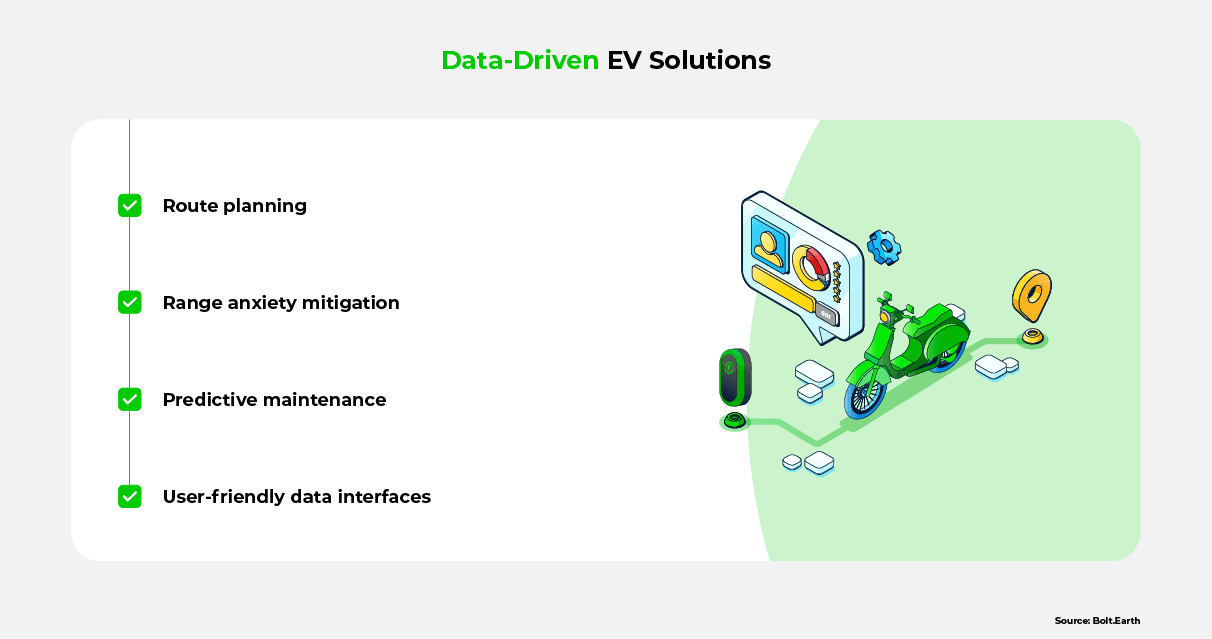
    A list of data-driven EV solutions

    Route Planning and Range Anxiety Mitigation

    Many EV users lack clarity about their vehicle’s performance. With data analytics, they can plan better, optimizing their travel routes. Charging apps can guide users in real time, suggesting less congested charging stations or efficient routes based on battery levels, mitigating range anxiety.

    Predictive Maintenance

    Continuous data collection, especially from components like Battery Management Systems (BMS), IoT microcontrollers, and other accessories, facilitates predictive maintenance. By pre-emptively identifying issues through analyzing data to monitor the EV’s health, it can provide early warnings of potential problems, extend the lifespan of critical components, and reduce long-term ownership costs.

    User-Friendly Data Interfaces

    Clean and intuitive user interfaces are the key to making data and analytics accessible to EV users and fleet operators. App developers must design user-friendly interfaces so users can gauge their EV’s performance, charging habits, and maintenance needs. Additionally, apps offering personalized recommendations and insights enable users to make the most of data-driven insights.

    Such concerted efforts from all stakeholders can enable the industry to better utilize the data generated from EVs and charging points.

    Pros and Cons of Data-Driven EV Solutions
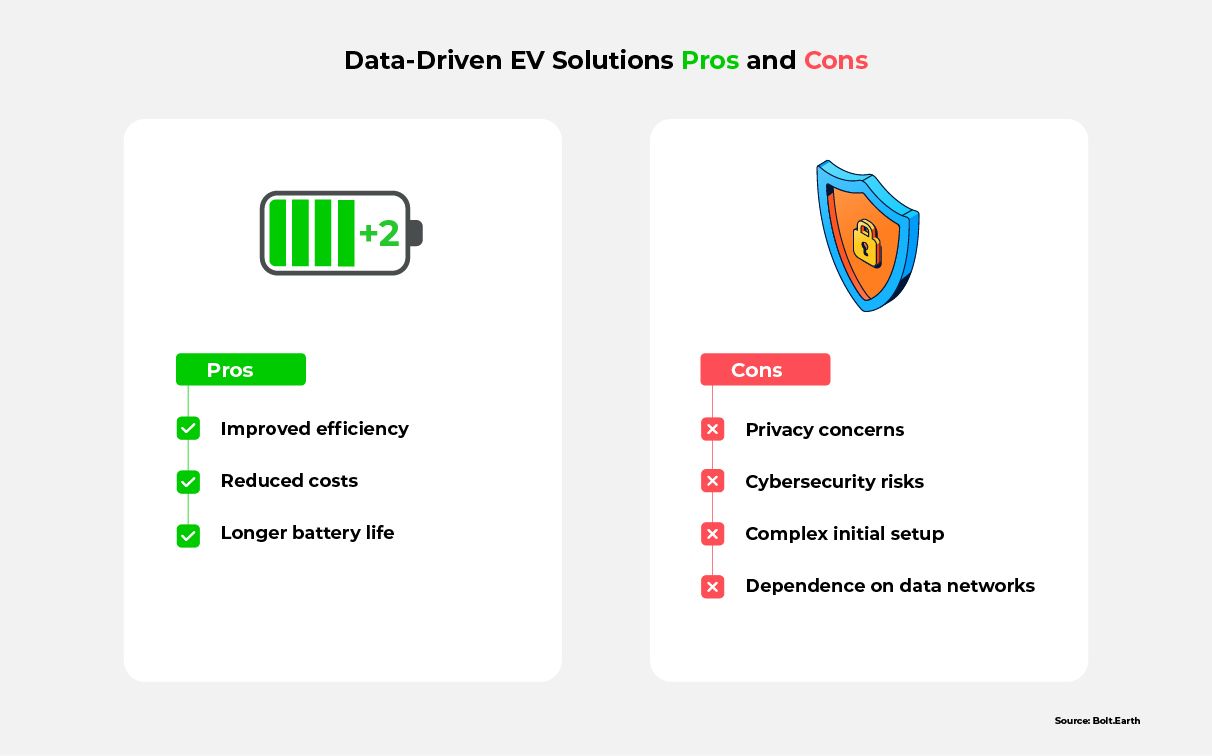
    A pros and cons list for data-driven EV solutions

    Pros

    Improved Efficiency

    Data-driven solutions can optimize routes, charging times, and driver behavior, leading to increased efficiency of EVs. By empowering EV users and fleet operators with actionable data insights, they can maximize vehicle potential. Over time, this can widen EV adoption by making it an environmentally and economically viable mobility choice.

    Reduced Costs

    A key advantage of harnessing EV data insights is the potential for monetary savings. Data-driven predictive maintenance can extend the lifespan of EV components like batteries, reducing upkeep and replacement costs. Optimized charging strategies can also lower electricity expenses, providing long-term financial benefits.

    Longer Battery Life

    Battery replacement costs are a deterrent to EV adoption. Given that the cost of replacement ranges from INR 15,000 to INR 20,000 per kWh (with a mid-range EV battery being 30-40 kWh) and INR 30,000 for EV two-wheelers. Leveraging data insights allows for adaptive driving habits that can prolong battery life, increasing overall vehicle value.

    Cons

    Privacy Concerns

    The process of data collection and analysis creates privacy concerns among EV users. The comprehensive data collected from EVs often include personally identifiable information (PII). Mismanagement or mishandling of this data can lead to potential data misuse. Addressing this requires rigorous data security measures at multiple levels to protect sensitive information and prevent unauthorized access, increasing trust and confidence in the data-driven approach.

    Cybersecurity Risks

    Cybersecurity is intrinsically linked to the EV ecosystem. Given the interconnected nature of EVs, with ties to the power grid, transportation networks, and smart city infrastructure, the emphasis on cybersecurity is paramount. Hence, cybersecurity needs to be embedded during manufacturing and development.

    Complex Initial Setup

    Generating EV data insights requires the installation of sensors and smart charging equipment. This can be expensive and require a high level of technical expertise. For some users, downloading and configuring the software can seem daunting. One way to alleviate this downside is to create a user-friendly setup process and offer comprehensive support resources.

    Dependence on Data Networks

    EV data insights often rely on data networks for real-time updates and recommendations. Certain features might underperform in areas with poor network coverage, potentially frustrating users. A solution to this downside is to bolster offline capabilities and integrate alternative operational methods, ensuring a seamless user experience.

    Despite these challenges, the traction for EV data insights remains robust.

    Current Market Trends and Expert Insights

    The EV market is undergoing a major transformation, largely driven by data insights. Market leaders like Tesla and Nissan are harnessing real-time data to boost battery efficiency and overall user experience. The prevalence of user-centric mobile apps continues to grow, enabling users easy access to valuable data insights. These apps provide personalized recommendations for efficient driving, route planning, and charging schedules to enhance user experience, fostering greater EV acceptance.

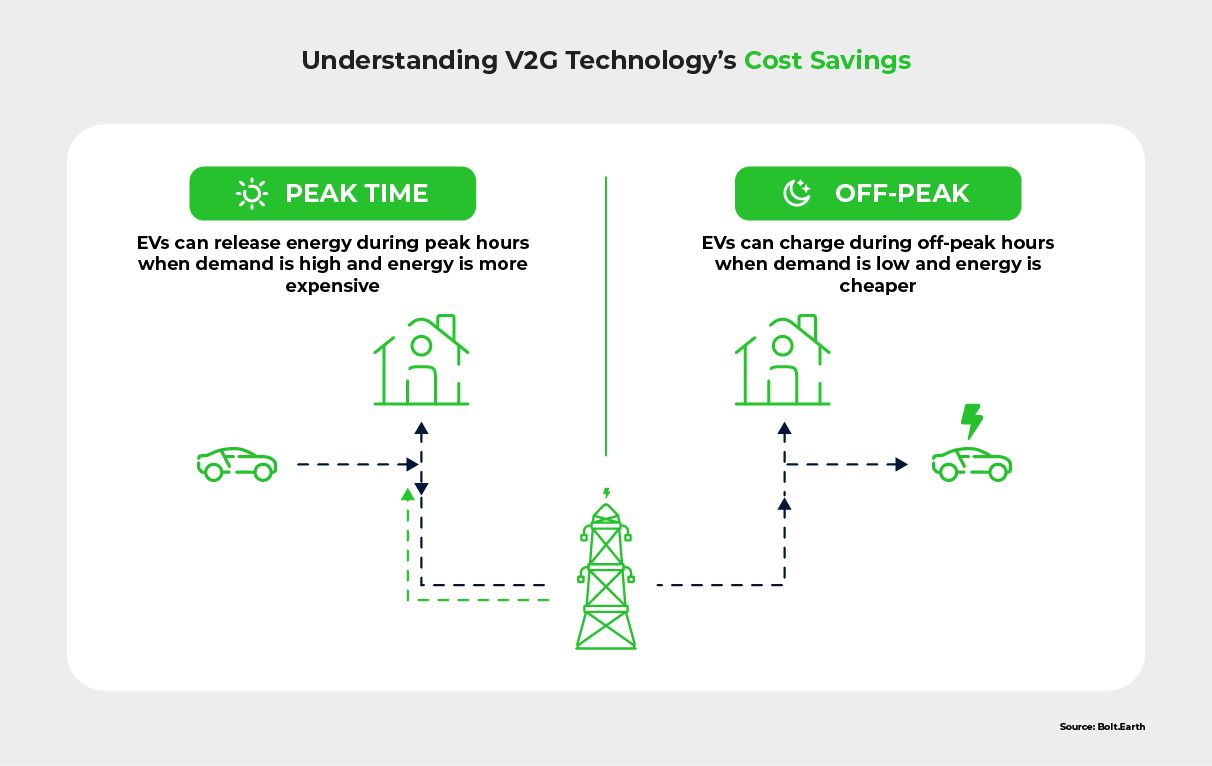
    Moreover, urban planners are integrating these data-driven insights into their plans. Technological advancements, including bidirectional charging and vehicle-to-grid (V2G) technology, are reshaping EV and grid interactions, leading to power distribution and usage efficiency. Additionally, artificial intelligence (AI) is improving predictive maintenance capabilities, extending the lifespan of critical components.

    These developments promise a cleaner, smarter, and greener future. More importantly, stakeholders actively leverage these data-driven insights, recognizing their transformative benefits.

    EV Success Stories

    Success stories provide valuable information into how organizations leverage data insights to improve EV performance and how these enhancements influence consumer choice and experiences.
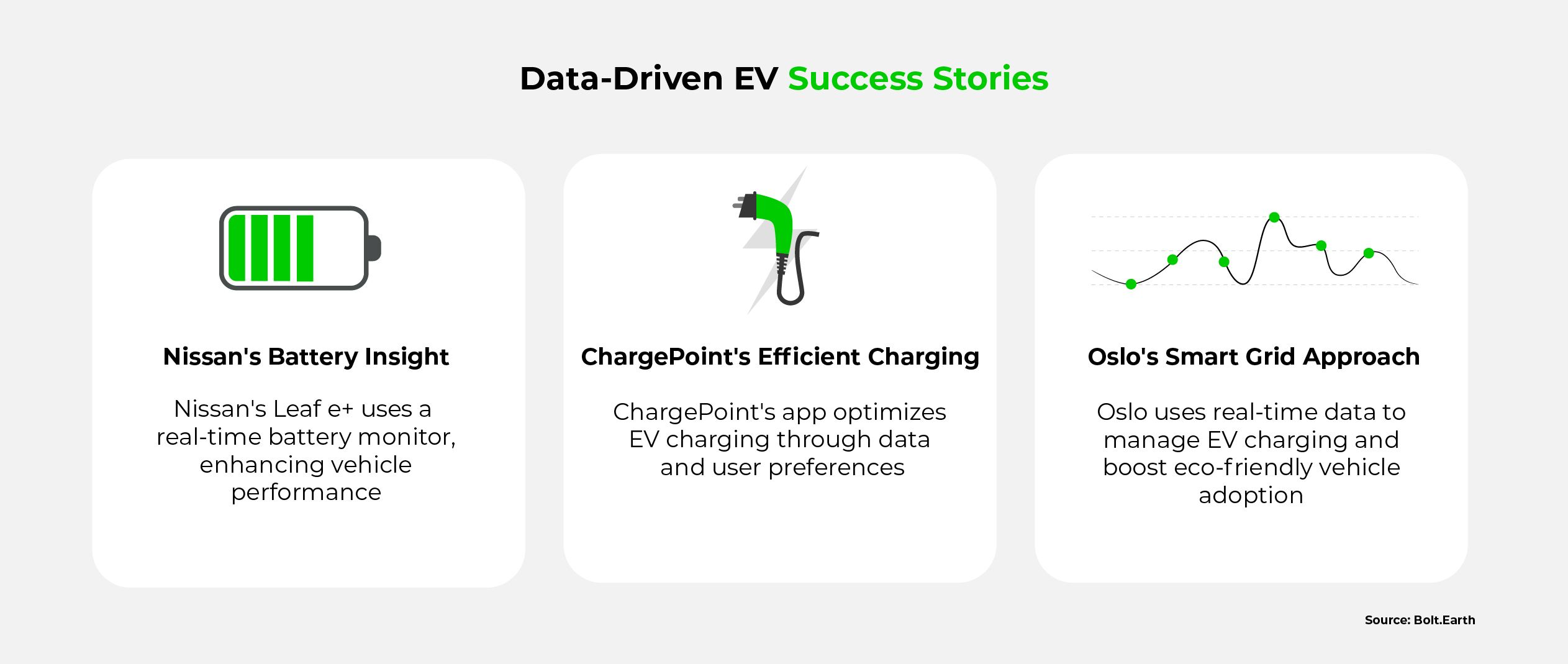
    A pros and cons list for data-driven EV solutions

    Case Study 1: Nissan’s Battery Health Monitor

    Nissan’s battery health monitor tracks 288 lithium-ion cells within its Leaf e+ model’s 96 battery modules, offering real-time insights into battery health and performance. The Leafspy app, accessible to Leaf e+ users, provides information by connecting to the EV through a wireless dongle, allowing users to monitor battery health.

    Many Nissan owners have attested to the effectiveness of these EV data insights. One notable Leaf e+ user reported minimal degradation in the battery’s two-year lifespan despite the absence of active cooling while driving in a warm climate. These insights empower users to take control of their vehicle’s performance and maintenance, enhancing the ownership experience.

    Case Study 2: ChargePoint’s Charging Optimization Platform

    ChargePoint, a leading charging solutions provider, is revolutionizing the EV charging experience through data insights. Its app combines real-time analysis of charging station data with user preferences, guiding users to available charging spots.

    Electricity rates, grid demand, and user preferences are all factors the app considers to help EV owners charge at optimal times. Additionally, this information helps charging point operators balance grid load, ensuring stability during peak hours. Using this information, EV users can define their ideal charging times and locations to enhance their convenience while mitigating costs.

    Case Study 3: Smart Grid Integration in Oslo, Norway

    Norway’s capital, Oslo, uses real-time data to manage its EV charging networks, balance grid demand, and incentivize off-peak charging. It continuously monitors grid demand and electricity rates to encourage users to charge during off-peak hours. Its many incentives, including free public parking and reduced company car taxes, make EV ownership appealing. The growing EV adoption is helping reduce carbon emissions, creating a better living environment for residents.

    Oslo’s integration of data-driven solutions is a testament to the power of using data to increase EV adoption. Its real-time data analysis has helped harness the potential of its smart grid, benefiting the environment and residents.

    These case studies clearly show that the future is in data-driven EVs.

    The Future of Data-Driven EVs

    The future of EVs will be closely tied to the development of data-driven solutions, echoing the software-centric approach of next-generation vehicles. Breakthroughs in 5G, AI, and V2G promise a transformative phase of EVs.

    Accelerated real-time analytics, facilitated by 5G, will optimize charging, route planning, and overall EV performance. AI’s potential to quickly analyze vast datasets will provide EVs with accurate information for predictive maintenance, personalized recommendations, and energy-efficient management. Bidirectional charging and V2G technologies make EVs active participants in the energy grid, drawing and releasing excess power to help enhance grid stability.

    The future of data-driven EVs is promising, as technology can make EVs more efficient, cost-effective, and sustainable.

    Start Using EV Data Insights Today

    The journey of improving EV efficiency and performance hinges on the ability of stakeholders to embrace data-driven solutions. The associated challenges, including range anxiety, battery replacement costs, and charging time concerns, can be surmounted using data-driven insights. The case studies from Nissan’s health battery monitoring, Chargepoint’s charging optimization, and Oslo’s smart grid integration showcase the potential of data-driven insights.

    Data insights have the transformative power to optimize EV performance, reduce costs, and elevate user experience. EV users, charging point operators, policymakers, and investors can address challenges more effectively with data-driven strategies. As we look to the future, data-driven solutions are necessary in the evolution of EVs that increasingly rely on software components. By embracing these EV data insights, we can shape a cleaner, more efficient, and cost-effective sustainable transportation future.

    To learn more about maximizing your EV’s performance with data insights, please see the FAQ and Resources below!

    FAQ

    Can data insights extend EV battery life?

    Yes, data insights can extend EV battery life. By monitoring battery health and performance data, EV owners can take proactive measures to ensure optimal battery conditions. For example, Nissan’s battery health monitoring system sends alerts for maintenance, preventing early battery degradation and extending its lifespan.

    Are data-driven solutions expensive to implement in an EV?

    Data-driven solutions in EVs vary in cost but can offer substantial long-term savings. Initial implementation may include expenses for sensors, software, technicians, and infrastructure, depending on the chosen solution. However, these investments often lead to reduced maintenance and operational costs over time.

    How do data insights alleviate range anxiety for EV users?

    EV data insights provide real-time information on factors such as battery charge levels, traffic conditions, and charging station availability. Using this data, drivers can make informed decisions about planning their routes and charging stops, reducing range anxiety.

    Are data-driven solutions available for all types of electric vehicles?

    Data-driven solutions are generally available for a wide range of EVs, as they come equipped with built-in sensors and data collection software systems that enable data-driven features. However, the availability and extent of data-driven solutions can vary depending on the make and model. Additionally, retrofitting older EVs with data-driven features may be possible but could be challenging and costly.

    How do data insights impact the cost of charging an electric vehicle?

    Data insights analyze electricity rates, grid demand, and user preferences to optimize charging schedules. This helps users take advantage of lower electricity prices during off-peak hours, resulting in cost savings. Additionally, predictive maintenance enabled by data insights can extend the lifespan of the EV’s battery, further reducing long-term ownership costs.

    Resources

    Tech Briefs: Optimizing EV Performance Through the Power of Data

    Explore how engineers can harness data to optimize battery safety and performance and, ultimately, drive EV adoption.

    YoCharge: The Role Of Data Analytics In Optimizing EV Charging Management Systems

    Learn about the importance of data analytics in EV charging management systems.

    The University of Chicago Press Journals: The Market for Electric Vehicles: Indirect Network Effects and Policy Design

    Understand how EV data insights were used for policymaking.

    Australian Government: National Electric Vehicle Strategy

    Discover how the Australian government ensures EV privacy and data security through its policies.

    EV Box: Home EV Charging Data and Insights

    Learn how to benefit from home EV charging insights.
  • The Rise of Electric Vehicles in South Africa

    The Rise of Electric Vehicles in South Africa

    Road transport remains a key source of greenhouse gas (GHG) emissions in South Africa. Nevertheless, South Africa has committed to the Paris Agreement, and is determined to transition to new-energy vehicles. This commitment is poised to accelerate electric vehicle (EV) adoption in the near future, despite some significant challenges. Thanks to its large mineral reserves, South Africa has even more opportunities on the horizon.

    This article explores South Africa’s nascent EV landscape. In particular, it addresses the following questions:

    • What is the current state of South Africa’s EV market?
    • How is the South African government supporting the EV industry?
    • What potential challenges and opportunities does South Africa’s EV market face?

    South Africa’s Nascent EV Market

    South Africa’s overall auto sector is growing. In 2021, the automotive industry contributed 4.3% to GDP, with vehicle and component exports making up 12.5% of total exports. In 2023, new vehicle sales rose by 5% YoY to 265,970 units by June 2023, exports increased by 4% to 172,836 units YoY, and production grew by 10% to 284,035 units.

    South Africa’s robust auto assembly industry is heavily reliant on exports to the European Union (EU), particularly Germany.). As a result, the EU’s 2035 ban on new petrol and diesel vehicles strongly incentivizes South African manufacturers to transition to new energy vehicles (NEVs).
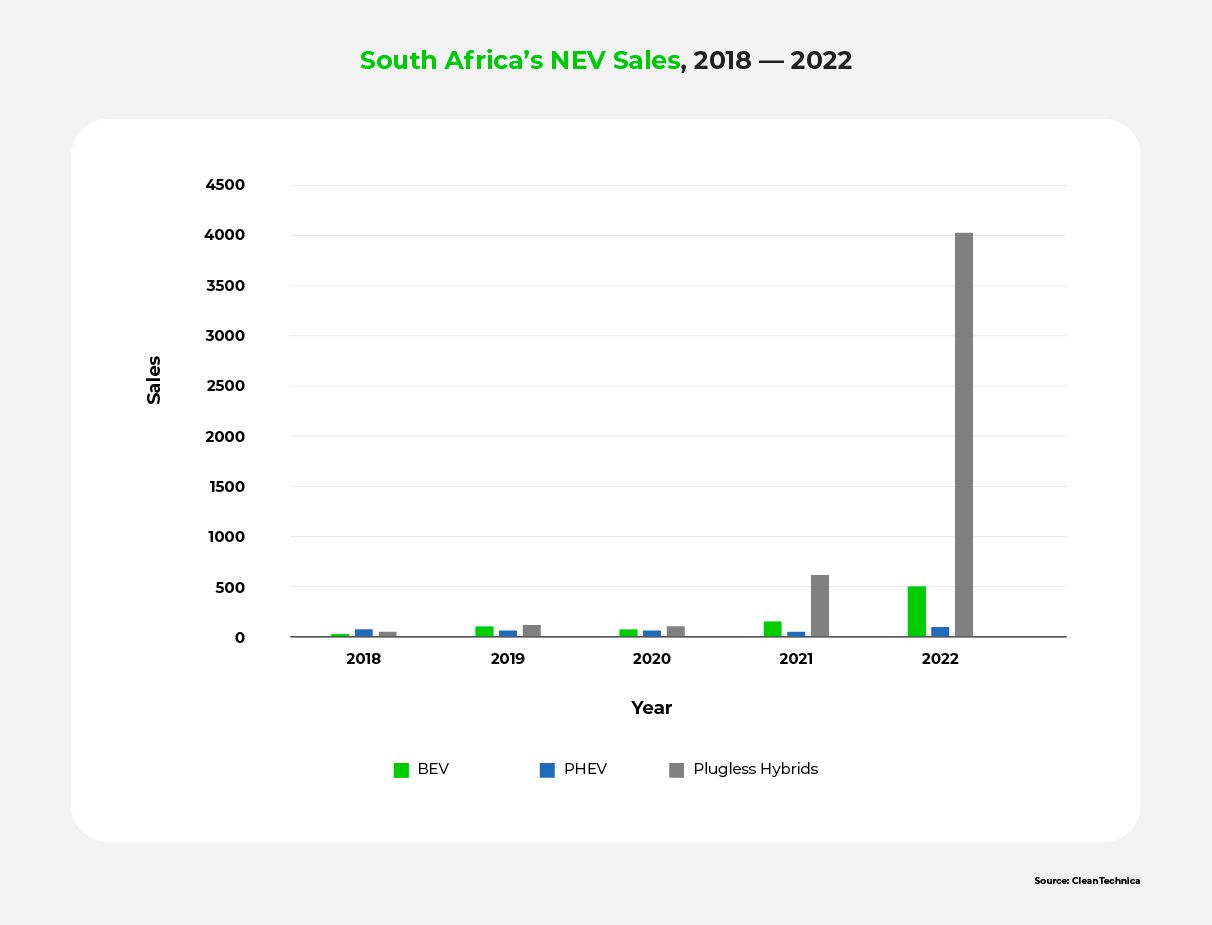
    Within South Africa, NEV sales have been slow, but are now gaining momentum. Data from the National Association of Automobile Manufacturers of South Africa (NAAMSA) shows that NEVs accounted for nearly 1.2% of YTD June 2023 sales. Notably, NEV sales surged by 47.1% YoY in June 2023.

    Battery electric vehicles (BEVs) constitute a minor but fast-growing segment in South Africa’s NEV market. In the first half of 2023, South Africa saw the sale of 502 BEVs, matching the total number of BEVs sold during the entirety of 2022. This suggests the potential for over 1,000 BEV sales in a single year.

    As depicted in the chart below, plugless hybrids (HEVs) have experienced a significant surge in sales since 2022. This momentum continues into the first half of 2023; in 2022, a record-breaking 4,050 plugless hybrids were sold, and 2,561 have been sold in 2023 so far. This increase can be attributed to the growing availability of plugless hybrids, such as the Toyota Corolla Cross hybrid. As OEMs actively promote plugless hybrid models, consumer interest and purchases are aligning with this trend.

    A bar chart showing South Africa's NEV sales from 2018 to 2022
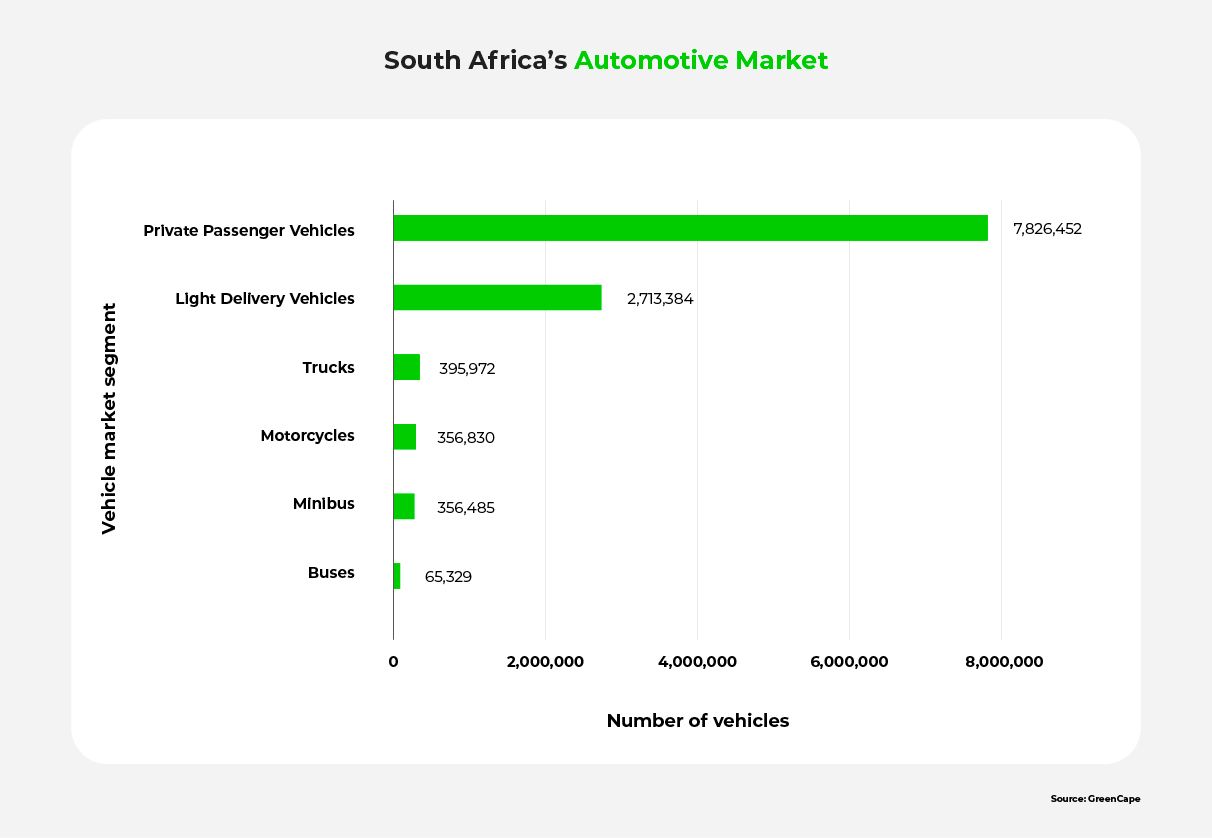
    Private passenger vehicles comprise the largest segment in South Africa’s market, but electrifying them poses significant challenges. Nevertheless, 506 BEVs were sold in 2022 for private passenger purposes.

    The second-largest segment consists of light commercial vehicles, primarily for last-mile delivery services. Several OEMs are entering this market, including Takealot, Spar, DPD, Skynet, and DHL.

    Another emerging category is electric 2- and 3-wheelers, projected to see a compound annual growth rate (CAGR) of 24.35% and 14.38%, respectively, by 2030. Due to South Africa’s high urbanization rate, this sector is poised for growth, primarily driven by fleet owners who want to save money on fuel.

    The electric public transportation sector is also gaining ground. South Africa has approximately 65,239 buses and minibuses, and 356,485 minibus taxis, that could be replaced with electric buses. The City of Cape Town has already successfully tested and deployed electric buses for daily commuter use.

    A bar chart showing the composition of South Africa's automotive market

    Current Charging Infrastructure

    South Africa’s EV charging network currently consists of over 350 publicly accessible charging stations, including ones at dealerships.

    In 2022, several companies made substantial investments in expanding South Africa’s public EV charging network. Most notably, Audi South Africa partnered with Grid Cars to establish 70 new EV charging stations. These included 4 150kW DC super-charging stations, as well as slower chargers, across 33 locations.

    Other major EV manufacturers have also made significant contributions to South Africa’s public charging infrastructure. BMW, for instance, has deployed over 60 ChargeNow stations across the country. Jaguar and Nissan have also invested in expanding the charging network.

    The public EV charging station sector is expected to experience the most significant growth as South Africa’s network continues to expand. This expansion is essential to facilitate long-distance EV travel between cities and provinces.

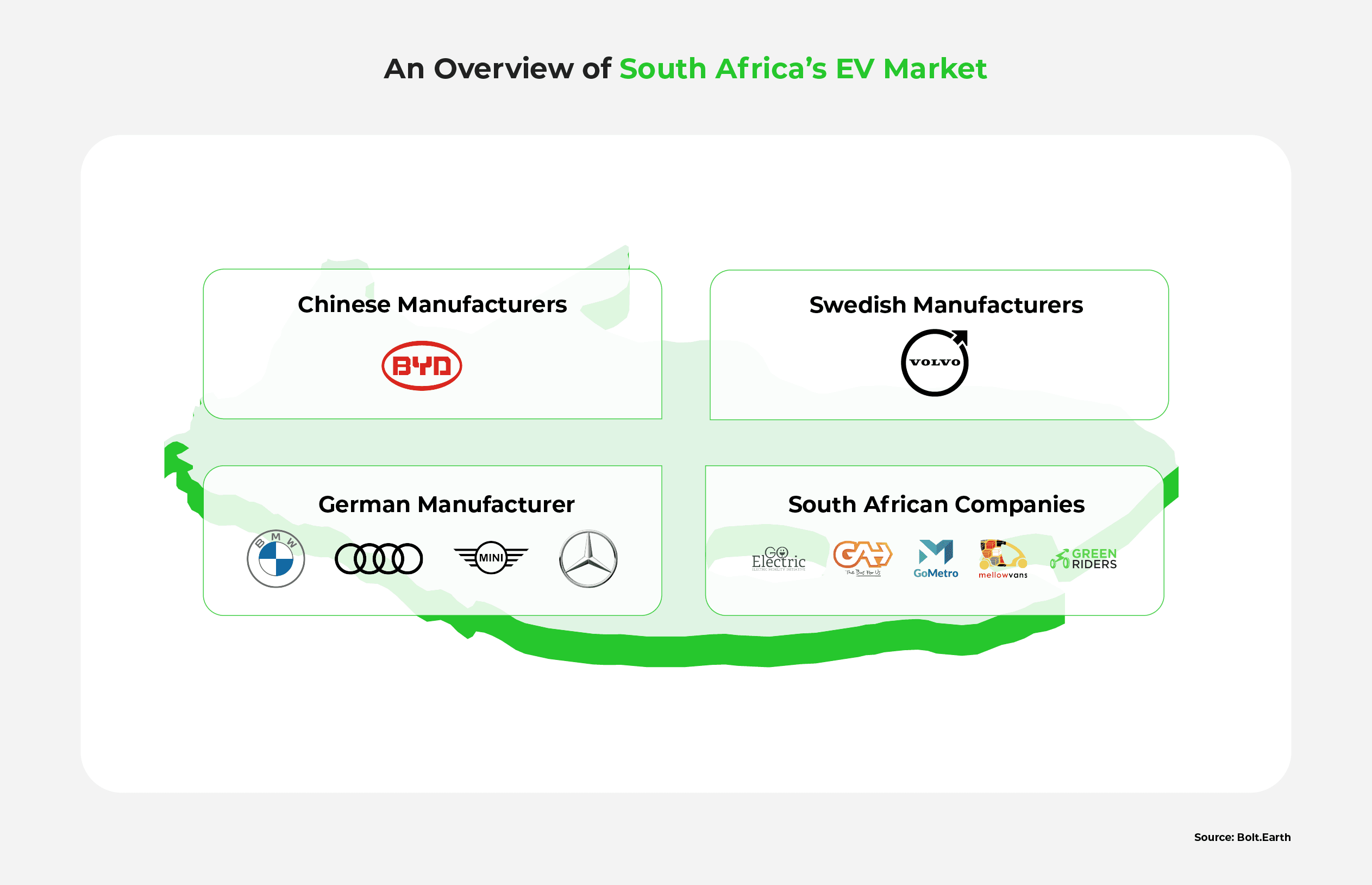
    Key Players

    An infographic listing key players in South Africa's EV market

    Numerous OEMs currently operate in South Africa, serving the private passenger vehicle market. There are key automotive manufacturing hubs in the Eastern Cape (EC), KwaZulu-Natal (KZN), and Gauteng (GP) regions. Despite having fewer commuters, the EC has attracted substantial investment due to its proximity to sea and river ports.

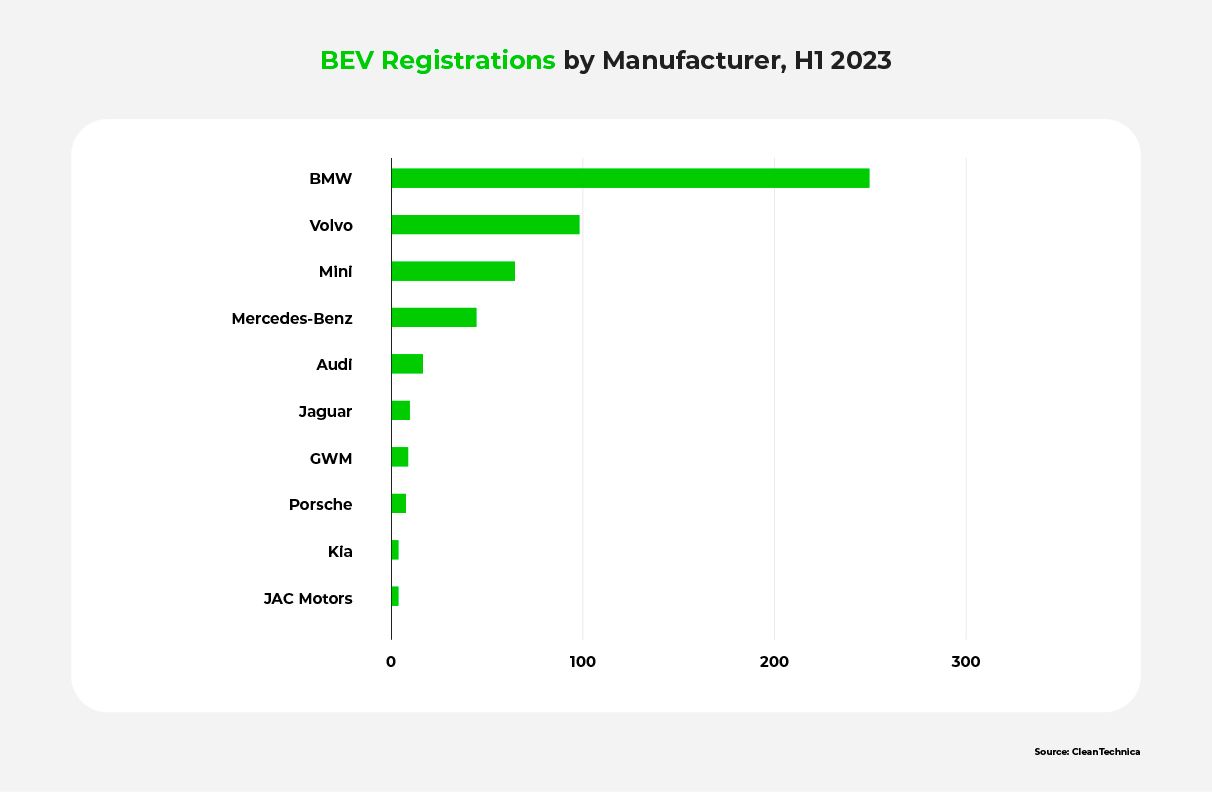
    German brands, including BMW, Audi, and Mercedes-Benz, dominate the BEV sector, mainly catering to South Africa’s private passenger vehicle market. BMW maintains its position as the BEV sales leader due to its wide range of EV options, while MINI, a part of the BMW Group, is also growing steadily. Mercedes-Benz has achieved some success by focusing on convenience; it offers home charging kits, and has installed charging stations at 36 of its dealerships.

    The Swedish Volvo XC40 is another common choice in South Africa, offering a 423km range at a lower price than the Mercedes-Benz EQA 250. Furthermore, the Chinese company BYD recently launched the Atto 3, priced between R 768,000 and R 835,000 (USD 40,941 – 44,479). Tesla vehicles, despite their popularity in other countries, are not yet available in South Africa. Volkswagen plans to produce its first African-market electric SUV by 2035, emphasizing the need for localized EV supply chains.

    Although Japanese OEMs make up a significant portion of South Africa’s overall auto sector, Japan’s historical focus on hybrid electric vehicles precludes its participation in the BEV market.

    A bar chart showing South Africa's BEV registrations during the first half of 2023, broken down by manufacturer

    The Domestic EV Fleet Market

    Several players are focusing on South Africa’s fleet market, including public transport, last-mile delivery, and niche sectors such as tourism vehicles.

    Public Transport

    Golden Arrow Bus Services (GABS) and BYD have jointly announced the deployment of two electric buses in Cape Town. These are the first electric buses in operation in the entirety of Southern Africa.

    GoMetro, in partnership with several firms and researchers, successfully tested the first minibus taxi in South African conditions in January 2023.

    Last-Mile Delivery

    Many South African startups participate in the last-mile delivery market segment. MellowVans has introduced a cargo e-rickshaw equipped with a 4KW motor and a 9kWh battery pack, allowing it to travel up to 100 kilometers on a single charge. Their production facilities in Stellenbosch and Strand can currently manufacture four electric three-wheelers daily, with nearly 70% of components sourced locally.

    In 2022, Go Electric collaborated with AEVERSA and the Spar Group to initiate a pilot project employing electric mopeds for Spar’s online grocery delivery service.

    Green Riders has launched a fleet of 600 electric cargo bicycles to support the growing electrification of last-mile food and grocery delivery services such as Uber Eats and Mr. Delivery. They aim to have 3,000 Green Riders in South Africa’s Western Cape and Gauteng provinces by the end of 2023.

    Other Niche Markets

    In 2020, Makanyi Private Game Lodge pioneered the first electric safari vehicle, in the Timbavati Game Reserve within Kruger National Park. This innovative initiative involved converting a traditional diesel 4×4 safari vehicle into an electric one, plus making it fully rechargeable via solar panels.

    Government Incentives and National EV Targets

    South Africa’s manufacturing industry urges clear EV policies for automotive sector stability, motivated both by the EU’s ICE phase-out and by South Africa’s GHG reduction goals. In response, a government-issued Auto Green Paper, released in 2021 for feedback from 7 major automakers, is poised to become a guiding White Paper in 2023.

    EV Master Plan

    The Auto Green Paper, South Africa’s first NEV industry guidance, has not been publicly issued yet, but its intentions are clear: it will focus on creating a competitive EV manufacturing hub. It aims to boost job creation, develop EV tech, transition to clean fuels, and reduce emissions through green manufacturing.

    Although industry players applaud these goals, some concerns remain. First, the paper’s call for local NEV production and exports may not be feasible, due to South Africa’s small market and high import duties. Second, charging infrastructure development is uncertain, raising questions about whether the government or the private sector should take responsibility for it.

    The new South African Automotive Master Plan (SAAM) offers incentives to encourage the automotive industry transition but, notably, remains silent on the issue of NEVs.

    EV Supply-Side Incentives

    Many stakeholders have requested that the government provide guidance or incentives for EV manufacturing, research, and development. Furthermore, the government-issued Green Transport Strategy for South Africa (2018 – 2050) proposes providing financial incentives for OEMs to produce and sell affordable EVs within South Africa. Thus far, however, the government has not actually implemented any of these measures.

    EV Demand-Side Incentives

    South Africa’s government has not issued demand-side incentives yet. However, early this year, NAAMSA released a document entitled the “New Energy Vehicle Roadmap Thought Leadership Discussion, The Route To The White Paper,” in which they recommend a detailed subsidy structure to drive consumption.

    Import tariffs on EVs in the South African market are a contentious issue. EVs are subject to a 25% import tariff, significantly higher than the 18% applied to traditional internal combustion engine (ICE) vehicles. In response, the Democratic Alliance (DA) advocated for the removal of all import duties on EVs in order to make these vehicles more affordable for consumers, especially in light of rising petrol prices. The government has not yet responded.

    Potential Challenges in South Africa’s EV Market

    In addition to the political uncertainty surrounding the EV industry, South Africa’s transition to electric mobility faces several other challenges. The primary hurdles involve high prices and limited charging infrastructure. Moreover, South Africa’s power supply constraints are not conducive to a swift transition to EVs.

    Limited Charging Infrastructure

    As of 2020, South Africa had one of the highest ratios of public EV chargers to EVs: close to 1.8 chargers per 10 EVs. However, this number does not reveal the whole picture; the ratio is so favorable because the country’s EV penetration rate is so low.

    Furthermore, charging infrastructure shortages may be in store. In 2020, there were about 143 public charging stations in South Africa, increasing to over 350 in 2023: approximately a 50% annual growth rate. However, in the same period, EV penetration saw a CAGR of 55%. South Africa’s EV goals will probably accelerate this CAGR even more. In other words, the number of chargers is rising more slowly than the number of EVs, which may lead to future problems.

    High Initial Costs

    Currently, South Africa’s EVs are priced much less competitively than ICE vehicles. South Africa’s expanding middle class, which represents a significant portion of the market, typically purchases vehicles priced between R150k and R350k (USD 7,923 – 18,487). However, most EVs in South Africa, with the sole exceptions of the Funky FE-1 and the Eleksa CityBug, are priced outside this range. This dearth of affordable options contributes to South Africa’s low EV adoption rates.

    South Africa’s taxation system compounds the problem. In addition to the 25% import tax mentioned above, EVs are subject to a further ad valorem tax, which can be as high as 30%. As a result, an EV often costs twice as much as a comparable ICE vehicle from the same manufacturer.

    Electricity Supply and Grid Infrastructure

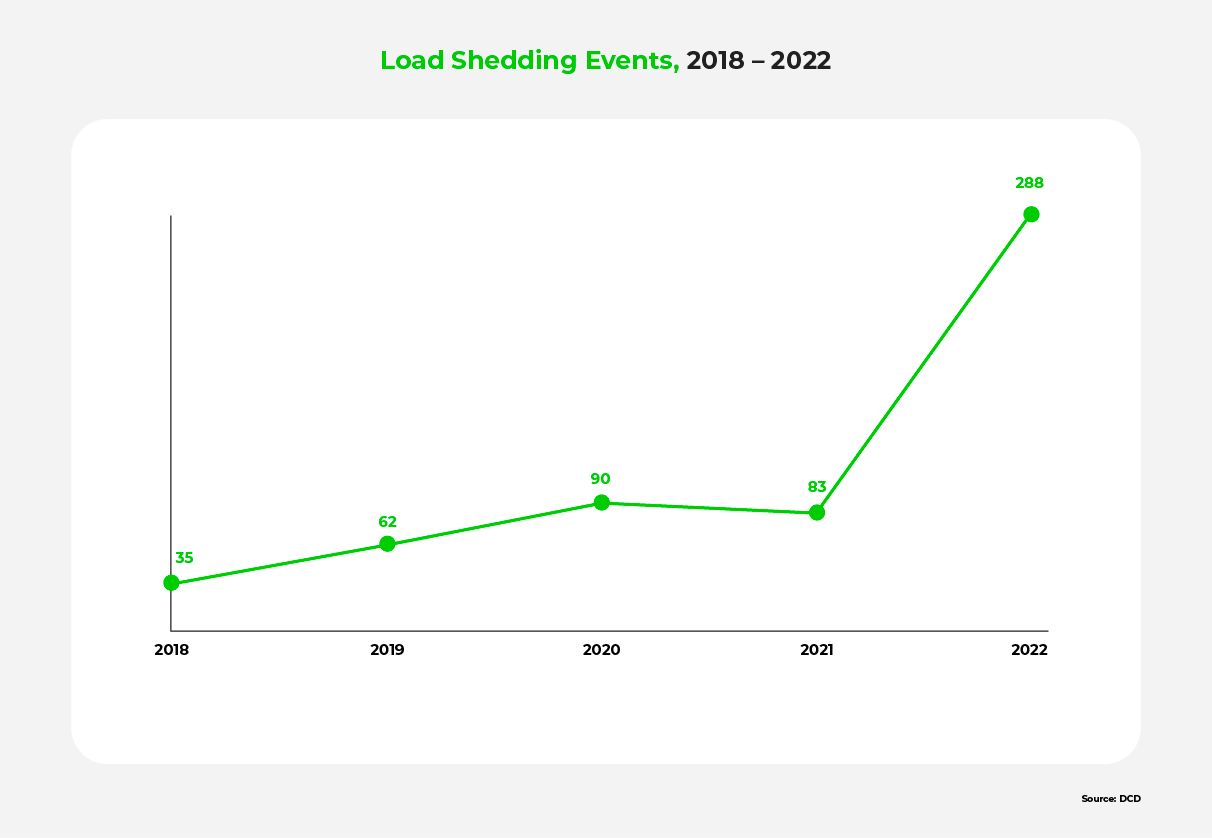
    South Africa is notoriously prone to power shortage issues, as a result of outdated grid infrastructure. Eskom, the state-owned national power utility, supplies more than 95% of the country’s electricity, but has not attained high efficiency, due to plant breakdowns. According to CEO Calib Cassim, although the power utility has approximately 47,500MW of installed capacity, it can utilize only 26,500MW. This has resulted in a continuous electricity crisis since 2007. Eskom has responded by implementing load shedding: strategic blackouts on a rotating schedule.

     A graph showing the number of load shedding events between 2018 and 2022

    In 2022 alone, South Africa underwent 288 load shedding events. Since mid-January of 2023, the country has typically been without electricity for 8 to 10 hours a day, causing economic losses and disrupting daily life. As a result, residents are reluctant to purchase vehicles that they will be unable to charge on a regular, reliable schedule.

    Opportunities for Future Growth

    Although South Africa has significant obstacles to EV adoption, it also holds great potential for progress.

    Energy Upgrades

    South Africa, like many other countries, presents opportunities for charging infrastructure development. However, it will need to support this development by improving its existing electricity system. The country has abundant forms of new energy, such as solar and wind power, which it could upgrade its infrastructure to harness. Alternatively, South Africa could leverage advanced technology such as V2G and distributed energy resources to relieve the strain on the state grid. It could also attract private sector investment in transmission, following Brazil’s example.

    Cape Town is already pioneering some of these solutions. They have commissioned a major solar and battery storage project, which is expected to generate more than 60MW of renewable energy. They are also exploring purchasing solar power from households and small producers.

    As EV growth continues, significant opportunities for charger infrastructure development, particularly in the private sector, will emerge. Several companies are already entering or planning to enter this market. Notably, Rubicon and Audi are collaborating on an ongoing charger installation project, including South Africa’s first ultra-fast charger.

    Green Incentives and Policy Overhaul

    South Africa could directly support EV adoption by offering subsidies and reducing taxes. However, this may not be a realistic option for a developing country. South Africa may be able to work around this if it funds EV incentives by leveraging the EV value chain to boost the country’s economy. In particular, South Africa’s existing battery industry and rich manganese resources make it an optimal destination for lithium-ion battery assembly and manufacturing. South Africa could also draw inspiration from Indonesia, which has successfully attracted investment in local processing. If South Africa steps into a role in global lithium-ion cell manufacturing, its economy and employment rates would improve, creating a positive production-demand cycle. Policy support from the demand side could further catalyze industry development.

    Public transportation holds additional potential. Government-level procurement and policy support for public transportation could incentivize EV adoption and create opportunities.

    Public Awareness and Education Campaigns

    A 2020 national survey revealed a significant disparity: 68% of respondents expressed high willingness to own an EV, but actual EV ownership is only 1.8%. This mismatch is largely due to concerns about load-shedding, range issues, and upfront costs.

    The Department of Transport partnered with several other entities to launch an Electric Vehicle Road Trip (EVRT) campaign in 2019. The journey aimed to promote electric mobility by demonstrating the feasibility of crossing the country without traditional fuel. The positive public sentiment expressed by the 2020 survey results may be attributable to this campaign. This suggests that future public awareness and education projects would meet with success.

    The Future of EVs in South Africa

    South Africa stands on the cusp of a significant transition towards EVs, driven by global commitments to reduce greenhouse gas emissions, and supported by the nation’s rich mineral reserves. Although the EV market is in its infancy, it shows promising signs of growth. A variety of EV types are gaining traction, especially in the private passenger vehicle and last-mile delivery sectors. However, this transition is not without challenges, including high initial costs, limited charging infrastructure, and ongoing power supply issues.

    As South Africa looks ahead, it could make progress by leveraging its potential in battery manufacturing, pursuing green incentives, and raising public awareness through education campaigns. The forthcoming Auto Green Paper on new energy vehicles and continued policy support promises to guide the nation toward a cleaner, more sustainable automotive future.

    FAQ

    How is charging infrastructure developing in South Africa?

    Charging infrastructure in South Africa is steadily growing. Currently, there are over 350 publicly accessible charging stations. Major investments from automakers like Audi have expanded the charging network, with a focus on facilitating long-distance travel.

    What incentives exist for South African electric vehicle buyers?

    South Africa does not yet offer direct incentives for EV buyers. However, there are proposals for subsidies, and the Auto Green Paper aims to guide future policies in this regard.

    Are there any government policies supporting EV adoption?

    The government has drafted the Auto Green Paper as the first guidance specifically addressing the NEV industry. It aims to create a competitive EV manufacturing hub, promote job creation, develop EV tech, transition to clean fuels, and reduce emissions through green manufacturing.

    How do electric vehicles compare to traditional cars in terms of cost?

    EVs can be more expensive upfront than traditional cars due to high import tariffs. However, the government is considering proposals for subsidies and reduced taxes to make EVs more affordable.

    What future trends can we expect for electric vehicles in South Africa?

    South Africa is predicted to continue adopting electric market private passenger vehicles and last-mile delivery service vehicles. Battery manufacturing, green incentives, and public awareness campaigns promise to boost EV growth.

    Resources

    NAAMSA: SA Automotive Market Analysis, Aug 2023

    Explore South Africa’s overall automotive market here.

    GreenCape: 2023 Electric Vehicles Market Intelligence Report

    Get details about South Africa’s EV market sector here.

    GreenCape: Electrification of public transportation

    Discover Cape Town’s successful electric bus initiative here.

    South African Government: Auto Green Paper on the advancement of new energy vehicles in South Africa

    Find South Africa’s current policy guidance here.

    Earth.Org: Understanding the Energy Crisis in South Africa

    Learn about South Africa’s ongoing energy crisis here.

  • EV Technology in 2023: Current Trends and Future Prospects

    EV Technology in 2023: Current Trends and Future Prospects

    Growing climate change concerns, coupled with technological advancements in the automotive industry, have fueled the growth of electric vehicles (EVs). In the first half of 2023, there was a 40% increase in global EV sales compared to the previous year. By 2030, EVs will constitute 35 to 40% of all new car sales. However, this mass adoption depends on innovations in charging infrastructure, smart grids, and battery technology.

    To provide a realistic perspective on the EV trends in India, this article answers three key questions:

    • What are the top technology trends shaping the EV industry in 2023?
    • How are current challenges impeding the progress of EV technology?
    • Why are proposed solutions vital to overcoming these challenges?

    Today’s EV Technology

    EVs present an eco-friendly and cost-effective alternative to traditional vehicles, offering a solution to reduce congestion and pollution in Indian cities. These modern vehicles come equipped with high-tech features, further enhancing the driving experience and contributing to a sustainable urban environment. Consequently, the Indian government is supporting EV adoption, and the private sector is building innovative EVs to suit India’s roads and traffic conditions.

    Battery technology innovations play a key role in the EV market. Advancements in lithium batteries have reduced EV battery costs by 90% since 2008, making EVs more affordable, providing more mileage, and reducing range anxiety. Advancements in EV chargers and smart grids further boost consumer interest. Favorable government policies, greater EV benefits, and rising consumer demand have all spurred the global EV market.

    In India, Tata Motors is in the lead, with an 86% market share from its Tigor and Nexon EV models. Other popular models include MG Motor’s MG ZS EV at 9% and Hyundai’s Kona at 1.6%. In the two-wheeler EV sector, Ola Electric leads a 27.2% market share, followed by TVS Motor at 19.3% and Ather Energy at 14.6%. Mahindra & Mahindra dominates the three-wheeler EV market, followed by Piaggio Vehicles.

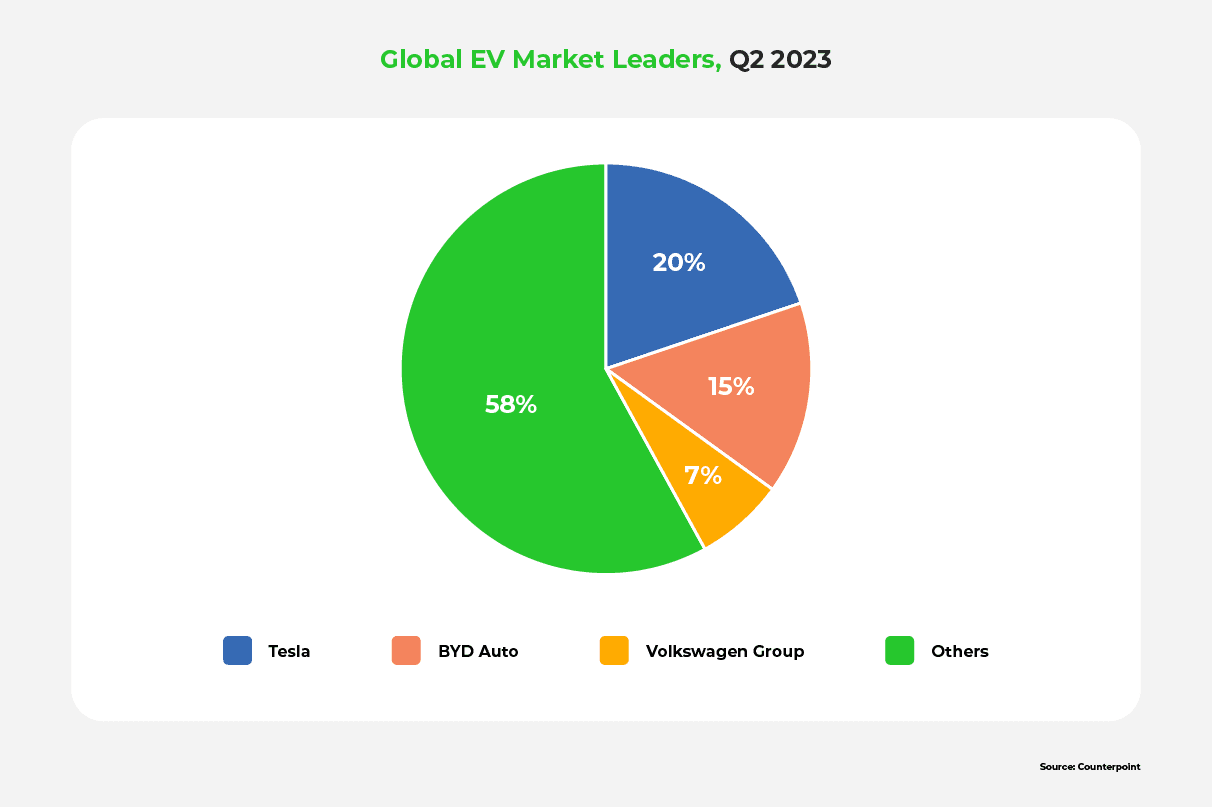
    Moving on to the global EV market, Tesla leads with a market share of 20% in Q2 of 2023. BYD Auto follows with a market share of 15% and Volkswagen with 7%. The remaining 58% of the market share is highly fragmented among many local and international companies.

    A pie chart showing global EV market leaders

    When it comes to EV two-wheelers, the top players are AIMA Technology, Ather Energy, Hero Electric, Jiangsu Xinri, and Yadea Group Holdings.

    A quick comparison between the Indian and global markets shows that in India, there’s room for more players and models. This also signifies more opportunities for global players who can enter this lucrative market for a share in the EV pie.

    Why Discuss EV Breakthroughs Now?

    2023 is a pivotal year for EVs, marked by an influx of new models and increased demand and awareness. By discussing EV shifts in India now, stakeholders have a chance to actively shape the future of mobility. Furthermore, these advancements are backed by potentially time-sensitive regulatory policies that create a conducive environment to improve battery technology and integrate renewable energy sources; this is an ideal moment to boost EV adoption, create economic opportunities, and provide environmental benefits.

    Key Technology Trends Shaping Electric Vehicles in 2023

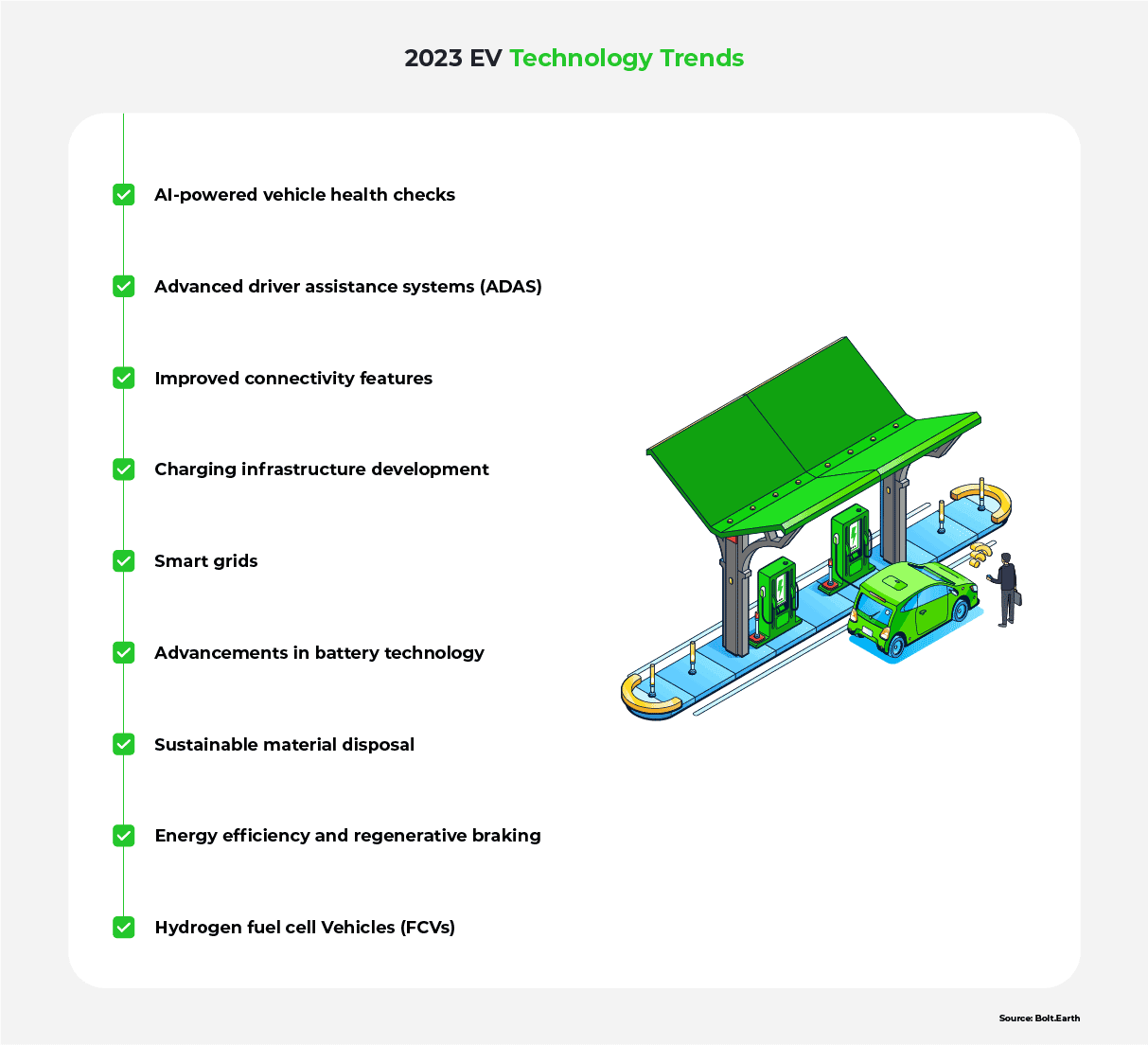
    A lot is happening under the hood, from smart systems to power-packed batteries. Here are some key technology trends shaping EVs in 2023.

    A graphic listing nine key trends in EV technology in 2023

    AI-Powered Vehicle Health Checks

    AI systems are revolutionizing EV safety and performance by gathering sensor data and analyzing anomalies. In particular, these systems gauge EV and battery health, so that owners and fleet operators can take proactive actions to avoid costly repairs. A good example is the vehicle intelligence system developed by Delhi-based Vecmocon Technologies and funded by the Indian Department of Science and Technology; it features keyless entry, predictive maintenance, remote diagnostics, fleet management, and user-adaptive algorithms to ensure a reliable and safe EV driving experience.

    Advanced Driver Assistance Systems (ADAS)

    ADAS refers to a collection of technology-driven features, consisting of sensors and controllers, that enhance driving safety and comfort by monitoring the external environment for the presence of other vehicles and pedestrians. This information is used to provide real-time suggestions, including emergency braking and parking assistance. ADAS can also detect driver drowsiness to improve safety.

    Improved Connectivity Features

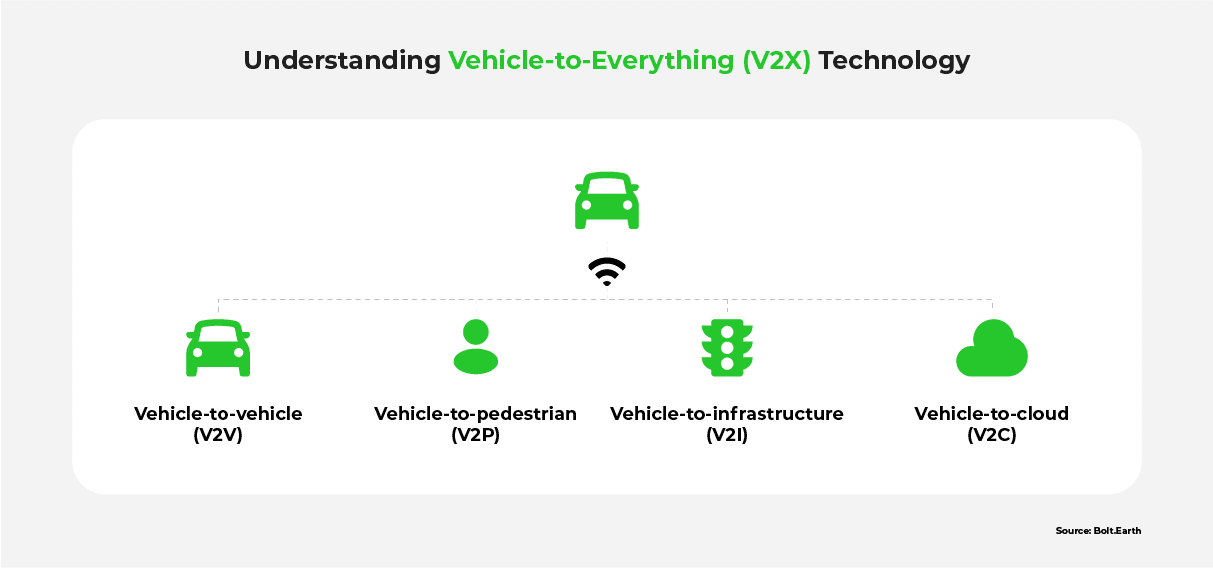
    The shift to software-defined vehicles (SDVs) emphasizes seamless connectivity for a smooth driving experience. Vehicle-to-everything (V2X) technology enables software controllers to send and receive information — including remote diagnostics, location-based services, current charge level monitoring, and over-the-air software updates — to internal and external components.
    An infographic depicting vehicle-to-everything (V2X) technology

    Charging Infrastructure Development

    Currently, the charging market in India is highly fragmented, with four different charging standards: Bharat AC-001, Bharat DC-001, CHAdeMO, and CCS. The existing infrastructure is located in cities, although public-private partnerships are working to build many stations across highways. Efforts to address incompatibilities in charging standards include Bolt.Earth’s universal chargers. Furthermore, the emergence of fast charging technology is reducing charging time, leading to optimized usage of existing facilities and greater return on investment (ROI) for infrastructure developers.

    Smart Grids

    Smart grids enhance EV charging efficiency and improve load balancing, ensuring a smooth charging experience for users. Innovations like bi-directional charging and vehicle-to-grid (V2G) technology allow EVs to function as energy repositories that can return unused energy to the grid, making them a more sustainable option.

    Advancements in Battery Technology

    The demand for high-performance EVs with longer mileage is fueling innovation in battery technology. Solid-state batteries, which use solid electrolytes over liquid or gel, promise efficiency, durability, and higher energy density that has higher energy storage. Similarly, lithium-sulfur batteries offer greater energy storage at reduced costs. Sodium-ion (Na-ion) batteries, which are cost-effective but less-than-ideal for long distances, are currently being explored for e-scooters. Additionally, advancements in battery recycling technologies are helping extend battery lifespans and reducing operational costs.

    Sustainable Material Disposal

    The growing awareness of environmental damage and the efforts going into solid waste management will extend to EVs. It’s estimated that 100 million EV batteries retire in the next decade, creating opportunities in battery recycling.

    Research and development grants from the EU’s European Battery Alliance and the United States’ National Science Foundation Phase II are driving the battery recycle trend. Stringent decarbonization targets are also pushing EV automakers to consider using recycled batteries, as it can have four times less carbon footprint than new ones.

    Energy Efficiency and Regenerative Braking

    EV makers are looking to optimize energy usage and efficiency, as it can directly address problems like range anxiety. The regenerative braking trend contributes to energy efficiency as it captures the kinetic energy released during braking. When the vehicle decelerates or comes to a standstill, a certain amount of kinetic energy is released, and this is captured and reused for running the EV. While this trend is in the nascent stages, it is expected to pick steam in 2023 and beyond.

    Hydrogen Fuel Cell Vehicles (FCVs)

    The push to make EVs more environment-friendly is fueled by renewable energy usage. Along with solar, wind, and hydro, there has been a growing interest in hydrogen fuel cells. As the name suggests, hydrogen is the fuel, and the emission is only water and warm air. Though FCEVs are in the early stages now, a lot of research is happening in this field. Countries like India are even looking to commercialize these hydrogen fuel cells in the coming years.

    These exciting trends chart a path to a greener and smarter future. However, to realize their full potential, stakeholders must tackle some important challenges.

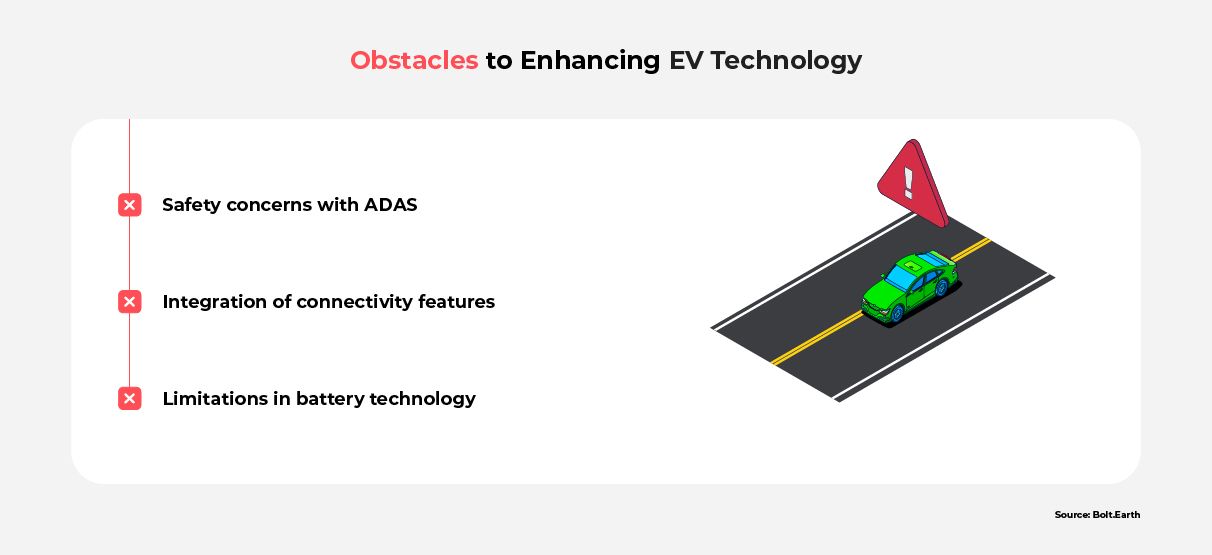
    Obstacles to Enhancing EV Technology

    The road to enhanced EV technology is complicated by several technical, regulatory, and economic factors. The EV industry must address these before it can truly harness the power of emerging technologies.

    A graphic listing obstacles to enhancing EV technology

    Safety Concerns With ADAS

    ADAS’ safety features may not always be reliable; low light, weak network signal areas, and inclement weather conditions can lead to false alarms, or cause ADAS to miss serious issues. Furthermore, since ADAS relies heavily on GPS systems, outdated data can reduce efficacy, or even provide inaccurate information.

    Integration of Connectivity Features

    Relying on EV software for connectivity creates a need for compatible protocols and hardware to ensure seamless communication. Nevertheless, the current landscape is fragmented; there are multiple communication protocols, which can prevent software components from effectively exchanging information. Furthermore, EV users must search for charging locations that have hardware compatible with their specific vehicles. Lastly, concerns about data security and privacy affect connectivity among EV components. These issues impact remote diagnostics and smart navigation, reducing user experience and increasing maintenance costs.

    Limitations in Battery Technology

    Although there have been remarkable developments in battery technology in the last few years, it still lags behind fossil fuels in energy density. Furthermore, insufficient charging stations and prolonged charging times continue to restrict EVs’ usability.

    Although these challenges are substantial, the EV industry is already taking steps to overcome them.

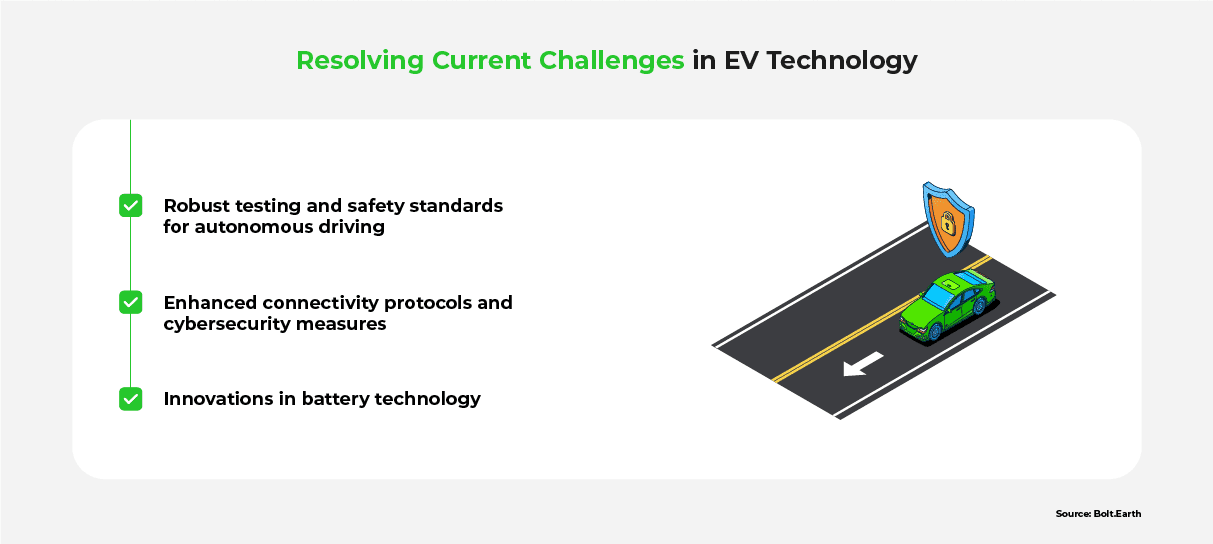
    Resolving Current Challenges in EV Technology

    In order to keep making progress, the EV industry must resolve challenges involving safety, range, and battery technology. Industry stakeholders are working together to address these issues with research, investments, and regulatory support.

    A graphic listing solutions that can address major challenges in today's EV technology

    Robust Testing and Safety Standards for Autonomous Driving

    Rigorous testing is required to ensure a safe driving experience, especially for ADAS. Automakers and technology companies must integrate real-world trials with virtual simulations and data analysis to identify shortcomings, enhancing user trust in ADAS-equipped EVs.

    Enhanced Connectivity Protocols and Cybersecurity Measures

    Cybersecurity is essential to all communication and connectivity protocols. Automakers must consider using upgraded protocols, encrypted communication channels, and proven authentication mechanisms to ensure confidentiality among car components, EVs, and smart grids. Secure connectivity is required to prevent cyberattacks and safeguard sensitive user data.

    Innovations in Battery Technology

    Battery technology, which is undergoing ongoing research, is central to EVs. Developing solid-state and lithium-sulfur batteries can increase EV mileage, and advancing fast-charging technologies reduces charging time. For example, the Swiss-based technology company Morand has developed a fast charger that can charge EVs to 80% in 72 seconds, although it is only suited to small-range cars.

    These solutions pave the way for a future where autonomous driving, seamless connectivity, and cutting-edge batteries work together to boost EV users’ driving experience.

    Imagining the Future of Transportation

    Emerging trends in battery technology and ADAS are not just drivers of innovation; rather, they can reshape the future of the EV industry by creating user-friendly features, improved range, and faster charging solutions, making EVs more attractive to a wider customer base. By championing EV adoption, stakeholders can make strides towards improving air quality and reducing carbon emissions.

    If harnessed correctly, technology trends can pave the way for a greener, cleaner, and more electrified future.

    Embrace the Electrifying Future: Drive the Change Today!

    In 2023, technological trends such as AI-powered health checks, seamless connectivity, smart grids, improved charging infrastructure, and powerful batteries are driving the EV industry. Keeping up with these trends isn’t just a choice; it’s a roadmap for a cleaner future. Let’s embrace the electric shift and drive the change toward a greener tomorrow!

    To learn more about EV trends in India, please see the FAQ and Resources sections below.

    FAQ

    How is the global adoption of electric vehicles progressing?

    The global adoption of EVs is steadily advancing. Sales and registrations of EVs have been on the rise, driven by factors like government incentives, environmental awareness, and technological advancements. EV sales reached a near-record high of 1.26 million in June 2023. This growth is attributed to improved battery technology, expanded charging infrastructure, and increased consumer interest in sustainable transportation.

    Who are the major players in India’s electric vehicle market?

    The Indian EV market’s major players are Tata Motors, Ola Electric, and Mahindra & Mahindra. These companies have strategically positioned themselves to capitalize on India’s growing demand for EVs. With innovative product offerings, competitive pricing, and collaborations with local stakeholders, these players have emerged as influential contributors to the expansion of India’s EV market.

    What role does autonomous driving play in the future of electric vehicles?

    Autonomous driving plays an important role in shaping the future of electric mobility. It integrates artificial intelligence and advanced sensors to enhance safety, reduce traffic congestion, and optimize energy efficiency. As self-driving technology advances, it could enable shared autonomous EVs, reducing urban pollution.

    How is the charging infrastructure developing to support the expanding electric vehicle market?

    The charging infrastructure is rapidly evolving to accommodate the growing number of EVs. Governments, private companies, and communities are driving the installation of charging stations, especially in urban centers and along highways. This expansion is fueled by increased EV adoption, government incentives, and environmental concerns, all contributing to a more accessible and convenient charging network.

    What sustainability initiatives are being taken in the electric vehicle industry?

    Many sustainability initiatives are happening in the EV industry. Manufacturers prioritize eco-friendly materials, including polymers or composites of carbon fibers, for EV production, integrate renewable energy in charging stations, and create battery recycling programs. Together, all these initiatives are contributing to a greener EV ecosystem.

    Resources

    LinkedIn: Top 5 Electric Vehicle Technology Trends for 2023

    Get detailed insights on some cutting-edge trends in EV technology.

    EV Magazine: Trends in electric vehicles: what can we expect in 2023?

    Discover predictions for the EV industry’s immediate future.

    InteractOne: The Tech & Trends Shaping Automotive in 2023

    Learn about some key technological advancements and trends.

    United States Department of Energy: Electric Vehicle Charging Infrastructure Trends from the Alternative Fueling Station Locator

    Find out how EV charging infrastructure trends are shaping the industry.

    International Council on Clean Transportation: Annual Update on the Global Transition to Electric Vehicles

    Gain an understanding of the global EV market.

  • How Operating Systems Influence Two-Wheeler EVs’ Advanced Driver Assistance Systems

    How Operating Systems Influence Two-Wheeler EVs’ Advanced Driver Assistance Systems

    India’s rapidly increasing middle class is increasingly relying on vehicles as a means of economic empowerment and a sign of upward mobility. However, the surge in ownership correlates with the rise in accidents. In 2021, there were 4,12,432 road accidents leading to 1,53,972 fatalities, while 2022 saw a record high 1,68,000 road accident deaths – this is about one death every three minutes. Two-wheelers are at the highest risk, accounting for a staggering 45.1% of the total accident-related deaths.

    Technological advancements have recently caught the attention of automakers looking to improve road safety, especially for two-wheelers. Advanced Driver Assistance Systems (ADAS) is at the forefront of these innovations, which can reduce the number of accidents by addressing potential accident causes, including speeding, traffic light violations, objects on the road, lane departure, and drunk driving.

    To better understand ADAS’s critical role and its underlying operating system (OS) can play in enhancing the safety and efficiency of two-wheelers, this article will answer three key questions:

    • How do operating systems influence ADAS in 2-wheeler electric vehicles?
    • What are the current challenges in implementing operating systems for two-wheeler ADAS?
    • What solutions and potential impact do enhanced operating systems have for the future of safety and efficiency in two-wheeler electric vehicles’ ADAS?

    Analyzing the Existing Landscape of ADAS Technologies and OS

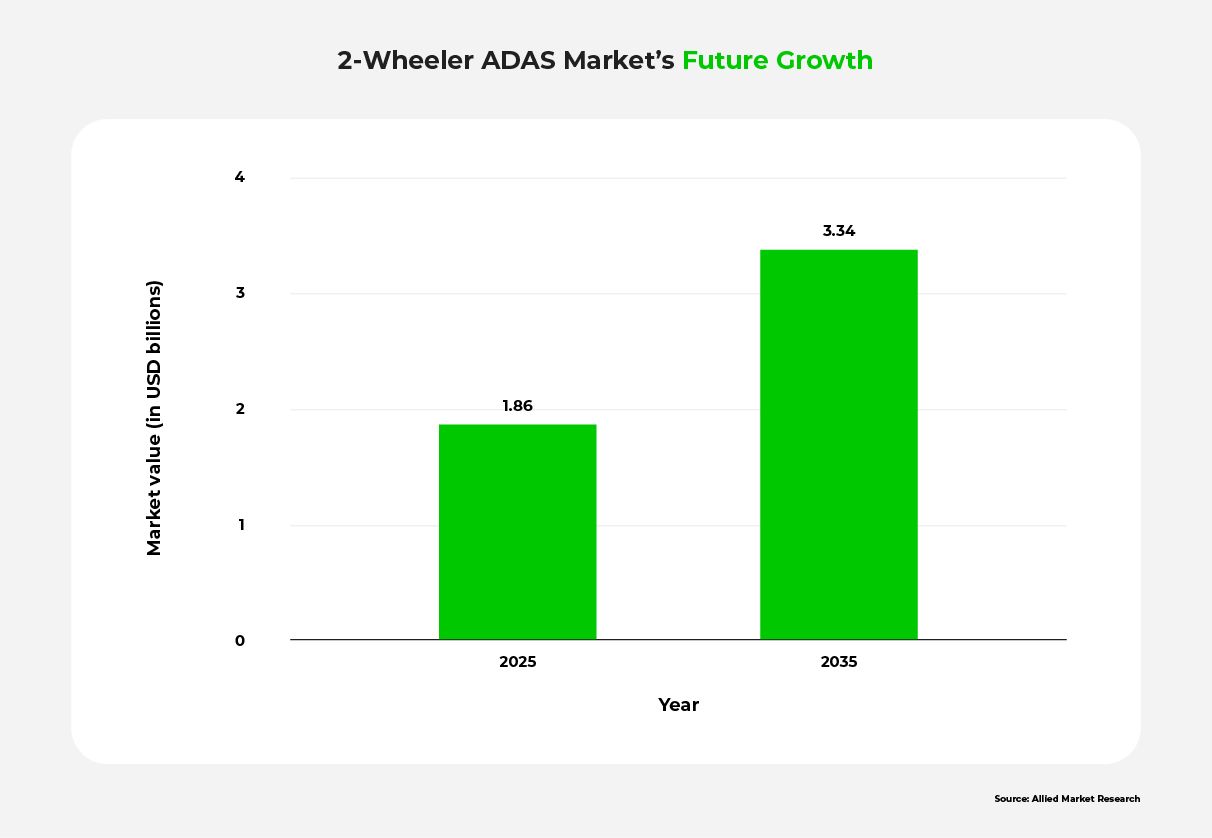
    ADAS comprises electrical and electronic components that collect external and internal data to analyze and provide real-time driving insights, enhancing safety and driver experience. By 2035, the two-wheeler ADAS market is projected to reach USD 3.34 billion, marking a 6.3% annual growth. The Asia-Pacific region is expected to lead with a 7.3% growth rate between 2026 and 2035.

    A bar chart showing the 2W ADAS market growth

    Two-wheeler ADAS encompasses diverse technologies, including collision alerts, adaptive cruise control, parking features, camera-based vehicle sensors, human-machine interface, and blind-spot detection. An efficient OS synergizes these technologies, ensuring seamless interaction between sensors, electric control units (ECUs), gear assistors, and brakes.

    Leading players in India’s two-wheeler ADAS market include Spark Minda, Brakes India, BMW, Continental, Ducati, Garmin, Honda, Bosch, TVS Motor, Suzuki, and Yamaha. A key determinant of their market position is their OS’s power and efficiency.

    Significance of OS in Advancing 2-Wheeler EVs’ ADAS

    A two-wheeler ADAS OS seamlessly manages all hardware components and software programs, providing suggestions to drivers based on dynamic environmental factors without latency.

    Standards and protocols have been established for the OS, and these determine how the OS works and supports communication between components. Currently, the Automotive Open System Architecture (AUTOSAR) and the Connected Vehicle System Systems Alliance (COVESA) are well-known standards for four-wheelers, undergoing modifications to cater to two-wheelers.

    While two-wheeler ADAS in India is still nascent, upcoming innovations such as Minda’s AI-enabled Collision Avoidance Technology (CAT) and Continental’s low-cost radar (expected in 2024) show promise. However, to adapt to the growing two-wheeler adoption and curb accidents, policymakers, researchers, and manufacturers must collaboratively innovate, prioritizing safety features.

    Yet, developing a dedicated OS for 2-wheeler ADAS is full of challenges.

    Addressing the Challenges in OS for ADAS

    Two-wheeler ADAS implementation grapples with issues due to the vehicles’ small size, maneuverability in tight spaces, and the need for real-time responsiveness. Selecting the right sensors and an OS capable of seamlessly collating information and compatibility with hardware and software components is a difficult task.

    A list of challenges in 2W ADAS OS

    Hardware Limitations

    Embedding essential ADAS components, including braking systems, sensors, radars, and ECUs in the limited size of two-wheelers, without compromising affordability and efficiency, is challenging. Moreover, these systems must function without depleting electric vehicle (EV) batteries. Potential solutions include compact hardware, power management strategies, and improved battery technology.

    Real-Time Responsiveness

    Two-wheelers require ADAS to react quickly due to their maneuverability in tight spaces. Indian road congestion and the lack of clearly marked lanes compound this challenge. Optimized algorithms and high-speed data processing allow an OS to process surrounding information and issue commands quickly.

    Integration Complexities

    Currently, only a few ADAS technologies are in the pipeline for two-wheelers. Integrating multiple technologies, such as collision alerts, adaptive cruise control, and lane departure warning requires exceptional communication and coordination among hardware and software components. A modular approach, backed by standardized protocols, can reduce this integration complexity.

    The road to implementing two-wheeler ADAS is intricate, but innovation and standardization can tackle these challenges.

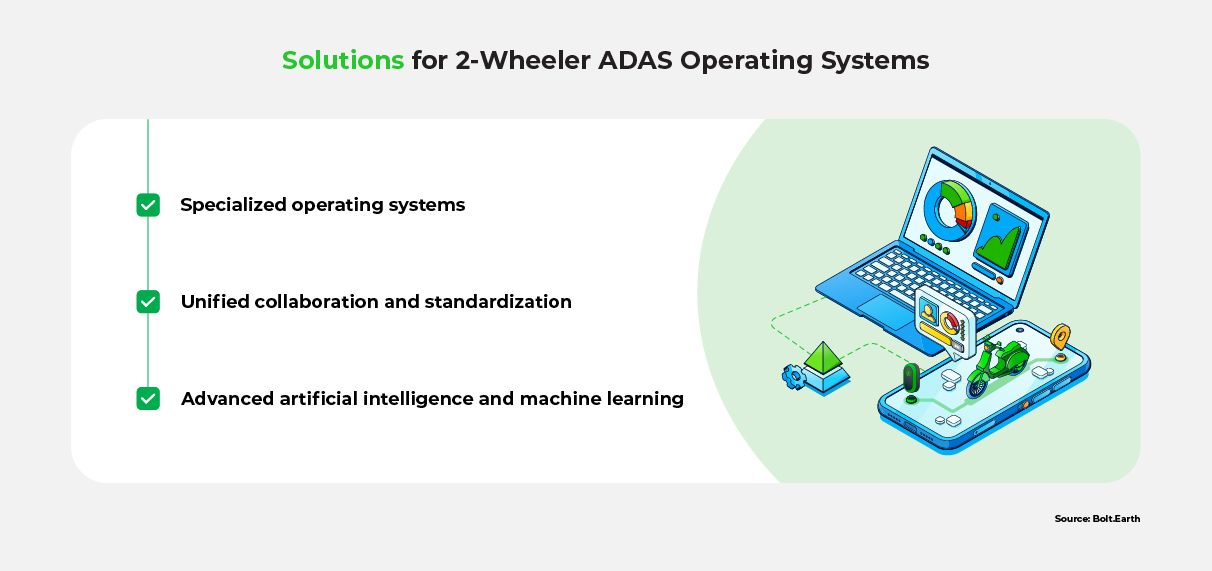
    ADAS OS Solutions

    Addressing the challenges highlighted earlier requires a concerted effort from all stakeholders that can lead to improvements in OS, seamless communication, and a modular approach that leverages technological advancements. Such a modular approach provides greater flexibility to change components based on user preferences and to add technological advancements.

    A list of solutions for 2W ADAS OS challenges

    Specialized OS

    While many companies are looking to use existing ADAS OS such as AUTOSAR and COVESA, which were designed for four-wheelers, it’s imperative to develop dedicated systems for two-wheelers. For instance, Continental is pioneering a two-wheeler ADAS system and planning to bring its safety products to Indian original equipment manufacturers (OEMs).

    Collaboration and Standardization

    Establishing standards and implementation requires a collaborative approach among stakeholders. Policymakers must create protocols for seamless communication, while two-wheeler manufacturers need to create power-efficient and compact hardware components. Automotive software developers should leverage emerging technologies to build a specialized OS that integrates ADAS. One such standard is the Motorcycle Safety Integrity Level (MSIL) in ISO 26262, which creates guidelines that align with the unique developmental processes and safety requirements of two-wheelers.

    Advances in Artificial Intelligence and Machine Learning

    Artificial intelligence (AI) and machine learning (ML) are redefining the automotive industry, having the potential to enhance the efficiency of 2-wheeler ADAS OS. These technologies continuously learn from data and can adapt to changing road conditions. Nagpur implemented an AI-driven ADAS to detect road hazards, including possible collisions, reducing road accidents.

    These solutions underscore the immense potential of developing and customizing a state-of-the-art OS for two-wheeler ADAS.

    Future Benefits of ADAS-Specific OS

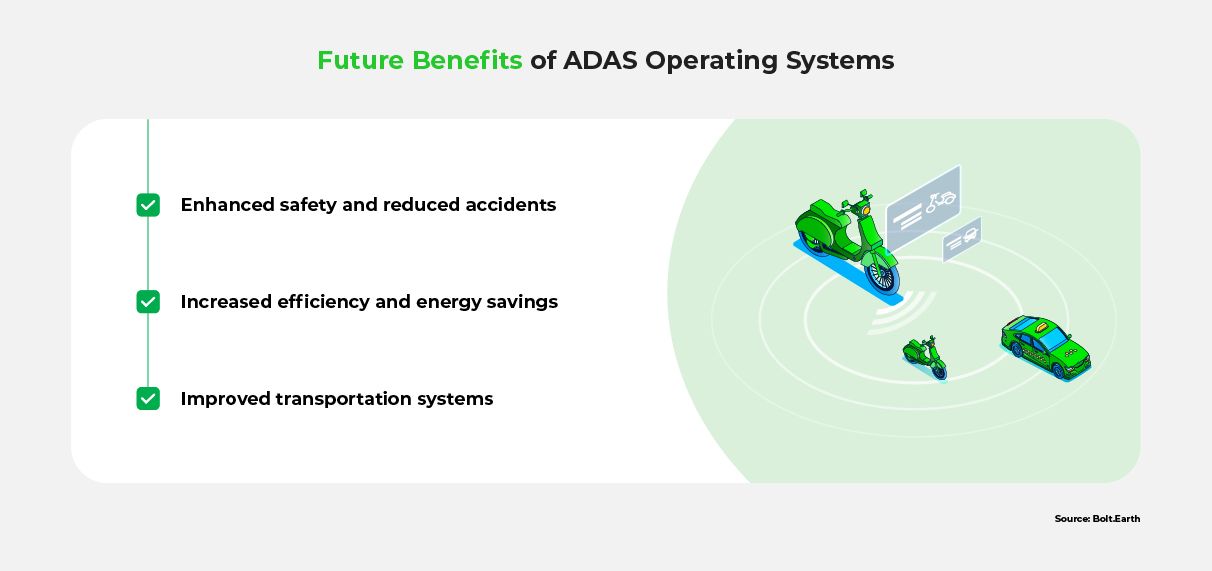
    Indian road conditions present distinctive challenges for two-wheeler riders. Developing an OS to power a unique ADAS will aid automakers in improving road safety, vehicle efficiency, and user driving experience. Such an OS-powered ADAS can have a far-reaching impact on smart cities, sustainable mobility, and the evolution of transportation systems.

    ADAS OS unlock a future of benefits for everyone involved

    Enhanced Safety and Reduced Accidents

    Two-wheelers are 30 times more prone to accidents than cars, and riders suffer from higher fatality and disability rates. Installing crash-avoidance systems, such as anti-lock brakes that are automatically triggered when there’s a possibility of a crash and warnings about fixed road objects and lane departure reduce collisions on national highways. Such ADAS requires a dedicated OS that can quickly collect surrounding data, predict a collision, and activate hardware components, curbing accident rates.

    Increased Efficiency and Energy Savings

    With the ongoing research in the two-wheeler segment, ADAS components must remain lightweight to avoid compromising EV efficiency. The integration of hardware components requires a dedicated OS that can offer fast communication, anticipate potential collisions, and adaptive cruise control. These developments can positively impact India’s environment, as two-wheelers account for 70% of all vehicles, and shifting to EVs with ADAS can reduce emissions, improve air quality, enhance cost-savings, and increase safety.

    Evolution of Self-Reliant Vehicles

    As cars incorporate advanced technologies, the demand for similar features in two-wheelers increases. This can even pave the way for autonomous bikes with self-balancing capabilities. Furthermore, ADAS can cater to skilled and novice riders, democratizing the advantages of technological innovations and reshaping urban mobility.

    ADAS and its underlying operating systems have the potential to redefine mobility, setting new standards in safety and efficiency.

    Unlocking the Future of Safety and Efficiency with ADAS

    ADAS provides heightened levels of safety for two-wheelers, alleviating road safety concerns in India. Despite existing challenges – from hardware component constraints to real-time responsiveness – these can be addressed with a tailored OS. Central to this transformation is the collaboration among stakeholders and fostering innovation in building ADAS-specific OS. The road ahead for two-wheeler ADAS is filled with potential, and each stride towards a better OS is a step closer to a safer, greener, and more efficient transportation future.

    For more information about the influence of operating systems in two-wheeler EV’s ADAS, please see the FAQ and Resources below!

    FAQ

    How do operating systems support two-wheeler EVs’ ADAS?

    Operating systems in two-wheeler EVs’ ADAS manage and control advanced features such as collision avoidance and adaptive cruise control. They coordinate information from sensors and cameras to make quick decisions for safer rides. Currently, there are no dedicated ADAS operating systems for two-wheelers, though there are many promising developments.

    How can enhanced operating systems improve two-wheeler EV safety?

    Enhanced operating systems in two-wheeler EVs improve safety by processing data from sensors and cameras faster. They enable features such as automatic braking and collision warning. These systems analyze road conditions and rider behavior, acting accordingly to avoid accidents. Faster responses and accurate predictions enhance rider protection as well.

    What collaborative efforts are being made to standardize ADAS operating systems for two-wheelers?

    Collaborative efforts are underway to standardize ADAS operating systems for two-wheelers. Industry leaders, manufacturers, and technology providers are working together to establish common platforms. Standards, including AUTOSAR and COVESA, are a good starting point to ensure compatibility and easy updates across different brands. Additionally, safety standards like ISO 26262, ISO 17409, ISO 12405, ISO 18243, and ISO 15118 ensure the reliability of two-wheeler ADAS.

    How do operating systems contribute to the evolution of sustainable mobility in two-wheeler EVs?

    Operating systems play a vital role in the evolution of sustainable mobility in two-wheeler EVs. They optimize energy usage, enhance battery management, and support regenerative braking. Also, they efficiently control power distribution and extend EVs’ range and overall lifespan, contributing to environmental benefits like reduced emissions and resource conservation.

    Are there specific operating systems specifically designed for two-wheeler ADAS?

    Currently, there are no specific operating systems available for two-wheeler ADAS. Leading companies such as Bosch modify AUTOSAR for two-wheelers, while others like Spark Minda and Continental want to implement specific ADAS features only through their existing operating systems. One company that’s offering a wide range of operating systems is Bolt.Earth, and its products can be customized for all EVs.

    What are the potential benefits of integrating advanced operating systems into two-wheeler EV ADAS?

    Integrating advanced operating systems with two-wheeler EVs’ ADAS offers significant benefits. It enhances real-time data processing for quicker responses to potential dangers on the road. This improves collision avoidance, adaptive cruise control, and overall rider safety. Additionally, seamless integration allows for regular software updates, ensuring that safety features remain up-to-date and effective over time.

    Resources

    National Highway Traffic Safety Administration: Advanced Rider Assistance Systems for Powered Two-Wheelers

    Understand how ADAS works for two-wheeler EVs.

    Hindawi: An Improved Deep Learning-Based Technique for Driver Detection and Driver Assistance in Electric Vehicles with Better Performance

    Discover how ADAS helps improve safety for EVs.

    Hitachi: Electric Drive and Control for Two-wheeled Vehicles to Protect Environment and Enhance Safety and Comfort

    Explore insights about ADAS for two-wheelers.

    The Motorcycle Industry of Europe: An In-depth Study on Detection of Two-wheelers by Advanced Driver Assistance Systems

    Learn how ADAS can benefit two-wheelers.

    The Federation of European Motorcyclists’ Association: CMC: ‘Motorcycles Must Be Included In Driver Assistance Systems’

    Know more about the ADAS expectations of motorcyclists.

  • The Role of OEMs in Driving Platform Integration within OS

    The Role of OEMs in Driving Platform Integration within OS

    In today’s dynamic auto industry, original equipment manufacturers (OEMs) are driving innovation and progress. Traditionally, they have designed, developed, and produced various components of internal combustion engine (ICE) vehicles. As the world shifts towards software-defined vehicles, however, their role is evolving to include building and deploying elements within the automotive operating system (OS) for a seamless user experience.

    Automotive OS forms the backbone of a car, managing and controlling functions including braking, infotainment, and safety. This means that OEMs must master increasingly complex car elements, such as sensors. Meanwhile, incompatibilities and poor harmonization among software car elements pose significant issues. If left unaddressed, these issues can hinder innovation and impede electric vehicle (EV) adoption, leading to environmental and economic setbacks.

    Within that context, this article explores the following questions:

    • How do OEMs contribute to designing, integrating, and ensuring compatibility among platform elements within automotive operating systems?
    • What challenges are involved in integrating platform elements within an automotive OS, and how can OEMs overcome them?
    • How can harmonization of platform elements within automotive OS transform the automotive industry by improving user experience, accelerating innovation, enhancing safety and security, and facilitating connected and autonomous vehicle technologies?

    The Current Landscape of Automotive OS Platform Elements

    The current landscape of automotive OS platforms is highly fragmented. Typically, OEMs manufacture some components, purchase some from partners, and build some through joint ventures. Once all the elements are ready, OEMs integrate them into a proprietary platform for a car.

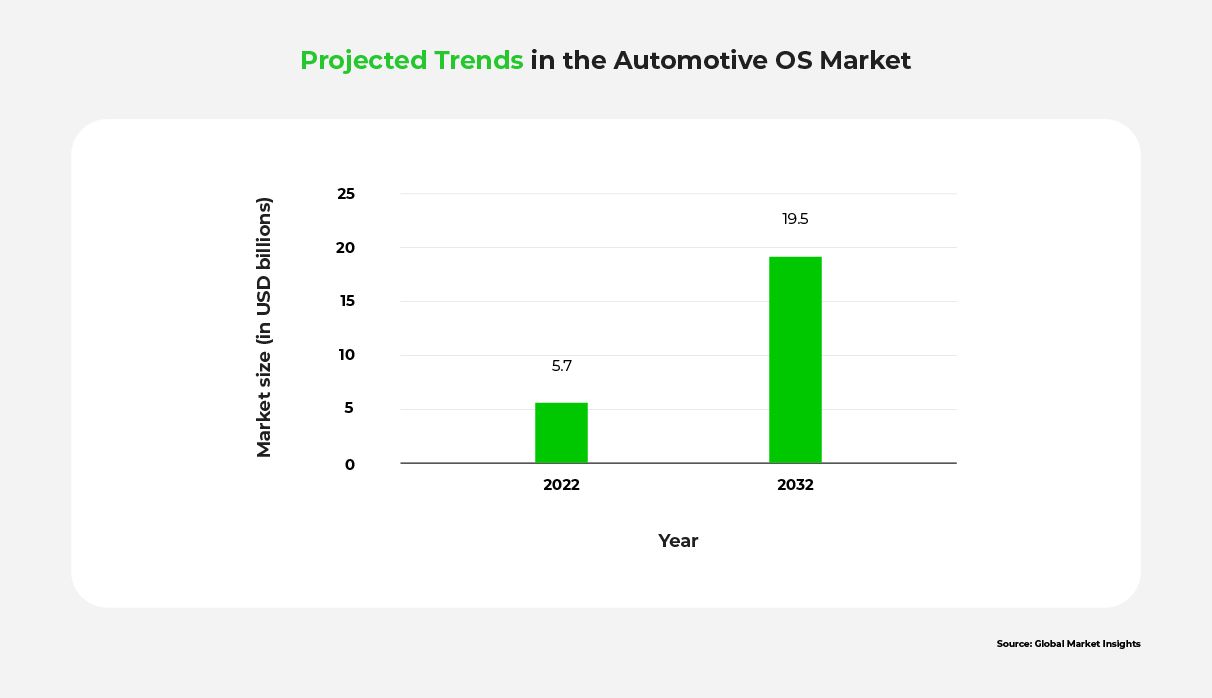
    Today’s leading players include Google’s Android Automotive and Apple’s CarPlay. As expected, Google’s platform integrates with Android phones while CarPlay integrates with iPhones. Meanwhile, Tesla’s proprietary operating system provides seamless connectivity for Tesla vehicles, and Blackberry’s QNX is steadily increasing its market share. Other prominent players include AGL, Baidu, BMW, Continental, COVESA, Ford, GM, Siemens, Benz, Toyota, Microsoft, and Volkswagen. The automotive OS market reached USD 5.7 billion in 2022, and is projected to increase to USD 19.5 bn in 2032 — an impressive annual growth rate of 13%!
    A chart showing the automotive OS market's projected growth from 2022 to 2032

    However, capitalizing on this high growth rate will not be easy for OEMs, given the rapid technological advancements, user demands, and lack of standard protocols across software platforms. In particular, the ever-growing number of software components and the need to communicate between in-car and cloud-based platforms further complicate software development. A promising solution to scale and overcome these impediments is to focus on harmonizing the different elements for cohesive functionality and greater synergy.

    The Need to Harmonize Platform Elements

    The existing fragmentation among automotive software platforms and standards poses a challenge for all EV stakeholders, particularly OEMs. Traditional gasoline-powered vehicles were primarily hardware-driven, but current and future vehicles are increasingly replacing hardware with software to control and manage various functions. As a result of this shift, OEMs have been investing more resources to adapt their applications and services to work on different OS platforms.

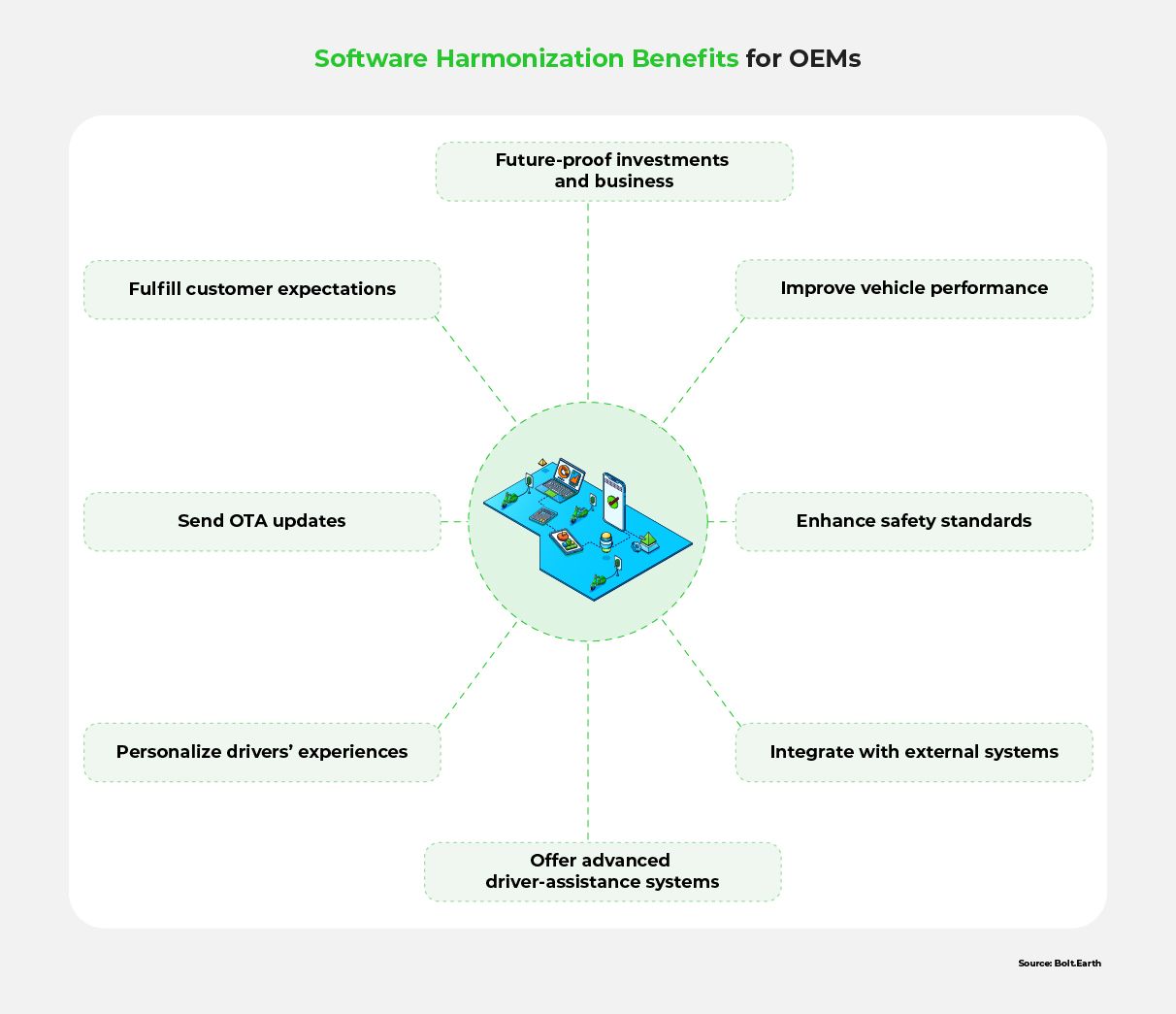
    As vehicle models proliferate and software functions become more complex, however, these investments lose scalability. A better option is to prioritize integrating and harmonizing disparate software elements. By adopting such a strategy, OEMs can:

    An infographic detailing how OEMs can benefit from harmonizing disparate software elements

    To realize these benefits, it is crucial for OEMs to adapt their strategies and priorities toward harmonization.

    The Role of OEMs in Platform Elements

    Given OEMs’ pivotal role in building software systems, they have the unique opportunity to turn the existing harmonization challenges into beneficial opportunities. Here are various elements that OEMs can enhance to propel growth in the automotive OS domain while focusing on scalability and security.

    Designing and Integrating Platform Elements

    Design is the first step in software development, and, by prioritizing harmonization, OEMs can ensure that they create designs based on hardware and software components that work cohesively. From infotainment systems and connectivity modules to sensors and control units, OEMs can design a system that enables smooth connectivity and integration.

    Ensuring Compatibility and Interoperability

    In the world of software-defined vehicles such as EVs, cars are seen as devices. Just as computers and smartphones need compatible apps, cars need systems that can communicate and collaborate. Standards like AUTOSAR attempt to ensure this interoperability, but each electronic control unit (ECU) is still built individually. OEMs must strive to use common protocols that ensure compatibility with other software apps and interoperability with diverse hardware components.

    Collaborating with Software and Technology Partners

    Collaboration with software and technology partners enables OEMs to leverage external expertise with minimal upfront research costs. With this approach, OEMs can enhance their software capabilities, accelerate innovation, and keep pace with rapidly evolving technologies. Sharing knowledge and experience among different stakeholders of software-defined vehicles can lead to creating a universally-compatible OS with cutting-edge features, robust security, and a superior user experience.

    Conducting Testing and Validation

    Rigorous testing and validation of platform elements within the automotive OS give OEMs the opportunity to verify functionality, performance, and safety standards, and to identify and address any potential issues or vulnerabilities before vehicles reach consumers. By adhering to stringent testing protocols, OEMs can ensure that the platform elements, which include electronic control units, sensors, IoT units, and mobile apps, meet the highest quality standards and deliver a reliable and secure user experience.

    Providing Ongoing Support and Updates

    Providing ongoing support and software updates, along with addressing customer feedback and preferences, are important processes which OEMs must plan in advance. In particular, cybersecurity best practices must be geared for EVSE devices, communications with EVs, and upstream devices like cloud, third-party apps, and software of grid operators. By continuously monitoring and addressing likely security threats, OEMs can release timely bug fixes, security patches, and feature enhancements to adapt to evolving user needs and ensure the long-term performance and functionality of the OS.

    Collaborating with Industry Stakeholders

    OEMs must work with industry stakeholders, including regulatory bodies and standards organizations, to shape industry standards, protocols, and guidelines for interoperability and compatibility among diverse vehicles and systems. These efforts can empower OEMs to drive the overall advancement of the automotive OS landscape and ensure a cohesive and standardized approach to platform integration.

    Although many OEMs are working towards harmonization, many integration challenges stand in the way.

    OEMs’ Platform Integration Challenges

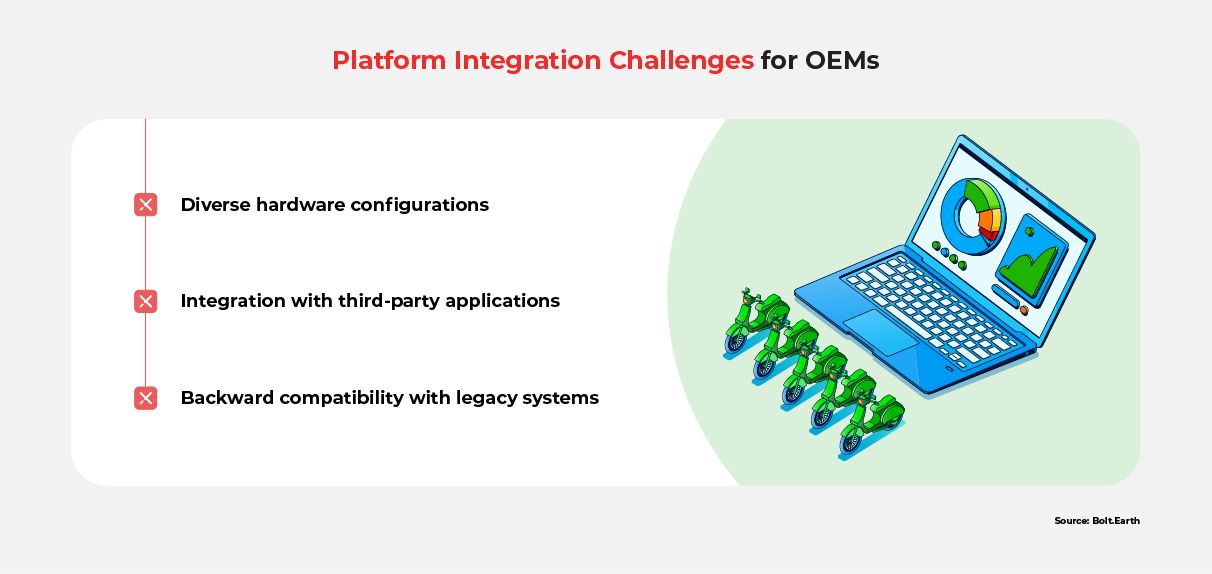
    All emerging technologies create complexities, and software-defined cars are no exception. Advances in automotive software are not only enhancing next-gen cars’ capabilities, but also creating numerous integration challenges for OEMs.

    Diverse Hardware Configurations Across Vehicles

    Each vehicle model and brand may have unique combinations of processors, memory capacities, connectivity modules, and sensor configurations. These variations among car models make it difficult for OEMs to design software that works seamlessly across diverse hardware configurations. More importantly, such incompatibilities can lead to safety and security issues. As a result, OEMs must continue to invest resources in developing software that can adapt to varying computing capabilities while efficiently utilizing available hardware resources.

    Compatibility Issues with Third-Party Applications

    Third-party applications, like navigation systems or infotainment platforms, are often developed by different software providers, each with their own interfaces, data formats, and compatibility requirements. To integrate them, OEMs must perform compatibility testing for smooth interactions between the OS and third-party software. Even with extensive testing, however, compatibility issues can still arise when OS updates or changes impact the functioning of third-party applications. A possible solution is for OEMs to collaborate closely with software partners to maintain compatibility and address any issues.

    Compatibility Issues with Legacy Systems

    OEMs face challenges when integrating new platform elements with legacy systems in older vehicles. Legacy systems may have different communication protocols, software architectures, and hardware limitations. Ensuring backward compatibility with legacy systems can be complex and may impose limitations on system updates and advancements. OEMs need to carefully balance the need for backward compatibility with the desire to introduce new features and technologies, as it may be necessary to maintain support for legacy systems while gradually phasing them out in favor of more advanced platform elements.

    An infographic listing the challenges that OEMs may encounter while working towards platform integration

    Addressing the above challenges is difficult, but not impossible. With the right strategy and concerted effort, OEMs can overcome them.

    Overcoming OEMs’ Platform Integration Challenges

    OEMs need innovative solutions and strategic approaches to overcome their platform integration challenges. Some key strategies that OEMs can use are:

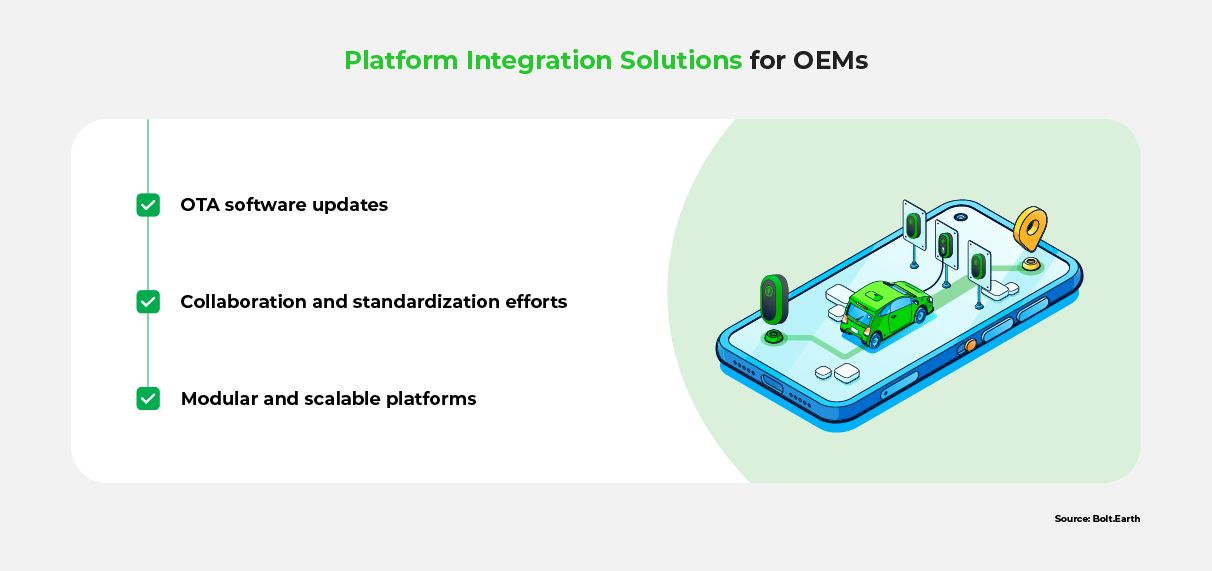
    Over-The-Air (OTA) Software Updates

    Through over-the-air (OTA) updates, OEMs can remotely deliver new software features, security enhancements, and bug fixes to vehicles. This contributes to user convenience by minimizing the need for in-person servicing. Additionally, OTA updates offer cost savings for OEMs by reducing recall expenses and enabling swift deployment of critical updates. They can also resolve compatibility issues with third-party applications and legacy systems. However, OEMs must implement robust security measures and rigorous testing and validation processes to ensure the reliability and stability of OTA updates before deployment.

    Collaboration and Standardization Efforts

    Collaborative efforts among OEMs, software companies, and technology providers are critical for establishing common standards and specifications for platform integration. These industry stakeholders can come together to define common interfaces, protocols, and data formats that promote interoperability and compatibility across different vehicles and systems. Industry alliances or organizations such as the COVESA (formerly GENIVI) Alliance or the Automotive Grade Linux (AGL) project, which focus on ensuring harmonization within automotive OS, are working on such standards. Additionally, collaborations and partnerships foster knowledge sharing, promote best practices, and enable the development of robust and harmonized solutions for automotive OS.

    Modular and Scalable Platforms

    Building a modular architecture makes it easy for OEMs to integrate new platform elements without disrupting the entire system. They can add or replace components with minimal impact on the overall system, ensuring flexibility and scalability. Application programming interfaces (APIs) are vital in enabling seamless integration of third-party applications and services. Well-documented and standardized APIs facilitate interoperability among different software components, enabling easy integration and enhancing the overall user experience. These modular designs also promote scalability, so existing hardware can adapt to evolving software configurations, processing capabilities, and future technological advancements.

    An infographic listing solutions for overcoming the challenges associated with platform integration

    The above solutions can significantly assist OEMs, and the larger auto industry, in leveraging the benefits of software development and technological advancements.

    The Impact of Harmonized Platform Elements Within Automotive OS

    By driving the harmonization of platform elements, OEMs can shape the future of the entire auto industry as a whole. For example, their efforts can promote:

    Faster Development and Deployment of New Features

    Platform harmonization permits OEMs to streamline the development and deployment of new software features and updates. A harmonized platform provides a standardized framework for software development, thereby reducing the complexity and time required to develop new features across different vehicle models and brands. This enables OEMs to accelerate innovation, improve their time-to-market, and more efficiently deliver advanced features and functionalities to customers.

    Enhanced Safety and Security

    Harmonized platform elements lead to improved safety and security of vehicle systems and data. Standardized security protocols and robust software architectures enable OEMs to establish a strong foundation for cybersecurity. Additionally, harmonized platforms enable faster deployment of security patches and updates that can enhance the overall security posture of vehicles. Through such efforts, OEMs can build trust with customers and prioritize their well-being.

    Facilitation of Connected and Autonomous Vehicle Technologies

    In a harmonized platform, sensors, connectivity modules, and control units work together to provide a superior user experience. Furthermore, such harmonization enables the automotive OS to efficiently process, analyze, and share data for real-time traffic updates and predictive maintenance. These features enhance the usability of vehicles and can lead to their wider adoption.

    All of the above benefits create a unified ecosystem that empowers society to enjoy the positive environmental and economic effects of software-defined vehicles.

    Fostering a Unified Approach Towards EV Software

    The harmonization of platform elements holds the potential to create an automotive landscape that improves users’ driving experience by providing them with cutting-edge technology. Moreover, harmonized platform elements enhance vehicle systems’ and data’s safety and security. Though many challenges exist in harmonizing diverse car elements, OEMs can overcome them with the right strategy and active collaboration with other stakeholders to implement standardized security protocols and robust software architectures.

    Additionally, with seamless communication and interoperability among different vehicle systems and external networks, OEMs can unleash the full potential of these technologies. This can enable the creation of advanced features, improve efficiency, and foster a more interconnected and intelligent automotive software ecosystem, as well as economically benefiting OEMs by bolstering car sales and providing a competitive advantage. As the industry evolves, OEMs will remain at the forefront, strengthening a unified approach toward EV software to realize a connected, autonomous, and electrified future.

    For more information about harmonization, please see the FAQ and Resources below!

    FAQ

    How do OEMs ensure compatibility and interoperability among different platform elements?

    OEMs can implement standardized protocols to ensure compatibility and interoperability. They can also work with other players to establish guidelines and specifications for enabling seamless communication and integration between various components and systems.

    How does harmonization enhance the user experience in vehicles?

    Harmonization of car elements leads to consistent and intuitive user interfaces, standardized features, and interoperability with third-party applications and services. Overall, it promotes a unified and cohesive experience, enabling users to easily navigate and utilize various functions and technologies within the vehicle.

    How do OEMs collaborate to achieve platform integration?

    OEMs can collaborate with software companies, technology providers, and industry organizations to establish common standards and specifications for platform integration. This collaboration involves knowledge sharing, joint research and development, and participation in industry alliances or organizations dedicated to promoting harmonization within the automotive industry.

    How do OTA updates contribute to seamless software integration?

    OTA updates enable the remote delivery of software updates to vehicles, eliminating the need for physical changes to hardware components. Besides adding to user convenience, OTA updates also make it easy to access the latest features and build a secure system.

    What security measures are in place to protect against vulnerabilities in platform integration?

    Security measures including encryption secure data transmission while authentication mechanisms like multifactor authentication ensure authorized access to data and systems. Additionally, code signing to verify software integrity, intrusion detection systems to identify potential threats, and continuous monitoring for timely identification and response to security incidents can protect cars from cyberattacks.

    How does platform harmonization advance connected and autonomous vehicle technologies?

    Platform harmonization enables seamless communication and interoperability among different vehicle systems and external networks. Harmonized platforms allow vehicles to exchange data with infrastructure, other vehicles, and cloud-based services. Such an approach can ease the development and deployment of advanced features.

    Resources

    McKinsey: The Case for an End-to-End Automotive-Software Platform

    Discover how software can transform the automotive industry.

    EE Times: Perspectives on Automotive Operating Systems

    Gain a detailed understanding of automotive operating systems.

    Automotive World: How can OEMs Accelerate the Software-Defined Mobility Revolution?

    Learn about OEMs’ impact on SDV adoption.

    European Commission: Technical Harmonization

    Find out about Europe’s technical harmonization guidelines, which provide a model for other countries.

    Center for Automotive Research: Global Harmonization of Connected Vehicle Communication Standards

    Explore the latest efforts to harmonize vehicle elements.

  • Bolt.Earth Brings Global EV Strategies to EICMA 2023

    Bolt.Earth Brings Global EV Strategies to EICMA 2023

    Bolt.Earth, a leading global innovator of electric vehicle (EV) solutions, is headed for the 2-wheeler industry’s most important event of the year: the glamorous 2023 International Motorcycle and Accessories Exhibition (EICMA), in Milan, Italy! Bolt.Earth plans to showcase its groundbreaking technology by co-hosting stalls with two of its partners, preeminent electric scooter manufacturers OKLA Global and Bafang subsidiary T&D.

    The rapid growth of EV adoption has ignited demand for scalability, agility, and interoperability in tech for EVs. Bolt.Earth is working towards making it all possible via one centralized platform. The company currently partners with 8 of India’s top 10 EV-2W OEMs, has established a vast charging network with 30k+ charging points across 1100 cities, and has 150k+ active users on its app.

    Meanwhile, the startup has started making waves in international waters — with dynamic collaborations with established 2W automotive firms, in order to accelerate cleaner mobility in emerging markets.

    Bolt.Earth also provides solutions and services for EV users, fleet operators, and dealers, and empowers original equipment manufacturers (OEMs) to accelerate their go-to-market timelines. In addition to charging solutions, its comprehensive array of offerings includes integrated cloud-based software, user-friendly speedometers, allied services, and financing and leasing options to facilitate EV adoption.

    All of these offerings strategically position Bolt.Earth to address the increasing demand for an agile, scalable, interoperable, and universal EV ecosystem. By employing a strategic perspective, Bolt.Earth has successfully initiated global operations, driven by its mission to provide accessible and sustainable automotive tech solutions for EV 2-wheelers worldwide.

    To better understand Bolt.Earth’s strategy for building a sustainable auto revolution, this article will address three questions:

    • What role will Bolt.Earth play in the upcoming EICMA motorcycle show, and how will it benefit EV ecosystems in emerging markets?
    • How is Bolt.Earth strategically implementing innovative technology, including the powerful Bolt.Earth OS, to help international partners move towards software-enabled EVs?
    • Why does Bolt.Earth’s global expansion hold broad industry implications?

    Bolt.Earth at EICMA: What’s on Display

    Bolt.Earth looks forward to introducing its transformational technology to the 2-wheeler world at EICMA!

    The company takes pride in offering cutting-edge EV tech products that center on its proprietary EV operating system (OS) — the core driving force behind intelligent and well-connected software-defined vehicles (SDVs).

    In addition to its OS, Bolt.Earth provides a comprehensive range of innovative EV charging products designed with efficiency and sustainability in mind. These chargers are compatible with all EV models and promote clean energy practices. Bolt.Earth further extends its commitment to user convenience with a well-developed mobile app for finding EV charging points and charging EVs.

    Here’s a detailed look into the key features of Bolt.Earth’s various offerings.

    Infographic listing the key features Bolt.Earth offers

    State-of-the-Art 2-Wheeler Integrations

    Bolt.Earth OS is a comprehensive and interconnected platform technology that perfectly integrates across various EV components and devices. This provides a unified and efficient user experience. For example, embedded smart speedometer clusters monitor and control various EV components like the Battery Management System (BMS), controller, motor, and vehicle peripherals.

    By seamlessly integrating Bolt.Earth OS-powered solutions into their offerings, original equipment manufacturers (OEMs) and distributors can effortlessly tailor the EV driving and charging experience to the unique preferences of each user. Bolt.Earth OS can also help OEMs by streaming EV data to the cloud to enable a deeper understanding of customer needs, and can upgrade new features accordingly through over-the-air (OTA) updates.

    Bolt.Earth OS products’ versatile compatibility has led to many successful collaborations between Bolt.Earth and various OEMs. For example, Kyte Energy, a leading electric scooter maker in India, has leveraged Bolt.Earth’s technology to offer a comprehensive suite of EV charging features through its mobile app. Meanwhile, BattRE has incorporated Bolt.Earth’s speedometer clusters into its cutting-edge electric 2-wheelers. Such partnerships have resulted in the development of technologically advanced and user-friendly EVs, mobile apps, and EV charging stations.

    Another key advantage of Bolt.Earth OS is its ability to synchronize data, which enables users to optimize performance and ensure uninterrupted communication between different EV functionalities. This versatility extends to compatibility with any vehicle management system (VMS) and fleet management system (FMS) to optimize EV health and performance. In addition, Bolt.Earth OS is interoperable with all EV charging points and other technological components within the EV ecosystem.

    Designed with fleet operators in mind, Bolt.Earth OS also offers integrated EV charging infrastructure functionality, and FMS-optimized telemetry capabilities including real-time monitoring and continuous data collection.

    Diverse EV Charging Solutions

    Bolt.Earth offers a range of EV charging solutions, including the innovative Bolt.Earth LITE. This slow charging point caters to 2-, 3-, and 4-wheelers to ensure compatibility with all EV models, and even offers protection against power and voltage surges. Its resilience also extends to guarding against overheating and short circuits.

    Meanwhile, Bolt.Earth’s Blaze AC and Blaze DC fast-charging solutions provide flexible, efficient EV charging options to cater to every user’s needs. The Blaze chargers’ state-of-the-art features include:

    Blaze DC

    • On-the-go EV charging, enabling 50km range in just 30 minutes
    • IOT capabilities, for easy locating, scanning, and EV charging
    • In-app energy consumption monitoring
    • Ultimate customizability and adaptability; the charger can use any CAN-enabled connector, and can be scaled up to 12kW
    • IEC 61851-6 compliance, for the safest EV charging experience

    Blaze AC

    • Wireless energy metering
    • Intuitive charger status and energy display
    • IP65 water resistance
    • Included gun holder
    • Compatibility with a wide range of electric vehicles

    Bolt.Earth’s EV charging solutions are characterized by their remarkable versatility. They seamlessly adapt to different power sources, from conventional electrical grids to sustainable renewable energy systems. This compatibility supports the use of sustainable and eco-friendly EV charging practices. They are also innately compatible with offerings from all OEMs, making them a versatile and invaluable solution within the broader EV ecosystem.

    Overall, Bolt.Earth’s EV charging solutions are transforming EV ownership by enabling users to conveniently charge at any Bolt.Earth station and its partnering stations, without worrying about compatible chargers or standards. User-friendly interfaces make for a hassle-free EV charging experience, while the fast EV charging capabilities minimize wait times. Comprehensive safety measures are integrated to guarantee a secure and worry-free EV charging experience as well. Moreover, these products exhibit agility and scalability to align with emerging trends in renewable energy.

    Virtual Reality Experience

    Bolt.Earth is excited to offer EICMA attendees the opportunity to experience the practical applications of Bolt.Earth OS in immersive VR. Visitors to participating EICMA stalls can try out VR headsets to gain a firsthand understanding of Bolt.Earth OS’ user-friendly interface and advanced functionalities, making the technology accessible to everyone.

    By using the VR headsets, users can get a preview of enjoying the ultimate riding experience with Bolt.Earth, and envision their own role in a greener future. They can see how Bolt.Earth EV charging points work, and how Bolt.Earth OS clusters integrate with electric 2-wheelers. In particular, the VR experience showcases Bolt.Earth OS notifications about navigation, battery level, receiving a call, and other essential information.

    This VR experience isn’t limited to potential users; it’s a valuable resource for partners and stakeholders as well. It effectively showcases the functionalities, user interface, and advantages of Bolt.Earth’s integrated OS solutions in an immersive experience, helping OEMs gain a deeper appreciation of their technology and potential to transform the global EV industry.

    The Bigger Picture: Bolt.Earth’s Global Expansion Strategies

    Not only is Bolt.Earth poised to make an exciting splash at EICMA, it has diligently laid the groundwork for successful global progress. Bolt.Earth fully understands and is prepared to address the intricate interoperability challenges inherent in the expansion of the international EV ecosystem. Bolt.Earth’s versatile, multi-compatible offerings play a crucial role in resolving these challenges. To promote their adoption, Bolt.Earth is forging strategic partnerships with local stakeholders and industry leaders to accelerate successful market entry and expansion.

    The following key initiatives are also boosting Bolt.Earth’s global footprint.

     Infographic illustrating detailing Bolt.Earth's global expansion strategies

    Regulatory Navigation and Compliance

    Navigating international regulations can be tricky. To address this challenge, Bolt.Earth has established a dedicated team proficient in monitoring and adapting to evolving legal frameworks worldwide. This team ensures that Bolt.Earth’s products are up-to-date with the latest regulatory changes and compliance requirements.

    Moreover, Bolt.Earth proactively engages with local authorities, industry associations, and regulatory bodies to ensure compliance while providing inputs to standardize and streamline regulatory processes.

    Technological Adaptation and Innovation

    In tandem with navigating compliance, Bolt.Earth is also investing heavily in research and development to cultivate an adaptable tech ecosystem capable of integrating with various EV models and infrastructure specifications. Recently, the company raised $20 million in funding to support expanding Bolt.Earth worldwide.

    Bolt.Earth is also developing cutting-edge smart EV charging technologies, apps, and speedometer clusters that excel in both efficiency and interoperability with diverse EV models and mobility landscapes. A strong emphasis is placed on creating user-friendly interfaces that enhance owners’ and drivers’ overall EV experience. Above all, Bolt.Earth takes a need-driven approach to ensure its technology remains relevant and valuable to users globally.

    Market-Specific Customization

    A key aspect of Bolt.Earth’s global expansion strategy is its ability to customize existing products to cater to regional preferences and demands. Most notably, by providing a versatile range of OS speedometers compatible with both lower-cost and premium 2-wheelers, Bolt.Earth enables OEMs to serve every consumer segment. On the EV charging side, Bolt.Earth is working to strategically provide convenient and efficient solutions so that on-the-go EV users, residential consumers, businesses, and fleets can all transition smoothly to electric mobility.

    This dedicated focus on market-specific customization reduces entry barriers, allowing EV OEMs to swiftly enter new markets and provide convenient, accessible, and efficient electric 2-wheeler solutions to every customer.

    In all, Bolt.Earth’s multipronged approach to global expansion includes adherence to local and national regulations in different countries, investments in research and development, and a steadfast focus on market-specific customization. These collective efforts position Bolt.Earth to leave a lasting impact on the global EV market.

    Bolt.Earth’s Expanding Map

    Bolt.Earth has made progress towards establishing a robust and user-friendly EV ecosystem in promising international markets. Notably, regions like Thailand, Vietnam, and Indonesia hold significant potential for EV adoption, but face challenges such as gaps in EV charging infrastructure. Bolt.Earth’s global presence has expanded to these countries to lower barriers to EV adoption. At EICMA, Bolt.Earth looks forward to introducing its offerings to potential partners beyond the Asian shores.

    Specifically, Bolt.Earth is focusing on deploying smart EV charging technologies in international markets. These technologies optimize the EV charging network. EV owners can benefit from Bolt.Earth’s advanced EV charging features like remote EV charging management, dynamic pricing, and load balancing, all of which can make the EV charging process convenient and cost-effective.

    Bolt.Earth is also collaborating with local power grids to establish a seamless and reliable EV charging network. This integration ensures that the EV charging infrastructure functions with existing power sources to prevent grid congestion. In turn, this integration will strengthen the stability and reliability of power grids and will build confidence in the minds of EV owners. Additionally, Bolt.Earth is actively including renewable energy sources in the EV charging infrastructure. This expansion reduces the carbon footprint and contributes to a more sustainable future.

    These efforts in select international markets reflect Bolt.Earth’s vision to establish an efficient, sustainable, and user-friendly EV charging network. Throughout this process, Bolt.Earth is cultivating new opportunities for partnerships and collaborations with various stakeholders across the global EV market.

    Looking Ahead at EICMA: Global Expansion Opportunities

    Bolt.Earth’s global presence is creating a transformative opportunity for OEMs worldwide as the company showcases the immense potential of its well-curated tech ecosystem for EV 2-wheelers to widen adoption and increase access to sustainable EV charging infrastructure. By attending EICMA, Bolt.Earth will advance its goals by taking its place within the international 2-wheeler industry.
    Infographic showcasing Bolt.Earth's vision for global expansion opportunities

    Revenue Acceleration through Global Outreach

    International expos like EICMA provide a way to accelerate growth and revenue for both exhibitors and attendees. These events allow all stakeholders to ride the EV wave and contribute to positive change within their respective countries. OEMs, third-party app developers, and other players in the EV ecosystem can partner with Bolt.Earth to tap into a growing two-wheeler customer base.

    Spearheading Technological Advancements on the Global Stage

    With a wide range of EV charging solutions, a comprehensive app, and a universal OS, Bolt.Earth is emerging as a global player in the overall EV tech space. More specifically, its commitment to research and development and its 2W offerings are rapidly establishing it within the European 2-wheeler market. As Bolt.Earth plans to demonstrate at EICMA, such initiatives are spearheading the future of sustainable transportation solutions.

    Driving Positive Ecosystem Transformation

    As Bolt.Earth goes global with its sustainable EV charging solutions, it is bringing about substantial environmental benefits. Its presence at EICMA and other international expos helps raise awareness about 2Ws’ place within the holistic EV ecosystem. Through these efforts, Bolt.Earth is driving a positive transformation in the way the world thinks about transportation.

    In all, Bolt.Earth is contributing to a greener and more sustainable future for all through its initiatives in EV charging.

    In Conclusion

    Bolt.Earth is moving forward with one approach: to change how people perceive EVs. Through the establishment of an inclusive ecosystem, they are not merely promoting the widespread adoption of electric vehicles, but also establishing a worldwide standard for software-defined EVs. Bolt.Earth’s mission goes beyond the concept of “Make in India” — it’s about “Innovate in India and Craft for the Entire World.”

    _Join Bolt.Earth at EICMA to experience cutting-edge tech trends for EV 2-wheelers!_

    _Booth C-49 | Hall 14 & Booth I-05 | Hall 22, Rho Fiera Milano Exhibition Centre, Milan | 7th – 12th November_

    To learn more about Bolt.Earth’s international roadmap, please see the FAQ and Resources below.

    FAQ

    How will international partnerships enable Bolt.Earth to accelerate e-mobility goals on a global level?

    By forging partnerships with EV stakeholders worldwide, Bolt.Earth’s international team can not only expand the company’s presence, but also gain further insight into, and ensure alignment with, the values and needs of diverse markets. As a result, Bolt.Earth will be able to optimize its strategic offerings to most efficiently and effectively support every aspect of the emerging global EV ecosystem.

    What is the significance of Bolt.Earth’s global journey for its future growth?

    Bolt.Earth’s global journey is significant as it enables access to new markets, promotes partnerships, and positions the company as a leader in sustainable EV charging solutions. International expansion contributes to revenue diversification and accelerates the adoption of eco-friendly mobility, further solidifying Bolt.Earth’s presence in the evolving global landscape of electric transportation.

    How does Bolt.Earth inculcate innovation and adaptability in its global expansion strategies?

    Bolt.Earth boosts innovation and adaptability through investments in research and development, creating smart EV charging solutions, and establishing strategic partnerships with local stakeholders. These initiatives allow Bolt.Earth to tailor its offerings to diverse markets, promoting the adoption of sustainable transportation solutions on a global scale.

    What cross-border partnership models does Bolt.Earth explore for global expansion?

    Bolt.Earth explores joint ventures, licensing agreements, and strategic alliances for global expansion. Joint ventures involve shared ownership and management of operations, allowing for local expertise. Licensing agreements grant the use of Bolt.Earth’s technology to foreign partners. Strategic alliances entail collaboration with industry leaders and local stakeholders, leveraging their knowledge and networks.

    Resources

    Infosys: Strategic partnerships to boost EV growth

    Get to know about the importance of strategic partnership in EV growth here.

    Forbes: Five Ecosystem Actions Required To Accelerate EV Adoption

    Discover the strategies required to accelerate EV adoption here.

    Gartner: International Expansion Strategy: How to Target Specific Countries

    Learn about how to target countries with the most growth potential here.

    Velocity Global: Top 5 Global Expansion Strategies

    Explore key strategies to promote global expansion here.

    South China Morning Post: Top Chinese EV makers like BYD poised for global expansion by 2030 thanks to ‘overwhelming’ cost advantages: UBS

    Learn how EV companies are expanding globally here.

  • The Power of Dynamic Electric Vehicle Operating System Integration

    The Power of Dynamic Electric Vehicle Operating System Integration

    Electric vehicles (EVs) represent a technological revolution with the potential to transform transportation. Central to this revolution are EV operating systems (OS), the digital intelligence behind the wheels driving the future of mobility. In recent years, these operating systems have rapidly advanced to dynamically integrate with hardware and software components, making EVs smarter, safer, and more efficient. As these OS continue to develop their integration capabilities, they hold the potential to reshape mobility in India and worldwide. However, several challenges must be addressed to realize this potential fully.

    In light of the growing importance of dynamic OS integration, this article will answer three questions:

    • Why is dynamic OS integration crucial in revolutionizing the next generation of EVs?
    • What challenges and obstacles affect the integration of OS in EV technology?
    • How do innovative solutions and advancements in OS impact the future of EVs?

    Current Landscape of EVs and OS Integration

    The OS is the core of any EV, facilitating seamless communication among the vehicle’s components, managing energy usage and distribution, and providing an interface for drivers to interact with the vehicle’s components. As the focus shifts to OS in this age of software-defined vehicles (SDVs), numerous players are entering the scene. The Foxconn-led Mobility in Harmony (MIH) consortium selected Blackberry’s QNX OS to power its EVs in Asia. Additionally, Android Auto introduced many features, allowing drivers to select their EV charging connector type, displaying real-time battery charge, and integrating with Google Maps.

    Despite these advancements, many limitations in EV OS need to be addressed to maximize the benefits of technological innovation. These limitations include slow real-time responsiveness, limited customization and compatibility options, potential cybersecurity issues, and restricted integration with third-party apps. This gap between the current state of EV OS and what is required underscores the importance of focusing on dynamic OS integration.

    Significance of Dynamic OS Integration in EVs

    The race to build next-generation EVs is intensifying, as almost every auto manufacturer strives to make EVs smarter and more energy-efficient with each new model. GM’s Ultium architecture and Mercedes’ MMA platform are introducing new features and enhancing efficiency through their OS. However, to captivate the interest of EV buyers, these next-generation vehicles must offer seamless, intelligent, and personalized experiences.

    Dynamic OS integration can deliver these experiences, making it highly relevant for future EV models. However, several challenges must be addressed to fully harness the power of this dynamic integration for EV drivers.

    Addressing Challenges in OS Integration

    To meet the growing demand for smarter and more efficient EVs, it’s essential to acknowledge the challenges associated with OS integration. Key challenges include complexities in integrating diverse hardware and software components and creating integrations that can scale effectively for the future while providing real-time insights into health and performance.

    A list detailing the various challenges faced in integrating operating systems into EVs

    Integration Complexity

    Integrating various cutting-edge technologies is a challenge in itself. Many hardware components, such as motor and battery systems, are manufactured by different companies and may have differing communication protocols. Similarly, the OS, which acts as the controller, may have incompatibilities with other software systems, including battery management, GPS, and user interface. The challenge lies in enabling these diverse hardware and software components to communicate and work together.

    A viable approach to achieving compatibility and interoperability is through standardized protocols. Although components may have different origins and functions, integration will be easy if they communicate using the same language. Such standardized interfaces and protocols can streamline integration processes.

    Real-Time Performance and Safety

    Real-time insights into performance and safety are crucial as they can warn drivers if they deviate from lanes or exceed the speed limit. Furthermore, this real-time information is fundamental to autonomous driving and Advanced Driver Assisted Systems (ADAS), as data from external sensors must be analyzed and actions made almost instantaneously. Ensuring such rapid responsiveness is a technical challenge.

    The key to addressing this challenge lies in a robust OS and standardization of how the OS communicates with EV subsystems. This simplifies the exchange of critical data from sensors to the vehicle’s central controller. To achieve this safety, EV automakers need a dynamic OS that can understand real-world contexts, detect anomalies, and initiate fail-safe protocols even during unforeseen road events.

    Scalability and Upgradability

    Scalability and upgradability are the other significant key challenges in OS integration. To keep pace with innovation, the OS must accommodate new hardware and software without disrupting the existing operations. This seamless integration necessitates an OS that can scale easily to leverage emerging technologies.

    To address this challenge, it’s essential to anticipate the likely technological innovations over the next decade and develop an OS that can dynamically accommodate them. A good way to stay informed of upcoming technological trends is to read thought-leadership blogs, examine research papers, and analyze utilization and marketing data related to EVs. Adopting a modular approach to OS architecture can make it scalable, as new components can be integrated as needed.

    Over-the-Air Updates

    Over-the-air (OTA) updates are an integral part of the next generation of SDVs. These updates enable manufacturers to introduce new features and fix existing problems without requiring a complete overhaul. While OTA updates are convenient, they also present new challenges, particularly in cybersecurity, as cybercriminals can easily intercept these updates and add malicious code and risks for data corruption due to poor Internet connectivity. Incompatibility with existing systems, interference with other vehicle systems, and excessive reliance on networks are other potential drawbacks of OTA updates.

    While these challenges are daunting, they aren’t impossible to overcome. However, overcoming these obstacles requires a revolutionary approach.

    Revolutionary Approaches to OS Integration in EVs

    The road to a better driving experience requires a revolutionary approach that reimagines the role of the OS as a dynamic entity, evolving and integrating with other vehicle components to leverage emerging technologies. Along with dynamic OS integration, the use of artificial intelligence (AI) and machine learning (ML) can infuse intelligence into real-time decision-making, optimize energy usage, predict maintenance needs, and personalize driving experiences.

    A list outlining the different approaches to integrating operating systems in EVs

    Dynamic OS

    The EV OS must seamlessly adapt to new hardware configurations, software updates, and user needs. This evolutionary nature ensures that rigid hardware and software limitations do not confine EVs but can capitalize on upcoming technologies and benefit users.

    Dynamic OS enhances energy efficiency by distributing and using energy based on real-time demands, simplifies the addition of new features without a complete system overall, and elevates personalization to new heights, all of which can expand EV adoption.

    AI Integration

    AI is more than just a technology; it represents a paradigm shift that infuses intelligence into every aspect of EV operation. AI and ML algorithms can analyze extensive datasets from sensors, traffic patterns, and historical behavior to make split-second decisions that optimize energy management and enable autonomous driving.

    Moreover, integrating AI into EVs can enhance vehicle-to-infrastructure (V2I) communication. This system enables EVs to interact with traffic lights to mitigate congestion and communicate with grid systems to augment the efficiency of energy usage and consumption. These trends can contribute to creating sustainable, livable, and smart cities.

    Standardization and Collaboration

    Realizing the benefits of dynamic integration and AI and ML implementation necessitates industry-wide standardization and collaboration. Numerous organizations in the EV ecosystem are working to improve hardware and software capabilities. Synchronizing their efforts and translating their innovation to EV users will require standards. Organizations, including the American National Standards Institute (ANSI), the International Energy Agency’s (IEA) Electric Vehicles Initiative, the International Organization for Standardization (ISO), and governments from countries such as the US, India, and Europe, are collaborating to establish common standards.

    While these efforts are encouraging, more work is needed to unite manufacturers, developers, and other stakeholders to define and shape these standards collectively. This collaborative spirit can fuel innovation, reduce costs, and accelerate EV adoption.

    Preparing for dynamic OS integration in next-generation EVs is a critical step toward realizing these benefits.

    Dynamic OS Integration in Next-Generation EVs

    Dynamic OS integration can significantly impact the landscape of next-generation mobility by enabling EVs to adapt to users’ driving habits and optimize energy usage accordingly. This level of personalization, with intelligent adjustment of vehicle parameters, can elevate the user experience and pave the way for autonomous driving.

     A list highlighting the role of dynamic operating systems in shaping the future of next-generation EVs

    Future Mobility Ecosystem

    The impact of dynamic OS integration extends beyond individual EVs, as it can transform the future mobility ecosystem, ushering in an era where EVs are a cohesive component of connected and intelligent transportation infrastructure, with seamless data flow across traffic lights, EVs, and control systems. EVs are pivotal to an energy-efficient future, as they can interact with grids, store and discharge excess energy, and incorporate renewable energy systems.

    Advanced Features and Autonomy

    Dynamic OS can power advanced features in next-generation EVs, such as intelligent cabins tailored to drivers’ needs and cutting-edge safety features, changing the current perception of EVs. These systems communicate with other vehicles and road sensors to make autonomous driving a reality. Adaptive cruise control and ADAS can further boost the driving experience, making EVs a safe and convenient transportation choice of the future.

    Enhanced Performance and Efficiency

    Dynamic EV operating systems communicate with the power grid to balance the load and charge efficiently based on the driving needs. This optimizes power distribution and energy management, creating a positive environmental ripple effect. Additionally, efficient power distribution enables the OS to direct power where needed, increasing range, improving acceleration, and reducing charging times. All these advancements accelerate the transition to electric mobility.

    These benefits can integrate EVs into a connected transportation and energy system, creating an era where mobility is a dynamic, efficient, and harmonious experience.

    Embracing Dynamic Operating System Integration

    Dynamic OS integration equips EVs with the intelligence to transform mobility while conserving the environment through efficient charging practices. It can seamlessly incorporate upcoming technologies while overcoming scalability and real-time responsiveness challenges. The emerging trends and innovation in the EV landscape make dynamic OS integration a real possibility in the coming years. However, it necessitates a collaborative effort from all stakeholders in the EV ecosystem to define standards and protocols.

    The future is shaped by those who embrace challenges. Let’s unite to seize this opportunity and navigate towards a sustainable and electrifying future with dynamic OS integration.

    For more information about dynamic operating system integration in EVs, please see the FAQ and Resources below!

    FAQ

    How can operating system integration enhance EV performance?

    Operating system integration streamlines communication and coordination of various hardware components while the integrated OS optimizes energy distribution, enhances real-time responsiveness, and enables intelligent features. This harmonious collaboration between hardware and software translates to increased range, improved acceleration, and an enhanced driving experience, ultimately enhancing EVs’ overall efficiency and performance.

    How does dynamic operating system integration contribute to developing advanced features in EVs?

    Dynamic operating system integration embraces new developments with over-the-air updates, allowing automakers to add new functionalities without a system overhaul and boost the efficient utilization of hardware resources. Due to these conducive aspects, dynamic OS integration accelerates developing and deploying advanced features in EVs.

    What role does AI play in enhancing operating system capabilities for next-generation EVs?

    AI allows the EV operating system to gather and analyze vast datasets from sensors and surroundings, enabling energy optimization, maintenance prediction, and support for autonomous driving in the future. These insights help boost EV performance, safety, and user experience.

    How does dynamic operating system integration contribute to the future of mobility?

    Dynamic operating system integration enables EVs to seamlessly interact with smart grids, renewable energy sources, and intelligent transportation systems. Adapting to evolving requirements and integrating with larger infrastructures promotes energy efficiency, supports grid stability through bi-directional energy flow, and contributes to a more connected, sustainable, and efficient transportation ecosystem.

    What benefits can consumers expect from integrating dynamic operating systems in next-generation EVs?

    Consumers can anticipate many benefits from integrating dynamic operating systems, including improved energy efficiency, personalized driving experiences, and enhanced vehicle performance. EVs can adapt to changing conditions and driver preferences and manage energy utilization. This integration maximizes range and minimizes energy waste while seamlessly integrating advanced features.

    Resources

    Investment Monitor: Software is now driving the EV charging market

    Learn about the role of software in advancing the EV charging market.

    Appinventiv: How EV Technology and Software are Tackling Key Barriers to Electric Vehicle Adoption?

    Discover how software is the key to the future of EV adoption.

    Energy Informatics: Integration of EVs into the smart grid: A systematic literature review

    Explore how the integration of EVs and smart grid technology works.

    Research and Markets: Automotive Operating System Global Market Report 2023

    Know how 2023 is shaping up for the EV OS market.

    Frost & Sullivan: Implications of GM’s Decision to Embrace a Built-in, Native Operating System

    Understand the rationale behind GM’s decision to build an OS for its EVs.

  • The Rise of Electric Vehicles in Japan: An Exploration of Market Trends

    The Rise of Electric Vehicles in Japan: An Exploration of Market Trends

    The automotive sector accounts for over 89% of Japan’s GDP. In fact, Japan is the world’s third-largest automotive manufacturer! Nevertheless, unlike several other Asian countries, Japan has been slow to adopt zero-emission vehicles (ZEVs).

    As the global shift to ZEVs accelerates, the success or downfall of Japan’s automotive sector will impact the country’s economic stability. As a result, Japan’s still-emerging role in the evolving global EV landscape will take on significant implications.

    This article delves into Japan’s ZEV landscape from multiple angles, offering a comprehensive exploration.

    • What is the current state of Japan’s EV market, and how have governmental policies and national EV targets shaped it?
    • How is the market share distributed among different vehicle types and commercial EV OEMs?
    • What potential challenges does the Japanese EV market face, and how do these challenges impact EV adoption in Japan?

    Japan’s Current EV Market

    In Japan, the term “Clean Energy Vehicles” encompasses a variety of eco-friendly technologies, including battery electric vehicles (BEVs), hybrid electric vehicles (HEVs), plug-in hybrid electric vehicles (PHEVs), hydrogen fuel cell electric vehicles (FCEVs), natural gas vehicles (NGVs), biofuel vehicles (BVs), and solar-powered vehicles (SVs).

    This article will use “xEV” to refer to these vehicles collectively, and “ZEV” to specifically denote emission-free options like BEVs, PHEVs, and FCEVs.

    Japan’s vehicle market has long been wary of zero-emission vehicles. It has instead favored hybrid vehicles, which controlled 70% – 90% of the market throughout the 2010s. Additionally, the government, led by Prime Minister Abe Shinzo, initially focused on hydrogen fuel-cells for car electrification.

    Due to this focus on hybrid and hydrogen technologies, Japan has been slow to respond to the global EV trend. In 2021, although xEVs constituted about 33.5% of total car sales in Japan, BEVs accounted for just 1.5% of these.

     A pie chart showing Japan's 2021 xEV sales broken down by type

    More recently, however, Japan’s commitment to net-zero emissions by 2050 and 46% emission reduction by 2030 has begun to popularize EVs. In 2022, Japan hit an all-time high in ZEV sales: 92,000, representing a 109% YoY increase. Studies predict that, between 2023 and 2032, BEV sales will increase, ultimately achieving a 37.8% revenue share.

    The driving force behind this trend is twofold: OEMs’ intensifying efforts to enhance and reintroduce electrified versions of existing conventional cars, on the one hand, and governmental policies to encourage xEV adoption, on the other.

    Japan’s domestic 2-wheeler market has declined by over 50% over the past 30 years; Japanese motorcycle manufacturers now generate most of their profits from overseas markets. Although interest in electric scooters is growing, consumer demand is not strong enough for domestic 2-wheeler EV sales to constitute a significant component of the market.

    Government Incentives & National EV Targets

    Japan has been struggling to keep up with global EV trends. Clean energy vehicle policies face challenges including limited lithium resources, unstable energy sources, industry growth, and CO2 reduction.

    The over-prioritization of HEVs has further slowed down progress, as has Japan’s shifting stance on ZEVs due to global trends and local demand. As the situation intensifies, Japan’s government is gradually recognizing the need for action, and is adopting tax redemptions, incentives, and mileage tax discussions. At this point, Japan must choose between proactive hydrogen plan suspension or market-driven action.

    National EV Vision

    Electrified Vehicle Strategy 2050

    Japan aims to transition all vehicles produced by Japanese automakers in global markets to xEVs by 2050. This ambitious long-term goal is intended to achieve world-leading environmental performance and support a “Well-to-Wheel Zero Emission” approach, effectively eliminating emissions throughout a vehicle’s lifecycle, from fuel production to operation.

    Green Growth Strategy Through Achieving Carbon Neutrality in 2050

    The Ministry of Economy, Trade, and Industry (METI) set out a new policy goal in 2021, as part of the Green Growth Strategy: to achieve 100% xEV vehicles sales by 2035. This includes HEVs, where sales already comprise almost 30% of the total in Japan.

    Japan’s 2030 Fuel Efficiency Targets

    Japan’s national government has announced plans to increase the percentage of EVs and PHEVs in passenger car sales to 20-30%, and the percentage of FCVs up to 3%, by 2030.

    A table detailing Japan's targeted adoption rates for various types of vehicle by 2030

    Japan’s EV Charging Infrastructure Landscape

    Tokyo Electric Power Company Holdings (TEPCO) is planning to boost the number of rapid chargers on highways to 1,000 units by 2025. Meanwhile, the government in Tokyo is working to expand the network of public charging points from the current 30,000 to 150,000 by 2030.

    EV Supply-Side Incentives

    Research and Development Grants

    Japan currently invests in EV R&D, focusing on batteries and charging tech for improved capabilities. Government support includes $2.2 billion for battery production and $1bn subsidies for manufacturers like Toyota, aiming to bolster supply chain security.

    Tax Reductions

    To encourage the transition from gas to electric/hybrid cars, reducing lithium-ion battery costs is key. Accordingly, Japan is considering implementing tax incentives for firms investing in emission-cutting battery production facilities.

    Financial Assistance for Charging Infrastructure

    The Japanese government is providing a total of ¥12.5bn (USD 85mn) for e-mobility in a supplementary budget for 2021. They have designated a budget of ¥6.5B (USD 59.5mn) to establish new charging stations, and ¥6bn (USD 54.9mn) to develop new hydrogen filling stations.

    Government Procurement Incentives

    Japan’s Act on Promoting Green Purchasing sets a strong green procurement framework. Government agencies are mandated to practice it across product categories. xEVs, including passenger cars, buses, and trucks, are part of the procurement database.

    EV Demand-Side Incentives

    Subsidies for EV Purchases

    In 2021, Nikkei reported ¥25 bn (USD 193mn) subsidies for electric and fuel cell vehicles. BEV incentives reached ¥800,000 (USD 5,460) per vehicle, but eligibility requires access to renewable charging sources, which is challenging for urban residents.

    Reduced Acquisition Tax

    The Eco-Car Tax Break offers deductions or exemptions on motor vehicle tonnage tax, automobile acquisition tax, and motor vehicle tax for xEVs. Eligible types of vehicle also include efficient internal combustion engine vehicles.

    Exemption from Automobile Weight Tax

    The Japanese government aims to boost EV and hybrid adoption through revised vehicle weight tax (VWT) rules. Starting January 2024, vehicles hitting 80% of Japan’s fuel-economy target will receive 50% tax cuts; vehicles hitting 70% will receive 25% tax cuts. These rules will change by May 2025, requiring vehicles to meet 80% and 90% of the fuel-economy target to receive 25% and 50% breaks, respectively.

    Lowered Road Tax

    In Japan, combustion-powered vehicles can be taxed up to ¥110,000 (USD 789) annually, based on engine size. However, all EVs and fuel cell vehicles are taxed at a flat rate of only ¥25,000 (USD 178) per year.

    Major Players in Japan’s EV Market

    In the realm of imported cars, electric vehicles (EVs) are making significant headway. Sales of foreign electric passenger cars soared by 64% to 16,430 in FY2022, securing a 6% share in the imports market. While Japanese brands predominantly focus on electric minicars, foreign players like Tesla, BYD Auto, and Audi offer luxury EV options.

    An infographic showing key players in the Japanese EV market, superimposed on a map of Japan

    Domestic OEMs

    In 2020, Japanese-made xEVs tallied around 120,000 units, shared between Nissan and Toyota. Since then, however, due to the government’s net-zero emission commitments, domestic OEMs have announced plans to launch their own EVs.

    Toyota plans to expand its EV range, focusing on technological development in China. Nissan is investing in Renault’s Ampere for European EV ventures and hastening New Energy Vehicle (NEV) launches due to sales declines in China. Other Japanese OEMs like Suzuki, Mazda, Mitsubishi, and Subaru are introducing multiple EV models and aiming for substantial EV ratios in their respective markets by 2030.

    Currently, minicars, defined as cars with sub-660cc engines, significantly contribute to Japan’s EV growth, comprising 54% of the market in FY2021. The top-selling Japanese EV in FY2022 was the Nissan Sakura; thanks to its smaller lithium-ion battery, its relatively affordable price — ¥2.54 million (USD 19,300) — has boosted its popularity.

    Overseas OEMs

    In 2021, out of the 8,610 foreign EVs sold in Japan, more than half were Teslas. Volkswagen EVs were also popular. Hyundai gained traction in 2022, and 2023 marked BYD’s entrance into the passenger EV market.

    A bar chart showing how many imported BEVs were registered in Japan from 2011 to 2021

    Tesla

    Tesla’s EV lineup (Models S, 3, X, and Y) bolstered brand visibility in Japan, especially in urban areas with accessible chargers. The Model Y price dropped 24% in 2021, aided by local delivery centers. Meanwhile, urban-focused charging infrastructure expanded via Tesla’s Supercharger network growth.

    Volkswagen

    Volkswagen entered Japan’s EV market in 2017 with ID.3 and ID.4 models tailored to Japanese preferences. Volkswagen’s EV manufacturing innovations, such as metal binder jet 3D printing, are expected to further accelerate sales.

    BYD

    BYD’s global 7+4 Full Market Strategy has expanded to Japan’s EV market. Unlike Tesla, which has a proprietary charging network and focuses primarily on EVs, BYD complements country-specific charging strategies and boasts a diversified portfolio spanning various aspects of clean energy and transportation.

    Hyundai

    After 12 years away from the Japanese market, Hyundai has returned with its Nexo hydrogen fuel cell EV and Ioniq 5 battery EV. Partnerships with DeNA’s car sharing and Sompo Holdings for vehicle rentals strengthen Hyundai’s prospects.

    Major EV Fleets

    Japan’s fleets primarily consist of light commercial vehicles used for employee pool cars. Brands like Honda, Toyota, Nissan, Mitsubishi, Mazda, Suzuki, Mitsubishi, and Daihatsu offer electric vehicles for this sector. Car sharing companies like Times Car and taxi and car rental fleets also play a significant role.

    Although fleet business is a small part of Japan’s automotive market, growing interest in electric fleets is evident. DHL Express is deploying 19 electric trucks in Japan in 2023 to cut carbon emissions. Initially, four Hino Dutro Z EVs will serve pickup and delivery operations in Tokyo’s Chiyoda, Shibuya, and Taito wards.

    Potential Challenges in Japan’s EV Market

    Although Japan is actively moving towards an electric future, effectively addressing its challenges will require a gradual shift. These challenges involve limited resources, supply chain disruptions, environmentally damaging resource extraction, and inadequate charging infrastructure in terms of both quantity and quality. As a result, domestic OEMs are approaching BEVs with caution.

    A graphic listing potential challenges in the Japanese EV market

    Insufficient Stakeholder Participation

    Ironically, Japan’s delayed entry into the EV market is largely attributable to its past successes: its mastery of internal combustion engine manufacturing, and its robust hybrid vehicles.

    Hybrid production is a revenue cornerstone for Japanese automakers, dissuading them from investing in new areas. Industry leaders are wary of undermining existing strengths, while engineers who specialize in complex hybrids find simpler EVs less engaging. Meanwhile, executives fear that switching to ZEVs, which have fewer parts, will negatively impact supplier networks. These factors collectively contribute to Japan’s hesitation to commit to EVs.

    Inadequate Charging Infrastructure

    Japan’s electric vehicle charging infrastructure lags behind many other countries. As of 2021, there were only around 29,000 public charging stations nationwide, many of which were dilapidated. In rural regions, stations are disproportionately absent. Furthermore, Japan has only 160 hydrogen refueling stations for fuel cell vehicles. Although there are 7,600 quick chargers available, over 40% are situated in car dealerships, and are therefore challenging to access. Notably, 18 geographical areas lack charging facilities within a 44-mile highway radius, and 60 areas along major roads lack charging facilities within 25 miles. This scarcity discourages EV adoption.

    Furthermore, the number of charging stations is going down instead of up. Currently, high output chargers above 200 kilowatts face stringent safety regulations, resulting in elevated costs. Installing 200 kW charging equipment costs tens of millions of yen, plus ongoing operational expenses. The Japanese government subsidized 67% of charging piles constructed between 2013 and 2016, but private sector interest has remained limited since then. Consequently, as of February 2023, there were 800 fewer charging stations than in March 2020.

    Since Japan’s charging infrastructure is so limited, it has not yet overburdened the national grid. However, global experience indicates that, as EV demand surges, Japan will need to upgrade its grid to keep up.

    Battery Technology and Range Issues

    As other countries have discovered, lithium ion batteries face challenges in grid-scale energy storage due to degradation, cost, and safety issues. Despite their relatively high energy density compared to other batteries, they remain far less energy-dense than gasoline.

    Cost Concerns

    The battery industry’s heavy reliance on materials like lithium, nickel, and cobalt presents cost concerns. Along with rising demand and disruptions like the Chilean mine disaster in 2010, lithium prices soared and projected a 40-fold demand increase by 2040. Global trade barriers challenge Japan’s export-oriented model, necessitating domestic technology retention and supply chain improvement.

    Energy Density Limitations

    Energy density of mainstream lithium iron phosphate and ternary lithium batteries falls short of development needs, limiting their applications.

    Safety Risks

    Safety concerns include thermal runaway from overcharging, lithium precipitation, and electrolyte overheating during rapid charging, risking combustion.

    Temperature Fluctuations

    Temperature fluctuations impact battery performance, with low temperatures increasing viscosity and reducing energy, and high temperatures destabilizing battery interfaces. For instance, batteries rated for 100% capacity at 27°C (80°F) may deliver only 50% at -18°C (0°F), impacting performance in Japan’s particularly cold regions, such as Hokkaido.

    Opportunities for Future Growth

    As demand increases, Japan is determined to reclaim its place on the world stage of zero-emission vehicles. Despite external competition, there are plenty of opportunities for Japan’s traditional automotive giants to excel and succeed in this new era of sustainable mobility.

    A graphic listing opportunities for future growth in Japan's EV market

    Digital Transformation and IoT Connectivity

    Embracing the CASE concept (connected cars, autonomous driving, sharing, electrification), the global automotive industry is shifting towards a technology-driven landscape. Connected vehicles will create a booming mobility services market, propelled by semiconductors, sensors, autonomous algorithms, and cybersecurity.

    Japan’s smart city strategy.pdf), which involves using digital technology to enhance urban life, aligns with this trend, providing a perfect context for EV adoption. Practices such as smart charging, smart parking, and integrated eco-friendly transportation options will fit seamlessly into Japan’s existing urban frameworks.

    Japan’s progress is evident, with initiatives like Nissan’s Choimobi Yokohama car-sharing service promoting low-emission transport and sustainable urban mobility. The service targets ultra-compact EVs, and aims for public-private collaboration to expand its reach.

    Electric Mobility and Infrastructure Development

    Challenges in charging infrastructure and battery production hinder EV adoption in Japan, but also offer growth prospects. Addressing these hurdles involves exploring charging station development and battery advancements.

    Charging Infrastructure

    Japan’s stringent safety regulations inflate costs, particularly for high-output chargers; Japan could consider deregulating standards for >20 kW chargers to foster innovation. In addition, Japan could proactively mitigate any future space constraints by exploring innovative mobile chargers, equipped with AI for locating EVs and wireless stations.

    Battery Production

    Japan’s battery resource scarcity could be countered via deep-sea mineral extraction. Alternatively, focusing on next-gen batteries is promising; solid-state batteries with non-flammable electrolytes would ensure safety, while lithium-air batteries would offer high energy density for extended ranges. Toyota, Honda, and Nissan are optimistic about producing these advanced batteries by the mid to late 2020s, potentially offering a competitive edge.

    Circular Economy Models and Sustainable Practices

    The drive towards EV growth is intrinsically linked to curbing CO2 emissions. However, for this effort to be meaningful, the electricity used to power and manufacture EVs must come from low-emission sources. Other countries have been exploring solutions involving repurposing EVs as stationary storage batteries during downtime, fostering a cycle where increased EV usage promotes renewable energy adoption and vice versa.

    In Japan, Nippon Car Solutions and Nippon Rent-A-Car Service, Inc. have initiated an EV rental program in collaboration with Kyushu Electric Power Company. This innovative project aims to harness renewable energy through a solar power plant coupled with EV rental storage batteries.

    Resource scarcity poses another hurdle for Japan’s ZEV development. Recycled materials offer a solution, by reducing reliance on imports. Japan acknowledges this, and is exploring circular economy practices within the EV sector, focusing on strategies such as reuse, repair, refurbishment, remanufacturing, and recycling. Additionally, Japan could capitalize on its existing vehicle stock by transforming existing internal combustion engine and hybrid vehicles into EVs.

    Investment in Research and Development

    Japan’s strong foothold in ZEV and battery technology presents significant opportunities for the country to thrive in the global xEV trend. The government recognizes these advantages and is actively backing the research and development of ZEV-related technologies.

    In 2022, Japan allocated substantial funds — around ¥331.6bn (USD 2.5bn) — to enhance materials for magnets and batteries. This investment aims to reduce reliance on rare earth elements and lithium. The private sector is also increasing R&D investments, with companies like Honda committing $64bn for research over the next decade.

    Japan’s history of successful collaboration between the government and private sector has been pivotal in driving innovation, industry growth, and economic prosperity. As the nation invests in EV research and development, it is poised to become a technological leader, fostering job creation and economic expansion.

    The Future Of Japan’s EV Market

    Japan stands at the crossroads of its automotive legacy and the rapid global shift towards ZEVs. Despite already being a major player in the automotive industry, Japan grapples with substantial challenges, such as limited resources, charging infrastructure, and battery technology issues.

    However, Japan is expressing its determination to evolve. The government’s ambitious targets for ZEV adoption and investments in research and development underscore the country’s commitment to leading the charge in sustainable mobility. Collaborations between public and private sectors, innovative initiatives such as repurposing EV batteries for renewable energy storage, and the exploration of circular economy models demonstrate Japan’s multifaceted, strategic approach.

    By embracing opportunities in digital transformation, advanced battery technologies, and international collaboration, Japan is positioning itself to not only catch up but also excel in the global ZEV trend.

    The road ahead may be challenging, but Japan’s automotive prowess and adaptive spirit pave the way for a promising electric vehicle revolution.

    Want to know more about Japan’s EV landscape? Please visit the FAQ and Resources sections below!

    FAQ

    What key factors are driving EV adoption in Japan?

    Key factors driving EV adoption in Japan include government targets for emissions reduction, increased emphasis on clean energy, and growing public awareness of environmental concerns.

    How is the Japanese government supporting the growth of the EV industry?

    The Japanese government supports the EV industry through R&D grants, tax reductions, financial assistance for charging infrastructure, and subsidies for EV purchases.

    Which companies are major players in the Japanese EV market?

    Major players in Japan’s EV market include Toyota, Nissan, Honda, Suzuki, and Mitsubishi. Foreign companies like Tesla and Volkswagen also have a presence.

    What incentives are available for Japanese consumers to purchase electric vehicles?

    Incentives for consumers include subsidies for battery-electric, plug-in hybrid, and fuel cell vehicles, reduced acquisition tax, and exemption from automobile weight tax.

    What are the projected trends for EV growth in Japan?

    Projections indicate that BEVs will dominate with a 37.8% revenue share by 2032. Passenger cars are expected to lead EV sales, driven by OEM efforts and government incentives.

    How does the Japanese EV market compare to other global markets?

    While Japan’s EV market is growing, it initially lagged behind due to a focus on hybrid and hydrogen technologies. However, recent advancements and policy shifts are positioning Japan to catch up with and excel in the global EV trend.

    Resources

    Spherical Insights: Japan Electric Vehicle Market Insights Forecasts to 2032

    Discover market insights regarding Japan’s EV landscape here.

    Mordor Intelligence: Japan Electric Car Market Size & Share Analysis — Growth Trends & Forecasts up to 2028

    Learn about trends in the Japanese electric car market here.

    Climate Group: Japan and the Global Transition to Zero Emission Vehicles

    Explore Japan’s role in global ZEV trends here.

    LUT University / Agora / Renewable Energy Institute: Renewable Pathways to Climate-Neutral Japan

    Read about Japan’s determination to harness renewable energy here.

    NIMS: The Challenge of the Rechargeable Battery Revolution

    Learn about Japan’s advanced battery technology research projects here.

  • How Fast EV Charging Will Transform India’s Energy Landscape

    How Fast EV Charging Will Transform India’s Energy Landscape

    Electric vehicle (EV) adoption in India is skyrocketing due to increased environmental awareness, government initiatives, and private sector investments. As more individuals and fleet operators transition to eco-friendly transportation solutions, there arises a critical need for an efficient EV charging infrastructure upgrade that can support dc fast chargers and every electric vehicle charging station in India. A seamless charging experience is vital to earn the trust of potential EV customers. In turn, such an experience can increase adoption and boost growth in the EV industry. However, to deliver this experience, it’s crucial to strengthen the electricity grid and prioritize fast charging.

    To better understand the nature of investments and their potential challenges and impact, this article will answer:

    • Why should India invest in electrical grids for a better fast charging network?
    • What are the current challenges with fast charging, and how can we solve them?
    • How can developments in the fast charging industry help the overall EV ecosystem of India?

    The State of Electric Vehicle Charging Stations and Power Grid in India

    Although laudable strides have been made recently, India’s existing electricity infrastructure continues to raise concerns about its ability to support growing EV demands and the rollout of dc fast chargers across every electric vehicle charging station in India. It’s projected that India will require an annual installation of 4,00,000 chargers, totaling 1.3 million regular chargers by 2030. This will aid the country in achieving an infrastructure-to-EV ratio of 1:40, which falls short of the global average of 1:20.

    Notably, another issue is the unequal distribution of charging stations across urban and rural areas, leading to range anxiety concerns for long-distance trips. Additionally, the prevalent infrastructure primarily comprises standard chargers resulting in extended charging periods. This inconvenience poses a challenge for users who depend on EVs for daily commutes or for commercial uses.

    Lastly, the power grid’s capacity is inadequate to accommodate the fast-charging needs of a rapidly expanding EV market. The surge in EV usage adds strain to the grid, causing power outages and disrupting the stations’ efficient functioning. It’s projected that if 33% of automobile sales in India are EVs by 2030, the country would require 37 terawatts (TW) of power. As of June 2023, the total installed capacity was 4,21,901 MW, which equates to roughly 0.422 TW.

    Addressing these gaps necessitates significant grid investment for EV charging, ensuring India can support large-scale fast-charging expansion.

    Why Grid Investment for EV Charging Is India’s Next Leap

    The EV adoption trend in India is still in its infancy, and tackling these challenges now can set the course for explosive future growth. Moreover, mounting climate change concerns and their resulting impacts underscore the urgency of shifting to cleaner and sustainable transportation.

    EV adoption is expected to skyrocket at a 49% annual rate between now and 2030, with 10 million EVs anticipated to hit Indian roads annually during this period. To ride this wave, India must bolster its electricity infrastructure and accelerate EV charging infrastructure upgrades to ensure grids are scalable, resilient, and capable of powering dc fast chargers nationwide

    A chart showing annual EV adoption growth between now and 2030

    Scalability and Capacity

    India’s growing EV market is increasing the demand for efficient and high-speed charging solutions. Furthermore, Indian cities are expected to double their energy consumption by 2040 due to heightened cooling demands. These trends could exert considerable strain on the power grid and lead to extensive power outages. To prevent this, stakeholders must invest in expanding electricity generation and distribution infrastructure.

    Reduced Charging Times

    A high-capacity charging infrastructure facilitates quicker and more efficient charging, making EVs appealing and practical for consumers. Faster charging enriches the user experience and paves the way for long-distance travel and commercial applications. However, supporting high-speed and high-capacity charging requires investments in power infrastructure today.

    Grid Stability and Reliability

    Without a robust grid, charging disruptions and power outages can cause frustration and inconvenience for EV owners. This situation is more likely in rural areas due to limited grid capacity. Overcoming these voltage fluctuations requires investment in enhanced grid management, load balancing mechanisms, and smart charging solutions.

    Future-Proofing

    Proactive adoption of technologies can future-proof India’s electricity infrastructure amid the anticipated surge in EV adoption. Using smart grids enables demand-response capabilities, where charging rates can be adjusted based on grid conditions and electricity supply. Additionally, integrating renewable energy sources like solar and wind power can reduce reliance on non-renewable resources, While vehicle-to-grid (V2G) and bidirectional charging can reduce the burden on grids.

    Economic Opportunities

    Developing charging infrastructure can create job opportunities in the renewable energy and EV charging sectors. It’s estimated that the renewable energy sector will create 3.4 million new jobs by 2030 while the EV sector is expected to create 5 mn direct and indirect jobs by the end of this decade. This job growth can stimulate local manufacturing, technology development, and the growth of a skilled workforce. Furthermore, a robust and efficient EV charging network can attract investments from domestic and international players.

    Due to these reasons, all stakeholders must collaborate to enhance India’s electricity grid. Specifically, they must concentrate on fostering a conducive environment for fast charging, which can alleviate many existing challenges related to reliability and grid capacity.

    Solving India’s EV Charging Infrastructure Challenges

    DC Fast charging can significantly reduce charging time for each vehicle. However, creating the infrastructure that can sufficiently support fast charging is difficult due to challenges, including insufficient grid capacity, outdated power grids, ineffective demand management, and unstable grid infrastructure.

    A infographic showing four challenges to fast-charging

    Insufficient Grid Capacity

    The existing grid infrastructure may struggle to handle the additional electricity demand from a multitude of EVs charging simultaneously through dc fast chargers. The potential repercussions of insufficient grid capacity include:

    • Charging delays
    • Decreased efficiency of charging stations
    • Congestion at charging stations

    Outdated Power Grids

    The existing outdated grid infrastructure lacks the capacity to support efficient fast-charging EV ecosystems’ development. Currently, transmission and distribution losses are common due to obsolete equipment and inefficient infrastructure. It’s important to invest in smartgrid technologies and energy-efficient practices to reduce these losses and increase stability. However, upgrades can be expensive as the country needs to enhance its:

    • Transmission lines for optimized power distribution
    • Substations to ensure adequate electricity reaches charging points
    • Transformers to handle higher capacity

    Load Balancing and Demand

    If not appropriately managed, fast charging stations can impose sudden and significant loads on the grid during peak times. Noteworthy challenges include:

    • Handling peak charging demands
    • Knowing the cost and technical expertise related to grid management
    • Acquiring insights into power usage for planning

    Grid Stability and Reliability

    The escalating demand for power from households, industries, and EVs can lead to grid instability. Addressing these issues require investments in:

    • Smart charging solutions to optimize charging rates based on grid conditions
    • Grid upgrades to reduce the risk of grid failures during fast-charging operations
    • Advanced technologies like V2G for grid stability

    Addressing these challenges demands concerted efforts from government authorities, industry stakeholders, and technology providers. Moreover, innovative approaches leveraging emerging technologies can lay the groundwork for a sustainable and efficient fast charging infrastructure.

    Smart Approaches to DC Fast Chargers and Grid Readiness

    India must accelerate upgrades of its power infrastructure to achieve its ambitious electrification goals. This could involve substantial investments from the public and private sectors. To streamline these upgrades and ensure cost-effectiveness, India can adopt innovative approaches like the following.

    A flowchart showing approaches to fast charging infrastructure

    Grid Expansion

    To strike a balance between costly upgrades and expansion, India can:

    • Assess the current grid infrastructure in areas with the highest demand and prioritize them
    • Foster a collaborative environment for utility companies, government agencies, and private sector companies
    • Support funding for expansion initiatives

    Although Norway has a highly fragmented system of EV charging stations, its early and decisive action to create a scalable strategy for grid expansion is widely seen as a pivotal factor to its success in EV adoption.

    Smart Grid Infrastructure and Technology

    A smart grid infrastructure and continued grid investment for EV charging can enable India to better understand its power usage and optimize loads across every electric vehicle charging station in India. To reap these benefits, India must:

    • Create a roadmap for upgrading the grid, focusing on improving transmission lines and substations
    • Integrate advanced metering technologies like the advanced metering infrastructure (AMI)
    • Use distribution automation software to optimize grid performance

    Denmark stands as Europe’s smart grid hub, utilizing advanced digital technologies to monitor and manage electricity from its source to endpoint.

    Demand Response Systems

    A demand response system can optimize charging patterns and maintain well-balanced loads. To achieve this:

    • Offer incentives to EV owners to charge during off-peak hours
    • Introduce dynamic pricing mechanisms
    • Employ real-time monitoring and scheduling tools to manage peak demand

    California reduces grid load through financial and non-financial incentives to property owners and residents, preventing blackouts. Its Flex Alert programs and their use of technologies, including smart thermostats and connected water heaters, have reduced consumer grid load.

    Improved Grid Stability and Reliability

    Enhancing grid stability and reliability bolsters confidence among potential EV owners. To achieve this stability, India can:

    • Implement real-time monitoring systems to promptly detect and address grid stability issues
    • Integrate renewable energy sources
    • Collaborate with grid operators and technology providers to develop and implement grid management systems

    Germany’s power grids hailed as the most reliable globally, owe their success to integrating renewable energy sources such as wind, solar, and biomass. It’s estimated that renewable sources account for 55.5% of Germany’s total power consumption.

    Indian stakeholders can draw lessons from the aforementioned success stories, implementing actions quickly to reap the benefits.

    How Grid Investment for EV Charging Transforms India’s EV Ecosystem

    Investing in the electricity grid holds far-reaching positive impacts, including enhanced grid flexibility and improved load management capabilities. Such advantages can fortify a fast-charging environment, transforming India’s EV ecosystem.

    Enhanced Charging Infrastructure

    Strategic grid investment for EV charging will be foundational for a well-established and extensive network of electric vehicle charging stations in India, supporting modern dc fast chargers and large-scale EV charging infrastructure upgrades, offering:

    • Increased convenience: With a widespread charging station network across urban and rural areas, EV owners will enjoy improved convenience and accessibility.
    • Reduced range anxiety: A well-distributed charging network will alleviate range anxiety, boosting confidence among potential EV buyers.
    • Economic and environmental benefits: A broad and reliable charging infrastructure will create jobs in the EV charging industry and reduce greenhouse gas emissions.

    Faster Charging Speeds

    Investments in the electricity grid will enable faster charging speeds for EVs, resulting in transformative effects such as:

    • Reduce charging time: Advanced charging infrastructure will enable rapid EV charging, reducing wait times and congestion.
    • Impact on travel patterns: EV owners can take longer trips without extended charging stops, making EVs ideal for intercity travel.
    • Accelerate EV adoption: As charging times become comparable to refueling times for traditional vehicles, EV adoption will accelerate.

    Grid Flexibility and Load Management

    Grid investments will result in enhanced grid flexibility and improved load management capabilities, providing benefits like:

    • Optimized grid utilization: Smart grid technologies and advanced load management systems will allow scheduling optimization of charging operations, balancing electricity demand and supply, and preventing grid overloads during peak charging periods.
    • Integration of V2G technology: V2G can enable EVs to discharge stored energy back to the grid during peak demand periods, providing additional grid support and enhancing its resilience.

    A graphic showing V2G technology stores and discharges excess energy to the grid during peak demand

    • Increased utilization of renewable energy: A flexible grid can better integrate and utilize renewable energy sources, contributing to a greener, more sustainable future for India’s EV ecosystem.

    Investments in the electricity grid hold the potential to propel India toward a sustainable and electrified future for India.

    Unleashing India’s EV Revolution Through Grid Investment

    In the realm of electric mobility, the electricity grid serves as a beacon to power India’s EV revolution. Ongoing grid investment for EV charging can foster a nationwide network of dc fast chargers and electric vehicle charging stations in India, accelerating the next phase of the EV charging infrastructure upgrade. Furthermore, grid flexibility and smart load management will establish a symbiotic relationship between EVs and the grid, optimizing energy flow and aiding renewable energy utilization. Together, these transformative elements will steer India towards a cleaner, greener, and more electrified future.

    With united efforts from policymakers, industry leaders, and innovative thinkers, India can illuminate an electrified pathway, shaping the destiny of generations to come.

    To learn more about investing in the electricity grid, read the FAQs below.

    Frequently Asked Questions

    Why is grid investment essential for India’s fast charging infrastructure?

    Investing in the electricity grid is the backbone of a sustainable EV charging infrastructure upgrade. Strengthening the grid supports the rollout of dc fast chargers and ensures every electric vehicle charging station in India can deliver reliable, high-speed charging. Without sufficient grid investment for EV charging, the industry risks slower adoption due to limited capacity and unstable power supply.

    What benefits can prioritizing grid investing bring to EV adoption?

    Prioritizing and investing in the electricity grid will establish a reliable and widespread fast-charging infrastructure. Additionally, it enables India to optimize its power consumption and peak demand load effectively. Above all, a robust grid can scale to meet growing demands, leverage advanced technologies, and harmonize with renewable energy sources.

    How can the collaboration of policymakers and industry stakeholders enhance India’s EV infrastructure?

    Policymakers and industry stakeholders can implement supportive policies, provide incentives for EV adoption, and invest in the development of charging infrastructure. Collaboration between government authorities, utility companies, and private investors can create a conducive environment for EV growth and ensure the comprehensive availability of charging stations across India.

    What is the long-term impact of insufficient electricity grid investment on India’s EV market?

    Insufficient electricity grid investment could impede the growth of India’s EV market in the long term by constraining the expansion of charging infrastructure and causing slower charging speeds. Limited grid capacity can result in charging delays, reduced efficiency, and charging station congestion, discouraging potential EV buyers and fleet operators. All these together will impede widespread EV adoption.

    How can a reliable and efficient electricity grid enhance EV owners’ consumer experience?

    A reliable and efficient electricity grid can enable faster charging times, alleviate range anxiety, and provide seamless access to charging stations. With a robust grid, EV owners can enjoy convenient and hassle-free charging, fueling the growth of India’s EV market.

  • Cloud-Based Development in Automotive Software: Future and Benefits

    Cloud-Based Development in Automotive Software: Future and Benefits

    The automotive industry is undergoing a digital transformation, and cloud-based development is at the heart of this shift. As vehicles get smarter, connected, and increasingly electric, cloud platforms enable faster innovation, seamless updates, and scalable solutions.

    This article delves into the transformative impact of cloud-based development in automotive software. Specifically, it answers the following questions:

    • How is the automotive industry moving towards cloud-based development right now?
    • What software development challenges does the automotive industry currently face, and why are traditional development environments inadequate?
    • How do cloud-based development environments provide solutions, and how can they shape the future of the automotive industry?

    The Current Landscape of Automotive Software Development

    Automotive software development encompasses designing, creating, testing, and maintaining vehicle control software. In 2022, the global automotive software market reached a value of USD 21.7 billion and is projected to reach USD 40.1 billion by 2027, with a CAGR of 13.1% during this period. Factors such as adherence to fuel efficiency regulations, enhanced comfort, reduced vehicle downtime, and convenience propel the growth of the automotive software market.

    A bar chart showing the automotive software market increasing from USD 21.7 billion in 2022 to USD 40.1 billion in 2027

    • In-vehicle software: Directly impacts vehicle operations, including advanced driver-assistance system (ADAS), body controls, powertrains, infotainment, communication, remote monitoring, and vehicle-to-everything (V2X).
    • Industry software: Applications that span the entire automotive value chain, including vehicle design and engineering, manufacturing execution, supply chain management, dealer management, and fleet management software and systems.

    The evolution of automotive software traces back to the 1970s when cars first integrated computers. Initially, software managed basic engine functions, and advanced electronics enabled software to improve engine performance and fuel efficiency. In the 1990s and early 2000s, software began to dictate safety, climate control, infotainment, and driver assistance. Today, there is a surge in software-focused connectivity, ADAS, and electric vehicle (EV) controls.

    Introducing EVs and ADAS technology has necessitated the development of new software systems and components, such as battery management systems and sensor fusion algorithms.

    However, automotive software development is still a relatively nascent field continuously steered by changing functional requirements and emerging design patterns. As automotive manufacturing becomes more complex and data-driven, automakers and OEMs face new challenges. They need to develop reliable software that meets new safety regulations, connects vehicles seamlessly, and powers innovation in electric vehicles and autonomous driving. They also need to efficiently manage multiple product variants and figure out the most effective way to deploy software.

    In 2021, the cloud segment led with over 60% in revenue share. The on-premise segment expects to grow at a rate of 18.6% over the forecast period.

    Embracing cloud technologies offers the automotive industry benefits, including cost-efficiency, increased reliability, faster time-to-market facility, and better scalability. In contrast, the drawbacks of an on-premise system entail substantial costs involving infrastructure, maintenance, storage, power, and licenses. Scaling poses complexities and expenses due to hardware prerequisites, and data backup necessitates investments in servers, network setup, and software, coupled with ongoing maintenance. These limitations underscore the constraints of on-premise systems in cost-effectiveness, scalability, and data management.

    Why Cloud-Based Development Matters in Automotive

    Manufacturers need more than production expertise to thrive in today’s automotive market. Software’s growing significance aids in monitoring diverse product variables, aligning with market demands.

    For internal combustion engine (ICE) vehicles, software development plays a pivotal role in elevating mobility performance and driving experiences. It refines production precision and safety features and integrates sensors, warnings, and advanced driver assistance systems (ADAS), providing drivers with proactive hazard alerts and fostering control to reduce accidents. Moreover, automotive software bolsters efficiency, curbing fuel consumption to deliver environmental advantages and cost savings. Software drives the evolution of connected vehicles, harnessing high-speed networks for real-time traffic updates and engaging infotainment services.

    In addition, software is even more vital in EVs. As these vehicles lack intricate mechanical systems and traditional engines, software drives vehicle management and operation. As technology evolves, gathered data aids software developers in evaluating performance, contributing to the ongoing enhancement of future models.

    Anticipating smoother EV experiences, future software endeavors will tackle existing driver concerns and perceived drawbacks. Comparable to other tech trends, the trajectory includes expectations for connected, integrated experiences featuring smart functionalities that aim to enhance passenger safety, environmental impact, wireless charging, and remote diagnostics and maintenance procedures.

    A graphic listing some benefits of EV software

    While EV charging stations are crucial for sustainability, their impact extends beyond physical infrastructure. Embracing cutting-edge software is pivotal for station owners, unlocking benefits such as optimized charging durations, remote monitoring, streamlined payments, scheduled charging, and integrations with fleet management systems. These software-driven advantages empower efficient operations and enhance user experiences, propelling the electric vehicle ecosystem forward.

    Challenges in Cloud-Based Automotive Development

    As the previous section mentioned, automotive software developers must tackle several major challenges.

    A graphic listing challenging aspects of EV software development

    Software System Complexities

    EVs require sophisticated software to coordinate their intricate systems seamlessly. Developing software for these complex systems poses challenges, mainly due to the need for domain knowledge and specialized expertise. Engineers must understand how components interact within the vehicle’s ecosystem. From precise battery management for safety and performance to algorithms needed for motor control and power optimization, developers must integrate knowledge from multiple domains and adapt software as EV technology evolves.

    Compatibility Issues

    A significant challenge in EV software development revolves around compatibility issues on two fronts:

    • Operational software compatibility: EV software architecture comprises multiple layers, each interacting with distinct hardware components. Challenges arise when creating an operating system (OS) that accommodates various hardware, ensuring seamless interactions between layers.
    • Hardware compatibility: EVs rely on software systems from varying manufacturers, demanding rigorous integration efforts. The challenge involves ensuring harmony and streamlined communication between software and hardware, with extensive testing necessary for reliable performance.

    On-Premise Computing Limitations

    The predicted dominance of cloud-based software from 2023 to 2030 raises questions about the challenges associated with on-premise computing — the practice of hosting software applications, data storage, and computing infrastructure within an EV manufacturer’s physical premises. Several aspects of on-premise computing are currently limited. These include:

    • Performance optimization: EV software optimizes complex vehicle aspects, requiring real-time data analysis and complex algorithms. On-premise computing constraints hinder efficient execution, affecting driving experience and energy efficiency.
    • Real-time processing: Functions like regenerative braking need instant processing for safety. On-premise computing might struggle, risking delays and compromising EV safety and performance.
    • Over-the-air (OTA) updates and cybersecurity: OTA updates enhance EV functionality. However, on-premise computing lacks the flexibility to manage updates for a diverse fleet, risking cybersecurity and update deployment challenges.
    • Software updates and maintenance: Routine updates are vital for bug fixes and security. On-premise systems may struggle to coordinate updates for a dispersed fleet, leaving vehicles outdated and vulnerable.

    Collaboration Barriers

    In the evolving automotive sector, effective communication is paramount. Internally, streamlined communication between design, engineering, and production teams is crucial for cohesive product development and efficient processes. Externally, collaboration with suppliers, partners, and competitors can be complex, with varying B2B communication methods, potentially causing compatibility issues and data discrepancies.

    Global operations add complexity, with manufacturers and stakeholders spread across regions and time zones. Aligning communication practices and overcoming cultural barriers become vital for successful collaboration.

    Cloud-Based Solutions for EV Software Development

    EV cloud-based development uses cloud computing for design, manufacturing, testing, and operation, offering collaboration, scalability, flexibility, and cost savings. Cloud deployment dominates the automotive data monetization market, which is crucial for global automotive original equipment manufacturers (OEMs).

    In this section, we’ll examine pivotal ways in which cloud-based solutions could improve automotive software going forward.

    A graphic listing ways to improve EV software development

    Interoperability

    Centralized data management and sharing through cloud platforms streamline stakeholder communication, fostering a coordinated EV ecosystem. Cloud solutions facilitate seamless data sharing and real-time communication between charging providers, manufacturers, grid operators, and users, enhancing overall interoperability. Standardized communication protocols and APIs enable effective interaction between diverse EVs and charging stations, eliminating compatibility concerns and promoting widespread charging access. Additionally, cloud-based energy systems intelligently distribute energy demand across charging stations based on grid capacity and user preferences, preventing grid overloads and optimizing energy utilization for sustainable EV charging.

    Scalability and Flexibility

    Cloud-based software integration in EV software development facilitates immediate resource allocation for tasks like simulations and data analysis. Cloud tools and environments tailor EV software for real-time monitoring, maintenance, and optimization. Collaboration among dispersed developers is seamless, enhancing knowledge sharing and creativity. Cloud flexibility accelerates experimentation and refinement, expediting prototyping and performance evaluation for functions including adaptive cruise control and battery management.

    Streamlined Deployment Processes

    Cloud-based software can streamline the deployment processes in EVs. Here’s how cloud-based software can help:

    • Remote monitoring and updates: Enables real-time EV component monitoring, diagnostics, and seamless remote software updates for fleets.
    • Data analytics and predictive maintenance: Analyze EV data to predict maintenance needs, enhance performance, and prevent downtime, reducing costs.
    • Simplified development and testing: Offers virtual environments for software development, testing, and validation, accelerating development cycles.
    • Charging infrastructure management: Optimizes charging stations, enabling remote monitoring, energy tracking, and efficient charging control.
    • Automatic updates and OTA: Handles routine maintenance and facilitates Over-the-Air updates for bug fixes, enhancements, and new EV features.

    Enhanced Collaboration

    Automotive manufacturers must embrace adaptable communication strategies and technologies to cater to diverse B2B approaches. Standardization initiatives and unified communication platforms aid in smoother interactions and information sharing among stakeholders with varied communication preferences.

    Cloud platforms offer a centralized space for geographically dispersed teams to collaborate seamlessly. Developers can work on code, access shared resources, and synchronize tasks in real-time, bolstering efficiency and productivity.

    Future Implications of Cloud-Based Automotive Software Development

    For automotive software development to cater to ever-evolving consumer demands, computing must become more centralized. Cloud-native development, best known for cost reduction, time, and complexity, is increasingly relevant to automotive development.

    Accelerated Software Development Cycles

    In the context of automotive OEMs and tier-one suppliers, ensuring reliability and safety is vital. Therefore, many steps are required to develop software, including virtual testing, performance indicators, and quality management, accelerated by cloud computing.

    Manufacturers use automated deployment and software lifecycle management tools when challenges arise from interdependent teams, causing delays and idle periods. This cloud computing automation technology makes it possible to expedite infrastructure setup, streamlines artifact sharing, and enhances collaboration, mitigating waiting times and improving software development efficiency.

    Increased Collaboration and Knowledge Sharing

    Software development in the automotive sector thrives on interdisciplinary collaboration, merging automotive engineering, electronics, software development, and energy systems. Cloud-based deployment boosts software quality, identifying and addressing issues early for reliable EV software.

    For instance, cloud computing supports open platforms, exemplified by European companies partnering with Microsoft, fostering data-driven investments and B2B collaboration. The Data Act drives Europe’s digital aspirations, underpinned by progressive policies, tech access, and global connectivity, enhancing competitiveness in the global market.

    Enhanced Industry Efficiency and Competitiveness

    Cloud computing drives rapid transformation in the automotive sector, revolutionizing design, manufacturing, and customer experience. OEMs benefit from cost-effective data storage, swift tech access, and enhanced scalability, accelerating development, fostering innovation, and yielding distinct products.

    Moreover, cloud technology empowers OEMs to connect global manufacturing plants, enhancing transparency, predictability, and sustainability across the digital production and value chain. Companies can swiftly address supply chain challenges, enhance quality control, optimize resource usage, and deploy best practices through advanced AI, data, and analytics tools.

    As a pioneer in cloud computing software, Mercedes-Benz, working with Microsoft, aims to improve production efficiency by 20% by 2025 – a competitive advantage on the path to an all-electric future.

    Advanced Technological Innovations

    The world of cloud computing is constantly evolving, and the latest trends are shaping the future of this exciting field:

    • Multi-cloud and hybrid cloud solutions: Empower businesses to embrace diverse services for optimal results. Advantages include increased flexibility, improved disaster recovery options, and avoiding vendor lock-in.
    • Edge computing and Internet of Things (IoT): Allows swift data processing near the source and connected devices for data exchange, creating transformative potential across industries, fostering real-time decision-making, and elevating outcomes.
    • Artificial intelligence and machine learning in the cloud: Enable efficient data management, informed decision-making, and personalized customer interactions. Their integration promises increased automation, data security, and individualized experiences, revolutionizing the cloud computing landscape.
    • Serverless technology: Equips businesses to embrace cost-effective, scalable solutions without dedicated servers. It offers versatility, eradicating costs, and enables automatic scalability based on demand, reshaping cloud computing’s landscape.

    Embracing the Future of Cloud-Based Development Environments

    Cloud computing revolutionizes the automotive industry with collaborative, sustainable, and safe advancements. Using remote servers, it replaces local devices to enhance vehicle connectivity, infotainment, and safety. Cloud-based development addresses challenges, including compatibility issues, hardware limitations, and collaboration difficulties, driving efficient interdisciplinary collaboration. These advancements accelerate software cycles, boost collaboration, and enhance industry competitiveness. Trends such as multi-cloud solutions, edge computing, AI, machine learning integration, and serverless computing shape the cloud landscape, propelling the automotive sector toward innovation.

    Blog Banner

    Frequently Asked Questions

    What are cloud-based development environments, and how do they benefit automotive software development?

    Cloud-based development environments enhance automotive software design, testing, and operation using remote servers. They promote collaboration, scalability, flexibility, and cost-efficiency, accelerating development and innovation.

    What impact does utilizing cloud infrastructure have on efficiency in automotive software development?

    Utilizing cloud infrastructure in automotive software development improves efficiency by offering cost-effective data storage, swift tech access, and enhanced scalability. Cloud integration accelerates development cycles, fosters innovation, and yields distinct products and services. Overall, the cloud infrastructure will have a positive influence on realizing smart digital solutions for the EV sector.

    How do cloud-based development environments streamline software deployment in the automotive industry?

    Cloud-based development environments simplify software deployment by enabling remote monitoring, diagnostics, and updates for EV components. They optimize charging infrastructure, manage energy demand, and facilitate automatic OTA updates, ensuring efficient and reliable EV operation.