Category: EV Charging Infrastructure

  • The Role of OEMs in Driving Platform Integration within OS

    The Role of OEMs in Driving Platform Integration within OS

    In today’s dynamic auto industry, original equipment manufacturers (OEMs) are driving innovation and progress. Traditionally, they have designed, developed, and produced various components of internal combustion engine (ICE) vehicles. As the world shifts towards software-defined vehicles, however, their role is evolving to include building and deploying elements within the automotive operating system (OS) for a seamless user experience.

    Automotive OS forms the backbone of a car, managing and controlling functions including braking, infotainment, and safety. This means that OEMs must master increasingly complex car elements, such as sensors. Meanwhile, incompatibilities and poor harmonization among software car elements pose significant issues. If left unaddressed, these issues can hinder innovation and impede electric vehicle (EV) adoption, leading to environmental and economic setbacks.

    Within that context, this article explores the following questions:

    • How do OEMs contribute to designing, integrating, and ensuring compatibility among platform elements within automotive operating systems?
    • What challenges are involved in integrating platform elements within an automotive OS, and how can OEMs overcome them?
    • How can harmonization of platform elements within automotive OS transform the automotive industry by improving user experience, accelerating innovation, enhancing safety and security, and facilitating connected and autonomous vehicle technologies?

    The Current Landscape of Automotive OS Platform Elements

    The current landscape of automotive OS platforms is highly fragmented. Typically, OEMs manufacture some components, purchase some from partners, and build some through joint ventures. Once all the elements are ready, OEMs integrate them into a proprietary platform for a car.

    Today’s leading players include Google’s Android Automotive and Apple’s CarPlay. As expected, Google’s platform integrates with Android phones while CarPlay integrates with iPhones. Meanwhile, Tesla’s proprietary operating system provides seamless connectivity for Tesla vehicles, and Blackberry’s QNX is steadily increasing its market share. Other prominent players include AGL, Baidu, BMW, Continental, COVESA, Ford, GM, Siemens, Benz, Toyota, Microsoft, and Volkswagen. The automotive OS market reached USD 5.7 billion in 2022, and is projected to increase to USD 19.5 bn in 2032 — an impressive annual growth rate of 13%!
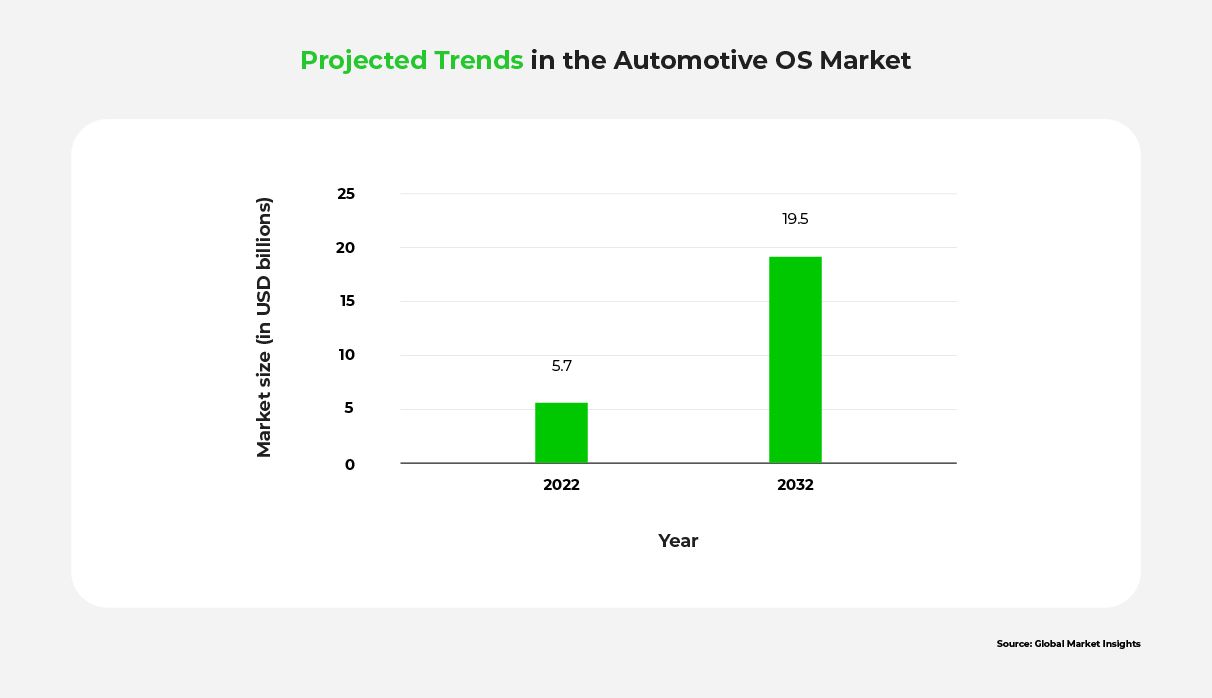
    A chart showing the automotive OS market's projected growth from 2022 to 2032

    However, capitalizing on this high growth rate will not be easy for OEMs, given the rapid technological advancements, user demands, and lack of standard protocols across software platforms. In particular, the ever-growing number of software components and the need to communicate between in-car and cloud-based platforms further complicate software development. A promising solution to scale and overcome these impediments is to focus on harmonizing the different elements for cohesive functionality and greater synergy.

    The Need to Harmonize Platform Elements

    The existing fragmentation among automotive software platforms and standards poses a challenge for all EV stakeholders, particularly OEMs. Traditional gasoline-powered vehicles were primarily hardware-driven, but current and future vehicles are increasingly replacing hardware with software to control and manage various functions. As a result of this shift, OEMs have been investing more resources to adapt their applications and services to work on different OS platforms.

    As vehicle models proliferate and software functions become more complex, however, these investments lose scalability. A better option is to prioritize integrating and harmonizing disparate software elements. By adopting such a strategy, OEMs can:
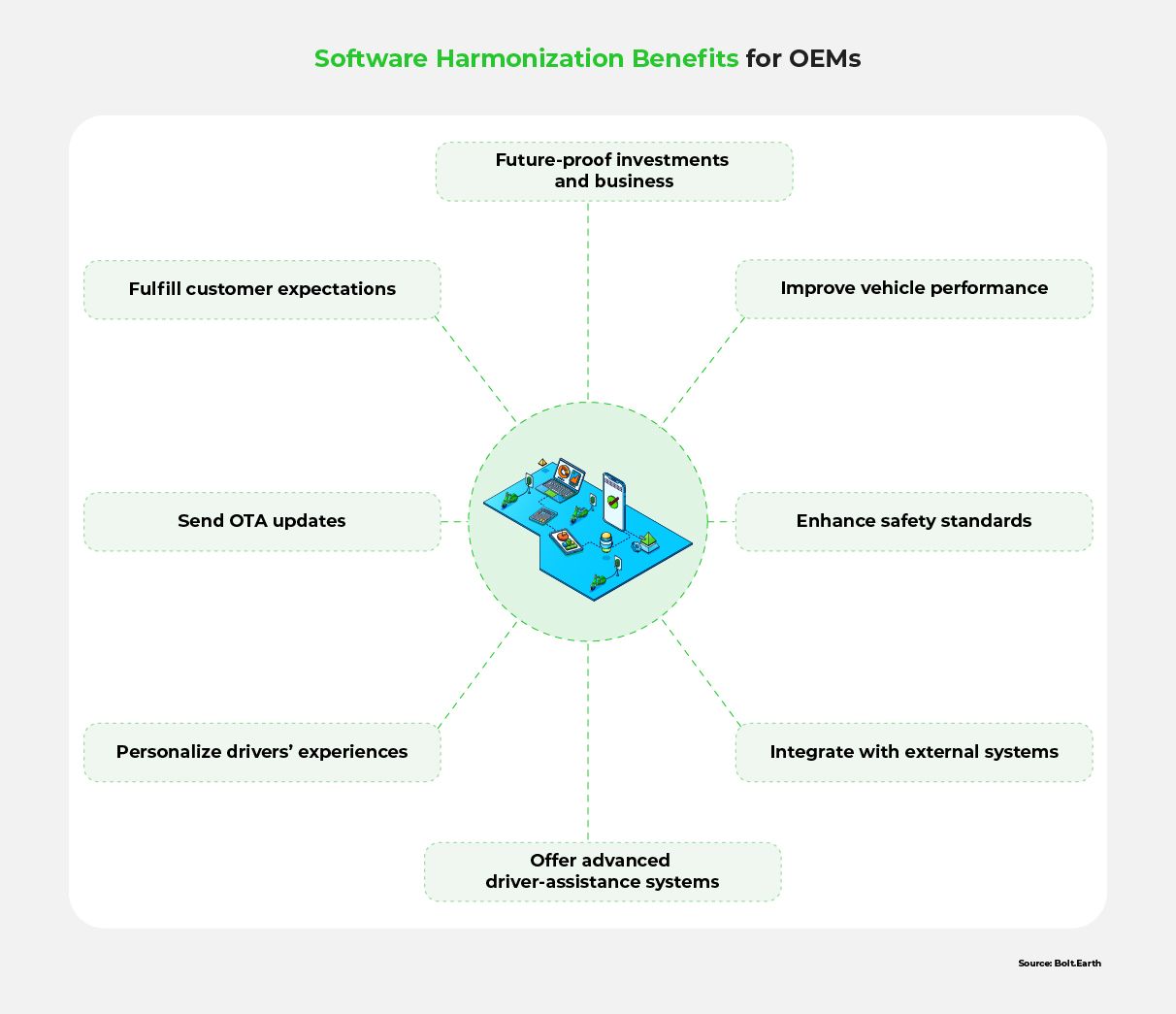
    An infographic detailing how OEMs can benefit from harmonizing disparate software elements

    To realize these benefits, it is crucial for OEMs to adapt their strategies and priorities toward harmonization.

    The Role of OEMs in Platform Elements

    Given OEMs’ pivotal role in building software systems, they have the unique opportunity to turn the existing harmonization challenges into beneficial opportunities. Here are various elements that OEMs can enhance to propel growth in the automotive OS domain while focusing on scalability and security.

    Designing and Integrating Platform Elements

    Design is the first step in software development, and, by prioritizing harmonization, OEMs can ensure that they create designs based on hardware and software components that work cohesively. From infotainment systems and connectivity modules to sensors and control units, OEMs can design a system that enables smooth connectivity and integration.

    Ensuring Compatibility and Interoperability

    In the world of software-defined vehicles such as EVs, cars are seen as devices. Just as computers and smartphones need compatible apps, cars need systems that can communicate and collaborate. Standards like AUTOSAR attempt to ensure this interoperability, but each electronic control unit (ECU) is still built individually. OEMs must strive to use common protocols that ensure compatibility with other software apps and interoperability with diverse hardware components.

    Collaborating with Software and Technology Partners

    Collaboration with software and technology partners enables OEMs to leverage external expertise with minimal upfront research costs. With this approach, OEMs can enhance their software capabilities, accelerate innovation, and keep pace with rapidly evolving technologies. Sharing knowledge and experience among different stakeholders of software-defined vehicles can lead to creating a universally-compatible OS with cutting-edge features, robust security, and a superior user experience.

    Conducting Testing and Validation

    Rigorous testing and validation of platform elements within the automotive OS give OEMs the opportunity to verify functionality, performance, and safety standards, and to identify and address any potential issues or vulnerabilities before vehicles reach consumers. By adhering to stringent testing protocols, OEMs can ensure that the platform elements, which include electronic control units, sensors, IoT units, and mobile apps, meet the highest quality standards and deliver a reliable and secure user experience.

    Providing Ongoing Support and Updates

    Providing ongoing support and software updates, along with addressing customer feedback and preferences, are important processes which OEMs must plan in advance. In particular, cybersecurity best practices must be geared for EVSE devices, communications with EVs, and upstream devices like cloud, third-party apps, and software of grid operators. By continuously monitoring and addressing likely security threats, OEMs can release timely bug fixes, security patches, and feature enhancements to adapt to evolving user needs and ensure the long-term performance and functionality of the OS.

    Collaborating with Industry Stakeholders

    OEMs must work with industry stakeholders, including regulatory bodies and standards organizations, to shape industry standards, protocols, and guidelines for interoperability and compatibility among diverse vehicles and systems. These efforts can empower OEMs to drive the overall advancement of the automotive OS landscape and ensure a cohesive and standardized approach to platform integration.

    Although many OEMs are working towards harmonization, many integration challenges stand in the way.

    OEMs’ Platform Integration Challenges

    All emerging technologies create complexities, and software-defined cars are no exception. Advances in automotive software are not only enhancing next-gen cars’ capabilities, but also creating numerous integration challenges for OEMs.

    Diverse Hardware Configurations Across Vehicles

    Each vehicle model and brand may have unique combinations of processors, memory capacities, connectivity modules, and sensor configurations. These variations among car models make it difficult for OEMs to design software that works seamlessly across diverse hardware configurations. More importantly, such incompatibilities can lead to safety and security issues. As a result, OEMs must continue to invest resources in developing software that can adapt to varying computing capabilities while efficiently utilizing available hardware resources.

    Compatibility Issues with Third-Party Applications

    Third-party applications, like navigation systems or infotainment platforms, are often developed by different software providers, each with their own interfaces, data formats, and compatibility requirements. To integrate them, OEMs must perform compatibility testing for smooth interactions between the OS and third-party software. Even with extensive testing, however, compatibility issues can still arise when OS updates or changes impact the functioning of third-party applications. A possible solution is for OEMs to collaborate closely with software partners to maintain compatibility and address any issues.

    Compatibility Issues with Legacy Systems

    OEMs face challenges when integrating new platform elements with legacy systems in older vehicles. Legacy systems may have different communication protocols, software architectures, and hardware limitations. Ensuring backward compatibility with legacy systems can be complex and may impose limitations on system updates and advancements. OEMs need to carefully balance the need for backward compatibility with the desire to introduce new features and technologies, as it may be necessary to maintain support for legacy systems while gradually phasing them out in favor of more advanced platform elements.
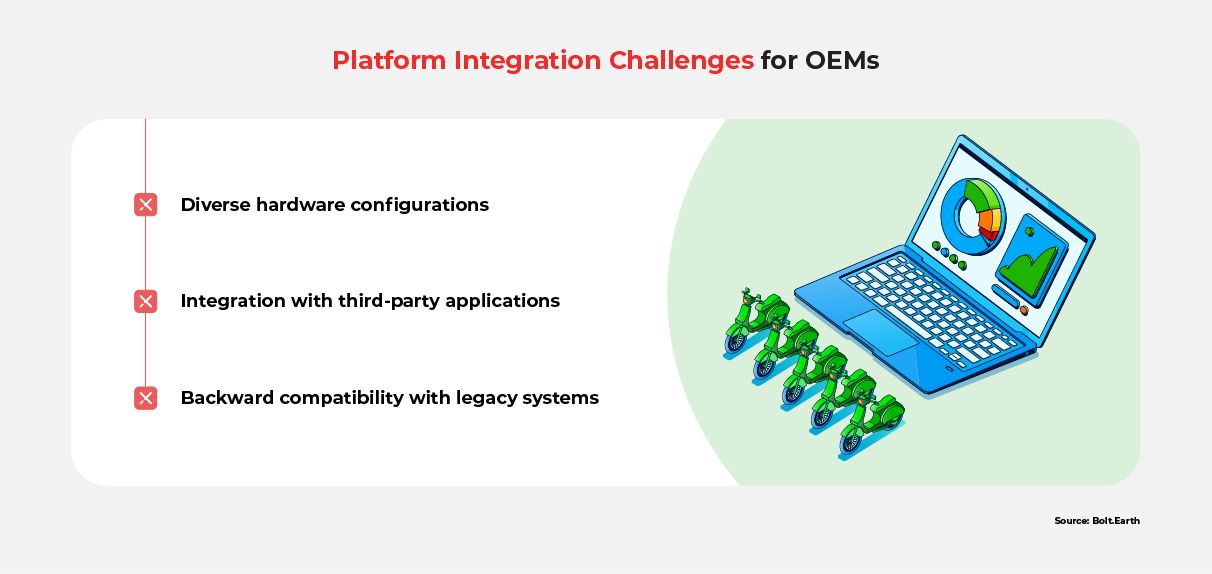
    An infographic listing the challenges that OEMs may encounter while working towards platform integration

    Addressing the above challenges is difficult, but not impossible. With the right strategy and concerted effort, OEMs can overcome them.

    Overcoming OEMs’ Platform Integration Challenges

    OEMs need innovative solutions and strategic approaches to overcome their platform integration challenges. Some key strategies that OEMs can use are:

    Over-The-Air (OTA) Software Updates

    Through over-the-air (OTA) updates, OEMs can remotely deliver new software features, security enhancements, and bug fixes to vehicles. This contributes to user convenience by minimizing the need for in-person servicing. Additionally, OTA updates offer cost savings for OEMs by reducing recall expenses and enabling swift deployment of critical updates. They can also resolve compatibility issues with third-party applications and legacy systems. However, OEMs must implement robust security measures and rigorous testing and validation processes to ensure the reliability and stability of OTA updates before deployment.

    Collaboration and Standardization Efforts

    Collaborative efforts among OEMs, software companies, and technology providers are critical for establishing common standards and specifications for platform integration. These industry stakeholders can come together to define common interfaces, protocols, and data formats that promote interoperability and compatibility across different vehicles and systems. Industry alliances or organizations such as the COVESA (formerly GENIVI) Alliance or the Automotive Grade Linux (AGL) project, which focus on ensuring harmonization within automotive OS, are working on such standards. Additionally, collaborations and partnerships foster knowledge sharing, promote best practices, and enable the development of robust and harmonized solutions for automotive OS.

    Modular and Scalable Platforms

    Building a modular architecture makes it easy for OEMs to integrate new platform elements without disrupting the entire system. They can add or replace components with minimal impact on the overall system, ensuring flexibility and scalability. Application programming interfaces (APIs) are vital in enabling seamless integration of third-party applications and services. Well-documented and standardized APIs facilitate interoperability among different software components, enabling easy integration and enhancing the overall user experience. These modular designs also promote scalability, so existing hardware can adapt to evolving software configurations, processing capabilities, and future technological advancements.
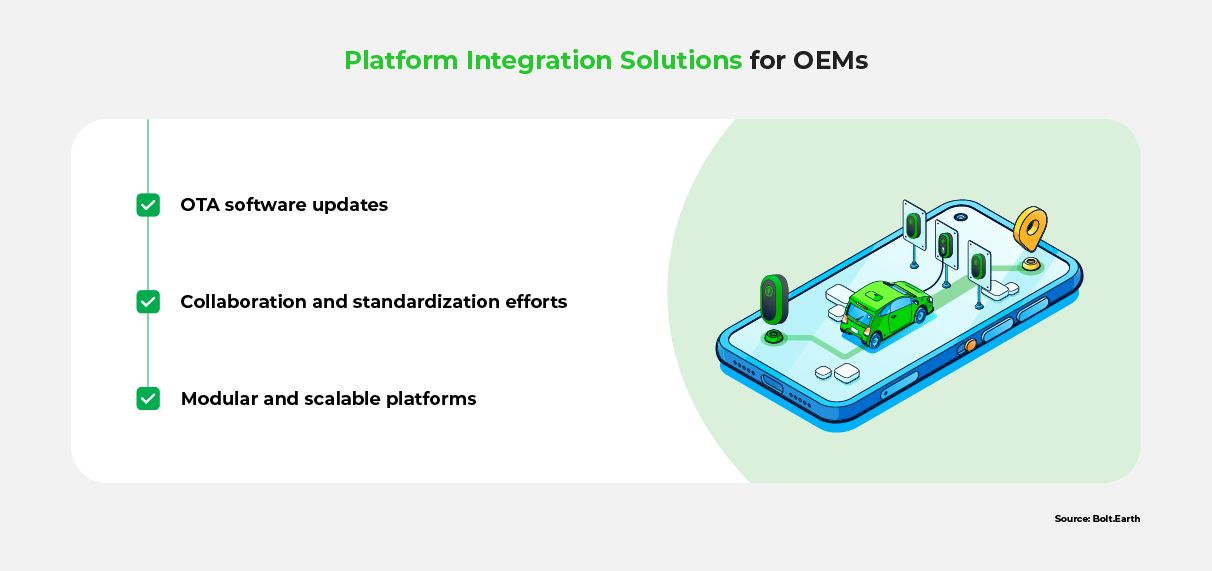
    An infographic listing solutions for overcoming the challenges associated with platform integration

    The above solutions can significantly assist OEMs, and the larger auto industry, in leveraging the benefits of software development and technological advancements.

    The Impact of Harmonized Platform Elements Within Automotive OS

    By driving the harmonization of platform elements, OEMs can shape the future of the entire auto industry as a whole. For example, their efforts can promote:

    Faster Development and Deployment of New Features

    Platform harmonization permits OEMs to streamline the development and deployment of new software features and updates. A harmonized platform provides a standardized framework for software development, thereby reducing the complexity and time required to develop new features across different vehicle models and brands. This enables OEMs to accelerate innovation, improve their time-to-market, and more efficiently deliver advanced features and functionalities to customers.

    Enhanced Safety and Security

    Harmonized platform elements lead to improved safety and security of vehicle systems and data. Standardized security protocols and robust software architectures enable OEMs to establish a strong foundation for cybersecurity. Additionally, harmonized platforms enable faster deployment of security patches and updates that can enhance the overall security posture of vehicles. Through such efforts, OEMs can build trust with customers and prioritize their well-being.

    Facilitation of Connected and Autonomous Vehicle Technologies

    In a harmonized platform, sensors, connectivity modules, and control units work together to provide a superior user experience. Furthermore, such harmonization enables the automotive OS to efficiently process, analyze, and share data for real-time traffic updates and predictive maintenance. These features enhance the usability of vehicles and can lead to their wider adoption.

    All of the above benefits create a unified ecosystem that empowers society to enjoy the positive environmental and economic effects of software-defined vehicles.

    Fostering a Unified Approach Towards EV Software

    The harmonization of platform elements holds the potential to create an automotive landscape that improves users’ driving experience by providing them with cutting-edge technology. Moreover, harmonized platform elements enhance vehicle systems’ and data’s safety and security. Though many challenges exist in harmonizing diverse car elements, OEMs can overcome them with the right strategy and active collaboration with other stakeholders to implement standardized security protocols and robust software architectures.

    Additionally, with seamless communication and interoperability among different vehicle systems and external networks, OEMs can unleash the full potential of these technologies. This can enable the creation of advanced features, improve efficiency, and foster a more interconnected and intelligent automotive software ecosystem, as well as economically benefiting OEMs by bolstering car sales and providing a competitive advantage. As the industry evolves, OEMs will remain at the forefront, strengthening a unified approach toward EV software to realize a connected, autonomous, and electrified future.

    For more information about harmonization, please see the FAQ and Resources below!

    FAQ

    How do OEMs ensure compatibility and interoperability among different platform elements?

    OEMs can implement standardized protocols to ensure compatibility and interoperability. They can also work with other players to establish guidelines and specifications for enabling seamless communication and integration between various components and systems.

    How does harmonization enhance the user experience in vehicles?

    Harmonization of car elements leads to consistent and intuitive user interfaces, standardized features, and interoperability with third-party applications and services. Overall, it promotes a unified and cohesive experience, enabling users to easily navigate and utilize various functions and technologies within the vehicle.

    How do OEMs collaborate to achieve platform integration?

    OEMs can collaborate with software companies, technology providers, and industry organizations to establish common standards and specifications for platform integration. This collaboration involves knowledge sharing, joint research and development, and participation in industry alliances or organizations dedicated to promoting harmonization within the automotive industry.

    How do OTA updates contribute to seamless software integration?

    OTA updates enable the remote delivery of software updates to vehicles, eliminating the need for physical changes to hardware components. Besides adding to user convenience, OTA updates also make it easy to access the latest features and build a secure system.

    What security measures are in place to protect against vulnerabilities in platform integration?

    Security measures including encryption secure data transmission while authentication mechanisms like multifactor authentication ensure authorized access to data and systems. Additionally, code signing to verify software integrity, intrusion detection systems to identify potential threats, and continuous monitoring for timely identification and response to security incidents can protect cars from cyberattacks.

    How does platform harmonization advance connected and autonomous vehicle technologies?

    Platform harmonization enables seamless communication and interoperability among different vehicle systems and external networks. Harmonized platforms allow vehicles to exchange data with infrastructure, other vehicles, and cloud-based services. Such an approach can ease the development and deployment of advanced features.

    Resources

    McKinsey: The Case for an End-to-End Automotive-Software Platform

    Discover how software can transform the automotive industry.

    EE Times: Perspectives on Automotive Operating Systems

    Gain a detailed understanding of automotive operating systems.

    Automotive World: How can OEMs Accelerate the Software-Defined Mobility Revolution?

    Learn about OEMs’ impact on SDV adoption.

    European Commission: Technical Harmonization

    Find out about Europe’s technical harmonization guidelines, which provide a model for other countries.

    Center for Automotive Research: Global Harmonization of Connected Vehicle Communication Standards

    Explore the latest efforts to harmonize vehicle elements.

  • The Power of Dynamic Electric Vehicle Operating System Integration

    The Power of Dynamic Electric Vehicle Operating System Integration

    Electric vehicles (EVs) represent a technological revolution with the potential to transform transportation. Central to this revolution are EV operating systems (OS), the digital intelligence behind the wheels driving the future of mobility. In recent years, these operating systems have rapidly advanced to dynamically integrate with hardware and software components, making EVs smarter, safer, and more efficient. As these OS continue to develop their integration capabilities, they hold the potential to reshape mobility in India and worldwide. However, several challenges must be addressed to realize this potential fully.

    In light of the growing importance of dynamic OS integration, this article will answer three questions:

    • Why is dynamic OS integration crucial in revolutionizing the next generation of EVs?
    • What challenges and obstacles affect the integration of OS in EV technology?
    • How do innovative solutions and advancements in OS impact the future of EVs?

    Current Landscape of EVs and OS Integration

    The OS is the core of any EV, facilitating seamless communication among the vehicle’s components, managing energy usage and distribution, and providing an interface for drivers to interact with the vehicle’s components. As the focus shifts to OS in this age of software-defined vehicles (SDVs), numerous players are entering the scene. The Foxconn-led Mobility in Harmony (MIH) consortium selected Blackberry’s QNX OS to power its EVs in Asia. Additionally, Android Auto introduced many features, allowing drivers to select their EV charging connector type, displaying real-time battery charge, and integrating with Google Maps.

    Despite these advancements, many limitations in EV OS need to be addressed to maximize the benefits of technological innovation. These limitations include slow real-time responsiveness, limited customization and compatibility options, potential cybersecurity issues, and restricted integration with third-party apps. This gap between the current state of EV OS and what is required underscores the importance of focusing on dynamic OS integration.

    Significance of Dynamic OS Integration in EVs

    The race to build next-generation EVs is intensifying, as almost every auto manufacturer strives to make EVs smarter and more energy-efficient with each new model. GM’s Ultium architecture and Mercedes’ MMA platform are introducing new features and enhancing efficiency through their OS. However, to captivate the interest of EV buyers, these next-generation vehicles must offer seamless, intelligent, and personalized experiences.

    Dynamic OS integration can deliver these experiences, making it highly relevant for future EV models. However, several challenges must be addressed to fully harness the power of this dynamic integration for EV drivers.

    Addressing Challenges in OS Integration

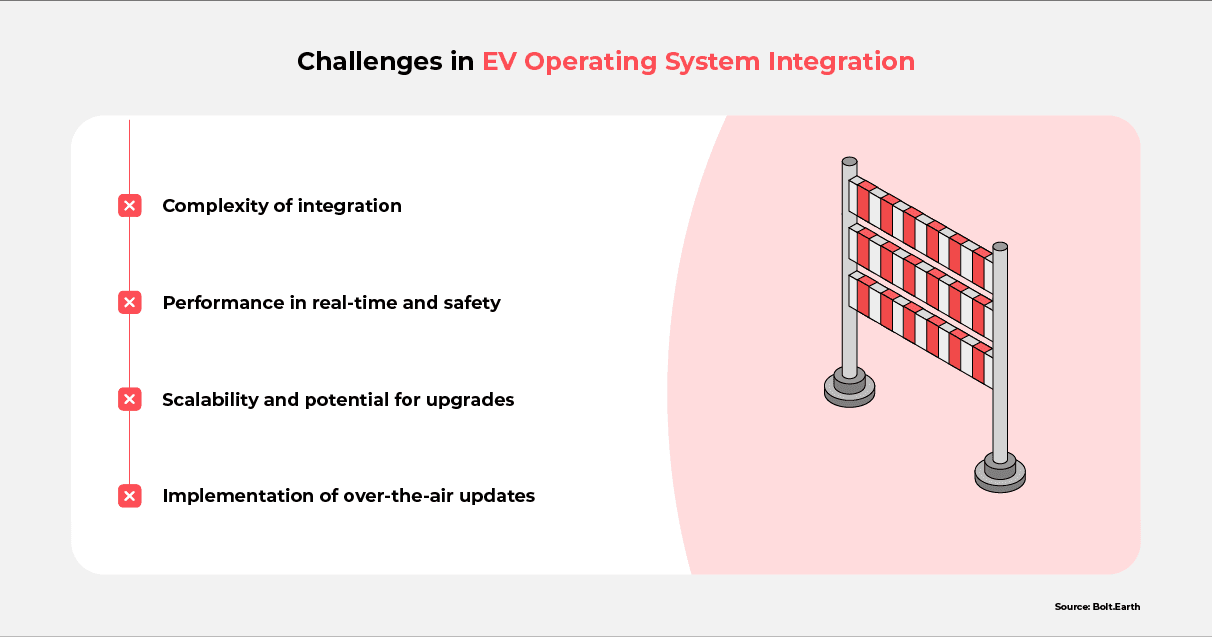
    To meet the growing demand for smarter and more efficient EVs, it’s essential to acknowledge the challenges associated with OS integration. Key challenges include complexities in integrating diverse hardware and software components and creating integrations that can scale effectively for the future while providing real-time insights into health and performance.

    A list detailing the various challenges faced in integrating operating systems into EVs

    Integration Complexity

    Integrating various cutting-edge technologies is a challenge in itself. Many hardware components, such as motor and battery systems, are manufactured by different companies and may have differing communication protocols. Similarly, the OS, which acts as the controller, may have incompatibilities with other software systems, including battery management, GPS, and user interface. The challenge lies in enabling these diverse hardware and software components to communicate and work together.

    A viable approach to achieving compatibility and interoperability is through standardized protocols. Although components may have different origins and functions, integration will be easy if they communicate using the same language. Such standardized interfaces and protocols can streamline integration processes.

    Real-Time Performance and Safety

    Real-time insights into performance and safety are crucial as they can warn drivers if they deviate from lanes or exceed the speed limit. Furthermore, this real-time information is fundamental to autonomous driving and Advanced Driver Assisted Systems (ADAS), as data from external sensors must be analyzed and actions made almost instantaneously. Ensuring such rapid responsiveness is a technical challenge.

    The key to addressing this challenge lies in a robust OS and standardization of how the OS communicates with EV subsystems. This simplifies the exchange of critical data from sensors to the vehicle’s central controller. To achieve this safety, EV automakers need a dynamic OS that can understand real-world contexts, detect anomalies, and initiate fail-safe protocols even during unforeseen road events.

    Scalability and Upgradability

    Scalability and upgradability are the other significant key challenges in OS integration. To keep pace with innovation, the OS must accommodate new hardware and software without disrupting the existing operations. This seamless integration necessitates an OS that can scale easily to leverage emerging technologies.

    To address this challenge, it’s essential to anticipate the likely technological innovations over the next decade and develop an OS that can dynamically accommodate them. A good way to stay informed of upcoming technological trends is to read thought-leadership blogs, examine research papers, and analyze utilization and marketing data related to EVs. Adopting a modular approach to OS architecture can make it scalable, as new components can be integrated as needed.

    Over-the-Air Updates

    Over-the-air (OTA) updates are an integral part of the next generation of SDVs. These updates enable manufacturers to introduce new features and fix existing problems without requiring a complete overhaul. While OTA updates are convenient, they also present new challenges, particularly in cybersecurity, as cybercriminals can easily intercept these updates and add malicious code and risks for data corruption due to poor Internet connectivity. Incompatibility with existing systems, interference with other vehicle systems, and excessive reliance on networks are other potential drawbacks of OTA updates.

    While these challenges are daunting, they aren’t impossible to overcome. However, overcoming these obstacles requires a revolutionary approach.

    Revolutionary Approaches to OS Integration in EVs

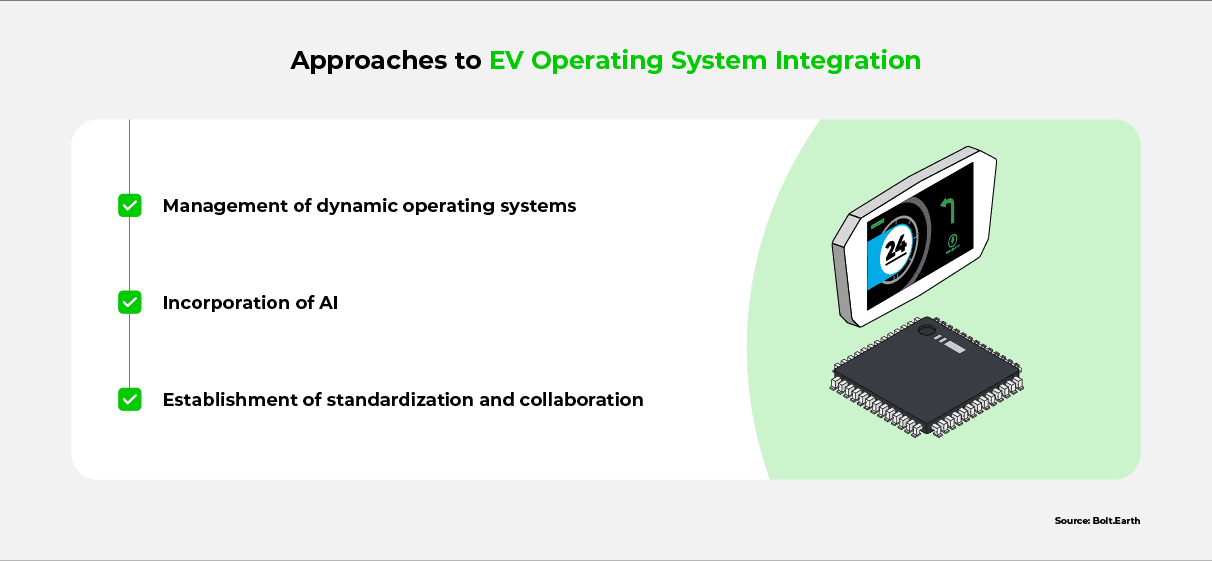
    The road to a better driving experience requires a revolutionary approach that reimagines the role of the OS as a dynamic entity, evolving and integrating with other vehicle components to leverage emerging technologies. Along with dynamic OS integration, the use of artificial intelligence (AI) and machine learning (ML) can infuse intelligence into real-time decision-making, optimize energy usage, predict maintenance needs, and personalize driving experiences.

    A list outlining the different approaches to integrating operating systems in EVs

    Dynamic OS

    The EV OS must seamlessly adapt to new hardware configurations, software updates, and user needs. This evolutionary nature ensures that rigid hardware and software limitations do not confine EVs but can capitalize on upcoming technologies and benefit users.

    Dynamic OS enhances energy efficiency by distributing and using energy based on real-time demands, simplifies the addition of new features without a complete system overall, and elevates personalization to new heights, all of which can expand EV adoption.

    AI Integration

    AI is more than just a technology; it represents a paradigm shift that infuses intelligence into every aspect of EV operation. AI and ML algorithms can analyze extensive datasets from sensors, traffic patterns, and historical behavior to make split-second decisions that optimize energy management and enable autonomous driving.

    Moreover, integrating AI into EVs can enhance vehicle-to-infrastructure (V2I) communication. This system enables EVs to interact with traffic lights to mitigate congestion and communicate with grid systems to augment the efficiency of energy usage and consumption. These trends can contribute to creating sustainable, livable, and smart cities.

    Standardization and Collaboration

    Realizing the benefits of dynamic integration and AI and ML implementation necessitates industry-wide standardization and collaboration. Numerous organizations in the EV ecosystem are working to improve hardware and software capabilities. Synchronizing their efforts and translating their innovation to EV users will require standards. Organizations, including the American National Standards Institute (ANSI), the International Energy Agency’s (IEA) Electric Vehicles Initiative, the International Organization for Standardization (ISO), and governments from countries such as the US, India, and Europe, are collaborating to establish common standards.

    While these efforts are encouraging, more work is needed to unite manufacturers, developers, and other stakeholders to define and shape these standards collectively. This collaborative spirit can fuel innovation, reduce costs, and accelerate EV adoption.

    Preparing for dynamic OS integration in next-generation EVs is a critical step toward realizing these benefits.

    Dynamic OS Integration in Next-Generation EVs

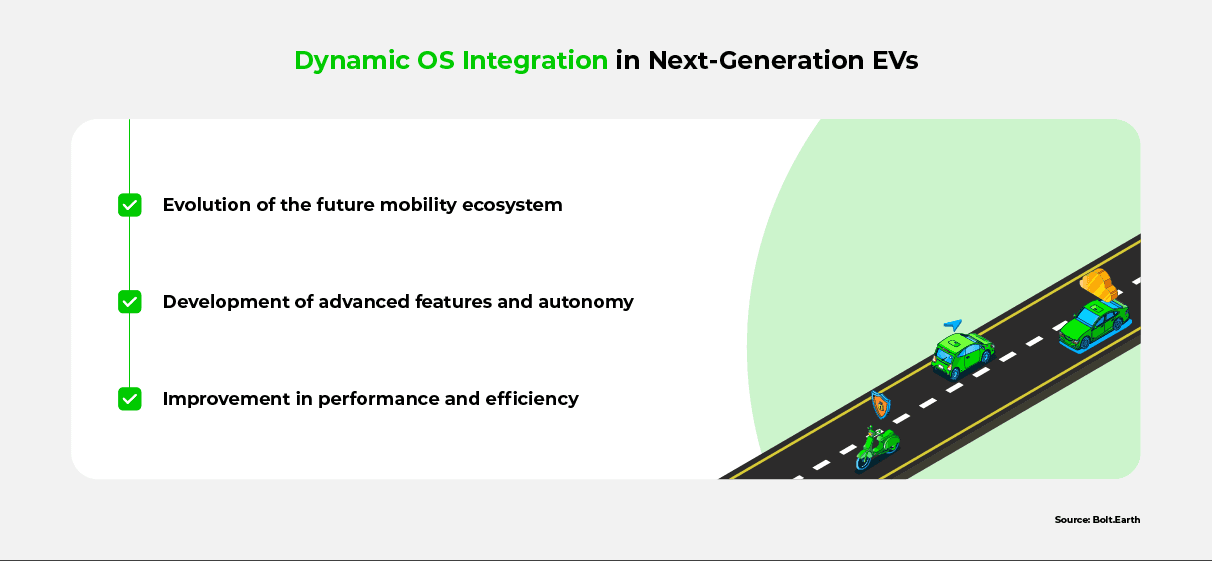
    Dynamic OS integration can significantly impact the landscape of next-generation mobility by enabling EVs to adapt to users’ driving habits and optimize energy usage accordingly. This level of personalization, with intelligent adjustment of vehicle parameters, can elevate the user experience and pave the way for autonomous driving.

     A list highlighting the role of dynamic operating systems in shaping the future of next-generation EVs

    Future Mobility Ecosystem

    The impact of dynamic OS integration extends beyond individual EVs, as it can transform the future mobility ecosystem, ushering in an era where EVs are a cohesive component of connected and intelligent transportation infrastructure, with seamless data flow across traffic lights, EVs, and control systems. EVs are pivotal to an energy-efficient future, as they can interact with grids, store and discharge excess energy, and incorporate renewable energy systems.

    Advanced Features and Autonomy

    Dynamic OS can power advanced features in next-generation EVs, such as intelligent cabins tailored to drivers’ needs and cutting-edge safety features, changing the current perception of EVs. These systems communicate with other vehicles and road sensors to make autonomous driving a reality. Adaptive cruise control and ADAS can further boost the driving experience, making EVs a safe and convenient transportation choice of the future.

    Enhanced Performance and Efficiency

    Dynamic EV operating systems communicate with the power grid to balance the load and charge efficiently based on the driving needs. This optimizes power distribution and energy management, creating a positive environmental ripple effect. Additionally, efficient power distribution enables the OS to direct power where needed, increasing range, improving acceleration, and reducing charging times. All these advancements accelerate the transition to electric mobility.

    These benefits can integrate EVs into a connected transportation and energy system, creating an era where mobility is a dynamic, efficient, and harmonious experience.

    Embracing Dynamic Operating System Integration

    Dynamic OS integration equips EVs with the intelligence to transform mobility while conserving the environment through efficient charging practices. It can seamlessly incorporate upcoming technologies while overcoming scalability and real-time responsiveness challenges. The emerging trends and innovation in the EV landscape make dynamic OS integration a real possibility in the coming years. However, it necessitates a collaborative effort from all stakeholders in the EV ecosystem to define standards and protocols.

    The future is shaped by those who embrace challenges. Let’s unite to seize this opportunity and navigate towards a sustainable and electrifying future with dynamic OS integration.

    For more information about dynamic operating system integration in EVs, please see the FAQ and Resources below!

    FAQ

    How can operating system integration enhance EV performance?

    Operating system integration streamlines communication and coordination of various hardware components while the integrated OS optimizes energy distribution, enhances real-time responsiveness, and enables intelligent features. This harmonious collaboration between hardware and software translates to increased range, improved acceleration, and an enhanced driving experience, ultimately enhancing EVs’ overall efficiency and performance.

    How does dynamic operating system integration contribute to developing advanced features in EVs?

    Dynamic operating system integration embraces new developments with over-the-air updates, allowing automakers to add new functionalities without a system overhaul and boost the efficient utilization of hardware resources. Due to these conducive aspects, dynamic OS integration accelerates developing and deploying advanced features in EVs.

    What role does AI play in enhancing operating system capabilities for next-generation EVs?

    AI allows the EV operating system to gather and analyze vast datasets from sensors and surroundings, enabling energy optimization, maintenance prediction, and support for autonomous driving in the future. These insights help boost EV performance, safety, and user experience.

    How does dynamic operating system integration contribute to the future of mobility?

    Dynamic operating system integration enables EVs to seamlessly interact with smart grids, renewable energy sources, and intelligent transportation systems. Adapting to evolving requirements and integrating with larger infrastructures promotes energy efficiency, supports grid stability through bi-directional energy flow, and contributes to a more connected, sustainable, and efficient transportation ecosystem.

    What benefits can consumers expect from integrating dynamic operating systems in next-generation EVs?

    Consumers can anticipate many benefits from integrating dynamic operating systems, including improved energy efficiency, personalized driving experiences, and enhanced vehicle performance. EVs can adapt to changing conditions and driver preferences and manage energy utilization. This integration maximizes range and minimizes energy waste while seamlessly integrating advanced features.

    Resources

    Investment Monitor: Software is now driving the EV charging market

    Learn about the role of software in advancing the EV charging market.

    Appinventiv: How EV Technology and Software are Tackling Key Barriers to Electric Vehicle Adoption?

    Discover how software is the key to the future of EV adoption.

    Energy Informatics: Integration of EVs into the smart grid: A systematic literature review

    Explore how the integration of EVs and smart grid technology works.

    Research and Markets: Automotive Operating System Global Market Report 2023

    Know how 2023 is shaping up for the EV OS market.

    Frost & Sullivan: Implications of GM’s Decision to Embrace a Built-in, Native Operating System

    Understand the rationale behind GM’s decision to build an OS for its EVs.

  • How Fast EV Charging Will Transform India’s Energy Landscape

    How Fast EV Charging Will Transform India’s Energy Landscape

    Electric vehicle (EV) adoption in India is skyrocketing due to increased environmental awareness, government initiatives, and private sector investments. As more individuals and fleet operators transition to eco-friendly transportation solutions, there arises a critical need for an efficient EV charging infrastructure upgrade that can support dc fast chargers and every electric vehicle charging station in India. A seamless charging experience is vital to earn the trust of potential EV customers. In turn, such an experience can increase adoption and boost growth in the EV industry. However, to deliver this experience, it’s crucial to strengthen the electricity grid and prioritize fast charging.

    To better understand the nature of investments and their potential challenges and impact, this article will answer:

    • Why should India invest in electrical grids for a better fast charging network?
    • What are the current challenges with fast charging, and how can we solve them?
    • How can developments in the fast charging industry help the overall EV ecosystem of India?

    The State of Electric Vehicle Charging Stations and Power Grid in India

    Although laudable strides have been made recently, India’s existing electricity infrastructure continues to raise concerns about its ability to support growing EV demands and the rollout of dc fast chargers across every electric vehicle charging station in India. It’s projected that India will require an annual installation of 4,00,000 chargers, totaling 1.3 million regular chargers by 2030. This will aid the country in achieving an infrastructure-to-EV ratio of 1:40, which falls short of the global average of 1:20.

    Notably, another issue is the unequal distribution of charging stations across urban and rural areas, leading to range anxiety concerns for long-distance trips. Additionally, the prevalent infrastructure primarily comprises standard chargers resulting in extended charging periods. This inconvenience poses a challenge for users who depend on EVs for daily commutes or for commercial uses.

    Lastly, the power grid’s capacity is inadequate to accommodate the fast-charging needs of a rapidly expanding EV market. The surge in EV usage adds strain to the grid, causing power outages and disrupting the stations’ efficient functioning. It’s projected that if 33% of automobile sales in India are EVs by 2030, the country would require 37 terawatts (TW) of power. As of June 2023, the total installed capacity was 4,21,901 MW, which equates to roughly 0.422 TW.

    Addressing these gaps necessitates significant grid investment for EV charging, ensuring India can support large-scale fast-charging expansion.

    Why Grid Investment for EV Charging Is India’s Next Leap

    The EV adoption trend in India is still in its infancy, and tackling these challenges now can set the course for explosive future growth. Moreover, mounting climate change concerns and their resulting impacts underscore the urgency of shifting to cleaner and sustainable transportation.

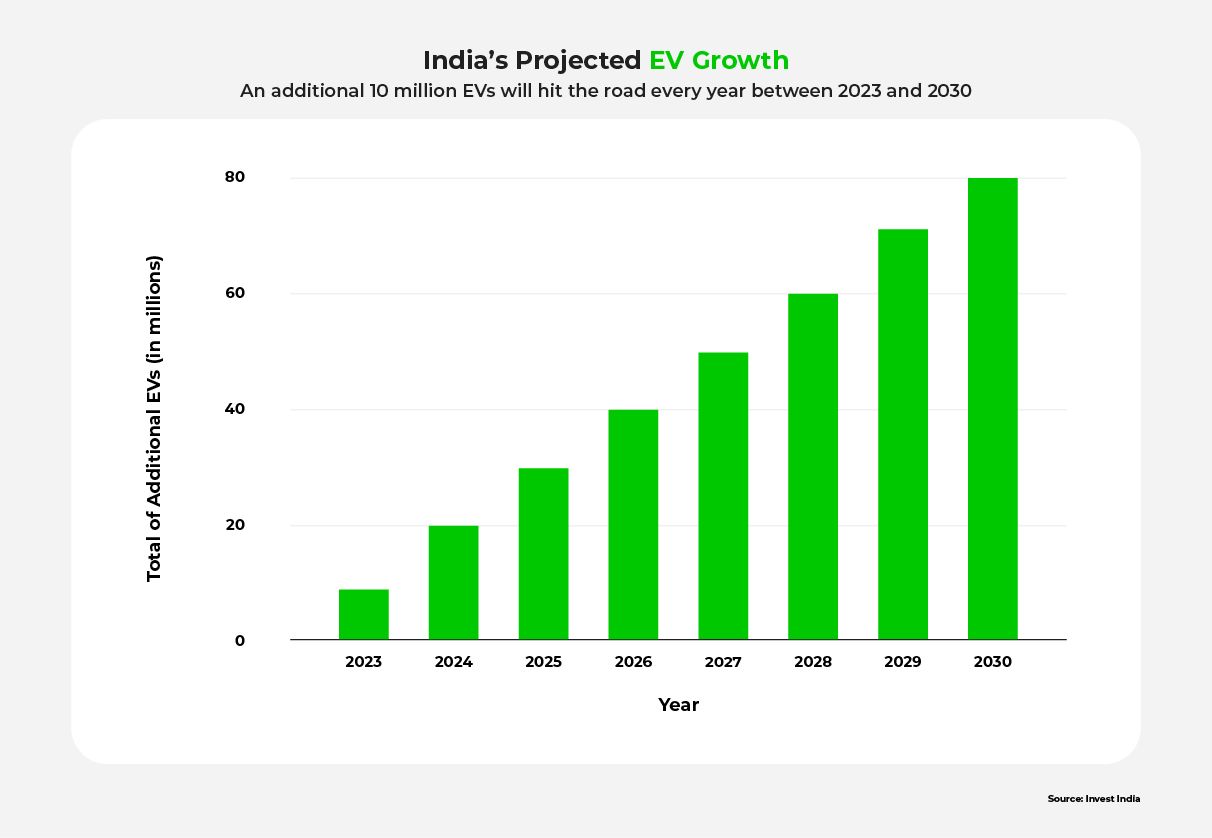
    EV adoption is expected to skyrocket at a 49% annual rate between now and 2030, with 10 million EVs anticipated to hit Indian roads annually during this period. To ride this wave, India must bolster its electricity infrastructure and accelerate EV charging infrastructure upgrades to ensure grids are scalable, resilient, and capable of powering dc fast chargers nationwide

    A chart showing annual EV adoption growth between now and 2030

    Scalability and Capacity

    India’s growing EV market is increasing the demand for efficient and high-speed charging solutions. Furthermore, Indian cities are expected to double their energy consumption by 2040 due to heightened cooling demands. These trends could exert considerable strain on the power grid and lead to extensive power outages. To prevent this, stakeholders must invest in expanding electricity generation and distribution infrastructure.

    Reduced Charging Times

    A high-capacity charging infrastructure facilitates quicker and more efficient charging, making EVs appealing and practical for consumers. Faster charging enriches the user experience and paves the way for long-distance travel and commercial applications. However, supporting high-speed and high-capacity charging requires investments in power infrastructure today.

    Grid Stability and Reliability

    Without a robust grid, charging disruptions and power outages can cause frustration and inconvenience for EV owners. This situation is more likely in rural areas due to limited grid capacity. Overcoming these voltage fluctuations requires investment in enhanced grid management, load balancing mechanisms, and smart charging solutions.

    Future-Proofing

    Proactive adoption of technologies can future-proof India’s electricity infrastructure amid the anticipated surge in EV adoption. Using smart grids enables demand-response capabilities, where charging rates can be adjusted based on grid conditions and electricity supply. Additionally, integrating renewable energy sources like solar and wind power can reduce reliance on non-renewable resources, While vehicle-to-grid (V2G) and bidirectional charging can reduce the burden on grids.

    Economic Opportunities

    Developing charging infrastructure can create job opportunities in the renewable energy and EV charging sectors. It’s estimated that the renewable energy sector will create 3.4 million new jobs by 2030 while the EV sector is expected to create 5 mn direct and indirect jobs by the end of this decade. This job growth can stimulate local manufacturing, technology development, and the growth of a skilled workforce. Furthermore, a robust and efficient EV charging network can attract investments from domestic and international players.

    Due to these reasons, all stakeholders must collaborate to enhance India’s electricity grid. Specifically, they must concentrate on fostering a conducive environment for fast charging, which can alleviate many existing challenges related to reliability and grid capacity.

    Solving India’s EV Charging Infrastructure Challenges

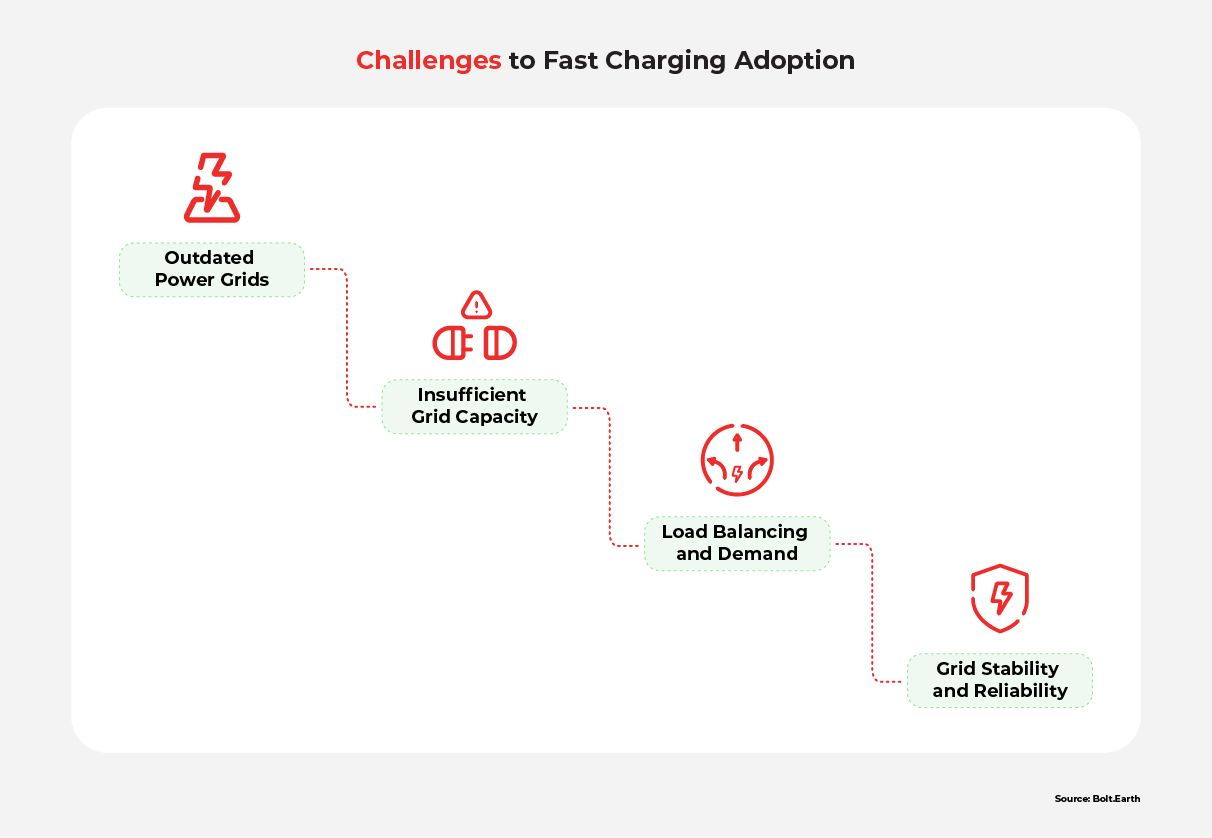
    DC Fast charging can significantly reduce charging time for each vehicle. However, creating the infrastructure that can sufficiently support fast charging is difficult due to challenges, including insufficient grid capacity, outdated power grids, ineffective demand management, and unstable grid infrastructure.

    A infographic showing four challenges to fast-charging

    Insufficient Grid Capacity

    The existing grid infrastructure may struggle to handle the additional electricity demand from a multitude of EVs charging simultaneously through dc fast chargers. The potential repercussions of insufficient grid capacity include:

    • Charging delays
    • Decreased efficiency of charging stations
    • Congestion at charging stations

    Outdated Power Grids

    The existing outdated grid infrastructure lacks the capacity to support efficient fast-charging EV ecosystems’ development. Currently, transmission and distribution losses are common due to obsolete equipment and inefficient infrastructure. It’s important to invest in smartgrid technologies and energy-efficient practices to reduce these losses and increase stability. However, upgrades can be expensive as the country needs to enhance its:

    • Transmission lines for optimized power distribution
    • Substations to ensure adequate electricity reaches charging points
    • Transformers to handle higher capacity

    Load Balancing and Demand

    If not appropriately managed, fast charging stations can impose sudden and significant loads on the grid during peak times. Noteworthy challenges include:

    • Handling peak charging demands
    • Knowing the cost and technical expertise related to grid management
    • Acquiring insights into power usage for planning

    Grid Stability and Reliability

    The escalating demand for power from households, industries, and EVs can lead to grid instability. Addressing these issues require investments in:

    • Smart charging solutions to optimize charging rates based on grid conditions
    • Grid upgrades to reduce the risk of grid failures during fast-charging operations
    • Advanced technologies like V2G for grid stability

    Addressing these challenges demands concerted efforts from government authorities, industry stakeholders, and technology providers. Moreover, innovative approaches leveraging emerging technologies can lay the groundwork for a sustainable and efficient fast charging infrastructure.

    Smart Approaches to DC Fast Chargers and Grid Readiness

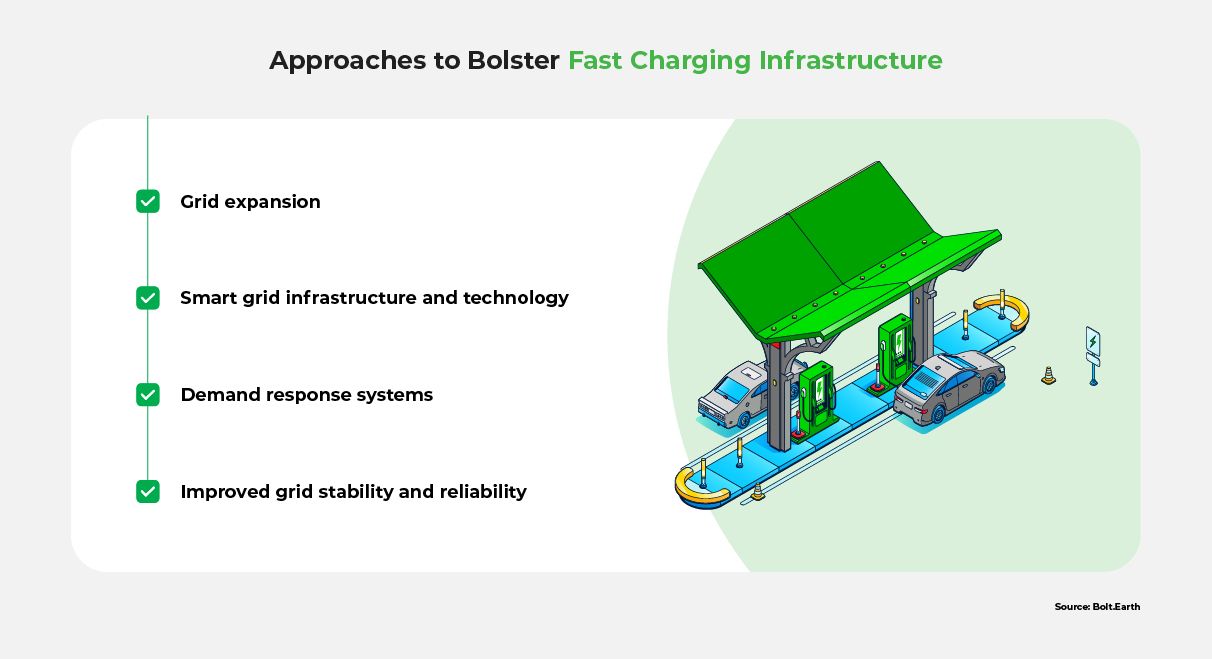
    India must accelerate upgrades of its power infrastructure to achieve its ambitious electrification goals. This could involve substantial investments from the public and private sectors. To streamline these upgrades and ensure cost-effectiveness, India can adopt innovative approaches like the following.

    A flowchart showing approaches to fast charging infrastructure

    Grid Expansion

    To strike a balance between costly upgrades and expansion, India can:

    • Assess the current grid infrastructure in areas with the highest demand and prioritize them
    • Foster a collaborative environment for utility companies, government agencies, and private sector companies
    • Support funding for expansion initiatives

    Although Norway has a highly fragmented system of EV charging stations, its early and decisive action to create a scalable strategy for grid expansion is widely seen as a pivotal factor to its success in EV adoption.

    Smart Grid Infrastructure and Technology

    A smart grid infrastructure and continued grid investment for EV charging can enable India to better understand its power usage and optimize loads across every electric vehicle charging station in India. To reap these benefits, India must:

    • Create a roadmap for upgrading the grid, focusing on improving transmission lines and substations
    • Integrate advanced metering technologies like the advanced metering infrastructure (AMI)
    • Use distribution automation software to optimize grid performance

    Denmark stands as Europe’s smart grid hub, utilizing advanced digital technologies to monitor and manage electricity from its source to endpoint.

    Demand Response Systems

    A demand response system can optimize charging patterns and maintain well-balanced loads. To achieve this:

    • Offer incentives to EV owners to charge during off-peak hours
    • Introduce dynamic pricing mechanisms
    • Employ real-time monitoring and scheduling tools to manage peak demand

    California reduces grid load through financial and non-financial incentives to property owners and residents, preventing blackouts. Its Flex Alert programs and their use of technologies, including smart thermostats and connected water heaters, have reduced consumer grid load.

    Improved Grid Stability and Reliability

    Enhancing grid stability and reliability bolsters confidence among potential EV owners. To achieve this stability, India can:

    • Implement real-time monitoring systems to promptly detect and address grid stability issues
    • Integrate renewable energy sources
    • Collaborate with grid operators and technology providers to develop and implement grid management systems

    Germany’s power grids hailed as the most reliable globally, owe their success to integrating renewable energy sources such as wind, solar, and biomass. It’s estimated that renewable sources account for 55.5% of Germany’s total power consumption.

    Indian stakeholders can draw lessons from the aforementioned success stories, implementing actions quickly to reap the benefits.

    How Grid Investment for EV Charging Transforms India’s EV Ecosystem

    Investing in the electricity grid holds far-reaching positive impacts, including enhanced grid flexibility and improved load management capabilities. Such advantages can fortify a fast-charging environment, transforming India’s EV ecosystem.

    Enhanced Charging Infrastructure

    Strategic grid investment for EV charging will be foundational for a well-established and extensive network of electric vehicle charging stations in India, supporting modern dc fast chargers and large-scale EV charging infrastructure upgrades, offering:

    • Increased convenience: With a widespread charging station network across urban and rural areas, EV owners will enjoy improved convenience and accessibility.
    • Reduced range anxiety: A well-distributed charging network will alleviate range anxiety, boosting confidence among potential EV buyers.
    • Economic and environmental benefits: A broad and reliable charging infrastructure will create jobs in the EV charging industry and reduce greenhouse gas emissions.

    Faster Charging Speeds

    Investments in the electricity grid will enable faster charging speeds for EVs, resulting in transformative effects such as:

    • Reduce charging time: Advanced charging infrastructure will enable rapid EV charging, reducing wait times and congestion.
    • Impact on travel patterns: EV owners can take longer trips without extended charging stops, making EVs ideal for intercity travel.
    • Accelerate EV adoption: As charging times become comparable to refueling times for traditional vehicles, EV adoption will accelerate.

    Grid Flexibility and Load Management

    Grid investments will result in enhanced grid flexibility and improved load management capabilities, providing benefits like:

    • Optimized grid utilization: Smart grid technologies and advanced load management systems will allow scheduling optimization of charging operations, balancing electricity demand and supply, and preventing grid overloads during peak charging periods.
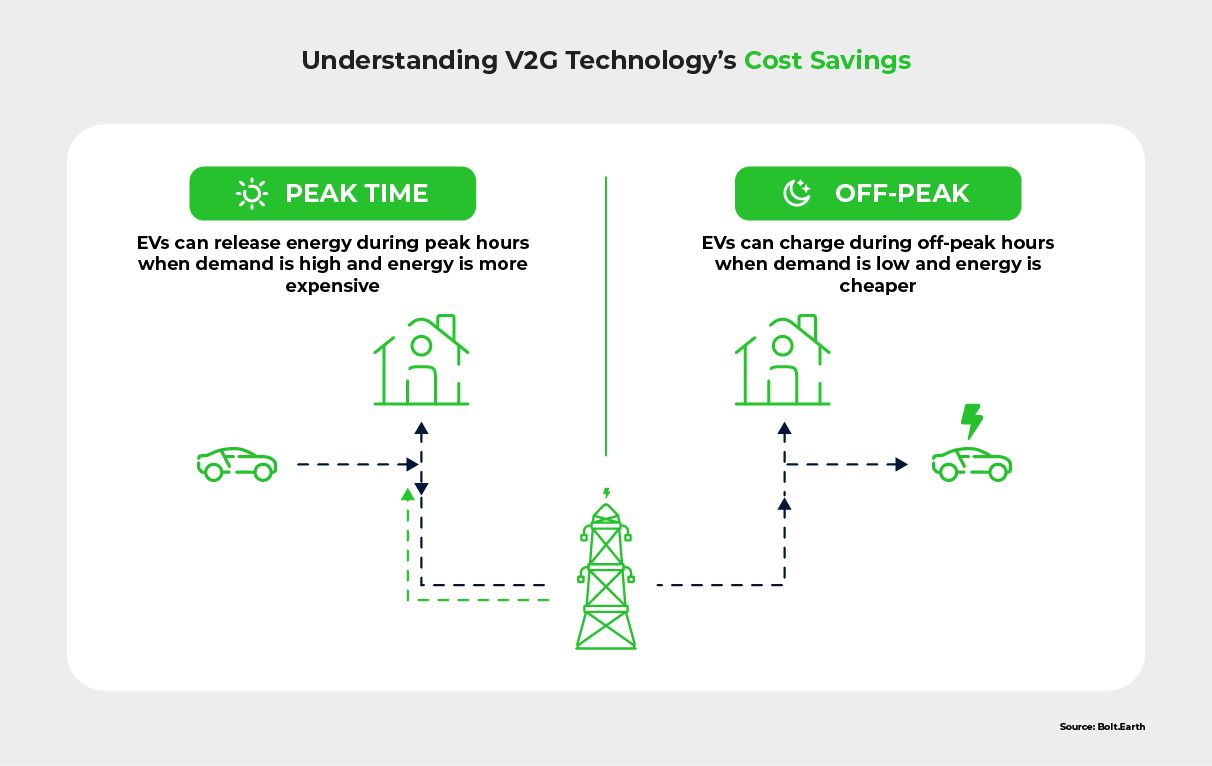
    • Integration of V2G technology: V2G can enable EVs to discharge stored energy back to the grid during peak demand periods, providing additional grid support and enhancing its resilience.

    A graphic showing V2G technology stores and discharges excess energy to the grid during peak demand

    • Increased utilization of renewable energy: A flexible grid can better integrate and utilize renewable energy sources, contributing to a greener, more sustainable future for India’s EV ecosystem.

    Investments in the electricity grid hold the potential to propel India toward a sustainable and electrified future for India.

    Unleashing India’s EV Revolution Through Grid Investment

    In the realm of electric mobility, the electricity grid serves as a beacon to power India’s EV revolution. Ongoing grid investment for EV charging can foster a nationwide network of dc fast chargers and electric vehicle charging stations in India, accelerating the next phase of the EV charging infrastructure upgrade. Furthermore, grid flexibility and smart load management will establish a symbiotic relationship between EVs and the grid, optimizing energy flow and aiding renewable energy utilization. Together, these transformative elements will steer India towards a cleaner, greener, and more electrified future.

    With united efforts from policymakers, industry leaders, and innovative thinkers, India can illuminate an electrified pathway, shaping the destiny of generations to come.

    To learn more about investing in the electricity grid, read the FAQs below.

    Frequently Asked Questions

    Why is grid investment essential for India’s fast charging infrastructure?

    Investing in the electricity grid is the backbone of a sustainable EV charging infrastructure upgrade. Strengthening the grid supports the rollout of dc fast chargers and ensures every electric vehicle charging station in India can deliver reliable, high-speed charging. Without sufficient grid investment for EV charging, the industry risks slower adoption due to limited capacity and unstable power supply.

    What benefits can prioritizing grid investing bring to EV adoption?

    Prioritizing and investing in the electricity grid will establish a reliable and widespread fast-charging infrastructure. Additionally, it enables India to optimize its power consumption and peak demand load effectively. Above all, a robust grid can scale to meet growing demands, leverage advanced technologies, and harmonize with renewable energy sources.

    How can the collaboration of policymakers and industry stakeholders enhance India’s EV infrastructure?

    Policymakers and industry stakeholders can implement supportive policies, provide incentives for EV adoption, and invest in the development of charging infrastructure. Collaboration between government authorities, utility companies, and private investors can create a conducive environment for EV growth and ensure the comprehensive availability of charging stations across India.

    What is the long-term impact of insufficient electricity grid investment on India’s EV market?

    Insufficient electricity grid investment could impede the growth of India’s EV market in the long term by constraining the expansion of charging infrastructure and causing slower charging speeds. Limited grid capacity can result in charging delays, reduced efficiency, and charging station congestion, discouraging potential EV buyers and fleet operators. All these together will impede widespread EV adoption.

    How can a reliable and efficient electricity grid enhance EV owners’ consumer experience?

    A reliable and efficient electricity grid can enable faster charging times, alleviate range anxiety, and provide seamless access to charging stations. With a robust grid, EV owners can enjoy convenient and hassle-free charging, fueling the growth of India’s EV market.

  • India’s EV Revolution: Scaling 3-Wheeled Commercial Transport [2025 Update]

    India’s EV Revolution: Scaling 3-Wheeled Commercial Transport [2025 Update]

    India’s bustling cities are undergoing a major transport transformation, with electric 3-wheeled commercial transport vehicles.

    Commonly referred to as electric rickshaws or e-rickshaws, these vehicles are steadily gaining traction in India’s bustling urban landscape. Their economic and eco-friendly nature positions them as a pivotal component in India’s stride towards 2030 EV adoption targets.

    In this article, we will take a deep dive into the 3-wheeler scene in India, focusing specifically on these three questions:

    • What is the current state of electric commercial transport vehicles and 3-wheeled commercial transport vehicles in India?
    • How can India resolve the challenges preventing 3-wheelers from scaling up?
    • Why should key players enable the transition to electric 3-wheeled commercial transport vehicles in India?

    Current Status of 3-Wheeled Commercial Transport Vehicles

    In India’s transportation system, 3-wheeled commercial transport vehicles, notably auto-rickshaws, hold a key place, often bridging the crucial last mile of a commute. Despite their usefulness, traditional auto-rickshaws, which run on internal combustion engines (ICE), are significant contributors to urban air pollution.

    On the other hand, the introduction of electric rickshaws (e-rickshaws), which produce no tailpipe emissions and operate quietly, promises to address both mobility needs and environmental concerns.

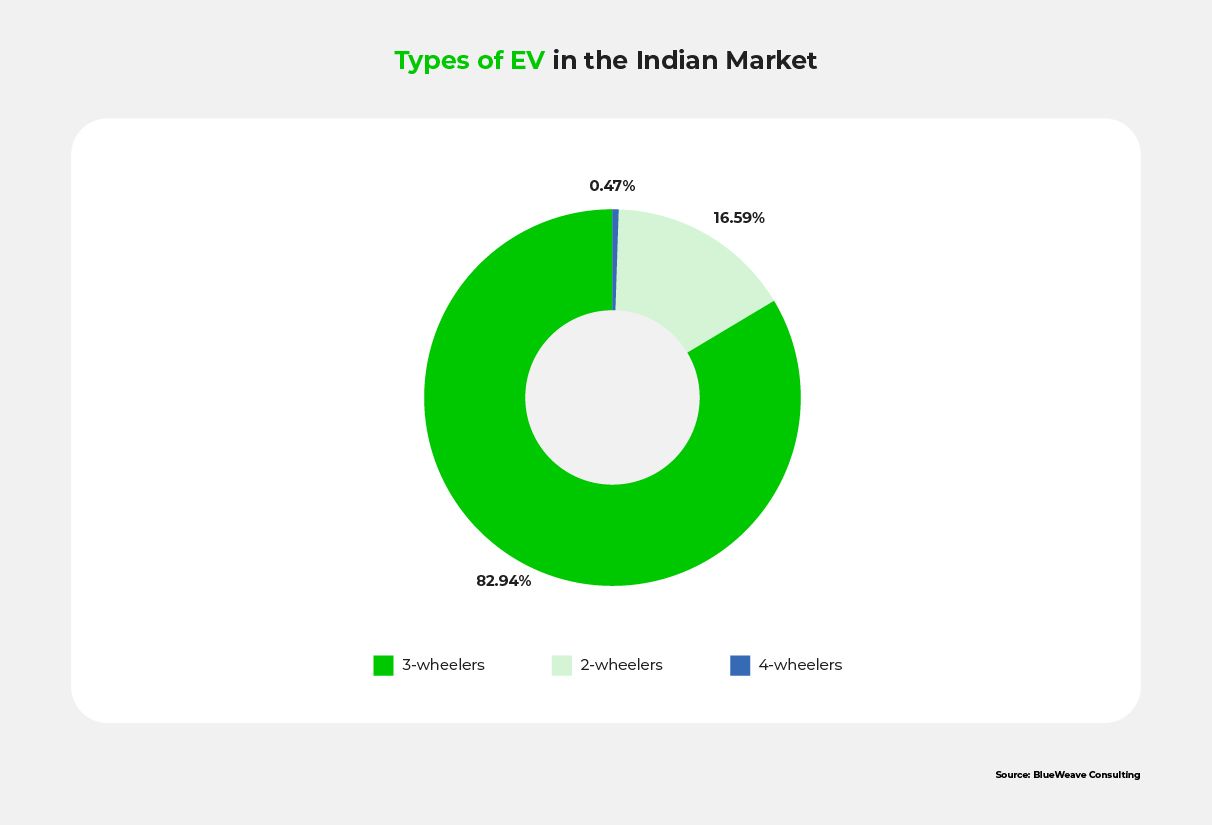
    As of 2025, electric 3-wheelers account for nearly 85% of India’s EV sales, clearly showing their dominance in the EV market.

    A pie chart showing the percentages of electric 2-wheelers, 3-wheelers, and 4-wheelers in the Indian market

    However, powering up this growing number of vehicles will require an extensive charging infrastructure. The good news is India has crossed 3,200 public EV charging stations nationwide, surpassing its earlier 2025 target of 2,600. India aims for 80% electrification of 2- and 3-wheelers by 2030.

    Currently, the charging infrastructure in India extends to homes and workplaces. It also offers both fast and slow charging solutions. Although this range of options accommodates different charging needs, it may not be enough to support the country-wide shift to EVs.

    Achieving a sustainable EV charging infrastructure will be key to powering the commercial 3-wheeler sector in India. However, this will require private sector investment and a comprehensive shift to renewable energy-supported EV charging. This might prove to be a challenging task for India.

    Key Challenges in the Path of India’s EV Infrastructure Growth

    Electric 3-wheeled commercial transport vehicles are becoming increasingly popular in India, but the supporting infrastructure is still in its early stages. Unfortunately, the journey to scale up this infrastructure to power up the 3-wheeled commercial transport vehicles is fraught with challenges.

    Below, we look at four key challenges that are hindering India’s EV infrastructure scale-up.

    1. Power Grid Capacity

    With rising EV adoption, India’s grid is already under pressure, and the anticipated surge in EVs by 2030 is expected to place significant strain on India’s power grid, potentially leading to power outages, as per a Brookings report. Moreover, uneven electricity access and fluctuating power supply across the country could further complicate the deployment of EVs.

    2. Charging Infrastructure Gaps

    The current EV-to-charge ratio in India is approximately 120:1, far higher than the global benchmark of 6-20:1.

    The charging infrastructure in India also faces another issue: its lack of standardization, which increases costs for operators. However, significant efforts are made by the Bureau of Indian Standards (BIS) to introduce national standards.

    Despite its promising future, battery swapping demands substantial upfront investment and presents several operational difficulties. It also raises legal liability concerns involving vehicle manufacturers, swap operators, and drivers in the event of accidents.

    3. Technological Developments

    Technological advancements are making EVs safer, more convenient, and more accessible. However, the faster the EV industry advances, the harder it becomes to keep abreast of the changes. If the country cannot keep up with the improvements, the EV sector might suffer greatly.

    Below, we take a look at some of these technological developments and why India might struggle to implement them:

    • Solar charging for electric rickshaws. The current solar panels for e-rickshaws are made using cheap imported materials. But improving these panels for safety and comfort may make the current price skyrocket. This would drive away potential buyers, thus reducing the overall interest in new tech.
    • Battery capacity improvements. Electric 3-wheelers typically have a shorter range per charge. But an increase in battery capacity may add to its weight, making 3-wheelers less desirable for users.
    • Lithium-ion batteries. These batteries are preferred for their fast charging and superior performance. But India’s limited lithium reserves hinder local battery production, leading to increased imports and higher overall EV costs.

    4. Consumer Awareness and Acceptance

    Consumer perceptions greatly influence EV adoption. Despite the growing range of electric options, potential buyers often lack awareness about government incentives, the economic benefits of EVs, and advances in EV technology. This knowledge gap can affect their purchasing decisions.

    An additional reason why consumers may have less interest in EVs is the lack of charging equipment and infrastructure. Although 50-90% of all EV charging happens at home, charging equipment in India may be unavailable for those without private parking amenities. Lack of charging infrastructure also raises concerns about a 3-wheeler EV’s driving range.

    Low awareness of EVs, combined with range anxiety, also puts a damper on India’s overall adoption of electric 3-wheeled commercial transport vehicles.

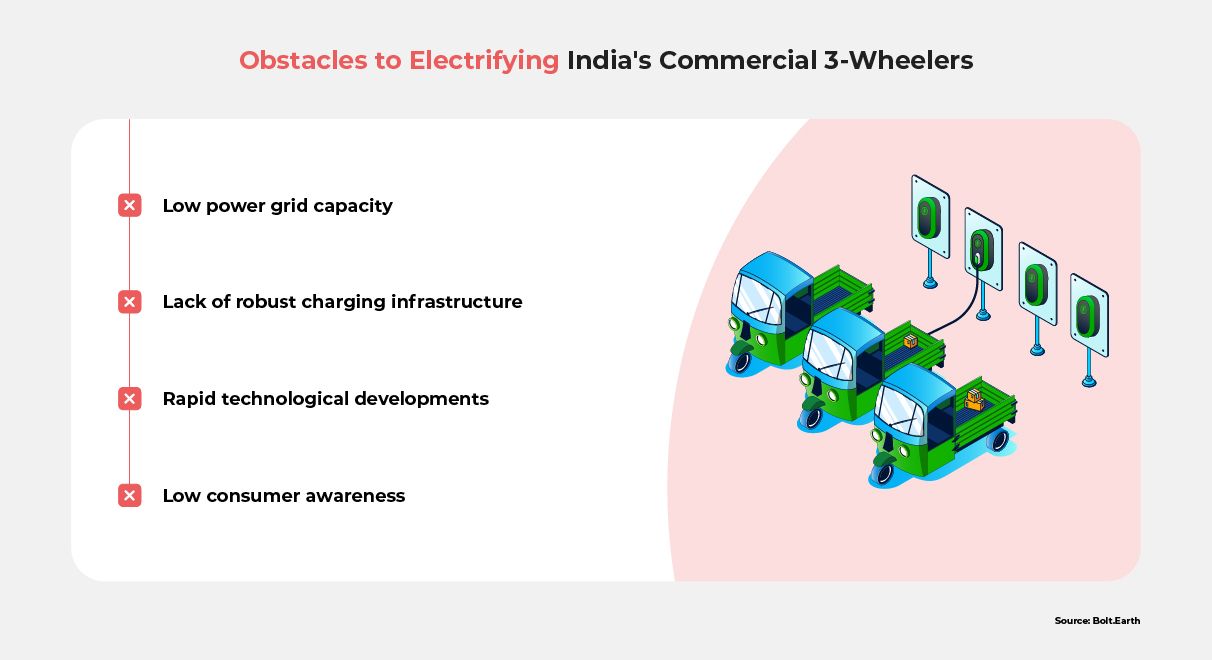
    An infographic listing obstacles to electrifying commercial 3-wheeled vehicles in India

    Strategies for Boosting India’s EV Infrastructure for Commercial Transport

    Addressing India’s infrastructure- and consumer-related challenges is key to scaling up the adoption of commercial 3-wheeler EVs. Policymakers and other key players will have to come together to implement innovative strategies that will pave the way for the full adoption of EVs in India.

    Below, we highlight four potential solutions that can help address the challenges facing EV 3-wheelers in India.

    1. Harness Smart Grid Technology

    A smart grid, which integrates information and communication technology, offers an upgrade over the conventional grid. It allows two-way transmission of both energy and information, bolstering security, efficiency, and responsiveness.

    To implement this smart grid across the country, the Indian government should offer financial support and policy encouragement. Below are some aspects to focus on:

    • The three components of a smart grid. It’s crucial to invest in energy storage units, communication systems, data analysis, and management systems for the smart grid.
    • Integration of Decentralized Energy Resources and Renewable Energy. These two together can boost India’s energy mix and increase energy storage units.
    • Smart meter devices and demand response systems. These systems are key to help monitor the grid and optimize its performance.

    A smart grid can help resolve India’s power management issues. It can offer more efficient and reliable electricity distribution, which means it can help the country manage the increased electricity demand from charging.

    A smart grid also has diagnostic features that can help reduce power outages and improve EV drivers’ access to electricity. Implementing smart grid technology will be key to helping India support the widespread adoption of 3-wheeler EVs.

    2. Promote Private Sector Investment

    Investments from the private sector are pivotal in facilitating the transition towards sustainable transportation. Investment in charging infrastructure will especially be helpful to support the growing number of 3-wheeler EVs on the road. To this end, India can propose a 5-dimensional plan:

    • Provide tax incentives and streamlined approval processes to attract private investments
    • Introduce PPP models to combine government support and private expertise
    • Improve charging infrastructure and deploy advanced technologies
    • Drive demand by boosting public awareness
    • Encourage EV financing to provide accessible and competitive EVs

    India can learn from countries like the US and China, which have greatly benefited from private sector investments. Private sector investment can help India address its infrastructure challenges. And coupled with a nationwide EV policy, charging infrastructure can make the commercial 3-wheeler EV sector a success.

    3. Invest in R&D

    Funding for research and development is vital to propel advancements in EV technology, leading to more efficient electric 3-wheelers. R&D can help India better understand the hurdles standing in the way of technological advancement. It can also shed light on solutions to those problems.

    Below are some suggestions to help India promote investment in R&D:

    • Allocate a larger budget for R&D
    • Encourage public-private partnerships
    • Promote venture capital and private equity investments
    • Engage in international collaborations
    • Establish dedicated research grants
    • Encourage industry contributions

    These measures will help attract funding, drive innovation, and accelerate advancements in electric vehicle technologies. As a result, EV technology will continue to improve and become safer, more convenient, and more accessible for all. This will greatly promote the demand for EVs, especially for electric 3-wheeler commercial transport vehicles.

    4. Create EV Awareness Campaigns

    Given the limited vehicle deployment and lack of exposure to charging stations, consumer awareness about EVs in India is still relatively low. Addressing this requires concerted awareness campaigns to educate consumers about EV purchasing, subsidies, performance, and charging station locations.

    • Propose campaigns at different political levels
    • Involve more participants, like private sector players and educational institutions
    • Leverage social media and press platforms

    These campaigns are a very effective way to broadcast the benefits of EVs. For example, in 2021, India launched the “GO Electric” Campaign to raise awareness and instill confidence among EV manufacturers and consumers. The campaign included workshops, webinars, technical talks, seminars, and road shows to connect with the masses and promote the adoption of electric vehicles. Creating similar campaigns can help more people know about the benefits of EVs, making them more desirable.

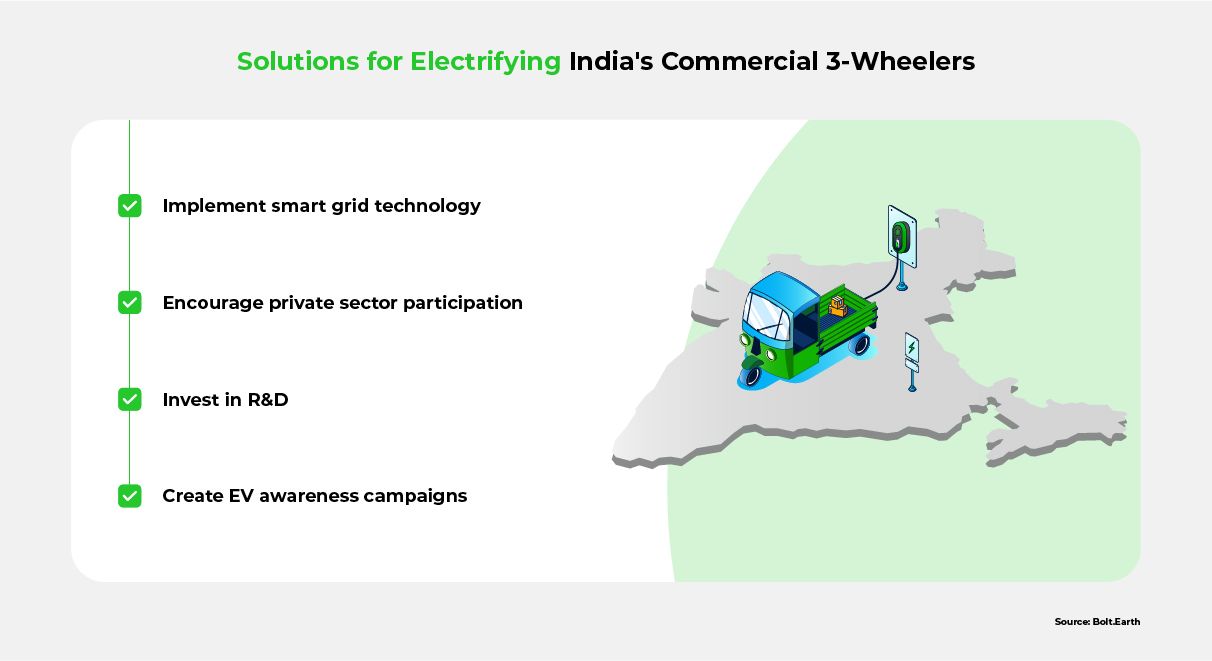
    An infographic listing ways in which India can electrify its commercial 3-wheeled vehicles

    The Role of Government Incentives & Public-Private Partnerships

    The successful deployment of electric vehicles is contingent on robust and reliable charging infrastructure. Additionally, policy frameworks that are tailored to local circumstances can greatly assist this rollout. Both government policies and public-private partnerships can be instrumental in facilitating the transition to electric 3-wheelers.

    Although India has already rolled out 18 state-level policies, all focus almost exclusively on infrastructure development. While this can help address India’s needs for EV charging, it falls short of resolving the other significant obstacles in the electric 3-wheeled commercial transport vehicle ecosystem.

    Below, we take a look at other countries’ examples and how they created policies to improve the state of their EV ecosystems. India can then take inspiration from these countries and create more comprehensive policies and partnerships that can fully cover the challenges it faces.

    International Best Practices in Government Policies

    International experience has shown that policymakers at all levels, from local to international authorities, play a crucial role in deploying public charging infrastructure for electric vehicles. Their intervention is necessary to address range anxiety and ensure sufficient coverage beyond highways and major cities.

    International government policies can help address many of the primary challenges faced by India’s 3-wheeled commercial transport vehicle sector. Here are some examples:

    Policies to Address Grid Issues

    • France declared that a portion of public EV connection costs may be assumed by the grid operator.
    • California’s Public Utilities Commission mandates that utilities provide “utility-side make-ready” infrastructure to support EV charging.

    Policies to Address Infrastructure Challenges

    • Portugal established a network management body to deploy public charging infrastructure and ensure interoperability and scalability.
    • Korea implemented a Smart Energy Strategy to ensure open access to all charging stations with a single membership card.
    • Indonesia detailed requirements for EV charging stations and battery swap stations, and offered tax breaks for the deployment of charging infrastructure.

    Policies to Promote Technological Advances

    • The Netherlands created a public-private platform to research, implement, and inform about EV policies

    Policies to Raise Awareness and Acceptance of EVs

    • China supports local governments with financial assistance for EV equipment roll-out if they have met their EV adoption targets.
    • Chile created the “Mi Taxi Electrico” program to encourage public transportation to switch from ICE to EV.
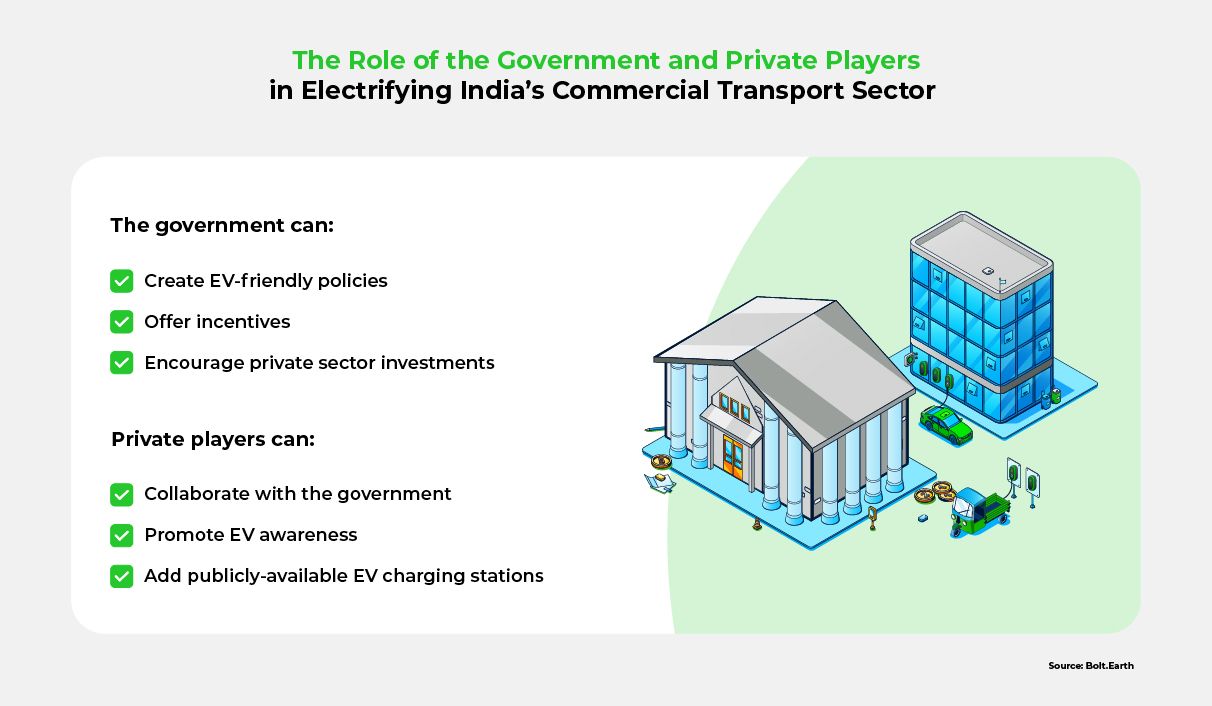
    An infographic listing ways in which the government and private players can facilitate electrifying commercial transport

    Successful Public-Private Partnerships in Other Countries

    In China, the government and utility companies heavily invest in EV charging infrastructure, supplemented by private investments. PPP initiatives in China merge public and social capital to drive the implementation of a nationwide EV charging infrastructure.

    Policies, incentives, and programs guide this development, while automakers and energy companies enhance charging infrastructure through acquisitions and joint ventures.

    In the US, a mix of federal and state programs, utility investments, private funding, and scandal settlement proceeds has facilitated the growth of the EV charging network. Despite the need for more public-private partnerships, the US is now home to 130,000+ public charging stations, minus private slow chargers.

    Strategies for Effective Public-Private Partnerships in India

    Despite the differences between these countries, China and the US’s success stories can be inspiring for India. Leveraging lessons from them can help India adopt an ambitious policy approach, which can include:

    • Integrating charging infrastructure investments into utility reforms
    • Optimizing charger utilization through strategic siting
    • Providing financing options, like low-interest loans
    • Implementing building codes to make for more EV-ready sites and buildings

    Additionally, India should establish clear guidelines and coordinate its efforts to effectively deploy charging stations. Through public-private partnerships, India can, for example:

    • Encourage oil companies to establish EV chargers to diversify their portfolio, which also boosts infrastructure development
    • Engage non-profit organizations and utilities to promote consumer awareness about EVs, which can also increase EV adoption rates in India

    These measures don’t specifically apply to the electric 3-wheeled commercial transport vehicle sector. They can, however, help India develop a more comprehensive EV charging infrastructure.

    By implementing the solutions to combat logistical and consumer-related obstacles, India can pave the way for the full adoption of electric 3-wheeled commercial transport vehicles. The electrification of the transport sector will yield beneficial results for the whole country and its population.

    The Impact of an Electric Transportation Sector

    Transitioning to electric 3-wheeled commercial transport vehicles in India holds the promise of considerable environmental and economic benefits, aligning with the nation’s transport objectives. Here’s how this transition supports these objectives:

    • Environment and air quality: Unlike their traditional counterparts, e-rickshaws produce no tailpipe emissions. This means they can reduce air pollution and improve public health.
    • Energy efficiency: Electric vehicles are far more energy-efficient than gasoline-fueled vehicles. As a result, they offer lower operating costs for drivers and contribute to nationwide energy conservation.
    • Renewable energy promotion: The surge in e-rickshaw adoption will also increase the need for renewable energy sources like wind and solar power is projected to follow suit. This has the potential to accelerate the growth of India’s renewable energy infrastructure.
    • Economic impacts: The growing e-rickshaw market could catalyze job creation in manufacturing, services, and infrastructure sectors. In addition, lower operating costs can boost drivers’ income, stimulating economic growth and potentially alleviating poverty.
    • Fulfilling international commitments: The transition to e-rickshaws supports international agreements like the Paris Agreement. This will then help India meet its commitments to combat climate change.

    Future Prospects for 3-Wheeler EVs in India

    The wider adoption of electric 3-wheeled commercial transport vehicles can offer substantial benefits to India in terms of the environment, public health, and economy.

    However, numerous challenges remain that require attention. India still suffers from a weak grid and lacks a robust charging infrastructure. The country is also unable to keep up with progress in EV technology, which also affects consumer perceptions of EVs.

    That being said, India should strive to adopt a collaborative approach involving various stakeholders. This will be key to overcoming these challenges. Policies promoting EV adoption, attractive incentives, and renewable energy investments are crucial for this transition.

    By fully embracing electric vehicles, India can pave the way for a cleaner, more efficient transportation system, securing a sustainable future for upcoming generations.

    To learn more about electric 3-wheeled commercial transport vehicles EVs in India, please see the FAQ and Resources sections below.

    Frequently Asked Questions

    What is the current status of India’s EV infrastructure for 3-wheeled commercial transport vehicles?

    India’s EV infrastructure for 3-wheeled commercial transport vehicles is still developing. Currently, obstacles such as a lack of charging stations, limited battery swapping facilities, and non-standardized chargers are apparent. However, efforts are in motion to overcome these hurdles, aiming to expand the EV infrastructure and pave the way for a smoother transition to electric vehicles.

    How can government policies and private sector investments facilitate the electrification of 3-wheeled commercial transport vehicles in India?

    Government policies and incentives can encourage private sector investment in the electrification of 3-wheeled commercial transport vehicles in India. These policies can promote manufacturing, charging infrastructure, and technological research for EVs. Public-private partnerships can further accelerate investment and cooperation, fostering an ecosystem that supports the transition to electric vehicles.

    What are the benefits of transitioning to EVs in India’s transportation sector?

    A move towards electric vehicles within India’s transport system holds the potential to significantly enhance air quality through reduced carbon emissions, increase energy efficiency, and promote economic expansion. In addition, the adoption of EVs can boost the demand for renewable energy sources, lead to job creation, and align India’s commitments to global climate change mitigation efforts.

    How could EV adoption impact the commercial transport sector in India?

    EV adoption could transform India’s commercial transport sector, leading to cleaner air and better public health due to reduced carbon emissions. Additionally, it could stimulate job growth in manufacturing, service, and infrastructure sectors and contribute to the nation’s overall energy efficiency. It can also support India in meeting its EV adoption targets.


  • An In-Depth Analysis of the Thailand EV Industry

    An In-Depth Analysis of the Thailand EV Industry

    Thailand, the top automobile producer in the south-east Asia region, is home to renowned global automakers who export internationally, besides supplying to consumers within the country. However, given the worldwide shift to electric vehicles (EV), Thailand is seeking to re-position itself at the forefront of EV manufacturing.

    To retain its central position in the auto manufacturing and export world, Thailand aims to transition 30% of its auto production to EV by 2030. Its initial focus is to promote EV sales within the country, then replace its automobile export with EVs.The production-led EV policy is bearing fruit — Thai EV sales made up 3% of total sales in 2022.

    The Thailand EV market poses an important learning opportunity for India. By analyzing the intricacies of the EV scene in Thailand’s economy, India will be better equipped to achieve its 30% EV sales target by 2030.

    This article is the first in a 6-part series that analyzes different EV markets in Asia and draws conclusions relevant to India’s EV market. This first part takes a deeper dive in the Thailand EV market, and discusses the following three questions:

    • Who are the major players in the Thailand EV industry, and what role do they play in the market evolution?
    • What initiatives is the government taking to promote the EV industry in Thailand?
    • What challenges, solutions, and investment opportunities exist in Thailand’s EV industry?

    Current State of the Thailand EV Market

    In 2017, Thailand’s Board of Investment (BOI) announced the Electric Vehicle and Hybrid Incentive Program. Under this program, the government offered incentives to manufacturers who use locally-produced batteries and other components in their vehicles. These players received steep excise tax reductions and corporate income tax exemptions of up to eight years. The program attracted over US$3.3 billion in investments.

    All the major players from Japan and Europe participated in this initiative. These included Toyota, Honda, Nissan, Mitsubishi, Mercedes-Benz, and BMW. It’s important to note that these players’ presence in the country was primarily through ICE vehicles up until that point. However, the production in this early stage of the program was mainly concentrated in hybrids and plug-in hybrids (PHEVs).

    In 2020, the BOI finally shifted its attention to battery electric vehicle (BEV) technology. It announced higher incentives for BEV project investments. These incentives attracted heavy-weight Chinese automakers. By the end of 2022, the Chinese brands dominated the BEV segment.

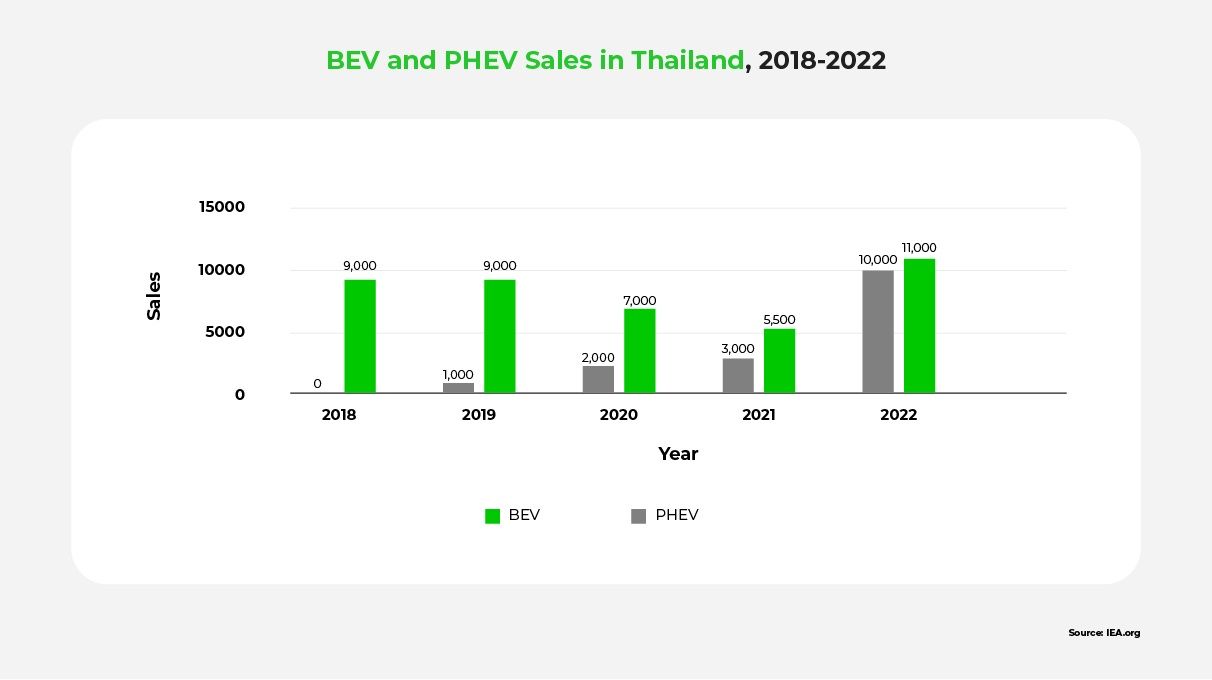
    The graph below shows the aftermath of these incentives: the number of sales in BEVs and PHEVs has seen a substantial growth between 2018 and 2022.

    Graph of the BEV and PHEV sales in Thailand from 2018 until 2022.

    Electric Cars Market in Thailand

    Two years after this shift, electric car sales reached 21,000, doubling the volume from 2021. Up until 2021, PHEVs dominated the Thai market, manufactured mostly by Japanese and European brands that were transitioning from ICE to EV technology. In 2022, the sales volume is split evenly between PHEV and BEV. Increasingly, BEV variants are gaining a greater share.

    Chinese Brands Taking Thailand by Storm

    In Q1 2023, the Chinese BEV brand, BYD, was the best selling EV. Chinese carmakers have played a significant role in accelerating the adoption of electric vehicles in the country with the launch of BEV models. According to the IEA, Chinese BEV Ora Good Cat became Thailand’s top-selling electric car in 2022, with nearly 4,000 units sold.

    The second and third best-selling electric cars in Thailand were also Chinese models. That’s no surprise; Chinese automakers were able to offer lower-priced EVs by availing of the financial incentives offered by Thailand’s government, such as subsidies, excise duty waivers, and import duty reductions.

    Japanese and European Players Exert their Influence

    Japanese and European brands are also competing with Chinese brands in Thailand. That’s especially true as more prominent brands are transitioning to EVs.

    For instance, Mercedes-Benz chose to manufacture the electric Mercedes-EQS in Thailand. The company also chose Thailand as one of its seven locations worldwide to produce high-performing Li-ion batteries.

    BMW also had early success in the Thailand EV market with its charging station-focused strategy. As of 2022, the company has cornered almost one third of the total EV base in Thailand.

    Toyota — the largest vehicle manufacturer in Thailand, Mitsubishi — the first automaker to export out of Thailand, and several other major auto brands have also announced investments in the EV Thai sector.

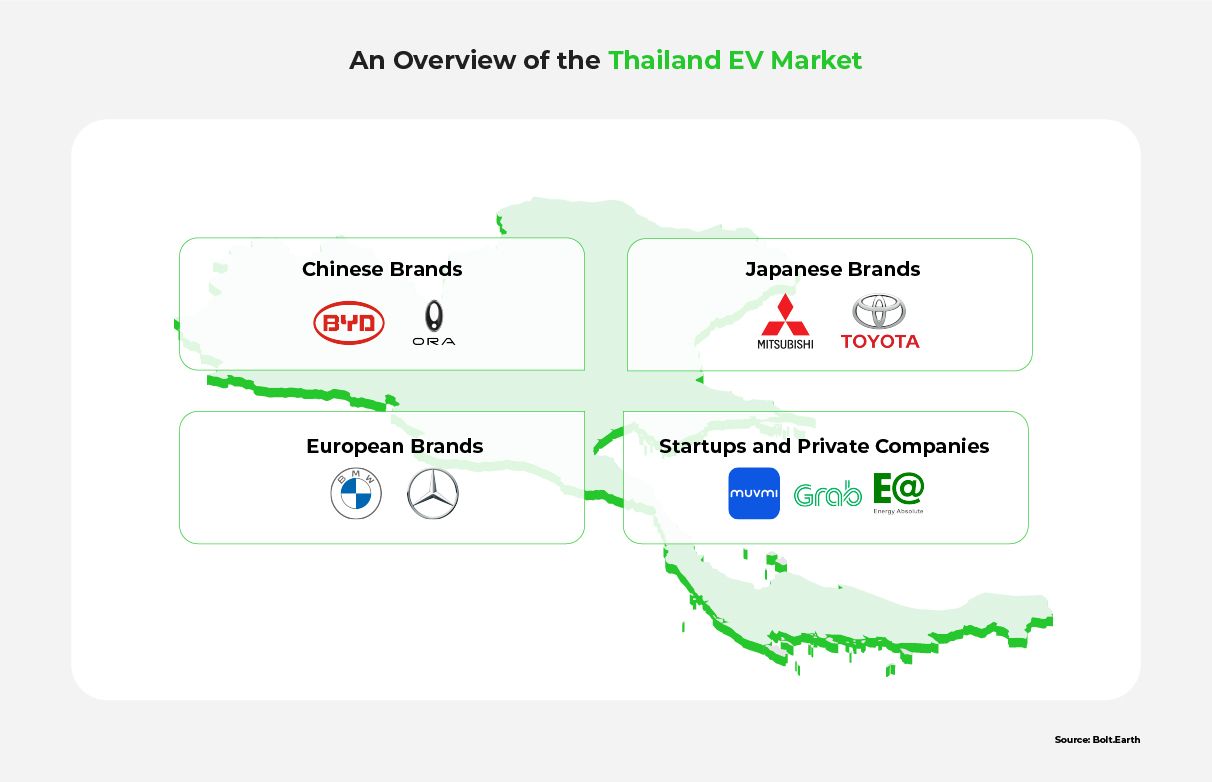
    Illustration of the different players taking part in the Thailand EV market.

    Beyond EV Cars

    Thailand’s public transportation is characterized with the tuk-tuk, or 3-wheeler auto rickshaws. Even this sector of the market is being reimagined as EVs, with innovative startups and private initiatives.

    For instance, Thai startup MuvMi is planning to triple its fleet size to about 1,000 EV tuk-tuks in 2023. Grab, a ride-hailing app company, is also converting 450 of its traditional tuk-tuks to EVs.

    Despite their higher upfront costs, 3-wheeler EVs have 80% lower running costs. As a result, demand for MuvMi and Grab EV tuk-tuks is increasing as they’re economical and also eco-friendly.

    The transition to EVs is spreading to other modes of transportation such as public buses, longtail boats, and ferries. One of the companies which has invested heavily in this EV transition is Energy Absolute, which is planning to run electric public buses, ferries, and charging stations.

    With these external players all contributing to the Thailand EV market, the government is playing an active role in promoting the transition to EVs.

    Thailand EV Targets and Incentives

    To achieve its national goal, Thailand has to have about 725,000 EVs by 2030. Ultimately, the plan is to increase production to 2.5 million EVs by 2040.

    Thailand currently exports more than half of its total vehicles produced. And with incentives, the country hopes to replicate this success in EVs as well. Below we see three incentives provided by the Thai government to make this goal a reality:

    • Tax holiday to EV manufacturers with 5,000 million + baht investment capital; PHEV: 3-year exemption; BEV: 8-year exemption + 1 to 3-year exemption in case of R&D investment
    • Tax holiday to EV component producers: Battery pack assembly, 5-year exemption; Battery module/cell production, 8-year exemption + incentive of 90% import duty reduction for raw and essential materials not available within the country for 2 years; other key EV component, 8-year exemption
    • Tax holiday to EV charging station providers: 5-year exemption to companies that build at least 40 chargers, of which at least 25% are fast chargers

    Government policy is encouraging the switch to EV by offering subsidies that should reduce the price of EVs by between around US$ 2,200 and US$ 4,800 per vehicle depending on the model and battery capacity. Despite this push, however, the Thailand EV market currently appears to be unable to unlock its full potential.

    3 Challenges in Thailand EV Market

    Although the Thai EV policy is among the most dynamic and aggressive policy frameworks, it may not be enough to achieve the national EV goals. This is because of the challenges that plague the Thai EV market.

    1. Non Comprehensive EV Policy and Regulatory Challenges

    The international regulatory environment poses a challenge for Thailand. Currently, Thailand exports most of its automotive production to Australia, Japan, China, Vietnam, and the Philippines. If these countries shift their preference to local producers, Thailand may need to look for new export destinations.

    Thai EV policy also needs to address the lack of local mineral supply as it does not have adequate sources required for Lithium-Ion batteries (LIB). Unless this constraint is dealt with, the country may be reduced to a mere EV assembly hub.

    The policies and regulations related to EV manufacturing, sales, import, and charging infrastructure in the targeted export destinations will play a crucial role in determining the success of Thailand’s EV strategy.

    2. Lack of Charging Infrastructure

    The current state of charging infrastructure in Thailand limits the widespread adoption of EVs. In 2022, Thailand had 900 fast chargers, but the goal is to have 4,400 by 2025. These fast chargers will also have to work in tandem with home chargers, slow chargers, and battery swapping stations. As newer technologies, such as wireless charging and Vehicle-to-Grid (V2G), are commercialized the market supply will need to respond to these developments.

    Graph of the expected growth of public fast chargers in Thailand.

    The government is prioritizing EV charging expansion by offering tax benefits and other financial incentives. However, unless investors have visibility of a commercially viable business model for charging infrastructure, this problem is unlikely to be resolved. In the absence of easily accessible charging infrastructure, customer demand for EVs will remain low.

    3. Need for Higher Investment in the EV Industry

    The current level of investment in Thailand’s EV market needs to be sustained to retain the competitive edge that the country enjoys in auto manufacturing and export. This might prove to be more challenging than anticipated.

    For instance, lack of awareness around the technical aspects of EVs might create a blur around the viability of EV investments. Lower consumer awareness and acceptance of EVs might also drive away potential investors.

    The opportunities of the transition to EVs aren’t limited to well-established global players — they extend to startups, too. Therefore, it becomes important to attract investment from a diverse set of players who can enable access to globally competitive EV technology.

    If Thailand fails to address these issues, it might face an investor exodus as it moves to EVs. In this event, Thailand will lose out on an important economic opportunity and its auto sector will be in crisis.

    Potential Solutions to Drive Growth in the Thailand EV Market

    Thailand will suffer grave consequences if it doesn’t maintain its spot as an auto exporter. As a result, the country must establish strategies to overcome the obstacles hindering its progress in the EV export and manufacturing landscape.

    Below we analyze three potential solutions to Thailand’s EV problems.

    1. International Orientation of EV Policy

    Because Thailand is primarily targeting international EV markets, the country should establish a clear framework to coordinate with other nations.

    In south-east Asia, Thailand can build mutually beneficial relationships with other markets. For example, Indonesia is rich in minerals and could be a good source of supply for raw material required in EV batteries. Similarly, other countries in the region could offer potential for collaboration to develop the EV market in the regions.

    The key is clarifying the guidelines that will govern these relationships. This way, Thailand can ensure it reaches its goals without suffering any negative side effects from the lack of clear EV policies.

    2. Build EV Charging Infrastructure

    Having a sustainable business model for charging is a key step to building charging infrastructure. One way to ensure Thailand’s EV charging infrastructure grows properly is to establish data collection systems from the existing charging points.

    These data collection systems can provide information about location, user behavior, utilization, and time. From there, decision-makers can understand how to create charging infrastructure suited to specific market conditions.

    For example, high-density locations with a lot of EV traffic could benefit from fast-charging stations. On the other hand, low-density locations may be able to focus on building a network of slow chargers.

    Once the charging points have been established according to the country’s needs, EV charging will be easily available. This will greatly reduce Thai consumers’ range anxiety, further boosting EV adoption within the country. Due to this widespread EV adoption, the Thailand EV market will see significant growth.

    3. Promote Investment in Thailand’s EV industry

    Thailand’s existing strengths in the automotive industry and strategic location in Southeast Asia provide a competitive advantage for the manufacturing and export of EVs and EV components.

    These advantages can be leveraged to forge partnerships with emerging EV players. Government policy should provide a platform and framework to enable the players to engage and explore partnership opportunities.

    EV technology is expected to evolve rapidly and early investments can help gain crucial first-mover advantage. For example, research and development in battery and charging technology could help accelerate the growth of EV. Innovative modes of financing such as public-private participation and green financing should be explored to encourage research in EV technology.

    Infographic of the three ways Thailand can position itself as a top EV manufacturer and exporter.

    Potential of EVs in Thailand

    Thailand is a prominent figure in the worldwide auto industry. This, however, does not guarantee its success in the EV transition. As a result, the country is putting intense efforts to grow its EV market.

    Greatly aided by external auto players, mainly from China, Japan, and Europe, Thailand is slowly becoming an EV manufacturing and export hub. Nonetheless, the country is still facing significant regulatory, infrastructure, and financing challenges.

    Investors who can leverage policy incentives to navigate these challenges will be well-placed to take advantage of the huge opportunity offered by Thailand’s EV industry. The Thailand EV market offers investors a pathway to tap not only the national market but also international markets in south-east asia, asia-pacific, and beyond.

    The next part of this series will focus on Indonesia’s EV market. It will also discuss the players and challenges facing electrification in the country.

    To learn more about the Thailand EV market, please see the FAQ and Resources sections below.

    FAQ

    What are the incentives for EV investors in Thailand?

    Thailand’s Board of Investment has announced various policy incentives to attract EV investors. These include a reduction in excise tax and import duties on completely knocked down and completely built-up units of EVs. Thailand also offers an exemption of import duties on EV parts, such as batteries, traction motors, compressors, battery management systems, drive control units, and reduction gears. Finally, the country provides tax holidays for EV manufacturers, component producers, and charging station providers.

    How is the Thai government promoting the adoption of EVs in the country?

    Government policy is encouraging the switch to EV by offering subsidies that reduce the price of EVs by around US$2,200 to US$4,800 per vehicle, depending on the model and battery capacity. Moreover, to address range anxiety among consumers, the government is prioritizing EV charging infrastructure development by offering tax and other financial benefits to charging providers.

    How does the cost of owning and operating an electric vehicle compare to a gasoline-powered car in Thailand?

    An EV has a higher upfront cost when compared to traditional fossil-fuel vehicles. However, the running cost of an EV is much lower. For those who commute daily, an EV may be more economical because the daily saving in fuel cost and in maintenance cost over time may offset the high upfront cost.

    What investment opportunities are available in Thailand’s EV market?

    The Thailand EV market presents many investment opportunities. For example, policymakers are encouraging all EV manufacturers, component producers, battery companies, and charging station providers to invest in Thailand. This is an interesting opportunity since each segment has multiple sub-segment. This means investors and companies can diversify their assets in the Thai EV market, which ultimately benefits them.

    Resources

    Baker Mckenzie: Thailand: Electric Vehicles — A New Automotive World Order

    Discover how Thailand is preparing for nationwide EV adoption.

    Reogma: Assessment of the Electric Vehicle (EV) Landscape in Thailand

    Dive deep into Thailand’s EV landscape. Understand the risks, drivers, and restraints that influence the Thailand EV market.

    KPMG: Electric Vehicles in Thailand

    See the progression of the EV market in Thailand with numbers.

    Fitch Solutions: Thailand EV Profile

    See how the EV market in Thailand will continue to evolve between 2023 and 2032.

  • Innovative Financing Models for India’s EV Charging Infrastructure

    Innovative Financing Models for India’s EV Charging Infrastructure

    As India aims to accelerate its transition to electric mobility, the development of a robust and extensive EV charging ecosystem becomes paramount. However, by 2030, the nine largest cities are projected to need 46,397 public charging stations — highlighting the increasing demand for charging infrastructure.

    The success of India’s shift to sustainable transportation relies heavily on the country’s ability to establish accessible and affordable EV charging infrastructure. Innovative EV infrastructure financing models can play a vital role in facilitating the affordability, scalability, and private sector involvement required to develop a comprehensive nationwide charging network.

    In this article, we delve deeper into the following questions:

    • What are the current financing challenges for EV infrastructure in India, and why is it important to address them?
    • How can innovative EV infrastructure financing models boost EV adoption in India?
    • Why are these innovative financing approaches likely to be effective for India, and what is their potential impact?

    Current State of India’s EV Charging Infrastructure

    In 2012, the Indian government launched the National Electric Mobility Mission Plan 2020 (NEMMP-2020) with the goal of achieving an annual sales figure of 6-7 million EVs in the country by the end of the decade.

    To support this mission, the Department of Heavy Industry (DHI) developed the Faster Adoption and Manufacturing of (Hybrid &) Electric Vehicles (FAME) scheme. The graph below highlights the potential outcomes of these initiatives.

    Graphic of the expected EV sales in India, between 2021 and 2030.

    During Phase-I of FAME, the Ministry of Heavy Industries authorized approximately 520 EV charging stations at the cost of around Rs. 43 crore. Similarly, other incentives and subsidies were offered to foster the growth of the EV ecosystem.

    In Phase II of the FAME India Scheme, a budget allocation of Rs. 1,000 crore was designated for a five-year period ending in 2024, dedicated to the establishment of charging infrastructure.

    Moreover, the Ministry of Heavy Industries has also issued Rs 800 crore to the public sector oil marketing companies, tasking them with the installation of 22,000 EV charging stations across the country by 2024.

    Currently, 6,586 public charging stations in India cater to over 2 million EVs. FAME-II plans to establish 2,877 charging stations across 68 cities and 1,576 charging stations along nine expressways and 16 highways. Among the states, Delhi has the highest number, with 1,845 available. However, there’s still considerable ground to cover before the policy target is achieved.

    As challenges and areas for improvement are identified, comprehensive financial models can bridge the gap between availability and the projected requirements while ensuring affordability, adaptability, and speedy deployment of charging infrastructure.

    Examining India’s Goals

    India is targeting 30% EV penetration by 2030, which will rely on a robust network of charging stations to soothe EV users’ range anxiety. Financing plays a key role in facilitating convenient and affordable access to public EV charging facilities.

    Horizontal bar graph of the number of public EV chargers today and the number needed by 2030.

    According to the Centre for Energy Finance, India requires a network of 29,38,000 public chargers to meet its 2030 EV vision, with low capacity chargers contributing for 71% of the network. This projection is based on multiple factors, including projected GDP growth, the automobile industry’s contribution to GDP, and the penetration of EVs. This vision for 2030 outlined by NITI Aayog, a government-linked think tank, serves as the base case scenario.

    Bar graph of the base case for EV use by 2030 in India.

    Challenges of Infrastructure Funding

    Adequate charging infrastructure is pivotal in driving the transition towards EVs. It provides the necessary convenience for potential buyers and EV users. However, establishing a network of charging stations requires substantial upfront investment, including the cost of land and equipment. Funding EV charging infrastructure in India poses a significant obstacle to the widespread adoption of electric EVs in the country.

    To encourage private companies to invest in EV structure development, a stable and predictable regulatory environment is crucial. With a clear forecast of EV charging demands and revenues, private companies can confidently commit their resources to these projects. Current uncertainty over EV charging demand and revenues, however, leaves companies hesitant to invest in charging infrastructure ventures.

    Below we examine three challenges in financing India’s EV infrastructure:

    1. Bridging the Funding Gap

    Investors are finding it increasingly difficult to estimate EV project costs and revenue. India’s Centre for Energy Finance estimates a requirement of Rs 20,600 crore (USD 2.9 billion) worth of funding for India to meet its public charging needs. Another study predicts investments upwards of Rs 1 lakh crore by 2032, to cater to the growing demand for EVs, which is expected to grow at a compounded annual growth rate (CAGR) of 39%. Additionally, long payback periods, high upfront costs, and uncertain return on investment further complicate the development of viable business models, deterring potential investment.

    2. Governmental Challenges

    The Indian government faces budgetary constraints and competing priorities as it allocates funds across various sectors, including healthcare, education, and infrastructure development. These limitations restrict the available funding for developing charging infrastructure.

    3. Challenges for the Private Sector

    High capital costs associated with setting up EV infrastructure pose a significant challenge for private sector investment decisions, especially when uncertain returns on investment and evolving business models for charging stations further complicate investment decisions. Financial incentives such as grants, subsidies, or low-interest loans can help alleviate the burden of high capital costs for private companies and encourage private sector investment.

    To overcome these challenges, innovative public-private partnership models and collaborative arrangements can make a significant difference. These models, like revenue-sharing agreements or performance-based incentives, can help align the interests of public and private entities.

    Financing Models to Promote EV Infrastructure Funding

    Innovative approaches to EV infrastructure financing in India have the potential to attract private sector investment, bridge the funding gap, and support widespread EV adoption.
    These approaches offer promising opportunities to secure necessary capital, ensuring the development of a comprehensive EV ecosystem that meets the growing demand.

    Infographic of the three financing models for EV infrastructure.

    Public-Private Partnerships

    Public-private partnerships (PPPs) foster collaboration between government and private entities to develop and finance EV infrastructure. These partnerships allow for resource pooling, risk-sharing, and shared responsibilities. Such risk-sharing mechanisms make investment more viable for private companies.

    To incentivize private sector involvement, funding models like revenue-sharing and performance-based incentives can be implemented. Transparency and fairness are essential to the success and long-term sustainability of these partnerships.

    Delhi’s successful PPP implementation is expanding for greater reach. It serves as an example of how collaboration between the government and private entities can drive the growth of EV infrastructure.

    Corporate Social Responsibility (CSR) Funding

    Corporate Social Responsibility (CSR) funding has been mandated by the Companies Act 2013 for companies that meet certain financial thresholds. The act requires eligible companies to allocate at least 2% of their average net profits earned during the previous three financial years on CSR initiatives. The act also provides guidelines on eligible activities, reporting requirements, and monitoring mechanisms for CSR expenses.

    CSR funding provides an avenue for companies to invest in environmental causes. In India, the annual CSR funding available exceeds Rs 26,000 crore. Companies can support EV infrastructure financing and development by investing in charging stations as part of their CSR activities, contributing to a greener future.

    Establishing charging infrastructure at their offices and their local area can also benefit their employees and the local community.

    For companies, CSR spending on EV charging infrastructure offers an opportunity for brand building and enhancing their corporate reputation. Such companies can improve their ESG (Environment, Social, and Governance) score and attract investment from ESG funds.

    Additionally, companies that follow sustainable business practices are generally preferred by consumers, employees, investors and the public. A good ESG reputation will benefit companies in multiple ways and help them gain a competitive edge.

    Infographic of the five biggest Indian ESG funds, by size.

    Community-Based Funding

    Community-based funding involves mobilizing resources from local communities to support the development of EV infrastructure. It encourages grassroots participation and engagement, leading to a stronger commitment to maintaining, utilizing, and promoting the charging infrastructure.

    Community funding can complement government and private sector efforts, especially in areas where commercial investments may be limited. This model has been proven successful in various sectors, such as the establishment of India’s robust telecom payphone system. Additionally, recent peer-to-peer (P2P) business models like Airbnb and Uber have achieved global success.

    A P2P charging network built by EV enthusiasts who voluntarily contribute to expanding the charging infrastructure map. They can share the availability of their private charging stations with others, helping address gaps in charging infrastructure.

    However, community-based funding may face limitations in generating significant capital compared to government or private sector investments as it relies heavily on voluntary contributions and community participation. Scaling up this approach to meet the national demand for charging infrastructure could pose challenges. Nevertheless, it can effectively complement other approaches and fill the gaps in specific regions of India.

    Impacts of Indian EV Infrastructure Growth

    Implementing innovative EV infrastructure financing approaches in India can have positive economic, environmental, and social impacts, such as job creation, reduced air pollution, and increased energy security. Specific financial relationships can also make a difference.

    Economic and Environmental Impact

    Public-Private Partnerships, Corporate Social Responsibility initiatives, and community-driven funding for the EV charging infrastructure market in India can contribute to market growth, cost efficiency, revenue generation, employment opportunities, and local economic development.

    Public-Private Partnerships

    PPPs employ innovative business models that optimize operational costs and enhance the efficiency of charging infrastructure. This results in affordable and accessible charging services for end-users.

    Corporate Social Responsibility Initiatives

    CSR funding establishes charging stations in previously overlooked areas. This not only expands coverage and accessibility for EV owners, but also contributes to economic growth and job creation in these regions.

    Community-Driven Funding

    Community funding promotes a more inclusive and widespread infrastructure network driven by entrepreneurship. It encourages the development of small businesses and organizations within the community, leading to employment opportunities and local economic development.

    Clean-Energy Benefits

    EVs increase energy security by reducing reliance on imported fossil fuels, as the electricity used for charging can be generated from domestic renewable energy sources. Moreover, EVs have zero tailpipe emissions, leading to improved air quality. This environmental impact generates economic benefits such as reduced healthcare costs from lower levels of respiratory illnesses and related health problems. Thus, the environmental benefits of EV adoption goes hand-in-hand with India’s economic interest, improving quality of life for all across the country.

    Economic Windfall

    The widespread adoption of EVs can stimulate economic growth and create 50 million direct and indirect job opportunities. The growth of the EV industry can also lead to increased investment, technological advancements, and export opportunities, further boosting the economy. The estimated impact of EV adoption on India’s GDP is Rs 14,42,400 crore boost. This includes the impact from EV component manufacturing, assembly, sales, maintenance, and charging.

    India’s Global Leadership in EV Adoption

    India has the potential to become a global leader in the EV industry, given its large population and commitment to sustainability. Currently, India is the fifth-largest automobile market in the world, and is on track to be the third-largest by 2030.

    By strategically employing public-private partnerships, community-based funding, and CSR initiatives, India can attract investment, foster innovation, and develop an advanced EV ecosystem, leading to a transformative shift toward sustainable mobility and business growth.

    The potential for India to become a global leader in EV adoption carries profound benefits and implications and innovative financing approaches could help realize its possibilities.

    Promoting the Future Through Collaborative Funding

    India’s transition to EVs will help foster economic growth, contribute to climate change mitigation, and improve public health. However, the establishment of a universal and affordable charging infrastructure is essential for India to make this change.

    EV infrastructure development is plagued by a lack of funding. To overcome hurdles and expedite India’s transition, India’s communities must seek and instill comprehensive EV infrastructure financing solutions.

    Collaborations between government entities and private companies offer a promising approach, leveraging the strengths of both sectors. Innovative financing models, such as strategic partnerships between retail hubs and renewable energy companies, can expedite the development of EV charging infrastructure.

    The time is ripe for all stakeholders, including government agencies, investors, and private entities, to come together and develop innovative financing approaches that will shape India’s electric vehicle future. Together, we can ensure a sustainable and prosperous future for India’s transportation sector.

    For more information on EV infrastructure financing, please see the FAQ and Resources below.

    FAQ

    What is public-private partnership financing for EV infrastructure, and how does it work in India?

    Public-private partnership (PPP) financing for EV infrastructure involves collaboration between government entities and private companies to develop, finance, and operate charging infrastructure in India. This model allows for the sharing of risks, resources, and expertise between the public and private sectors, accelerating the expansion of EV charging infrastructure networks. It enables the government to address funding constraints in tandem with the private sector.

    How can community-based funding models support EV infrastructure development in India?

    Community-based funding models involve active participation and financial contributions from local communities for the installation and maintenance of charging stations. This instills a sense of ownership among community members. By harnessing the collective power and enthusiasm of local communities, community-based funding models can supplement government and private sector investments in EV infrastructure development and ensure the establishment of charging infrastructure in areas where traditional financing may be limited.

    How can innovative financing approaches for EV infrastructure contribute to India’s sustainability goals?

    Innovative financing approaches for EV infrastructure will enable rapid expansion of charging infrastructure. With an increase in charging infrastructure EV users will have universal and affordable access to charging facilities. This will lead to an increase in EV adoption. With more users adopting EVs, India will be able to reduce carbon emissions, improve air quality, and transition to green energy. Thus, innovative financing models support India’s sustainability goals and help to achieve the environmental benefits associated with green energy.

    What role can government policies play in facilitating innovative financing approaches for EV infrastructure in India?

    Supportive government policies provide a conducive environment for investments in EV infrastructure. A supportive policy framework can include incentives, tax benefits, and subsidies for private sector investments in EV infrastructure. By establishing clear targets and timelines, such as the number of charging stations to be installed the government provides clarity about future investment prospects. Clear and consistent policies provide a sense of stability and reduce uncertainty, attracting investors.

    How can stakeholders collaborate to create successful innovative financing approaches for EV infrastructure in India?

    Different stakeholders such as government agencies, private companies, and community organizations can collaborate to develop innovative solutions to the charging infrastructure challenges. By pooling their resources, expertise, and perspectives, stakeholders can leverage their respective strengths. Government can formulate a policy framework to encourage public-private partnerships, such as between renewable energy companies and residential communities to set up charging stations. Similarly, private companies and community organizations can work together on CSR projects to establish charging stations.

    Resources

    CEEW: Financing India’s Transition to EVs

    Learn why India needs EV infrastructure financing to boost EV adoption.

    IBEF: EV Market in India

    Learn about the drivers and obstacles to EV adoption in India.

    India Times: How Adequate Finances, Infrastructure Can Provide Fillip to India’s EV Dreams

    Learn innovative insights about the needed EV infrastructure financing models to support India’s EV30@30 goals.

    The Economic Times: India to See 48k More EV Chargers with Investment of Rs 14,000 Crore in 3-4 Years

    Read why the India EV market is in rude health.

    India Times: Charging Infrastructure Needs Big Push as EV Adoption Grows in India

    Learn about the urgent need for improvements in charging infrastructure.

    Inc42: Does India’s Current EV Infrastructure Support The Rising EV Adoption Trend?

    Is India’s infrastructure up to the task of facing EV adoption trends?

  • The Impact Of EV Charging Infrastructure On Mobility in India

    The Impact Of EV Charging Infrastructure On Mobility in India

    In the rapidly changing automotive world, India’s robust EV infrastructure can shape the future of mobility. However, this transformative journey faces hurdles due to inadequate charging stations, curbing the growth of electric vehicles.

    The journey towards electrification, and its associated mobility shift, hinges on the implementation of a cohesive EV charging network through innovative renewable energy solutions and advanced battery technology. Effecting this shift is crucial for socioeconomic development, environmental preservation, and sustainable transportation.

    This article investigates these challenges and the potential of stakeholder collaboration to expedite the deployment of EV infrastructure by addressing the following questions:

    • What challenges does India’s transportation sector face, and why is India struggling to address them?
    • How can EVs and EV charging infrastructure help address the transportation sector’s challenges and improve Indians’ mobility?
    • Why is it essential for stakeholders to collaborate and overcome obstacles to fully leverage the mobility benefits of EVs and successfully deploy EV charging infrastructure?

    India’s Current State of Mobility

    India’s mobility landscape has grown substantially, with National Highways expanding from 97,830 km to 145,155 km in just a decade, as seen in the chart below.

    Despite this progress, the transportation sector still experiences significant challenges. Critics frequently characterize India’s transportation system as insufficient and outdated. Traffic congestion, narrow roads, and inefficient public transport, cost India an estimated $22 billion a year in wasted fuel and lost productivity.

    India’s slow post-pandemic economic recovery has compounded the problem. Inflation and higher borrowing rates have disrupted the automotive industry, and structural shifts related to the advent of electric mobility have created uncertainty for manufacturers and investors.

    Furthermore, India’s environmental goals have made the transportation sector’s condition even more urgent. According to IQAir’s 2022 report, India contains 10 of the world’s most polluted cities.

    This high pollution rate is partially due to the transportation sector, which contributes 18% to national energy consumption — equivalent to approximately 94 million tonnes of oil (MTOE). In addition, vehicular emissions like PM2.5, nitrogen oxides (NOx), and volatile organic compounds (VOCs) significantly affect air quality and public health.

    In response to the Paris Agreement, India aims to achieve 30% EV adoption and reduce GDP emissions intensity by 33-35% by 2030. By the same year, it targets 450GW of renewable energy installations, significantly greater than its current installed capacity (82.6GW) and its 2019 electricity grid size (362GW).

    This ambition necessitates a comprehensive roadmap, in which the transportation sector will play a crucial role. As a result, the Indian government is actively promoting EVs through a variety of initiatives as seen in the table below.

    Table displaying key governmental initiatives to promote EV adoption in India.

    Obstacles to Implementing EV Charging Infrastructure To Transform Mobility In India

    Expanding India’s EV market requires a robust, sustainable charging infrastructure. According to data from Customized Energy Solutions, 17,520 EV chargers were sold in 2021, with a combined capacity of 201.5 MW. These chargers were provided by EV original equipment manufacturers and procured by PSUs, commercial fleet operators, bus operators, and charging service providers.

    Despite this auspicious growth, various hidden challenges still hinder the transformation of mobility, ranging from insufficient charging stations to a lack of stakeholder coordination. The high cost of establishing charging stations and a broader electricity grid poses even more problems.

    1. Lack of Charging Infrastructure in Remote & Rural Areas

    India’s Ministry of Power mandates a charging station every 25 km on highways, for a total of 11,596 stations. As the map below demonstrates, however, the current situation is very different.

    Not only does India have a mere 1,742 stations, but most of them are situated in urban areas like Delhi, Mumbai, and Bengaluru, making for a dramatically unequal distribution of this vital EV infrastructure. The focus on urban development is understandable, given that the potential for EV usage is higher in cities, but it leaves rural areas drastically underserved.

    2. Limited Grid Capacity

    A 2019 Brookings India report suggests that EVs can substantially reduce the strain on India’s power grid. Even if India were to achieve 100% EV sales by 2030, electricity demand would only be around 100 terawatt-hours (TWh). Given projections, EVs would account for 1.3% to 4.8% of overall electricity demand, mitigating concerns about power capacity gaps.

    Bar chart showing EVs' reduced electricity requirements.

    However, two issues still require attention. First, EVs add to the volatility of instantaneous demand due to their high charging capacities, potentially affecting grid stability.

    Second, although actual charging hours might be low, the surge in power requirement when EVs are plugged in would be high, meaning that increased EV adoption might create unforeseen problems by transforming the demand pattern of electricity in India.

    Adopting smart grid strategies is, therefore, essential to managing peak demand and ensuring reliable power supply to charging stations.

    3. Technological Limitations

    All three of the currently available EV charging technologies — conductive charging, inductive charging, and battery swapping — come with their own challenges and limitations.

    • Conductive charging, using either AC or DC, hinges on an onboard charger. While DC can charge 80% of an EV battery within 30 minutes, it costs more and can accelerate battery degradation with frequent use. AC charging is more economical but requires 4 to 10 hours for a full charge using 240V.
    • Inductive charging involves wireless electricity transmission through induction, reducing land needs but increasing costs due to auxiliary devices like high-frequency transformers and SCADA systems.
    • Battery swapping stations present a unique solution, substituting drained batteries with fully charged ones. However, standardizing batteries, addressing ownership issues, and concerns over degradation pose their own problems.

    As a result, research in charging technology is critical. Technological breakthroughs will overcome the current limitations, enable mass production of charging equipment, and facilitate large-scale infrastructure, thereby alleviating ‘range anxiety’ for prospective EV owners.

    4. Regulatory and Policy Barriers

    India’s Faster Adoption and Manufacturing of Hybrid and Electric Vehicles (FAME) schemes are aimed at promoting EV adoption. However, compared to other countries with similar schemes — such as Singapore’s, whose comprehensive approach uses tax incentives, regulations, and standards to support EVs — India still has miles to go.

    Singapore’s goal of deploying 60,000 EV charging points by 2030 sets a significant benchmark. If India is to catch up, it will have to address challenges like inadequate charging infrastructure, high EV costs, lack of consumer awareness about EV technology, and the need for better coordination among governmental bodies and the public-private sectors.

    Why Is India Struggling to Address These Challenges?

    Transforming mobility in India, a diverse, sprawling nation, via the adoption of EVs presents significant challenges, particularly given India’s large automobile market. To scale the necessary infrastructure, India needs a vast number of charging stations. This requires considerable investments of time, funds, and logistical efforts. Stable energy supply and grid reliability are also crucial for the deployment of EV infrastructure. However, India still faces grid stability issues, especially in rural regions.

    The cost of developing EV charging infrastructure is a potential deterrent to investors, as the Indian market values cost-effectiveness. The complexity of policy and regulatory issues exacerbates these economic challenges. Because India’s EV policy framework is still evolving, many crucial areas, such as charging infrastructure standards, charger grid integration, and power tariffs, remain unclear.

    Furthermore, public awareness and acceptance of EVs remain relatively low in India, slowing demand and, consequently, infrastructure development. The urban-rural disparity in infrastructure development also needs to be addressed for a successful nationwide transition to EVs. Most developments are concentrated in urban areas, leaving rural regions underserved.

    Finally, current battery technology and charging speeds pose a concern. Charging an EV is significantly more time-consuming than refueling a conventional vehicle, which might discourage potential EV adopters.

    Overcoming these barriers demands concerted efforts from the government, private sector, and consumers. These could involve financial incentives to offset infrastructure costs, grid enhancements, streamlined policy and regulatory frameworks, and public education campaigns on EV benefits, all of which are critical to India’s sustainable transportation shift.

    Solutions for Successful EV Charging Infrastructure Deployment

    Key strategies for bolstering India’s EV charging infrastructure include standardization of charging protocols for interoperability and user experience, innovative charging solutions, and multi-stakeholder collaboration, all of which will enhance EV convenience and efficiency.

    1. Development of Charging Infrastructure in Remote & Rural Areas

    Expanding charging infrastructure to rural areas is crucial for nationwide EV adoption in India. Innovative solutions, like solar-powered stations and mobile units, can address limited grid connectivity.

    Solar-powered stations utilize renewable energy to provide sustainable charging options, while mobile units can bring charging facilities directly to remote locations, ensuring on-the-go charging options for remote EV users.

    2. Partnership and Collaboration to Improve Infrastructure and Mobility

    Establishing a comprehensive EV charging network in India requires the synergistic collaboration of multiple stakeholders, including government entities, private firms, and communities.

    Harnessing public-private partnerships can marshal requisite investments and expertise, facilitating infrastructure development. Expanding existing alliances among auto manufacturers, charging station providers, and regulatory bodies will provide the impetus for wider, transformative impacts.

    3. Technology and Standards

    Standardization of charging systems for interoperability among various EV models is a crucial step toward addressing “charging point anxiety”. Incorporating technological advancements such as fast charging, wireless charging, and vehicle-to-grid technology can also significantly elevate the EV charging infrastructure’s usability and accessibility.

    4. Smart Grid and Energy Storage

    Implementing smart grid technology and energy storage solutions can help manage peak power demand and ensure a reliable power supply for EV charging stations. These technologies can balance electricity loads, store excess power during off-peak times for use during high-demand periods, and enhance the overall efficiency and reliability of the power grid.

    5. Supportive Policies and Regulations

    Policies and regulations that incentivize EV adoption and facilitate the deployment of charging infrastructure are essential catalysts for a thriving EV ecosystem. For instance, tax incentives, low-interest loans for charging station installation, and mandatory EV charging provisions in building codes can boost the growth of EVs and charging infrastructure. Governmental initiatives to subsidize EV purchases or provide free or discounted charging can further accelerate the adoption of EVs.

    Fortunately, many states have already adopted initiatives for charging infrastructure planning. The table below shows some states’ incentives for EV 2-wheelers specifically. However, the same can apply to all types of EVs to fully transform mobility in India.

    Table comparing EV incentives across participating states in India.

    Improving Indian Mobility via EV Charging Infrastructure

    As urban migration strains India’s mobility infrastructures, the government looks to EVs for sustainable solutions. Rapidly increasing vehicle ownership, especially two-wheelers, raises energy consumption to unsustainable levels. It also perpetuates India’s oil dependency; transport accounted for a full 50% of India’s oil use in 2020.

    Transitioning to EVs could mitigate pollution, reduce oil dependency, and stimulate economic opportunities. Therefore, India needs to pursue cleaner energy and greener low-carbon fuel, with electric mobility and clean energy vehicles taking the lead.
    Achieving these benefits requires widespread societal backing for pro-EV policies and substantial expansion of the EV charging infrastructure.

    Increased Access to Transportation Options

    Boosting the number of EV charging stations across India enhances the convenience of charging EVs, mitigating range anxiety and thereby promoting wider adoption of these vehicles.

    A comprehensive charging infrastructure not only incentivizes EV usage but also catalyzes the growth of the e-mobility sector, generating considerable progress toward a sustainable and environmentally friendly transportation ecosystem.

    Improved Range and Reliability for EVs

    Technological advancements are improving EV range capabilities, thereby rendering EVs more suitable for long-distance travel. A reliable and accessible charging infrastructure boosts user confidence, emboldening EV owners to undertake longer journeys without the fear of running out of charge. The distribution of charging points is a key factor in alleviating range anxiety and encouraging acceptance of EVs.

    Increased Innovation and Technology Development

    Expanding EV charging infrastructure isn’t just a logistical necessity; it also acts as a springboard for further innovation and technological breakthroughs in the EV industry.

    This sector’s evolution can yield enhancements in battery technology, charging speeds, and other related areas. In essence, fostering a robust EV charging infrastructure in India is akin to building an innovative, inclusive, and efficient mobility ecosystem.

    The Future Impact of EVs on India’s Mobility

    The Indian government recognizes the need for a sustainable transportation solution and is prioritizing EVs. However, challenges in developing EV charging infrastructure hinder the widespread adoption of EVs. These challenges include inadequate charging stations, limited grid capacity, technological limitations, regulatory barriers, and public awareness.

    Overcoming these barriers will require collaboration between stakeholders, standardization of charging protocols, innovative charging solutions, and the expansion of infrastructure in rural areas. Smart grid strategies, supportive policies, and advancements in battery technology and charging speeds are also essential.

    By addressing these challenges and developing a comprehensive EV charging network, India can build a brighter future by transforming its mobility landscape, reducing pollution, and fostering economic growth.

    Blog CTA Banner

    FAQs

    How does EV charging infrastructure affect mobility in India?

    EV charging infrastructure is pivotal to India’s mobility transformation; having adequate charging stations encourages EV adoption by alleviating range anxiety. At the moment, however, infrastructure is concentrated in urban areas, leaving rural regions underserved and thereby hindering widespread EV adoption.

    How will installing more public charging stations benefit EV owners in India?

    Installing public charging stations makes charging EVs more convenient. This boosts EV owners’ confidence for long journeys, thereby promoting wider adoption and growth of the e-mobility sector in India. It will also benefit the business landscape for fleet operators.

    What incentives are available for the installation of private charging stations in India?

    Incentives for private charging stations in India could include tax benefits, low-interest loans for charging station installation, and mandatory EV charging provisions in building codes to stimulate infrastructure growth.

    How can EV-friendly policies like tax credits and toll exemptions incentivize the adoption of EVs in India?

    EV-friendly policies like tax credits and toll exemptions reduce the overall cost of EV ownership, thereby making them a more attractive and affordable option for potential EV owners in India.

    What role can private companies play in developing and operating EV charging infrastructure in India?

    Private companies can enter into public-private partnerships to provide the necessary investment, expertise, and innovative solutions for the development and operation of a comprehensive EV charging network, facilitating transformative impacts in the EV industry.

    How can the availability of EV charging infrastructure impact the growth of the EV market in India?

    Creating a widely available EV charging infrastructure can stimulate the growth of the EV market in India by alleviating range anxiety, enhancing the usability of EVs, and providing a springboard for further technological innovation in the transportation sector.

  • An Introduction to Software-Defined Vehicles

    An Introduction to Software-Defined Vehicles

    Rapid technological advancements and the quest for customizable vehicles have propelled the rise of software-defined vehicles (SDVs): vehicles whose functionalities and underlying hardware are controlled and managed by an operating system.

    Software-defined vehicles are unique — they continually evolve and adapt via over-the-air updates. This enables manufacturers to seamlessly introduce new features, improve vehicle performance, customize functionality, and enhance safety, all without the need for physical modifications to the vehicle.

    This article will explore the following three questions about software-defined vehicles’ transformative effect on the future of mobility:

    • What are software-defined vehicles, and how are they reshaping mobility paradigms in the electric vehicle revolution?
    • What challenges and solutions are associated with transitioning to software-defined vehicles, considering factors such as infrastructure readiness, regulations, cybersecurity, and battery technology?
    • How can software-defined vehicles impact the future of transportation?

    Understanding Software-Defined Vehicles

    Software-defined vehicles have had a game-changing effect on the automotive industry, just like the game-changing effect of Android and iOS on the smartphone industry in the 2000s. Smartphone apps have gone on to replace many hardware gadgets, such as alarm clocks, calculators, and radios.

    Similarly, SDV software is streamlining automotive hardware functionality, including navigation, battery charging, sensors, diagnostics, and infotainment systems. SDV software is particularly powerful because it can quickly and affordably customize a car to meet a user’s evolving requirements — users no longer need to invest in overhauling hardware components.

    This paradigm shift in auto manufacturing is fueling the growth of autonomous and electric vehicles, which are particularly well-suited to leveraging the capabilities of SDV software.

    A list of SDVs' general benefits

    Increased Safety

    By sending data to a cloud system for real-time analysis, SDV software enables vehicles to better interact with their surroundings. The vehicle can then receive instructions to avoid certain routes, automatically slow down when it reaches the prescribed speed limits, and so on.

    Greater Adaptability and Performance

    Software is easier to update than hardware, so a vehicle can continue to improve its efficiency and performance long after it has left the factory. For example, Tesla releases regular software updates to enhance its vehicles’ functionality.

    Enhanced Sustainability

    Software-defined vehicles last longer than traditional vehicles, since new additions and upgrades can be made directly to the software, with no need to update hardware components.

    This obviates the need for additional raw materials and manufacturing processes, thereby eventually contributing to enhanced sustainability. SDVs also bridge the generational gap between vehicle models, reducing the resources needed for recycling and disposal.

    More Flexibility

    SDV software makes it easier to extend the usability and functionality of a vehicle. For example, the Hummer EV’s “CrabWalk” feature offers greater maneuverability in tight spaces such as narrow roads. The driver can turn on this mode to enable sideways motion and a tighter turning circle.

    Predictive Maintenance

    Fleet managers and car owners can opt to collect and analyze the data generated by their SDVs. As a result, owners can catch problems early on and can reduce repair costs by proactively servicing or replacing faulty hardware components right away. Fleet companies can also use the data for fleet routing and predictive maintenance. Additionally, government officials can use data about road conditions to improve the highway infrastructure.

    Improved User Experience

    SDVs provide automakers with a unique opportunity to continuously improve their products. An SDV’s connected features open endless possibilities like remote cabin heating and cooling, pay-per-use insurance, screen defrosting, and more. With SDVs, automakers can provide value to users by selling functionality upgrades rather than new vehicles, while users can enjoy a customized driving experience.

    Growth Trends for Software-Defined Vehicles

    Due to drivers’ and fleet operators’ evolving needs, the global SDV market is expected to grow from $34.2 billion in 2022 to $81.6 billion in 2027: an average annual growth rate of 19%.

    Currently, North America is seeing the highest growth, powered by buyers’ demand for autonomous and semi-autonomous functionality. In Europe, existing automakers’ investments in IoT, AI, and connected vehicle technologies are expected to propel adoption.

    However, the Asia-Pacific region is projected to be the most promising market for SDVs in the next few years, with a surge in demand expected from China, Japan, India, and South Korea.

    How Are SDVs Paving the Way for EVs?

    SDVs’ modular architecture is fueling innovation in the automotive industry and paving the way for the adoption of sustainable transportation options like EVs. SDVs and EVs are a natural fit for several reasons.

    Software Is the Heart of EVs

    EVs provide more than just a new kind of engine — they represent the evolution of smart, connected vehicles that are fueled by software to enhance driveability and user experience.

    Furthermore, well-developed software is necessary to monitor and maintain EVs’ battery storage, charging system, and other components. As a result, progress in the SDV industry enables greater EV adoption.

    Decentralized Power Distribution

    A diagram explaining how zonal architecture handles power distribution in SDVs Show less

    SDVs’ zonal architecture handles power distribution more efficiently than traditional vehicles’ domain architecture does. This enables EVs to get additional mileage from stored battery power, which, in turn, mitigates the technological shortcomings and limited charging infrastructure that are currently fostering range anxiety and thereby hampering EV adoption.

    Enhanced Control

    SDVs give car owners and fleet managers more control over their vehicles’ performance and health. Over-the-air updates and always-on cloud connections open the door to new services and features such as streamlined EV charging.

    A Balance of Customization and Sustainability

    SDVs provide drivers with an expanded range of options for features, while EVs bring down emissions and dependence on fossil fuels. As a result, advancements in SDVs can promote the creation and adoption of more EV models that provide an environmentally friendly way to enjoy the driving experience.

    Due to these multipronged benefits, many automakers are looking to implement SDV software in EVs.

    How Are Software-Defined Vehicles Implemented?

    Implementing software-defined vehicles requires a systematic, forward-thinking approach. Here is an overview of the implementation steps and their significance:

    1. Analysis and Requirements Gathering

    Analyze the existing vehicle system to identify areas for improvement. Involve key stakeholders, like engineers, designers, fleet operators, and potential car owners, to ensure the software aligns with everyone’s needs and expectations.

    2. Design and Planning

    Plan the SDV system’s architecture. According to the current architectural trend, the vehicle is divided into multiple zones, each of which has its own central component. This central component controls its zone’s other components, while communicating with the vehicle’s central gateway. Keep abreast of these emerging trends and plan a roadmap with milestones to guide the implementation process.

    3. Hardware and Software Integration

    Based on the design, identify the required hardware components. While deciding, consider hardware-software compatibility, and ensure that the hardware is scalable for future software advancements. Decide on the operating system, communication protocols, and middleware needed to power the vehicle.

    4. Network Setup and Sensor Integration

    Set up a robust network infrastructure that is connected to sensors for cameras, lidars, radars, and GPS. Ensure seamless communication between different components and subsystems, and integrate them into the cloud system for real-time data collection and analysis.

    5. Development, Testing, and Deployment

    Develop the software as per the design. Thoroughly test the individual components and their integrations for safety, reliability, and performance. Once the system is deemed ready, deploy it in real-world environments and subject it to further testing and monitoring. Establish maintenance procedures to support ongoing operations and future updates.

    A list of steps for implementing SDVs

    With this systematic approach, EV owners can discover SDVs’ inherent benefits, and automakers and original equipment manufacturers (OEMs) can revolutionize transportation by providing efficient, sustainable, advanced mobility solutions.

    However, SDV implementation may not be as simple as it sounds.

    Challenges in Implementing Software-Defined Vehicles

    Integration issues, cybersecurity and data privacy concerns, and unclear regulations can all impede the development and implementation of SDVs.

    Software Development and Integration Challenges

    Seamlessly integrating various software components with underlying hardware is integral to SDV functionality. However, ensuring compatibility, interoperability, and reliability of the software stack with the hardware components can be daunting.

    Furthermore, in order to guarantee SDVs’ safety and reliability, companies must invest time and money in developing a thorough testing approach and leveraging validation methodologies such as simulation and real-world testing.

    OEMs also face new considerations, such as finding suitable open-source platforms and cloud-based development systems to reduce time to market. Finally, because SDV software is still a relatively young industry, it can be difficult to find developers who have the relevant skills.

    Cybersecurity and Data Privacy Concerns

    Because SDVs rely heavily on software and connectivity, they are potential targets for hacking and unauthorized access. They are also vulnerable to data breaches, since they collect and analyze vast amounts of user data. This means that, by manufacturing SDVs, companies are taking on an additional, and substantial, commitment to implementing robust cybersecurity measures.

    Protecting SDVs and the sensitive data they collect from potential breaches requires encryption, intrusion detection systems, and secure communication protocols. To build trust with users and ensure compliance with data protection laws, companies must also be prepared to address concerns regarding data ownership, consent, and privacy regulations.

    Regulatory and Policy Implications

    Existing regulations and standards, such as ISO, are insufficient to monitor the complexity of an SDV because a single vehicle goes through dozens of potentially game-changing upgrades.

    For example, by rolling out regenerative braking for its SDV’s autopilot feature, Tesla altered the driving experience in stop-and-go traffic. While this could potentially require a recertification of the braking safety system, the guidelines are not clear. To ensure SDV safety and reliability, policymakers and key stakeholders must create a continuous certification process.

    Innovations to Advance SDVs

    With ongoing technological advancements and collaboration among all parties in the EV ecosystem, several innovative developments are emerging in the SDV industry.

    Unlocking Applications by Making Vehicles Computers

    Growing computing capabilities make it possible to treat vehicles as computer systems. To continue the smartphone analogy: an SDV’s OEM software corresponds to a smartphone’s Android or iOS platform.

    In turn, this opens up a world of innovative car apps related to vehicle financing, diagnostics, charging systems, e-commerce, and more. In this sense, software-defined vehicles will create a bridge between service providers and consumers.

    Artificial Intelligence, Machine Learning, and IoT Integration

    IoT systems can collect vast amounts of data from sensors, while AI and ML algorithms can analyze them for intelligent decision-making, predictive maintenance, and autonomous driving.

    These systems can also provide real-time insights to improve the overall performance and safety of SDVs. For example, AI-powered algorithms can detect and respond to potential road hazards, optimize energy consumption, and provide personalized driving experiences.

    Technological Advancements and Innovations

    Research initiatives are exploring cutting-edge technologies, such as edge computing, vehicle-to-everything (V2X) communication, and swarm intelligence, to further enhance the capabilities of SDVs and create a safer and more efficient transportation ecosystem.

    Studies estimate that OEM automotive spending will increase by 70%, from $26 billion in 2021 to $43 billion in 2030. Much of this will be in the areas of middleware, automotive cybersecurity, batteries, nanotechnology, and autonomous driving.

    Shaping the Future: SDVs’ Global Impact

    Software-defined vehicles have the potential to revolutionize the mobility landscape, reshaping every aspect of travel and transportation. Thanks to ongoing advancements in automotive software, connectivity, and automation, SDVs can optimize route planning, minimize traffic congestion, reduce emissions, improve safety, and enable more sustainable transportation and living options.

     A list of SDVs' predicted positive effects

    Smart City Integration and Sustainable Infrastructure

    Significantly, SDVs can integrate with smart cities and sustainable infrastructure. SDVs can create a more efficient and connected urban environment by interacting with smart city systems for traffic management, parking solutions, and energy optimization.

    Transforming Urban Mobility and Congestion Management

    Currently, 55% of the world’s population lives in urban areas. The United Nations expects this number to rise to 68% by 2050. As urban areas become more crowded, traffic congestion will become increasingly problematic. Shared and autonomous SDVs have the potential to mitigate this by optimizing routes, minimizing empty trips, and enabling efficient utilization of vehicles.

    Environmental Sustainability and Reduced Emissions

    Electric SDVs have special potential to significantly decrease reliance on fossil fuels and combat climate change. As renewable energy sources become more prevalent, the adoption of electric SDVs can lead to a greener and more sustainable transportation system.

    Embrace the Future by Unlocking the Potential of SDVs

    Software-defined vehicles have emerged as a transformative force in the EV industry, offering customizable and adaptable transportation solutions. With their ability to evolve through over-the-air updates, SDVs have the power to reshape mobility paradigms and fuel the global EV revolution.

    By embracing SDVs, drivers, fleet owners, and automakers can unlock benefits such as enhanced safety, adaptability, sustainability, and improved user experiences.

    The future of SDVs is promising. Due to software advancements, heightened public awareness, growing investments from automakers and technology companies, and continued research and development efforts, the SDV industry’s progress is expected to accelerate in the coming years. As governments and societies continue to recognize the benefits of SDVs, regulatory frameworks and infrastructure investments will also support their widespread adoption.

    Overall, embracing SDVs will revolutionize transportation, enhance connectivity, and build greener and smarter cities, paving the way for a more efficient, connected, and sustainable transportation system.

    Blog CTA Banner

    FAQ

    What are software-defined vehicles, and what role do they play in the electric vehicle revolution?

    Software-defined vehicles (SDVs) rely on software to control and manage various aspects of a car’s operations, including power distribution, battery management, and driving dynamics. By decoupling hardware from software, SDVs offer sustainable customization and adaptability to meet the evolving drivers’ needs.

    What can software-defined vehicles help achieve?

    SDVs’ continuous updates enable improved performance, enhanced safety features, and increased energy efficiency. They also offer remote diagnostics and maintenance, which reduce the need for physical repairs and minimize downtime. Furthermore, SDVs pave the way for autonomous driving capabilities, advanced driver-assistance systems, and seamless integration with smart city infrastructure.

    What benefits are unlocked by turning vehicles into computers?

    Turning vehicles into computers creates a new ecosystem of products, services, and opportunities for every stakeholder. In particular, it enables vehicles to act as the platform connecting service providers and consumers, while opening up new revenue streams for automakers and OEMs to offer customized solutions to their customers.

    How do software-defined vehicles leverage advanced software systems and connectivity to optimize performance and adaptability?

    SDVs’ sensors enable intelligent decision-making by gathering real-time data about the vehicle’s surroundings. This data, combined with powerful computing capabilities, allows for dynamic adjustments in vehicle settings, such as power distribution, suspension, and steering, to optimize performance and ensure a smooth and safe driving experience.

    How do software-defined vehicles enable over-the-air updates, and how does this feature help drivers?

    SDVs enable over-the-air updates through their connectivity capabilities, allowing software and firmware updates to be delivered remotely to the vehicle. This feature continuously provides instantaneous safety improvements, bug fixes, and new features, so that drivers can save time and effort by optimizing their vehicles without having to visit a dealership or service center.

  • EV Infrastructure in India: What to Expect By 2030

    EV Infrastructure in India: What to Expect By 2030

    The Indian government aims to have EVs comprise 30% of new private vehicle registrations, amounting to 8 crore EVs, by 2030. To support this dramatic rise in EV adoption, India will need a total of 39 lakh public and semi-public charging stations, for a ratio of 1 station per 20 vehicles.

    The current ratio — approximately 1 charging station per 135 EVs — is significantly lower than the global ratio of 1 charging station per 6 to 20 EVs; this shortage in charging stations could push India to be 40% behind its EV 30@30 vision.

    To remedy this, the government has implemented a series of policies and incentives related to EV charging infrastructure, which affects all stakeholders in the EV ecosystem.

      To promote a better understanding of how EV charging infrastructure can shape India’s electric mobility by 2030, this article addresses the following questions:

    • Why does India need to prioritize the development of its EV charging infrastructure?
    • What is the current state of EV charging infrastructure in India, and what challenges does the country face in implementing widespread EV charging infrastructure?
    • How does the government plan to improve EV charging infrastructure by 2030?

    Electrifying India’s Mobility: Preparing for 2030

    India’s charging infrastructure requires urgent attention. A robust nationwide charging network is crucial to promoting ongoing electric vehicle adoption in India, both because it can help EV owners charge their vehicles quickly and conveniently, and, even more critically, because it will eliminate drivers’ concerns about running out of charge. This is key because range anxiety is still a primary deterrent against EV adoption.

    The Indian government has launched many EV charging infrastructure initiatives. Most notably, the Faster Adoption and Manufacturing of (Hybrid &) Electric Vehicles (FAME) scheme provides incentives for EV adoption and charging infrastructure growth. The government has further accelerated EV adoption by setting up the National Electric Mobility Mission Plan (NEMMP), which incentivizes EV purchases.

    However, the success of these government initiatives for charging infrastructure depends on private sector investment. The government alone cannot create a robust and extensive charging network on its own. Private sector players, including charging infrastructure providers and resident welfare associations (RWAs), should contribute to charging infrastructure development as well.

    Private sector investment may have the additional benefit of fostering innovative business models such as battery swapping and smart charging, which can make charging more affordable and convenient for EV owners. This, however, may be easier said than done.

    Identifying EV Infrastructure Roadblocks in India

    India has set an ambitious goal: electrifying the transportation sector by 2030. To meet this target, India will need a total of 46,000 charging stations across the country. The current state of EV infrastructure in India is depicted below:

    A map of India showing how many public charging stations each state currently has

    As the above image shows, India’s EV charging infrastructure is unevenly distributed. Furthermore, there is a significant discrepancy between the current number of EVs and the existing charging stations. For example, the state of Uttar Pradesh has 4.5 lakh EVs, but 406 charging stations — only one station for every 1,103 EVs!

    A bar chart showing the five states in India with the highest number of electric vehicles

    Unfortunately, the solution to this problem is not as easy as building more charging stations. For example, private sector players like SMB owners and RWAs complain about the high costs of charging stations, which discourage them from participating in charging infrastructure opportunities.

    Below, we analyze three reasons why India’s EV infrastructure is currently unable to flourish.

    A list of obstacles to establishing adequate charging infrastructure in India

    1. Inadequate Power Grid

    India’s growing power demand, which is expected to increase by 9-12% in the first half of 2023 alone, has already put the power grid under significant strain. Adding EVs to the grid can exacerbate this, which will result in frequent power cuts. This is especially true for rural areas.

    This power shortage can, in turn, discourage EV adoption by reducing prospective EV owners’ confidence about being able to reliably charge their vehicles. Reduced consumer confidence also discourages private sector investment in EV infrastructure.

    2. Lack of Public Charging Infrastructure

    The Bureau of Energy Efficiency (BEE) expects 46,397 public charging stations to be built across 9 cities by 2030. Currently, however, India only has 5,234 stations scattered across the land.

    Despite the push from the government, retail stores, small business owners, and RWAs may still be hesitant to provide public charging stations at their premises. They are concerned about the significant capital these stations require. They may also lack awareness about the potential benefits these stations could yield for their businesses.

    In the meantime, however, prospective EV owners are still anxious about their vehicles’ range.

    3. Geographical Diversity

    India is a vast and geographically diverse country. Its various terrains, from mountains to rain-fed plains, require different charging-related considerations. For example, some of the EV charging infrastructure should be resistant to waterlogging, which is common in certain areas during four months of the year.

    Furthermore, due to differing population density and travel patterns, rural areas may require entirely different charging infrastructure from urban areas. This massive rural-urban divide can make it more challenging to install and maintain charging stations in remote areas. To compound the issue, these rural areas may not have sufficient EVs to justify the investment.

    These challenges require innovative solutions, which could include everything from using renewable energy sources to developing fast charging technology.

    4 Solutions to Revolutionize EV Charging in India

    India is taking several steps to address the challenges of creating a sustainable and efficient EV charging network. The government is increasing public charging infrastructure, incentivizing private sector investment, actively promoting the use of renewable energy to meet the growing power demands, and developing fast charging and smart software solutions.

    Below, we analyze the four most prominent initiatives for revolutionizing EV charging in India.

     A list of ways to resolve the obstacles to establishing public charging infrastructure in India

    1. Increase Public Charging Infrastructure

    The Ministry of Power is collaborating with agencies like the BEE to build EV charging stations in India, along highways, in cities, and in public areas.

    Under the FAME India scheme, the Ministry of Heavy Industries has sanctioned the construction of 2,877 EV charging stations across multiple states, as well as 1,576 stations across 16 highways and 9 expressways. These major roads cover 10,275 kilometers across India, so providing sufficient charging stations along them will significantly reduce range anxiety.

    Furthermore, the Ministry of Power’s Energy Efficiency Services Limited (EESL) initiative has encouraged private players to build 810 EV charging stations. The government is also incentivizing businesses, shopping malls, parking lot owners, and RWAs to set up EV charging stations on their premises.

    The government is providing more education on the benefits of charging stations for businesses and simplifying the installation processes. These incentives must continue for India to reach its EV charging infrastructure goals.

    2. Integrate Renewable Energy

    Integrating renewable energy sources into the EV charging infrastructure can make EV charging cheaper and more sustainable. It can reduce dependence on fossil fuels and the resulting pollution and global warming effects, as well as rendering power cuts less likely and making EV charging more affordable for EV owners.

    India’s ample sunshine, flowing rivers, and favorable wind patterns hold vast potential for renewable energy. The government is leveraging these renewable energy sources effectively. In 2022-23, for example, various renewable sources made up 40% of total energy generation, as demonstrated in the table below.

    A table displaying India's 2022-2023 usage of various renewable energy sources

    By 2030, the government plans to increase renewable energy generation capacity to 500 GW, which represents 50% of total energy requirements. If realized, this increase would reduce pollution and provide uninterrupted electricity for charging EVs.

    3. Develop Fast-Charging Technology

    Developing fast-charging technology and its associated software can reduce EV charging times. Slow chargers take anywhere from 1 to 5 hours, but fast chargers take less than an hour. This can alleviate range anxiety, especially for long-distance travel.

    Fast-charging technology can also cut down the total number of required charging stations. Since fast-charging stations can charge an EV in a matter of minutes, a small number of fast-charging stations can provide the same level of service as a large number of conventional charging stations.

    The Indian government is subsidizing the installation of fast-charging infrastructure across the country. Private companies are also investing in the development of fast-charging technology, with many companies introducing fast-charging stations across the country.

    4. Incentivize Private Sector Investment

    The Indian government recognizes the private sector’s critical role in developing EV charging infrastructure. To incentivize private sector investment, the government has introduced several initiatives and policies.

    One of these initiatives is the FAME scheme, under which the Indian government has given oil companies Rs 800 crore to set up EV charging stations. The government has also allowed 100% Foreign Direct Investment (FDI) in the EV charging infrastructure sector, thereby further encouraging private investment.

    These solutions can have a profound impact on future electric mobility in India.

    EV Infrastructure’s Impact on India’s Future

    A robust EV charging infrastructure in India can positively impact the growth of the EV market by reducing range anxiety and enhancing EV adoption.

    The shift towards electric mobility can benefit the environment by improving air quality and reducing Greenhouse Gas (GHG) emissions. It can also have a positive impact on the country’s economy.

     A list of reasons for India to improve its current EV charging infrastructure

    Reduction in Greenhouse Gas Emissions

    The majority of GHG emissions in India are from the energy and transportation sectors, and can therefore be reduced by the shift towards electric mobility. The chart below provides a glimpse into how different countries are progressing towards meeting EV adoption goals by 2030.

    A bar chart showing declining GHG emissions between 2021 and 2030, in Europe, the United States, China, and India

    In addition to having no tailpipe emissions, EVs can convert 60% of the electrical energy from the grid, whereas petrol and diesel vehicles convert only 17 to 21% of fuel. The resulting decrease in GHG emissions will improve air quality, which, in turn, can support public health, increase productivity, and reduce healthcare costs.

    Increased Use of Renewable Energy

    To reduce dependence on fossil fuels and oil imports, India is steadily adding renewable energy to its overall power consumption. Increased EV adoption will require more power, which could lead to more renewable energy generation.

    The Open Access Rules 2022 of the Ministry of Power enable EV owners to purchase green energy directly from producers. This move can also pave the way for charging EVs with renewable energy.

    Economic Growth

    The shift to EVs and renewable energy sources will reduce India’s dependence on oil imports, thereby freeing up money that can be put towards generating more jobs. The resulting increase in demand for EVs and battery manufacturing may also create more job opportunities in this sector.

    According to one IVCA-EY-Induslaw report, the expanding EV industry is predicted to create 10 million direct and 50 million indirect jobs by 2030. This rapid growth may help India achieve a stable, sustainable $10 trillion economy by 2035.

    Powering Ahead: India’s EV Future Beckons

    India’s successful transition to electric mobility is contingent upon developing a robust charging infrastructure. Although India faces many challenges in creating a reliable and efficient charging network, the government is working to increase the number of public EV charging stations, incentivize private investment, and integrate renewable energy sources.

    These measures could make India a leader in sustainable transportation and clean energy. Developing EV charging infrastructure in India can also create new job opportunities, boost economic growth, and enhance public health and overall quality of life.

    If India can achieve its goals, it can inspire other countries, thereby ultimately creating a more sustainable and greener future for all.

    Blog CTA Banner

    FAQs

    What is the current state of electric vehicle charging infrastructure in India?

    The EV-to-public-charging ratio in India is 135:1 — the country has 1 charging station for every 135 vehicles. This is very low compared to the global average of 6:20. This gap in India is due to factors like an inadequate power grid, the vastness of the country, the high cost of investment, etc.

    How many public charging stations are currently available in India?

    5,254 public charging stations are currently operational in India. To meet its 2030 goals, India needs a total of 46,397 stations. Until then, India can complement the existing fast charging infrastructure with slow chargers to meet EV drivers’ needs.

    What charging standards are used in India?

    In India, 3 agencies are responsible for creating and implementing charging standards involving EVs and their components: the Bureau of Indian Standards (BIS) creates interoperability standards; the Central Electricity Authority creates power grid safety standards; and the Automotive Research Association of India (ARAI) creates manufacturing and safety standards, known as AIS-XXX standards.

    What initiatives are being taken by the Indian government to promote electric vehicle charging infrastructure?

    Under the FAME II scheme, the Indian government plans to set up EV charging stations across 9 cities. The government has given oil companies Rs 800 crore for setting up EVs, and is subsidizing EV charging infrastructure installation for small business owners and RWAs.

    How many electric vehicles will be on Indian roads by 2030?

    A report by KPMG estimates that Indian roads will have 40 to 50 million EVs by 2030. The central and state governments’ favorable EV policies, in combination with public and private sector investments in EV charging infrastructure, are expected to expand the EV market and drive EV adoption.

    How many charging stations will India need by 2030?

    India will need an estimated 46,397 charging stations to meet its goal of 30% electrification of automobiles by 2030. JMK Research predicts that, over the next 18 months, the country will see about 7,000 new charging stations from both private and public players. These numbers are expected to continue increasing during the coming years.

  • The Importance of Affordable Slow Chargers in Building a Robust Countrywide EV Network

    The Importance of Affordable Slow Chargers in Building a Robust Countrywide EV Network

    During the 2015 COP21 Summit held in Paris, the Indian government pledged to reduce greenhouse gas emissions by 2030, minimizing its carbon footprint by 35% compared to levels in 2005. To meet this commitment, the Indian government aims to transition 30% of vehicles on the road to electric vehicles (EVs) by 2030.

    Policymakers, infrastructure developers, investors, and private companies all play a vital role in achieving this EV milestone. Thus, their key focus should be on incentivizing businesses and users to improve access to a country-wide EV charging network.

    The image below shows the percentage of EV market share across regions in Q4 2022.

    This article analyzes the key role of affordable slow chargers in creating this comprehensive EV charging network and answers these three questions:

    • Why does India need a country-wide EV charging network?
    • What are the challenges of building a charging network across India?
    • How can a slow-charging EV network resolve these challenges?

    Need for a Comprehensive Country-Wide EV Charging Network

    Road transportation in India constitutes most of the country’s fossil fuel demand and is a major source of carbon emissions. The shift from ICE (internal combustion engines) to EVs can help India make significant strides toward achieving carbon neutrality.

    The aim is to reduce dependence on fossil fuels and replace them with electric energy, which is much more efficient to produce and consume. The transition to EVs will be beneficial for the environment and will also reduce India’s oil import dependency. However, this transition will only be possible through the creation of a comprehensive charging infrastructure.

    Policy Focus on EV Charging Infrastructure

    Most people considering an EV are concerned about the availability of charging stations. The availability of adequate charging infrastructure is, therefore, a critical requirement for widespread EV adoption in India.

    To achieve India’s vision for 2030, the Bureau of Energy Efficiency (BEE) has been nominated as the Central Nodal Agency for EV Public Charging Infrastructure by the Ministry of Power, Government of India. As a result, every state government has appointed its State Nodal Agency to roll out EV Public Charging Infrastructure as government policy works to make a charging station accessible every 25 km along highways and roads. But this initiative alone may not be sufficient to meet India’s charging needs.

    Complex Challenge of Building a Nationwide EV Charging Network

    Despite the push from the government, public EV charging stations are not available across the country yet. It takes significant capital to set up and maintain charging infrastructure, and the country’s infrastructure may not be able to handle the load.

    These challenges standing in the way of rolling out a nationwide network are discussed in more detail below.

    1. Public EV Charging Stations Are Costly

    Public charging station setups have fast charging capabilities, meaning they use DC power, and are costly to set up, run, and maintain. The charger cost, however, is not the only issue to consider. Charge point operators also need to consider the cost of land, power transformers, power substations, and metering equipment.

    Since fast chargers are designed for public use, customers drive in, charge their EVs, pay, and drive out. This means the land requirement is substantial as operators try to manage peak capacity by charging multiple EVs simultaneously. The power and infrastructure required to manage multiple charging and metering units further add to the setup cost.

    2. Setting up Public EV Charging Stations in Rural Areas Is Fraught with Challenges

    Creating a country-wide EV charging network includes rolling out stations in rural areas. This presents a challenge, as the population density in these areas is low. Rural areas generally have lower demand for EV charging, meaning setting up charging stations is not financially viable. Given that the per capita income for rural areas is low, residents in these areas may not be able to afford to use charging stations for their EVs.

    Additionally, power supply is a challenge in many rural areas. Many regions do not have round-the-clock access to power from the grid. Augmenting the power supply in these regions may not be possible due to the additional costs and long gestation periods for these projects. This, in turn, makes setting up fast charging stations in these areas a challenging task.

    3. The Power Grid May Not Support the Load of Charging Stations

    As the EV transition picks up pace, the charging stations’ demand for electric power will also increase. Meeting this demand will require efficient power grid management and a reliable power supply to support India’s increasing demand for EV charging infrastructure in the years ahead. Because fast chargers can require up to 750V, they add a lot of pressure to the existing power grid.

    Additionally, the increased load on the grid can result in issues like network congestion, voltage issues, an increase in peak load, and phase imbalance issues. To manage these challenges, DISCOMs (power distribution companies) will need to regulate the power supply to fast chargers through measures such as location planning and smart charging capabilities.

    But until then, fast chargers cannot be the mainstay of the charging network in India. A more viable solution would be to rely on affordable slow chargers as the centerpiece of the EV charging network.

    Building a Nationwide EV Charging Network with Affordable Slow Chargers

    Given that fast chargers cannot be rolled out nationwide due to their high cost and the pressure they place on the grid, attention shifts to more affordable slow chargers. The three areas below highlight how slow chargers may help address the challenges in creating a country-wide EV charging network.

    1. Slow Chargers Are Affordable

    Government policy can encourage charging companies to primarily focus on rolling out a country-wide network of affordable slow chargers because it is the most cost-effective, convenient, and efficient way to recharge an EV. Setting up slow chargers requires little investment compared to fast chargers.

    With current government policies, slow chargers can play a dominant role (≥ 60%) in delivering the demand for EV charging infrastructure in India. The Indian scenario is not much different from the worldwide trend, as slow chargers are slated to be the dominant choice due to the advantages of slow charging technology.

    For instance, slow chargers offer the added benefit of maximizing battery life and safety compared to fast charging. Slow charging is the best way to charge an EV because it uses low voltage and allows ample time for ion stabilization. In contrast, fast charging generates more heat, which is detrimental to the battery’s health. This makes slow chargers more economical in the long run.

    2. Rural Regions Can Support Slow Chargers

    Slow chargers are viable in rural areas because they have low setup costs and infrastructure requirements. They only need an AC power supply and can easily be powered through renewable energy sources such as solar power in the absence of a round-the-clock, reliable power supply.
    Most rural regions in India have an abundant supply of renewable energy sources, such as solar energy. They could, therefore, leverage this supply to power slow charging stations at a fraction of the cost required for a fast charging station.

    Renewable energy-powered slow charging stations with facilities like net metering could help mitigate the power supply challenge and improve the financial viability compared to a fast charging station. With net metering, charging point operators can supply surplus power that they generate back to the grid and reduce their power costs significantly.

    3. Slow Chargers Are Better for the Power Grid

    Slow chargers use an AC electric supply to charge the EV in a few hours while it is parked. For reference, a 2-wheeler with a 2kWh battery can charge in an hour, while larger vehicles will charge in five to six hours. Slow charging stations can also be optimized for energy management through smart load management for grid balancing.

    By providing information access to users and providers across the network, smart chargers can help users save money. They can also drive the adoption of slow charging among price-conscious consumers, who would form the majority of users in India.

    DISCOMs will be able to manage the increased load of a slow charger-dominated EV charging network rollout much more efficiently than a faster charger-dominated network. This is because slow chargers deliver up to about 2.5 KW-3.3kW of power with a 230V/15A single-phase plug.

    The power requirement of a fast charger is manifold: 10 KW-50 KW or higher capacity and voltage rating 48V/72V, up to 750V or even higher depending on the battery capacity. A smart network of slow chargers will also improve grid stability, as DISCOMs will be able to manage the peak load of charging demand more efficiently.

    That being said, will rolling out a network of affordable slow chargers be beneficial for the country’s overall goals? Can slow charging meet India’s increasing EV charging needs?

    Slow Chargers Can Cater to the Majority of EV Charging Demand in India

    Government policy encourages people to set up chargers across the country, even going as far as delicensing the activity. Anyone can set up EV charging points according to the technical performance standards provided in the government policy.

    The setting up of slow charging stations has also been incentivized through early bird incentives and tax exemptions, such as a reduction in GST on chargers and a lower tariff on the power supply. However, will this promotion of affordable slow chargers be successful in India? How can slow chargers meet the EV charging demand?

    The numbers below can give an idea of how much charging EVs require for their daily function:

    • 2-wheelers in India run for 17 km per day on average
    • Private 4-wheelers in India have an average daily run of 32 km
    • Commercial 4-wheelers run for 192 km per day on average
    • Intra-city public transport (buses or light commercial vehicles) run for approximately 100 km a day on average

    The graph below shows that the average run for each of these EV types is well below the average range gained from a single full charge. This means charging these vehicles overnight using slow chargers is a viable option.

    Current EV Range vs Average Distance traveled in a Day for India, 2022

    For 2-wheelers, private 4-wheelers, and most commercial 4-wheelers, a large-scale public fast-charging infrastructure is unnecessary. Installing slow charging points within residential complexes, housing societies, shopping malls, parking lots, and offices could cater to the majority of the charging demand for EVs. It is pertinent to note that most EVs in India are 2- and 3-wheelers. Therefore, affordable slow chargers can cater to the majority of the country’s charging demand quite comfortably.

    Government policy has already mandated the provision of sufficient EV charging points in housing colonies/building apartments), which is a step in the right direction for building charging infrastructure within the residential infrastructure. Parking lots could also adopt slow chargers and create a feasible revenue model for EV charging services.

    The image below provides an overview of the sales share of electric vehicles by mode and scenario in India 2030.


    Role of Software in Creating a Network of Affordable Slow Chargers

    Policymakers, infrastructure providers, investors, and charging companies need to put concerted efforts into promoting slow charging in India and connecting all the charging points into a single network through software. This is crucial to accelerate the rollout of a country-wide charging network and to achieve the EV30@30 target. This will pave the way for a host of economic and environmental benefits for stakeholders in the EV ecosystem, Indians, and people across the globe.

    To promote the development of charging infrastructure, the Indian government has made it mandatory for public charging stations to tie up with at least one Network Service Provider (NSP) to enable advanced remote/online booking and specify service charges. Such interconnectivity will encourage large-scale private participation in the setting up of charging stations. For instance, private slow chargers can generate passive income, e.g., through a simple app-based scan-pay-charge. This will also help strengthen the community of EV owners in the region as more consumers can access charging services conveniently.

    Software will play a critical role in connecting slow chargers across the country, especially with advancements like Open EV Charging Platforms, allowing different entities to add their charging points to a single network. This software can benefit users, providers, investors, and policymakers by providing information such as the nearest available charging point and the supply-demand gap in charging in a given region.

    Accelerating the Transition to a Sustainable Future

    As India marches toward full EV adoption by 2030, the country needs to support its initiatives with a robust charging network. Fast chargers, however, are only a small part of the solution here. They are expensive to set up and substantially increase the load on the power grid. Fast chargers are also unsuitable for rural areas without enough grid support and capital to implement them.

    On the other hand, the potential environmental and economic impact of affordable slow chargers and a countrywide EV network on the future of transportation and energy is immense. The mainstay of the EV charging network will be slow chargers, supplemented with other technologies, such as fast chargers and battery swapping systems.

    With India’s strides towards its COP21 goals, many niche innovations in EV charging are starting to arise, such as wireless charging and vehicle-to-grid (V2G) technology. V2G, for instance, has the potential to make about 5% of the total EV battery capacity available to manage the grid’s peak demand.

    These innovations will surely drive EV adoption in time, especially if they become more affordable and available. But until then, investing in affordable slow chargers can solve India’s growing need for a country-wide EV charging network.

    To learn more about affordable chargers and their impact on the EV space in India, please see the FAQ and Resources sections below.

    FAQ

    What is a slow charger, and why is it important for EV charging networks?

    Slow chargers use an AC power supply to charge the EV. Most private-use EVs will provide a slow charger to install at home, but EV owners can also get a compatible slow charger from the market through independent providers. A slow charger is the most popular and affordable way to charge an EV. Although slow chargers take longer to charge the battery, they are safe and prolong the EV battery’s life.

    What is the difference between a slow and fast charger for EVs?

    A slow charger uses an AC power supply to charge the EV battery, whereas a fast charger uses DC power as input. Slow chargers charge slowly but are low-cost and good for the battery’s long-term health. In contrast, fast chargers are helpful when you need to charge the EV quickly and are willing to pay a premium for the quick service.

    How do slow chargers fit into the infrastructure requirements for a country-wide EV network?

    Slow chargers are an important part of the country-wide EV network infrastructure as they provide a reliable, convenient, and economical mode of charging EVs. Users can plug in the EV for charging overnight while they rest or during the day at their convenience. Slow chargers require very low setup costs compared to fast chargers and are expected to fulfill most of the EV charge requirements for private-use EVs.

    What challenges does India face in building a country-wide EV network, and how can affordable slow chargers help address those challenges?

    India faces multiple challenges in building a country-wide EV network, such as vast geography, erratic power supply, and price-sensitive consumers, particularly those in rural areas. These factors inhibit the rollout of a public charging station network based on fast charger technology as it is capital-intensive. Slow chargers are touted as the perfect solution for the Indian market because they are economical and can be easily set up at home.

    What role do government policies and incentives play in encouraging the adoption of affordable slow chargers and building a country-wide EV network?

    Government policies and incentives enable the adoption of slow chargers and the building of a country-wide EV network. The government offers different types of financial incentives through national-level policies, such as FAME II, and state-level policies. The financial incentives make it economically a smarter option to choose EVs and install a slow charger at home.