Category: EV Ecosystem

  • Why Cybersecurity Matters to the EV Ecosystem

    Why Cybersecurity Matters to the EV Ecosystem

    EVs have emerged as a promising solution to address climate issues, create new job opportunities, and act as an engine for economic growth. However, the increasing connectivity of EVs creates new cybersecurity risks. The recent combination of cutting-edge technologies and mobility in EVs brings new cybersecurity vulnerabilities to ensure safety, reliability, and trustworthiness.

    This article talks about EV cybersecurity in India, and examines possible next steps. Specifically, it answers:

    • What major cybersecurity risks do EV ecosystems face?
    • Why is it important to address cybersecurity in the EV ecosystem, and how does it impact stakeholders, including EV manufacturers, charging infrastructure providers, and policymakers?
    • How can stakeholders mitigate these cybersecurity risks and enhance the resilience of the EV ecosystem?

    Assessing Current Cybersecurity Processes

    In EVs, each individual component is connected to a central operating system. This operating system ensures smooth communication between all of the components, as well as monitoring their individual health and performance. Although this model is efficient, it also means that hackers can use the operating system as a single point of attack to bring down the entire EV. To highlight this vulnerability, a research student hacked into 25 Tesla EV cars using a third-party tool called Teslamate.
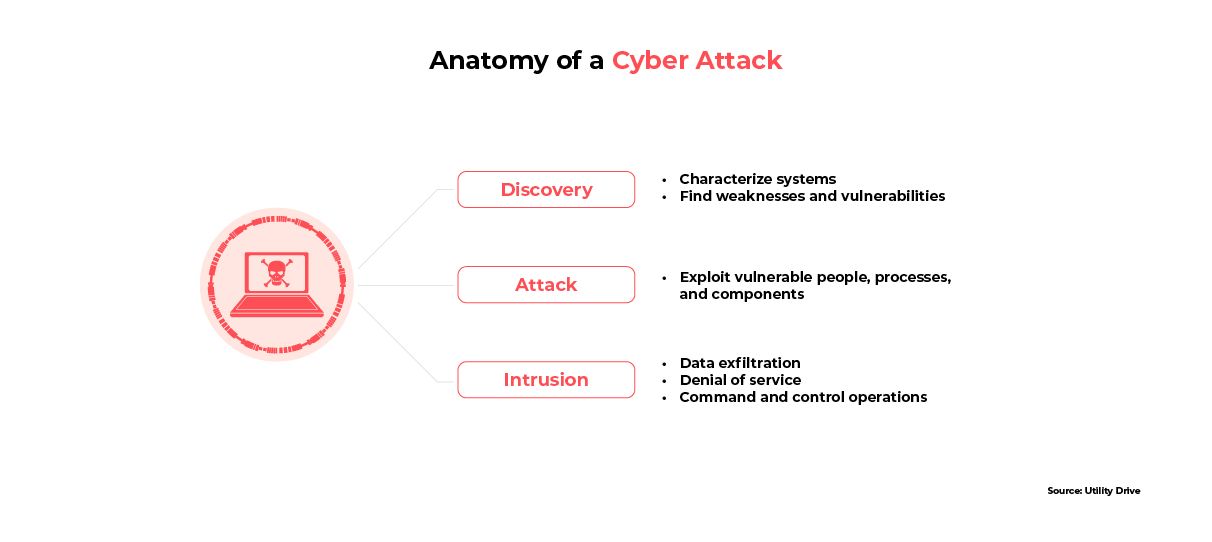
    A graphic depicting different parts of a cyber attack

    Charging infrastructure introduces additional risks. By connecting to a charger, which is necessary for monitoring charge levels and avoiding voltage fluctuations, EV operating systems become vulnerable to malware and ransomware that can be transmitted through the charger. Malware can also be transmitted in the other direction: from the infected EV to the charger, and then from the charger to the power grid. Ransomware, on the other hand, is more dangerous because cybercriminals lock the EV users’ personal data using encryption techniques and demand a high payment as ransom to provide the decryption key. Such attacks have the potential to cause large-scale power outages, similar to the Colonial Pipeline ransomware attack that inflicted fuel shortages on the United States’ east coast in 2021.
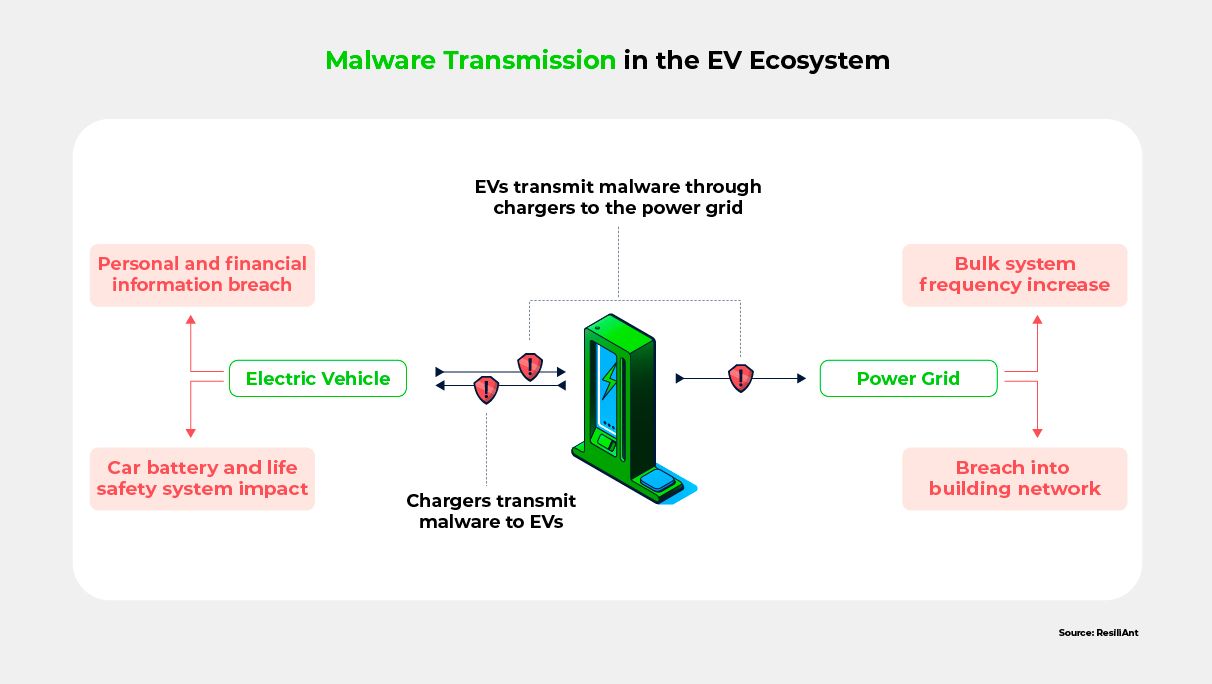
    A graphic showing the transmission of malware between an EV, a charger, and a power grid

    EVs are also susceptible to social engineering attacks such as phishing. One investigation discovered that scammers in India had defrauded would-be EV customers of approximately $1,000,000, by using Google Ads to misdirect them to phishing sites and charging them for down payments or booking fees for nonexistent EVs.

    Although these incidents are relatively rare so far, growing EV adoption of EVs opens the door to more frequent and serious security breaches with widespread ramifications.

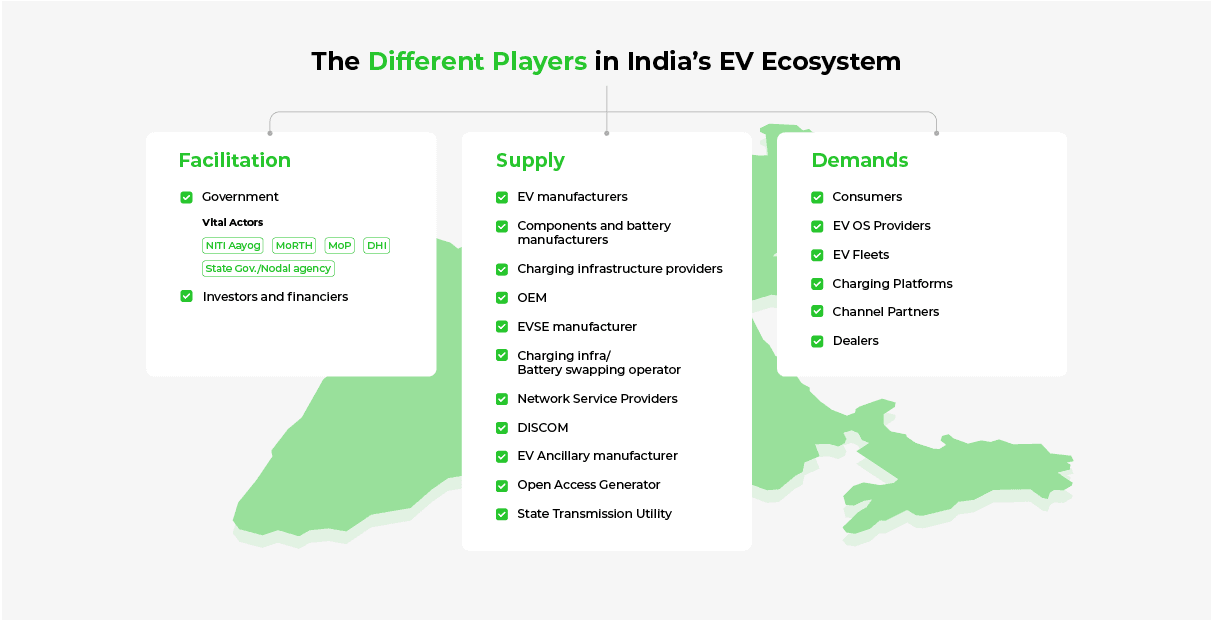
    The Value Chain of the Indian EV Ecosystem

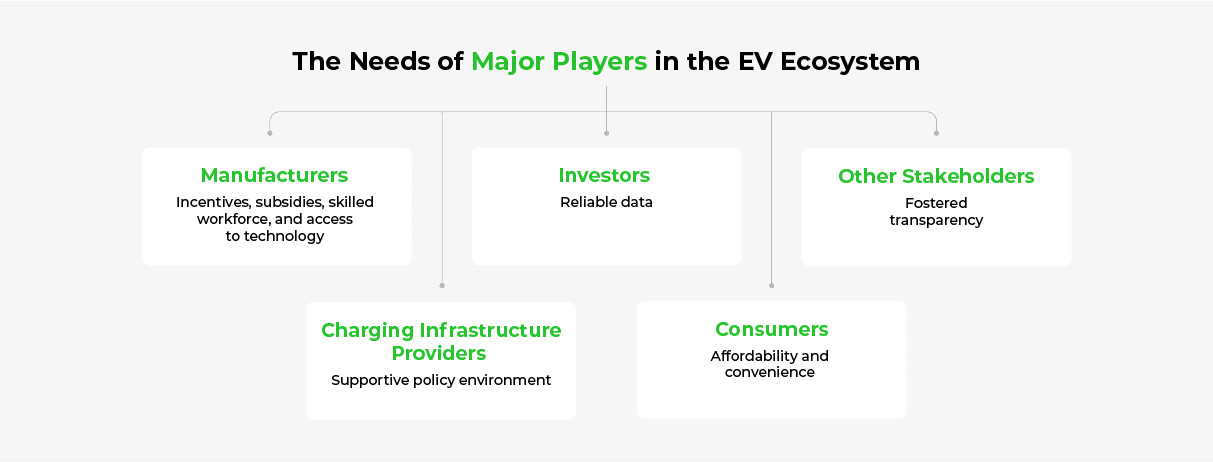
    Cybersecurity risks can potentially discourage EV adoption, and reverse the environmental and economic gains that EVs have achieved so far. To counteract this, EV manufacturers, charging station operators, and service providers must work to earn consumers’ trust. Otherwise, they may incur reputational damage, massive financial losses, and even legal liabilities. Stakeholders who are not directly connected to EVs must also step in; cyberattacks on EVs could lead to public safety hazards such as grid blackouts, disabled EV charging infrastructure, mass malware, stolen personal information, and more.

    To mitigate these risks, protect individuals and companies in the EV ecosystem, and safeguard national resources including power grids, cybersecurity for EVs is a top priority today. The first step to building a comprehensive cybersecurity solution is to understand the most likely threats to both charging networks and EVs themselves.

    Major Cybersecurity Risks in EVs

    EVs’ inherent architecture and design make them vulnerable to unique cybersecurity threats such as the unauthorized takeover of vehicles. Furthermore, EVs’ reliance on software puts them at risk of malware attacks and data breaches.

    Hacking and Unauthorized Access to Vehicles

    Most EVs unlock via either apps or RFID chips. Unfortunately, car manufacturers’ apps are demonstrably vulnerable to hacking, and RFID chips are easy to clone. This gives hackers two different mechanisms for easily gaining unauthorized access to an EV’s systems. In addition to physically unlocking the EV, they could remotely manipulate braking, acceleration, or steering functionality, potentially leading to life-threatening accidents.

    Data Breaches and Privacy Concerns

    EVs and their associated charging infrastructure collect and store a wealth of data, including user profiles, location data, and payment details. Cybercriminals can exploit this valuable information through wireless technology and malicious software for financial gain. This risk can hinder EV adoption by exacerbating existing public concerns about data safety, usage, and sharing.

    Malware and Software Vulnerabilities

    Malware can infect EVs, compromising their functionality, safety features, and data integrity. Potential consequences of these attacks range from inconvenience and financial losses to threats to public safety. Since EV components are so closely connected to other systems, hackers can inflict virtually unlimited damage.

    Besides EVs, the charging networks can also be impacted by cyberattacks.

    Major Cybersecurity Risks in the EV Charging Networks

    The Electric Vehicle Supply Equipment (EVSE) industry is experiencing explosive growth due to the increasing demand for EV charging points. Unfortunately, due to their unique position at the intersection of the energy and transportation sectors, EVSEs are highly susceptible to cyberattacks. From cyberattackers’ perspective, EVSEs provide a perfect opportunity to cause widespread damage.

    Below are some potential ways for hackers to attack EV charging networks.

    Disrupting Electrical Grids

    Since chargers connect to national resources like power grids, cyberattackers have the opportunity to cause major disruptions. Electrical grids are an unusually easy and attractive target for cybercriminals, since attacking them can inflict extensive damage with little effort.

    Disabling EV Charging Infrastructure

    Hackers can disable EV charging stations, thereby stranding drivers. The magnitude of the threat increases with every new charging station. For example, the United States’ current governmental plan to fund EV charging stations across 53,000 miles of highways will give hackers myriad opportunities to disrupt operations.

    Accessing Interconnected Systems

    The EVSE architecture encompasses a variety of components and architecture types. For example, some EVSE equipment may use renewable energy resources, or may be connected to building management systems. This interconnected architecture means that, by gaining access to a single charger, hackers can attack an entire system.

    All of these threats require comprehensive solutions, both to protect public safety, and to build confidence and trust among potential EV owners.

    Addressing Key Cybersecurity Challenges in the EV Ecosystem

    Overcoming the above cybersecurity challenges requires a proactive and multifaceted approach from all stakeholders. Given the dynamic nature of cyber threats, the complexities in implementing solutions, and the lack of awareness about the underlying problem, collaboration is crucial now.

    Dynamic Nature of Cyber Threats

    The growing sophistication of EV components and technologies continually opens new attack vectors for cybercriminals. To effectively combat these ever-evolving threats, continuous monitoring, threat intelligence, and adaptive security measures are essential. Continuous monitoring of communication channels allows for real-time detection and response to potential attacks, while threat intelligence provides insights into new risks and trends. Cybersecurity teams are taking a proactive approach by alerting drivers of potential breaches and using SAE automation levels 1-3 to mitigate them automatically.

    Implementing adaptive security measures ensures the ability to effectively address cyber threats as they emerge. Due to the rapid pace of technological advancements, however, staying abreast of the latest cybersecurity best practices and industry standards poses its own challenges. As a result, collaboration between stakeholders, including manufacturers, cybersecurity experts, and regulatory bodies, is essential to disseminate and implement up-to-date guidelines and standards that protect the privacy of users.

    Complexities in Securing the EV Ecosystem

    Securing the EV ecosystem is complex because of the diverse components and systems involved. It is crucial to implement measures and checks not only within every individual system, but also at the endpoints where systems integrate with each other. In particular, the communication networks that connect systems are highly vulnerable and impactful targets, and therefore require secure protocols and encryption to prevent interception or tampering.

    Furthermore, backend systems managing EV data and infrastructure operations need robust protection like secure tools, VPNs, and role-based access to ensure data integrity and availability. Overall, a holistic security approach that takes into consideration the interdependency between components is necessary for the integrity and resilience of the entire EV ecosystem.

    Lack of Awareness

    Most stakeholders today are not aware of the cybersecurity risks associated with the EV ecosystem. Accordingly, a vital first step is to raise awareness about EV cybersecurity, so that stakeholders can make informed decisions and take necessary precautions. Educating EV manufacturers and charging infrastructure providers about cybersecurity best practices can facilitate the implementation of robust security measures at the design and operational levels.

    Policymakers need to be aware of these risks, so that they can develop regulations and standards that prioritize cybersecurity in the EV ecosystem. Furthermore, consumers must be informed about the importance of adopting secure practices and encouraging them to adopt them Some ways for users to protect their data are:

    • Regularly update software, as they become available
    • Use strong passwords
    • Know how to identify compromised chargers and be on the lookout for these signs
    • Beware of phishing emails and messages

    Comprehensive awareness campaigns, training programs, and information-sharing platforms can also boost awareness among all of these stakeholders.

    As part of the cybersecurity process, automakers, charging point manufacturers, and OEMs must be encouraged to implement cybersecurity measures at every stage of their operations.

    Implementing Effective Cybersecurity Measures

    Cybersecurity principles must be an integral part of every software development and manufacturing activity. Secure design principles can lay the roadmap for development while the use of encryption and authentication can reduce the attack surface. All these measures must be tied in with awareness and education, so that end users can avoid risky behavior.

    Secure Design Principles for EVs

    “Secure by design” is a set of principles that ensure safety and reliability right from the design phase. These principles ensure that safety is not compromised for fast development.
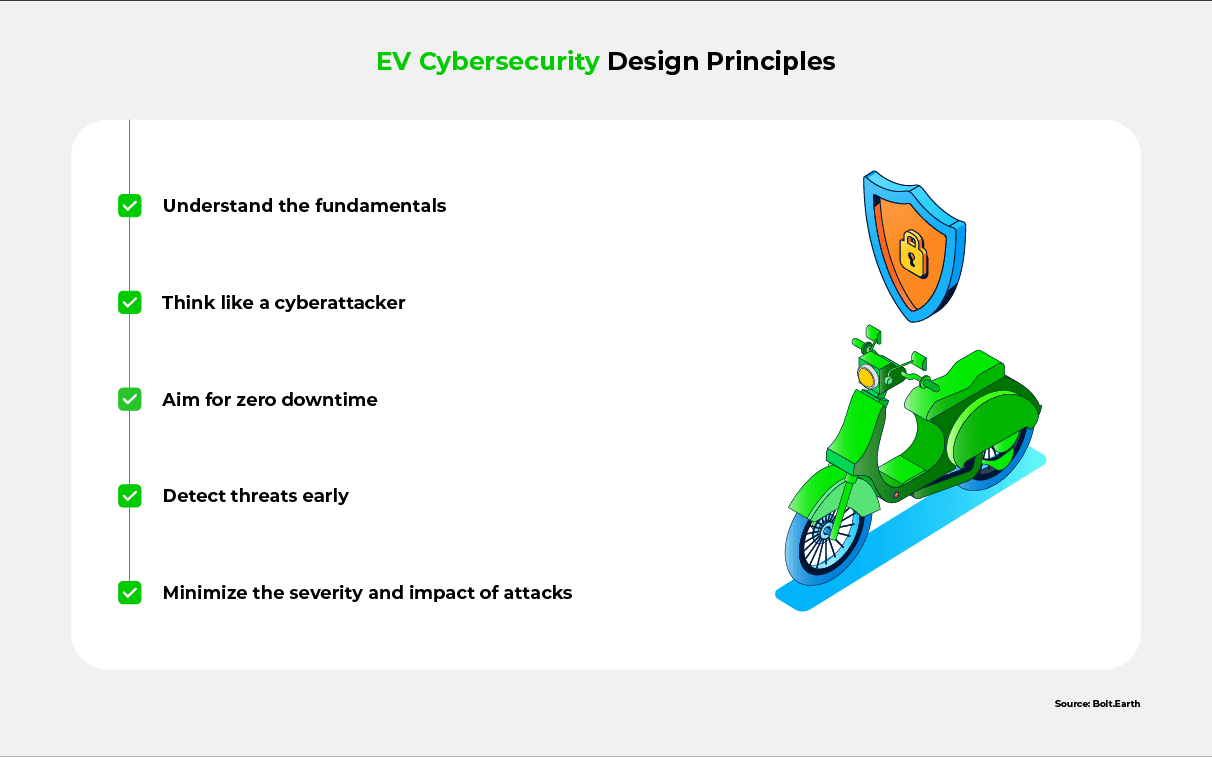
     A list of guidelines for promoting cybersecurity in EV systems

    Key principles of secure design include:

    • Understand the fundamentals and address any shortcomings
    • Design for security by thinking like a cyberattacker
    • Aim for zero downtime by ensuring that the technology cannot easily be disrupted
    • Make provisions for continuous monitoring and early threat detection
    • Aim to minimize the severity and impact of attacks

    Encryption Technologies for Data Protection

    The unique zonal and interconnected system architecture of EVs requires out-of-the-box solutions for data protection. Relevant security techniques include:

    • A zero-trust approach, where every user or device must establish its identity to access a resource
    • Advanced privacy-preserving frameworks like L-EncDB
    • Blockchain-based systems for greater visibility into data access and modification
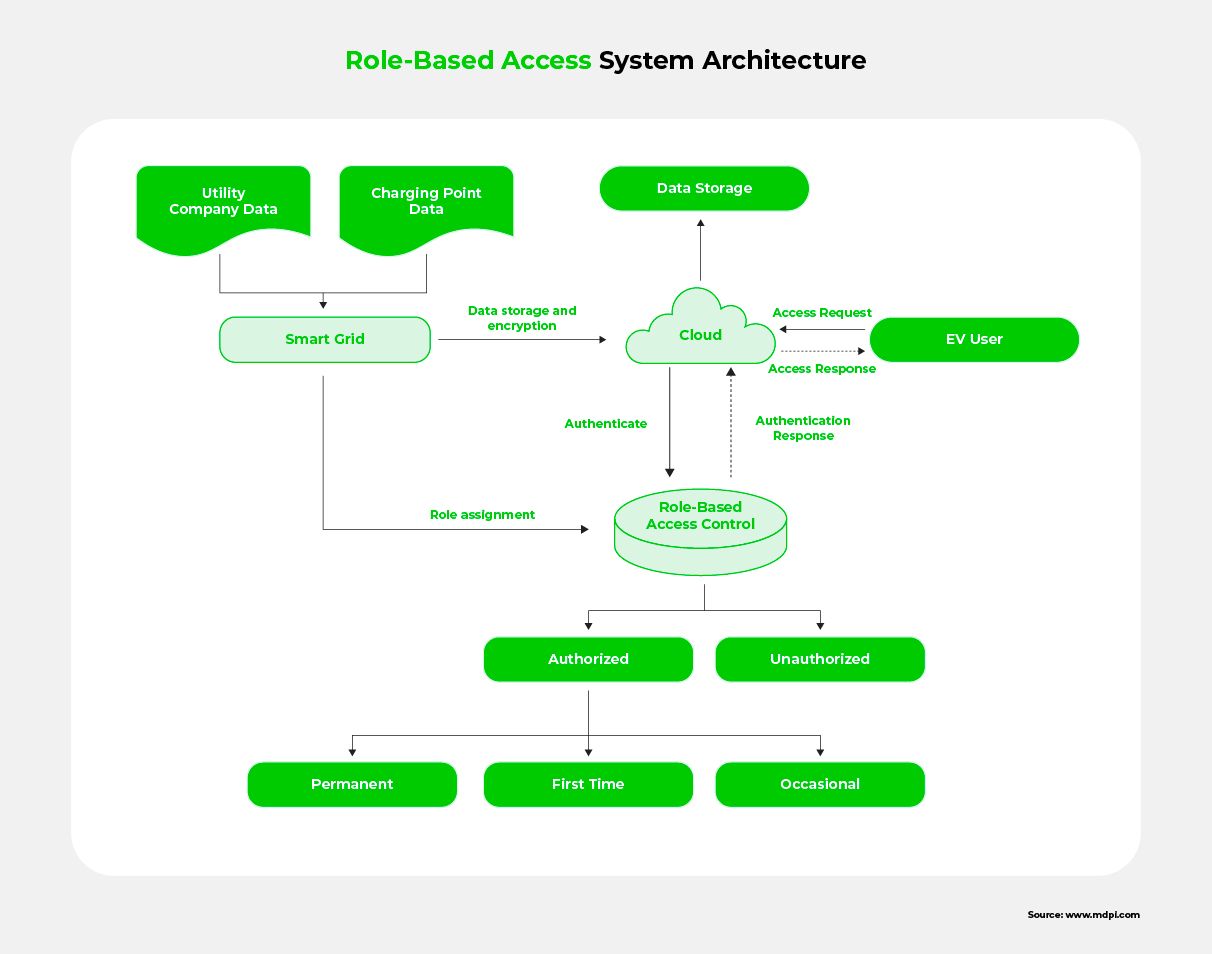
    • A smart role-based access system that combines authentication and authorization strategies to prevent illegal access to data
    • Advanced encryption mechanisms

    A diagram showing the architecture of a role-based access system

    Regular Software Updates and Patches

    Given that EVs rely greatly on software for their smooth running, automakers and software developers can enhance security and add new features through regular software updates. Participants in this process should:

    • Stay on top of imminent attacks and vulnerabilities, and build updates to address them
    • While designing software, ensure compatibility across different EV models
    • Consider using a technology-agnostic open-source OS
    • Integrate intelligent chips into EVs to make them capable of receiving both software and firmware OTA updates
    • Work with EV manufacturers, charging infrastructure providers, and software developers to seamlessly deliver timely updates and patches

    Implementing the above security measures can go a long way in improving the safety and resilience of EVs, that in turn, can promote their growth and adoption.

    Promoting Resilience and Growth in the EV Ecosystem through Cybersecurity

    As the world anticipates the EV ecosystem’s environmental and economic benefits, cybersecurity emerges as a crucial component in promoting resilience, growth, and sustainability in EVs. The potential economic growth associated with a secure and resilient EV ecosystem is immense, attracting investments and fostering innovation that will drive job creation and economic development.

    Simultaneously, increased EV adoption and reduced reliance on fossil fuels will have a substantial positive impact on the environment. None of these benefits, however, are attainable in the absence of a robust cybersecurity foundation. In this sense, cybersecurity serves as the bedrock for fostering trust among consumers, encouraging widespread EV adoption, and ensuring a sustainable transportation future.

    All EV stakeholders must prioritize cybersecurity measures to build a resilient EV ecosystem that inspires confidence, drives economic prosperity, and paves the way for a cleaner, greener, and more sustainable world. The moment has come to embrace cybersecurity as a catalyst for transforming the EV landscape and shaping a brighter future for transportation.

    To learn more about cybersecurity for EVs, see the FAQs and Resources below!

    FAQ

    What are the cybersecurity risks to the EV ecosystem?

    EV cybersecurity risks include unauthorized vehicle takeover through keyless access mechanisms, compromised vehicle controls, and theft of personal data. EV charging system cybersecurity risks include power grid disruptions, data breaches, access to interconnected systems like renewable energy sources and building management systems, and malware and ransomware attacks.

    How can EVs and charging infrastructure be protected from cyber threats?

    Some measures to protect EVs and charging infrastructure from cyber threats include implementing secure communication protocols, using tamper-resistant hardware, conducting regular software updates, and employing encryption technologies. Authentication mechanisms and access control systems can also prevent unauthorized access. Most importantly all stakeholders must come together to implement cybersecurity principles and techniques at each stage.

    Why is cybersecurity crucial to the development of a resilient EV ecosystem?

    Cybersecurity is crucial to the development of a resilient EV ecosystem because it protects against cyber threats, ensures the safety of personal data, protects national resources like the power grid, and fosters consumer trust. A resilient EV ecosystem can, in turn, enhance EV adoption, improve economic development, and create sustainable transportation for the future.

    What are the potential consequences of neglecting cybersecurity in the EV ecosystem?

    Neglecting cybersecurity in the EV ecosystem can have far-reaching consequences not only for individual EV owners, but also for public safety, and for the transportation and energy sectors as a whole. A lack of resilience to cyberattacks can lead prospective EV owners to worry about the safety of their data, and can therefore discourage them from EV adoption. Consequently, neglecting cybersecurity will lead to huge financial losses for automakers, OEMs, charging point operators, and others, as well as reversing the environmental gains that EVs have already made.

    Are there any existing regulations or standards regarding EV cybersecurity?

    Yes, there are existing regulations and standards regarding EV cybersecurity. One prominent example is the UNECE WP.29 regulation on Cybersecurity and Software Updates for Automotive Systems, which includes provisions specific to EVs. Additionally, organizations such as ISO, SAE, and NIST have developed standards and guidelines addressing cybersecurity in connected vehicles, including EVs.

    How can stakeholders collaborate to build a secure and resilient EV ecosystem?

    Stakeholders can collaborate to build a secure and resilient EV ecosystem by sharing information, coordinating efforts, and establishing industry-wide standards. Collaboration between EV manufacturers, charging infrastructure providers, policymakers, cybersecurity experts, and researchers is essential to build a secure EV ecosystem for the future.

    Resources

    Telematics Wire: Cybersecurity Assessment for EV Ecosystem – End-to-End Approach

    Find an in-depth examination of EV cybersecurity.

    Corporate Compliance Insights: Electric Vehicle Charging Stations: Unexpected Target for Cyber Attacks?

    Read about potential cybersecurity attacks on EV charging stations.

    arXiv: An Overview of Cyber Security and Privacy on the Electric Vehicle Charging Infrastructure

    Learn more about the EV ecosystem’s need for cybersecurity.

    ElaadNL: Knowledge and Innovation Center for Cybersecurity in Connected Vehicles

    Understand how ElaadNL is empowering stakeholders to tackle cybersecurity challenges.

    OSTI: Cybersecurity for EV Charging Infrastructure

    Discover recommendations for boosting the cybersecurity of EV charging infrastructure.
  • How India’s EV Ecosystem Drives Inclusive Growth for Local Communities

    How India’s EV Ecosystem Drives Inclusive Growth for Local Communities

    The EV ecosystem in India is creating new opportunities for inclusive growth, from job creation to the development of sustainable infrastructure. The transition to EVs brings along a wave of positives: cleaner air, reduced noise pollution, greater energy autonomy, and job creation. However, maximizing this potential for sustainable development requires various stakeholders to prioritize social and economic development at the local level.

    This article aims to explore the social and economic implications of EV adoption while explaining how local communities can actively participate in and benefit from this transition. Specifically, it addresses:

    • What is the current state of EV adoption in India’s local communities?
    • Why is India facing challenges in promoting further adoption of EVs in these local communities?
    • How can India’s local communities benefit from strategies to improve EV adoption?

    Current State of EV Infrastructure and Adoption in India’s Local Communities

    Transportation is pivotal for economic growth in India. EVs have particular potential to change the face of mobility and provide local communities with new opportunities for better healthcare, educational access, women’s empowerment, and enhanced quality of life. To unlock these benefits, however, local communities will need to accept EVs as the norm. The Ministry of Road Transport and Highways, acknowledging the need to promote EV adoption, has allocated a hefty budget of Rs 2,70,435 crore for nationwide road and highway construction. These expanding road networks, coupled with rising fuel prices, are propelling EV adoption across both rural and urban areas.

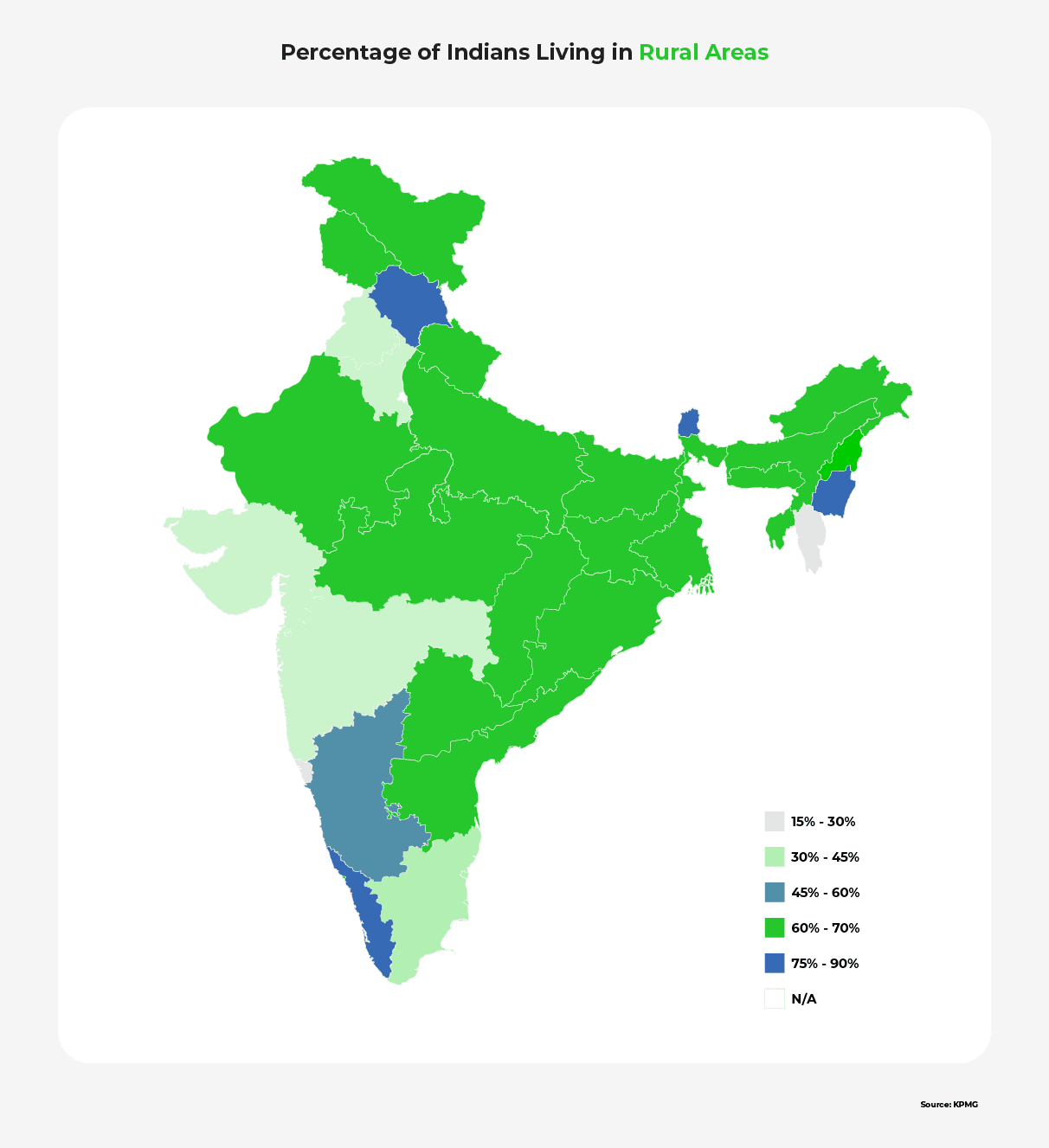
    Rural areas, which are conducive to easy EV charging because every village has access to electricity and most homes are independent, are finding EVs particularly advantageous. Fiscal incentives further sweeten the deal, encouraging rural dwellers to embrace this green technology.

    A map of India, color-coded to show the percentage of rural dwellers in each region

    Urban areas are also seeing a surge in EV uptake, especially in the two-wheeler and three-wheeler categories. The lower running costs and zero tailpipe emissions from EVs are reducing air pollution, thus enhancing public health and overall quality of life.

    Although these developments mark a promising start, India’s EV adoption rates remain low, due to various challenges within the current EV ecosystem. Surmounting these obstacles is essential to ensuring sustainable growth in local communities.

    Challenges to EV Adoption in India’s Local Communities

    Many challenges impede EV adoption in India’s local communities. Below, we examine some key hurdles.

    Limited Access to Financial and Technological Resources

    Electric vehicles often cost 15 – 20% more than their conventional counterparts, making affordability a major roadblock for individuals and communities with limited financial resources. In fact, an overwhelming 60% of Indian consumers report that EVs are beyond their budget.

    Furthermore, local communities often struggle to access the latest advancements in EV technology, due to limited exposure and availability. As a result, these communities miss out on many of the benefits that modern EVs offer, such as improved range, performance, and energy efficiency.

    Scarcity of EV Charging Infrastructure

    A dearth of charging stations in local communities, particularly in rural and remote areas, makes EVs an impractical option. This scarcity is especially problematic because it contributes to ‘range anxiety’ — the fear of running out of battery power with no charging station in sight — among potential EV owners. It also limits local communities’ ability to reap economic opportunities linked to electric mobility, such as reduced operating costs, and new jobs in the EV charging sector.

    Unawareness of the Benefits of EVs

    Many consumers in local communities are unfamiliar with EVs’ advantages, such as lower operating costs, a reduced environmental footprint, and government incentives. This knowledge gap fuels skepticism and misinformation, resulting in reluctance to transition to EVs, and contributing to the slow adoption rates.

    Addressing these challenges is crucial to stimulating local community engagement, creating an environment conducive to EV adoption, and unlocking the benefits of EV technology.

    Streamlining the Path to EV Adoption: How Can We Strengthen India’s EV Ecosystem?

    Empowering local communities to harness the economic and environmental benefits of EVs requires a concerted effort from governments, automakers, and charging point providers. The next section delves into key strategies that these stakeholders can employ to surmount the obstacles to EV adoption.

    Building EV Charging Infrastructure in Rural and Remote Areas

    Constructing reliable EV charging infrastructure to reduce range anxiety is crucial. Governments can establish charging stations and stimulate private-public investment through affordable funding. Additionally, automakers, original equipment manufacturers (OEMs), and charging providers can install charging infrastructure in parking lots, residential communities, small businesses, and other areas offering high connectivity and accessibility. These investments can boost economic growth by attracting visitors and supporting local businesses.

    One successful example is Bolt.Earth Lite, a universal charging socket compatible with all EV models that can be easily installed at homes and small businesses. Measures like these ensure equal access to EV charging.

    Government Initiatives and Incentives Promoting EV Adoption

    Government incentives play a vital role in encouraging EV adoption within local communities. Financial motivators, such as tax incentives, state-specific subsidies, and registration fee waivers, make EV ownership viable for more community members. For instance, India’s Faster Adoption and Manufacturing of Electric Vehicles (FAME) program offers subsidies to EV buyers, while some states provide additional benefits like road tax exemptions and reduced electricity tariffs for EV charging.

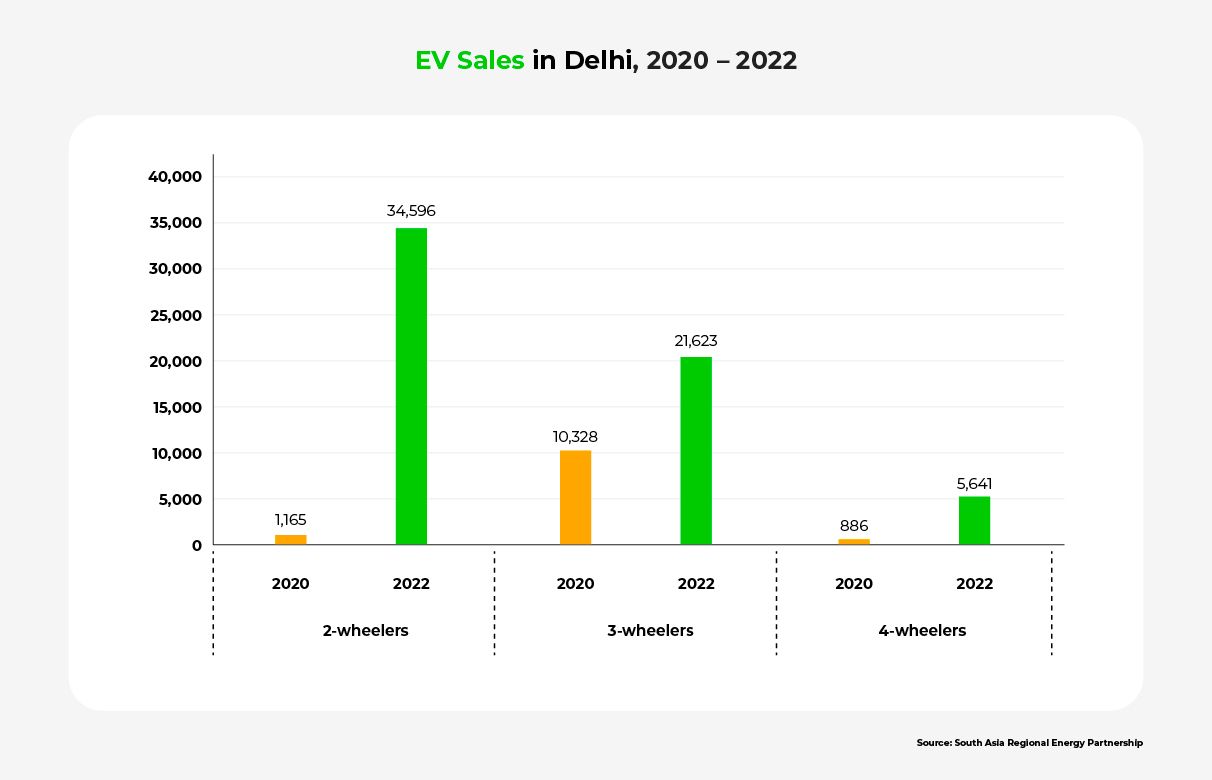
    The Delhi government’s EV policy is a shining example of how such initiatives can effect change. Thanks to appealing incentives and a simplified policy for setting up charging stations, the number of EV two-wheelers in Delhi surged from 1,165 in 2020 to 34,596 in 2022. During the same period, EV three-wheelers rose from 10,328 to 21,623, while four-wheelers jumped from 886 to 5,641.

    A bar chart showing the jump in Delhi's EV adoption rates from 2020 to 2022

    Engaging and Educating Local Communities Through Outreach and Awareness Programs

    Collaborative programs involving governments, the private sector, and community leaders and representatives can help dispel misconceptions and enlighten the public about EVs and their benefits. Stakeholders can organize outreach campaigns, events, talk shows, and Q&A sessions to address community queries and offer guidance on setting up charging infrastructure and accessing financial incentives.

    Successful initiatives include e-Amrit, a one-stop website providing comprehensive information about EV models, business opportunities, subsidies, charging station locations, and the benefits of EVs. Local leaders can use resources like this to educate their communities about the potential of EVs.

    The aforementioned strategies, if promptly executed, can address the obstacles to EV adoption, empowering diverse communities to benefit from a robust EV ecosystem.

    How India’s EV Ecosystem Can Benefit Local Communities

    India’s growing EV ecosystem holds immense potential to foster inclusive growth and benefit local communities across the country. Strengthening this ecosystem ensures that the advantages of electric mobility reach all corners of society. This section will explore these benefits.

    Economic Inclusion through EV Adoption

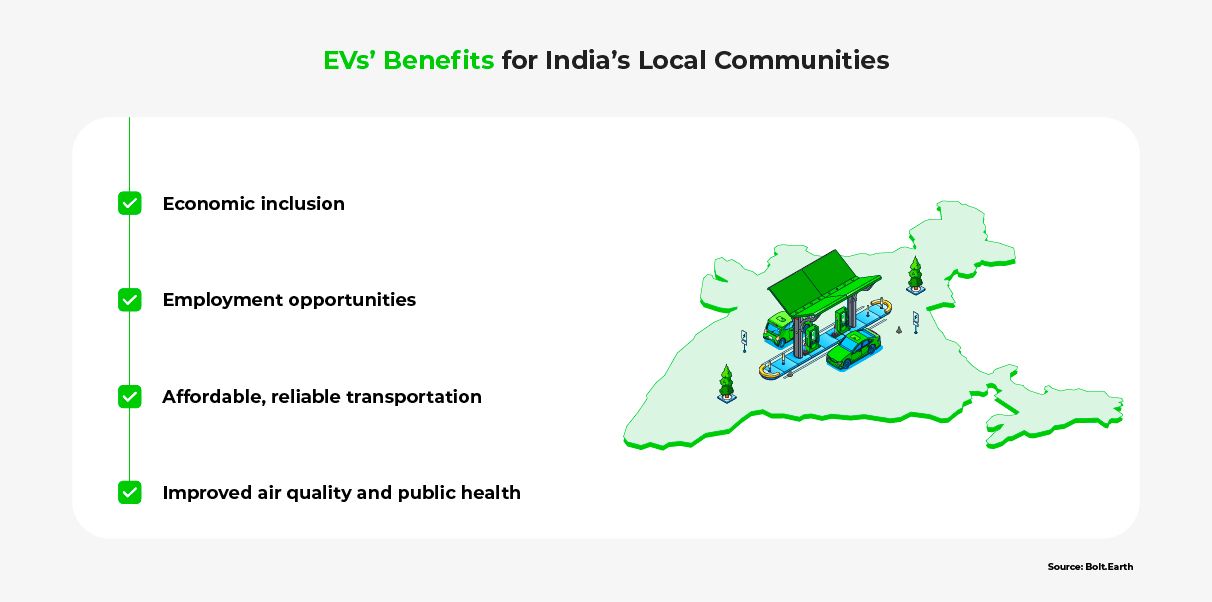
    Economic inclusion, or inclusive growth, involves economic advancement that benefits everyone, including members of marginalized or underprivileged communities. Amplifying EV adoption in local communities can democratize access to clean, affordable transportation. This accessibility enables faster commutes and offers cost-effective transport for agricultural goods, the backbone of rural communities. Other outcomes of EV adoption include increased income, improved market access, enhanced services, and reduced mobility disparity. Specifically, and importantly, EV adoption empowers women to seek work and education beyond their immediate surroundings, contributing to a fairer and more prosperous society.

    Employment Opportunities Emerging from the EV Ecosystem

    The growth of India’s EV ecosystem forges new job opportunities in local communities. It also uncovers new income sources for small businesses, landowners, and even households willing to establish public EV charging stations. The expansion of EV-related businesses, like manufacturing, maintenance, and sales, is generating additional employment opportunities across various skill levels. As EV adoption accelerates, further investments in the sector will continue to spur significant job growth.

    Affordable, Reliable Transportation Through EVs

    EVs can offer transformative change in areas where traditional transportation modes are limited or unreliable. Lack of transportation access has historically thwarted local community development, especially for remote and marginalized communities living on the periphery of Indian villages. With nearly half of the rural population walking between 2 and 10 kilometers daily for work and education due to high petrol and diesel costs, EVs can provide an affordable and reliable alternative. This improved mobility can bridge communities, enhance access to essential services such as jobs, healthcare, and education, and foster regional socio-economic development.

    Improved Air Quality and Public Health

    Pollution in India’s rural areas is nearly three times higher than in urban areas, causing approximately 700,000 deaths each year. Although vehicular traffic contributes only minimally to this pollution, EVs can indirectly reduce air pollution levels by offering alternative employment opportunities for rural youth and steering them away from pollution-causing activities involving brick kilns and hot mix plants. The result is cleaner air, reduced respiratory and cardiovascular health issues, better overall well-being, and decreased healthcare costs.

    An infographic listing how EV adoption can benefit local communities in India

    As India’s EV ecosystem continues to grow and evolve, these benefits will magnify, positively influencing local communities nationwide. However, to achieve this promising future, India must first address existing challenges, promote innovation, and engage various stakeholders in ensuring a sustainable and inclusive transition to electric mobility.

    The Promising Future of India’s EV Ecosystem

    The transformative power of India’s EV ecosystem promises to drive economic development and enhance the quality of life for local communities. Adopting EVs paves the way for numerous benefits, including job creation, pollution reduction, and improved access to transportation.

    Developing an inclusive EV ecosystem with reliable charging infrastructure and informed decision-making is a prerequisite for reaping these benefits. It’s essential to ensure that everyone can access the opportunities presented by this shift towards electric mobility.

    Looking to the future, EVs have the potential to weave together economic progress, environmental sustainability, and an improved quality of life in India. By using tech innovation to build something substantial, investing in infrastructure, promoting awareness, and fostering collaboration, India can unlock the full potential of its EV ecosystem. This pathway promises a future that is not only greener but also prosperous and equitable for all local communities.

    The exciting potential of India’s EV ecosystem to drive inclusive growth encourages everyone to contribute to its development. Let’s all participate in this electrifying journey towards a sustainable and inclusive future!

    Frequently Asked Questions

    What does inclusive growth mean in the context of India’s EV ecosystem?

    Inclusive growth within India’s EV ecosystem refers to ensuring that the benefits of economic development reach all communities. This includes creating equitable opportunities for all individuals and fostering upward mobility and an enhanced quality of life, thereby contributing to a balanced and prosperous future.

    What economic opportunities does the EV ecosystem present for local communities?

    The EV ecosystem introduces economic opportunities like job creation, enhanced mobility and work access, revenue generation for households and small businesses through setting up charging stations, and increased demand for local services. This fosters entrepreneurship and stimulates economic development at the community level.

    How is India’s government supporting EV ecosystem development in local communities?

    India’s government supports EV ecosystem development by offering financial incentives like tax rebates, subsidies, and grants; providing vital information for stakeholders via its website; implementing policies to boost EV and component manufacturing; and investing in charging infrastructure deployment.

  • How Public-Private Sector Collaboration Can Accelerate EV Adoption in India

    How Public-Private Sector Collaboration Can Accelerate EV Adoption in India

    India has been experiencing a noticeable shift towards electric mobility. In FY 2024–25, over 1.3 million EVs were registered, representing a 78% year-on-year growth, which signals a major shift toward sustainable transportation. This surge is driven by India’s progressive EV policy, increased consumer awareness, and strategic public-private partnerships.

    Despite this, challenges like charging infrastructure gaps, affordability, and consumer perception persist. Overcoming these obstacles will require a concentrated, unified effort from all stakeholders, especially between government bodies and private innovators.

    This article delves into the transformative impact of public-private collaboration in the field of EVs. It answers the following questions:

    • What role does public and private sector collaboration play in accelerating India’s transition to electric mobility?
    • How can this collaboration address the challenges of transitioning to EVs?
    • Why is public and private sector collaboration crucial for this transition?

    The Current State of EVs in India

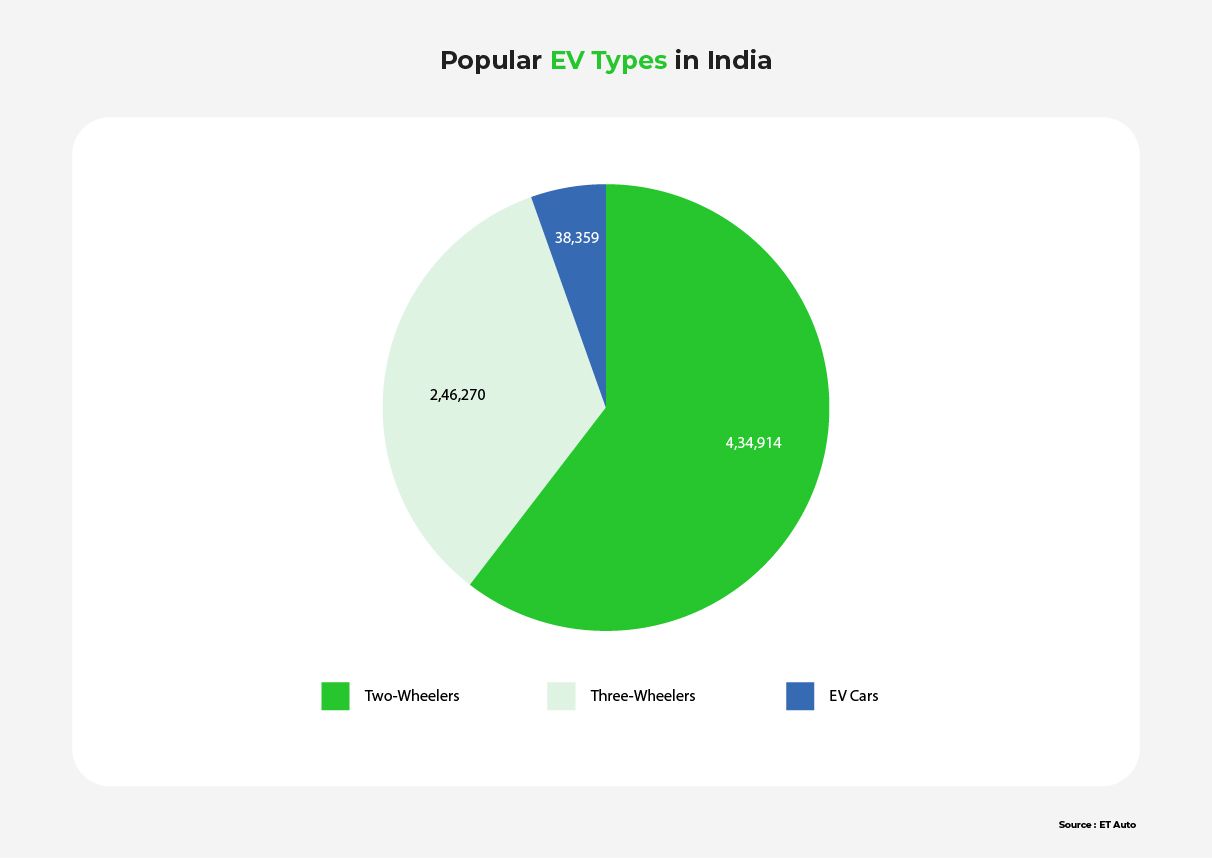
    In FY 2024–25, India saw 1.3 million+ EV registrations, with two- and three-wheelers dominating the market. Notably, electric passenger vehicle registrations crossed 1 lakh units, showing an 18% growth over the previous year. This reflects growing consumer confidence and the impact of targeted incentives under the evolving EV policy in India.

    A pie chart showing EV sales for two-wheel, three-wheel, and EV cars during the first half of 2023

    Government initiatives like FAME II, state-level subsidies, and reduced GST from 12% to 5% continue to drive adoption. Moreover, prominent automobile manufacturers and numerous EV startups are investing heavily in electric vehicle charging solutions tailored to Indian road conditions and improving the driving experience.

    Charging infrastructure providers and software developers are collaborating to expand EV charging for businesses, especially in commercial hubs and fleet operations. Above all, the private sector is working closely with government agencies to tackle key challenges and accelerate EV growth and adoption.

    The Importance of Public and Private Sector Collaboration

    The symbiotic relationship between the public and private sectors is crucial in maintaining the growth of EV adoption. This collaboration is a mix of expertise and the right resources. The private sector, composed of leading EV manufacturers, technology developers, and market leaders, offers cutting-edge EV designs, robust distribution, and myth-busting marketing.

    In contrast, the public sector, with its significant influence via subsidies and incentives, is a crucial ally for the success of the private sector. Policymakers and various government departments create the regulatory framework and policies that incentivize EV adoption. Financial incentives like subsidies, low-interest loans, and tax benefits create a conducive environment for the private sector. Together, they share risks, pool resources, and accelerate innovation, driving electric mobility growth in India.

    Challenges to EV Transition

    Despite considerable progress in India’s EV journey, many challenges continue to hamper widespread adoption. Notably, the lack of infrastructure, the cost disparity between EVs and conventional vehicles, and consumer awareness and perception continue to pose challenges facing this industry. A siloed approach, where public and private sectors operate independently, exacerbates these challenges and undermines the efforts required to address them.

    Charging Infrastructure Roadblocks

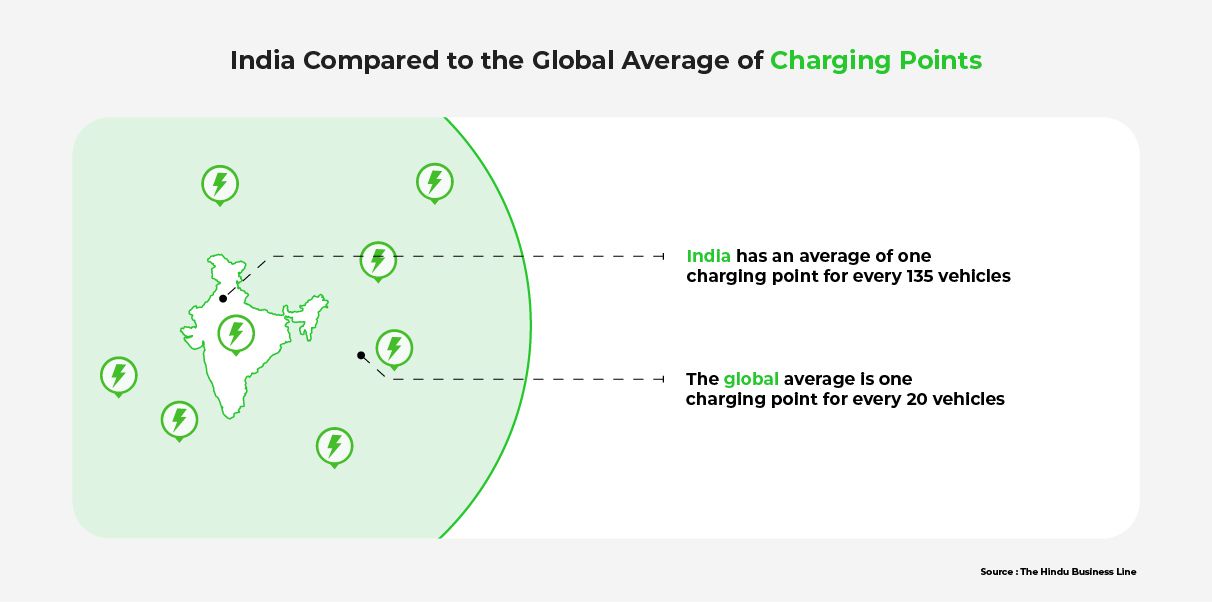
    India has approx. 25,000 public charging stations, a leap from 2023, but still behind global benchmarks. Most are concentrated in metros, creating range anxiety. In comparison, the global average is one station for every 20 vehicles. Moreover, these charging stations are primarily located in the metropolitan areas of Delhi, Mumbai, and Bengaluru, creating range anxiety for drivers traveling long distances.

    An infographic comparing India with the global average of vehicles per charging station

    A public-private partnership (PPP) could accelerate the expansion of charging infrastructure in India, alleviate range anxiety, encourage long-distance travel, and open new possibilities for EV adoption. Public-private partnerships (PPPs) can expand coverage, especially for EV charging for businesses in Tier 2/3 cities.

    Affordability Concerns

    In India’s price-conscious and value-driven car market, EVs come at a significantly higher cost than traditional internal combustion engine (ICE) vehicles. These factors contribute to low adoption rates in the four-wheel segment.

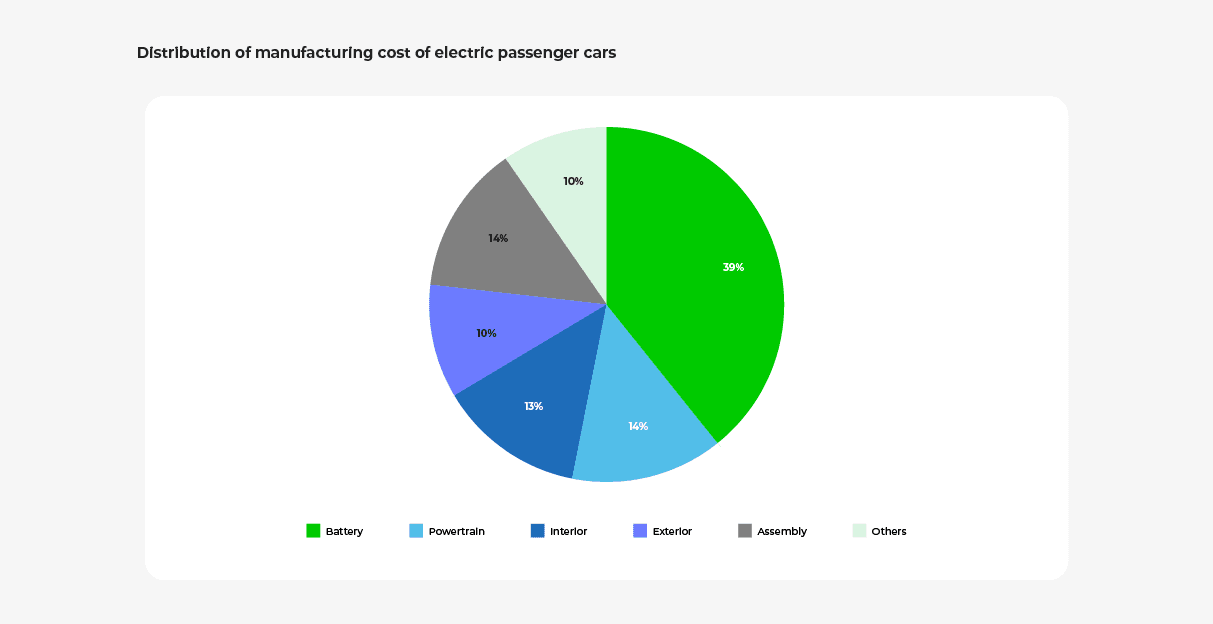
    Given that batteries account for 40% of the manufacturing costs, a PPP can foster innovation to improve battery energy efficiency, thereby reducing production costs. Such collaborations can make EVs accessible and appealing to Indian EV buyers.

    Consumer Awareness and Perception

    EVs are a relatively novel concept, and there’s a lack of adequate awareness and knowledge about their use. This has led to misconceptions and myths, which can discourage EV purchases.

    Public and private sectors can design effective educational initiatives that dispel myths and inspire confidence in EVs. These measures can empower consumers with knowledge, dispel misconceptions, and foster enthusiasm for EVs, making them a preferred choice when it comes to vehicle buying decisions.

    Lack of Adequate Technological Tools

    The push for EV adoption requires interoperable technological components. India’s diverse market, with its unique demands, highlights the need for software solutions that seamlessly integrate various EV systems. Fortunately, Indian startups are at the forefront, innovating electric vehicle charging solutions to bridge these disparities. Their efforts are pivotal in reshaping public perceptions and making EVs more user-friendly.

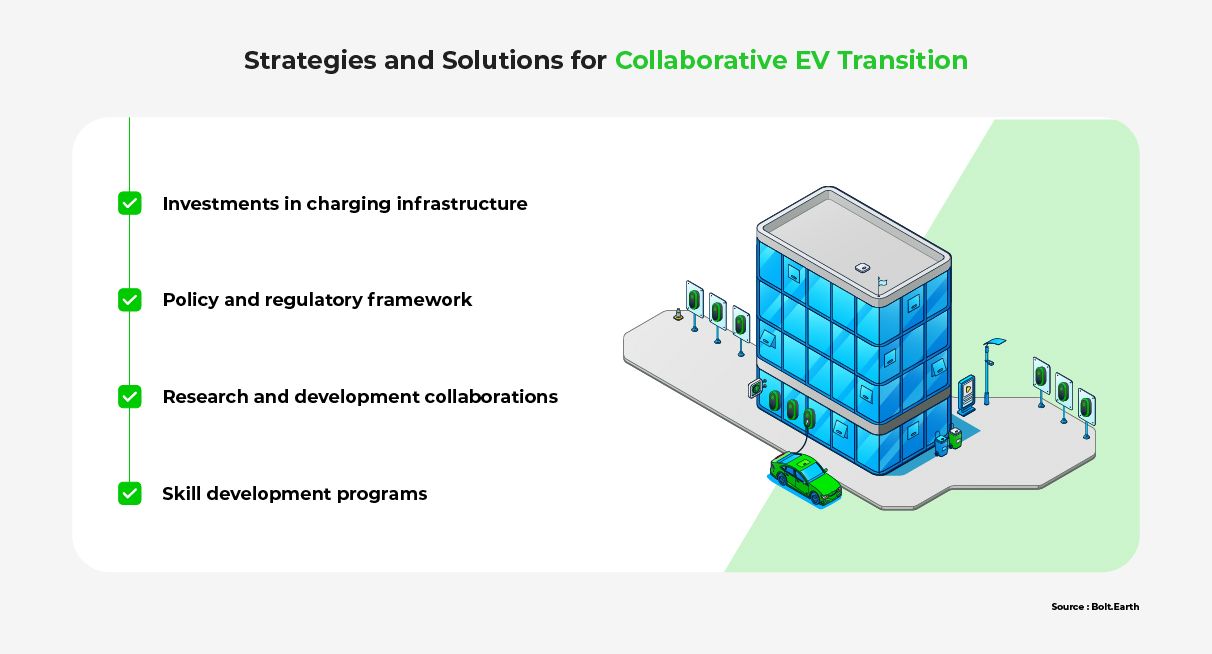
    Strategies and Solutions for Collaborative EV Transition

    Considering the challenges mentioned above, the public and private sectors can jointly take some specific steps to ensure greater EV adoption.

    Investments in Charging Infrastructure

    The high costs of establishing EV charging infrastructure are a significant entry barrier, resulting in high range anxiety. Some measures to address them are:

    • Joint investments from the public and private sectors in building charging stations can distribute the cost burden and risks.
    • Partnerships between utility companies and charging infrastructure providers can ensure smart grid integration.
    • Introduction of attractive financing options such as low-interest loans, tax subsidies, and more.
    • Creation of joint consortiums to pool expertise and reduce maintenance costs.

    Policy and Regulatory Framework

    A collaborative policy and regulatory framework is the cornerstone for EV adoption as it establishes a stable and resilient environment that benefits all stakeholders. Some specific actions in this regard are:

    • Creation of comprehensive policies that address the concerns of all stakeholders.
    • Regular public-private interactions can streamline the permitting and approval processes, which can expedite action.
    • Building a comprehensive renewable energy policy for EVs to ensure long-term sustainability and greater environmental benefits.
    • Development of standards and certifications for EVs and charging infrastructure.
    Research and Development Collaborations

    Public and private sectors can undertake various research and development initiatives that can lower the manufacturing costs of EVs, improve battery technology, and create a sustainable EV ecosystem. Some possible actions are:

    • Joint research projects between academic institutions, industry players, and government research agencies to accelerate EV technology development.
    • Combined innovation programs to develop advanced battery technologies, electric drivetrains, and lightweight materials for EVs.
    • Cooperative initiatives for advancing indigenous EV technologies, decreasing dependence on imports and foreign supply chains.
    • Public-private partnerships are designed for pre-competitive research, enabling the sharing of resources and knowledge to overcome technological barriers.

    Skill Development Programs

    India’s EV industry is projected to generate one crore direct jobs and about five crore indirect jobs by 2030. However, the gap in skills could prevent India’s young workforce from capitalizing on this opportunity. The public and private sectors can reduce this gap with the following actions:

    • Governments and the private sector should jointly develop EV-specific training programs and curriculum.
    • Investment in upskilling the existing workforce in the EV industry.
    • Build credible education technology (edutech) platforms offering online training and certification.
    • Collaborate with educational institutions to provide apprenticeship programs.

    It is encouraging to note that such collaborations have already begun, contributing to India’s rapid EV adoption.

    An infographic listing various actions to take for collaborative EV transition

    Successful Case Studies of Public and Private Sector Collaboration

    Various stakeholders in India’s EV industry are working together, and the current rapid adoption is a testament to these joint efforts. Below are three successful collaborations.

    Ather Energy and Karnataka Government

    Ather Energy, a prominent Indian electric scooter manufacturer, has partnered with the Karnataka Government to set up 1,000 fast-charging points across the state. These stations will be established in public areas owned by the government or its subsidiaries, with state-owned power distribution company BESCOM providing support and implementation as per the Memorandum of Understanding (MoU). This partnership is designed to alleviate range anxiety and encourage EV adoption in Karnataka.

    Hyundai and Indian Institute of Technology (IIT) Delhi

    Renowned car manufacturer Hyundai entered a significant collaboration with the Indian Institute of Technology (IIT) Delhi to advance EV technology. The joint venture includes research and development projects aimed at improving EV technology, battery efficiency, and range capabilities. Hyundai has donated its Kona EV for battery profiling using external sensors and OBD connectors, which help understand EV performance under varying driving conditions.

    MG Motor and Tata Power

    MG Motor and Tata Power combined efforts to establish an extensive fast-charging network across India’s major cities. With MG Motor’s commitment to environmentally friendly vehicles and Tata Power’s expertise in supplying charging infrastructure, this partnership addresses range anxiety and instills confidence in EV owners for long-distance travel.

    These partnerships demonstrate the potential for society to leverage the environmental and economic benefits of EVs.

    The Sustainable Impact of Collaboration on EV Transition

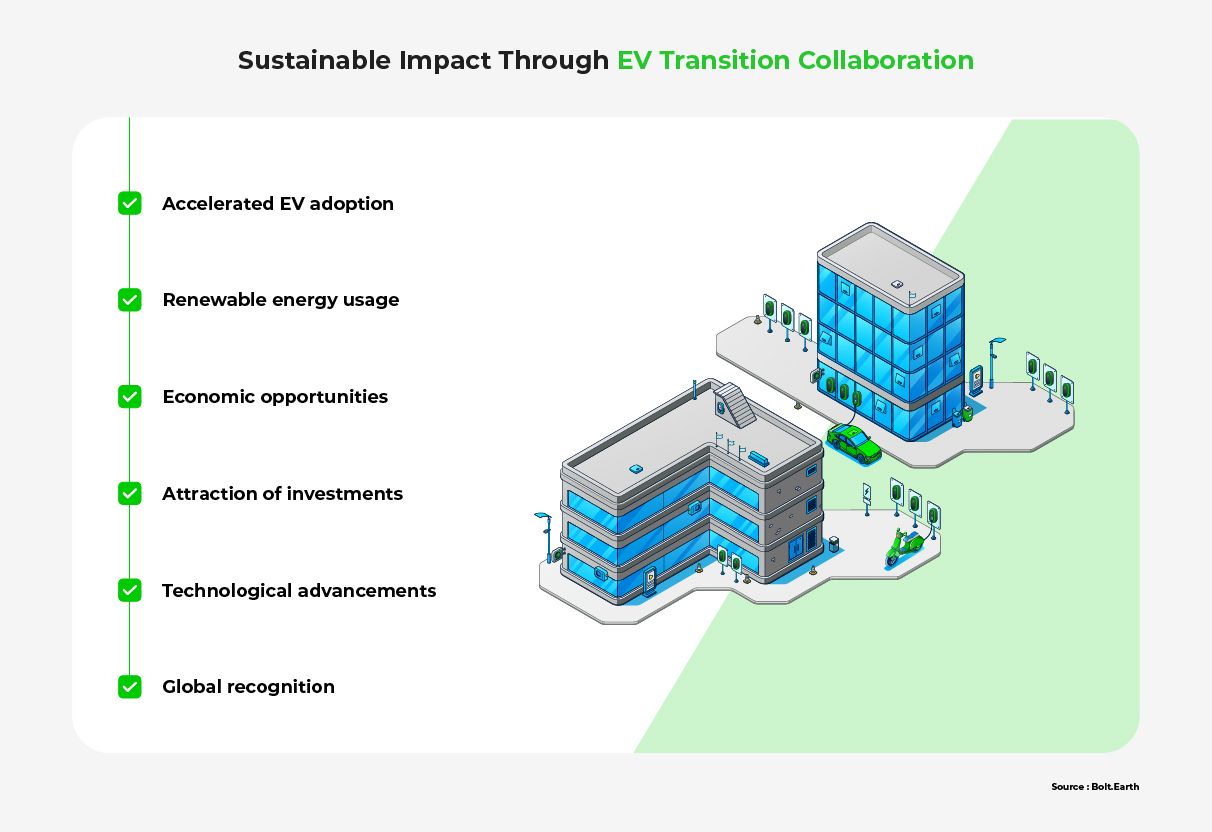
    The collaboration between the public and private sectors has a far-reaching and varied impact. It can accelerate EV adoption and reduce carbon emissions, improving air quality. Additionally, such partnerships can encourage the use of renewable energy, promoting a cleaner and more sustainable transportation ecosystem.

    Beyond the environmental benefits, collaborative efforts in the EV industry also create substantial economic opportunities. The growth of the EV industry boosts job creation across various sectors, including manufacturing, research, development, and maintenance of EVs and charging infrastructure. As India emerges as a global leader in electric mobility through joint initiatives, it attracts investments from domestic and international entities. This investment influx fosters innovation and technological advancements, furthering India’s expertise in EVs and related technologies.
    Additionally, a robust EV ecosystem enables India to export its indigenous EV technologies, marking its position as a key player in the global electric mobility market. Therefore, the sustainable impact of collaboration on India’s EV transition is beneficial for the environment and drives economic growth, energy security, and global recognition.

    A list of benefits attributed to sustainable and collaborative EV transition

    Driving EV Transition Through Collaboration

    Collaboration between the public and private sectors is critical for accelerating India’s EV transition. Successful partnerships, like those between Ather Energy and the Karnataka Government, Hyundai and IIT Delhi, and MG Motor and Tata Power, have proven a significant impact in overcoming challenges and driving sustainable growth in the EV industry.

    To fully capitalize on the potential of electric mobility, more collaborations are urgently needed. Various stakeholders can form strategic partnerships to effectively address key roadblocks such as charging infrastructure expansion, affordability concerns, consumer awareness, and technological advancements. Through united efforts, the public and private sectors can establish an enabling environment that supports widespread EV adoption and paves the way for a cleaner, greener future.

    All stakeholders must collaborate to bring about a transformative transition. Together, through cooperation, India can steer towards a sustainable future, reduce carbon emissions, improve air quality, and embrace electric mobility as a cornerstone of a cleaner, more responsible transportation landscape.

    Frequently Asked Questions

    What is the current status of electric vehicle adoption in India?

    EV adoption in India is on the rise, 1.3 million+ units in FY 2024–25. This growth is due to growing awareness, government incentives, and a wider range of available EV models, and expanded charging infrastructure. Collaborations between the public and private sectors are crucial, particularly in strengthening charging infrastructure and overcoming the barriers to adoption.
    Can collaboration between the public and private sectors accelerate the transition to EVs?

    Yes. Joint efforts expand infrastructure, reduce costs, and build consumer trust. Through their combined expertise, resources, and influence, the public and private sectors can address major challenges hindering adoption. 

    What are the incentives and policies promoting the adoption of electric vehicles in India?

    The central government in India has implemented various policies to boost the construction of EV charging stations, the use of renewable energy sources, and the purchase of EVs with low-cost financing options. State governments also offer subsidies and tax benefits to individuals and automobile manufacturers. Furthermore, many state governments are forming partnerships to address the existing challenges in EV adoption. 

    How does the collaboration of public and private sectors contribute to sustainable mobility and environmental benefits?

    Joint initiatives between the public and private sectors aid in building charging infrastructure, crafting policies, and providing financial  incentives that promote EV adoption. The private sector’s innovation in EV manufacturing and technology complements the public sector’s role in creating supportive policies and regulations. Together, they accelerate the EV transition, allowing all stakeholders to enjoy the environmental and economic benefits.

  • How Are EVs Shaping India’s Urban Future?

    How Are EVs Shaping India’s Urban Future?

    Smart cities represent the new frontier of urban sustainability. Equipped with cutting-edge technology, they are shaping the future of communities globally. A key feature of these modern urban landscapes is the integration of electric vehicles (EVs), contributing to more efficient and eco-friendly transportation systems.

    India, with the launch of its ambitious Smart Cities Mission (SCM) in June 2015, is marching forward in this global trend. Its vision includes a significant focus on adopting EVs as a critical aspect of its urban sustainability plan.

    In this article, we’ll discuss how electric vehicles and smart cities can work together to create a more sustainable future for India. We’ll explore how EVs can help to reduce pollution and improve air quality, and how smart cities can make it easier for people to use EVs.

    More specifically, this article answers these three questions:

    • How can the integration of EVs help smart cities promote sustainable and efficient transportation?
    • What are the challenges when integrating EVs into smart cities, and what solutions can overcome them?
    • Why consider the potential future impact of integrating EVs to create smarter cities?

    The Current State of Smart City Development in India

    The concept of a smart city involves adopting data-driven technologies. These cities are designed to enhance energy efficiency, reduce environmental footprints, and elevate living standards.

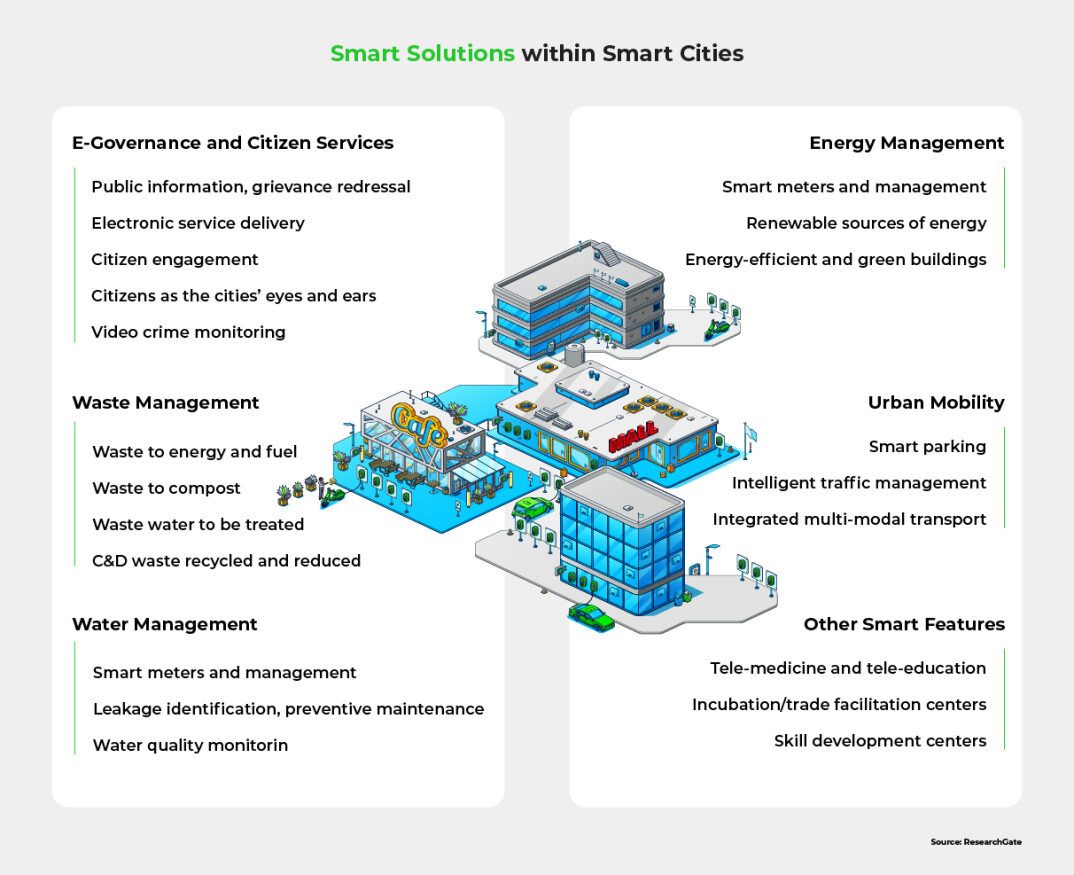
    The infographic below showcases the smart solutions that can be integrated within smart cities. This clarifies why smart cities are a noteworthy, desirable development for the urban population.

    An infographic showing solutions that Smart Cities provide

    Smart City Development in India

    As a result of rapid urbanization rates, a smart city initiative in India is pivotal to improving urban living. In 2015, Prime Minister Narendra Modi launched the Smart Cities Mission. It aims to transform 100 cities into urban ecosystems with robust infrastructure, a sustainable environment, and innovative solutions that reflect the citizens’ aspirations.

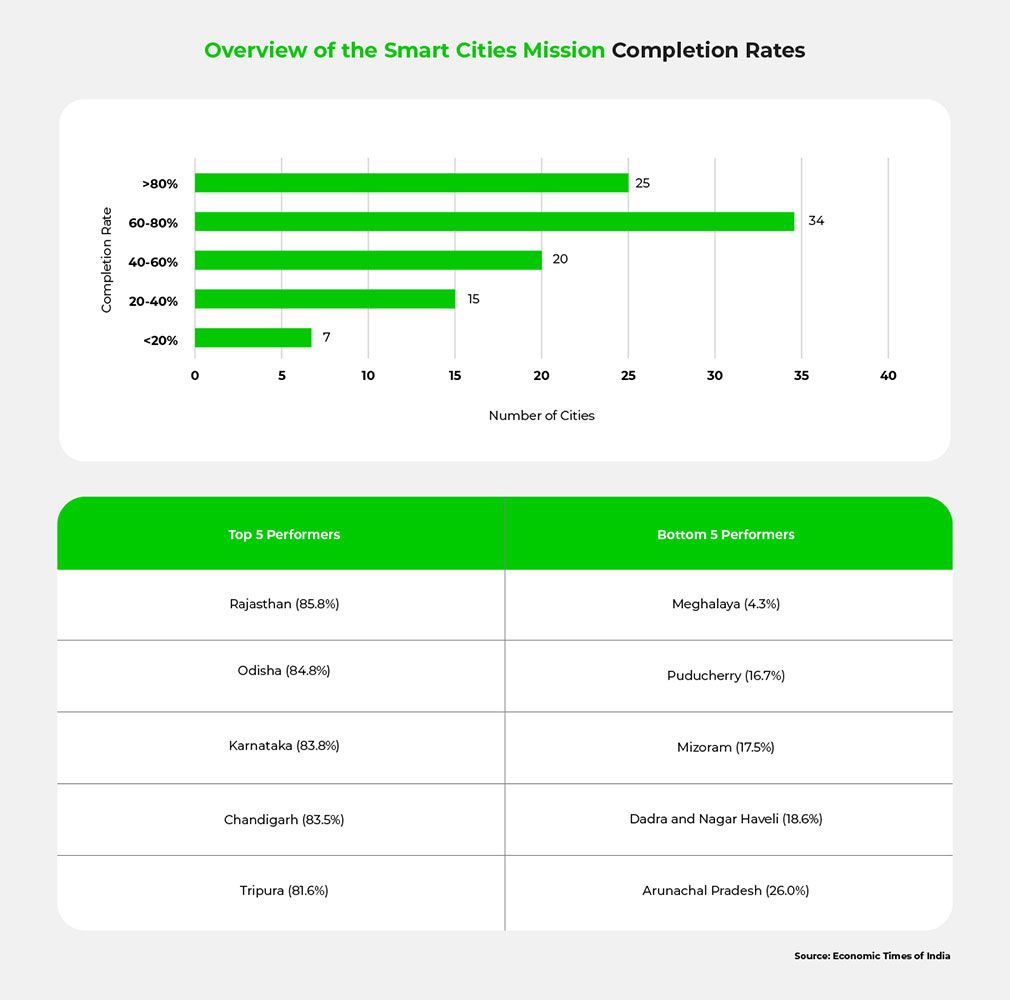
    COVID-19 slowed progress, but momentum has returned. As of mid-2025, 72% of smart city projects are completed nationwide, with big cities averaging 80% and smaller cities around 66% completion, respectively.

    Smart cities are designed to enhance energy efficiency and reduce environmental footprint. and enrich living standards through data-driven technologies. 

    An infographic with a bar chart showing the completion rate of Smart Cities and a list of the top and bottom 5 performers

    Why EVs Are Critical for Smart Cities

    India’s rapidly growing megacities, such as Mumbai, Delhi, and Kolkata, face the complex challenge of balancing quality of life with environmental sustainability.

    One critical aspect of this urban overhaul is the integration of EVs. By shifting towards electric vehicles, India stands to significantly reduce its reliance on fossil fuels, cut greenhouse gas emissions, and lessen the impacts of climate change.

    This approach provides a blend of economic, social, and environmental benefits. As a result, the integration of electric vehicles into smart cities will be a key strategy for India’s urban future.

    In the following sections, we delve into the general impact of EVs on building smart cities. We focus on three key areas that make integrating EVs into smart cities more desirable for India.

    1. Economic Impact

    Smart cities can have a significant impact on a country’s economy. More specifically, smart cities can help boost the economy in the following areas.

    Job Creation and Skill Development

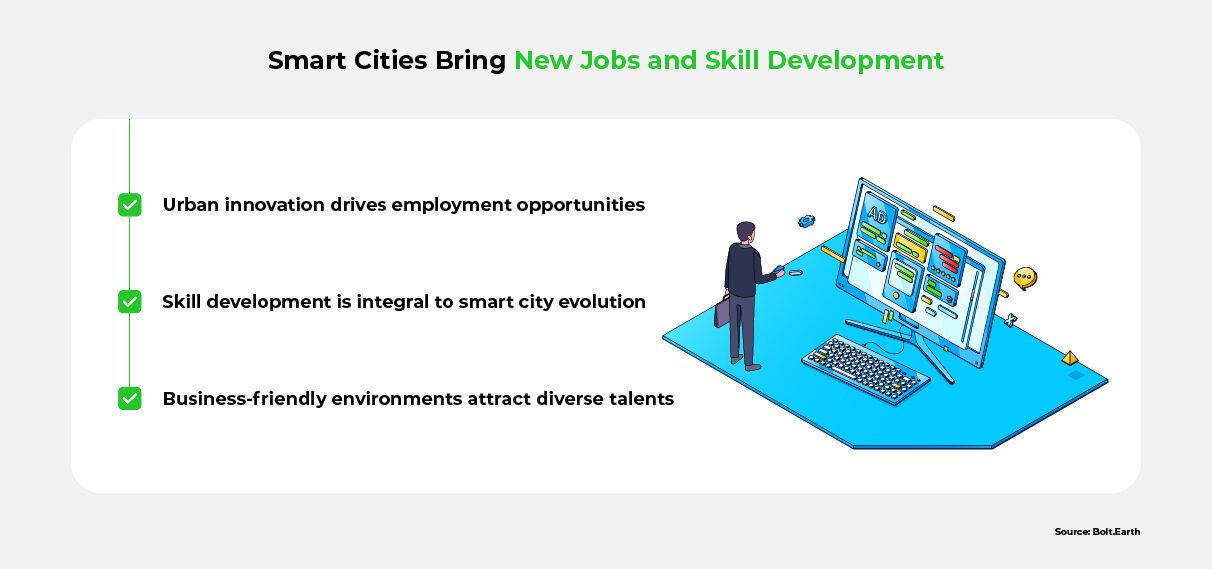
    Building a smart city necessitates a skilled workforce. Key factors for attracting private investment and boosting employment include a business-friendly environment, an innovation-driven climate, and a strong network of educational and vocational institutions.

    Within the EV industry, the importance of technology is paramount. EV manufacturing, R&D, and charging infrastructure create new employment opportunities.

    A list of advantages that smart cities bring related to job creation and skill development

    Fleet and Logistics Transformation

    EVs play a pivotal role in the adoption of smart city concepts, transforming transportation to be more sustainable. Electric buses and e-rickshaws lower costs and emissions. This can help improve transportation services in smart cities.

    Furthermore, EVs support the logistics industry by reducing carbon footprint and enhancing last-mile deliveries.

    Boost to Clean Energy

    Smart charging integrates EVs into the renewable energy ecosystem. This can pave the way for efficient and sustainable energy management.

    Combined with other smart initiatives like smart grids and smart energy management, smart cities can help boost or speed up the adoption of clean energy. This will help countries contribute to a greener energy industry.

    2. Social Impact

    Beyond providing a significant economic boost, smart cities also have a direct positive impact on citizens’ lives.

    Improved Air Quality 

    Integrating EVs into smart cities helps curb greenhouse gas emissions and fosters a low-carbon energy future. The resulting improved air quality can alleviate respiratory diseases.

    For example, a recent study found that transitioning Delhi’s existing bus fleet to all-electric buses could reduce the total pollutant emissions by 74%, helping reduce the number of premature deaths caused by air pollutants. 17% of annual deaths in India are due to air pollution.

    Enhanced Mobility and Accessibility

    The integration of EVs with smart traffic sensors enables real-time vehicle tracking. This can reduce congestion and accidents, facilitating smoother drives. Insights from this data can improve transportation planning.

    Furthermore, smart cities enhance safety through camera surveillance and traffic signal sensors. At the same time, they optimize parking services for improved accessibility and mobility within the city.

    Inclusive and Equitable Development

    EVs foster clean transportation, reducing emissions and improving air quality, which benefits all citizens, particularly those with lower incomes. Smart city infrastructure, such as advanced charging systems and intelligent traffic management, enhances accessibility and inclusivity.

    The growth of the EV industry generates jobs, supports economic growth, and prioritizes equity, inclusivity, and sustainability. This promotes a more equitable and inclusive future.

    3. Environmental Impact

    Most notably, EVs and Smart Cities can have a great impact on the environment, which is a benefit for the world, not just the smart city residents.

    Conservation of Natural Resources

    Smart city technology enables optimal resource allocation. Smart charging infrastructure, intelligent traffic management, and smart energy management systems are woven into the smart urban landscape.

    This helps achieve better resource conservation, which promotes more environmental sustainability. It also helps ensure equitable distribution of resources.

    Mitigation of Climate Change

    As urbanization progresses, smart city technology aids in monitoring urban heat islands (UHIs) caused by heat-absorbing surfaces. This data-driven approach empowers cities to address UHIs effectively and tackle climate change.

    In conjunction with EVs, smart cities support sustainable transportation, curbing greenhouse gas emissions and slowing the effects of climate change.

    Reaching these benefits, however, is not an easy feat.

    Challenges in EV Integration for Smart Cities

    Integrating EVs into smart cities is gaining importance due to the increasing attraction towards alternative urban mobility paradigms. However, the road to revolutionized urbanization is riddled with obstacles.

    Below, we dissect three of these obstacles and their implications on the future of EVs and smart cities.

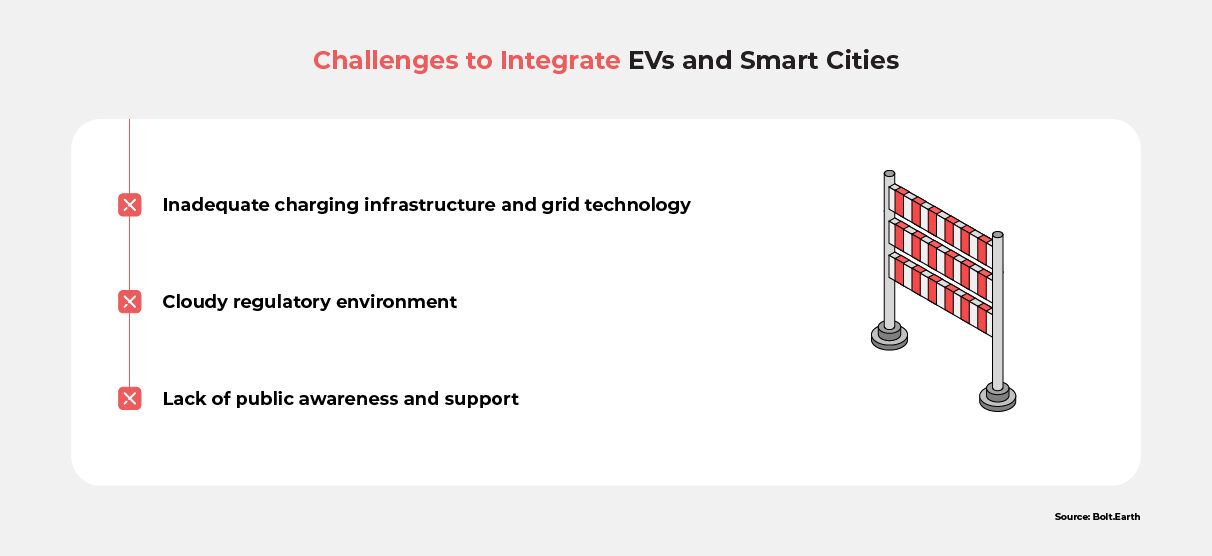
    A list of obstacles to integrating EVs and Smart Cities

    1. EV Charging Infrastructure Challenges

    Charging infrastructure availability and maturity are essential aspects of driving EV adoption in any country. This also applies to the integration of EVs and smart cities.

    Availability of Charging Infrastructure

    In previous articles, we discussed India’s insufficient amount of public infrastructure in terms of high EV sales. As EV penetration increases in urban areas, uncoordinated charging may cause power outages.

    In reality, an immature EV charging network also poses challenges. Existing charging facilities often offer limited services, lacking availability status and reservation options. EV users must search for available charging ports, leading to exhausting experiences and concerns in urban areas.

    Grid Capacity and Stability

    With EVs constituting a small fraction of the massive 362 million vehicle population, the current power grid adequately handles charging demand. However, a projected EV surge by 2030 could strain the grid, risking power outages and highlighting challenges posed by uneven electricity access and supply fluctuations.

    This also applies to the emergence of more smart cities, which could possibly strain the grid even more with the integration of other advanced technologies.

    Technology and Innovation

    Technological knowledge and access to technology are crucial for smart city development. Scholars highlight the potential of technologies like IoT, Big Data, and AI for urban infrastructure, which includes EV charging infrastructure in Smart Cities.

    However, a robust infrastructure of systems, devices, and communication networks is necessary to effectively capture, process, and disseminate data across different sources and support the integration of physical infrastructure.

    The challenge lies in the advanced technologies required to realize Smart Cities, as well as addressing potential social impacts such as privacy concerns.

    2. Policy Challenges

    EV adoption is quasi-impossible without the backing of specific government policies. In a cloudy regulatory environment, the integration of EVs and smart cities will be more challenging.

    Regulatory Instability and Inconsistency

    To achieve the smart city vision, political stability, clear vision, and long-term planning are crucial. Transparent governance and citizen empowerment are also essential.

    However, legal complexities, policy inconsistencies, and misalignment between central and state governments can hinder large-scale infrastructure development. This can further slow down the integration of EVs and Smart Cities.

    Short of Municipal Government Capacity

    Smart city applications have focused on surveillance and security, often managed privately. This is because Urban Local Bodies (ULBs) mostly rely on private funding. This is in line with the SCM’s prioritization of private partnerships, which aims to overcome municipal capacity limitations.

    However, long-term smart city development requires building governance capacity and technological competence within municipal authorities to effectively manage projects. In the absence of municipal governments, integrating EVs and smart cities cannot be conducted smoothly.

    Coordination between Central and State Governments

    Among the governance barriers in smart city development are the absence of effective planning, communication, and leadership. Uncoordinated implementation and isolated efforts pose the risk of resource scarcity and project delays.

    Complex organizational structures and political issues also contribute to a lack of internal coordination and cooperation within city agencies, hindering progress and collaboration. Without a unified approach and vision, the integration of EVs and Smart Cities will prove to be more challenging.

    3. Public Acceptance Challenges

    Because EVs and smart cities are projects for the people, they cannot succeed without the people’s support. Even if all else falls into place, integrating EVs into smart cities will not happen if the public remains opposed to these initiatives.

    Below are some reasons why the public might have a negative perception of EVs and smart cities.

    Consumer Behavior and Perception

    The lack of transparency in policy-making processes undermines citizens’ trust in the government, impeding their willingness to support and engage with smart initiatives aimed at transforming cities for the better. In a word, citizens don’t feel they have any ownership in smart cities.

    Lack of Awareness and Education

    In terms of barriers, citizens are not aware of what is happening nor of the importance of their participation; consequently, the lack of citizens’ participation is a barrier to sustainable smart city development.

    Solutions for Integrating EVs in Smart Cities

    The Indian government’s initiatives and strategic partnerships have significantly boosted EV adoption and infrastructure development. However, the way ahead remains long. Furthering this progress calls for a multifaceted approach addressing infrastructure, policy, and public acceptance.

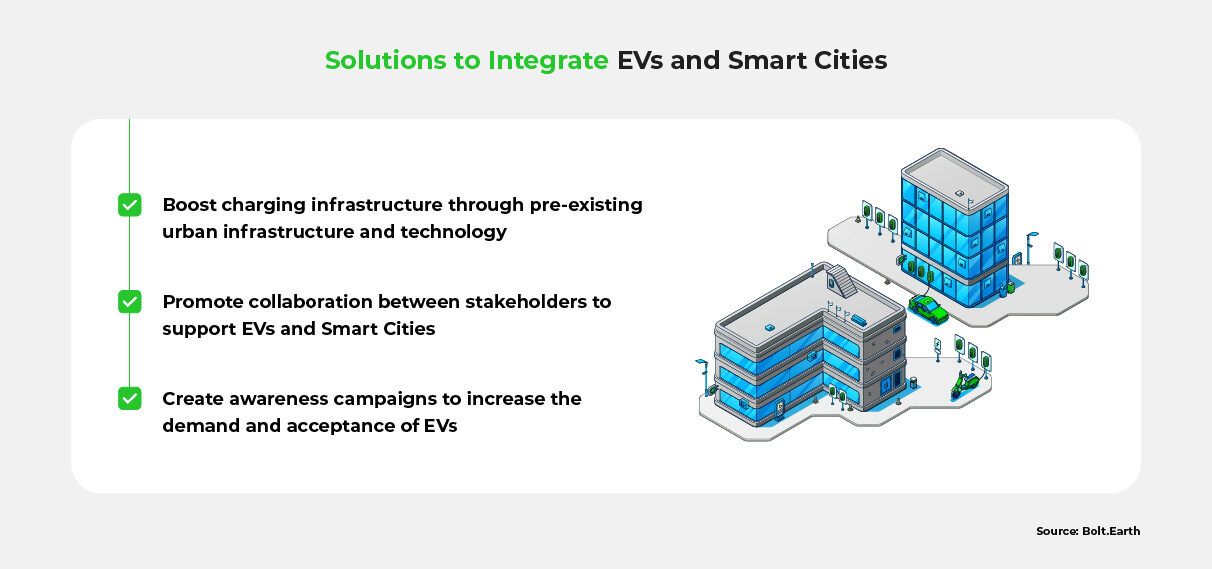
    In the following sections, we will delve into three solutions for these areas, aiming to enhance the successful integration of EVs into India’s smart cities.

    A list of solutions to integrate EVs and Smart Cities

    1. Integrate the EV Ecosystem into Smart City Technology

    EV and smart city initiatives are mutually beneficial, supporting the development of both ecosystems. Below we look at some examples that can help India improve this symbiotic relationship, to further expand the reach of its charging infrastructure.
    Adopt Smart Charging Stations with IoT

    IoT plays a pivotal role in smart city technologies, including EV charging. It enables continuous monitoring, data reporting, and notifications for EV drivers, Charge Point Operators (CPOs), and network operators.

    IoT also enables secure user authentication, including billing and transactions. Users can easily find and reserve available charging stations, receive real-time charging updates, and benefit from smart charging options based on energy rates.

    IoT platforms can ensure efficient control and management of existing infrastructure. This can make the limited charging points available for more users. This will also enable the creation of a more connected charging network, with both private and public charging points and stations.

    Leverage EVs to Promote Smart Energy Management in the Cities

    Rapid urban growth drives high energy demand, surpassing local resources. The solution is a decentralized smart energy chain powered by renewables, ensuring sustainability and resilience through intelligent digital technologies.

    Copenhagen’s EnergyLab Nordhavn project is a prime example. It shows how smart energy solutions, battery integration, EVs, and intelligent heating solutions can help enhance grid flexibility. Following this revolutionary city’s footsteps can help countries worldwide achieve carbon neutrality with the integration of EVs and smart cities.

    Leverage Smart City Technologies for Enhanced Efficiency

    EV charging infrastructure can utilize existing smart city infrastructure. Cities can repurpose parking spaces, fuel stations, and smart buildings as charging hubs. Bidirectional chargers can also enable efficient power management, facilitating power transfer between the grid and vehicles.

    EVs are transforming parking lots into smarter spaces by integrating charging infrastructure, allowing real-time charging insights delivered to an app. Automated parking is also available, allowing owners to schedule a pickup from their phones.

    For example, in Los Angeles, the innovative, cost-effective curbside Streetlight EV Charging Stations utilize existing infrastructure to meet the Mayor’s mandate for increasing EV adoption by adding 100,000 electric vehicles in the city by 2025. Similar hardware and software innovations can help integrate EVs into smart cities more seamlessly.

    2. Support the Implementation of EV and Smart City Technology with Government Efforts

    Clarifying the regulatory environment for smart city implementations requires coordination at different levels. This will help boost the stability in policies, as well as improve different authorities’ abilities to support Smart City projects.

    The following best practices can help promote collaboration between institutions and governments:

    • Collaborate with stakeholders: Foster coordination among governments, private entities, and the public to overcome administrative silos and promote accountability through e-governance services.
    • Create Smart City plans for EV integration: Define the city’s vision and prioritize transportation improvement, aligning EV integration with Smart City goals.
    • Develop strong partnerships: Collaborate with renowned organizations in technology, urban development, and policy to leverage expertise and ensure successful implementation.
    • Seek additional funding through PPP: Mitigate risks and attract financing using tools like tax incentives, concession agreements, and Public-Private Partnerships. For example, the Anqing project in China partners with Qingdao TGOOD Electric to provide charging infrastructure using a viability gap funding model.
    • Pilot test integration initiatives: Evaluate effectiveness and measure benefits before full-scale implementation.
    • Assess, improve, and repeat: Continuously evaluate the rollout, gather feedback, and address inefficiencies for ongoing improvement and scalability.

    3. Public Acceptance Solutions

    As the end users of EVs and smart cities, the public needs to have more awareness to support integration initiatives. To gain citizens’ trust and support, some strategies should be adopted.

    Create Consumer Education and Awareness Campaigns

    To enhance customer awareness of EVs and smart cities, countries should create dedicated campaigns for educational purposes. These efforts educate on EV benefits, cost savings, environmental impact, and policies, promoting the shift towards sustainable mobility and smart urban environments.

    Ampere Vehicles, for example, has been spearheading this movement. In 2021, the company announced a dedicated education campaign called “Ampowering Change”. This campaign aimed at boosting the demand for EVs in India by showcasing their benefits.

    Then, in 2023, the company also created an anthem featuring Indian rappers to get more people to appreciate the electric revolution. With these initiatives, more people will be aware of the benefits of EVs, making them more likely to support the transition to EVs and Smart Cities.

    The Path to Sustainable and Efficient Transportation in Smart Cities

    In transitioning to sustainable urban development, EVs emerge as integral constituents. They bring about multifaceted benefits, socially, economically, and environmentally. Integration of EVs into smart city technologies, intelligent use of IoT for efficient charging, and creative reuse of existing urban infrastructure serve as promising solutions. Governmental efforts are pivotal; encouraging collaboration, fostering partnerships, securing funding, and promoting public awareness are all critical to this integration’s success.

    Moreover, the public’s role is crucial; gaining acceptance and support ensures these initiatives’ sustainability. To make this sustainable, efficient, and inclusive urban environment a reality, we need concerted efforts from policymakers, industry leaders, and citizens. This joint effort will pave the way for the smooth integration of EVs into our smart cities, steering India towards a sustainable urban mobility future.

    Blog Banner

    Frequently Asked Questions

    What are the benefits of integrating EVs within smart city technology?

    Integrating EVs and smart city tech in India has multifaceted benefits: reduced emissions, improved air quality, and enhanced mobility. This can also lead to job creation and economic growth. These integrations also contribute to sustainable transportation, reduce fossil fuel reliance, and help achieve India’s environmental and economic goals.

    How is the Indian government supporting the development of EVs and smart cities?

    India’s government supports EVs and smart city development through various initiatives like the FAME II scheme and Production Linked Incentives for manufacturers. These efforts are designed to enhance charging infrastructure, subsidize EV adoption, attract private investment, and foster an environment conducive to sustainable urban development.

    What infrastructure is needed for EVs and smart cities to be successful?

    To successfully implement EVs and smart cities, we need charging stations, advanced energy management systems, and IoT-enabled smart grids. Other necessities include intelligent traffic systems, robust IT networks, data-sharing platforms, and communication systems.

  • How Electric Vehicles Can Help Decentralize the Energy Grid in India

    How Electric Vehicles Can Help Decentralize the Energy Grid in India

    India’s historic dependence on fossil fuels poses environmental and economic challenges. In today’s complex energy landscape, the urgent need for sustainable solutions opens the door to Decentralized Energy Resources (DERs) — small-scale, end-user proximate energy assets like photovoltaic systems, electric vehicles (EVs), and batteries.

    According to JMK Research’s annual report, 455,733 new EV units hit India’s roads in FY2022. This growth in the EV ecosystem, when integrated with DERs, can optimize renewable energy management. EVs are essentially moving energy storage systems; they have the potential to redefine energy consumption, enhance power supply reliability, reduce transmission loss, and drive economic gains.

    This article will examine the following questions:

    • How can EVs help decentralize the energy grid?
    • How are distributed energy resources (DERs) entering India’s EV ecosystem, and what obstacles are preventing their integration?
    • Why is it important to implement solutions to overcome these challenges and maximize the cooperation between the EV ecosystem and decentralized energy in India?

    The Rapid Growth of the EV Ecosystem and Distributed Energy Resources

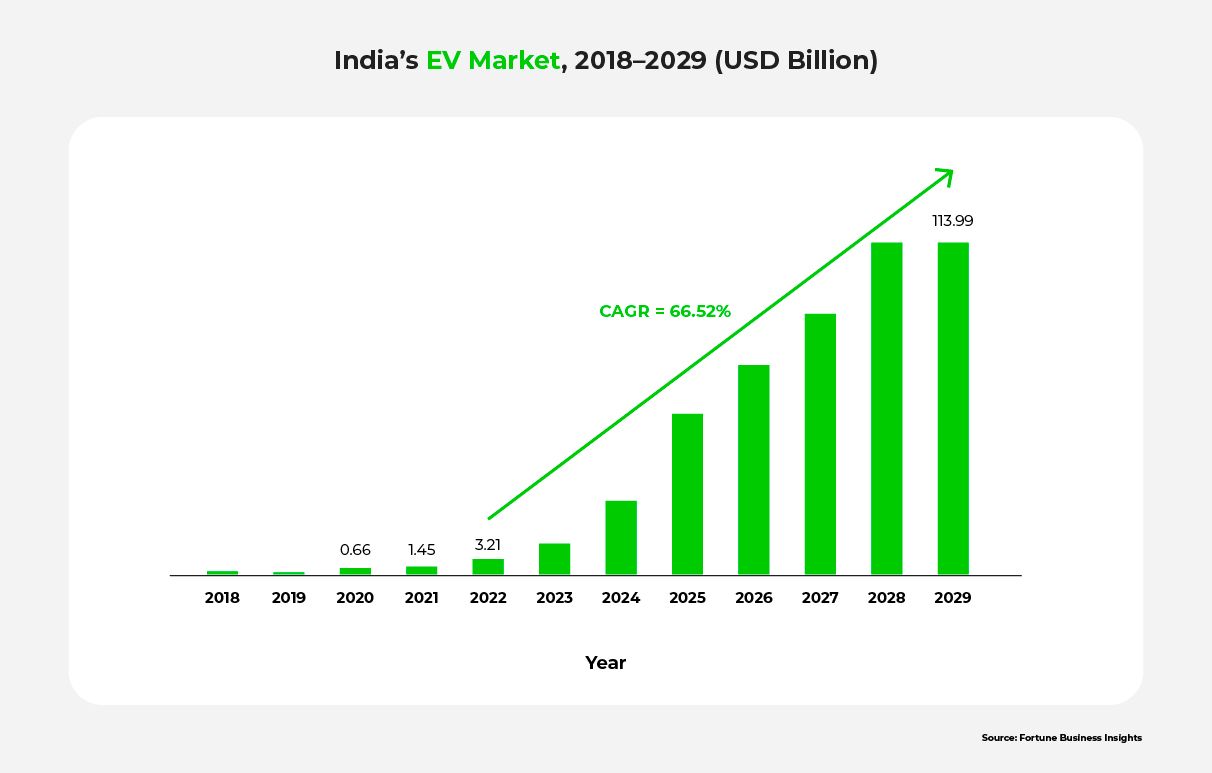
    India’s EV market is projected to increase from $3.21 billion in 2022 to $113.99 billion by 2029, thanks in part to the popularity of 2- and 3-wheelers. For example, the prominent automotive manufacturing corporation Mahindra & Mahindra Limited has announced upcoming plans to release a range of electric vehicles. Government initiatives, such as FAME India subsidies, are facilitating this shift towards e-mobility; currently, 9 central ministries and departments and 27 states are participating.

    A bar chart showing the projected expansion of India's EV market between 2018 and 2029

    Nevertheless, India’s EV charging infrastructure lags. The government is targeting a total of 46,397 operational public charging stations by 2030, but there are only 5,254 so far. In order to meet India’s EV infrastructure goals, private sector investment — with a particular focus on manufacturing and installing EV supply equipment and battery swapping technologies — is crucial.

    The EV ecosystem’s rapid development needs a significant shift in approaches to energy management. To successfully revolutionize its energy landscape, India will need to embrace decentralized energy resources (DERs).

    DERs are small-scale energy resources positioned closer to consumption sites, thereby optimizing renewable energy use, reducing fossil fuel reliance, and increasing eco-efficiency. DER systems consist of distributed generation, energy storage techniques, and demand-response technologies.

    • Distributed generation coordinates heat and power generation in combined heat and power plants, enabling optimal use of renewable energy.
    • Energy storage techniques like batteries and compressed air stabilize the grid by storing excess energy and feeding it back during peak hours.
    • Demand-response technologies optimize grid usage through real-time monitoring and communication.

    Physical DERs produce, store, and consume power through various renewable energies (RE). This can take several forms. For example, solar power uses photovoltaic systems, wind power utilizes wind turbines, hybrid power taps into small hydropower generation, and bioenergy derives energy from organic matter.

    The Australian Energy Market Commission’s classification system provides a valuable reference on capacity interaction and RE technologies.

    A table classifying and detailing the typical installation of various types of reusable energy

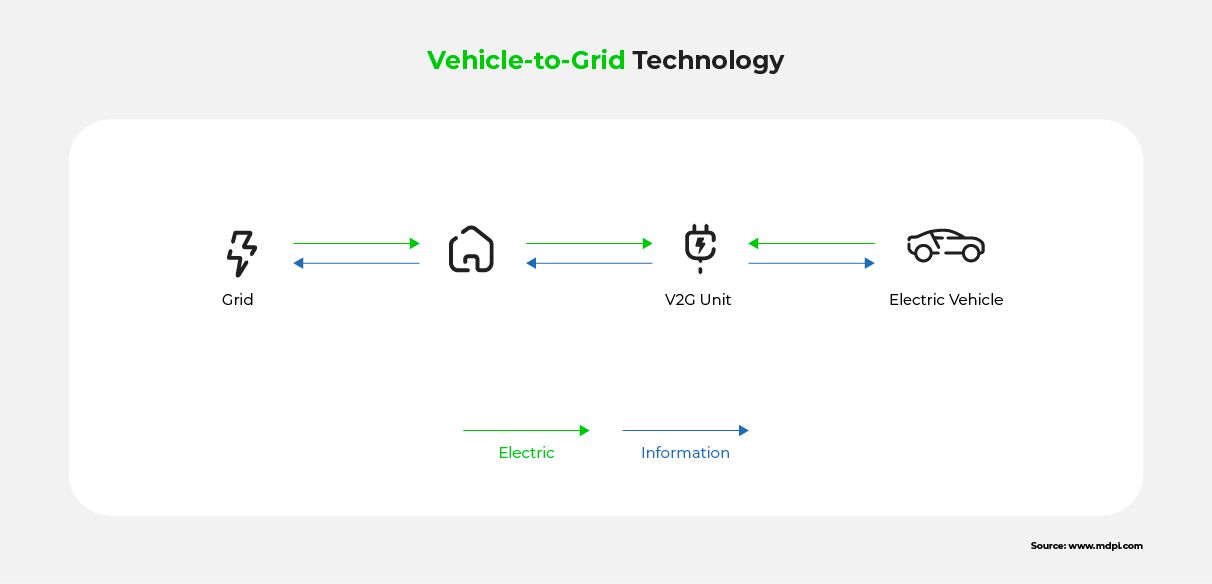
    Individual DERs can be aggregated into virtual power plants (VPPs). Once regulatory and technical barriers are addressed, Vehicle-to-Grid (V2G) technology will be able to enrich this mix by leveraging the potential of EVs and their batteries.

    Why Discuss DERs and India’s EV Ecosystem Now?

    The 21st century is witnessing a transformation in global energy dynamics, as advances in decentralized power technologies challenge traditional grids. According to the UN’s SE4All initiative, by 2030, 70% of the currently unelectrified population will be able to access electricity through mini-grids or off-grid solutions.

    India, in line with its commitment to sustainable development, is making significant progress towards its goal of having 50% of its energy requirements from renewable energy by 2030. In its 2022 end-of-year report, India’s Ministry of New and Renewable Energy announced that they had already installed 172.72 GW of non-fossil electricity capacity, accounting for 42.26% of the country’s total generation capacity.

    A table showing the installed capacity of various forms of renewable energy in India, in 2021 and 2023

    Distribution companies (DISCOMs) face challenges due to increasing renewable energy penetration, including balancing costs and the need for enhanced system flexibility. To address these challenges, India has undergone a paradigm shift, embracing innovative renewable energy procurement models, grid-scale battery storage solutions, and the integration of EVs across regions.

    The projected annual sales of 23.6 million EV units by 2029-30 highlight the crucial role EVs can play in resolving grid integration challenges and optimizing the electricity system.

    The DER sector is also a timely topic because it provides an opportunity for economic growth. Installing 280 GW of solar capacity and 140 GW of wind capacity could create approximately 3.4 million jobs in India. Various skill development programs offer training for these new careers in the growing solar, small hydro, and wind power sectors.

    The Role of EVs in DER Integration

    EVs can play a crucial role in integrating distributed energy resources through vehicle-to-grid (V2G) technology. V2G enables EV batteries to serve as energy storage devices — EVs can store surplus energy during low-demand periods, and then feed it back into the grid during high-demand periods. This contributes to grid stability and facilitates the integration of renewable energy sources.

    EVs can also be strategically charged to align with renewable energy generation. Charging during the day, when solar energy is abundant, and utilizing workplace EV chargers during idle periods optimize energy usage. In the evenings, when demand peaks and solar energy is limited, EVs can be connected to V2G chargers near homes, supplying energy to meet peak demand.

    By leveraging these capabilities, EVs can enhance grid flexibility, maximize renewable energy utilization, and support a sustainable energy transition.

    Challenges in Integrating DERs and EVs into India’s Energy Landscape

    Successfully integrating DERs demands addressing technical, regulatory, and market challenges. It necessitates new standards, effective governance, and a regulatory ecosystem to optimize benefits, foster confidence, and enable updated utility business models.

    Renewable Energy Source Integration Challenges

    Several obstacles stand in the way of establishing an extensive and accessible EV charging network across India. These include:

    • Insufficient EV charging infrastructure
    • Limited accessibility in certain regions
    • Remote locations of renewable energy installations (this strains weak transmission networks, resulting in faults and energy losses)
    • Conventional grid that can’t accommodate the intermittent nature of renewable energy generation
    • Sudden spikes and drops in energy supply

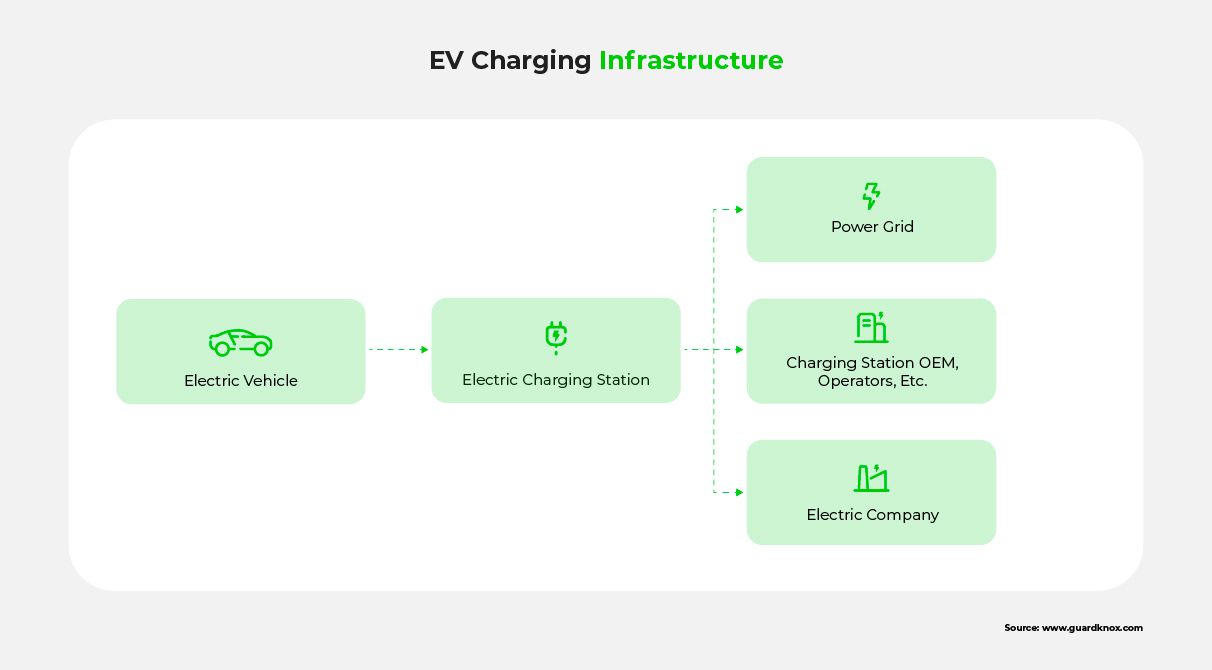
    In theory, the EV ecosystem can address these challenges via technologies like V2G. However, these technologies are not yet sufficiently advanced to enable widespread implementation. For effective EV integration, comprehensive charging infrastructure is essential, encompassing electrical, control, communication, and standardized charging port components.

    A schematic diagram of EV charging infrastructure

    EV integration also comes with its own difficulties. For example, only smart batteries can help realize the V2G technology and, in turn, benefit the grid capacity. However, because smart batteries have special microchips programmed to communicate with a charger of the same brand, this introduces cross-brand compatibility complications, as well as increasing manufacturing costs.

    Furthermore, V2G technology and smart grid integration involve the collection of personal data on location, preferences, and travel distances. Privacy concerns, including GDPR restrictions, pose additional challenges regarding the utilization and protection of personal data.

    Overcoming all of these challenges requires strategic planning, adequate investment, and collaboration between government agencies, private companies, and utility providers.

    It is vital to develop a comprehensive infrastructure plan, address the cost implications, ensure sufficient power supply, and enhance connectivity for charging stations.

    Regulatory and Policy Hurdles

    Because DER technologies are relatively new, the Indian government has not yet created clear regulations for integrating them into the energy grid. Policymakers must also establish technical standards. Conflicting needs of manufacturers, customers, distribution businesses, system operators, regulators, and aggregators can create grounds for contention. Harmonizing these standards is essential for ensuring smooth integration and operation of DERs.

    Insufficient development of flexibility resources poses challenges, potentially leading to curtailment of renewable energy and increased costs in achieving decarbonization goals. Policymakers must tackle the question of how to unlock the inherent flexibility offered by DERs. Furthermore, the downstream segment of the power sector has gained paramount importance with the increasing decentralization of energy systems, but currently represents a weak link within India’s electricity industry.

    Policymakers also need to create technical standards. This can be challenging because different groups have different needs, such as manufacturers, customers, distribution companies, system operators, regulators, and aggregators. Harmonizing these standards is essential for ensuring smooth integration and operation of DERs.

    Financial and Investment Barriers

    Although electric vehicles can save money for individual consumers and strengthen India’s economy in the long run, EV adoption can pose a number of financial challenges. First, high upfront costs can be a major deterrent for potential buyers. While factors such as lower fuel, running, and maintenance costs, as well as tax incentives, can offset these expenses, the initial price remains a significant deciding factor for many potential customers.

    Furthermore, fleet owners face potentially deal-breaking operating cost increases due to the price of electricity from the grid.

    Finally, Indian banks and financial institutions commonly risk exhausting their capacity due to frequent exposure to lending for thermal assets. Therefore, another financial barrier in India is the lack of risk mitigation instruments for low-credit consumers.

    Driving the Growth of DERs Through EV Integration and Supportive Measures

    Recent technological advancements promise to facilitate EVs’ contribution to the Indian energy sector, especially in terms of integrating DERs. Successfully leveraging these new technologies will require substantial policy and regulatory support.

    Integration of EVs and DERs

    V2G technology is a groundbreaking innovation which enables bidirectional energy flow between EVs and the power grid; it allows EVs to not only charge from the grid, but also discharge energy back into it. This both provides a new means of energy storage, and empowers EVs to function as DERs.

    A schematic diagram of EV charging infrastructure

    V2G technology can significantly benefit distribution companies. By utilizing V2G capabilities, distribution companies can actively engage in demand-side management, effectively flattening the load curve and optimizing grid operation. This demand-response functionality can contribute to more efficient grid management, and lead to significant cost savings in terms of flexibility and grid integration.

    With V2G technology, EVs can function not only as vehicles, but also as valuable assets in the energy ecosystem. Leveraging their energy storage capacity and bidirectional energy flow, EVs can actively participate in balancing electricity supply and demand, offering enhanced grid flexibility and resilience.

    Technology and Innovation

    Widespread EV adoption is increasing the demand for microgrids in the energy sector. Leveraging smart technology and data from the Internet of Things (IoT) can address these challenges by enabling the establishment of microgrids. Microgrids, which are powered by intermittent energy sources, seamlessly integrate renewable energy (RE) and EVs. They facilitate smart charging, optimize energy consumption, and reduce costs, fostering a sustainable energy ecosystem. This empowers the sale of excess electricity generated from rooftop solar arrays and stored in EV batteries to local consumers, effectively meeting the demand for EV charging within the community.

    In residential and commercial settings, EVs enhance energy efficiency by strategically charging during off-peak hours, thereby reducing peak demand and lowering electricity bills. Integration with wind turbines, energy storage systems, and combined heat and power generators further enhances energy management capabilities.

    Energy hubs, designed to transfer and store various energy carriers, require meticulous management to successfully integrate EVs. Researchers focus on strategies to reduce costs and address tax implications, maximizing both economic and environmental benefits.

    Virtual Power Plants, comprising decentralized generation, consumers, and energy storage, leverage the capabilities of EVs as large-scale energy assets. They enhance frequency response, power storage capacity, and contribute to CO2 emissions reduction.

    All of the aforementioned energy systems heavily rely on advanced communication technology to function effectively. Communication technology plays a crucial role in facilitating interaction and communication among these components, which promotes smarter and more efficient energy systems.

    Advanced Metering Infrastructure (AMI), real-time monitoring, demand response systems, grid automation, predictive analytics, and AI-based algorithms are integral components of communication technology in the energy context. These technologies rely on communication networks and data transmission for efficient energy system monitoring, control, and optimization. They enable data collection, analysis, and utilization to enhance grid management, energy efficiency, and overall system performance.

    Policy and Regulatory Support

    ​​Policy and regulatory support are vital, including clear guidelines and regulations addressing technical, operational, and commercial aspects.

    Technical regulations define the technical requirements for grid connection, including voltage and frequency standards, protection mechanisms, and grid stability measures. By setting clear standards, utilities and grid operators can ensure the reliable and secure integration of DERs, avoiding grid instability and potential disruptions.

    Operational regulations specify grid connection procedures, including application processes, technical assessments, and interconnection agreements. Standardized grid connection procedures streamline the integration process.

    Commercial regulations address financial considerations, such as energy pricing mechanisms, grid service agreements, and compensation mechanisms for DER owners. They will foster a conducive environment for DER owners’ participation in the market.

    Harnessing innovative technologies, and supporting them with a clearcut regulatory system, can enable the integration of RE and EVs to catalyze a sustainable energy transition. Collaboration, innovation, and effective implementation will accelerate the shift towards an efficient, reliable, and environmentally friendly energy landscape.

    Empowering India’s Energy Transition

    As India’s reliance on fossil fuels continues to pose environmental and economic challenges, EV adoption presents an opportunity to integrate DERs and optimize renewable energy management. By functioning as mobile energy storage units, EVs can revolutionize energy consumption, enhance power supply reliability, reduce transmission loss, and propel economic gains.

    The rapid growth of India’s EV ecosystem, supported by government initiatives and market trends, has set the stage for DER integration. However, challenges such as inadequate charging infrastructure, technical limitations, regulatory hurdles, and financial barriers must be addressed to maximize the synergies between the EV ecosystem and decentralized energy.

    With coherent policies, technological advancements, and collaboration, India will be able to realize the potential of DERs and accelerate the transition to a low-carbon economy.

    For more information, please see the FAQ and Resources sections below!

    FAQ

    How are electric vehicles driving the growth of distributed energy resources in India?

    Electric vehicles are driving the growth of distributed energy resources in India by acting as mobile battery storage systems. When integrated with DERs, EVs optimize renewable energy management, enhance power supply reliability, reduce transmission loss, and drive economic gains.

    What role do EVs play in integrating DERs into India’s energy mix?

    EVs play a crucial role in integrating DERs into India’s energy mix by leveraging vehicle-to-grid (V2G) technology. They can store surplus energy during low-demand periods and feed it back into the grid during peak demand, contributing to grid stability and the integration of renewable energy sources.

    How can EVs help in decentralizing energy grids in India?

    The synergies between India’s EV ecosystem and decentralized energy lie in EVs’ potential to serve as energy storage devices, provide flexibility to the grid, and facilitate the efficient utilization of renewable energy. This integration can enhance power supply reliability, optimize renewable energy management, and contribute to a cleaner and more sustainable energy future.

    How can stakeholders become aware of the potential of DERs in India?

    Stakeholders can become aware of the potential of DERs in India through increased knowledge dissemination, awareness campaigns, industry collaborations, and educational programs. Engaging with policymakers, utilities, and industry associations can also help raise awareness about the benefits and opportunities of DERs.

    How can investors contribute to the growth of decentralized energy resources in India?

    Investors can contribute to the growth of decentralized energy resources in India by providing funding and investment support for projects related to DER deployment, EV charging infrastructure, and renewable energy generation. They can also explore innovative financing models and partnerships to accelerate the adoption of DERs in the country.

    What impact can the integration of DERs have on India’s energy security?

    The integration of DERs in India’s energy landscape can have a positive impact on energy security. By diversifying the energy mix with renewable sources and enabling localized generation and storage, DERs reduce dependence on imported fossil fuels and enhance the resilience and stability of the energy system, thereby improving energy security in the long term.

    Resources

    UNESCAP: Low Carbon Green Growth Roadmap for Asia and the Pacific

    Learn about decentralized energy systems in Asia and the Pacific.

    IEEFA: Lessons from Australia for India on Integrating Distributed Energy Resources (DER)

    Discover best practices for regulating DER integration.

    Oxford Institute for Energy Studies: The Rise of Distributed Energy Resources

    Find an overview of India’s DER sector.

    MOP: Report On Optimal Generation Capacity Mix For 2029-30

    Explore India’s energy goals.

  • Assessing the Environmental Impact of EVs in India by 2030

    Assessing the Environmental Impact of EVs in India by 2030

    Transportation is currently a leading cause of air pollution in India. As a result, the government is taking steps to encourage electric vehicle adoption. By embracing EVs, India aims to decarbonize the transportation sector and pave the way for a national transition to clean energy.

    Transitioning to EVs promises to reduce air pollution in India’s megacities and provide citizens with better quality of life. This article delves into the projected environmental impact of EVs by 2030 by answering three key questions:

    • How does the transportation sector currently impact India’s environment, and what are the expected trends in the coming years?
    • How can EV adoption benefit India’s environment?
    • Why is it important for every stakeholder to help India balance environmental sustainability with economic development?

    India’s Transportation Sector: Current Environmental Challenges

    The transportation sector in India has a significant environmental impact. It accounts for around 20% of India’s total energy consumption. Unfortunately, it also contributes to 11% of India’s total carbon dioxide emissions.

    This strain on the country’s environment worsens as rapid urbanization and population growth lead to increased traffic congestion, further damaging air quality and increasing fuel consumption. Infrastructure development for transportation requires land acquisition and can result in habitat destruction and ecosystem disruption.

    These numbers are only expected to grow as the economy develops and people’s purchasing power increases. Because cars are seen as a status symbol, people’s increasing desire and ability to own one will lead to a surge in pollution.

    A recent study estimates that the number of four-wheel vehicles will skyrocket by 900% over the next thirty years, exacerbating the already critical environmental crisis. Additionally, as India’s economy grows, truck emissions will increase, since freight transportation of goods primarily relies on carbon-emitting trucks.

    A bar chart showing the demand for various types of passenger vehicle in India, from 2016 to 2027

    The automotive sector, buoyed by a growing middle class, presents tremendous financial opportunities for investors. Research shows that India received a cumulative FDI equity inflow of $33.77 billion from April 2000 to September 2022. The Indian government expects the automobile sector to attract $8-10 billion in both local and foreign investment in 2023.

    While 2023 is expected to be a turning point with increased investments in EVs, the market for traditional ICE vehicles is also expected to grow. This might offset the positive environmental impact of EVs in the coming years.

    Key Environmental Challenges from ICE Vehicles

    The automotive sector poses several challenges to the environment in India. Current practices for vehicle manufacturing play a role in rapid resource depletion. Once manufactured, these vehicles contribute to greenhouse gas emissions through their dependence on fossil fuels.

    This leads to air pollution, adverse health effects, and accelerated climate change, especially in growing urban areas. Examining these barriers and their current impacts on the environment can elucidate the urgent need for sustainable solutions and alternative approaches in the transportation sector.

    1. Resource Depletion from Vehicle Manufacturing

    Most vehicles are primarily composed of steel, plastic, aluminum, and iron. Mining, manufacturing, and unsustainably utilizing these resources have significant environmental consequences, including habitat destruction, water pollution, and soil degradation.

    Another concern is the disposal of traditional vehicles, which often end up in landfills, contributing to waste and pollution. Discarding these vehicles also requires significant energy, further depleting valuable resources.

    2. Air Pollution and Public Health Risks

    Air pollution is a severe problem in India, with some cities ranking among the most polluted in the world. Out of the many pollutants, vehicular emissions are a top contributor.

    The emissions from conventional ICE vehicles contain pollutants like carbon monoxide, nitrogen oxides, sulfur dioxide, particulate matter, lead, and benzene. All of these negatively impact human health, as the table below demonstrates.

    List of the different pollutants emitted by traditional ICE vehicles, and their negative effects on human health.

    In densely populated urban centers, the concentration of vehicles further exacerbates these health problems. The increasing number of vehicles will raise morbidity and mortality rates among India’s population if this challenge remains unaddressed.

    Left unchecked, both resource depletion and air pollution can continue to intensify the greenhouse effect and contribute to ecological disruption.

    3. Climate Change and Greenhouse Gas Emissions

    India ranks as the third-largest greenhouse gas emitter in the world. The transportation sector significantly contributes to these emissions, with vehicular pollution causing high levels of carbon dioxide and nitrous oxide in particularly congested cities like New Delhi, Mumbai, and Bengaluru. The transportation sector is also responsible for a third of India’s particulate matter pollution, which traps heat and further drives climate change.

    The resulting rise in temperatures has adverse effects on public health, including an increase in vector-borne diseases; warmer weather creates favorable conditions for pathogen-bearing organisms, such as mosquitoes, to thrive and breed.

    Greenhouse gasses also impact weather patterns, causing droughts, heat waves, and floods, all of which undermine agricultural productivity and increase the risk of food insecurity.

    Graph of total CO2 emissions (well to exhaust) on Indian roads from 2005 to 2035.

    These challenges are a ticking bomb — as the graph above shows, vehicular emissions will increase dramatically in the coming decades. Recognizing the urgency, India’s government is actively pushing for increased adoption of EVs.

    By reducing emissions and dependence on fossil fuels, the positive environmental impact of EVs can help mitigate the negative impacts of the transportation sector on the environment.

    How EV Adoption Can Benefit India’s Environment

    EVs have great potential to address India’s pressing environmental challenges. By reducing harmful emissions, increasing the demand for renewable energy sources, and fostering sustainable production and disposal practices, EVs hold the key to revolutionizing India’s transportation sector.

    An infographic stating that EVs can help India's environment by minimizing resource depletion, eliminating air pollution, and reducing the impact of climate change.

    Below, we analyze three positive environmental impacts of EVs.

    1. Reducing Resource Depletion with EVs

    EVs benefit the environment insofar as they require fewer natural resources to produce than traditional vehicles. EVs have simpler mechanics than petrol or diesel vehicles.

    Furthermore, their batteries can be recycled, minimizing the need for new resources and reducing waste. By creating more demand for EVs, potential EV owners can reduce the environmental impact of extensive mining and nonrenewable resource depletion.

    2. EVs as a Solution to Air Pollution

    Unlike traditional vehicles, EVs do not produce tailpipe emissions, which are harmful air pollutants. By utilizing electricity stored in batteries to power their electric motors, EVs eliminate the need for combustion engines that rely on fossil fuels.

    Furthermore, EVs employ regenerative braking, which sends energy generated by braking back to the car’s power system. ICEs, on the other hand, use disc brakes that emit even more pollution.

    Knowing the environmental impact of EVs can help potential car buyers make informed decisions and promote EV adoption in their communities — leading to more benefits for the country.

    3. EVs and Climate Change Mitigation

    EVs can be charged using electricity generated from renewable sources like solar panels and wind turbines. Unlike traditional sources of electricity, renewable sources don’t emit greenhouse gasses that contribute to climate change.

    EV owners, RWAs, and businesses can work together to establish renewable energy infrastructure to power EVs in their communities, further improving the environmental impact of EVs

    India needs to develop and implement sustainable government policies that effectively incentivize all stakeholders to embrace EVs and push for a greener future for the country’s transportation.

    By doing so, India can pave the way for a dynamic EV revolution that not only addresses environmental challenges but also unlocks countless economic and societal opportunities for generations to come.

    Stakeholder Roles in Driving EV Adoption & Sustainability

    Maximizing the environmental impact of EVs cannot happen without a collaborative effort involving policymakers, businesses, governments, and individuals. Each party plays a crucial role in creating a political and economic environment that supports the adoption of EVs.

    Below we take a top-down look at four key players, and how they can work together to ensure India can reap a positive environmental impact from EVs.

    1. Policymakers and Government Initiatives 

    Policymakers should create favorable policies and regulations that promote the installation of renewable energy sources for powering EVs. They can also provide incentives and support to accelerate the transition to clean energy. Doing so will help increase the positive environmental impact of EVs.

    2. Businesses and Green Innovation

    Businesses can work alongside governments to boost EV adoption. In particular, they can invest in research and development for renewable energy sources and materials. They can also sponsor events to raise awareness about the need for end-to-end green mobility options. They can also promote eco-friendly living by offering charging amenities at their premises to boost EV adoption.

    3. Resident Welfare Associations (RWAs)

    Resident Welfare Associations (RWAs), along with individuals, can take advantage of government subsidies to establish solar-powered charging infrastructure in their communities.

    They can also contribute to the safe disposal of EV batteries by establishing collection hubs in their communities. One by one, RWAs can promote the environmental impact of EVs and boost EV adoption in their communities and across the country.

    4. EV Owners and Consumers as Change Agents

    Lastly, current and potential EV owners can make their voices heard. They can demand that EV makers use renewable materials, encourage their housing communities and offices to install solar panels for charging, and use their purchasing power to support EV manufacturers in driving the shift towards sustainable transportation.

    Projected Environmental Benefits of EVs in India by 2030

    Partnerships among the roles above complement India’s push for renewable energy. Specifically, India is currently the world’s largest producer of bioenergy. The country is also expected to become the third-largest producer of ethanol — an alternative clean energy source that can be used to power EVs — by 2026.

    Due to these concerted efforts, the environmental impact of EVs by 2030 is looking bright:

    • 17% reduction in nitrogen oxide and particulate matter emissions
    • 18% lower carbon monoxide emission
    • A reduction of 846.3 million tons of carbon dioxide every year
    • 40% of cumulative electric power from renewable sources to power EVs can reduce the burning of fossil fuels
    • A reduction of 474 million tonnes of oil equivalent and a net savings of ₹15.21 trillion

    An infographic stating that EVs can help India's environment by minimizing resource depletion, eliminating air pollution, and reducing the impact of climate change.

    As India continues to transition to clean energy sources for EV charging, the environmental benefits will continue to grow. Widespread EV adoption, coupled with investment in charging infrastructure and renewable energy sources, can help India achieve its climate goals while promoting sustainable and responsible development.

    Driving Towards a Sustainable Future with EVs

    Currently, the transportation sector environment in India severely impacts the environment by contributing to resource depletion, air pollution, and climate change. India’s adoption of EVs holds immense potential to address these pressing environmental challenges and pave the way for a sustainable transportation future.

    EVs require fewer natural resources for production and can be manufactured using renewable materials, minimizing resource depletion. Additionally, EVs produce zero tailpipe emissions, reducing harmful air pollutants that can cause adverse health effects. EVs can also be charged using electricity generated from renewable sources, such as solar and wind power, thereby achieving a substantial reduction in greenhouse gas emissions and their impact on climate change.

    To ensure a successful transition towards EVs, collaborative efforts are crucial. Policymakers can create favorable policies and regulations that promote renewable energy infrastructure and provide incentives for EV adoption. Similarly, businesses can invest in research and development for renewable energy sources, charging infrastructure, and eco-friendly EV manufacturing practices.

    By embracing EVs and promoting a greener future for transportation, India can simultaneously address environmental challenges, unlock economic opportunities, and improve the well-being of current and future generations. Ultimately, a collective effort from all stakeholders can enable India to realize the positive environmental impact of EVs and achieve a sustainable and responsible path for development.

    Blog Banner
     

    Frequently Asked Questions


    What is the expected growth rate of EVs in India by 2030?

    The expected growth rate of EVs in India by 2030 is around 49% per year. EV sales are predicted to reach 10 million per year by 2030. The Indian government is targeting 30% electrification of all vehicles by 2030.


    How will the government’s policies influence the adoption of EVs in India?

    Government policies, such as tax breaks, can incentivize car owners to switch to EVs. Subsidies and the single window system can encourage RWAs and small businesses to set up EV charging stations. Furthermore, business-friendly policies can boost domestic EV manufacturing and the generation of renewable energy.


    What are the potential challenges in the widespread adoption of EVs in India?

    Potential challenges in EV adoption include lack of charging infrastructure, high battery costs, limited driving range, and a lack of consumer awareness and education about EVs. The affordability of EVs also remains an additional concern for many consumers.


    How will the shift towards EVs impact the automotive industry in India?

    The growing demand for EVs will drive investments in research and development, battery manufacturing, EV software development, and charging infrastructure. Domestic manufacturing of EVs and components will also create new job opportunities and support the country’s economic growth. However, the shift towards EVs will also require significant investments in retooling manufacturing facilities and upskilling the workforce to adapt to the changing technology.
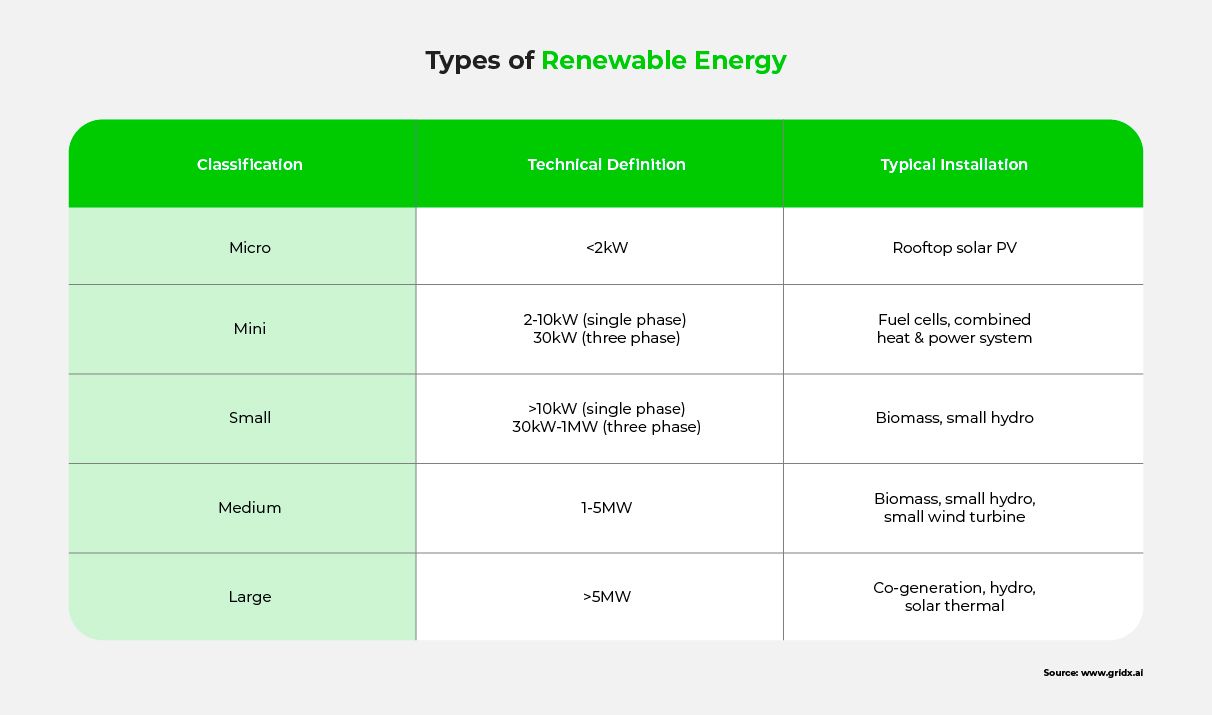
  • How The EV Ecosystem Can Drive EV Adoption in India

    How The EV Ecosystem Can Drive EV Adoption in India

    India is standing at a crucial crossroads in its journey towards sustainable development. As one of the world’s largest and fastest-growing economies, the country faces the challenge of balancing economic growth with environmental responsibility.

    To overcome this challenge, India has set ambitious goals for EV penetration as EV adoption has emerged globally. However, with only 1.32% of India’s registered vehicles being EVs in FY 2021-22, the path to achieving the announced target of 30% EVs by 2030 requires a collaborative effort from the government, private sector, and consumers alike.

    Embracing an ecosystem approach — where all stakeholders actively participate and contribute — is key to creating a supportive and conducive framework for the growth of India’s EV market. By examining the intricacies of this approach, we can uncover the driving forces behind India’s EV revolution and explore its potential for shaping India’s sustainable future.

    This article analyzes the EV ecosystem in India and answers three essential questions:

    • What is the current state of EV adoption in India, and why does it need to improve?
    • Why is driving EV adoption in India challenging, and how can an EV ecosystem help address these challenges?
    • Who are the key players in the Indian EV ecosystem, and how can they work together to electrify India?

    The Current State of EV Adoption in India

    India’s current EV ecosystem reflects both opportunities and challenges as the nation strives to accelerate EV adoption. While major Indian and international automobile manufacturers such as Hyundai, Kia, and Mercedes-Benz offer a wide range of EV 4-wheeler models, a significant portion of India’s vehicle market comprises 2- and 3-wheelers, which account for about 80% of total vehicle sales.

    Surprisingly, out of the 250 million 2- and 3-wheelers on the roads in India, only one million are electric. Nonetheless, in FY 2022-23 alone, India witnessed a surge in EV registrations exceeding one million with electric two-wheelers making up 62% of EVs sold.

    Graph titled

    Projections for EV Adoption in India

    Ev adoption in India looks promising as its EV market is expected to grow rapidly. By 2030, it’s estimated that 10 million EVs will be sold annually, with a compound annual growth rate of 49% in the coming years.

    States that have proactively provided policy and infrastructure support to accelerate this transition are already witnessing sharp increases in EV sales — in December 2022, Delhi reported 16.8% of all vehicle sales were EVs, showcasing an impressive 86% YoY growth.

    Present government policies support achieving India’s goal of 30% EVs by 2030. In the 2023-24 budget, a substantial amount of INR 35,000 crore has been allocated for crucial capital investments to facilitate the transition to net-zero energy targets.

    Additionally, the allocation for the FAME-II scheme has been increased by 80%, providing subsidies and promotions to encourage EV adoption. These initiatives demonstrate the government’s commitment to creating a sustainable future and promoting the use of EVs in India.

    Two graphs representing EV sales and penetration projection by 2030.

    While India is making some progress toward EV adoption, the country still has a pressing need to accelerate adoption and tap into India’s market potential, combat environmental challenges, enhance energy security, and achieve policy objectives.

    Below we examine why EV adoption is a necessary step to help India achieve significant economic and environmental benefits

    The Need to Drive EV Adoption in India

    Environmentally, EVs offer a sustainable alternative to fossil fuels in the transportation sector as petrol and diesel vehicles emit almost 3x more carbon dioxide than EVs.

    Image listing the environmental benefits of EVs, including low noise, energy efficiency, no air pollution, and renewably charged.

    Beyond the environmental benefits, widespread adoption holds the potential to transform transportation in India, offering economic advantages like job creation and increased energy security. By reducing emissions and integrating EVs into the transportation framework, a balance between environmental sustainability and economic growth can be struck.

    Image of the economic benefits triggered by EVs, such as job creation and reliance on fossil fuel imports.

    While EV adoption is a very interesting prospect for India, the country is still facing several obstacles preventing it from unlocking the full potential of EVs.

    3 Main Challenges to EV Adoption in India

    While EVs can reduce emissions and unlock economic benefits, several factors stand in the way of EV adoption in India. Lack of infrastructure, public awareness, and high costs impede progress. Identifying and understanding these challenges is necessary for key players to develop targeted strategies to address them.

    1. Lack of Infrastructure

    Charging infrastructure requires significant investment in equipment and land, in addition to investments needed to enhance the capacity and efficiency of the power grid.

    Without adequate charging infrastructure, consumer demand for electric vehicles will remain severely limited. This will lead to restricted demand for EV charging and investor reluctance to invest in charging infrastructure.
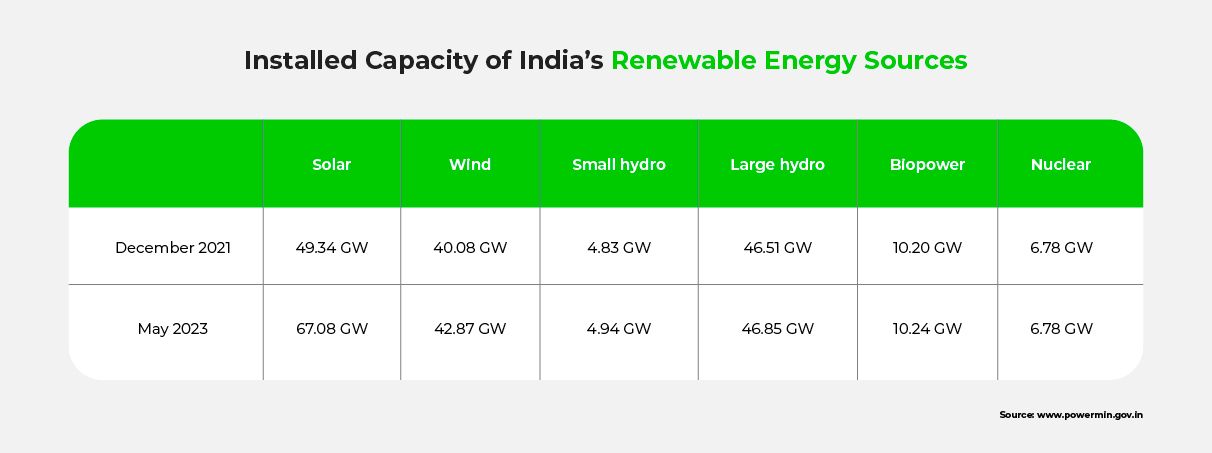
    Image displaying the role of each player in the EV infrastructure value chain, including hardware, software, power suppliers, and service providers.

    2. High Costs of EVs

    The price of an EV is much higher compared to an internal combustion engine (ICE) vehicle as EVs use battery power instead of fossil fuel. Although EVs have a much simpler design comprising the battery pack, electric motor, and transmission, they are still expensive to produce because of the high cost of the battery.

    While lithium-ion technology is the major contributor to EVs’ costs, their batteries also use costly components made up of rare earth metals such as lithium, cobalt, and nickel — further decreasing the affordability of EVs and driving average consumers away.

    Pie chart breaking down the manufacturing costs of EV components.

    Research and development also contribute to high EV costs. For example, many EV manufacturers are investing in EV software and the vehicle’s operating platform to make EVs more efficient and eventually autonomous.

    3. Low Public Awareness

    Due to limited outreach and the dominance of traditional vehicles, insufficient information and education leaves many people in India unaware of the benefits of EVs and the role they can play in building a more sustainable future. Consumers may also not be aware of the government’s initiatives and plans to drive EV adoption, making ICE vehicles a go-to choice for lack of external intricacies.

    Graph representing the priorities for policymakers to catalyze EV adoption, with increasing public awareness at the top.

    The Ecosystem Strategy to Increase EV Adoption in India

    A comprehensive ecosystem approach is key to accelerating EV adoption in India. Different players in the ecosystem can come together to drive infrastructure development, increase the affordability of EVs, and improve public awareness.

    Addressing these aspects will allow India to pave the way for a sustainable and widespread transition to e-mobility, fostering a greener and more energy-efficient transportation landscape.

    Below, we analyze how an EV ecosystem can help address these challenges, then take a look at the individual players who make up this ecosystem, and what role they play.

    1. Infrastructure Development

    The Indian government has launched several initiatives to encourage the development of charging infrastructure, such as the Faster Adoption and Manufacturing of Hybrid and Electric Vehicles (FAME) scheme.

    Drawing of the role of infrastructure development in the EV ecosystem: developed tech, grid innovations, and comprehensive planning.

    The EV charging ecosystem offers immense potential for innovation. For instance, chargers in parking lots and vertical charging stations. Investment in futuristic solutions such as smart charging systems and battery recycling facilities should also be encouraged. Policymakers should take the lead in bringing together ecosystem players for infrastructure development and guide collaboration among the participants.

    To establish an EV ecosystem, policymakers should involve market participants and develop a transparent, holistic roadmap for developing India’s EV Infrastructure. The roadmap to achieve policy goals should emphasize cross-operator synergies, long-term solutions, and comprehensive planning.
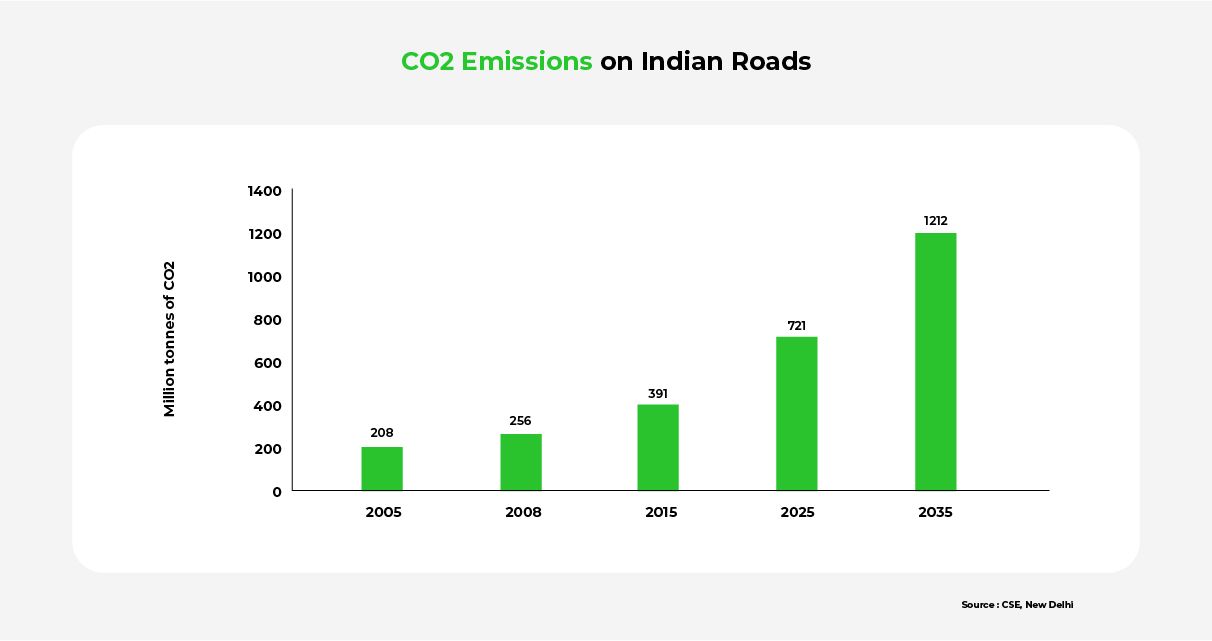
    2. Improving EV Affordability

    The demand for EVs will vary with the price at which it is offered for sale. When the prices are high demand will be low, and when prices drop, demand will go up.

    EVs are currently much more expensive than petrol or diesel vehicles in India. Thus, an essential component of the strategy to promote EVs in India is to work towards reducing the price of EVs. For instance, India can encourage greater self-reliance in battery production to reduce dependence on imports like raw material discovery efforts.

    Drawing outlining the role of EV affordability: local manufacturing and financial support.

    Using the ecosystem approach, EV players can develop practical strategies to address concerns about the high cost of EVs in India. Policymakers, for example, can design corporate incentives and consumer subsidies. This will help support local supply and demand, respectively.

    3. Awareness Campaigns

    Many people are still unfamiliar with the benefits of EV. However, India needs to promote green living among the public. The country should also educate citizens about the benefits of EV adoption. This will encourage more people to switch to EVs.
    Awareness campaigns are a vital component in the successful implementation of an EV ecosystem approach. As India navigates this transition, the need to foster awareness for a supportive ecosystem cannot be understated. By educating the public, promoting infrastructure development, and encouraging collaboration, these campaigns create a favorable environment for the widespread adoption of electric vehicles.

    Drawing of the role awareness campaigns play in the EV ecosystem through showcasing the reduced costs of EVs, promoting EV infrastructure, and promoting policy incentives.

    EV manufacturers and charging operators can collaborate with the government to create awareness campaigns. The government can offer incentives and tax breaks to companies that promote EVs. These partnerships can create an integrated campaign to promote EVs, such as the ‘Go Electric’ campaign to encourage the development of an EV ecosystem.

    After understanding how an EV ecosystem can help address India’s EV adoption challenges, we can analyze who can take part in this ecosystem — and what they can do.

    7 Major Players of the EV Ecosystem in India

    Expediting the transition toward widespread EV adoption can’t be an individual effort. Key players have to collaborate and develop practical solutions to tackle the challenges of EV transition.
    Below we analyze the roles of seven key players in the EV ecosystem, to see how collaboration among them can make EV transition more affordable, cohesive, efficient, and effective.

    1. EV Manufacturers

    New and established brands are competing for a share in the EV market. As a result, they are expanding their EVs’ availability and affordability, further driving EV adoption. The Indian consumer now has access to 3-wheelers, cars, buses, and other EV models.

    2. Component and Battery Manufacturers

    Batteries are one of the most critical components of an EV, and they significantly contribute to an EV’s hefty price tag. Driving EV adoption in India will require component and battery manufacturers to invest in high-performing, cost-effective batteries. Doing so will also help India emerge as a leader in the global EV market.

    3. Charging Infrastructure Providers

    As range anxiety is one of the key hindrances in EV adoption, charging infrastructure providers can play a critical role in removing this obstacle. By rolling out charging stations across the country, EV drivers can charge their EVs conveniently on the go.

    Charging infrastructure providers also have a unique opportunity to leverage software to create interconnected charging networks, with companies leveraging Open Charging Platforms to bring together different providers’ charging points into a single platform.

    4. The Government

    The Indian government develops policies and regulations that govern the EV industry. Policy support encourages players to invest in the EV ecosystem to develop a competitive EV industry in India and accelerate consumer EV adoption through subsidies and end-user incentives.

    5. Investors and Financiers

    Investors provide the necessary facilities and infrastructure for the manufacturing, assembly, supply, and servicing of EV components. Consumer financing options from major banks and NBFCs make EVs more affordable and accessible to a wide range of consumers.

    6. Consumers

    Consumers also have the responsibility to respond to and benefit from other players’ efforts. By taking advantage of subsidies, residential charging infrastructure, and the countless educational resources on EVs, consumers can develop a green mindset, and share it with their peers, further driving the demand for EVs.

    7. Other Players

    Software pervades many processes in the EV ecosystem, including EV operating systems, charging platforms, and fleet management. Channel partners and dealers educate consumers, promote and market EVs, and provide after-sales services. By introducing technology in every step of the EV adoption process, like single window portals, EV OS apps, etc., EVs can become an even more innovative offering, attracting more consumers.

    Drawing listing various players and their corresponding roles in the EV ecosystem.

    Despite individual players’ efforts, EV adoption requires an interconnected ecosystem. A siloed approach to problem-solving in the EV industry will only hinder the transition to EVs, as each player focuses on their personal views and objectives.

    Conversely, all players in the EV industry should set aside their preferences, and focus on the primary goal: driving EV adoption in India; they should trust that putting the country’s needs first will ultimately benefit them and their agendas.

    Table displaying the needs of each player in the EV ecosystem.

    An EV Ecosystem That Fulfills All Players’ Needs

    An EV ecosystem presents a unique opportunity to drive the EV revolution in India. This approach can address the many challenges faced by EV adoption by fostering collaboration between key players while boosting the economy and establishing a sustainable future.

    It is important to involve the key EV stakeholders in the planning and development of strategies to achieve the targeted EV adoption in India. Policymakers and industry leaders can use the ecosystem approach to effectively bring together all stakeholders, from consumers to manufacturers and charging infrastructure providers.

    The players should aim to achieve synergy in the ecosystem so that the action of the players has a multiplier effect through effective collaboration. The transition to EVs will be faster and seamless when the needs of EV players are met efficiently.

    To learn more about the EV ecosystem in India, please see the FAQ and Resources sections below.

    FAQ

    What is the ecosystem approach to EV adoption?

    The ecosystem approach aims to bring together all the players in the EV industry to collaborate and work synergistically. EV technology is at a nascent stage and different segments of the industry — EV manufacturers, battery companies, charging providers, and investors — need to establish a shared perspective of the future they are trying to create. Without this, EV players may work with different perspectives in silos and impede progress.

    Who are the major players in the Indian EV ecosystem?

    The Indian EV ecosystem encompasses all the players who have a role to play in the EV industry in India, including manufacturers, component suppliers, battery companies, dealers, EV charging companies, investors, policymakers, and consumers. Different segments of the EV industry will have their own subset of an ecosystem.

    Why do we need to build an EV ecosystem in India?

    A comprehensive EV ecosystem offers a sustainable alternative to transportation. EVs will help create a greener future and more robust economy. As per planned policy goal, EV’s contribution to India’s GDP is expected to cross US $150 billion by 2030, and the EV industry will create 10 million new jobs in India by 2030.

    How does an EV ecosystem lead to a greener future?

    EVs are free from toxic emissions, unlike petrol and diesel vehicles as they have zero tailpipe emissions. EVs can also be charged using renewable energy sources, such as solar power, and can reduce demand for fossil fuels for electricity production.

    #### How can businesses and investors benefit from investing in an EV ecosystem?
    The Indian EV industry is at a nascent stage. The share of EVs in total vehicle registration is 1.32% despite growing over 130% in the past year. India’s target is to reach 30% EV penetration by 2030. This holds immense potential for players in the EV ecosystem to enable and profit from the EV transition in this decade and beyond.

    What are the challenges to driving EV adoption in India?

    Building an EV ecosystem in India faces several challenges, like lack of infrastructure, high costs of EVs, and low consumer awareness. Addressing these challenges will require collaboration from different stakeholders in the Indian EV market, and it will be key to boosting adoption in India

    How can the challenges of driving EV adoption be overcome?

    The challenges to building an EV ecosystem can be overcome through collaborative efforts from all players in the ecosystem. Policymakers should take the lead in bringing together all stakeholders and outlining the roadmap to achieve the policy targets. The needs of the players in the ecosystem need to be identified and fulfilled in a mutually beneficial way through the ecosystem approach.

    Resources

    International Energy Agency (IEA): Global EV Outlook 2023

    Learn how India can catch up with its climate ambitions through EVs.

    Arthur D Little: Unlocking India’s Electric Mobility Potential

    Understand what can shape the future of EVs in India.

    NITI Aayog Report: Analyzing the Status Quo of Different E-Mobility Segments

    Read this report to understand the current state of electric mobility and low-carbon transportation in India.

    World Economic Forum: Financing India’s Electric 2- and 3-Wheeler Fleets

    Read this executive brief from November 2022 to see what strategies can help finance India’s EV fleets.

  • The Future of Electric Vehicles in India: Opportunities and Challenges

    The Future of Electric Vehicles in India: Opportunities and Challenges

    As one of the world’s largest automobile markets, India’s country-wide electrification will be a turning point for the entire world and the country itself. Driven by the Indian government’s push towards sustainable mobility, growing consumer demand for new technologies, and the emergence of private players with an interest in EV technology, the future of electric vehicles in India looks promising.

    However, the country continues to grapple with several challenges in its pursuit of full EV adoption, namely with the low number of charging stations and high upfront costs of EVs.

    In this article, we focus on the following three questions:

    • What is the state of the Indian EV ecosystem?
    • What challenges and opportunities lie ahead?
    • What can India learn from other countries?

    India’s EV Market Is on a Rapid Growth Trajectory

    India is one of the world’s largest markets for two- and three-wheeled vehicles, ranking among the global top five for private cars and commercial vehicles.

    According to JMK Research, a staggering 455,733 EV units were sold in FY2022. India’s Ministry of Road Transport and Highways also claimed that 1,334,385 electric vehicles in India were on the road as of July 2022.

    These numbers are sure to increase, with central and state governments, as well as private sector players, actively pushing for greater electrification on Indian roads.

    India Sets Ambitious Targets

    According to Union Minister Nitin Gadkari, the Indian government intends to achieve the following EV mix in India by 2030:


    India sets ambitious targets for its EV ecosystem by 2030.

    To reach these ambitious targets, the Indian government has created policies and programs like the National Electric Mobility Mission Plan (NEMMP), a broad plan to encourage the adoption of electric vehicles in India. The aim is to reduce India’s dependence on crude oil.

    The Indian government has also formulated the Faster Adoption and Manufacturing of (Hybrid &) Electric Vehicles (FAME) scheme. This plan should facilitate greater adoption rates in the coming years. The Finance Minister of India has also announced a reduction in customs duty and taxes for the 2023 budget. This will help boost the domestic production of lithium-ion batteries that power electric vehicles.

    Many state governments like Assam, Telangana, Tamil Nadu, and Gujarat have also created attractive policies and programs to incentivize EV manufacturing in their respective territories.

    As a result of these strategies, private players have begun entering the EV market, setting the stage for the further adoption of electric vehicles in India. India’s success will also have a significant, positive impact on the rest of the world.

    India’s EV Adoption Will Be a Global Win

    According to the International Energy Agency (IEA), global EV sales in 2021 doubled from the previous year to 16.5 million EV units sold worldwide. India also announced that EVs will represent at least 30% of all road traffic by 2023. Though a modest target, a 30% adoption rate will have global ripple effects, both environmentally and economically.

    For starters, India is the world’s third-largest oil importer, but the transition to EVs will significantly reduce its oil dependency, disrupting global oil markets. If India can meet its ambitious adoption targets, the country will create a model that other emerging economies can replicate. This, in turn, will have further impacts on oil markets as the dependency on this fossil fuel decreases.

    Additionally, with India’s population of 1.4 billion and its rapidly growing economy, the country is certain to be an influential player in the global EV market today. The full adoption of electric vehicles in India will represent a major step in the right direction toward sustainable development in worldwide mobility.

    The increasing adoption of EVs in India will have significant environmental impacts. Source: Pixabay, carlovenson

    Environmental Opportunities for India

    The shift towards electric vehicles in India will have a significant impact on the environment. Currently, the transportation sector in India is a major contributor to pollution. Take the capital, New Delhi, for example, where two- and three-wheelers contribute 50% to the surface PM 2.5 levels.

    India’s transportation sector also accounts for about one-fifth of the country’s total energy use. In light of these numbers, EVs can have a huge impact on India’s environment in the following areas.

    1. Reducing Air Pollution

    Within India alone, vehicular traffic contributes to 27% of total air pollution and claims 1.2 million deaths00090-0/fulltext) annually. EV adoption in India will therefore significantly reduce the negative global environmental impacts originating from Internal Combustion Engine (ICE) vehicles.

    2. Reducing Noise Pollution

    Noise pollution is also a major challenge in India due to the rapid urbanization increasing the need for vehicles. According to the 2022 UNEP report, five Indian cities feature in the world’s noisiest cities. Though vehicles are not the only source mentioned in the report, EVs are likely to bring down the noise levels because they don’t have the mechanical valves, gears, or fans common to ICE vehicles.

    3. Improving Operational Efficiency

    From a fuel efficiency standpoint, petrol or diesel cars convert only 17 to 21% of stored energy while EVs can convert 60% of electrical energy from the grid. Clearly, this shift to electric vehicles in India can improve the efficiency of fuel production and optimization. It will bring down the operational costs for end-users, thereby increasing demand for EVs.

    Besides the above environmental impacts, the adoption of EVs in India will also present many economic opportunities for the country.

    Economic Opportunities for India

    In addition to representing significant progress towards a cleaner and greener future, locally, the full electrification of India will benefit businesses, investors, and consumers alike. Below, we highlight several of the most compelling opportunities.

    1. Fleet Operators

    Fleet operators like Amazon, DoorDash, and BigBasket can reduce their operating costs by switching to EVs. According to Weforum.org, the Total Cost of Ownership (TCO) for a two-wheeler in New Delhi is Rs 2/km when it’s run on petrol. This cost comes down to Rs 0.52/km when switched to EVs. Undoubtedly, the operating costs go down by more than half for fleet operators. Maintenance costs will go down as well.

    However, shifting to EVs is happening at a much slower pace when compared to Brazil or the US. Electric vehicles in India are still unfavored because of the high upfront costs, unestablished reseller value, and lack of trust in the new technology.

    To address these concerns, the government is providing tax incentives to reduce upfront costs. Meanwhile, first mover companies are providing robust and reliable charging solutions that will boost confidence in this new technology.

    2. OEMs

    The EV industry provides enormous opportunities for OEMs to build cost-competitive auto products for India and the rest of the world. Research shows that OEMs can produce a 5.7% higher value addition to every EV by 2030. As a result, the Indian government is pushing for indigenization of the supply chain under the Atma Nirbhar plan to support OEMs to develop the EV ecosystem.

    Furthermore, efforts from companies in India are underway to help OEMs build a charging app using SDK development tools, and provide access to features like navigation, vehicle diagnostics, and keyless control. All these measures help OEMs offer on-the-go charging for their drivers and accelerate the shift to EVs.

    3. The Real Estate Sector

    EVs create multiple opportunities for real estate investors, realtors, and property developers, as this industry requires the construction of EV manufacturing units, industrial areas, and charging stations. Another key aspect is the development of retail infrastructure around EV charging stations, as it takes an average of 15 to 20 minutes to charge an EV.

    report by Colliers shows that the EV industry will require 1,300 acres to set up 110 GWh battery manufacturing capacity by 2030. The country will also need 13.5 million square feet for charging stations by 2025. These numbers reflect the ample opportunities available for every player in the real estate space.

    4. Consumers

    India’s young and dynamic population is looking forward to embracing new technologies as the country is experiencing a growing trend in upward mobility. As individuals become more affluent, their socioeconomic status continues to improve, and they are better positioned to purchase EVs.

    To meet the growing demand, the government and other innovative players in India’s EV space are spearheading efforts to add more charging points to EV charging networks. This includes offering software solutions that make daily charging accessible.

    Multiple players are also partnering with businesses and government agencies to build innovative solutions that positively impact the EV industry, leveraging India’s qualified talent pool. According to Nitin Gadkari, the Union Minister of Road Transport and Highways, the EV industry is likely to create five crore new jobs, and India’s young talent pool is well-poised to ride this job growth.

    Despite these many opportunities, the country still has to address significant challenges before reaching full adoption of electric vehicles.


    India’s electrification will be beneficial for many different sectors, but the country’s path won’t be very smooth. Source: Weforum.org

    The Challenges for India

    Realizing India’s EV potential is not without its challenges. The journey towards widespread EV adoption in India is slow and plagued with hurdles to overcome. In the following sections, we examine the key challenges hindering EV adoption in India. We also explore possible solutions that can help the country overcome these obstacles to enable a faster, more efficient country-wide adoption of EVs.

    1. Lack of Clean Energy

    Much of India’s electricity is generated from burning coal. That said, relying on coal to generate power for all the EVs would defeat the purpose of reducing carbon emissions through EV adoption. That’s why India is exploring other energy generation sources, like solar, wind, and nuclear energy, as mentioned in Nitin Gadkari’s speech in the 7th edition of the ETAuto EV Conclave. The government is also actively pursuing research and development in the areas of biofuel to power EV manufacturing units.

    These measures from the Indian government provide trust and opportunities for private players to leverage innovation and technology to build EVs faster and at a lower cost. In turn, this will bring down upfront costs for end-users, thereby leading to greater adoption of electric vehicles in India.

    2. Underdeveloped Charging Infrastructure

    Infrastructural issues stand against India’s quest for full EV adoption. EVs require different charging and maintenance infrastructure than traditional ICE vehicles because of the differences in engine and other working parts. But India’s current charging infrastructure may not be enough to handle the increased demand for EVs.

    At the time of writing this piece, India has 934 charging stations, most of which are located in urban areas. In comparison, China had 1.8 million electric charging stations as of 2022. Building bigger batteries and fast-charging stations will mean investing in high-speed, commercial-grade chargers. This, however, requires significant capital investment.

    The government is working with private players to boost the presence of charging stations. The Ministry of Power is providing a slew of financial and non-financial incentives to build EV charging stations. For example, the ministry is adopting a revenue-sharing model for land use and setting affordable charging rates for both operators and users.

    In addition, private entities in the sector are working with municipal, state, and central entities to help install EV stations and charging points. They are also collaborating with operators to create a Charger Management System (CMS) to monitor the operations of these stations and streamlining the entire charging process.

    3. Suboptimal Battery Technology

    An EV’s driving range is limited, making it difficult for drivers to travel long distances without recharging. Besides limited charging stations, battery capacity, aerodynamic drag, and vehicle weight also compound the problem. This is because current batteries are small, and have low voltage capacities, so they aren’t enough to increase EV propulsion and travel longer distances.

    To address this problem, private players must innovate to create batteries made of lightweight materials, with higher energy density, and that use renewable sources for charging. The government is providing the necessary impetus in the form of tax credits.

    The national government is also promoting the manufacturing of batteries in India with the National Mission for Transformative Mobility and Battery Storage, 2019. It is also providing companies with the technical know-how and business environment to improve the battery technology for EVs.

    4. Persistent Resistance to Change

    Indian consumers are still resisting the adoption of EVs, despite their long-term economical and environmental benefits. This stems from a lack of awareness of EVs and a general reluctance to embrace new technologies, especially in rural areas.

    But players in the Indian market must come together to address consumers’ concerns. They should also build a supportive ecosystem to promote the widespread adoption of EVs in India. This can be done through the development of more affordable EVs, the expansion of charging infrastructure, and the creation of awareness and education programs to educate consumers about the benefits of switching to EVs.

    What Can India Learn from Other Countries’ Success?

    Power, infrastructure, and financing all are primary antagonists in India’s EV adoption story. But the country can take cues from others already making inroads towards full EV adoption. The countries leading global EV adoption paint an interesting picture.
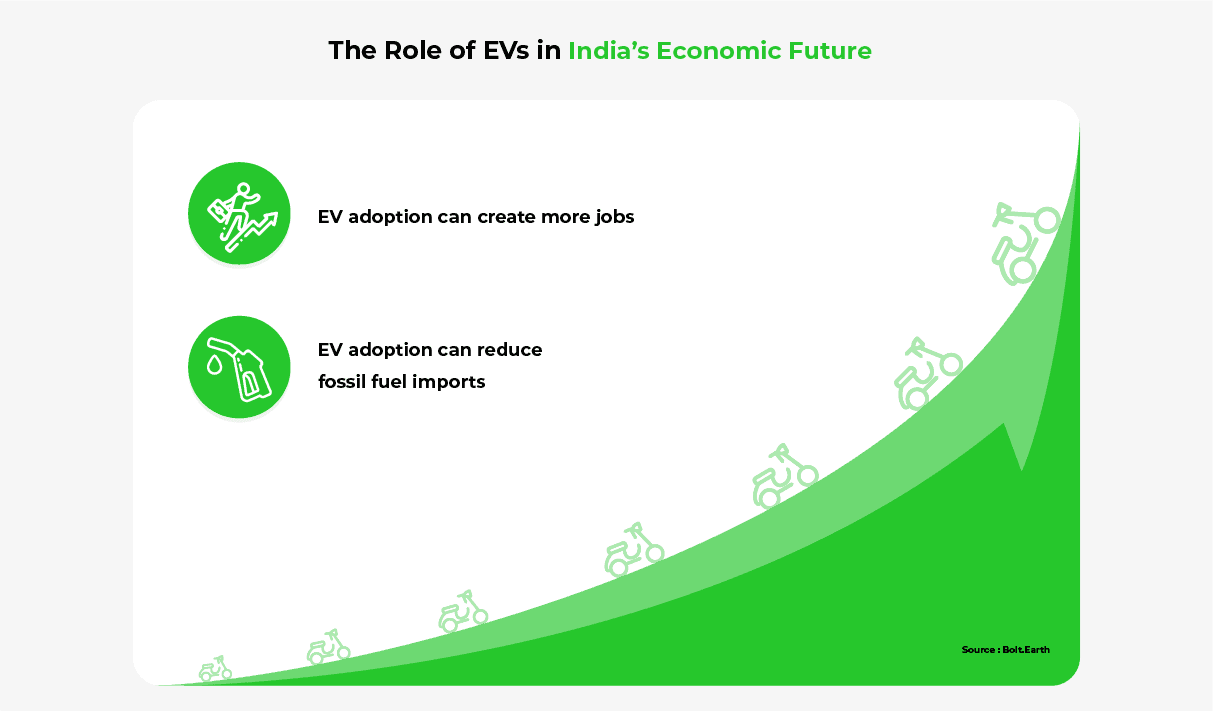
    India can learn from other countries’ successes and mistakes. Source: acea.auto

    The top countries in the graph above are all wealthy countries in northern Europe. Combined, they don’t even represent 3% of India’s population. This may lead us to believe that their success will be impossible to replicate in a much more diverse and densely-populated country, like India.

    However, China comes in second and turns that argument on its head. Let’s delve into what different regions have done for EV adoption and what India can learn from these efforts.

    The EU, EFTA, & UK

    In 2021, electric car registrations in the EU-27 region was 1,729,000, up from 1,061,000 in 2020, representing a 17.8% increase. All EU countries, including Norway, which has the highest number of registrations in a year, offered financial incentives like tax reductions and exemptions.

    India is also offering tax incentives along the same lines. And with favorable government policies and the presence of first-mover companies, the country will be able to improve the adoption of EVs in the next three to five years.

    China

    According to the China Association of Automobile Manufacturers (CAAM), China sold 6.89 million EVs in 2022 alone. It also boasts the largest electric car fleet in the world: 4.6 million + electric cars on roads in China. This success story is attributed to generous government support as well as intense domestic competition, both of which fueled innovation and reduced car prices.

    In comparison, India is also offering support, but the domestic market is not robust and competitive yet. But that is expected to change in the coming years as the impact of the current policies becomes more widespread. In the meantime, the government must continue to encourage innovation and investments.

    The USA

    EV car sales in the US represent 5.8% of all vehicles sold, up from 3.2% a year ago. However, the overall sales fell by 8% in 2022 when compared to 2021. Experts believe that stricter requirements for claiming federal incentives, high car prices, and concerns about raw materials for batteries were the cause of the decline. That said, the EV car industry is still huge in the US, and it grew due to government investments and policies. Innovation by leading players like GM and Tesla also added to the appeal.

    In comparison, the Indian government is significantly pushing towards greater adoption of EVs, with incentives and investments. However, it must enhance the pace of innovation and technical expertise. To do that, the government should create more educational centers of excellence. It must also stop federal funding in a phased manner after considering the macroeconomic factors.

    With the right mix of policies, awareness, investments, infrastructure, and technology, India will certainly take key lessons from these countries to drive full EV adoption.

    Smart Digital Solutions Will Be A Key Driver for India’s EV Ecosystem

    The future of electric vehicles in India holds great promise and is poised for significant growth in the coming years. With supportive government policies, increasing consumer awareness, and advancements in EV technology, the country is well-positioned to embrace this shift toward sustainable transportation.

    The increasing demand for EVs is also leading to an expansion of charging infrastructure and the development of locally produced battery technologies. The automotive industry in India is also poised to play a major role in the global shift towards EVs, with the country having the potential to become a leader in this space.

    Private companies play a critical role in offering smart digital solutions that will contribute to infrastructure development while acting as a bridge between government agencies and end-users. Initiatives from these companies will help fleet operators make the shift to EVs and OEMs to provide seamless driving experiences to their customers.

    Collaboration with local governments will also help expedite the construction of charging stations, along with creating greater awareness among Indian customers. This will contribute to the rapid growth of the EV industry.

    It is therefore up to both the public and private sectors to continue working together to make India’s ambitious goals a reality. The right combination of innovation and investment has the potential to accelerate the adoption of electric vehicles in India, transforming the country’s transportation landscape and contributing to a cleaner, greener future.
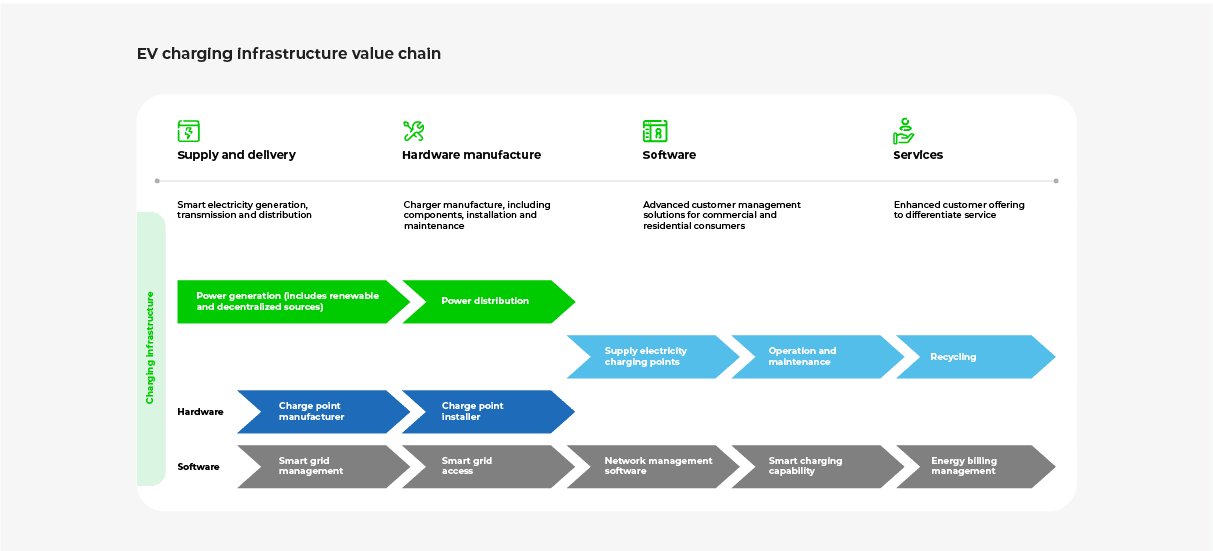
    For more information about the future of electric vehicles in India, please see the FAQ and Resources sections below.

    FAQ


    What challenges is India facing on the road to electric mobility?

    India’s concerns along the road to electric mobility relate to a lack of infrastructure, energy, and domestic innovation and production. But innovative players are offering solutions and helping pave the way to mass adoption.


    What will contribute to India’s EV goals?

    The Indian government has set ambitious targets for EV adoption in India by 2030. The important contributing factor in meeting these targets is the infrastructure needed to charge EVs in India. EV drivers, however, could install simple and cost-effective solutions. This will help them build on this adoption and accelerate the adoption of electric vehicles in India.


    Is the future of electric vehicles in India cost-effective?

    Many people only see an EV’s higher upfront cost, so they assume an electric future is expensive. That said, EVs offer significant savings in maintenance and power over their lifetime. Some companies even enable EV drivers to charge at home while generating passive income from letting others use their device.
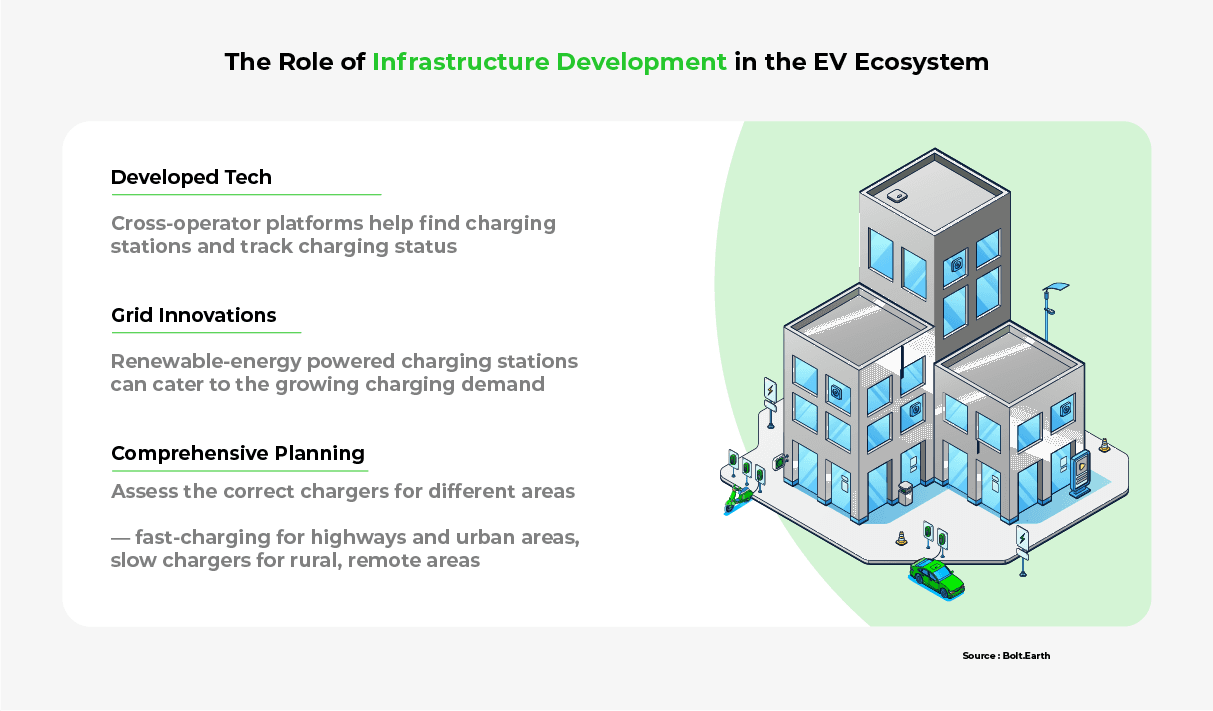
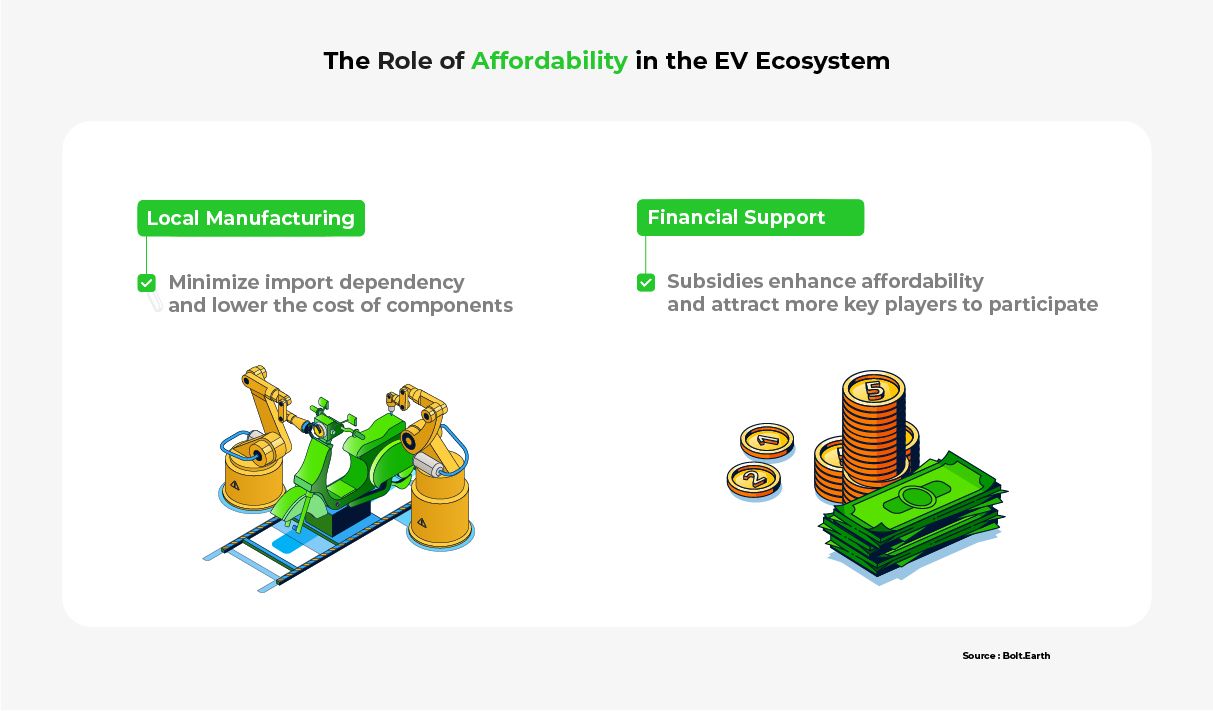
     

    What are the benefits of electric vehicles?

    EVs help reduce carbon emissions. They’re also significantly cheaper to run and maintain than traditional petrol-engine vehicles. EVs are even quicker to accelerate and smoother to drive because they don’t have changing gears. Finally, EVs can be conveniently charged without expensive petrol stations.


    What is the economic potential of the Electric Vehicle market in India?

    India sells many vehicles every year combined, and the government has ambitious targets for 2030. As a result, the total addressable market for new vehicles in 2030 encompasses almost 15 million vehicles. This bright future of electric vehicles in India offers a huge chance for vehicle manufacturers. It’s also an opportunity for anyone looking to participate in this booming market.

    Resources

    Bureau of Energy Efficiency: E-Mobility

    Learn more about the general E-Mobility space from the Ministry of Power.

    E-Amrit: Accelerated E-Mobility Revolution for India’s Transportation

    See what the government is doing to support the transition to electric vehicles in India.

    SECTION 80EEB: Tax Deductions

    Find out which tax deductions are available for electric cars in India.

    Bolt.Earth: Official Website

    Get to know Bolt.Earth’s products and services on our official website.