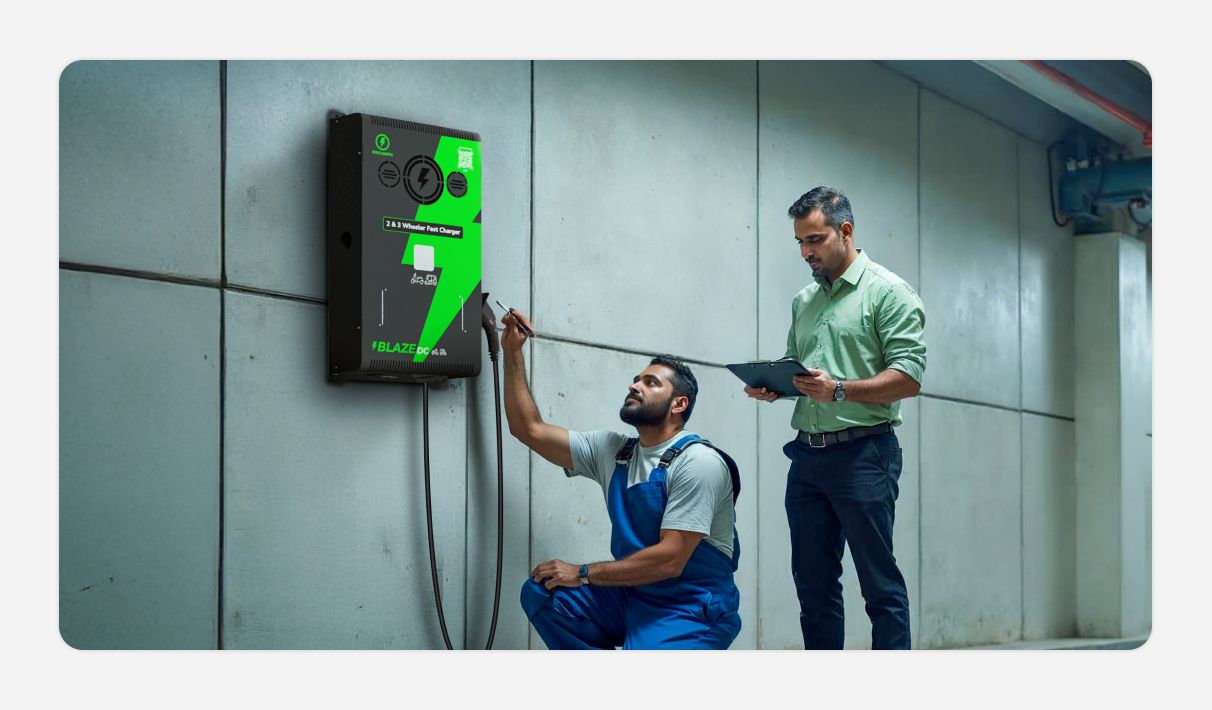
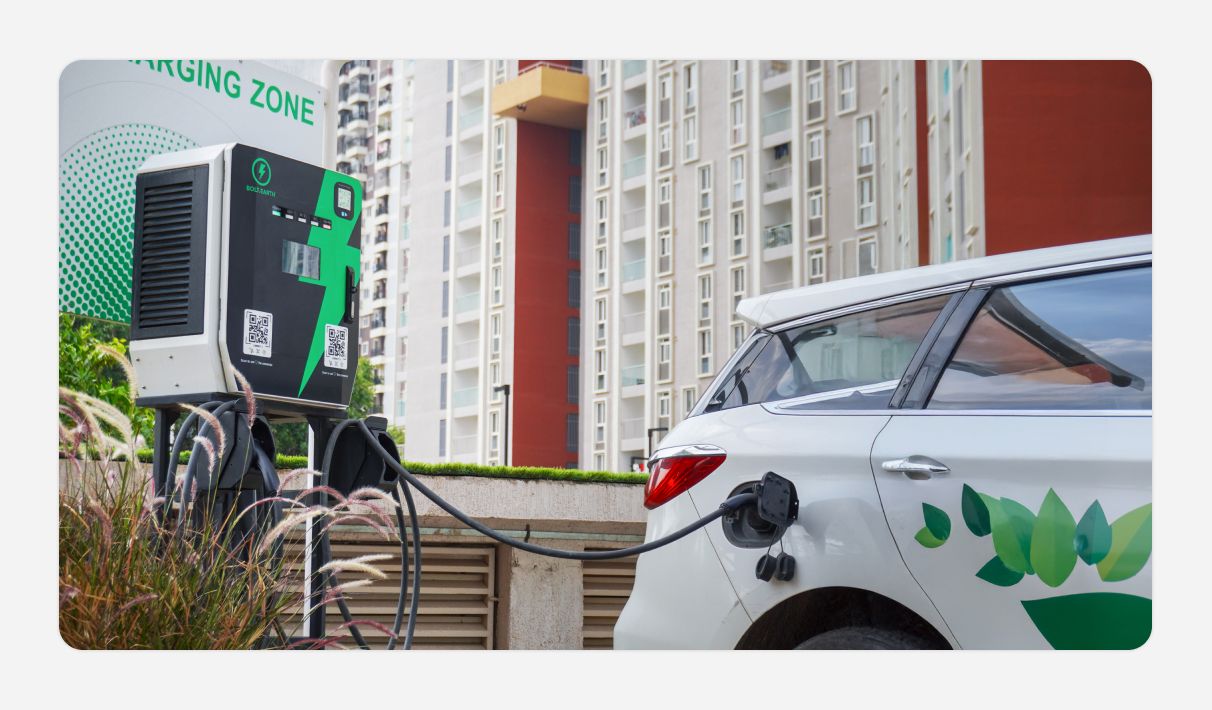
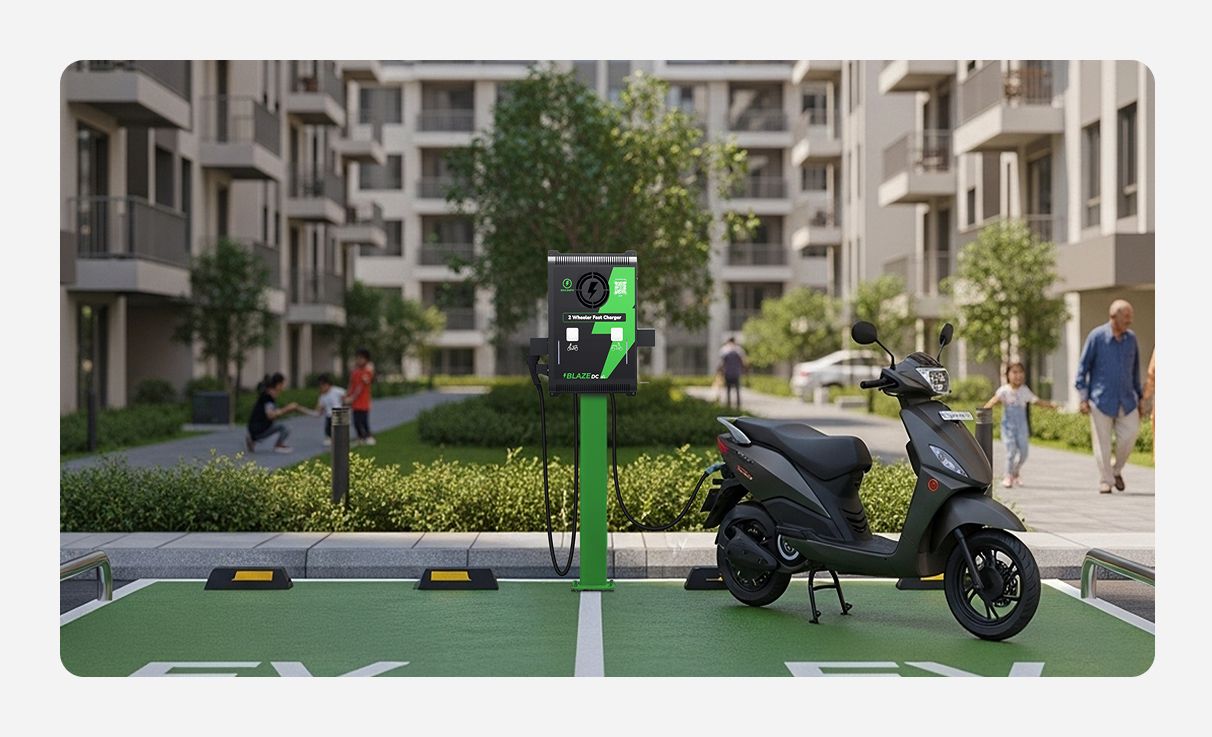
Category: EV Charging for Societies and Apartment Complexes

  • How Real Estate Developers Can Monetize EV Charging in India (2026 Guide) 

    How Real Estate Developers Can Monetize EV Charging in India (2026 Guide) 

    Electric vehicles (EVs) are rapidly gaining traction in India’s mobility landscape, bringing new opportunities for real estate developers. By 2025, EV sales accounted for 7.6% of all vehicle sales in India, steadily climbing toward the government’s 30% target by 2030. This surge in EV adoption is driving demand for accessible charging infrastructure in residential complexes, commercial centers, and mixed-use developments.  

    Developers who integrate EV charging for real estate early can future-proof their properties, attract premium tenants, and command higher asset values. But monetizing EV charging is not a simple “install and forget” exercise. It requires navigating evolving policies, choosing viable business models, and balancing upfront costs with long-term returns.  

    In this blog, we explore:   

    • Direct revenue models for EV charging monetization  
    • Indirect ways EV charging enhances property value, occupancy, and ancillary revenue  

    Direct Revenue Models for EV Charging Infrastructure for Real Estate 

    Simply installing chargers is not enough. Developers need a clear business model to recover costs and generate returns. Below are the primary monetization approaches you can consider:

    1. Pay-Per-Use Charging (Direct Revenue per kWh/Session) 

    Under this classic model, EV drivers pay for the energy they consume or the time they spend charging. The property owner (or its facility management) operates the chargers and collects fees directly from users.  

    Pricing is typically set on a per kilowatt-hour basis (e.g., ₹10–₹18 per kWh, often indexed to electricity cost) or per minute in the case of DC fast chargers.  

    Revenue Potential 
    Pay-per-use offers straightforward revenue that scales with utilization. For example, if you charge ₹12/kWh and a charger dispenses 300 kWh in a month, that’s ₹3,600 revenue per charger. At high-traffic locations, the numbers can be significant.  

    Use Case 
    This model works well for commercial and mixed-use developments such as malls, cinemas, highway food plazas, and hotels. It can also be applied in residential complexes or offices as a way for residents/employees to pay only when they charge (instead of a flat fee). 

    Management Considerations 
    If a developer chooses this model, they must handle the operations. This includes payment processing, uptime maintenance, and customer service. Luckily, there are white-label software platforms and O&M (Operations and Maintenance) service providers that make these tasks easier. Many charging stations today run on management apps that handle user authentication and digital payments, so the property doesn’t need to build its own system. Still, the developer is essentially running a mini-utility service.  
     
    Tip: Partnering with established charging networks ensures visibility on EV charger maps, boosting footfall. 

    2. Subscription and Membership Models (Recurring Revenue) 
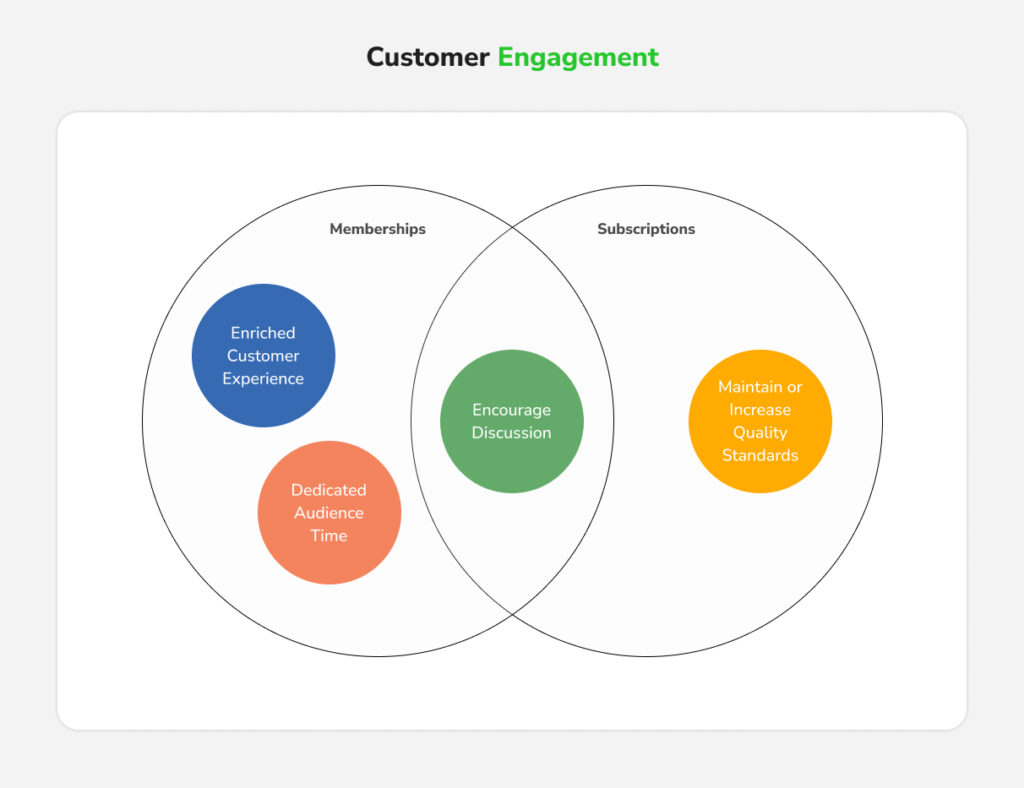
    Diagram illustrating benefits of subscription and membership models

    The subscription model offers EV charging as a service package; users pay a fixed periodic fee for access to charging. This could be structured as: 

    • Monthly flat fee for unlimited charging. 
    • Membership plans offering discounted per-kWh rates or reserved charging slots for a subscription fee. 
    • Prepaid plans where residents or employees pay a fixed amount that includes a bundle of charging hours. 

    Use case

    Subscription and membership models make a lot of sense for real estate developers: 

    • Residential Complexes: RWAs could levy an “EV charging amenity charge” of ₹500–₹1000 per month per EV-owning household. In return, those residents get unlimited charging at the society’s chargers (or a generous cap that effectively feels unlimited). This guarantees the RWA as a steady income stream to offset electricity bills and charger upkeep. It’s like adding an EV line item to maintenance dues. 
    • Offices and Campuses: An office park could offer employees a subscription (possibly paid for by the tenant company) for reserved daytime charging. E.g., employees pay ₹2000/month for the convenience of always finding a spot to plug in at work. Some employers subsidize this or include it in their green initiatives. 
    • Commercial Memberships: A retail chain or mall could have a loyalty program offering discounted charging for a yearly membership fee. Similar to how clubs offer parking privileges. 

    Revenue Potential 

    Subscriptions provide predictable recurring revenue. Even if a given subscriber charges only sparingly, you still collect the full fee, which helps cover fixed costs. It also increases charger utilization (since subscribers feel “I’ve paid for it, I should use it”), which is good for achieving ROI on the asset. In fact, one strategy is to combine subscription with usage fees. For example, offer a small monthly subscription that gives members cheaper per-kWh rates than non-members. This way, you build loyalty while earning steady recurring revenue. 

    Benefits  

    • User Stickiness: From a marketing perspective, once a resident or tenant is on a subscription, they are less likely to move out because they’ve integrated that service into their routine.  
    • Administrative Ease: Implementing subscriptions might involve some management overhead (tracking eligible vehicles, ensuring one subscriber doesn’t hog the charger 24×7, etc.). But these can be handled via simple tech such as RFID cards, app-based profiles, or a fair-use policy.  

    3. Leasing Space to Charge Point Operators (CPOs) 

    In this model, the developer leases space to a third-party charging company, who installs and runs the charging station.  

    The developer’s monetization comes from rent or revenue sharing from the operator. Essentially, your property becomes a host location —much as allowing a telecom tower or an ATM on your premises for a fee. 

    • No CapEx, Low Risk: The biggest advantage here is that the developer’s upfront investment is minimal. The CPO typically bears the cost of equipment and installation. For an existing building, this is hugely attractive; many housing societies have taken this route to avoid spending their own funds.  
    • Steady Income: The income to the developer in this model might be a fixed rental, say ₹X per month for using 5 parking spots, or 10-20% of the revenue from each charging session, or a combination. The absolute amount may be lower than what you could earn if you ran it yourself at high utilization, since the CPO keeps a cut for their services. From an ROI perspective, it turns a potentially large CapEx project into a simple real estate rental yield. For some developers, that trade-off is worth it. 
    • Expertise and Customer Base: Another benefit is that established CPOs come with their brand, app, and existing customer base. For example, if Bolt.Earth installs a charger at your mall, EV drivers using the Bolt.Earth EV Charging App will automatically see and use it, bringing in footfall. The operator ensures the station is maintained, the firmware is updated, etc. This takes technical and operational complexity off the developer’s plate. 

    Use Case

    Locations with good potential usage where a charging company is interested in expanding. This could be a busy mall, supermarket, parking garage, highway hotel, or even a large residential complex. Many petrol pump owners have adopted this model; they lend space to a CPO to install chargers at the pump, often under a revenue share. The same concept extends to commercial EV charging stations: if you have a strategic location, multiple operators might even bid to set up there. 

    4. Integrated “Energy-as-a-Service” (EaaS) Solutions 
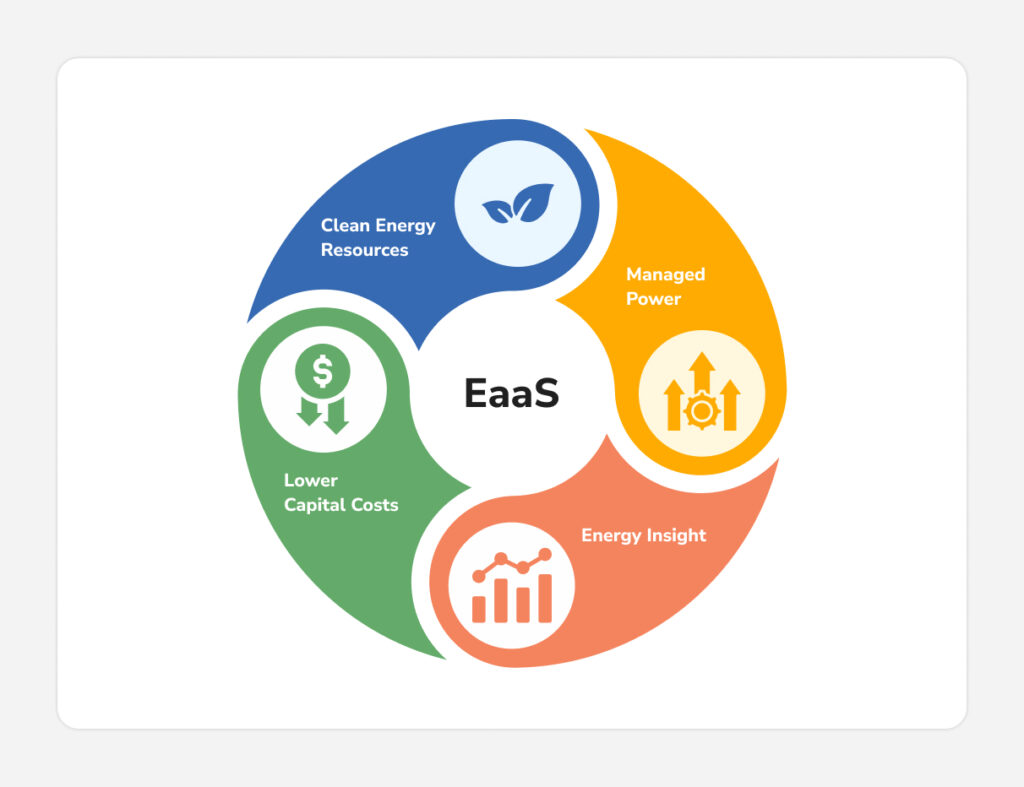
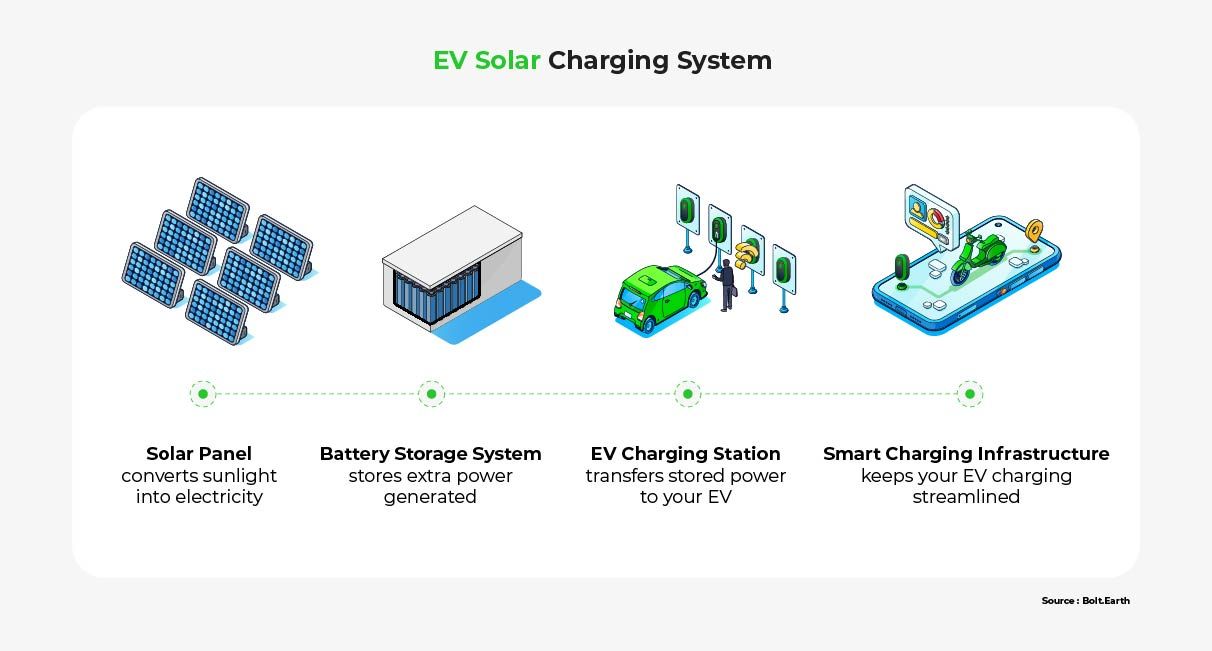
    This is an emerging, more holistic model where EV charging is combined with on-site energy infrastructure (like solar panels, battery storage, and energy management systems) and offered as a bundled service. Essentially, a third party or the developer itself provides the entire energy and charging setup to tenants as a service, often on a subscription or fixed-fee basis. It’s called “energy-as-a-service” because the focus is on delivering energy/charging to users without users investing in equipment like UPS or EV chargers. 

    • Monetization for Developer: If the developer partners with an EaaS provider, they might structure a profit-sharing or lease arrangement. Alternatively, large real estate players might set up their own subsidiary to provide EaaS in their campuses.  

    Benefits  

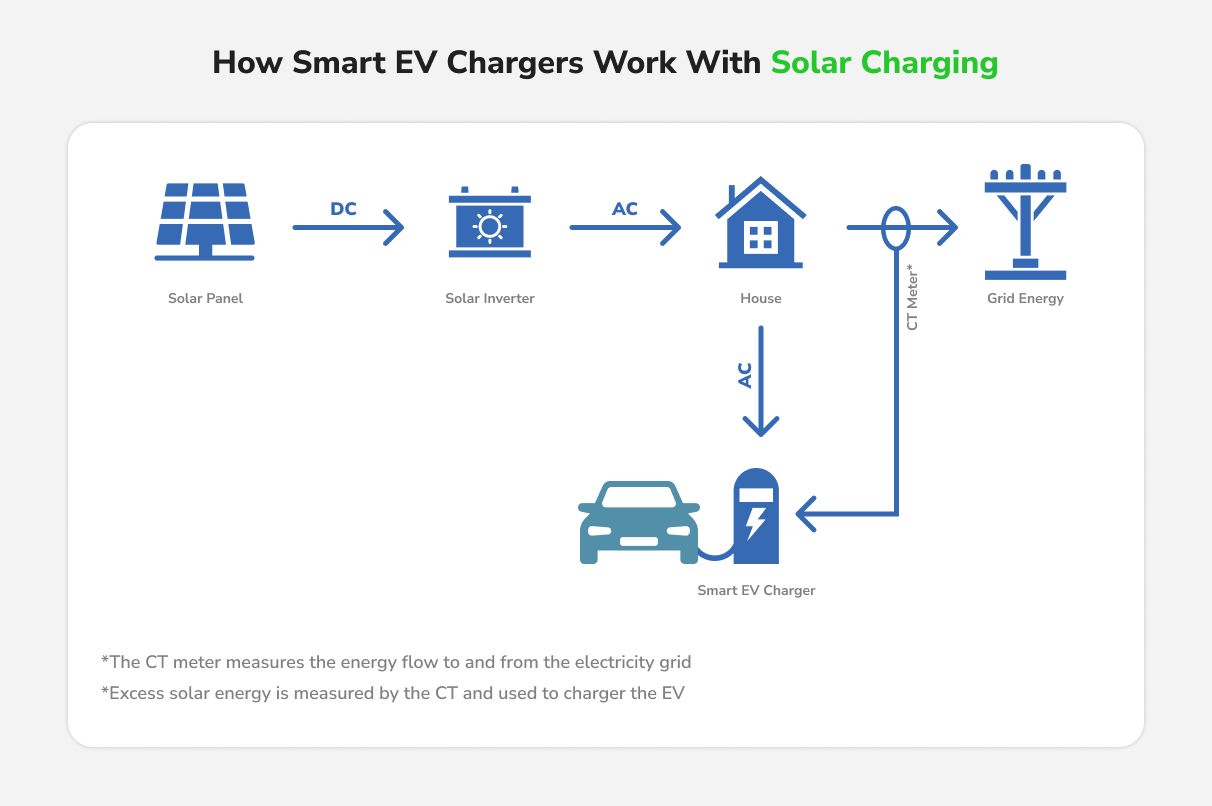
    • EaaS setups often incorporate renewable energy (solar) to reduce operating costs. Solar + battery can supply daytime EV charging at near-zero marginal cost after capex. This improves the ROI while also advertising the solution as 100% green.  
    • EaaS also enables peak load management; the battery can shave off peaks, ensuring the building’s overall electricity bill is optimized even as EV charging adds load. All these technical optimizations translate to better margins for the operator. From the user perspective, it’s convenient and can be cost-stable (e.g., a fixed rate per km or per kWh that the EaaS operator guarantees, insulating them from tariff volatility). 

    This model is complex to implement. It requires expertise in energy systems and a longer-term outlook. The contracts can be like mini power purchase agreements (PPAs) or service agreements spanning 5-15 years to make the investments worthwhile.  

    For a real estate developer, venturing into energy services might be a new territory, hence partnerships with specialist companies are common. However, given trends in sustainable smart buildings, this could become mainstream for large projects. 

    Use Case  

    • Tech parks, industrial parks, large mixed-use townships, or any development where energy usage is high and there’s scope for on-site generation.  
    • Forward-looking developers who want to differentiate with a “campus energy solution” approach.  
    • For smaller residential or single buildings, EaaS might be overkill unless packaged by a vendor in a simple way. 

    These four models are not mutually exclusive. Developers often deploy a hybrid approach. For example, lease out space for a public fast charger (Model 3) to serve visitors, while offering residents a subscription for the slower chargers (Model 2). Or run pay-per-use for anyone but give an option for employees to have a monthly plan. The right mix maximizes both usage and revenue. 

    Indirect Revenue and Value Addition Through EV Charging 

    1. Enhanced Property Value and Customer Attraction 

    EV charging stations significantly improve the marketability of both commercial and residential properties. As eco-conscious lifestyles become mainstream, tenants and customers increasingly look for locations that support sustainable choices. 

    Properties equipped with EV charging for buildings often experience higher occupancy rates, faster lease cycles, and the ability to command premium rental values. In fact, studies show that commercial properties with charging amenities can see a 10–20% increase in value, making EV infrastructure a strategic investment rather than a cost center. 

    2. Increased Dwell Time and Ancillary Revenue 

    Fast charging (20–40 minutes) keeps EV drivers on-site longer, boosting overall footfall and spending. 

    Retailers and property managers can capitalize by integrating: 

    • Cafes and restaurants 
    • Convenience retail 
    • Car wash services 
    • Co-working or lounge spaces 

    This increases per-visitor revenue and creates opportunities for revenue-sharing models with partner businesses that benefit from the added foot traffic. 

    3. Advertising and Sponsorship Opportunities 

    Modern EV chargers double as premium advertising real estate. With digital screens and high visibility, they attract both local businesses and national brands seeking exposure. 

    Monetization options include: 

    • Digital ad placements 
    • Sponsored charging zones 
    • App-based promotions  

    These passive revenue streams boost overall ROI while building brand presence for the property itself. 

    4. Strengthened Reputation and Attracting Premium Demographics 

    Installing EV charging showcases a property’s commitment to innovation and sustainability. This signals tenants, customers, and corporate partners that the location is aligned with modern values, a major advantage in competitive markets. 

    EV owners also tend to fall into higher-income segments, meaning their repeated visits bring additional premium spend and loyalty. 

    5. Long-Term Strategic and Operational Benefits 

    EV charging infrastructure opens the door to several strategic advantages, including: 

    • Integration with solar power for reduced costs 
    • Alignment with ESG and net-zero mandates 
    • Preparedness for V2G (Vehicle-to-Grid) technology 
    • Attraction of corporate tenants electrifying their fleets 

    As EV adoption accelerates, properties without charging infrastructure risk falling behind. Early adopters establish staying power and long-term competitiveness. 

    By 2026, EV charging will be a defining feature of competitive real estate in India. Developers who invest early can unlock multiple revenue streams, pay-per-use, subscriptions, leasing to CPOs, or integrated energy services, while boosting property value and tenant loyalty.  

    Final Thoughts 

    Beyond direct income, EV infrastructure enhances footfall, increases dwell time, enables advertising opportunities, and strengthens a property’s sustainability credentials. 

    The winners will be developers who treat charging not as an obligation, but as a strategic asset. Those who act now will future-proof their properties and secure long-term financial advantage in India’s electrifying mobility landscape. A well-planned real estate EV charging strategy ensures developers maximize both revenue and sustainability, while achieving strong EV charging ROI in India.

    Blog Banner

    Frequently Asked Questions

    How much investment should a real estate developer budget for installing EV charging infrastructure in India?

    Costs vary widely depending on charger type, electrical upgrades, and installation complexity. A basic AC charger can cost ₹30,000–₹1 lakh, while DC fast chargers can range from ₹3 lakh to ₹15 lakh. Developers should also consider wiring, load enhancement, and civil work. Partnering with a CPO can eliminate most upfront costs. 

    Is EV charging profitable for low-traffic residential or commercial buildings?

    Profitability depends on utilization, but even low-traffic buildings benefit indirectly. Properties with EV charging often lease faster, retain tenants longer, and command higher rents. Developers can also use subscription-based models, such as monthly EV amenity charges, which ensure predictable revenue even with low usage.

    Are EV charging revenues taxable for housing societies or commercial buildings?

    Yes, but the GST and taxation category depend on whether charging is offered as a service or as part of maintenance fees.
  • What is Smart Parking? The Rise of EV Charging & IoT in Real Estate

    What is Smart Parking? The Rise of EV Charging & IoT in Real Estate

    India’s cities are facing a parking crunch. Smart parking has emerged as a tech-driven solution to this urban dilemma, leveraging Internet of Things (IoT) sensors and connectivity to make parking spaces more efficient. At the same time, the rise of electric vehicles (EVs) is transforming real estate, from residential complexes to commercial buildings, by increasing demand for charging infrastructure.

    This blog dives into the facts, data, and trends shaping the future of parking and mobility. Specifically, it answers three key questions:

    • What exactly is smart parking, and why is it essential in modern cities?
    • How is EV charging transforming parking in real estate projects?
    • What role does IoT play in enabling smarter, data-driven real estate and urban planning in India?

    What Exactly Is Smart Parking, and Why Is It Essential in Modern Cities?

    Imge_1.jpg

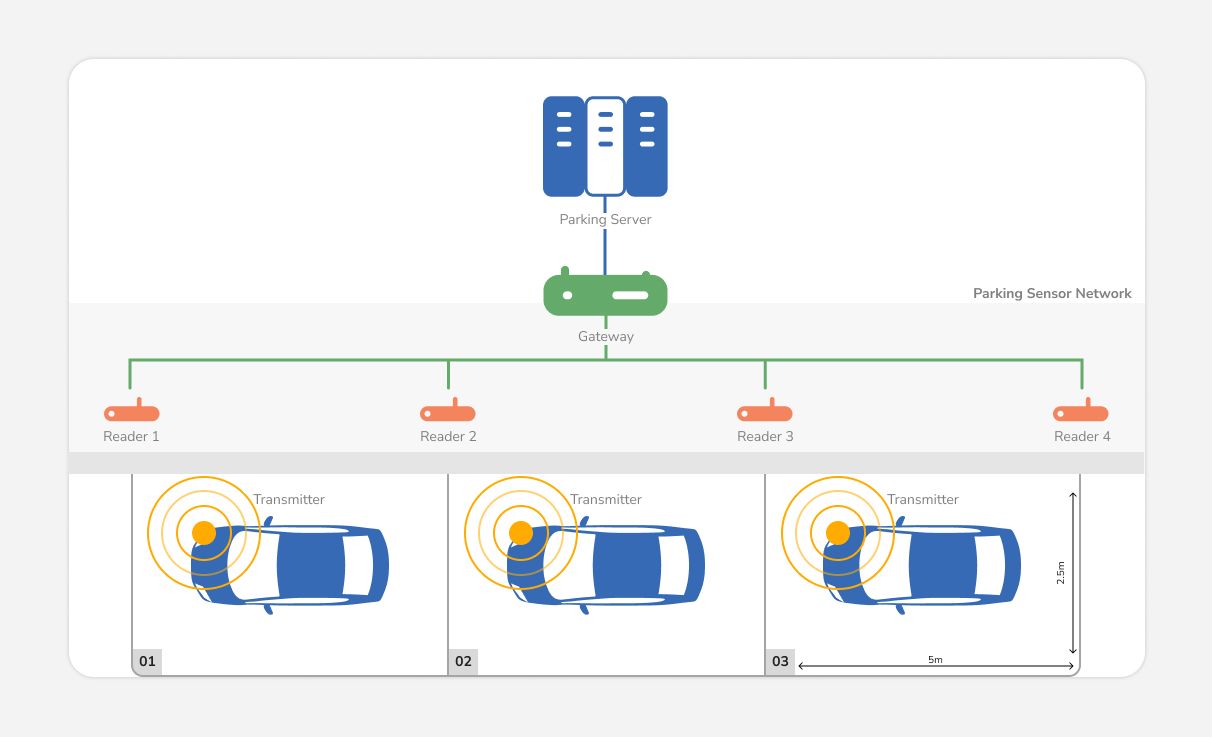
    Smart parking refers to parking systems that use sensors, cameras, and connectivity (IoT) to monitor parking space occupancy in real time and guide drivers to available spots. Drivers can check a mobile app or street display to see which spots are free or even get turn-by-turn directions to the open space in complex garages. This real-time occupancy data reduces the search time for users and reduces frustration.

    Key technologies enabling smart parking include:

    • IoT Sensors and Cameras: Ultrasonic or magnetic sensors and AI-enabled cameras detect occupancy and transmit data wirelessly.
    • Cloud Platforms: The sensor data is transmitted to cloud-based parking management platforms. This allows aggregating data across a city or building and applying analytics, which is increasingly relevant for EV charging for buildings and smart infrastructure.
    • Automated Payments: Contactless payment systems, often integrated with FASTag (the RFID toll payment sticker) to enable drive-in/drive-out payments without manual tolling. This reduces queues at exits and eliminates cash leakage. It also enables dynamic pricing models (varying rates by demand or duration) to encourage turnover and optimize charging solutions for businesses.
    • Analytics and Management Software: IoT-based parking solutions generate a wealth of data, including peak usage times and average park durations. City authorities or private operators can use this data to optimize parking policies, adjust pricing, and plan future capacity. Over time, such data-driven management leads to better land use.

    In essence, smart parking brings the power of IoT and data to an age-old urban problem. It reduces search time and enhances user experience while improving operational efficiency. It’s a win-win: drivers save time and fuel, and owners maximize utilization. This has tangible environmental benefits too; shorter parking searches mean fewer cars idling and circling, which in turn cuts fuel consumption and tailpipe emissions.

    Notably, smart parking often overlaps with smart building and smart city initiatives. For instance, India’s Smart Cities Mission has funded projects for sensor-based smart parking in multiple cities, integrating them with central command centers to better manage traffic flows and support EV charging for buildings.
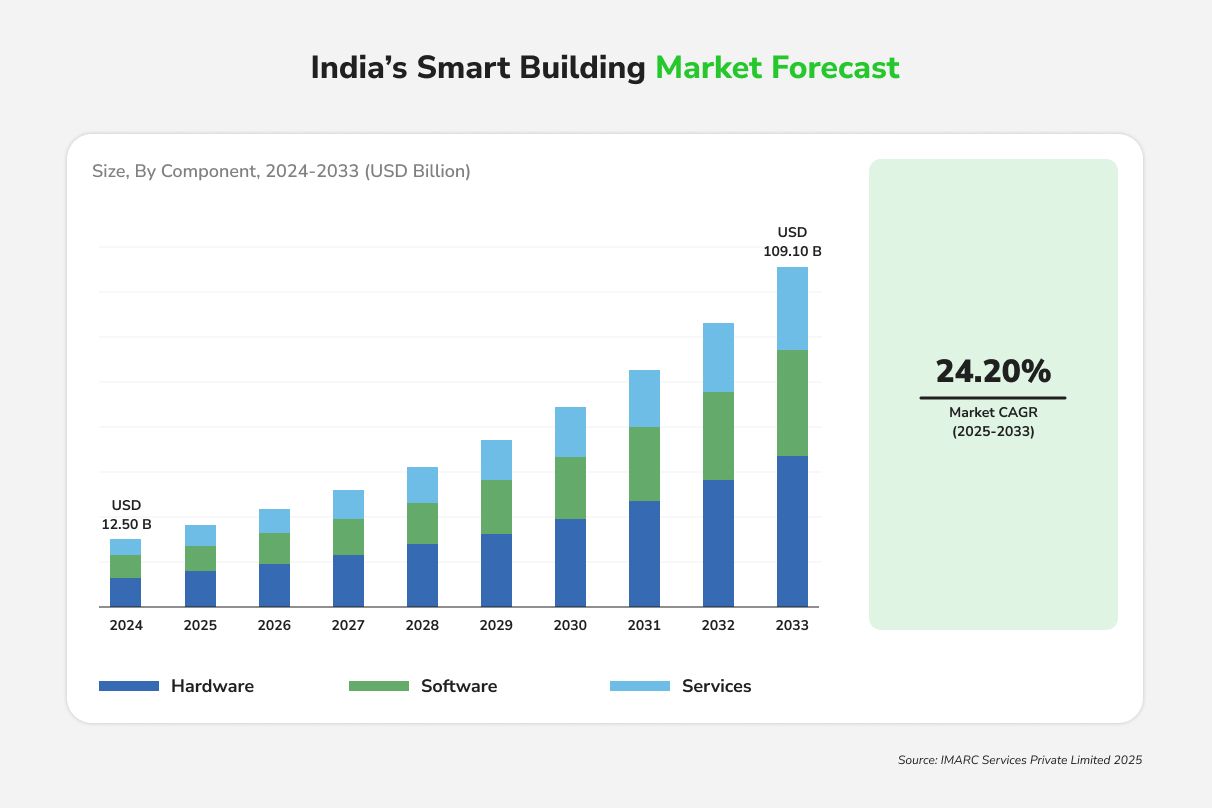
    India’s Smart Building Market Forecast.jpg

    The broader smart building market in India, including parking, was about USD 12.5 billion in 2024 and is projected to reach USD 109 billion by 2033.

    Why Smart Parking Matters in Urban India

    Urbanization and vehicle growth have led to severe parking shortages and traffic congestion. India alone has over 300 million vehicles on the road, and as cities grow vertically, traditional parking methods are becoming obsolete. Studies show that up to 30% of city traffic is caused by drivers searching for parking. This not only wastes time and fuel but also contributes significantly to pollution and economic loss. In fact, urban India loses an estimated ₹1.5 lakh crore (₹150 trillion) annually to traffic congestion, with parking-related issues accounting for nearly a third.

    Smart parking can reduce the time spent searching for parking by up to 50% and triple garage capacity through automation. Globally, the smart parking market is projected to grow from USD 5.7 billion in 2024 to USD 14.1 billion by 2033 (about 10.5% CAGR).

    Automating parking operations (through sensors, cameras, and digital payments) cuts labor costs and boosts revenue per space by optimizing utilization. Real-time data from IoT sensors provides accurate availability info, minimizing idle empty spots and helping operators adjust pricing based on demand, a model increasingly adopted in EV charging solutions for businesses. In short, smart parking promises more parking capacity with fewer resources and less chaos.

    How EV Charging Is Transforming Parking In Real Estate Projects?

    The explosion of electric vehicles globally is another major factor driving the evolution of parking infrastructure. Electric cars need charging points – and unlike a gas station that you visit only occasionally, EV owners often charge where they park (at home, work, or shopping centers). This convergence of parking and charging has huge implications for real estate developers and city planners.

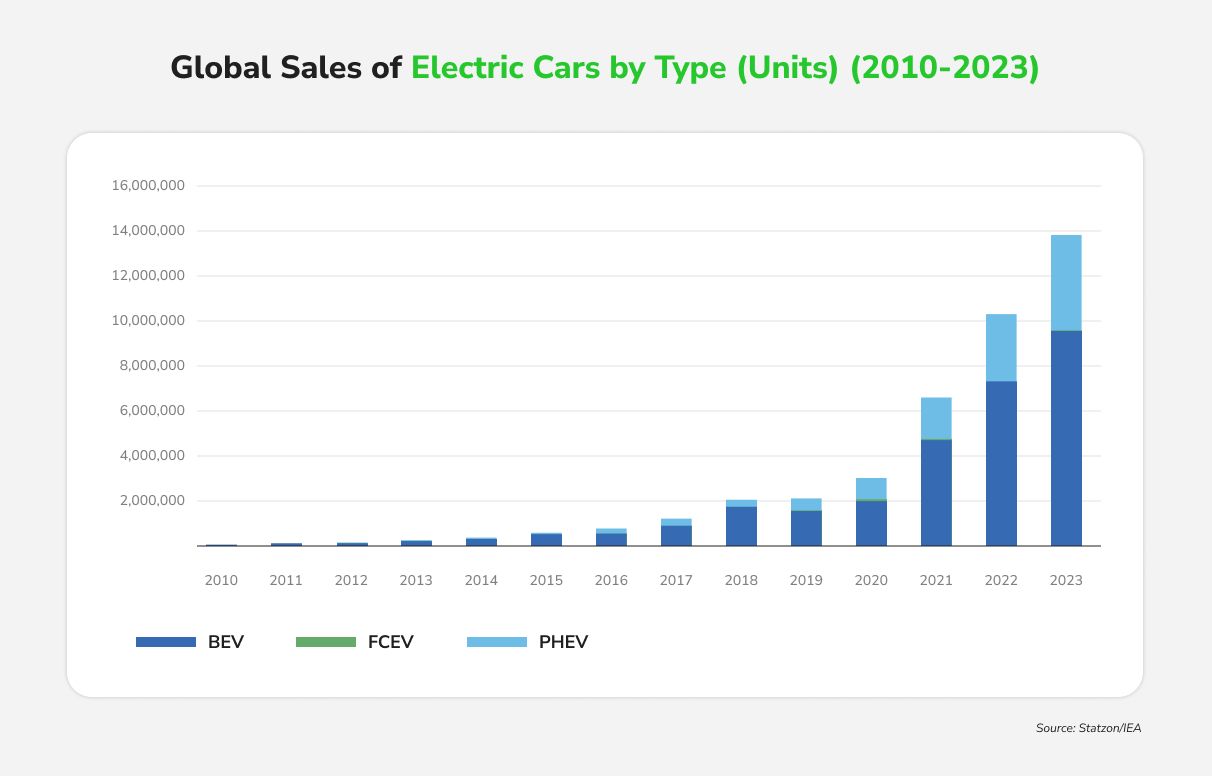
    Global Sales of Electric Cars by Type (Units) (2010-2023).jpg

    The convergence of parking and charging is reshaping real estate. Unlike gas stations, EV owners typically charge where they park (at home, work, or shopping centers). This shift demands that parking infrastructure evolve into charging infrastructure, making it a central concern for developers and city planners focused on planning EV charging for real estate.

    In 2023, global EV sales neared 14 million, a 35% jump from 2022, bringing the global fleet to 40 million vehicles. India saw 80,000 electric cars sold in 2023, a 70% year-on-year increase. While EV penetration is still modest, the government’s 2030 targets are ambitious: 30% of private cars, 70% of commercial vehicles, 40% of buses, and 80% of two- and three-wheelers. If realized, that’s 80 million EVs on Indian roads—each needing a place to park and charge.

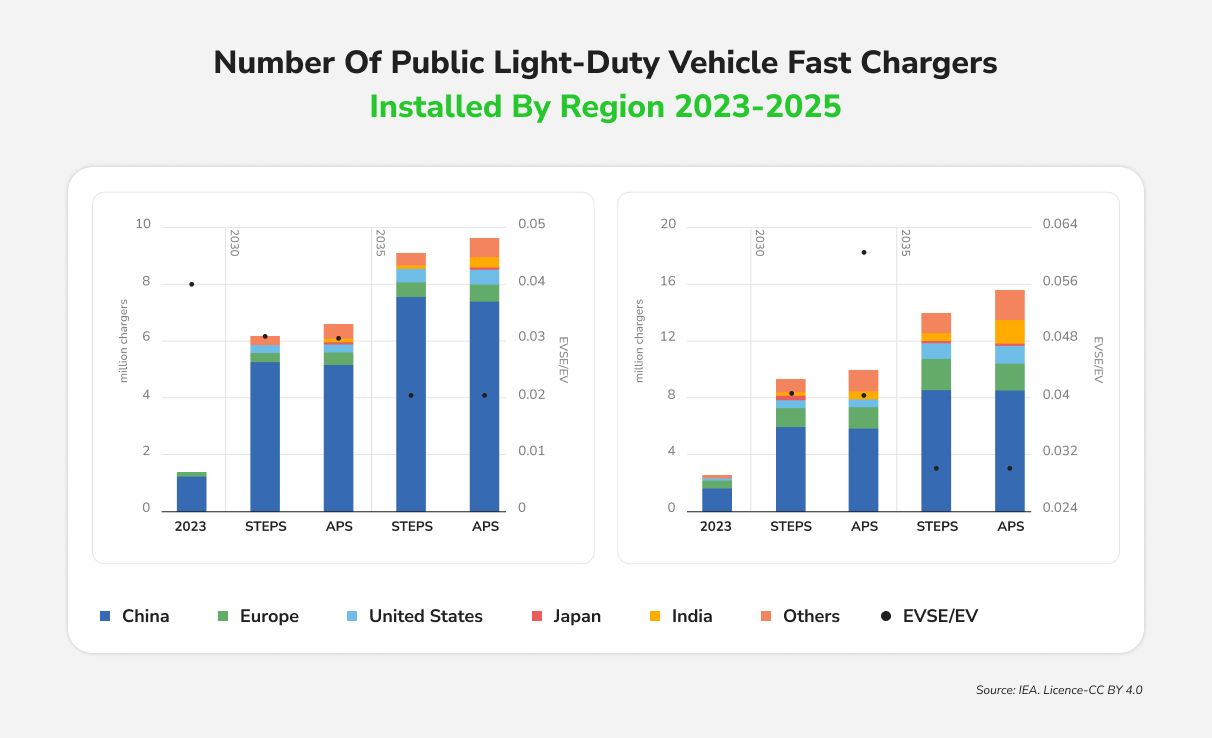
    Such growth will require an extensive EV charging network, and much of that charging infrastructure will be in parking areas. Globally, the number of public EV chargers is projected to grow fourfold from approx. 4 million in 2023 to over 15 million by 2030. A joint report by FICCI and McKinsey estimates that ₹16,000 crore (approx. $2 billion) in investments will be needed by 2030 to meet the country’s EV charging demand. These chargers are being installed in a variety of real estate contexts, from highway rest stops and shopping mall parking lots to office campuses and apartment basements.

    For real estate developers, providing EV-friendly parking is quickly shifting from a niche amenity to a mainstream requirement. Recognizing this, the Indian government and regulators have issued new guidelines:

    • Many municipal authorities are updating parking policies to include EV charging. For example, Delhi’s draft parking rules provide discounted fees for EVs in public parking lots, and cities like Bengaluru and Mumbai are exploring “EV-only” parking zones in crowded areas to encourage cleaner vehicles (as part of pollution control strategies).

    The integration of EV charging with smart parking systems is a natural next step. Since smart parking apps already manage parking spot availability, adding the status of charging stations to these platforms makes life easier for EV owners. We are seeing features like real-time EV charging slot booking through parking apps, so drivers can reserve a space that has a charger ahead of time. Additionally, advanced parking management systems now incorporate dynamic pricing for EV charging, for instance, higher rates during peak hours or incentives for vacating a charging spot once the car is topped up. This prevents charger hogging and optimizes the usage of each unit.

    Another interesting trend is the move towards sustainable parking infrastructure for EVs. Some parking lots are installing solar-powered EV charging stations (solar canopies over parking stalls with integrated chargers), reducing the draw on the grid and aligning with green building goals. This is particularly relevant in sunny parts of India; a few metro cities have piloted solar parking lots that generate renewable energy for on-site charging.

    What Role Does IoT Play in Enabling Smarter, Data-Driven Real Estate and Urban Planning in India?

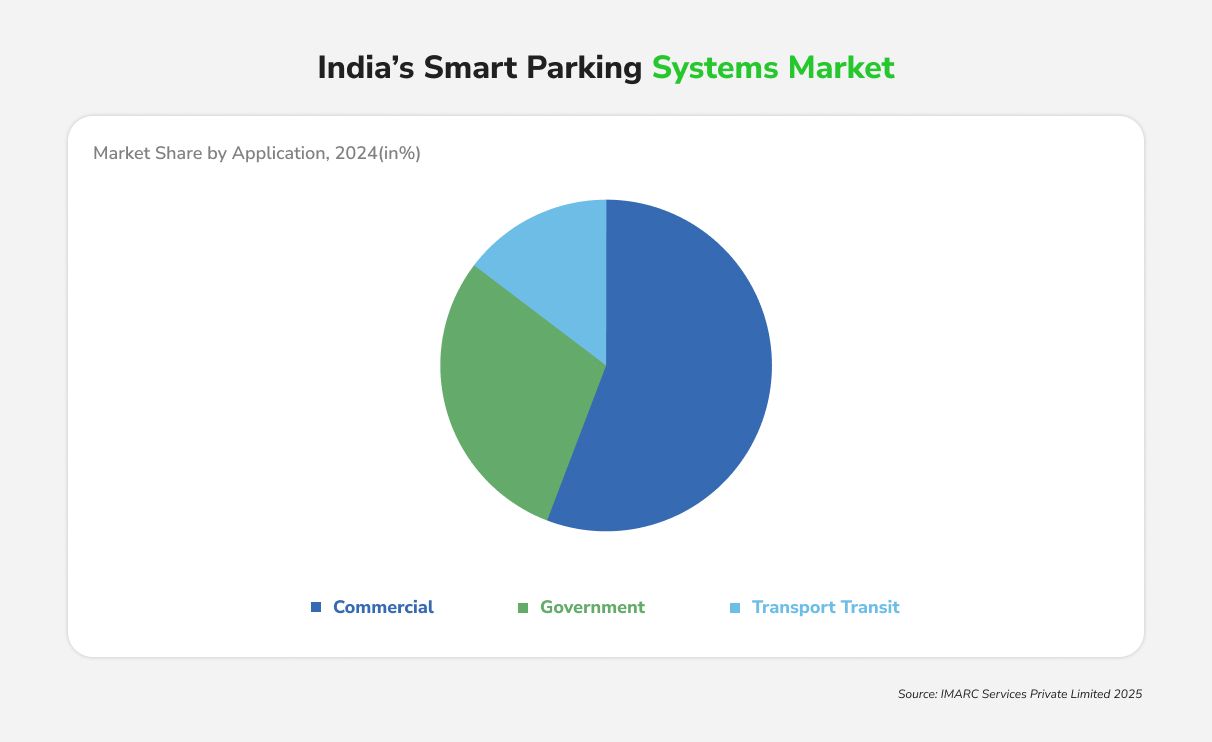
    India’s Smart Parking Systems Market.jpg

    From the perspective of real estate owners and urban planners, the confluence of IoT and EVs in parking brings several tangible benefits:

    • Enhanced User Experience and Convenience: Imagine entering a mall parking garage and your smartphone (or car’s navigation) immediately directs you to an open spot equipped with an EV charger. No circling ramps, no anxiety about whether you’ll find a plug. This level of convenience, enabled by IoT sensors and connectivity, greatly improves the visitor experience. It also builds customer loyalty; frustration-free parking can be a selling point for a shopping center or office building. Moreover, features like contactless payments and app-based reservations mean drivers can seamlessly park and pay without fumbling for cash or tokens.
    • Higher Property Value and Revenue Streams: Incorporating smart parking and EV charging can make a property more attractive. A commercial building with an IoT-driven parking system can advertise higher efficiency and guaranteed spots for tenants. On the revenue side, property managers can earn income from EV charging fees and better utilize every parking stall via dynamic pricing. A smart parking system can increase overall parking revenue by adjusting rates based on demand and preventing misuse or fraud. Essentially, technology turns parking from a cost center into a smarter profit center.
    • Better Security and Compliance: IoT in parking can bolster security through surveillance and access control. License plate recognition cameras can automatically log entries/exits and flag unauthorized vehicles. Sensors can detect if someone is parking in an EV-designated spot without an EV and alert authorities or apply fines. These measures protect resident parking in mixed-use developments and ensure that the infrastructure (like EV chargers) is used fairly. Additionally, having digital records of parking usage helps enforce time limits and prevents issues like parking ticket fraud or revenue leakage, which were common in fully manual systems. As EV charging for buildings becomes standard, these compliance tools will be essential to ensure fair access and proper usage.
    • Data-Driven Urban Planning: Over the long term, the data collected by smart parking systems is incredibly valuable for city planners and developers. Patterns of parking occupancy by time of day, by location, and even by vehicle type can inform how future garages are designed. Planners can identify underutilized lots that could be repurposed or pinpoint areas where demand far outstrips supply to justify building new multi-level parking. This data can feed into broader models of transportation and land use, helping answer questions like whether adding a metro station or bus route near a busy parking area reduces car usage. In essence, smart parking turns the parking lot into a source of insights for smarter urban development.

    India’s Trajectory vs. Global Trends

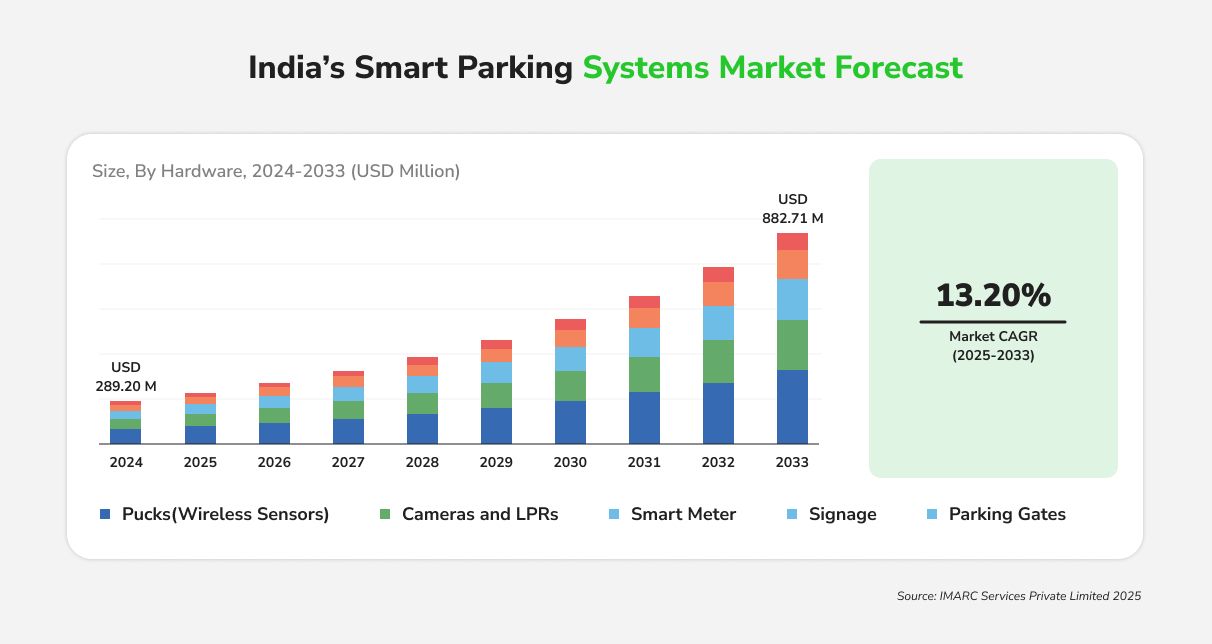
    India’s Smart Parking Systems Market Forecast.jpg
    India’s smart parking market was valued at USD 289 million in 2024 and is projected to reach USD 883 million by 2033. Government initiatives like the Smart Cities Mission have catalyzed adoption with cities like Puri (Odisha) and Davanagere (Karnataka) deploying advanced systems featuring IoT sensors, license plate recognition, and FASTag integration.

    India particularly stands out for the emphasis on two-wheelers and three-wheelers in the EV revolution. Unlike Western countries, a huge share of India’s urban commuters use scooters, bikes, and auto-rickshaws. Consequently, “smart parking” in India must cater to these vehicles as well, providing secure, organized parking and charging for electric two-wheelers. Cities are exploring dedicated two-wheeler smart parking zones with e-charging stations (for e-bikes) and anti-theft IoT locks. This broadens the definition of smart parking beyond just car garages.

    ajkgf.jpg

    Globally, countries are innovating with app-based parking payments and dynamic pricing to discourage long stays in prime spots. For example, San Francisco’s early smart parking project (SFpark) used demand-based pricing and sensors to reduce parking search time and was cited as a model for congestion reduction. China leads in public EV charging, while Europe and the US are exploring “mobility hubs” that integrate parking, charging, and shared transport.

    Future Outlook

    Looking ahead, the intersection of smart parking, EV charging, and real estate will only grow tighter. By 2030, India’s cities could be vastly different in terms of mobility. If EV adoption reaches the intended targets, tens of millions of EVs will need convenient charging.

    Most charging (up to 80%) is expected to happen at home or work, which means buildings must become the new fuel stations. We can expect every new apartment complex, office tower, and mall in India to incorporate networked EV chargers in their parking layout. In fact, only about 55% of Indian car owners today have access to home charging, so expanding to workplace and public charging is crucial. Real estate developers who provide abundant charging infrastructure stand to attract this growing EV owner demographic.

    On the technology front, IoT and AI will make parking even smarter. We might see AI-driven predictive parking, where algorithms predict parking availability at your destination by learning from historical data and current traffic and proactively reserve a spot for you. Some global cities are already testing systems that guide drivers not just to a parking lot but to a specific floor and slot based on the size of their vehicle, all optimized in real time. Autonomous vehicles could further disrupt parking; if self-driving cars become common in later decades, they might drop passengers off and then park themselves in ultra-dense robotic parking facilities. While that scenario is still on the horizon, it underscores the need to design parking infrastructure that’s adaptable.

    From a sustainability perspective, integrating renewable energy and energy management into parking will gain traction. Parking garages with solar rooftops, battery storage, and smart charging management can help balance the grid load of EVs. During the daytime, solar panels could directly power EVs in the lot; at night, the charging systems might communicate with the grid to draw power during off-peak hours. The IoT connectivity in these systems will be essential to manage such complexity, ensuring that as vehicles, buildings, and the grid all talk to each other, the outcome is optimal for everyone.

    In conclusion, smart parking represents a confluence of multiple innovation streams, urban digitalization (IoT, data analytics), the clean mobility transition (EVs), and next-gen real estate development.

    India, with its massive urban challenges and tech-savvy population, is fertile ground for these solutions. We are already seeing the early benefits: reduced congestion, better user experience, and new business models around parking. As the data and case studies build up, stakeholders from government bodies to private developers are gaining confidence in scaling up smart parking projects.

    The rise of EVs makes the case even stronger. A parking spot is no longer just a patch of concrete; it is a potential energy node where vehicles plug in and cities manage electricity demand. This will require continued collaboration between automakers, utilities, urban planners, and tech providers. The road ahead might be long, but one thing is clear: the future of parking in India and across the world is smart, connected, and electric. Embracing smart parking and IoT in real estate today is a step toward cities that are both more livable and more sustainable tomorrow.

    Blog Banner

  • Green Building Certifications and EV Integration: A Win-Win for Developers & Residents

    Green Building Certifications and EV Integration: A Win-Win for Developers & Residents

    India’s e-mobility infrastructure is accelerating. On the green-building front, rating bodies report a surge in certified projects. As of 2024, India had 15,800 IGBC-registered projects (13.5 billion ft²), 3,800 GRIHA-registered projects (86 million m²), and 370 new LEED India certifications (approx. 8.5 million m²) in that year alone.

    EV adoption is also climbing, bringing India’s total EV stock to approx. 5.45 million. However, EVs comprised only about 7.6% new vehicle sales in 2024, well below the global share of roughly 16.5%, indicating significant room for growth.

    These trends are converging by design. Government climate goals (India targets net-zero by 2070) and urban policies are driving both green real estate in India and EV-ready green buildings. Developers and planners now recognize that integrating EV charging for real estate and EV charging for buildings into green projects achieves multiple goals: earning rating credits, satisfying regulations, and adding market appeal.

    In this blog, we answer three core questions:

    • How does integrating EV charging help developers earn green building certifications like IGBC, GRIHA, and LEED?
    • What policies and incentives are pushing builders toward EV-ready green buildings?
    • Why is EV integration a win-win for developers and residents?

    We explore Indian green-building and EV-policy frameworks, highlight real projects, and quantify benefits, showing that green building with EV charging is a genuine win-win.

    How Does EV Charging Help Developers Meet Green Building Certification Criteria?

    Electric Charging Facility.jpg

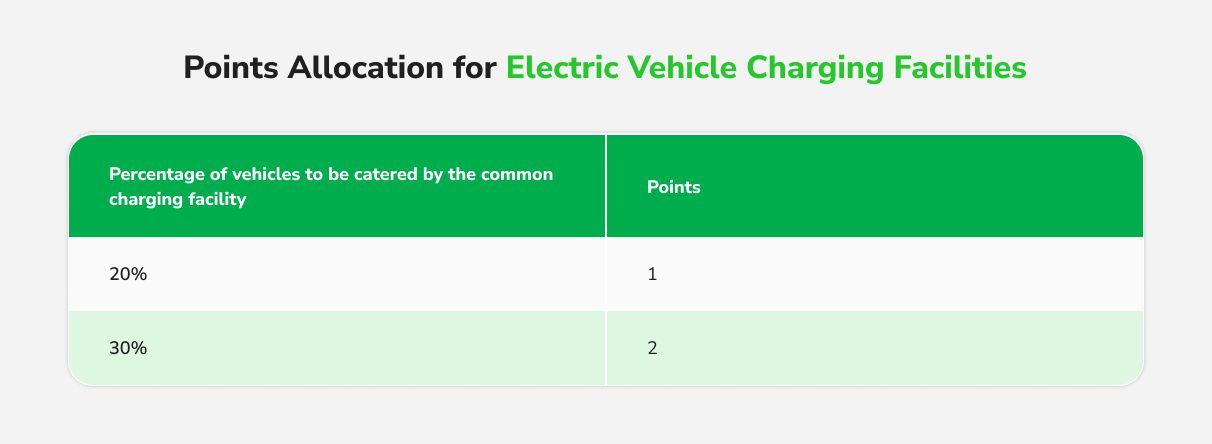
    All major Indian green-rating systems now reward EV readiness. Including chargers or conduits earns points toward certification. For instance, IGBC’s residential system awards up to 2 points for EV charging facilities: providing shared chargers for at least 20–30% of vehicles in a housing project can garner the full credit. IGBC New Construction/Commercial ratings offer similar credits.

    Likewise, the national GRIHA rating considers EV charging as an innovation strategy: projects offering charging points for 5% of four-wheeler parking earn innovation points. International LEED (LEED India) also provides credits for EV infrastructure. Under LEED v4 (Building Design + Construction), a project can earn 1 point by installing chargers on ≥5% of parking spots and another 1 point by making ≥10% of spots “EV-ready” (pre-wired for future chargers).

    In short, EV charging and green certifications go hand-in-hand: including EV infrastructure boosts a project’s green scorecard, helping developers qualify for Silver/Gold ratings or additional credits.

    Key certifications and EV criteria:

    • GRIHA (India’s national rating) – EV infrastructure earns “Innovation” credits. Installing chargers for approx. 5% of cars can earn innovation points. Large projects are expected to include EV facilities as part of sustainable mobility planning.

    By planning EV infrastructure early, developers pursue green ratings confidently. This not only supports building codes compliance but also appeals to corporate tenants. Many companies now mandate LEED/IGBC Silver or better. In fact, green offices command higher market rents and values. Studies show green-certified offices achieve 10–15% premium rents (some reports say up to ~18–22% higher) and 20%+ higher sales prices. Thus, green building with EV charging is both an eco-conscious and strategic business move.

    Indian Projects Leading the Way

    Indian Projects Leading the Way.jpg
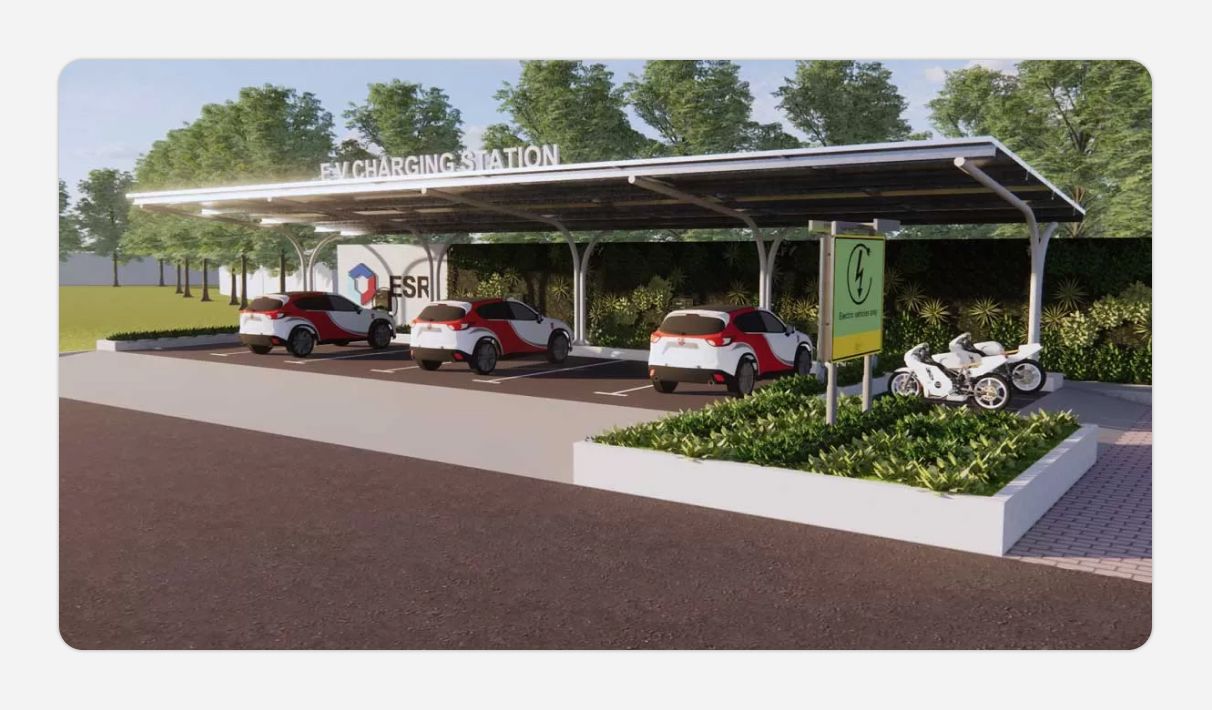
    Developers across India are already integrating EV charging into green projects. ESR India, a leading logistics-park developer, recently installed its first on-site charging station at the 89-acre ESR Taloja Park (IGBC Gold rated). Six 7.4 kW chargers for cars and several 3.3 kW chargers for two-wheelers can charge 10 EVs simultaneously, powered entirely by on-site solar panels. This solar-powered EV hub reduces tenant carbon footprints and positions ESR’s parks as sustainability leaders. All 22 of ESR’s Indian parks are IGBC-certified; Taloja won Gold.

    In residential real estate, Godrej Properties highlights EV readiness as a premium feature. Godrej MSR City township (North Bengaluru) “integrates infrastructure aligned with EV requirements,” offering provisioned charging points in parking decks and electric layouts designed for higher loads. Godrej notes that Bengaluru’s homebuyers “actively seek properties that include EV infrastructure” due to state subsidies and rising fuel costs. Residential EV charging stations are now seen as essential amenities in premium housing.

    What Policies and Incentives Are Pushing Builders Toward EV-Ready Green Buildings?

    A strong policy framework reinforces this green-EV nexus. The Ministry of Housing & Urban Affairs (MoHUA) has updated building regulations to mandate EV readiness: at least 20% of parking spaces in new buildings must be EV-ready green buildings (wired for chargers).

    Similarly, the Bureau of Energy Efficiency (BEE) and Ministry of Power reiterate the 20% rule and call for safe, standardized chargers. Central Electricity Authority (CEA) norms also require enhanced electrical capacity in large buildings to support EV load.

    States are leading the change, too. Maharashtra now mandates one EV charger (and supporting infrastructure) for every 5 parking spots, with builders coordinating with DISCOMs on power supply. Karnataka, Tamil Nadu, Telangana, Kerala, and others have similar requirements. These align with national EV policies offering subsidies and tax breaks for charging stations in residential and commercial projects.

    Green-building incentives multiply the benefits. Many states offer extra FSI/FAR (floor area ratio) or fee rebates for certified projects. For example, Maharashtra, Haryana, West Bengal and Uttar Pradesh grant 5–15% additional FAR for IGBC Gold/Platinum buildings.

    Some offer partial reimbursement of certification costs (e.g., Kerala and Gujarat finance up to 50% of IGBC fees. Andhra Pradesh and Tamil Nadu provide tax benefits or subsidies to IGBC-certified industrial and mixed-use projects.

    These incentives effectively lower developers’ costs and speed approvals. In this context, adding EV chargers helps a project qualify for these green-building incentives. In other words, EV infrastructure is being explicitly recognized in policies as part of the path to sustainable, approved buildings, especially when deploying a smart EV charging station that meets safety and load standards.

    Why Is EV Integration a Win-Win for Developers and Residents?

    Integrating EV charging pays off. Developers gain certification points, incentives, and marketing appeal. IGBC and LEED grant points for EV readiness, easing the path to Silver/Gold ratings. Certified buildings often receive expedited permitting and extra FAR, increasing saleable area and enabling faster delivery. Green buildings also command higher rents and resale prices: studies by Altre Digital and JLL show green offices rent for approx. 11–22% more and sell at approx. 21% premium. Even residential projects benefit, as environmentally conscious buyers pay more for certified homes.

    EV charging itself becomes a marketing asset: projects can advertise “EV-ready parking” as a modern amenity, attracting eco-minded tenants and investors.

    For homebuyers and tenants, EV-ready green buildings offer tangible value. They can charge at home overnight, avoiding range anxiety and fuel costs. Home charging rates are lower, and some utilities even offer off-peak tariffs for dedicated EV meters (e.g., Maharashtra’s reduced electricity rates for EV charging).

    Private charging spots eliminate the need to search for public chargers. This clean mobility aligns with urban sustainability goals, improving air quality and quality of life, an increasingly important factor for buyers. In fact, surveys show that the availability of home charging significantly increases buyers’ willingness to purchase an EV. In short, EV-ready homes are future-proof investments; as EV adoption grows, properties with built-in charging infrastructure will likely see higher demand and resale value.

    Key takeaways for ROI:

    • Incentives: Certified projects can claim FAR bonuses or fee reimbursements. Additionally, central schemes (PM e-DRIVE) may subsidize up to ₹6,000 ($80) per home charger, cutting capex.
    • Competitive edge: Marketing a project as an “EV-ready green building” taps into growing demand from eco-conscious buyers and supports corporate ESG goals.

    While EV chargers add upfront cost, they unlock certification points, incentives, and brand value that far outweigh the investment.

    Cost & Integration Tips for EV-Ready Buildings

    Cost & Integration Tips for EV-Ready Buildings.jpg

    Cost

    What does it cost to add EV chargers?

    Adding EV chargers is increasingly affordable. A 7–22 kW AC (Level-2) charger costs roughly ₹50,000–1,00,000 (US$600–1200). DC fast chargers range from ₹2–5 lakh ($2.5k–6k). Installation (conduits, panels, labor) might add ₹50k–2,00k per unit, depending on site complexity. In residential settings, developers often start with a few AC chargers in common areas; additional wiring (EV-ready conduit) can be budgeted cheaply during construction.

    Integration tips

    • Early planning: Identify EV parking spots in the master plan. Reserve electrical capacity (dedicated transformers or feeders) for future chargers. MoHUA now treats EV charging as an essential service, so it’s wise to include circuits and panels in the original MEP design.
    • Separate metering: Consider common metering for EV power. This allows all EV users to share a single tariff, often lower than individual household meters.
    • Smart load management: If many chargers are planned, use load-management systems to avoid overloading building mains.
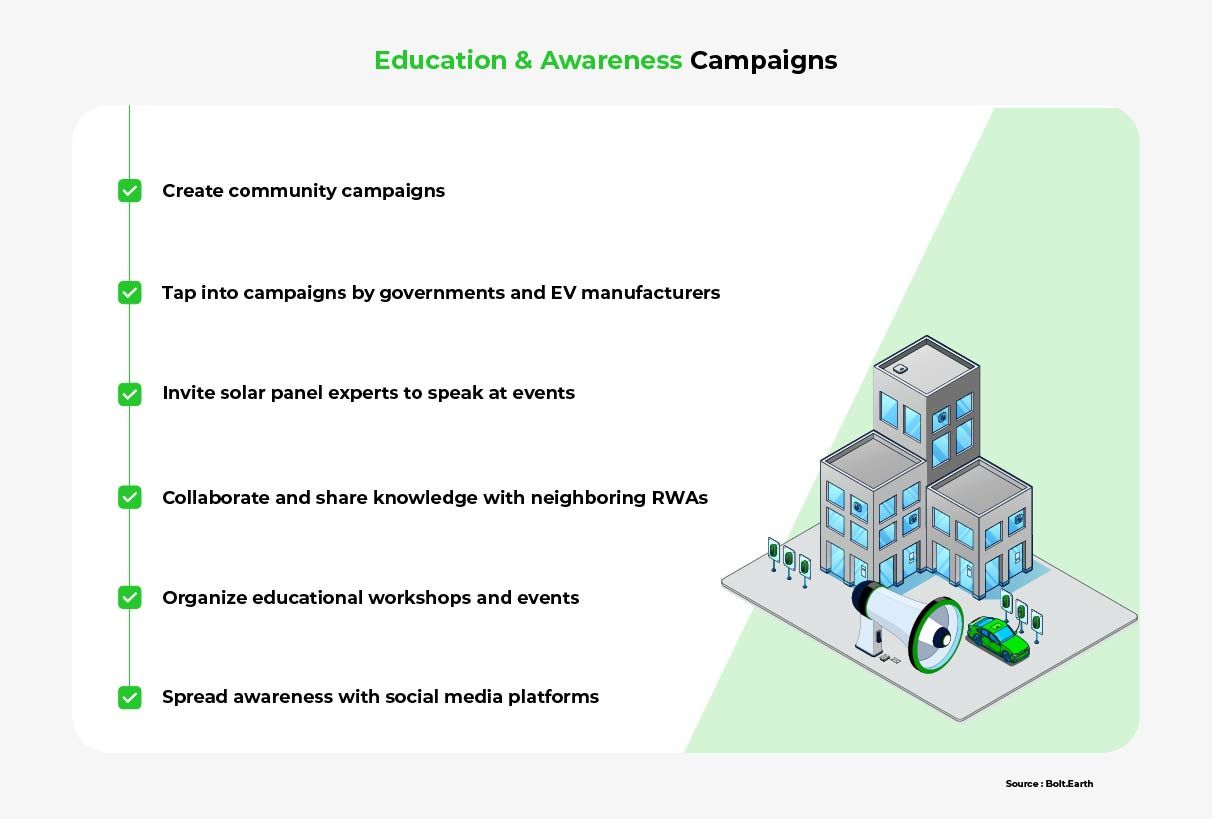
    • RWA engagement: In multifamily projects, engage the resident welfare association early. NITI-Aayog notes that many RWAs are hesitant about chargers, so education and clear policies (e.g., dedicated parking or insurance norms) can help prevent resistance.

    By addressing these factors during the design phase, builders can keep EV-readiness costs low. For example, installing conduits during construction avoids the need to break concrete later. With volume manufacturing driving down prices, EV hardware is no longer prohibitively expensive. In fact, EV charging infrastructure can be amortized over the building’s lifetime, while the strategic benefits, such as faster sales, regulatory incentives, and happier tenants, begin accruing immediately.

    Blog Banner

  • Guide to EV Charging in Apartment Complexes: All You Need to Know

    Guide to EV Charging in Apartment Complexes: All You Need to Know

    A national survey shows 24.4% of urban households live in flats. This means millions of EV drivers in India can’t simply plug in a charger at ground-level homes; instead, they must navigate complex rules in shared buildings.

    The lack of convenient home charging in high-rise societies is already emerging as a key bottleneck to EV adoption. EV experts note that roughly 80% of EV charging happens at home (typically overnight), making accessible residential charging critical. Yet many housing societies are unprepared: some restrict charger installation due to safety or wiring concerns. As one analysis puts it, “there is little discussion” about enabling home charging in India’s gated communities.

    If you’re considering installing an electric vehicle charging station at home in India, this guide covers the costs, steps, and available government support. It answers three key questions EV owners and society managers might have:

    • What rules and permissions are needed to install an EV charger in an apartment?
    • What charging setups work best in Indian housing societies?
    • How much does it cost, and who pays?

    What Rules And Permissions Are Needed To Install An EV Charger In An Apartment?

    Bolt.Earth_EV_charging Station.jpg

    Installing EV charger for apartment complexes involves several stakeholders: apartment owners (via the Resident Welfare Association, or RWA), the local electricity distribution company (DISCOM), and often municipal or building authorities. Fortunately, Indian government policy encourages, and in some cases mandates, EV charging for apartments in residential complexes. Key points include:

    No Special License Needed

    The Ministry of Power clarified in its EV Charging Guidelines that providing EV charging services does not require a separate electricity licence. In other words, you don’t need to become an “electricity supplier” to install a home charger; charging is treated as regular electricity use.

    Building By-Laws Require EV Provisioning

    The Ministry of Housing & Urban Affairs (MoHUA) amended the national Model Building Bye-Laws (MBBL) in 2019 to require EV-ready infrastructure in parking areas. Per these rules, 20% of parking capacity in new buildings must be reserved for EV charging infrastructure. States like Maharashtra and Karnataka have adopted similar rules: e.g., Karnataka mandates 10% EV-ready parking in new towers. This ensures future homes are “EV-ready,” but existing societies may need to retrofit wiring and parking to support residential EV charging stations.

    RWA Permission / Governing Body Approval

    In practice, any charger installation on society property needs RWA approval. Owners must pass an RWA resolution or AGM approval for dedicated charging points. RWAs can require EV owners to cover costs, but they should not arbitrarily block chargers. Some housing society bylaws have attempted to restrict EV chargers for non-technical reasons, but such restrictions conflict with government intent.

    DISCOM Coordination

    Once the RWA agrees, the DISCOM must be involved to supply power. Under the latest Ministry of Power guidelines, DISCOMs must supply electricity for EV charging through either the resident’s existing meter or a separate sub-meter, per the owner’s choice. Practically, this means:

    • Existing Meter: The EV charger draws power from the owner’s current apartment connection. The owner simply pays the extra usage on their usual bill.
    • Sanctioned Load and Panel Upgrades: Many apartment complexes have a limited power supply. If EV charging pushes the load beyond the society’s sanctioned capacity, the RWA must apply to the DISCOM for a load increase. This often involves an engineer survey and fees for extra capacity. Internal wiring (distribution panels and feeders) may also need upgrading to safely handle the new chargers.

    Step-by-Step Installation Process

    Apartment_1.jpg

    An apartment society should proceed roughly as follows:

    • Form a Committee and Survey Demand: The RWA or EV-owning residents should survey how many owners want chargers and form a small EV committee.
    • Obtain RWA Approval: Pass a general-body resolution allowing charger installation.
    • Consult DISCOM: Ask the local power utility about requirements. They may survey the site to advise on meter installation, necessary load upgrades, and any fees.
    • Apply for Connection / Load Upgrade: Request permission to connect (usually a NOC) or apply for a new connection or load enhancement. Follow the prescribed timelines (electricity rules mandate action within 30-60 days).
    • Choose Equipment and Vendor: Approve a list of BIS-certified chargers and licensed contractors.
    • Electrical Upgrades: Install or upgrade panels, wiring, and meters.
    • Commissioning: After installation, test each charger, ensure RCDs are functional, and update fire safety (e.g., fire extinguishers) and security measures (CCTV in parking).
    • Metering & Billing Setup: If using sub-meters, decide billing mechanisms: individual EV owners can pay their meter bills directly, or the RWA can collect usage fees. If relying on one master meter, the society must establish a fair cost-sharing mechanism (see next sections).
    Legal Rights

    Under the Electricity Act and Supreme Court rulings, RWAs cannot unreasonably prevent EV charger installations if they comply with safety norms. Disallowing a resident from using their allotted parking slot for EV charging is generally not permissible. Industry analysts note that “many residential communities do not allow EV chargers… despite central guidelines” and urge states to enforce citizens’ rights.

    Blog Banner

    What Charging Setups Work Best in Indian Housing Societies?

    Once permissions are cleared, society can typically choose between two models: private chargers (individual chargers at owners’ parking spots) and community chargers (shared charging stations in common areas). Some societies use a mix. The right choice depends on society’s size, parking layout, and budget.

    1. Private (Individual) Chargers

    Charger_installed_at a_host_place.jpg
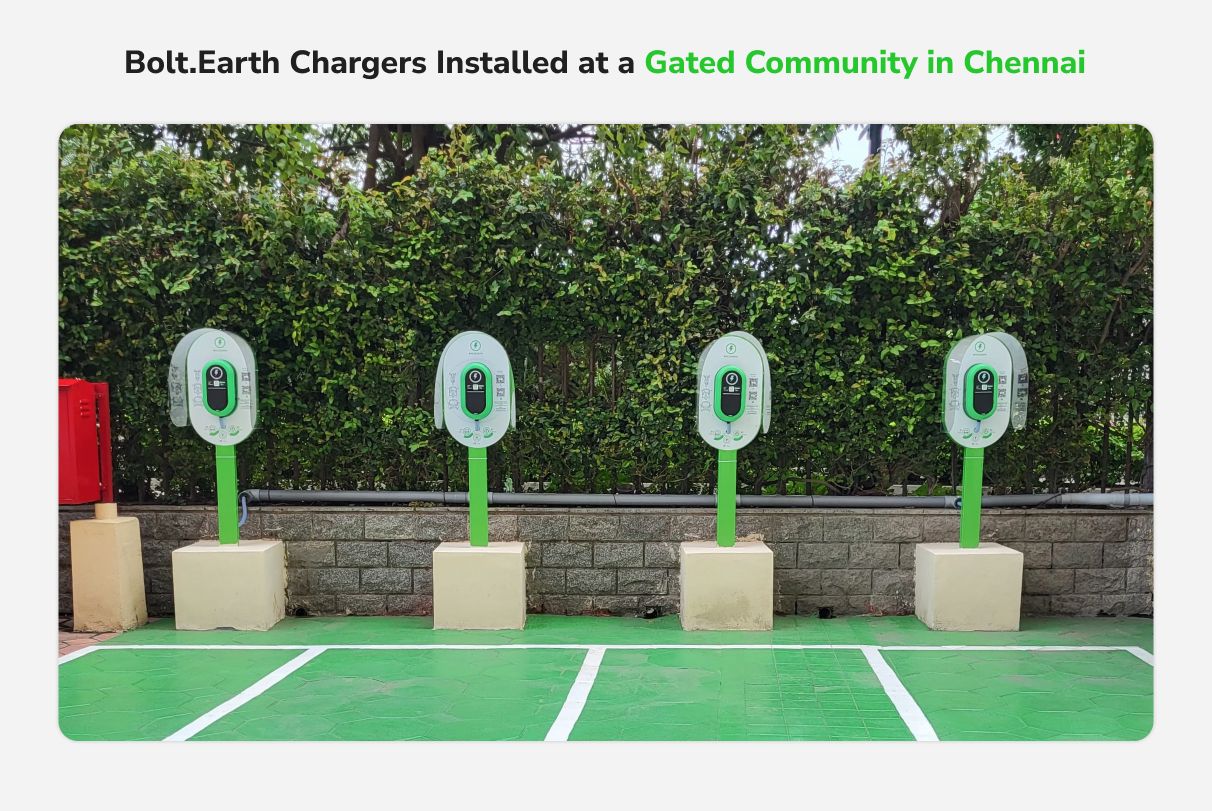
    In this model, each EV owner installs a charger at their own parking bay, usually an AC Level 2 charger (3.3–7.4 kW, 15–32A). The advantages are simplicity and owner control: each person pays for their own charger and electricity use. Installation can tie into the owner’s existing power meter (if the load permits), so billing remains straightforward. Individual chargers suit early adopters or smaller societies where each car has its own space.

      • Community (Shared) Charging Stations

    Apartment_2.jpg
    Here, RWAs install charging points in common areas. These may be slow AC chargers or DC fast chargers. Residents use them via reservation or pay-per-use. This model spreads infrastructure cost and suits societies with unassigned parking. Under new guidelines, RWAs can set community charging fees based on applicable tariffs. For instance, a Nagpur society set up a dual AC/DC station funded by the society; residents pay ₹20 per kWh plus GST when they use it.

      • Smart Charging Networks

    Some larger societies are adopting IoT-enabled chargers with dynamic load management and pre-booking features. Over time, these systems can be scaled (5–10 slots today, easily 50+ tomorrow) as EV ownership grows.

    Metering Models
    Regardless of setup, metering is crucial. There are two main approaches:

    • Individual Sub-meters: Each charger (private or shared) has its own meter. In new connections, DISCOMs often offer a dedicated EV tariff. The RWA or owner gets a separate bill for each meter. This model maximizes transparency and allows the use of EV-specific rates. Multiple submeters work well for both private and community chargers.
    • Single Master Meter: All users draw from one meter, and society divides consumption among EV owners. This requires trust and administrative effort.

    How Much Does It Cost, and Who Pays?

    A big question is “How much will this cost, and who foots the bill?” Costs come from hardware (chargers, wiring, meters) and electricity usage. Responsibility typically falls either on the individual EV owner (for private chargers) or on the RWA/owners (for community chargers), but government incentives can ease the burden.

    Charger & Installation Costs

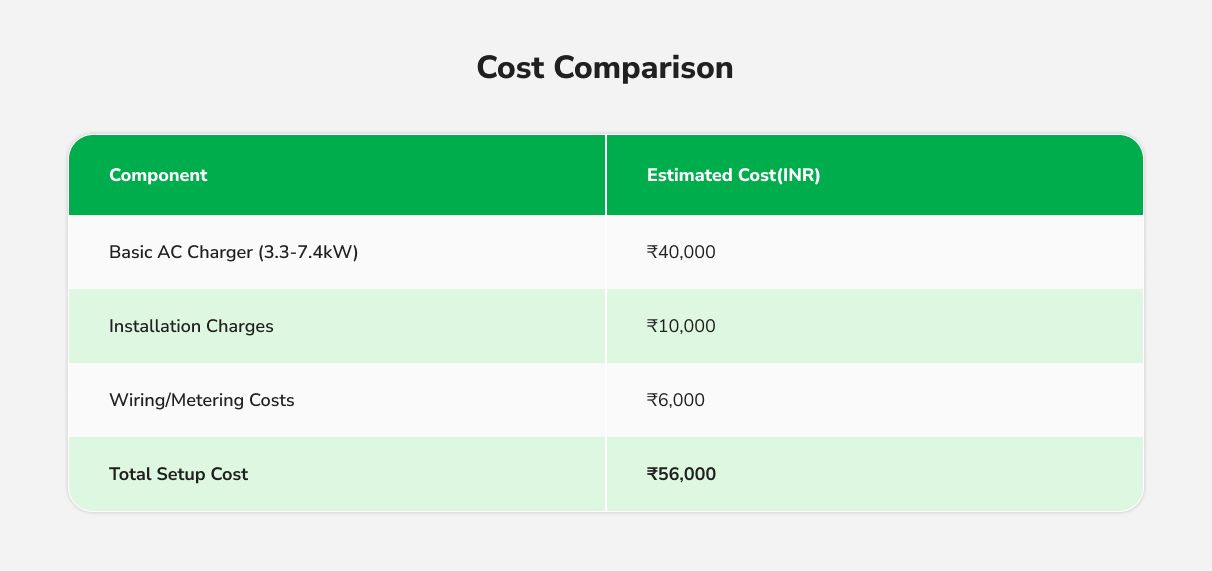
    A basic AC home charger (3.3–7.4 kW) typically costs ₹40,000–50,000. Installation and wiring add another ₹15,000–20,000. For example, an industry estimate breaks down a 7.2 kW charger as ₹40,000 (charger) + ₹10,000 (installation) + ₹6,000 (wiring/meters) = ₹56,000 total. Premium or fast chargers cost more (lakhs of rupees) but are rare in apartments.

    Existing electrical panels or transformers in older complexes may need an upgrade. A sanctioned load increase or new transformer can cost lakhs of rupees (often shared by all owners). States are beginning to subsidize this: for instance, Delhi offers up to a ₹30,000 subsidy per society to upgrade load. But without subsidy, the RWA must plan and allocate funds (sometimes from the society’s reserve fund) for such grid upgrades.

    Electricity Tariffs

    Power cost for charging is surprisingly low. If an EV consumes 7 kWh per night, that’s about 210 kWh per month. Even at ₹10/unit, that’s just ₹2,100 monthly. In practice, home charging often costs only ₹100–150 extra per month for a typical EV. EV experts stress that home charging is cheaper than public fast charging because residential tariffs are lower.

    Discoms increasingly offer dedicated EV tariffs (e.g., ₹4–5/unit) to encourage charging at home. However, one must usually use a separate meter to qualify. The IEEFA report notes that without a separate meter, “users cannot avail special discounted tariffs”. Thus, many societies opt for submetering so EV owners can pick the EV rate, a common setup for EV charging for apartments.

    Subsidies and Incentives

    Both the Central and State governments are providing incentives to lower costs:

    Central Schemes

    A BEE/EVI scheme allows RWAs to apply for subsidies on community charging, but uptake is minimal.

    State EV Policies

    Several state EV policies explicitly target residential charging:

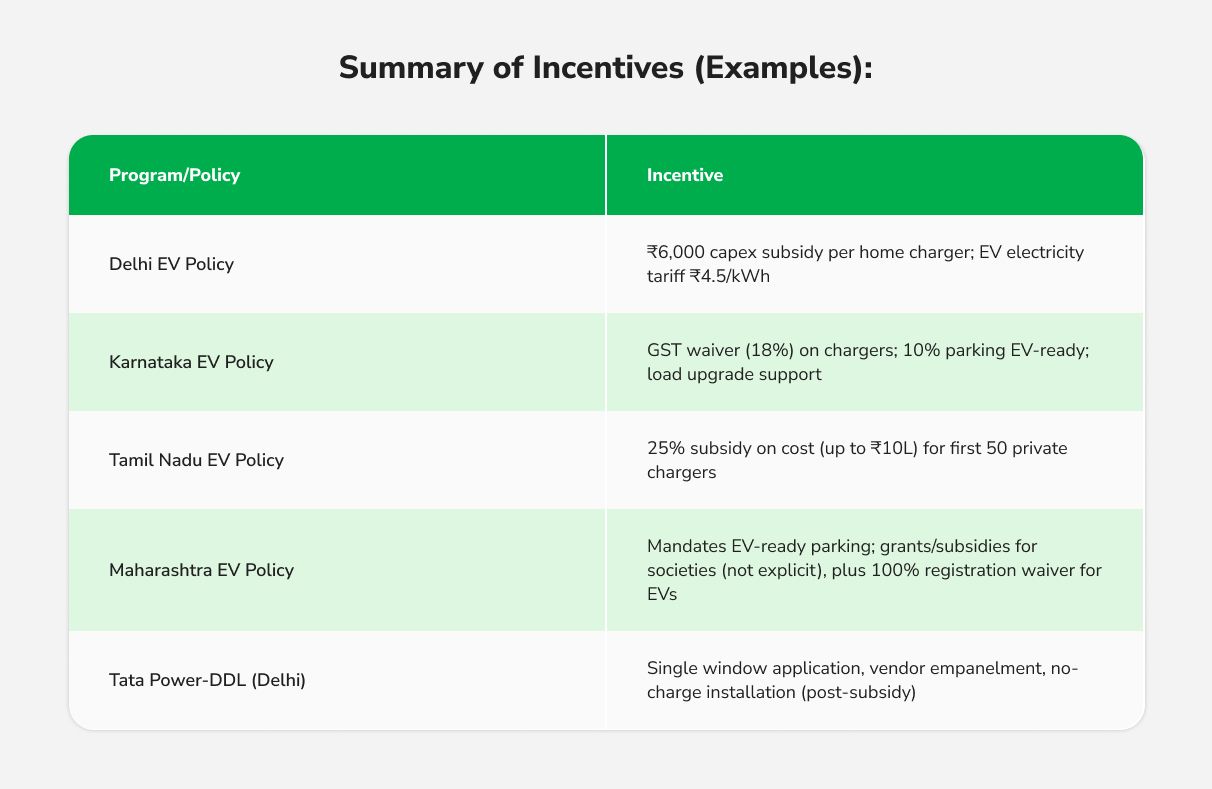
    • Delhi: Under Delhi’s Switch Delhi program, private owners get a ₹6,000 subsidy per home charger (on the charger capex). Additionally, owners can opt for a new “EV connection” from the DISCOM, with a special tariff of ₹4.50/unit. In Delhi’s scheme, the DISCOM even empanels vendors and offers a single-window online application.
    • Karnataka: Karnataka waived the 18% GST on EV chargers, meaning a 7.2 kW charger (₹42k + tax) can be bought for about ₹35,000 in practice. The state also mandates 10% EV-ready parking in buildings and allows communal chargers after a 2/3 society vote. BESCOM (Bangalore’s utility) has a mobile app for easy connections and bookings.
    • Others: Maharashtra’s EV policy 2021 offers road-tax and registration waivers for EVs and encourages developers to include charging points. The Delhi Development Authority and local municipalities in some cities have fast-tracked permissions and fee waivers for EV charger installations in apartment societies.

    DISCOM/Developer Support

    Some power utilities have their own schemes. Tata Power-DDL (Delhi) empanels vendors and promises 7-day installation service under the govt. scheme. BESCOM (Karnataka) partners with private operators, effectively subsidizing demand charges. Developers of new complexes often include base infrastructure (like conduits or panel capacity) in the building plan, as mandated by MoHUA.

    So who pays for the bill?

    • In an individual charger model, the EV owner bears the hardware cost and electricity. If using the existing meter, the cost is reflected in the owner’s normal bill. If a new meter is taken, the owner pays that bill.
    • In a community charger model, the RWA or society may invest in the charger and then recoup costs from users.
    • Grid upgrades are typically funded collectively by all owners. Since load enhancement benefits all, it’s often taken from the society’s funds or special contributions.

    Cost Comparison

    Cost Comparison.jpg

    To illustrate, consider installing a simple 7 kW AC charger at home. Total cost approx. ₹50–60k (with installation). If a Delhi subsidy of ₹6k applies, the net hardware cost is ₹44–54k. Spread over 5 years, that’s ₹750–1000/month. Added to electricity use (₹150/month), the total cost is roughly ₹900–1200/month. By contrast, a petrol SUV burns approximately ₹15,000 of fuel per month for similar use. So electric still wins hands-down on fuel savings.

    Summary of Incentives (Examples):
    Cost Comparison-1.jpg

    These incentives, together with dropping charger costs, mean EV solutions for housing societies are increasingly affordable.

    Best Practices and Case Examples

    Apartments across India are already pioneering EV charging solutions. For example, a new society near Nagpur (MIHAN) installed a mixed AC/DC station in its parking. Notably, residents report that no upfront payment was needed; the society covered installation, then billed users per kWh. They did submit a green load increase request to the DISCOM beforehand. This shows that with proper permissions, societies can make charging available at little or no cost to individual members.

    Other best practices include:

    • Pilot Testing: Start with a few chargers and gauge usage. Many RWAs encourage interested EV owners to chip in for a pilot station.
    • Load Management: Use smart controllers or time-of-day billing. Some societies offer overnight charging only when tariffs are lowest.
    • Fair Cost-Sharing: Keep non-EV owners’ concerns in mind. It often helps to create an EV reserve fund or allocate part of the RWA’s sinking fund for upgrades. Clearly communicate that an EV charger is like any amenity (like a pool or gym), and EV owners can pay for it as needed.

    Finally, it’s important to raise awareness: IEEFA recommends that state agencies run campaigns about EV charging safety and tariffs. Lack of awareness is the biggest hurdle: many societies initially do not allow EV chargers, citing “unknowns”. Education (sharing guidelines, success stories, and vendor demos) usually helps overcome hesitation.

    Conclusion

    As India’s EV population grows, residential charging will become essential. Fortunately, the regulatory framework now supports EV charging for apartments. With careful planning, involving the RWA, DISCOM, and residents, most societies can implement a mix of private and community chargers that fit their space and budget.

    The transition requires some effort (resolutions, load upgrades, wiring), but the rewards are clear: greater convenience, higher property values, and a greener neighborhood. In practical terms, a modest investment pays off in a few years through fuel savings and government subsidies.

    Whether you’re a homeowner with an EV or an RWA leader, now is the time to act. Begin the dialogue in your society, consult with power utilities, and tap into the growing market of EV solutions for housing societies. With each society that connects an EV charger, we drive India closer to a cleaner, smarter transportation future.

    Blog Banner

  • The Rise of EV-Ready Homes in India: Why Future-Proofing Your Property Matters

    The Rise of EV-Ready Homes in India: Why Future-Proofing Your Property Matters

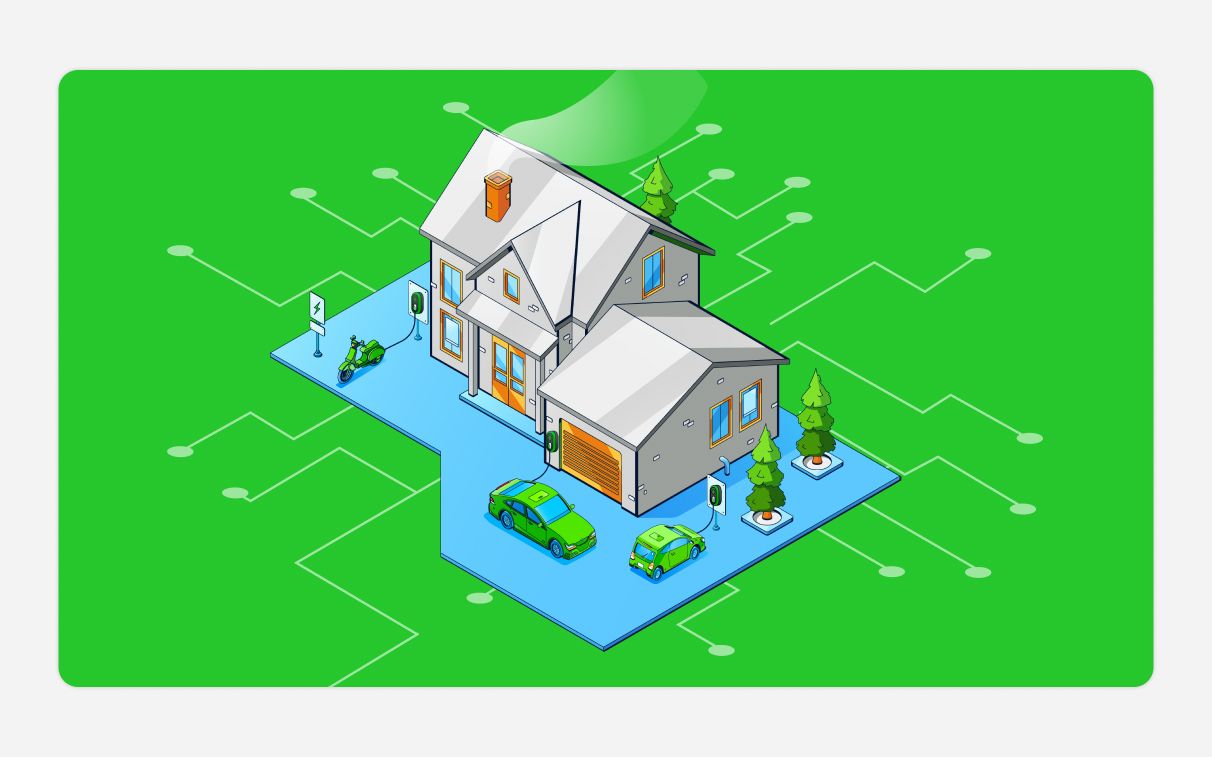
    Electric vehicles (EVs) are zooming into India’s future, but for many drivers, widespread adoption remains uncertain due to one critical reason: the lack of accessible home charging. In fact, experts note that convenient EV charging at home is a linchpin of India’s electric mobility push.

    In the US, about 80% of EV charging already happens at home, and surveys suggest more than half of Indian EV owners want a charger at home. With EV sales surging across India, pressure is mounting on homes and housing societies to keep pace.

    In response, governments and builders are gradually integrating EV infrastructure into urban living. This blog explores why EV-ready homes are becoming the next big milestone in sustainable living and answers three critical questions:

    • Why is home charging essential for EV adoption in India?
    • What policies and incentives are driving EV-ready real estate?
    • What challenges and opportunities must India address to make home charging a reality for everyone?

    Why Is Home Charging Essential for EV Adoption in India?

    image_2.jpg

    Owning an EV makes little sense if you can’t easily charge it where you live. Home EV charger setups offer unmatched convenience and cost savings. As one analysis notes, “home charging is not only convenient for EV users but also cheaper in most cases,” since domestic electricity tariffs are typically far lower than public charging fees.

    For example, charging a typical 30 kWh EV battery (about 250 km range) costs roughly ₹180 at home, about ₹0.7–₹0.9 per km, compared to ₹6–₹8 per km when using petrol. That’s an 80–90% reduction in fuel cost, a powerful incentive for buyers.

    Importantly, home charging can also benefit the grid. Since most EVs sit unused overnight, “home charging…helps in load management and enables grid stability”. In other words, if many EV owners plug in after dinner, utilities can take advantage of low evening demand (or even prearranged solar surpluses) to “refill” vehicles, smoothing out peaks. Analysts estimate that by 2035, EV charging could make up 6% of India’s electricity use, a level that only grids can handle if charging is smartly managed, mostly at home.

    Above all, home EV charger installations combat “range anxiety” by assuring drivers they can start each day at 100%. Indian consumers repeatedly cite charging infrastructure as a top concern. McKinsey found only about 55% of EV owners in India currently have home chargers, and over 75% of Indians feel charging networks are still inadequate. Yet two-thirds of those surveyed said they would still buy an EV even if they couldn’t charge at home, a testament to EV appeal.

    Still, the lack of home charging can slow adoption. Building more homes with ready-made chargers (or at least wiring) is key to making EV ownership seamless and practical for the masses.

    What Policies and Incentives Are Driving EV-Ready Real Estate?

    Recognizing the importance of residential EV charging stations, Indian authorities have begun issuing guidelines and incentives to promote EV-ready real estate. At the national level, the Ministry of Power (MoP) and related agencies have released several directives.

    In late 2024 the MoP issued “Guidelines for Installation and Operation of EV Charging Infrastructure”, which streamlines electricity connections for chargers.

    For example, existing residential power connections can be used or upgraded to a dedicated EV tariff. Importantly, the GST Council slashed the tax on EV charging equipment from 18% to just 5%, making home EV charger setups far more affordable.

    Meanwhile, the Ministry of Heavy Industry launched the [PM E-DRIVE scheme (Sept 2024) offering subsidies and grants for EVs and charging networks. Although primarily focused on vehicles, the scheme explicitly includes funding for “establishment of a network of charging stations”, which can benefit residential projects installing multiple chargers.

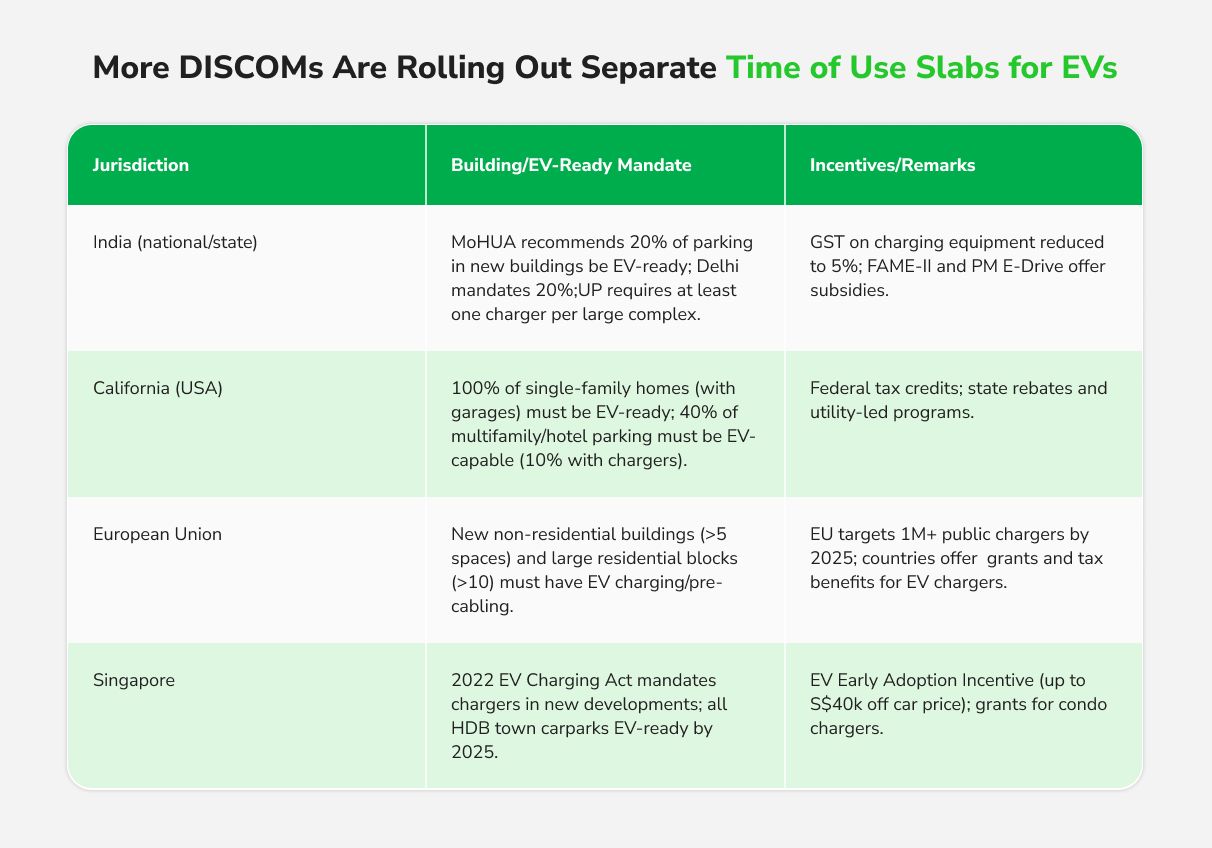
    At the urban planning level, the Ministry of Housing & Urban Affairs (MoHUA) has advised cities to incorporate EV-friendly rules into building codes. In 2019 MoHUA drafted amendments suggesting that 20% of parking spaces in new buildings be EV-ready (wiring and capacity in place). While these model bylaws haven’t been uniformly adopted, several states and cities have taken action.

    For example, Delhi’s EV policy (2020) directed that all commercial and large residential buildings reserve 20% of parking spots for EV charging. Maharashtra followed suit: its model building code (2022) requires 1 EV charger for every 5 parking spots in apartments and offices. The result is a patchwork: West Bengal and Karnataka are drafting rules for EV-ready homes, while Uttar Pradesh mandates at least one charger in any new housing project over 5,000 m².

    At a more technical level, agencies like the CEA and BEE have issued safety guidelines for wiring and meter connections. In short, policy is shifting from “charging is optional” to “charging is essential.” Even the National Building Code (2022 draft) includes EV charging as an essential service in new constructions.

    What Challenges and Opportunities Must India Address to Make Home Charging a Reality for Everyone?

    Despite these policies, integrating home EV chargers in Indian cities is not simple. One big issue is housing stock. Over half of dwellings in India’s major cities are multi-unit apartment blocks. Unlike single-family homes, these often lack individual garages or dedicated parking.

    An IEEFA analysis points out: “The majority of the population in Tier I cities live in multi-storey or shared accommodations, often lacking personal garages, making EV charging tricky.

    In cities like Mumbai and Delhi, apartment buyers rent or own parking slots in underground garages. To install EV charger at home, residents require RWA approval, rewiring common areas, and sometimes upgrading the grid connection.

    RWA_image.jpg

    Electrical infrastructure is another constraint. Many older buildings cannot easily support the extra load of EV chargers. A report on home charging economics notes that installing a Level 2 (fast home) charger,costing ₹25,000–₹60,000, often requires electrical panel upgrades of ₹10,000–₹50,000. In societies with shared feeders, the cost is distributed among all residents, even those without EVs, which can trigger resistance. Indeed, IEEFA found that in gated communities, non-EV residents can oppose installation “as an additional financial burden”.

    Beyond cost, regulatory/coordination challenges persist. India lacks a single framework for home charging. Many RWAs and electricians are often unsure who pays for wiring, how electricity is billed, and which safety standards to follow. As one article bluntly states, despite central guidelines from MoHUA and the Central Electricity Authority, “several state governments are yet to adopt those standards”.

    Resident awareness is also low. IEEFA reports that many communities simply “do not allow EV chargers…for fear of safety or lack of infrastructure”.

    Compounding these issues, India’s power grid has its own limits. Uncoordinated charging could create local peaks; conversely, shifting charging to off-peak hours or aligning it with rooftop solar could help stabilize demand. Either way, India’s utilities are under pressure: there are roughly 435 EVs for each public charger in India, versus only 26 per charger in the US. This disparity underscores the urgency of home charging and also the strain it could place on the grid.

    To sum up, lack of parking, tangled approvals, upgrade costs, and stretched wiring all make it difficult to “just plug in” in urban Indian homes. Overcoming these hurdles is a work in progress for policymakers, developers, and communities alike.

    Global Best Practices: How India Compares

    India is not alone in grappling with EV-ready buildings. Around the world, governments are mandating or incentivizing residential charging infrastructure to accelerate adoption.

    California is a prominent example: its building code (Title 24) requires 100% of new single-family homes with garages to be pre-wired for EV chargers. For new multifamily complexes and hotels, 40% of parking spaces must be EV-ready (with conduit and panel capacity), and 10% must have active Level-2 chargers installed.

    Similarly, cities like Seattle and San Francisco have introduced phased requirements for EV-capable parking in new developments. These rules significantly lower retrofit challenges and normalize charging stations as standard amenities.

    Across the Atlantic, the European Union’s Energy Performance of Buildings Directive (EPBD) is driving similar measures. Under the EPBD recast, new non-residential buildings with more than 5 parking spots and residential buildings with over 10 spots must have EV charging points or at least pre-cabled spaces. In practice this means wiring entire parking lots for future chargers. Many EU countries complement the directive with local incentives or rebates for installing home chargers. For example, Germany offers grants to cover private charger installation in single-family homes and €900 for chargers in condominiums.

    Singapore provides an instructive Asian model. Its EV Charging Act (2022) mandates that new developments “include EV charging provisions”. The government plans to make all public housing (HDB) town carparks EV-ready by 2025, and it even offers an EV Common Charger Grant to help condominiums install shared chargers. Combined with generous vehicle subsidies (up to S$40,000 off EV cost), Singapore’s approach is a holistic blueprint.
    More DISCOMs are rolling out separate TOU slabs for EVs. Typically_.jpg

    Overall, India’s regulations are promising but still catching up. Its 20% parking rule aligns with EU norms, and its GST reduction mirrors global efforts to lower charger costs. However, enforcement and public awareness remain uneven. The experiences of California, EU member states, and Singapore suggest that clear mandates combined with financial support drive rapid uptake of EV-ready buildings. India’s success will depend on active implementation by states and local authorities.

    Real Estate Developers Respond

    India’s developers are beginning to treat EV charging as a value proposition. Leading real estate players are embedding chargers into projects (and even retrofitting older complexes) to meet rising buyer demand.

    Sobha Ltd., for example, launched two Bengaluru projects with home EV charger setups at every parking slot. Mahindra Lifespaces, DLF, Brigade, and others have announced EV-enabled developments. Prestige Estates’ management notes that affluent buyers “want assurance they will have access to charging facilities” in their homes.

    Industry observers believe these amenities justify a price premium, much like swimming pools once did. Surveys suggest properties with charging get 3–5% higher prices, a trend noted by Knight Frank India in 2023.

    Developers are also exploring retrofit models. For instance, a Mumbai society recently installed 50 chargers for 250 flats using DLM, avoiding an estimated ₹35 lakh in grid upgrade costs. Flexible payment models, from pay-per-use kiosks to monthly subscription plans, are making it easier for homeowner associations to manage the service.

    That said, rollout is still uneven. In many complexes, the challenge is inertia or lack of awareness. Survey data show that younger, wealthier buyers are more interested in “EV-ready real estate”, while the broader market still views it as a nice-to-have. To bridge this gap, some states and developers are offering charging vouchers or co-financing options.

    The upshot is clear: EV charging is rapidly evolving from a fringe amenity to a core feature in new developments. The lead is being taken by forward-thinking builders targeting eco-conscious customers.

    Long-Term Sustainability Benefits

    Why all this effort?

    Because EV-ready homes have outsized climate and urban-health benefits, especially for India. Road transport today accounts for about 12% of India’s energy-related CO₂ emissions and is a major contributor to urban air pollution.

    Electrifying vehicles at scale can dramatically reduce this burden. According to IEA analysts, under ambitious decarbonization scenarios, India could avoid roughly 5 million tonnes of CO₂ by 2030, that’s equivalent to removing over 1 million petrol cars from the roads.

    As India’s grid gets cleaner with more solar and wind, the CO₂ savings per EV only increase. Globally, a battery-electric car emits roughly half the lifetime emissions of an equivalent petrol car. These reductions also improve local air quality: lower emissions of nitrogen oxides (NOₓ) and particulate matter from tailpipes mean healthier cities.

    image_1.jpg

    EV-ready homes can amplify clean-energy synergies. Many Indian households are installing rooftop solar, and EV charging is a natural way to use that clean power. Smart home charging can shift demand to midday (absorbing solar output) or late night (when demand is low), smoothing the load curve. Looking ahead, bidirectional charging (vehicle-to-grid) could turn EVs into mobile batteries, supplying power during peak hours or outages. In a country blessed with sunlight, an EV battery parked at home becomes a latent storage asset waiting to charge with sunshine.

    An example of EV Load Management.jpg

    Finally, EV-ready housing supports broader sustainable living standards. It complements water and energy conservation in green buildings and signals a shift in urban planning, one that prioritizes renewable and low-carbon transport. For homebuyers, an EV charger is becoming as fundamental as a high-speed internet connection or LED lighting.

    In an era of climate urgency, every EV kilometer charged at home (especially from solar) is a step toward India’s clean-air and net-zero goals. As Charith Konda of IEEFA puts it, EV-ready infrastructure “will play a crucial role in EV adoption”, and by extension, in India’s clean energy transition.

    Conclusion

    The transition to electric mobility won’t happen on roads alone; it will happen in our homes and neighborhoods. India’s push for EV-ready real estate is still nascent, but momentum is building. Clear government mandates (parking reservations, wiring norms), fiscal incentives (subsidies, tax cuts), and visionary developers are together accelerating the trend.

    The challenges are real: urban parking, apartment bylaws, and power upgrades, but so are the rewards: cleaner air, lower fuel costs, and a future-proof housing stock.

    In practical terms, EV-ready homes mean simply this: each night, drivers can plug in and wake up to a “full tank” of clean energy. That convenience is a powerful attractor for EV buyers, which in turn puts more electric vehicles on the road, creating a virtuous cycle for India’s sustainable future.

    Blog Banner

  • Why Blaze DC Is the Right Choice for Apartments and Enterprises

    Why Blaze DC Is the Right Choice for Apartments and Enterprises

    India’s electric vehicle (EV) revolution is no longer confined to highways and dealerships; it’s coming home to high-rises and heading to corporate campuses.

    With over 1.75 million EVs sold in FY24 and projections targeting 5 million electric two-wheelers annually by 2027, the demand for fast, reliable, and interoperable charging infrastructure is on the rise across residential EV charging stations and commercial EV charging stations.

    As India’s urban landscapes evolve, residential and commercial spaces are taking the driver’s seat in steering the transition toward sustainable mobility. Today, residents look for the convenience of EV charging for apartments at home, and employees expect their workplaces to support their climate-first choices. Moreover, facility managers and developers are under pressure to meet their sustainability (ESG) goals without compromising daily operations.

    So what’s the real challenge? As we’ve explored in earlier blogs, most existing charging solutions are slow, brand-specific, or simply not built for India’s unique and evolving EV landscape.

    But that gap ends here. With Blaze DC in the market, built for speed, interoperability, and scalability, it’s a strategic asset for future-ready properties.

    In this blog, we explore five reasons why Blaze DC is the right choice for apartments and enterprises. This will help you enhance property value, future-proof infrastructure, and elevate the resident experience through EV charging for apartments and enterprises.

    1. Universal fast charging built for India’s EVs

    Picture2.jpg

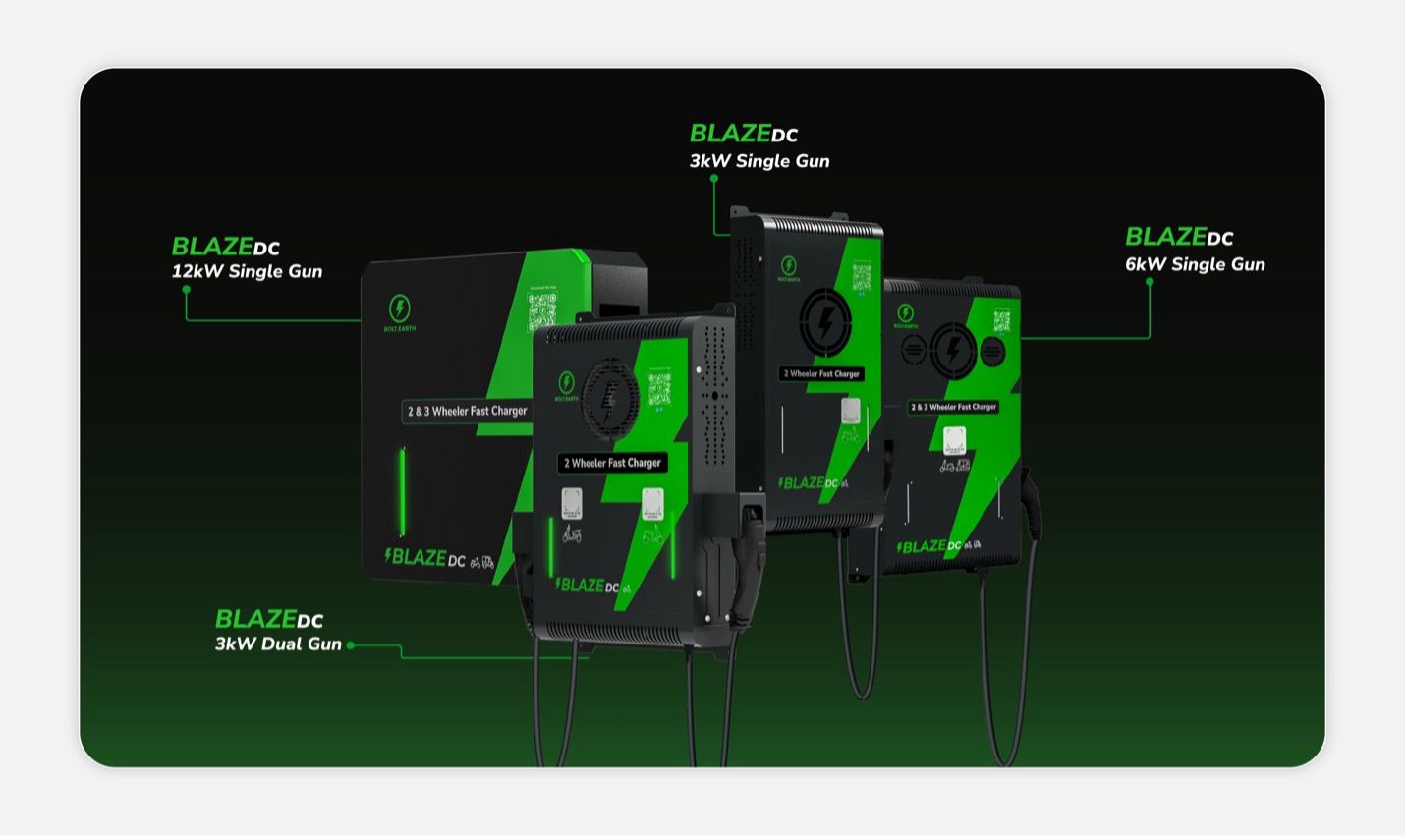
    Blaze DC is India’s first universally compatible fast charger engineered to cater to two- and three-wheelers. It supports both Type 6 and LECCS Type 7 connectors, making it compatible with over 80% of fast-charging-enabled EVs in India. This includes Ola, Ather, Hero MotoCorp, Ultraviolette, and Simple Energy.

    The best part is there are three variants, 3kW, 6kW, or 12kW, to choose from to match your infrastructure needs or according to the footfall demand in your properties. Whether it’s gated community parking or a sprawling enterprise campus, Blaze DC is engineered to cut queues and keep up with charging uptime.

    • For apartments: Residents get shared QR access, faster sessions, and no brand limitations.
    • For enterprises looking for workplace EV charger installation: Fleet and employee vehicles charge on demand, even during peak hours, reducing idle time and increasing utilization of chargers.

    Given that Blaze DC is brand-neutral and interoperable, you don’t need separate chargers for different EVs.

    The speed we are talking about isn’t just convenience; it’s a necessity. It’s about turnover and trust, especially for apartments, where your residents can charge quickly, and for enterprises, your employees and fleet vehicles are always ready to charge and go.

    • The 6kW and 3kW variants offer 80 km and 40 km range, respectively, in just 15 minutes.
    • The 12kW variant delivers up to 120 km range in 15 minutes; that’s 1% charge in 1 minute.

    Read more: Blaze DC: India’s First-Ever Universally Compatible Fast Charger

    2. Integrates seamlessly with apartment and office infrastructure

    Point 2b.jpg

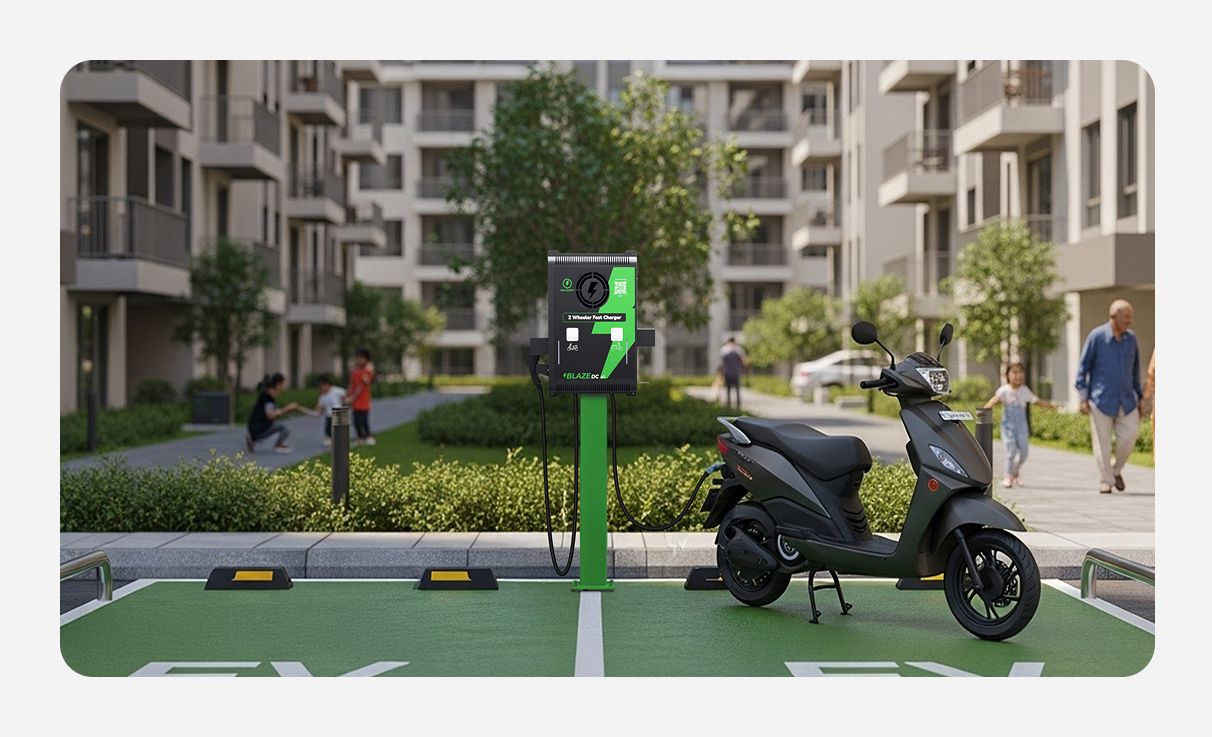
    Blaze DC is designed for India’s urban density. It’s compact, modular, and grid-friendly, which fits into every property’s needs. If space is a constraint, like in an IT park, you can easily wall-mount the Blaze DC, and if you’re looking to install these chargers in a gated community, you can choose the pedestal-style installation with minimal disruption.

    For EV charging for apartments, you get:

    • Shared access with QR authentication
    • Smart billing system
    • Minimal crowding at basement or open parking within residential EV charging stations

    For EV charging solutions for enterprises, Blaze DC can have:

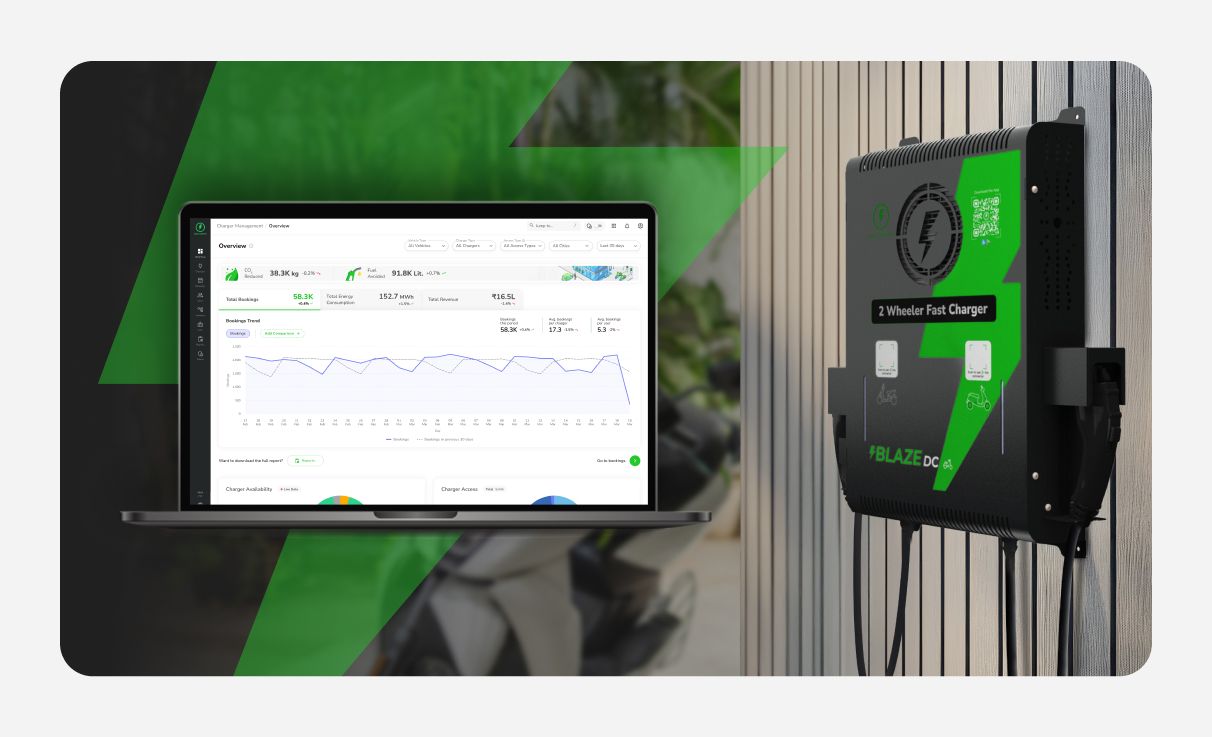
    • Centralized monitoring via Bolt.Earth’s CMS
    • Integration with employee ID systems

    Here is a quick case study for you to see how we helped streamline an overcrowded charging station at one of Bengaluru’s top gated communities and supported the RWA to optimize charger utilization among residents.

    Case study: Optimized an overcrowded charging point at Purva Westend, Bengaluru, with Blaze DC

    Challenge:

    With more residents adopting electric vehicles, Purva Westend in Bengaluru needed a solution that would streamline the EV charging infrastructure, make it less crowded, and provide smart, future-ready charging that aligned with their commitment to sustainability and resident convenience.

    What changed?

    We installed three chargers with varied capacities and formats. Namely, Blaze DC fast charger (deployed in April 2025), Blaze AC fast charger (in June 2023), and Lite, an EV charging socket (in February 2025).

    With seamless integration into the property’s electrical setup and smart monitoring through the Bolt.Earth platform, residents and guests now enjoy accessible, hassle-free charging that reflects the community’s sustainable values.

    Tech highlights:

    • Smart access and monitoring via Bolt.Earth platform
    • Seamless integration with existing electrical setup
    • Built to serve both residents and guests

    Timeline snapshot:

    • Site Assessment: 1 week
    • Electrical Prep & Cabling: 3 weeks
    • Installation & Integration: 1 week
    • Final Testing: 1 week

    The result (as of July 2025):

    • Over one metric ton of CO₂ emissions avoided, contributing meaningfully to ESG benchmarks.
    • On-site chargers eliminate range anxiety and support hassle-free daily EV commutes.
    • Establishes Purva Westend as an eco-conscious, forward-looking residential community in Bengaluru’s evolving EV landscape.

    3. Turn charging into a revenue stream

    Point 3.jpg

    For decades, EV charging has been perceived as a sunk cost, an amenity offered out of necessity, not profitability. Blaze DC challenges that assumption head-on.

    With Bolt.Earth’s Charger Management System (CMS), at its core, Blaze DC transforms charging infrastructure into a revenue-generating machine.

    As an operator, you can:

    • Set custom per-kWh pricing
    • Monitor usage in real time via the CMS
    • Open chargers to the public during off-peak hours to maximize utilization.

    Here’s a simple ROI calculation: Imagine a 6kW Blaze DC charger deployed in a residential EV charging station or commercial hub. With eight sessions per day, averaging 12 kWh each, the charger dispenses 96 kWh daily.

    If you set a rate of ₹22 per kWh, you can earn ₹2,112 in daily revenue. With margins ranging between ₹8 and ₹10 per kWh, you can expect gross earnings of ₹768 to ₹960 per day, totaling ₹23,000 to ₹29,000 per month.

    These figures aren’t hypothetical. They align with Ecogears’ financial projections, which show that fast chargers in India can yield a 30% to 40% margin per session, even before utilization scales.

    What’s more, you ask? Well, Blaze DC’s pricing and access controls allow you to experiment with monetization models. For example, subscription-based charging for residents, pay-per-use for visitors, and bundled packages for delivery fleets.

    This flexibility makes Blaze DC not just a charger but a business model in itself. For apartments, RWAs, and enterprises, the shift from cost center to profit center is finally achievable, don’t you agree?

    4. Safety meets smart monitoring

    4.jpg
    When it comes to shared environments like gated communities, office parks, or retail zones, we all agree that safety is non-negotiable.

    Thus, Blaze DC is designed to meet that need for safety with enterprise-grade protections that activate automatically, without requiring manual intervention, making it one of the most reliable EV charging solutions for enterprises. Blaze DC chargers come with:

    • Short-circuit and over-voltage protection
    • Earth fault and current leakage detection
    • An emergency stop button and IP54 weatherproofing

    These features ensure that your chargers remain resilient in any weather and withstand the unpredictability of India’s grid and density.

    But that’s not all. Blaze DC isn’t just about safety; it’s also designed to be smart. The integration with Bolt.Earth’s CMS enables you to monitor charger status across multiple locations. Predictive maintenance alerts flag potential issues before they escalate, and you also get remote diagnostics and over-the-air (OTA) updates. This reduces service calls, minimizes downtime, and enhances user experience, whether it’s your resident or an employee topping up between shifts.

    5. Futureproof for a greener tomorrow

    India’s EV market is projected to grow by 40% in 2025, with the country needing over 3.9 million charging stations by 2030. Yet, cities like Nagpur still have just one public charger for every 515 EVs, a ratio that underscores the infrastructure gap.

    The urgency to scale up to match the momentum is real. Government mandates, ESG goals, and shifting consumer expectations are attempts to make EV infrastructure not just desirable but indispensable.

    Blaze DC is engineered to make fast charging inclusive and easier. Its universal and interoperable personality supports both BIS-approved Type 6 and Type 7 connectors, meaning it’s compatible with over 90% of fast-charging-enabled two- and three-wheelers in India. Moreover, its modular design allows for easy upgrades. Compliance with Bharat Charge Alliance standards further guarantees interoperability across OEMs and platforms, making Blaze DC a future-ready investment.

    As Raghav Bharadwaj, CEO of Bolt.Earth, aptly puts it, _“Blaze DC is built by Indian engineers, for Indian infrastructure. It’s not just a charger; it’s a catalyst for everyday EV adoption.”_

    Did you know? Average Blaze DC charger uptime exceeds 99.5%, based on internal benchmarks. And properties report a 60% reduction in EV complaints post-deployment.

    Final Thoughts

    Apartments and enterprises are at the forefront of India’s EV transition. And you, as residential developers, facility managers, or enterprise leads, can self-drive the sustainability wagon with ease.

    Blaze DC helps you take the lead, future-proof your property with effortless installation, align with ESG goals, boost asset value, and unlock new revenue streams, all through a single, smart charging solution.

    Want to integrate smart EV solutions into your real estate or commercial projects? Get a free site assessment done today, and we will take care of the rest.

    Email: [email protected]

    Phone: +91 80456 88455

  • Why Blaze DC Is the Right Choice for EV Charging Hosts

    Why Blaze DC Is the Right Choice for EV Charging Hosts

    Historically, many businesses and residential complexes in India hesitated to host EV chargers due to perceived high costs and unclear benefits. But as EV demands surge and public charging remains scarce, a new reality is setting in: businesses that offer on-site charging stand to attract a growing wave of EV customers and gain a competitive edge over those that don’t.

    International trends echo this. Major retail brands like Starbucks and Walmart have invested heavily in EV charging, expecting it to increase customer dwell time and same-store sales. In the US, a comprehensive study across 800+ counties found that retailers located near public chargers saw a 4% increase in monthly visits and a 5% rise in spending on average. In other words, EV drivers actively seek out and patronize charger-equipped locations. Offering fast charging is no longer just a green gesture; it’s becoming a proven way to boost foot traffic, customer loyalty, and revenue.

    Blaze DC was built for exactly this opportunity. It’s a fast, intelligent charging solution tailored to businesses, property owners, and any EV charging hosts looking to turn the charging gap into a growth avenue.

    In this blog, we explore 5 reasons why Blaze DC is the right choice for EV charging hosts, helping you draw in EV customers, create new revenue streams, and deliver a seamless charging experience that sets your location apart.

    5 Ways Blaze DC is the Profitable Solution for EV Charging Hosts

    1. Increase footfall and customer dwell time

    Installing Blaze DC can transform your location into a magnet for the growing EV customer base. With convenient charging available on-site, EV drivers are more likely to choose your business over others, even going out of their way for a top-up in a safe, comfortable environment. Early-adopting retailers have already seen the impact: businesses within approx. 150 m of a charging station enjoy higher visit counts and spending from customers who charge while they shop.

    The logic is simple: if patrons can plug in their scooter or rickshaw and then grab a meal or do some shopping, they’ll linger longer and likely purchase more. This increased dwell time directly boosts sales.

    In fact, a US survey found EV drivers are willing to pay a premium for public charging convenience, and they overwhelmingly prefer venues that offer amenities during charging stops. By hosting Blaze DC fast chargers, you’re offering an experience that draws people in and keeps them coming back.

    2. Optimize space & serve more EVs with fast charging

    In many businesses, parking space comes at a premium. Blaze DC’s compact, wall-mountable design allows it to fit neatly onto a wall or a single parking spot, delivering fast charging without disrupting your layout or operations.

    Despite the small size, Blaze DC packs a punch: its DC fast charging capability drastically reduces charge times, so each parking spot with a charger can serve many more vehicles in a day compared to a slow charger.

    In fact, fast chargers service roughly 3× more vehicles per connector than typical AC units, according to a study done on 27,800 charging stations in Germany.

    For an EV host, this means you can accommodate more charging sessions without needing many dedicated bays. Customers get a meaningful charge in just 15 to 30 minutes, freeing the spot for the next EV drive; no one is stuck waiting hours.

    And faster turnaround keeps your parking area flowing smoothly, even as traffic grows. Blaze DC comes in 3 variants of 3 kW, 6 kW, and 12 kW you can choose from according to your use case, balancing speed and grid load to fit your space and capacity. Bottom line: Blaze DC lets you offer efficient charging, maximize utilization of each charger and parking spots.

    3. Tap into a high-margin revenue stream

    EV charging can be a lucrative new income source for host businesses. Public fast charging typically carries a hefty convenience fee. In India, DC fast charging rates hover around ₹18–₹22 per kWh, which is 2 to 3× higher than residential electricity rates. EV owners willingly pay this for a quick top-up, even though charging at home is much cheaper, because time is money on the road. This price difference translates into solid profits for the charger operator.

    One analysis found drivers are happy to pay ₹250–₹330 per hour for DC charging, despite it costing only about ₹60 in electricity for that time at home—a markup that goes into the host’s pocket. Even at modest utilization, a single Blaze DC can generate significant revenue. Industry data from early deployments in India shows that a busy public charger can earn ₹10–14 lakh per year from charging fees.

    With typical fast-charge margins of around 30–40% after electricity costs, that means ₹3–5 lakh in annual gross profit per charger. Moreover, government initiatives like the PM E-DRIVE scheme now offer subsidies (up to 80% of infrastructure costs) for installing public fast chargers, dramatically lowering your upfront investment.

    In short, Blaze DC doesn’t just pay for itself; it quickly becomes a profit center for your location, helping offset declining revenues in other areas and future-proofing your business model.

    4. Safety and smart reliability; built for worry-free operation

    When you provide EV charging to customers, you need it to work flawlessly every time; a malfunctioning charger could mean lost trust and business. Blaze DC is engineered with enterprise-grade safety and intelligence to ensure every charge is both safe and smooth. Each unit comes with a multi-layer protection system that operates autonomously in real time. This includes safeguards against:

    • Short-circuits
    • Over-voltage
    • Under-voltage
    • Earth faults
    • Reverse polarity
    • Current leakage

    Along with an emergency stop button for immediate cutoff. These protections are always-on and require no manual intervention, so even if a customer is charging unsupervised, you can be confident there’s no risk to them, their vehicle, or your premises.

    On the reliability front, Blaze DC’s built-in smart features minimize downtime. The charger is natively connected to the cloud via the Bolt.Earth CMS, enables live status monitoring, instant fault diagnostics, and predictive maintenance alerts.

    If an issue does arise, many fixes can be done remotely or with simple component swaps, thanks to its modular design (critical parts are field-replaceable in minutes). For a host operator, this means 99%+ uptime without needing on-site technical expertise.

    By choosing Blaze DC, you’re providing a safe, dependable service to your customers, backed by intelligent systems that keep it running smoothly in the background.

    5. Universal compatibility & future-proof flexibility

    One of the biggest headaches for charging hosts is dealing with multiple vehicle brands and charging standards. Nobody wants a charger that’s limited to one make or stuck with an outdated connector.

    Blaze DC eliminates that worry. It’s India’s first universally compatible DC fast charger for 2- and 3-wheelers and supports both the major connector standards, Type 6 (Bharat Charge Alliance’s DC standard) and Type 7 (the new LECCS fast-charge standard approved by the BIS), in a single unit.
    In practice, this covers over 90% of fast-chargeable EV models on Indian roads. Whether your customer drives an Ather or Ola e-scooter, a Hero MotoCorp, a Mahindra e-rickshaw, or any other popular model, Blaze DC can charge it seamlessly.

    As the market evolves toward these common standards, your infrastructure will remain compatible with upcoming vehicles, keeping you future-proof.

    The charger’s over-the-air update capability also ensures it stays current with the latest protocols and features. And with its robust design (IP54 weather protection, industrial-grade components), Blaze DC is built to last in India’s conditions, from high-traffic urban storefronts to outdoor parking lots. Choosing Blaze DC is a long-term investment in charging flexibility, ensuring that your site can serve the widest range of EV customers both now and in the years to come.

    Final Thoughts

    In a landscape where EV adoption is outpacing infrastructure, forward-thinking businesses have a golden chance to stand out by becoming EV charging hosts. Blaze DC makes that transition not only feasible but also highly rewarding. It enables you to offer a premium fast-charging experience that delights customers by letting them see their vehicle gain tens of kilometers of range over a quick cup of coffee or charge up while running errands without missing a beat. By doing so, you’re signaling that your business values convenience, innovation, and sustainability, which in turn builds goodwill and customer loyalty.

    At the same time, Blaze DC addresses the practical needs behind the scenes: keeping your operations smooth and profitable. From reducing parking bottlenecks with quick-charge turnover to generating new income with each charging session to minimizing maintenance headaches through smart monitoring, it’s a solution designed from the ground up for commercial viability.

    If you’re looking to deploy Blaze DC at your retail outlet, office complex, hotel, or any other site, our team at Bolt.Earth is here to help make it happen. You can purchase Blaze DC fast chargers directly through the Bolt.Earth website, or reach out to us for a tailored consultation and free site assessment.

    Email: [email protected]

    Phone: +91 80456 88455

  • Is Charging Your Electric Vehicle From a Household Socket a Good Idea?

    Is Charging Your Electric Vehicle From a Household Socket a Good Idea?

    Charging your EV from a regular 16-amp wall socket may seem harmless. In fact, it’s what most early adopters do. After all, it works for your fridge, washing machine, and air conditioner. Then why not your EV? Well, it’s not that simple.

    In this article, we answer the three most important questions every EV owner should ask before charging at home:

    • Why isn’t a household socket suitable for EV charging?
    • What are the hidden risks, long-term costs, and performance issues of home socket charging?
    • What are the smarter, safer alternatives—and how do they compare?

    Why Isn’t a Household Socket Suitable for EV Charging?

    While using a home socket is a quick–fix, it’s quietly becoming a roadblock in India’s EV transition. The simple answer to the question: domestic sockets are ideally not made for your EVs.

    It’s easy to assume that your home’s 16-amp socket can handle EV charging. After all, every new electric vehicle comes with a portable cable that plugs directly into these outlets.

    But what most people don’t realize is that this cable is labeled for exactly what it is, an “emergency charger.”

    And that is critical.

    Regular household sockets are not designed to handle the sustained high-power draw needed to recharge an EV battery. These sockets are meant for short-duration appliance use, not for delivering several kilowatt-hours of power over 6 to 10 hours.

    Using them to charge your EV regularly puts strain on your home wiring, dramatically increases the risk of overheating, and, in worst cases, can trigger electrical fires.

    India has seen a steep rise in EV-related fire incidents in recent years, especially as adoption accelerates.

    In Karnataka alone, 83 EV-related fire incidents were reported between 2020 and late 2024 — with 36 alone in 2024, the highest so far. Nationally, a series of high-profile fires in early 2022 triggered batch recalls and government probes. While two-wheelers were the most affected, cars, auto-rickshaws, and buses weren’t spared either.

    A striking pattern emerged when these cases were analyzed: most EV fires happened during home charging, often from standard 15/16A household outlets. Global data supports this as well, showing roughly 18% of EV battery fires occur while the vehicle is plugged in. In India, officials frequently attribute these accidents to short-circuits or power leakage caused by overburdened home sockets and aging wiring.

    Recent Incidents

    Case 1: Vellore, Tamil Nadu (2022)
    An electric scooter was plugged into an old wall socket. The outlet overheated, shorted, and sparked a fire that engulfed the house, tragically killing the owner and his daughter in their sleep.

    Case 2: Odisha (2022)

    An electric scooter caught fire overnight. Investigations revealed the cause wasn’t a battery fault, but a faulty socket, underscoring the risks of unsafe charging setups.

    Case 3: Karnataka (Statewide Audit 2020 – 2024)

    A government review found that 65 out of 83 EV fire incidents were triggered by electrical faults, not battery explosions, highlighting how infrastructure failures remain a major safety concern.

    These are not outliers, they reflect a systemic misunderstanding of what’s “safe enough” when it comes to EV charging at home.

    Unlike an ideal EV charger, domestic sockets lack thermal cutoffs, surge protection, or monitoring systems.

    Without safeguards, sustained charging pushes your wiring beyond its limits, especially during summers, increasing the risk of overheating, sparking, and fires.

    This is why power agencies and fire departments have issued repeated advisories: avoid charging EVs using regular 16 A outlets.

    Safety Concerns with Regular 16A Home Sockets

    1. Risks of overheating and overvoltage

    Most homes across India are equipped with IS 1293:2019 wall outlets, also known as Type D or Type M sockets, rated for 250V and 16A. On paper, that seems sufficient.

    When you run high power continuously through these outlets, as you would while charging an EV overnight, the heat buildup is significant. Within 30 minutes, temperatures can climb to nearly 100°C. And here’s the problem: not all wall sockets are created equal. Their thermal tolerance varies by manufacturer, and unless you’re an electrician, you won’t know how much heat your outlet can safely handle.

    The result? A very real risk of overheating, thermal runaway, and even fire.

    2. Slow charging time, more energy loss

    A standard wall socket might technically support up to 16A, but in many regions, regulations limit practical usage to just 10A, translating to a charging speed of roughly 2.3 kW.

    To put that in context:

    • A Tata Nexon EV (30.2 kWh battery) would take over 13 hours to fully charge via a regular wall socket.
    • An MG ZS EV (50.3 kWh battery) would need more than 21 hours.
    • Even a compact EV like the Citroen eC3 (29.2 kWh) would still take 12–13 hours to reach full charge.

    Blog_creatives_Point- No.7-04 (2).jpg

    In contrast, a home EV charging point delivering 7.2 kW or 11 kW can reduce charging times dramatically:

    • The Nexon EV can be fully charged in around 4–5 hours.
    • The ZS EV can be ready to go in just 7–8 hours—perfect for overnight charging.

    3. High costs due to high energy loss

    Wall sockets not only charge slower, but they also waste more energy.

    The cables connecting your wall socket to the EV resist the flow of electricity. The thinner and longer the cable, the more energy is lost as heat. And since EV onboard chargers are calibrated to work efficiently at higher currents, lower power delivery (like that from wall sockets) pushes them into suboptimal territory, causing further losses.

    Take the Tata Nexon EV Prime as an example.

    When charged via a standard wall socket, real-world tests show it consumes around 17.1 kWh per 100 km. But when charged through a dedicated 7.2 kW AC wallbox charger, consumption drops to approximately 13.8 kWh per 100 km—a difference of 3.3 kWh for every 100 km driven.

    Over the course of 15,000 km in a year, that adds up to nearly 495 kWh of wasted electricity.

    At an average Indian electricity rate of ₹8 per unit, that’s an annual loss of ₹3,960, just because you used a wall socket.

    Now multiply that inefficiency across tens of thousands of EV owners in India still relying on basic outlets, and the financial and environmental losses become massive.

    4. No smart features, no futureproofing

    As EV adoption rises, energy demand will grow with it. If we don’t plan ahead, peak-hour charging could overload local grids and trigger widespread instability.

    That’s where smart charging comes in.

    Modern home charging stations can:

    • Dynamically balance power use within your home.
    • Schedule charging for off-peak hours (when electricity is cheaper and cleaner).
    • Communicate with the grid to support larger energy management systems (V2G).
    • Seamlessly integrate with solar panels and home batteries.

    None of these benefits is possible with a basic domestic outlet. In fact, plugging in during peak hours might become outright impossible in the future as utilities enforce stricter load controls.

    Considering the safety and efficiency limitations, household sockets should be treated as a fallback, not a primary charging solution. They’re best reserved for rare, low-power situations like topping up for a short drive or temporarily charging plug-in hybrids that have smaller battery demands.

    Which Home Charging Solutions Should You Choose for Your EV?

    There are significantly safer and more efficient alternatives designed specifically to handle the power demands of modern electric vehicles.

    But first, let’s compare a 16 A household socket and a dedicated EV charger:

    Once you’ve understood the limitations of household sockets—slow charging, energy losses, and safety concerns—the case for a dedicated home EV charger becomes obvious.

    Installing a home charging point is the most reliable, efficient, and future-ready solution for EV owners. Unlike basic sockets, these chargers are purpose-built to handle sustained high-power loads safely. Depending on the model, they typically deliver between 3.7 kW and 22 kW, enabling a full charge in just a few hours, perfect for overnight charging or daily top-ups.

    Blog_creatives_Point- No.7-03 (1).jpg

    This said, there’s an upfront investment. Installation costs vary depending on the power rating and wiring needs and can range from a few thousand to over ₹1 lakh. But for most EV users, it’s a one-time cost that delivers daily convenience, long-term energy savings, and peace of mind. Think of it like upgrading from a manual bicycle to an electric scooter: not just faster, but more comfortable and user-friendly.

    Beyond Home: Other Charging Options That Work

    While home charging is ideal, it’s not the only option available. India’s EV ecosystem is rapidly evolving, and alternative charging solutions are becoming more accessible.

    Public charging stations

    download.jpeg
    Public chargers are increasingly available in cities, on highways, in malls, office complexes, and parking lots. Many offer fast or even ultra-fast charging, with some capable of delivering up to 150 kW, enough to charge an EV to 80% in under 30 minutes. They’re ideal for long-distance travel or quick top-ups, but drivers should plan routes and verify charger availability to avoid delays, peak-hour queues, or high rates.

    Charging at work

    1745499255093_9610d93e83.jpeg
    Forward-looking companies across India are now installing EV chargers for employees. Supported by green incentives and growing EV adoption, workplace charging offers a practical daytime solution, especially for apartment dwellers or those without private parking. It’s a win-win: employees get hassle-free charging, and companies reinforce their commitment to sustainability.
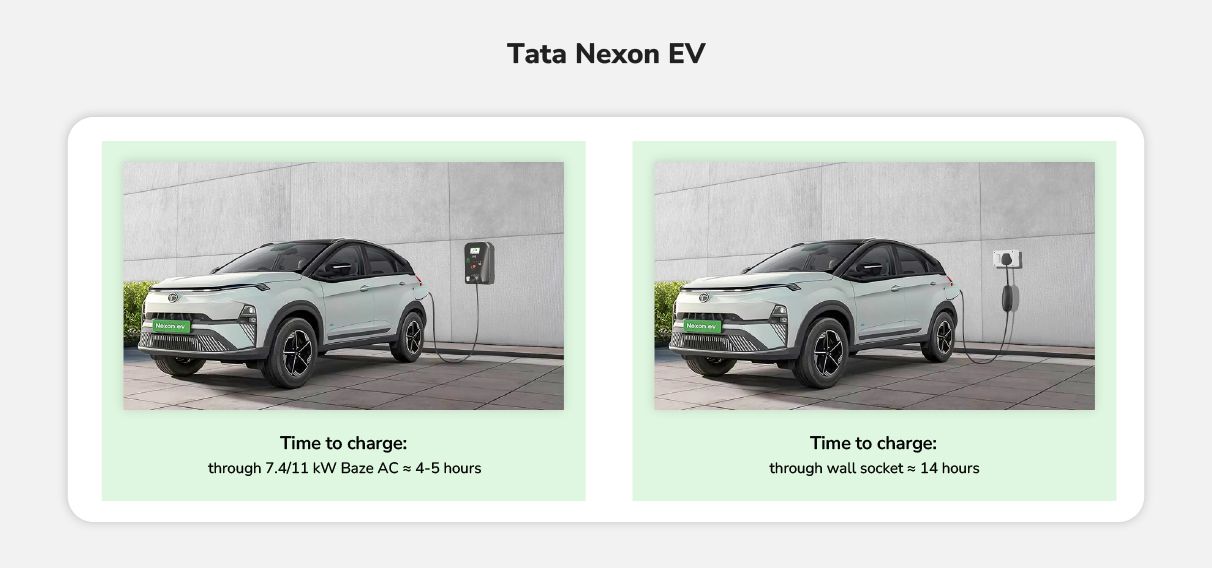
    Final Thoughts

    Household sockets were never designed for EVs, and treating them as a long-term solution is not just inefficient; it’s unsafe. As India moves toward large-scale electrification, the conversation must shift from access to infrastructure. A plug is not a plan. True EV readiness means building charging ecosystems that are smart, safe, and scalable, starting at home. The future of mobility demands nothing less.

    Ready to Charge Smarter and Safer?

    Bolt.Earth’s EV chargers come with multiple layers of electrical protection—surge protection, short-circuit prevention, thermal cutoffs, and more. Everything your 16A wall socket was never designed for.

    Explore our range of reliable, NABL- and ARAI-certified chargers on our product page.
    Or talk to our sales team to find the right charging solution for your EV.

    Email: [email protected]

    Phone: +91 80456 88455

  • Solar EV Charging in India: Why RWAs Must Lead the Transition

    Solar EV Charging in India: Why RWAs Must Lead the Transition

    For EV adoption in India to be truly sustainable, Resident Welfare Associations (RWAs) must embrace renewable energy. With an estimated annual generation potential of 5,000 trillion kWh per year and many regions getting 4-7 kWh/sq.m per day, India has a vast solar resource that can significantly contribute to making EVs more environmentally friendly, and RWAs can play a pivotal role in powering EVs cleanly and affordably. 

    By harnessing solar power from the sun through photovoltaic panels, solar charging systems allow EV owners to utilize renewable energy for charging their vehicles, thus reducing their dependence on the electrical grid and lowering their carbon footprint. More importantly, switching to renewable energy will eventually decrease the cost of charging, leading to increased EV adoption and improved return on investment for RWAs.

    In light of such opportunities for RWAs to transition to clean energy, this article examines three key questions:

    • What is the impact of solar charging systems on electric vehicles in terms of residential sustainability?
    • Why should RWAs consider implementing solar charging systems for electric vehicles in residential areas?
    • How can RWAs overcome the challenges associated with installing these systems to promote residential sustainability and facilitate a shift towards clean energy sources?

    Solar Charging Adoption Among RWAs in India

    India is the fourth largest producer of solar energy in the world, with a total installed solar capacity of 82 GW as of November 2025, up from 61.97 GW in 2022. Recent advancements in technology have made solar power a more practical and cost-effective choice, bringing its tariff on par with the traditional grid.

    Though EV solar chargers are not widely adopted yet, they have caught the attention of some pioneering RWAs, and many housing societies have already taken advantage of available subsidies to go green. Currently, the Delhi government is encouraging local housing societies to install solar panels for residents. Some RWAs in Maharashtra have gone a step further, implementing solar panels specifically for EV charging.

    To promote this trend and reap its many benefits, RWAs must tap into their abundant and competitively priced energy source for EV charging. By doing so, RWAs can reduce their cost of power generation, alleviate strain on the power grid, and optimize energy usage and efficiency. Overall, RWAs can contribute to a sustainable future while simultaneously enhancing their own financial prospects and improving the quality of life for their residents.

    Environmental Impact of Solar Charging Systems

    Given that 80 to 90% of EV owners charge at home, making solar integration crucial.

    Typically, electricity generated from coal-based thermal power plants is responsible for a significant portion of harmful air pollutants, including particulate matter, sulfur dioxide, mercury, and nitrogen dioxide. The release of nitrogen dioxide from burning fossil fuels is estimated to cause around 350,000 new cases of childhood asthma each year in India. These air pollutants are also linked to adverse health effects like stroke, lung cancer, and asthma in adults.

    A list of various pollutants from coal-based power plants, broken down by percentage

    Additionally, fly ash produced as a byproduct of thermal power plants can contaminate local water sources. This ash contains toxic and heavy metals, leading to many diseases among the population and negatively impacting groundwater recharge. By reducing dependence on thermal power plants, RWAs can mitigate the impacts of fly ash – especially for housing communities located near or within the same city as these plants.
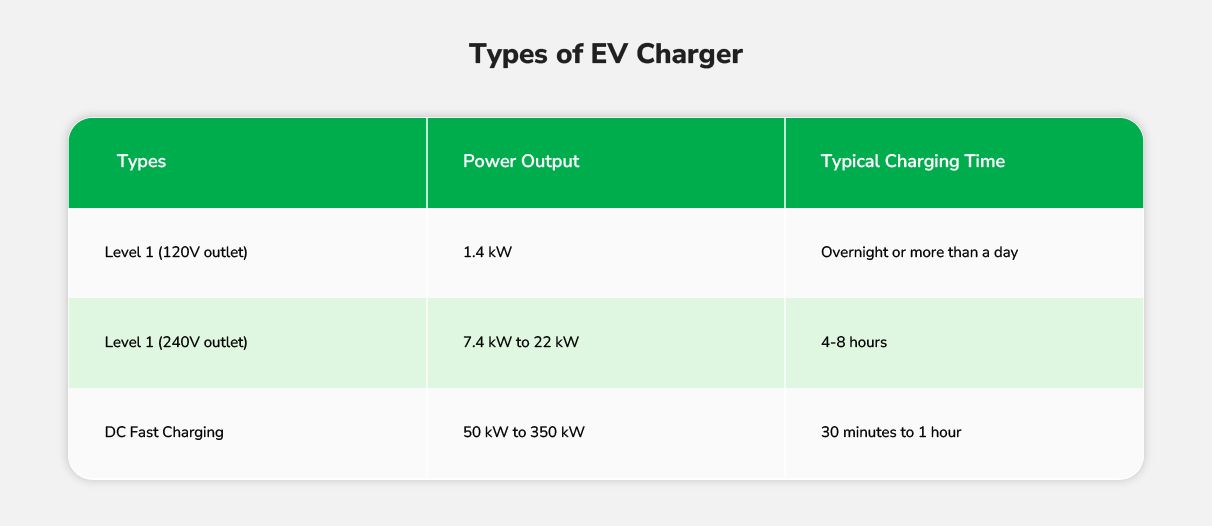
    A wider EV adoption, if powered by fossil fuels, can worsen the environmental impact. Instead, RWAs can switch to solar charging systems to greatly negate these effects. In particular, solar EV charging is considered net zero, meaning it doesn’t add to the greenhouse gases that cause climate change. Moreover, using solar EV chargers can reduce air and water pollution in their communities, while also ensuring no negative impact on the groundwater. All these aspects can improve the quality of life of their residents and promote a healthier environment.
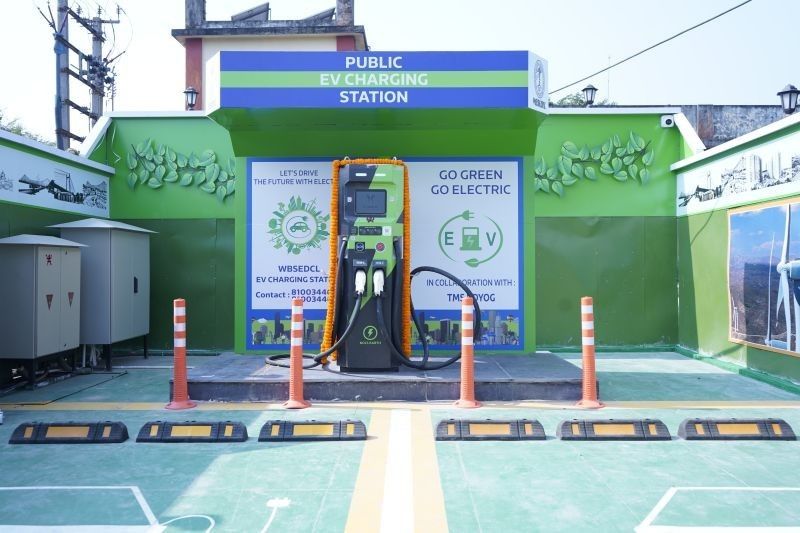
    Economic Impact of Solar Charging Systems

    Solar-powered charging stations offer a cost-effective solution for both RWAs and EV owners in India. With electric tariffs ranging from ₹4 to ₹7/kWh, powering an EV entirely with solar energy can drastically reduce costs. Even charging a modest fee of ₹1 to ₹2/ kWh can provide a steady revenue stream for RWAs. Also, RWAs have the opportunity to sell any unused solar power to the local DISCOM.

    Though installing solar panels can be a large initial investment, it ultimately yields revenue for many years to come. Additionally, the Indian government offers a 40% subsidy for residential solar rooftop installations. RWAs can leverage this subsidy to bring down their installation costs significantly.

    Together, these factors make EV solar charging infrastructure a potential avenue for RWAs to earn extra income over an extended period. By investing in solar infrastructure today, RWAs can benefit from available subsidies and achieve a high ROI.

    To gain these economic and environmental benefits, RWAS need to familiarize themselves with the technical aspects of these solar charging systems.

    Technical Aspects of Solar Charging Systems

    Installing EV solar charging systems within housing communities involves several technical considerations. To begin, RWAs should understand the components involved in a solar charging system, including:

    • Solar panels: These are the primary component that converts sunlight into electricity
    • Battery storage systems: They store excess solar power generated during the day for use at night
    • Charging stations: These connect the EV charger to the solar charging system and include an inverter for converting Direct Current (DC) generated from solar panels to Alternating Current (AC) for EV chargers
    • Smart charging infrastructure: This software component enables load balancing, energy optimization, and real-time monitoring of the charging process
    An infographic describing and showing the relationships between the various components of EV solar charging systems

    All four components are essential for the installation of an EV solar charging system. The capacity of solar panels and batteries needed depends on the usage of the housing community. RWAs must also decide whether to connect their solar power to the electricity grid. Integrating with the grid can provide RWAs the flexibility to draw power when solar power generation is low and feed excess power back into the grid for additional income. However, this integration involves coordination with local DISCOMs and may require associated permits and bureaucratic processes, leading to potential delays.

    RWAs should also plan for regular monitoring and maintenance of the chargers. This includes panel cleaning, dedicated staff for monitoring usage, and establishing warranty agreements with OEMs. Seasonal variations and adverse weather can pose a challenge as well – RWAs should have a backup plan for EV charging during the monsoon months when solar power availability may be rare.

    Knowing these aspects can better prepare RWAs to handle the challenges that come with installing solar charging infrastructure.

    3 Challenges of EV Solar Charging Systems that Indian RWAs Face

    Though solar charging systems offer many benefits for RWAs, their deployment poses three significant challenges – limited awareness and understanding of solar charging systems, high upfront costs and financing options, and a lack of charging infrastructure. By understanding the challenges associated with solar charging systems, RWAs can make informed decisions, mitigate risks, maximize benefits, and engage stakeholders most effectively.

    1. Limited Awareness and Understanding of Solar Charging Systems

    RWAs may not be able to garner the required support from residents, as volunteer office bearers often lack the necessary time and knowledge of the intricacies involved. This limited awareness can deter RWAs from installing solar systems for EV charging. Bridging this knowledge gap requires education about solar generation technology and a greater awareness of its benefits.

    2. High Upfront Costs and Financing Options

    The cost of installing solar panels depends on the area, required capacity, and budget. The solar rooftop calculator can provide an accurate cost of the installation. For example, to install 5kW capacity panels in Maharashtra, it can cost around ₹2,00,000. Even with a 40% subsidy, the costs can be prohibitive for small RWAs. Despite the low-cost financing options the government offers, it remains difficult for RWAs to install solar panels without support from their residents.

    3. Lack of Charging Infrastructure

    Many residential areas in India lack adequate and clear space for solar charging systems. Additionally, storing large amounts of solar power can be challenging due to nascent battery technology. Seasonal variations, especially during the monsoon months, can make solar power unreliable. RWAs must regularly clean and monitor solar panels to maintain their efficiency.

    Addressing these challenges is critical for creating a clean and green cycle for EV usage and adoption.

    3 Solutions that Prompt RWAs Towards Solar Charging Systems Adoption

    Undoubtedly, solar panels are a cost-effective and green option for powering EV chargers. Finding innovative solutions is needed to realize the benefits of solar charging systems for Indian RWAs.

    1. Education and Awareness Campaigns

    • Create community campaigns to help residents understand the impact of EV charging with solar energy
    • Tap into campaigns by governments and EV manufacturers that promote the use of solar charging
    • Invite solar panel experts as guest speakers for events to discuss the benefits of solar for EV charging
    • Foster collaboration and knowledge-sharing with neighboring RWAs
    • Organize workshops and events to educate residents
    • Utilize social media platforms to spread awareness
    A list of ways that RWAs can educate residents about EV solar charging

    By advocating for EV solar charging infrastructure and showcasing its benefits, RWAs can make it feasible and accessible to their communities. These campaigns also generate support and interest from community members, which can attract investment.

    2. Financing Options

    • Estimate their requirements and the accurate installation costs
    • Understand and leverage the subsidies offered by the central and state governments
    • Utilize financing options provided by the central government
    • Negotiate with vendors for monthly installments
    • Crowdfund the costs from residents
    • Collaborate with neighboring RWAs to share costs
    A list of ways for RWAs to raise money and defray costs in order to be able to afford solar panels

    Financing options, when coupled with education and awareness campaigns, empower RWAs and community members to grasp the advantages of solar charging systems. By promoting these initiatives, there’s an increase in demand for charging infrastructure and, in turn, fostering collaboration among stakeholders. Consequently, this synergy paves the way for improved charging infrastructure development.

    3. Charging Infrastructure Development

    • Work with local governments to install solar panels in nearby open areas, with RWAs paying for the installation in exchange for free electricity equivalent to the generated solar power
    • Collaborate with neighbors to install shared solar panels
    • Engage residents in brainstorming ideas to use terraces and balconies for installing solar panels
    • Consult with experts to understand how best to use the available space for solar installations
    • Stay updated on technological advancements that reduce the space required for solar panels
    • Consider repurposing unused space for solar panel installations
    A list of strategies for finding space and funds for installing solar panels

    Promoting the adoption of EV charging with solar requires a multi-faceted approach to address the associated challenges. By implementing the above solutions, RWAs can take advantage of the benefits while laying the path for a sustainable future.

    The Promising Role of EV Solar Charging Systems for RWAs

    The future of solar EV systems in RWAs and residential communities in India is very promising. With the government’s push for electric mobility and renewable energy, solar EV systems are set to become more accessible and affordable. Adopting solar charging offers numerous environmental and economic benefits for RWAs and India. While challenges like a lack of awareness, high upfront costs, and inadequate charging infrastructure exist, RWAs can overcome them by collaborating with different entities. Spreading awareness through widespread campaigns, carefully planning and implementing suitable charging infrastructure, and leveraging low-cost financing options are important steps in the right direction.

    As an RWA, you have the opportunity to be a pioneer. Take the initiative and embrace EV solar charging to create a brighter, cleaner, and greener future for your residents today.

    This series has addressed different challenges that RWAs and housing communities face when it comes to installing EV charging infrastructure. Together, the four parts guide how RWAs can take the lead to boost EV adoption in India, enhancing property value, and offering added convenience for residents. By debunking myths and offering practical advice, this series equips RWAs with the knowledge and tools they need to make a lasting impact on their environment.

    Frequently Asked Questions

    What is a solar charging system for electric vehicles?

    A solar charging system harnesses energy from the sun using solar panels and converts it into electricity to charge EVs. These solar panels generate DC power, which is then converted to AC power by the inverter and used to charge the EVs. This system usually consists of solar panels, a battery, a charging station that includes an inverter, and software for monitoring usage.

    Does the government offer any incentives or subsidies for using solar charging systems for electric vehicles?

    Yes, the government offers a subsidy of up to 40% of the total cost of solar installation. Additionally, RWAs can benefit from many tax incentives, like accelerated depreciation and exemption from customs duty and excise duty. These incentives aim to make solar charging systems more affordable and encourage their adoption to reduce carbon emissions and promote sustainable transportation.

    Can solar charging systems completely replace traditional charging methods for electric vehicles?

    No, solar charging systems cannot completely replace traditional charging methods for EVs. While solar charging systems offer a sustainable and renewable source of energy, they may not always provide enough power to fully charge an electric vehicle, especially during periods of low sunlight or high demand. Traditional charging methods, such as grid electricity or fast charging stations, may still be necessary for convenient and reliable charging.

    Are solar charging systems cost-effective in the long run?

    Yes, solar charging systems for EVs can be cost-effective in the long run. While the upfront installation costs of a solar charging system may be high, it can significantly reduce or eliminate the need for electricity from the grid, resulting in lower electricity bills in the long term. Additionally, solar charging systems require minimal maintenance and have a long lifespan, reducing overall costs.

  • How RWAs Can Navigate Government Guidelines for Efficient In-Home EV Charging Installation

    How RWAs Can Navigate Government Guidelines for Efficient In-Home EV Charging Installation

    In-home EV charging is quickly becoming a go-to for EV drivers across India due to its unmatched convenience. As a result, the country is incentivizing RWAs to install charging stations on their premises, further boosting EV adoption among residents.

    However, despite some state governments’ initiatives to streamline the installation process through a single window process, RWAs are still grappling with several challenges. RWAs have much to consider before taking on this project — specific building codes, varying compatibility between chargers and EVs, state and municipal regulations, etc.

    To help RWAs navigate through this maze, this article takes an in-depth look at the following questions:

    • How to decide on the right chargers for the community?
    • What arrangements has the Indian government made to ensure safe and reliable in-home EV charging installation?
    • How to meet government regulations to ensure the quick setup of EV charging points?

    What Defines the Right Charger?

    As discussed in part 2 of this residential EV charging series, RWAs have to choose the best charger that fulfills both government guidelines and residents’ needs. The Indian market has three broad types of chargers, as shown in the table below:

    RWAs can’t simply choose one type or another if they truly want to meet their community’s needs. Instead, they need to opt for a combination of two or three types when possible to ensure all current and future EV owners have access to in-home EV charging.

    To determine the right combination of chargers for their communities, RWAs should consider the current number and type of EVs and estimate future needs.

    RWAs also have to consider local laws and regulations before selecting a charger. The Bureau of Energy Efficiency, for example, provides detailed guidelines on the numbers and types of chargers RWAs need, with instructions on technical and safety specifications.

    Following these guidelines and selecting the correct charging infrastructure not only ensures a safe and reliable in-home EV charging experience for residents, but can save RWAs time, money, and frustration in the future by guaranteeing their community’s needs are met.

    Challenges to Installing In-Home EV Charging Stations

    When reviewing the guidelines for residential charging station installation, RWAs face several challenges, most notably:

    • Poor awareness of the state’s EV policy
    • Lack of appropriate legislation to handle the frictions that come between RWAs and residents for EV installation
    • No clarity on the required permits

    As a result, installing in-home EV charging stations becomes a time-consuming task that takes a lot of effort. To make matters worse, the guidelines around in-home EV charging installation are ambiguous. The existing legislation may also not favor the RWAs, as EV adoption is still in the nascent stage in India.

    Judicious planning and extensive research into government policies can alleviate some of these woes for RWAs. The following section will examine some of the most relevant guidelines and requirements for RWAs to look into when choosing in-home EV charging solutions. By understanding these challenges, RWAs can step closer to supplying their community with safe, affordable, and reliable charging infrastructure.

    Understanding Government Requirements for In-Home EV Charging In India

    India has delicensed the installation of EV charging stations, meaning anyone can set them up. RWAs, however, still have to comply with national, state, and city municipal corporations’ regulations.

    The below sections have consolidated four of the main provisions RWAs should keep in mind. This should help assess the next steps when it comes to meeting these requirements and beginning the in-home EV charging installation.

    1. Government Guidelines to Install In-Home EV Charging

    At the national level, the Indian Ministry of Housing and Urban Affairs (MOHUA) and the National Power Ministry laid down the guidelines for residential EV chargers. Some combined mandates are:

      • RWAs must apply for commercial metering. Often, this means an application for a new EV connection
      • 20% of parking space must be allocated for EVs
      • Open metering and on-spot payment must be available to all users
      • The RWA must install
        • One slow charger for every three 4-wheelers
        • One fast charger for every ten 4-wheelers
        • One slow charger for every two 3-wheelers
        • One slow charger for every two 2-wheelers
        • One fast charger for every 10 EV buses

    Besides the above regulations, every state government and even city municipal corporations have EV policies defining rules ensuring uniformity and safety when installing EV infrastructure.

    2. Permits for In-Home EV Charging Installation

      RWAs don’t need licenses to set up EV charging infrastructure, but they still need some permits to ensure all the work done is up to code. Most notably, RWAs need to:

    • Apply to the local power distribution company for additional load
    • Install appropriate electrical and civil works for safe EV charging installations
    • Meet the Power Ministry’s mandatory minimum charger requirements
    • Choose equipment tested and accredited by the National Accreditation Board for Testing and Calibration (NABL)
    • Share the data collected from EV charging stations with the appropriate State Nodal Agency (SNA).

    In states that have implemented a single window policy, RWAs simply have to follow the application process. All other steps and permits will be handled by the state’s DISCOM and chosen vendors.

    Even if the state has not implemented a single window process yet, the application process has been simplified across India. RWAs can apply for a new power connection online or through a form at the local office.

    3. Safety and Technical Standards for In-Home EV Charging

    In India, the Central Electricity Authority (CEA) defines technical specifications for EV charging stations. The Bureau of Indian Standards (BIS) then certifies EV chargers meet the established safety and technical standards. The BIS standards are:

    • AC (slow) connectors must adhere to IS-17017-Part-2 standard
    • DC (fast) connectors with a power output of 50kW to 200kW must adhere to IS-17017-Part-23 standard
    • DC (fast) connectors with a power output of less than 7kW must follow the IS-17017-Part-25 standard

    When buying EV chargers, RWAs must check if the equipment complies with the BIS standards for safety reasons. Approved vendors on the single window portals already meet these requirements, so RWAs can take advantage of this.

    4. Government Incentives and Subsidies for In-Home EV Charging

      To curb installation costs, RWAs can explore the following incentives and subsidies offered by governments:

    • Karnataka offers a capital subsidy of 25% on equipment for the first 100 fast-charging stations
    • Madhya Pradesh provides a capital subsidy of 25% of the EV charging equipment for the first 300 charging stations. This is capped at Rs 2 lakh for small stations and Rs 4 lakh for medium stations
    • Kerala offers a 25% subsidy on capital equipment with a maximum cap of Rs 30,000
    • Telangana offers a 25% subsidy capped at Rs 5 lakh for housing societies with more than 200 families
    • Odisha provides Rs 5,000 for the first 20,000 private charging points in residential and non-residential buildings
    • Andhra Pradesh offers a capital subsidy of 25%, capped at Rs 30,000 for DC chargers below 100V. Applicable only for the first 300 stations
    • Gujarat provides a 25% capital subsidy with a cap of Rs 10 lakhs per station

    The state’s single window process can automatically deduce these subsidies. However, if a single window portal isn’t available, RWAs can approach their local power distribution companies and vendors to get information on applying for these subsidies.

    Each of the four requirements above can be daunting for RWAs, especially in the absence of a single window process. That’s why the following section examines the exact steps RWAs can take to navigate bureaucratic complexities, thereby streamlining the installation process and alleviating the burden on RWAs.

    4 Steps to Navigate Government Requirements

    Despite the many guidelines to keep in mind, installing in-home EV charging stations is one of the simpler processes in India. That’s because national and state governments are taking concrete steps to simplify the tasks for RWAs.

    However, following the steps below can greatly alleviate the pressure off RWAs, ensuring they can quickly set up in-home charging points to benefit residents and generate revenue. It also helps RWAs gain several benefits, as shown in the image below.

    1. Know the EV Policies Beforehand

    National and state governments are pushing for EV adoption because of its many environmental and economic benefits. That’s why Indian states are putting together favorable policies. So before beginning the process, RWAs should seek to understand the policies and how they can benefit from them:

    • Visit the state government’s official online portal to check the EV policy
    • Get familiar with the regulations laid down by MOHUA and the Power Ministry of India regarding the charger specifications
    • Talk to the city/municipal corporation to understand the requirements, if any, for installation

    Besides reading through these policies, RWAs can talk to other communities that have implemented EV chargers. They can also read case studies to understand how other communities have tackled bureaucratic challenges. This will help them place their community on the right track to comply with these policies.

    2. Get the Necessary Permits

    The process to get permits can vary depending on the presence of a single window process in the state. So, an important second step for RWAs is to know whether to pursue the permits themselves. To do that, they can:

    • Check if their respective state’s EV policy has a single window system
    • Follow the guidelines described in the EV policy to start the application process
    • Visit the local DISCOM office to know the permits required
    • Fill out the necessary application forms, especially if a dedicated electricity connection is required
    • Talk to the EV charging vendors, as they have information on the respective state’s requirements

    The Power Ministry has mandated new connections to be provided within a short time frame of the application, seven days in metro cities, fifteen in municipal corporations, and thirty in rural areas. Accordingly, RWAs can plan the next steps, like completing civil works, raising money if needed, and buying EV chargers.

    It’s also important to note that assessing the scope of work needed for the installation process is key to having a comprehensive view of the permits needed. The table below can help RWAs identify what type of work their community needs. Based on this assessment, RWAs can get the permits to begin the projects.

    3. Comply with Safety Standards

    India doesn’t lay down specific guidelines for in-home EV charging in communities. However, to guarantee residents’ safety, different government agencies have laid down universal guidelines for the safe use of chargers.

    RWAs can:

    • Check with the vendor to see if the selected EV chargers meet the BIS standards
    • Get familiar with the Central Electricity Authority’s guidelines for the general safety of EV stations. Though they are mostly applicable to public charging stations, RWAs can follow them for additional safety
    • Set up a fire detection and alarm system for additional safety. RWAs can also have a fire retardant installed close to the EV charging points

    Taking these additional safety steps will help RWAs gain more support from their residents. Doing so will also help RWAs avoid dangerous incidents in their communities.

    4. Look and Apply for Subsidies

    Both national and state governments provide subsidies for setting up EV charging stations. Some states even offer discounts on power tariffs, and RWAs can leverage them to bring down installation and maintenance costs.

    RWAs can:

    • Apply directly through the single window portal, if applicable. The system will provide the final cost after deducting the eligible subsidies
    • Fill out a form at the local DISCOM office to get the power tariff subsidy credited directly to the RWA’s bank account
    • Agree with the EV charger vendors, where the vendor discounts the setup costs equal to the eligible subsidy

    Knowing which subsidies the RWA is eligible for will help minimize back and forths during the installation process. It will also ensure residents and office bearers are not overspending on in-home EV charging infrastructure, meaning the community’s in-home charging points are more profitable for the RWAs.

    Following the above steps can help RWAs navigate all the different government requirements quickly. In doing so, they can make in-home EV charging more accessible for residents and pave the way for wider EV adoption in their communities.

    Making In-Home EV Charging Accessible and Easy for Years to Come

    In-home EV charging can fill the gaps in India’s EV charging infrastructure – it’s a convenient and cost-effective solution compared to public charging stations.

    However, RWAs continue to face many challenges, despite a dedicated EV policy and single window systems in some states. But by understanding the different components and guidelines that dictate the installation process for in-home EV charging stations, RWAs can know how to navigate them to avoid hiccups in the road.

    However, to expand the benefits of in-home charging and encourage wider adoption, RWAs can petition the government for a single window system if the state doesn’t have one already. RWAs can also request simplified and practical regulations that address their concerns surrounding EV installations.

    By taking proactive steps and working with relevant stakeholders, RWAs can revolutionize in-home charging, making it more accessible for all communities while contributing to a cleaner environment.

    The fourth and final part of this series will discuss one of the innovative technologies that will help RWAs gain more benefits from installing in-home EV charging stations — solar charging systems.

    To learn more about in-home EV charging, please see the FAQ and Resources sections below.

    FAQ

    What are the benefits of in-home EV charging?

    Charging at home helps RWAs to earn a steady revenue from the charging while catering to their residents’ needs. The presence of in-home EV charging sockets can increase property value and make a community more attractive to EV owners. Additionally, in-home EV charging can increase EV adoption as well.

    What types of EV chargers are available for home installation?

    Three types of chargers are available for home installation in India: slow level 1, slow level 2, and fast chargers. The main difference is the time they take to charge. Level 1 chargers take about 8 to 10 hours, level 2 chargers take about 4 to 6 hours, and fast chargers can charge in about 1 to 3 hours.

    How do I determine the right EV charger for my home and car?

    The right home EV charger depends on the types of EV (2-, 3-, or 4-wheelers) used by residents. RWAs can start with a survey of the existing vehicles and their expected growth in their community before deciding on the type and number of chargers required in their respective communities.

    How long does it take to install an in-home EV charger?

    The installation time varies from state to state. In Delhi, for example, the government has mandated that EV chargers must be installed within seven days of receiving an application from an RWA. In other states, it could take longer, depending on whether they have a single window system or other guidelines.

    What factors should I consider when choosing an installer for in-home EV charging?

    Consider the existing number and types of EVs as the starting point to choose an in-home EV charger. Also keep in mind the cost of chargers, the additional civil and electrical work needed, and space availability.

    What are the government incentives or rebates available for in-home EV charging installation?

    Most states provide subsidies on power tariffs. Often, commercial connections are charged at the rate of residential connections for a limited number of years. Besides this, states like Delhi offer an incentive of up to Rs 6,000 for every charger.

    Can I install an in-home EV charger myself or should I hire a professional?

    It’s best to hire professionals for EV charger installation as they have the experience and expertise to get the installation right. They can look into technical feasibility and safety and may recommend additional civil and electrical work.