Category: Global EV Market Trends

  • How India’s EV Infrastructure Rise Will Reshape Mobility, Mindsets, and Market Dynamics by 2040

    How India’s EV Infrastructure Rise Will Reshape Mobility, Mindsets, and Market Dynamics by 2040

    India is on the cusp of an EV revolution. Over the next two decades, the EV charging infrastructure in India is projected to explode in scale dramatically, an 80-fold increase in DC fast chargers, from about 14,000 today to 1.1 million by 2040. This rapid buildout, driven by strong government policy support and a booming EV market, isn’t just about installing hardware; it promises to reshape how Indians move, think about transport, and do business.

    In this blog, we’ll explore:

    • How will the rise of EV infrastructure reshape everyday mobility by 2040?
    • In what ways will it shift consumer mindsets from range anxiety to range confidence?
    • How will it spark dynamic changes across industries and markets?

    India’s EV Infrastructure: An 80-Fold Expansion
    image_1 (1).jpg

    To appreciate the scale of change, consider where we are now and where we’re headed. As of 2025, India had roughly 14,000 DC fast charging stations, mostly in cities. These high-powered stations can refill a car’s battery in minutes rather than hours. Thanks to government programs and private initiatives, the number of charging points has already been rising rapidly. For instance, about 40,000 new public chargers were installed in 2024 alone. Under the national FAME-II scheme, oil marketing companies like IOC, BPCL, and HPCL received funding to install 7,432 chargers at fuel stations, contributing to a total of 8,885 new public chargers by mid-2025. These efforts mark just the beginning.

    Looking ahead, forecasts by Wood Mackenzie project India’s charging network to reach 1.1 million DC fast chargers by 2040. That’s a breathtaking leap, and it aligns with India’s ambitious EV targets. The government aims for 30% of all vehicles sold by 2030 to be electric and has backed this vision with robust policies. Programs like the PM-Electric Drive (E-DRIVE) scheme (₹10,900 crore) subsidize millions of e-two-wheelers, three-wheelers, trucks, and buses, including ₹2,000 crore earmarked specifically for new charging stations across highways and cities. Another policy introduced in 2024 offers ₹20 billion (~$240 million) in incentives for public fast chargers, signaling the government’s resolve to fill charging gaps. By building chargers in urban centers and along busy transport corridors, India is laying the groundwork for an EV charging infrastructure that reaches every corner.

    From a global perspective, India’s rollout is part of a broader wave. Worldwide, EV charging ports (including home chargers) are expected to grow at 12.3% annually through 2040 to about 206 million. The Asia-Pacific region leads this expansion, with China dominating public charging and India emerging as a key growth market.
    EVCL Global Annual Spend ($B).jpg

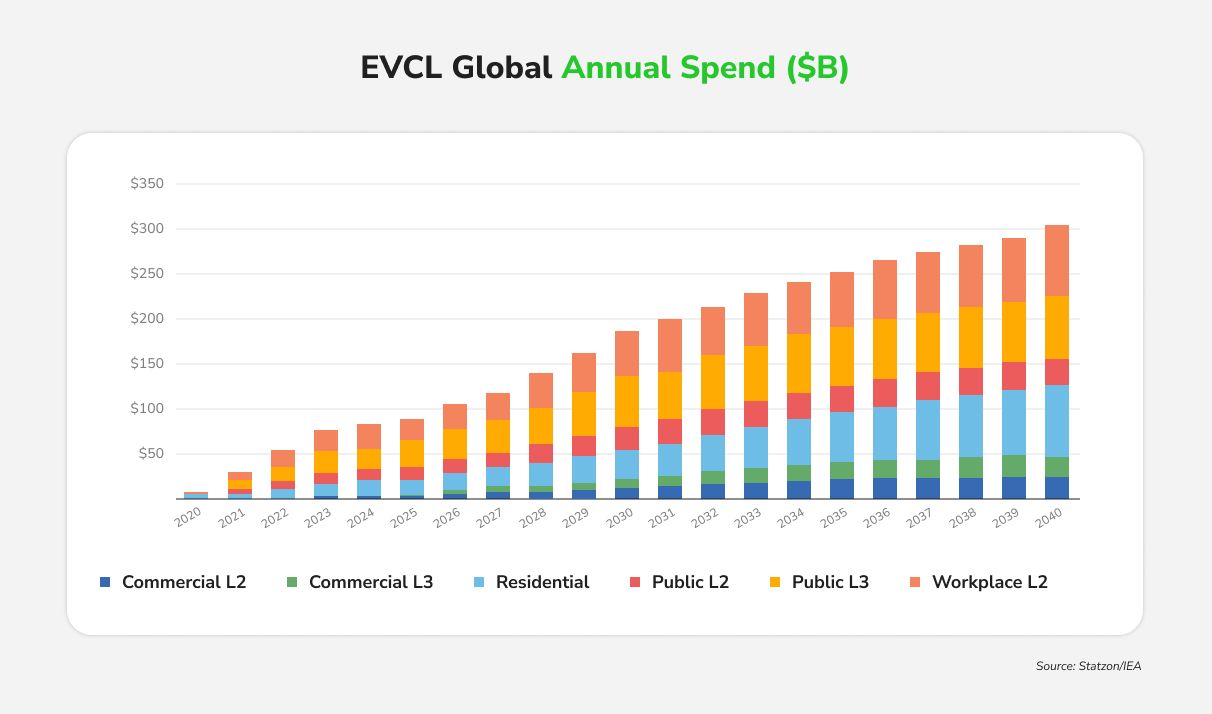
    Annual global investment in charging infrastructure is set to hit $300 billion by 2040, and India will account for a significant share of that spending. Identified as one of the fastest-growing markets for EV chargers, the EV charging market growth in India is being driven by policy push and rapid adoption. By 2040, what is today a sparse network will become a dense web, spanning from metropolis highways to smaller towns. This vast infrastructure growth will directly enable new forms of mobility and convenience.

    Driving Mobility into an Electric Future
    India’s Overall EV Penetration is.jpg

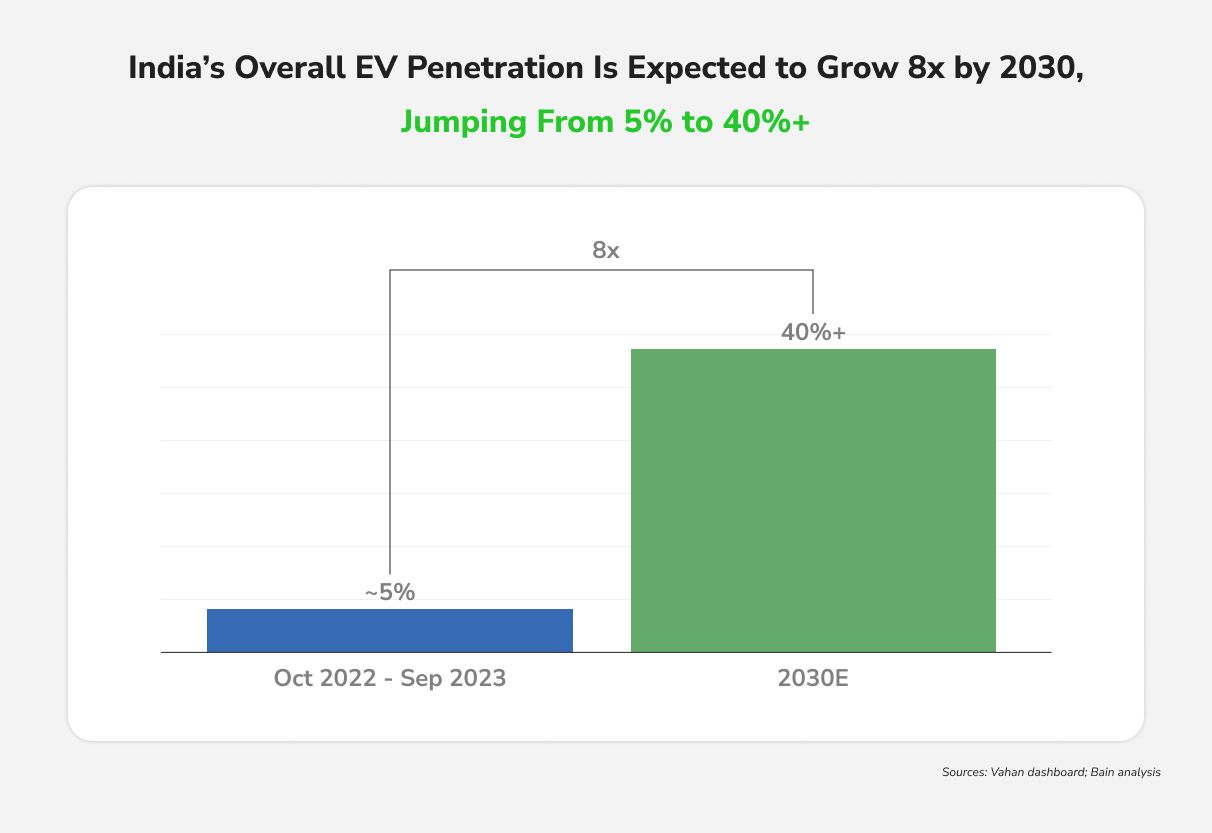
    The most immediate impact of a robust charging network will be on mobility – how people and goods move. Today, EV adoption in India is accelerating across all vehicle segments, but it’s still early days. EVs (including two-wheelers and cars) made up only about 5% of vehicle sales in 2023, albeit with strong growth in categories like electric scooters and rickshaws. By 2030, industry analyses suggest EVs could exceed 40% of new vehicle sales, and by 2040, nearly all new vehicles sold might be electric. A million-plus chargers will ensure these EV owners can drive anywhere without worrying about finding a plug.

    Every day commuting stands to become cleaner and cheaper. For longer journeys, highways will be lined with fast-charging stations every few dozen kilometers, much like petrol pumps today.

    The European Union is already mandating fast chargers every 60 km on major highways, and India’s plans are moving in a similar direction with corridor charging under schemes like PM E-DRIVE. With 120 kW “mega chargers” being rolled out at 500 locations by EV charging companies, in the next two years, even a quick 15-minute stop could add hundreds of kilometers of range.

    Range anxiety, the fear of running out of charge, will no longer dictate travel plans. Instead, EV drivers will have the freedom to take impromptu road trips, confident that a charger is always within reach.

    Crucially, better charging infrastructure also means public transportation can go electric at scale. India has already approved a ₹580 billion ($7 billion) plan to deploy 10,000 electric buses in 169 cities, aiming ultimately for 50,000 e-buses nationwide. These buses need reliable charging depots and en-route top-up points. By 2040, many city bus depots will have turned into high-capacity charging hubs, enabling entire fleets to run on batteries. The result? Quieter, zero-emission buses for millions of daily riders, improving air quality and commuter comfort. Likewise, electric three-wheelers and two-wheelers, which already form the majority of India’s EVs today, will benefit from abundant neighborhood charging.

    Even freight and trucking could see a transformation. While heavy trucks are harder to electrify, India has initiated its first incentives for electric trucks and commercial vehicles. As charging infrastructure extends to highways and logistic hubs, medium-duty electric trucks become viable for regional transport. By the late 2030s, we may see dedicated “electric lanes” on highways or priority charging for cargo vehicles at distribution centers.

    Government data shows trucks and buses contribute disproportionately to emissions (3% of vehicles but approx. 34% of CO₂), so electrifying these via targeted charging infrastructure will have outsized benefits. Imagine a future where major trucking routes have “charging plazas” every 100 km for fleet trucks, reducing diesel consumption and operating costs. Enhanced infrastructure will also encourage innovations in mobility services: ride-sharing fleets and corporate fleets could all be electric, knowing they can recharge quickly between shifts.

    Overall, the expansion of charging stations acts as a force multiplier for EV adoption, eliminating the practical constraints and ushering in an era where the future of electric mobility becomes the default for personal, public, and commercial transport.

    From Range Anxiety to EV Optimism: Changing Mindsets
    image_1-1.jpg

    The rise of charging infrastructure isn’t just an engineering feat; it’s changing how people feel about electric vehicles. In the early years, many Indians were understandably hesitant to switch to EVs. Concerns about limited range, scarce charging points, and long charging times loomed large.

    In 2023, India had roughly 200 electric vehicles for every one public charging point, a far higher ratio than countries like the US (approx. 20 EVs per charger) or China (<10 EVs per charger). That imbalance fed a perception that EVs might leave one stranded, a mindset summed up as “range anxiety.”

    In fact, surveys have shown charging access to be a key barrier. Policymakers acknowledged that “limited charging infrastructure remains a significant barrier to EV adoption” and have given charging stations infrastructure status and GST incentives to spur growth.

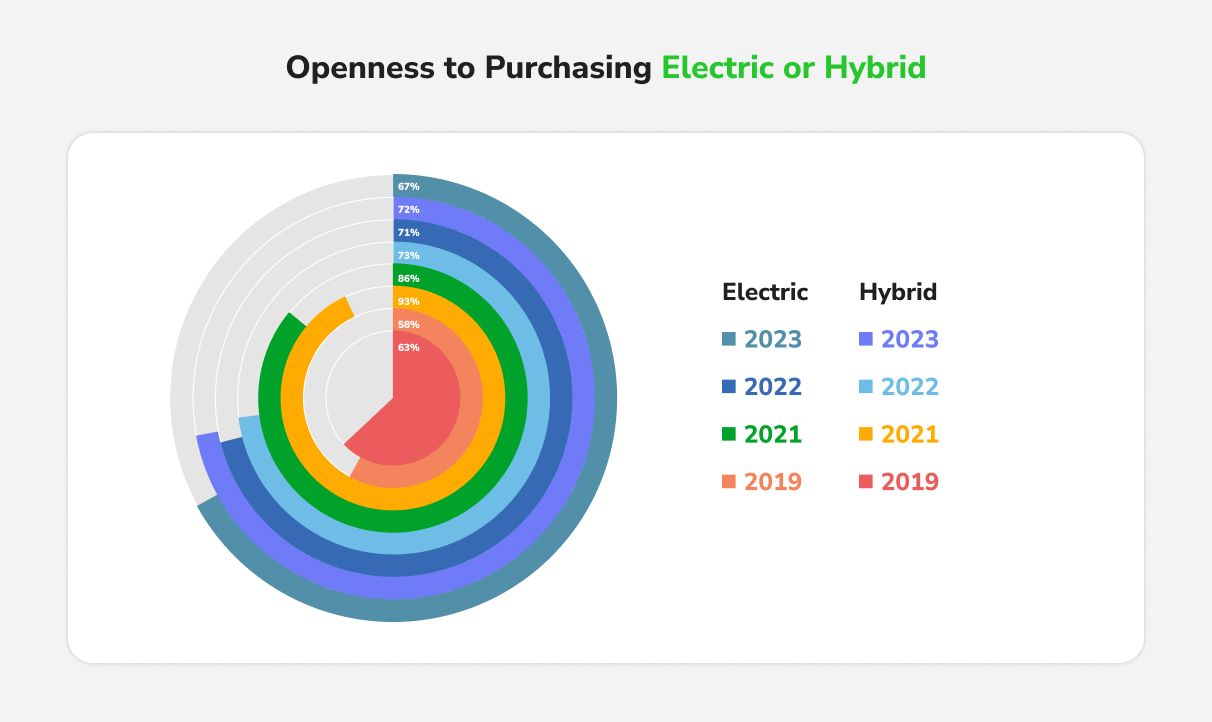
    But as infrastructure expands, these fears are subsiding. Confidence in EV technology is growing hand-in-hand with charger installations. By the end of 2025, India is expected to have around 500,000 EVs on the road (excluding the millions of e-scooters). This jump, from just 50,000 EVs sold in 2016 to over 2 million EVs sold in 2024, shows that consumers are warming up to electric mobility, especially as they see charging points popping up in their cities.

    Government incentives have made many EV models as affordable as their petrol counterparts, nudging buyers towards the new tech. Consumer mindset is shifting from skepticism to curiosity and even enthusiasm. As one Gartner analyst noted, “Indian customers are increasingly willing to make procurement decisions that will result in improving air quality levels.” In other words, people are motivated by the promise of cleaner air and are trusting EVs to deliver.

    A robust charging network reinforces this trust. When a new EV owner knows they can find a charger at their apartment, office, supermarket, or on a highway, the psychological barrier crumbles. Range anxiety gives way to range confidence. Globally, as EV ranges improved and networks grew, consumers started worrying less about range. In one survey, concerns about range and charging dropped on the list of EV purchase barriers, overtaken by cost concerns. We can expect a similar trend in India. By 2040, charging an EV might be as routine and banal as charging one’s phone or grabbing groceries. Many households will install home chargers (remember, residential chargers are forecast to make up two-thirds of all charging ports worldwide by 2040). For those who can’t charge at home, the wide availability of EV charging solutions ensures they’re never far from power.

    Public perception of EVs is also set to evolve from niche to normal. Early adopters often had to plan routes carefully and field constant questions about “what if you run out of battery?” By 2040, such questions will sound quaint. The average Indian driver will likely have multiple EVs, and charging will be second nature. EVs will no longer be seen as experimental or elite, but a default choice for families, commuters, and businesses alike. And with every new charger installed, that confidence will deepen. This shift in mindset, from hesitation to habitual use, will be one of the most profound cultural changes in Indian mobility. Moreover, major automakers like Tata and Maruti have roadmaps for launching multiple new EV models by 2030, signaling to consumers that EVs are the future of mobility.
    India’s Smart Parking Systems Market (1).jpg

    Environmental consciousness is also shaping how the public perceives EVs in India. As cities battle with air pollution and rising oil import bills, the discourse around EVs has turned positive. People are recognizing that electric mobility, when paired with a greener grid, promises cleaner air and reduced dependency on fossil fuels. The government’s push for EV adoption is partly to improve urban air quality and fight climate change, and citizens are on board with that vision. In the coming years, owning an EV could be seen not just as economically smart but as a point of pride for contributing to a cleaner India and the future of electric mobility.

    Market Dynamics: New Industries and Economic Impacts

    The ripple effects of India’s EV infrastructure boom will extend far beyond the vehicles on the road; they’ll reshape market dynamics and the economy at large. One of the most visible shifts is within the automotive industry itself. As charging infrastructure makes adoption easier, EV charging market growth in India is expected to grow into a $100+ billion opportunity by 2030 and even larger by 2040.

    Traditional automakers are racing to electrify their lineups, while EV-only startups are entering the scene. Legacy companies like Tata Motors are already leading early EV sales, strengthened by their partnership with Tata Power for charging infrastructure. Meanwhile, newcomers like Ola Electric are rapidly scaling up. By 2040, the auto market may look entirely different, EVs could dominate vehicle sales well before then, and companies that invested early in charging networks and EV charging solutions will likely hold a competitive edge.

    For example, Tata Motors announced plans to more than double its charging points to 400,000 by 2025 (including home and public chargers), recognizing that a convenient charging ecosystem drives vehicle sales. Other carmakers are following suit, forming alliances with charging providers or building their own networks. This trend is blurring the line between car manufacturer and energy provider, a dynamic new facet of the evolving market.

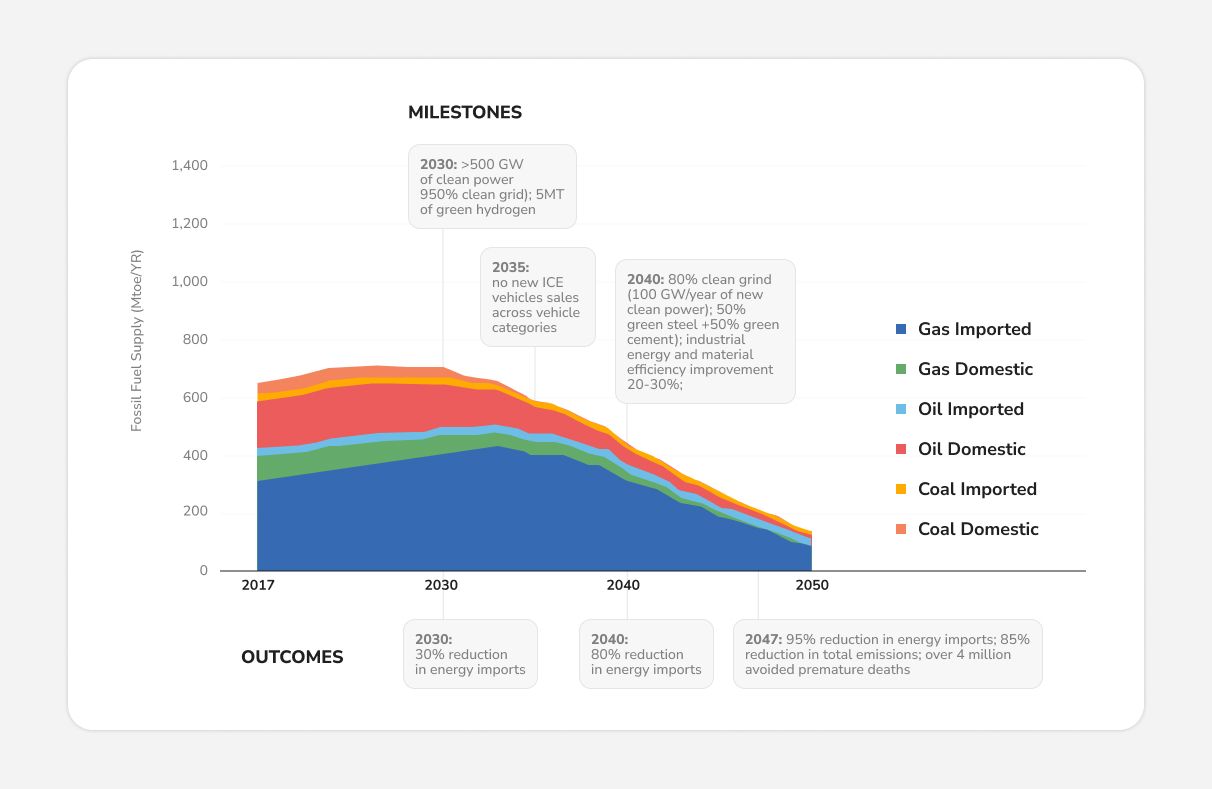
    Energy and utility companies are adapting too. Oil companies like Indian Oil, BPCL, and HPCL have started installing EV chargers at fuel stations, signaling a pivot in their business models. As EV adoption rises, demand for petrol and diesel is expected to decline, reducing India’s petroleum consumption. This is significant in a country that imports 90% of its crude oil. Studies suggest a high EV penetration scenario could cut India’s oil imports by 90% by the mid-2040s, saving around $240 billion on oil import costs. In practical terms, that’s money that could stay within the country and be reinvested in renewable energy to power the EV fleet.
    India’s Smart Parking Systems Market-1.jpg

    The synergy between EVs and renewable energy is a game-changer. India’s grid is projected to be 80% clean by 2040, thanks to massive investment in solar and wind capacity. When EVs charge on a green grid, transport emissions drop drastically. According to IEA scenarios, by 2050, India’s EV fleet could avoid between 110 to 380 million tonnes of CO₂ annually.

    This environmental dividend also has market consequences: carbon credits, cleaner cities that reduce healthcare costs, and a boost to sustainable industries across the board.

    Meanwhile, the charging infrastructure itself is giving rise to a new sector and job market. Think of the thousands of new charging stations, each one requires hardware (chargers, transformers), software, skilled installation, and maintenance. Companies providing these EV charging solutions are growing rapidly, creating job opportunities in manufacturing, energy services, and tech.

    Global players are offering charging hardware, while local startups are gaining ground with “Make in India” chargers. Service providers like charging network operators manage the stations, process payments, and offer apps to help users find chargers. This entire ecosystem barely existed a decade ago; by 2040, it’s expected to become a thriving industry employing skilled technicians, software developers, network planners, and more.

    Annual spending on EV charging infrastructure in India will be massive, especially considering the global figure of $300 billion by 2040. Investors are already taking notice. For example, Macquarie launched a $1.5 billion platform focused on financing fleet electrification and EV charging solutions in India.

    Another emerging market dynamic is electric utility load management and innovation. Utilities will view EVs as both a challenge and an opportunity. On one hand, millions of EVs plugging in could significantly increase electricity demand. On the other hand, EVs function as mobile batteries, a potential asset for the grid. By 2040, smart charging technologies may allow EVs to routinely feed power back into the grid (vehicle-to-grid or V2G) during peak hours, improving grid stability. Policies are already evolving to support this shift; California, for example, will require new EVs to support V2G by 2027. In India, EV numbers grow, utilities could introduce special tariffs for off-peak charging or incentives for V2G participation, effectively turning vehicles into part of the power infrastructure. This opens up new revenue streams for EV owners and for service providers who aggregate these capabilities.

    Battery manufacturing and supply chains in India are also transforming, altering market dynamics in the automotive supply landscape. With rising demand for EVs and chargers, battery needs will surge. The government’s Production-Linked Incentive (PLI) schemes for advanced batteries with an outlay of (₹18,100 crore) have already attracted major investments, aiming for 50 GWh of domestic capacity. By 2040, India could emerge as a global hub for battery production, reducing import dependency and creating an export market. This directly supports infrastructure growth, as locally produced batteries lower EV costs and ease deployment bottlenecks.

    The circular economy around batteries, including recycling, is set to expand. By 2030, automakers globally plan to recycle 95% of EV batteries, and India will likely adopt similar practices by 2040.

    Finally, consider the macroeconomic and consumer benefits rippling through the broader market. According to a study by an energy think tank, an aggressive EV transition could generate $2.5 trillion in net consumer savings for India by 2047, driven by lower fuel and maintenance costs. EV owners spend less on fuel (electricity is significantly cheaper per km than petrol) and on upkeep (fewer moving parts mean fewer service visits). Multiply those savings across tens of millions of vehicles, and the result is more disposable income circulating through the economy.

    As India reduces its oil imports, the currency and trade balance benefit, potentially easing inflation and reinforcing market stability and growth. In essence, the EV infrastructure boom is not just a technological upgrade; it’s a powerful economic catalyst. It will spur industries like automotive, energy, and tech, cut costs for consumers, and help position India as a leader in sustainable mobility.

    Conclusion

    By 2040, India’s landscape of mobility and commerce will likely be transformed by the vast EV charging network now taking shape. For the average Indian driver, charging anywhere, anytime will be second nature, a dynamic shift from the sparse charger map of the 2020s. This confidence will have propelled electric cars, bikes, buses, and trucks into the mainstream, fundamentally changing how people move.

    The psychological shift, from worrying about range to viewing gasoline vehicles as outdated, will be reflected in consumer choices and urban planning. Meanwhile, industries will have evolved and emerged: oil companies reimagined as energy providers, utilities managing millions of mobile batteries, automakers and startups competing in an electrified market, and India Inc. benefiting from reduced oil dependence and cleaner air.

    At the heart of all this transformation is infrastructure; the charging points quietly doing the work of “refueling” our vehicles. The data paints an exciting picture: a future where over a million fast chargers stitch the country together, supporting tens of millions of EVs, cutting emissions, and saving billions of dollars. Importantly, this isn’t speculative hype; it’s backed by concrete trends and targets being hit year by year.

    India’s EV infrastructure boom is well underway, and its ripple effects will be far-reaching. Mobility will become more sustainable and convenient, mindsets more open and optimistic about technology’s role in solving big challenges, and market dynamics more innovative and self-reliant. In sum, the charging cables being laid today are powering not just vehicles but also India’s journey into a new era of mobility and growth, an era that truly takes off by 2040.

  • EV Charging Trends 2025: What OEMs, Airports, and Governments Are Prioritizing

    EV Charging Trends 2025: What OEMs, Airports, and Governments Are Prioritizing

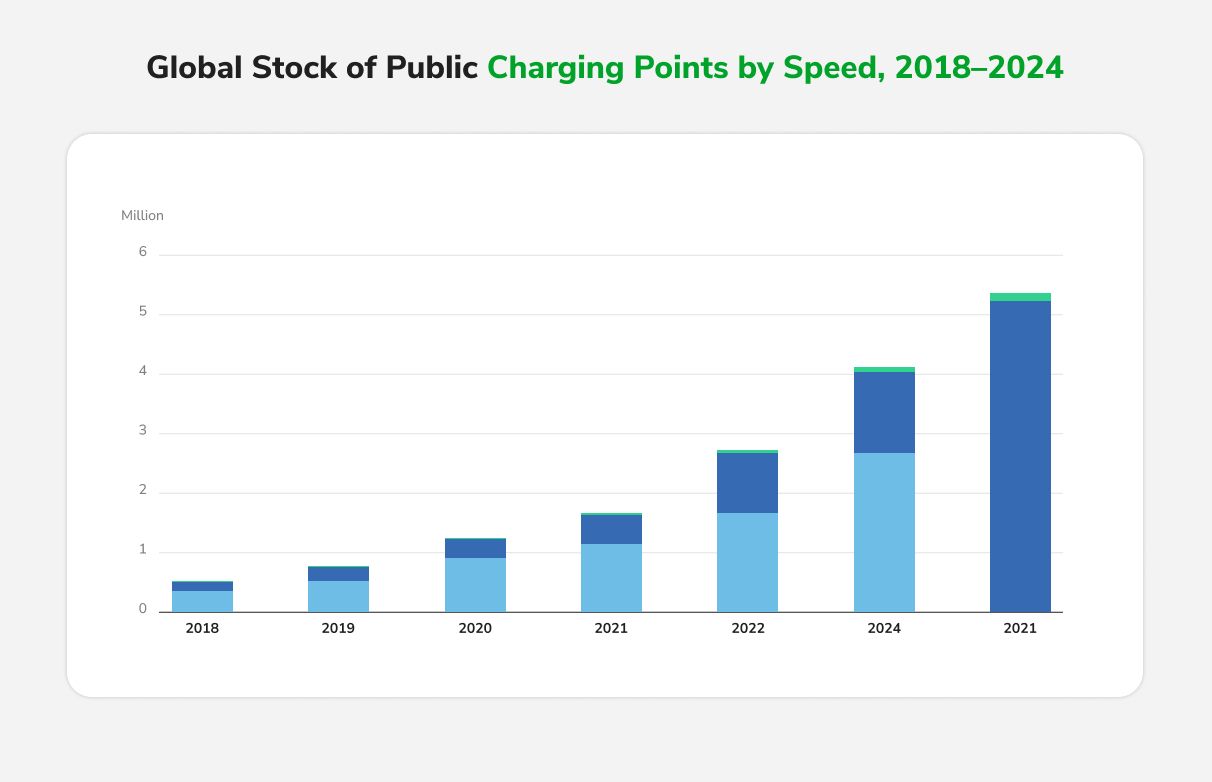
    Electric vehicles are hitting the road in record numbers, but is the charging infrastructure in India and globally keeping up? By the end of 2024, over 5 million public EV charging stations were in operation worldwide, double the number just two years prior.
    Global stock of public charging points by speed, 2018-2024.jpg

    This rapid expansion reflects surging EV adoption and strong policy pushes, especially in China and Europe. Yet challenges remain. EV charging network in India and other regions is growing, but unevenly. China now hosts about 65% of all public chargers globally, while India, the US, and the UK face higher EV-to-charger ratios as adoption outpaces charger deployment.

    So what exactly are different stakeholders prioritizing in 2025 to accelerate EV charging? Let’s answer three core questions upfront:

    • What are automakers (OEMs) prioritizing when it comes to EV charging?
    • How are airports ramping up EV charging, and why does it matter?
    • What are governments doing to accelerate EV charging infrastructure in India and worldwide?

    What are automakers (OEMs) prioritizing when it comes to EV charging?

    Automakers OEMs.jpg
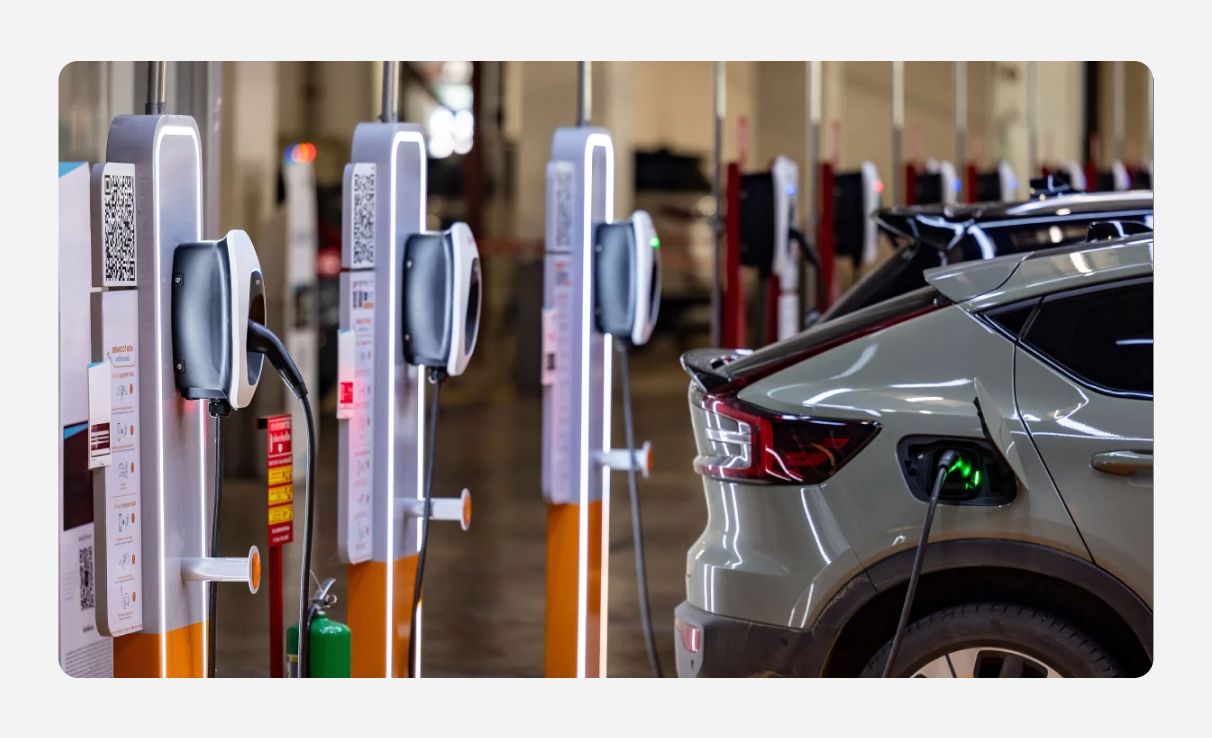
    Selling EVs is only half the battle; ensuring drivers can easily charge them is the other. In 2024–2025, OEMs are investing aggressively in EV charging stations, technology standards, and partnerships to make charging faster and more accessible.

    Expanding Fast-Charging Networks

    OEMs are building their own EV charging station business models to reassure customers. Tesla led the way with its global Supercharger network, and now others are following suit. In North America, seven major automakers (BMW, GM, Honda, Hyundai, Kia, Mercedes-Benz, and Stellantis) launched a joint venture in 2023 to install 30,000+ high-powered chargers across the US and Canada. The first stations opened in 2024, offering both CCS and Tesla’s NACS connectors. Similar OEM-backed networks are expanding in Europe, signaling that automakers now view EV charging infrastructure as a competitive necessity.

    Converging on Standard Plugs and Seamless Charging

    Converging on Standard Plug.jpg
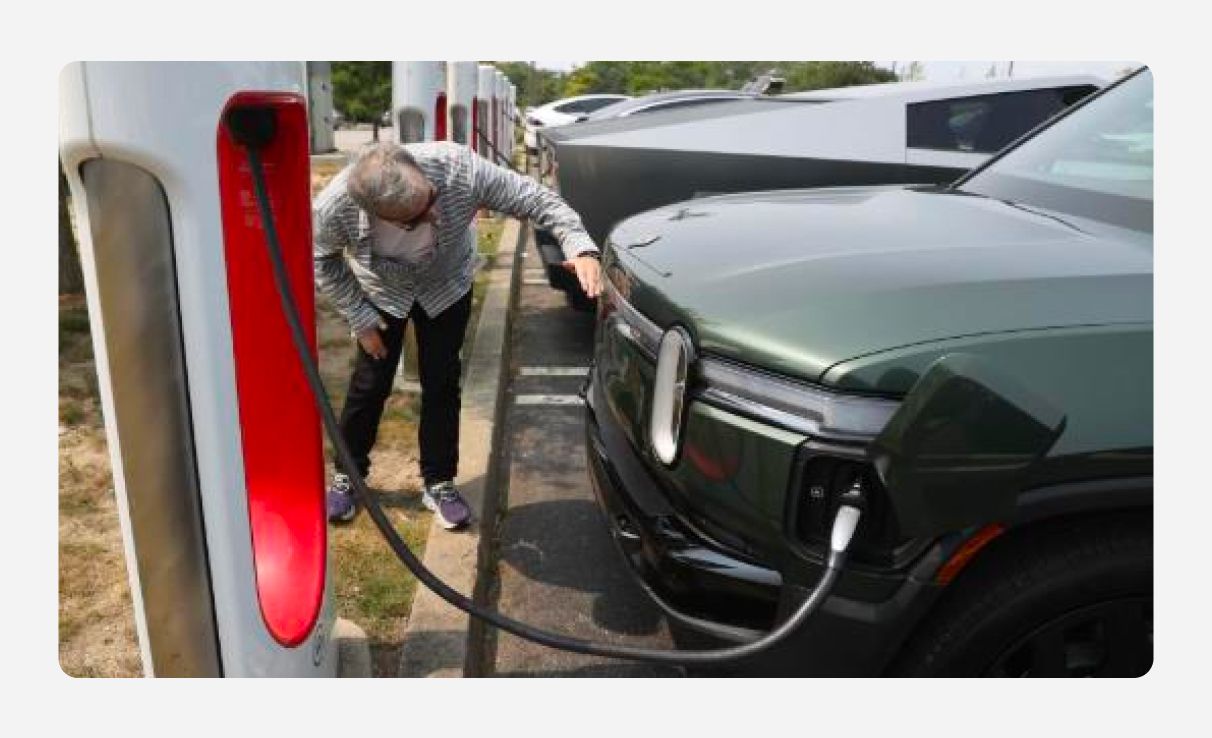
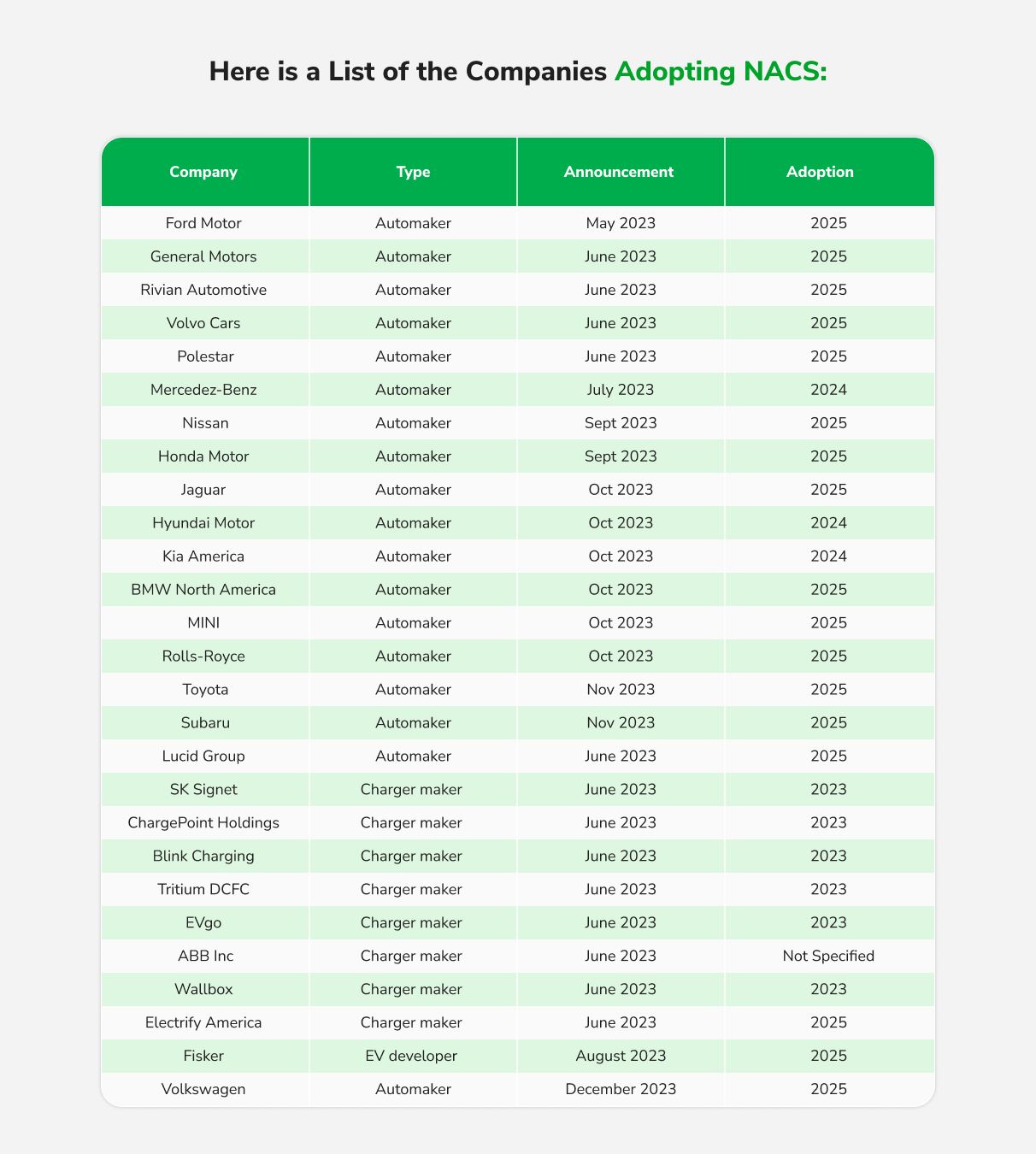
    Convenience and interoperability are top focuses. By late 2023, nearly every major automaker had agreed to adopt Tesla’s North American Charging Standard (NACS) connector. Starting in 2025, new models from Ford, GM, Mercedes, Honda, and others will include NACS ports, granting native access to Tesla’s Supercharger network. Plug & Charge capabilities (per ISO 15118) are also rolling out, enabling automatic authentication and billing; no cards or apps required.

    Partnering to Accelerate Infrastructure

    Partnering to Accelerate Infrastructure.jpg
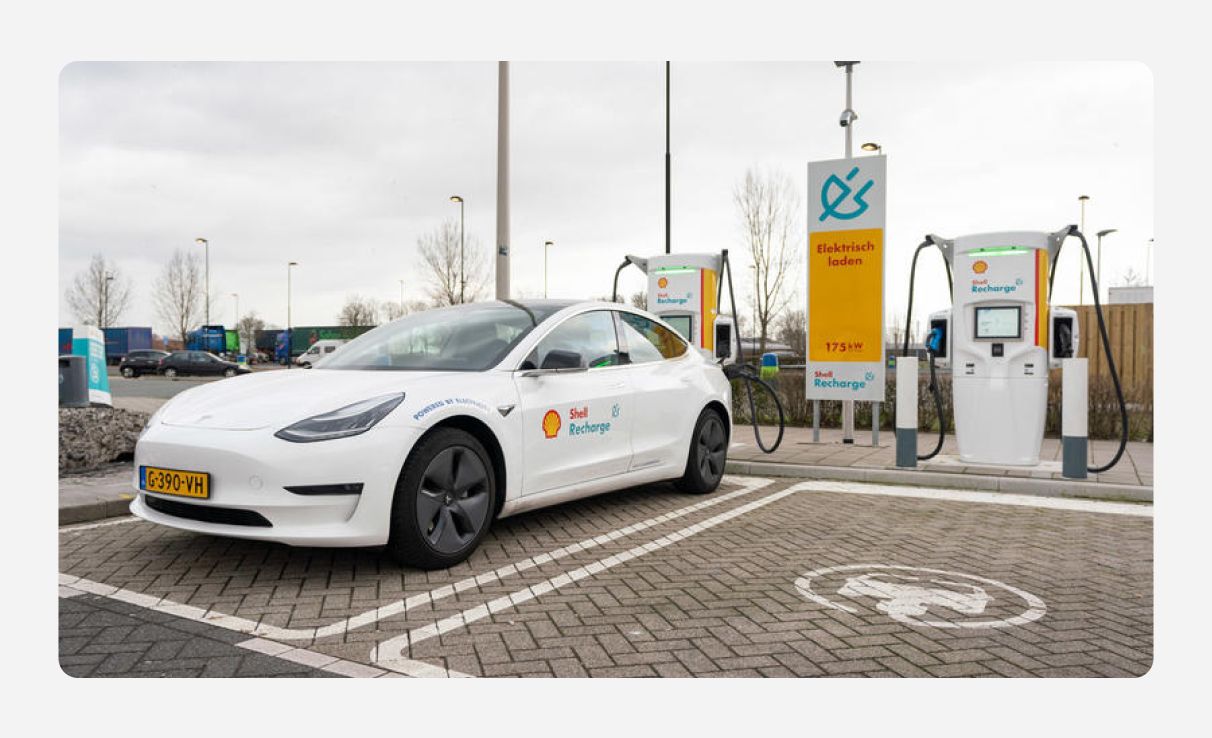
    Most OEMs are teaming up with charging operators and energy firms to speed up deployment. For example, Mercedes-Benz is working with ChargePoint and energy firm MN8 to deploy thousands of ultra-fast chargers in the US (part of Mercedes’ plan for 10,000 chargers globally by 2030). Shell and BP are also investing heavily, with Shell targeting 2.5 million chargers by 2030. These collaborations blend customer reach with infrastructure expertise, often leveraging public grants to accelerate deployment.

    How are airports ramping up EV charging, and why does it matter?

    How are airports ramping up EV.jpg
    Airports are emerging as key players in EV charging infrastructure expansion. With millions of travelers, rental cars, taxis, and employees passing through, major airports are prioritizing EV charging solutions for businesses as part of both their customer service and their sustainability goals. In fact, the airport EV charging market is projected to reach $4.1 billion by 2031.

    Scaling up chargers for travelers

    The United States has over 5,000 public airports, and most large airports now offer EV charging stations in at least one parking facility. Globally, airport-based chargers doubled from 2022 to 2024 (from around 1,500 to 3,000 units, according to industry estimates). Yet demand often exceeds supply, prompting airports to expand installations in long-term parking lots, garages, waiting areas, and rental car centers.

    Supporting electric taxis and ride-shares

    Supporting electric taxis.jpg
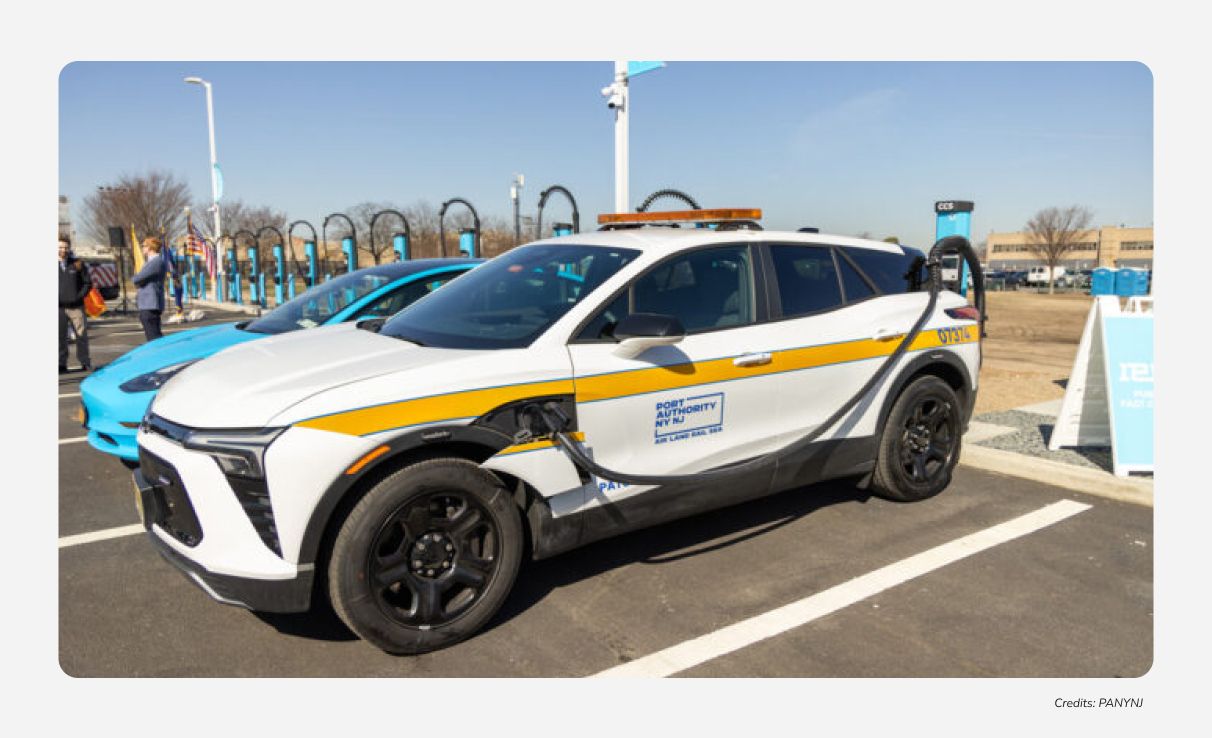
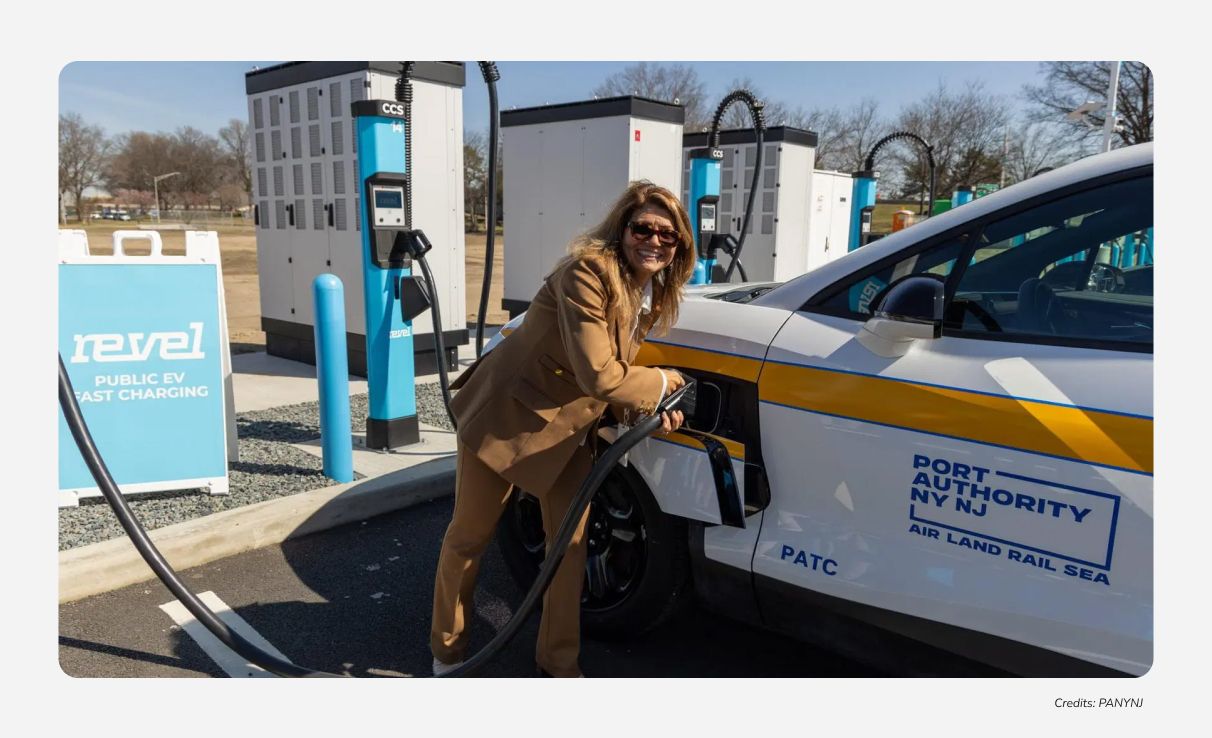
    Airports are building charging hubs for taxis and ride-hail vehicles. In late 2024, New York’s JFK Airport opened a new fast-charging site with 24 DC fast chargers in its for-hire vehicle lot, doubling JFK’s EV charging network capacity.

    LaGuardia Airport is constructing a 48-port facility for Uber/Lyft drivers and taxis. These high-powered stations allow commercial drivers to recharge quickly between trips, an essential step as cities move toward electrifying taxi fleets. The pattern is global: from Los Angeles to Oslo, airports are designating areas for ride-share and taxi EV charging stations so that zero-emission vehicles can reliably serve travelers. It’s a win-win: the airport reduces local emissions and congestion from idling gas vehicles, while drivers save on fuel and comply with evolving clean-air regulations.

    Electrifying airport fleets and operations

    Airports aren’t just catering to passenger cars; they’ve pledged to convert their ground service equipment and vehicle fleets to electric by 2030. For instance, across New York’s JFK, LaGuardia, and Newark airports, there are already 1,400+ electric ground service vehicles in use, supported by over 775 dedicated charging points for this equipment.

    Spain’s AENA (which operates Madrid and Barcelona airports) plans to install 250 airside EV chargers by 2026 and about 890 by 2030 to power its growing electric fleet.

    These efforts reduce emissions and turn airports into test beds for high-power charging management.

    The business case

    The business case.jpg
    EV charging is becoming a revenue stream. While many airports initially offered free charging, paid models are gaining traction. The market projection of $4.1 billion by 2031 for airport EV charging station business indicates that private firms and investors see profitability in these installations.

    Partnerships with private operators, like what JFK did with Revel, help airports defray costs and manage charging services while supporting their broader environmental objectives (many airports have sustainability certifications or carbon accreditation to maintain).

    Blog Banner

    What are governments doing to accelerate EV charging infrastructure?

    Governments are playing a pivotal role in scaling up EV charging, recognizing that market forces alone won’t build infrastructure fast enough or in all the right places.

    Massive public investments

    The United States, for example, launched a $5 billion National EV Infrastructure (NEVI) program for highway fast chargers. The European Union is directing billions of euros from its Alternative Fuels programs into charging stations across member states.

    China, which hosts about 65% of the world’s publicly accessible chargers, has leveraged generous subsidies and utility partnerships.

    India allocated ₹20 billion (approx. $240 million) in 2024, adding 40,000 new public EV charging stations that year to strengthen the EV charging network in India.

    Coverage mandates and targets

    Beyond funding, policymakers are also setting concrete targets to ensure chargers are distributed widely. The EU’s new Alternative Fuels Infrastructure Regulation (AFIR) mandates one 150 kW fast charger every 60 km on core European highways by 2025. The UK targets 300,000 public chargers by 2030. California aims for 250,000 chargers by 2025. These mandates ensure geographic coverage and readiness for the gasoline phase.

    Standards for reliability and interoperability

    Governments are enforcing open access and uptime standards. US federal funding requires both CCS and NACS plugs. Texas mandates NACS on state-funded chargers.
    What are governments doing .jpg

    Likewise, the EU requires transparent pricing, common payment methods, and real-time data on availability. Building codes are evolving to ensure new constructions are EV-ready.

    Public-Private Partnerships and Utility Regulation

    Governments are also encouraging collaboration with utilities and private firms. Utilities often need regulatory approval to invest in charging infrastructure. In many US states, public utility commissions (PUCs) have approved utility programs to build out charging infrastructure or offer rebates for home charger installations, recognizing it as beneficial for the public interest.

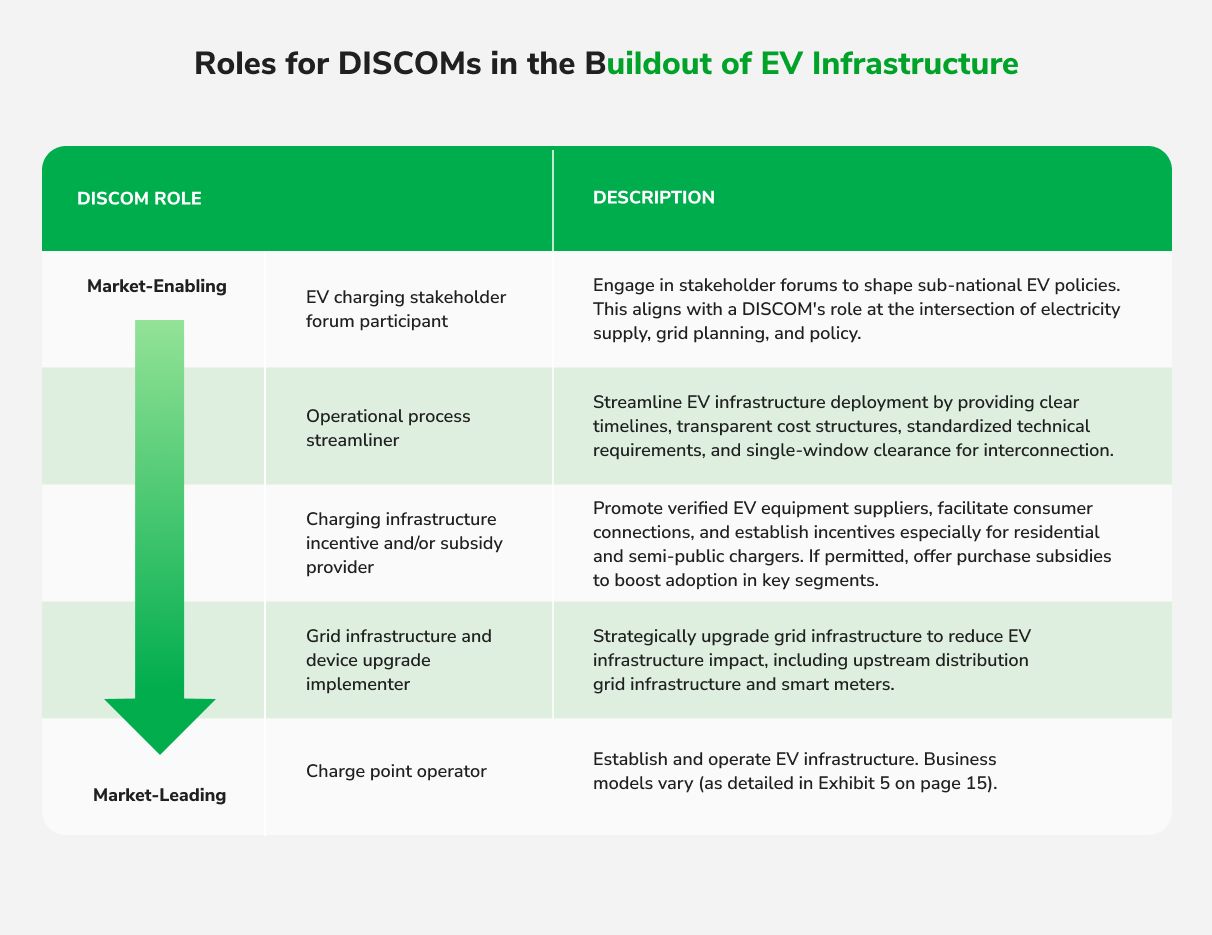
    California and New York have approved hundreds of millions of dollars of utility-led programs. In India, as mentioned, utilities (DISCOMs) are being guided to support charging infra and streamline grid connections. The Indian government’s 2025 policy framework suggests DISCOMs could serve as nodal agencies for EV charging infrastructure in India, coordinating between charger installers and the often-complex local grid upgrade process.

    Public-Private Partnerships.jpg

    Some Indian states (like Maharashtra and Delhi) introduced time-of-day electricity tariffs to encourage off-peak charging, aligning consumer behavior with grid capacity.

    Meanwhile, India’s central government has layered multiple initiatives: the new PM E-DRIVE earmarks funds largely for urban charging, and there are generous incentives for charging equipment manufacturing (tying into India’s broader “Make in India” push, so that chargers themselves are produced domestically).

    By the end of 2024, India had about 75,000 public chargers in place, and the Stated Policies Scenario (STEPS scenario) projects roughly 375,000 by 2030, a fivefold jump. Hitting that will require sustained year-on-year installation growth of approx. 50,000 units. It’s an ambitious trajectory, but India has signaled it will adjust policies as needed.

    Localized Initiatives

    City and regional governments are doing their part, too. Many cities have added requirements that new parking lots include EV charging spots or at least a conduit. Some have streamlined permitting; historically, installing a single public charger could require dozens of permits and months of paperwork, but places like Amsterdam and Los Angeles have introduced “one-stop shop” permitting that cuts through red tape. We also see novel ideas like curbside charging in dense cities. These smaller-scale initiatives, often supported by local government funds or utilities, make a big difference in driver convenience, especially for those without driveways.

    Conclusion: Key Takeaways and Outlook

    Across automakers, airports, and governments, 2025 is marked by collaborative momentum. Stakeholders are tearing down the chicken-and-egg problem of vehicles vs. chargers; they are growing together.

    Fast, convenient charging is becoming the norm. High-power chargers, standardized plugs, seamless payment, and reliable uptime are reshaping the EV experience. As infrastructure scales, EVs edge closer to mainstream adoption.

    Looking ahead, expect exponential growth in public chargers, deeper integration with energy systems, and innovation in fleet and highway charging. EV charging is no longer a niche experiment; it’s a cornerstone of transportation planning, charging full speed ahead into the future.

    Blog Banner

  • Exploring South Korea’s EV Success

    Exploring South Korea’s EV Success

    In Asia’s booming electric vehicle (EV) market, South Korea is demonstrating a much greater commitment to a cleaner environment than many other nearby countries.

    South Korea initially invested in hydrogen-powered EVs, much like Japan. However, it made a swift transition to pure EVs, thanks to determined policy support, advanced technology and innovation, a robust supply chain, and an export-oriented industry strategy. Since then, South Korea has emerged as a booming economy in the EV industry.

    This article will explore the factors behind South Korea’s leadership in the Asian electric vehicle market. In particular, it will address the following questions:

    • Who are the major players in the South Korean EV industry, and how do they shape the market?
    • How are the South Korean government and private sector promoting EV usage?
    • What are the current challenges associated with EV adoption in South Korea, and how can they be overcome?

    South Korea’s EV Market

    In South Korea, eco-friendly vehicles are usually called green cars or new energy vehicles (NEV). There are several types available, including battery electric vehicles (BEVs), hybrid electric vehicles (HEVs), plug-in hybrid electric vehicles (PHEVs), and fuel cell electric vehicles (FCEVs). FCEVs use a hydrogen-based fuel cell to power the motor, and are therefore sometimes categorized as HEVs.

    South Korea boasts a rich automotive history, particularly in the 1990s, when it became the world’s fifth largest automobile producer. When its market share declined in 2018, the government promptly responded by offering subsidies and incentives to boost the EV industry, and by investing in charging infrastructure. Leading OEMs like Kia and Hyundai began launching new EV models in 2004, and have been producing EV components domestically since 2009.

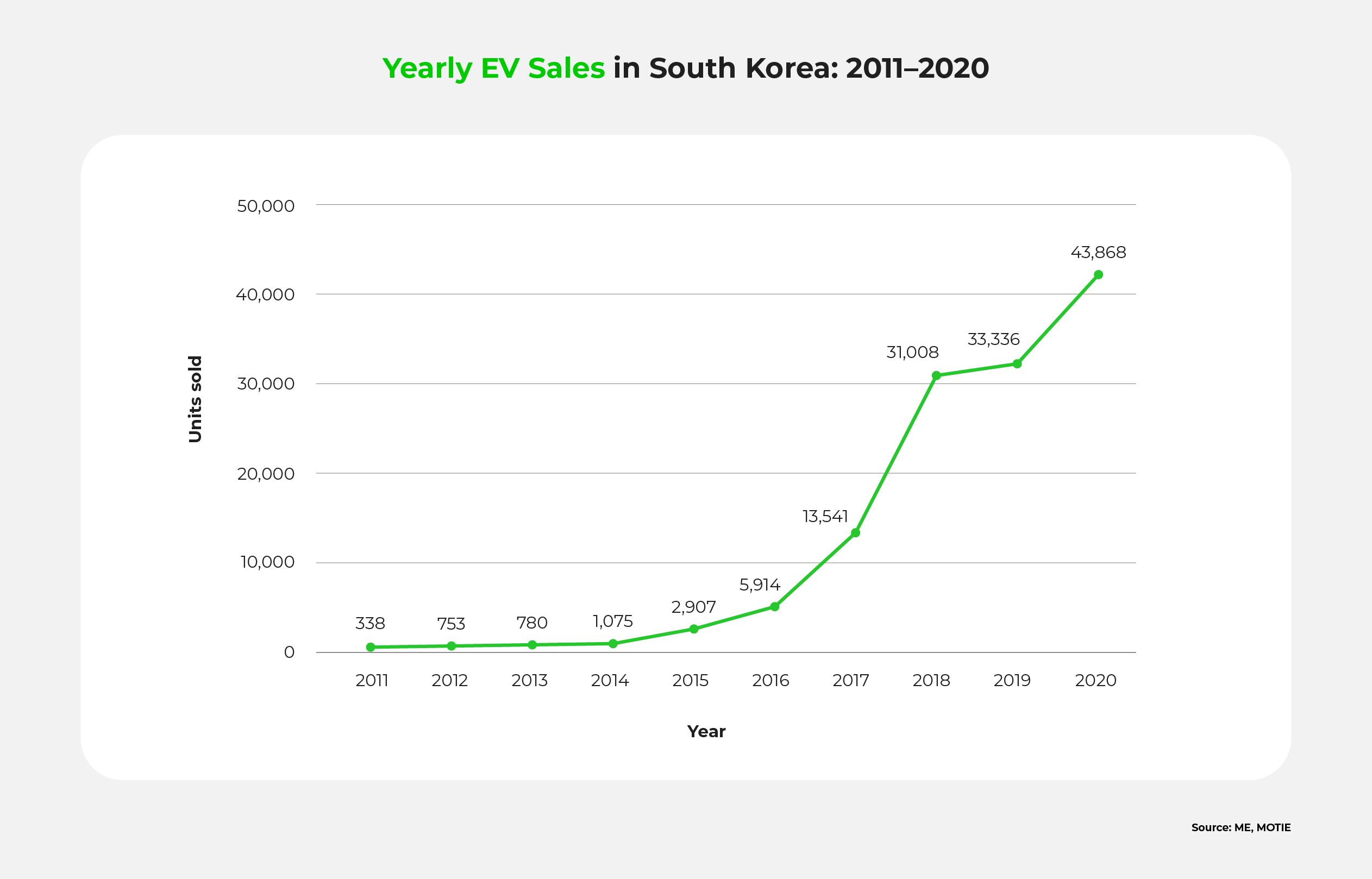
    This proactive approach resulted in significant growth in EV adoption. In 2022, the Ministry of Land, Infrastructure, and Transport (MOLIT) reported a remarkable surge in green vehicle registrations: electric vehicle registrations increased by 72.7% YoY, hydrogen vehicles by 54.3%, and hybrids by 29.6%. Total EV sales exceeded diesel vehicle sales for the first time, reaching 448,934 units. Among EV power sources, hybrids led with 274,282 units sold, followed by 164,324 BEVs, marking a 63.7% sales growth from 2021.

    A graph showing South Korea's annual EV sales from 2011 to 2020
    Nevertheless, there is still work to be done. In particular, stakeholders must find a way to meet the government’s extremely ambitious goals for the next few years.

    Meanwhile, South Korea’s adoption of electric 2-wheelers has slowed, due to limited range, inconvenient charging requirements, and extended charging times. These factors, coupled with reduced subsidies averaging ₩1.8 million (USD 1,365), down 13% from the previous year, have substantially dampened consumer demand.

    EV Charging Infrastructure Growth

    As a key initiative, in August 2016, the MOLIT, along with the Korea Electric Power Corporation (KEPCO) revealed plans to construct ₩200 billion of charging infrastructure. By November 2020, they had installed a total of 62,789 public chargers, including 9,661 rapid and 53,128 slow chargers. In 2021, they added 3k fast-charging stations, distributed as follows:

    • 2,280 charging stations at locations such as private supermarkets
    • 290 charging stations in parking garages
    • 300 fast-charging stations at pit stops
    • 123 high-powered charging stations by the automotive industry

    As of 2021, South Korea had the world’s best ratio of EVs to charging points: 2.6 vehicles per charging point.

    Major Players in South Korea’s EV Market

    South Korea’s thriving EV landscape is partly attributed to the efforts of leading automakers. They have rapidly adopted EVs, and have leveraged the country’s strong automotive industry and existing supply chains to compete globally.

    South Korea utilizes economies of scale to achieve competitive EV production. Its well-established network of suppliers and manufacturers, in addition to a substantial pool of engineers and technicians well-versed in cutting-edge production methods, supports efficient, cost-effective manufacturing of high-quality EVs.

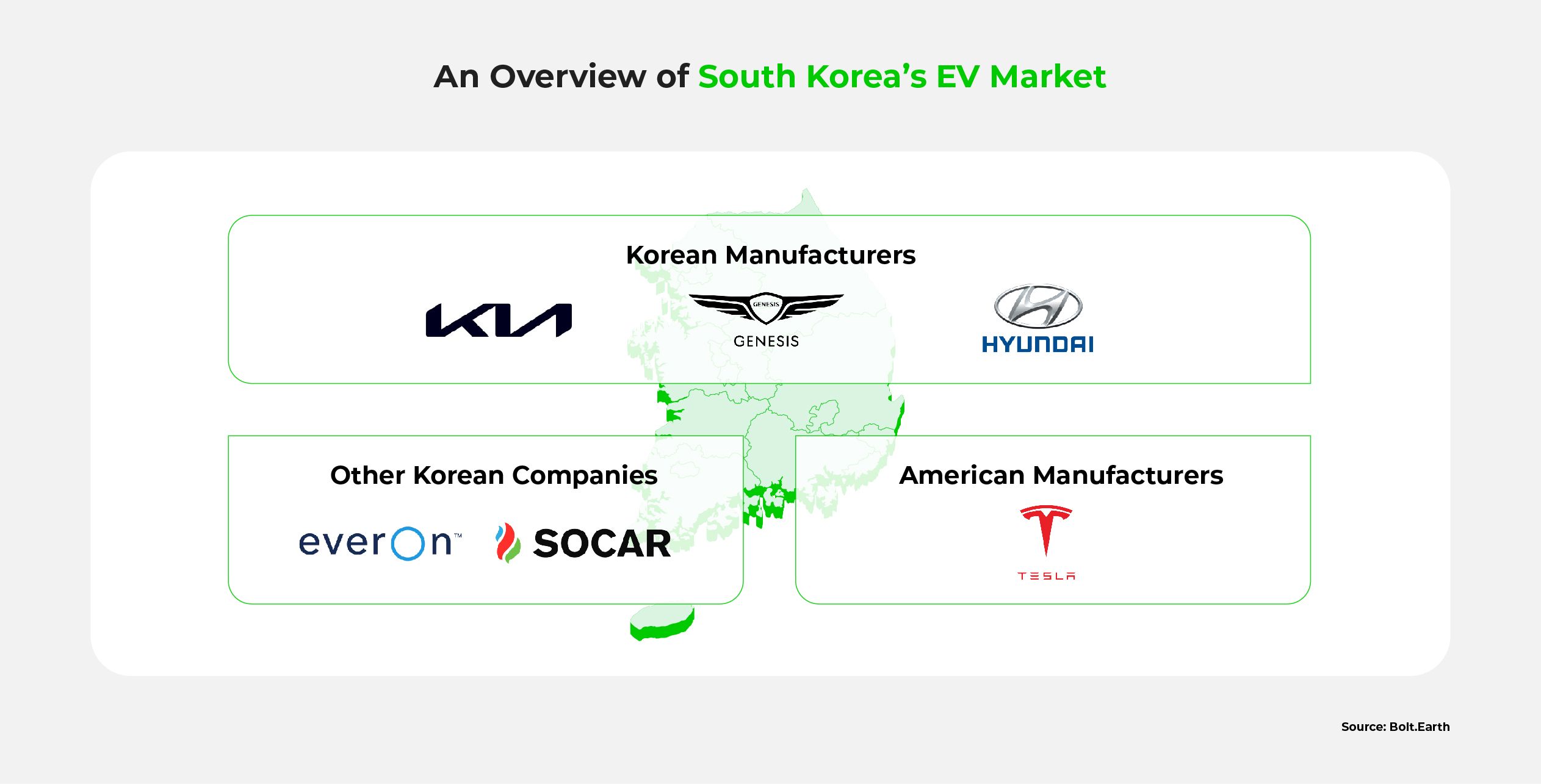
    A graphic listing major players in the South Korean EV market
    Global OEMs in South Korea

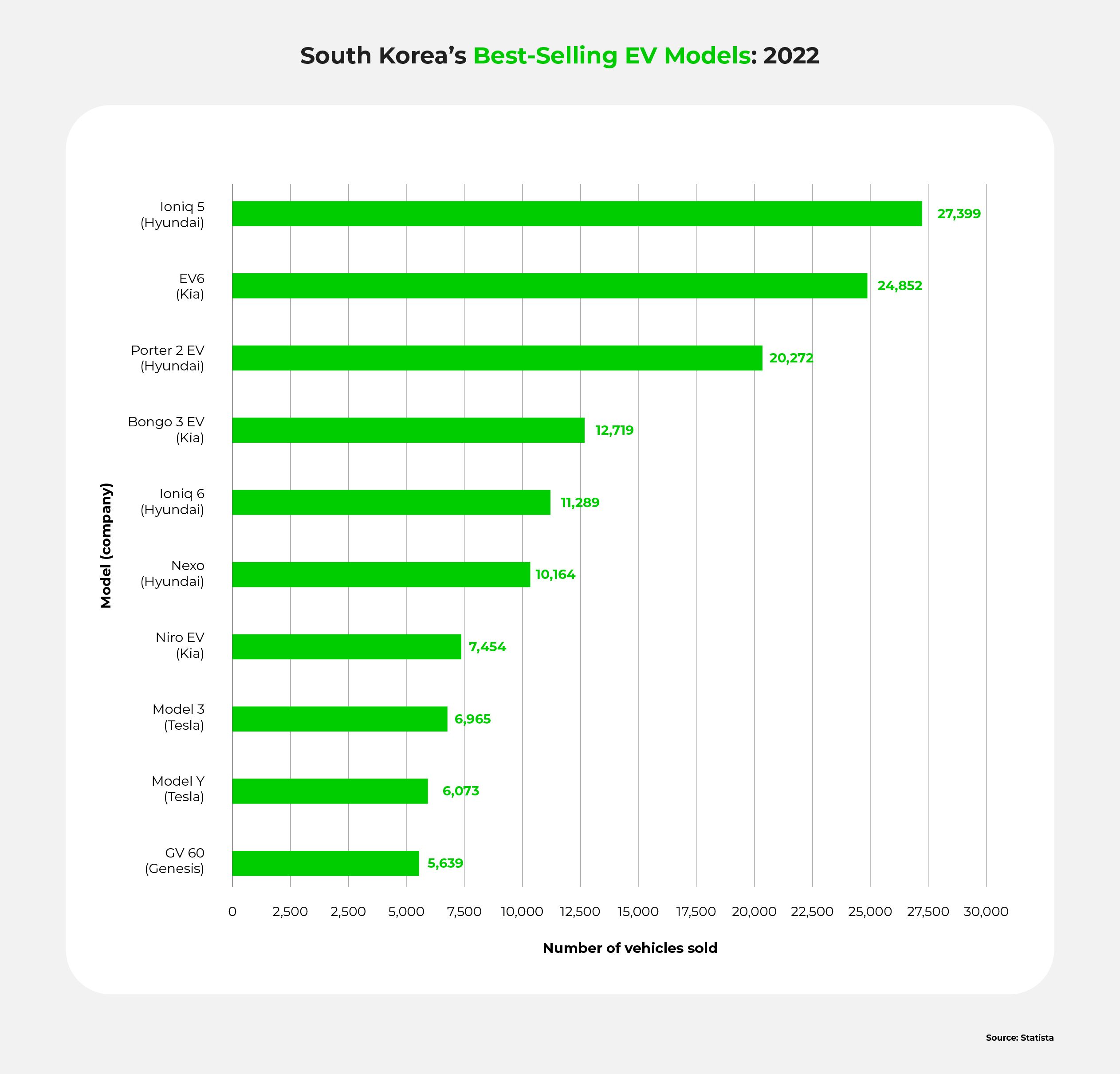
    In 2022, the top three players in South Korea’s domestic passenger EV market were Hyundai Motor Group, Tesla, and Kia, which is a subsidiary of Hyundai. In the context of the global market, Hyundai was the fifth largest EV seller in 2022.

    Hyundai did not enter the EV market until 2015, but has achieved immense success, with a 75% domestic market share. The company initially emphasized hydrogen vehicles, and only shifted its focus to BEVs in 2018, in response to Tesla’s success.

    Hyundai’s vertically integrated supply chain network, modular EV platform, and export-oriented focus have all proven instrumental to the company’s success. The vertical integration spans various subsidiaries, streamlining EV production from batteries to software, and enabling strategic partnerships involving the whole EV supply chain. By adopting a dedicated EV platform early on, Hyundai set itself up for successful rapid model development; it plans to launch 31 EV models by 2030.

    In addition to supplying EVs to South Korean consumers, Hyundai has a strong focus on exporting to foreign markets. In fact, South Korea’s EV exports rose by 112.2% between 2019 and 2022, led by Hyundai and Kia.
    A bar chart showing South Korea's 2022 EV sales, broken down by model

    South Korea’s EV Component Manufacturers

    EVs contain many parts, including a speed reducer, a thermal management system, batteries, motors, inverters, and tires. As mentioned above, due to South Korea’s strong value chain, the country has many prominent suppliers of these components.

    Three major battery cell companies, LG Energy Solution, Samsung SDI and SK On, recently announced their plan to work with the government to jointly invest ₩20 trillion (USD 15.1bn) through 2030 to develop advanced battery technologies, including solid-state batteries.

    Hyundai Mobis, LG Electronics, and S&T Motiv produce motors, and are all core suppliers of Hyundai Motor Co., Ltd.

    Hanon Systems is the main contributor to the heating system segment, while Hwaseung R&A produces important components like air conditioner hoses and coolant hoses.

    Major EV Fleets

    South Korea’s government recognizes the importance of commercial vehicles and fleets in terms of EV industry development. In 2020, the country introduced 94,430 EVs and hydrogen cars, including 11k two-wheeled EVs, 7,500 electric delivery trucks and 650 electric buses.

    Electric Taxis

    Between January and November of 2022, the number of newly registered electric taxis surged to 15,038 units — roughly triple the previous year’s figure. These taxis have rapidly gained ground against their ICE counterparts, primarily thanks to their higher fuel efficiency and lower maintenance costs. Green taxis’ market share is expected to grow to 40% in the future.

    Car-Sharing Services

    South Korea’s car-sharing pioneer, SoCar, plans to transition its entire fleet to electric vehicles by 2030. In collaboration with leading charging service provider Everon, SoCar will expand the charging station network and enhance EV charging and car-sharing services. This partnership aims to leverage the two companies’ expertise and data on EV charging, including charging times and battery capacity.

    Car Rental Companies

    Local rental companies are rapidly adopting EVs; in fact, projections indicate that rental companies could account for 8% of green vehicle sales by 2025. This trend is particularly pronounced in large cities, where long-term lease packages for EVs are gaining popularity, driving the adoption of new energy vehicles.

    Postal Services

    Postal and logistics companies globally are piloting EV programs to explore their environmental benefits. Public procurement of EVs, exemplified by Korea Post’s plan to introduce 10k EVs by 2020, demonstrates these programs’ effectiveness, and, in turn, encourages wider adoption. Replacing conventional vehicles with EVs offers operational and non-market advantages, such as replacing gasoline-fueled delivery motorcycles with compact EVs in Korea Post’s fleet.

    Government Incentives & National EV Targets

    South Korea’s electric vehicle policy is overseen by three ministries: the Ministry of Trade, Industry and Energy (MOTIE) for vehicle and auto parts technology development; the Ministry of Environment (ME) for EV promotion and infrastructure; and the MOLIT for safety certifications.

    The South Korean government strongly supports the EV industry, with incentives like tax breaks, financial aid and R&D spending. These measures encourage investment and drive sector growth to achieve the government’s ambitious goals for EV adoption.

    EV Master Plan

    South Korea’s government has been continuously updating its EV policies since 2011. Currently, there are two main sources of guidance for EV goals: the 4th Master Plan for Eco-Friendly Cars, and the Korean New Deal.

    MOTIE and ME unveiled the 4th Master Plan in February of 2021. It aims to support 2.83mn eco-friendly cars by 2025, and 7.85mn by 2030.

    The Korean New Deal sets another ambitious goal: 1.3mn electric and 200k fuel cell vehicles by 2025. It also involves increasing renewable energy usage and expanding the smart grid.

    South Korea also has some additional EV-related goals:

    • Charging infrastructure goal: have 50% more chargers than EVs, including ultra-rapid chargers that take only 20 minutes to provide enough charge for a 300 km range.
    • Export plan: achieve a 12% share of the worldwide NEV market by 2030, in the interests of becoming a global automotive industry leader.
    • Commercial EV target: launch 20k hydrogen-powered buses and 10k hydrogen-powered trucks by 2030.

    To support all of these ambitious goals, the government has revised the incentive scheme every two years.

    EV Supply-Side Incentives

    Research and Development Support

    South Korea offers substantial R&D tax incentives, and is even allocating 70% of its yearly R&D budget to fund 40 projects in 11 key industrial areas, such as secondary batteries and future mobility. This includes investments of around $4.7bn from 2023 to 2027, with a long-term target of $10.2bn by 2030.

    Tax Incentives for Manufacturers

    The government offers tax credits for companies in key tech sectors, including EV-related ones. Large firms currently receive tax credits of up to 15% tax credit, while small- and medium-sized enterprises receive up to 25%. An additional 10% credit is available for 2023, based on increased average investments over the past three years.

    Sales Quota

    The South Korean government has implemented a sales quota whereby EVs must comprise at least 15% of each car manufacturer’s sales. The aim is to eventually make 20% of all South Korean-produced cars EVs, and then transition to all-EV production in the public sector.

    Export Support

    The government is using tax incentives to encourage car manufacturers to invest up to ₩95 trillion (USD 66.03bn) in EVs by 2026, in the interest of stimulating the production of EVs for export. The government is further supporting this goal by providing ₩7 trillion won (USD 5.3bn) in loans and guarantees to battery and material firms in North America.

    Investment Incentives

    The Foreign Investment Promotion Act aims to attract foreign investment primarily through tax support, cash grants, and industrial site support.

    Collaborations and Partnerships

    In response to various challenges, South Korea has adopted a trans-regional R&D strategy. This approach aims to reduce regional inequalities within the country and foster collaborative innovation in areas such as EV technology.

    EV Demand-Side Incentives

    Subsidies and Grants

    In 2023, South Korea will revise its EV subsidy policy to favor domestic producers based on performance, infrastructure, battery density, and price. This will particularly benefit Hyundai and Kia. Subsidies range from ₩2.5mn to ₩6.8mn (USD 1,867 – 5,078), excluding vehicles over ₩85mn (USD 63,481). Makers who have installed at least 100 chargers over the last three years get extra incentives, as do makers who have implemented vehicle-to-load (V2L) technology.

    Tax Benefits

    In 2019, South Korea’s government announced plans to extend tax breaks for purchases of electric vehicles. These tax breaks were originally set to expire, but were extended to incentivize more people to buy EVs.

    Discounted Parking and Tolls

    EV users in South Korea enjoy incentives including a 50% discount on public parking facility fees and highway tolls. Notably, hybrid vehicles no longer qualify for these discounts; only compact cars and fully electric vehicles are eligible.

    Residential Charging Support

    In keeping with the revised Environment-Friendly Automobile Act, new apartment complexes must install EV chargers in 5% of their parking spaces, while existing apartment complexes need chargers in 2% of theirs.

    Key Challenges in South Korea’s EV Market

    To generate ongoing momentum and keep making sustainable progress, South Korea will need a combination of proactive investments and supporting regulations. South Korea is certainly on the right track, but must still overcome a few challenges.

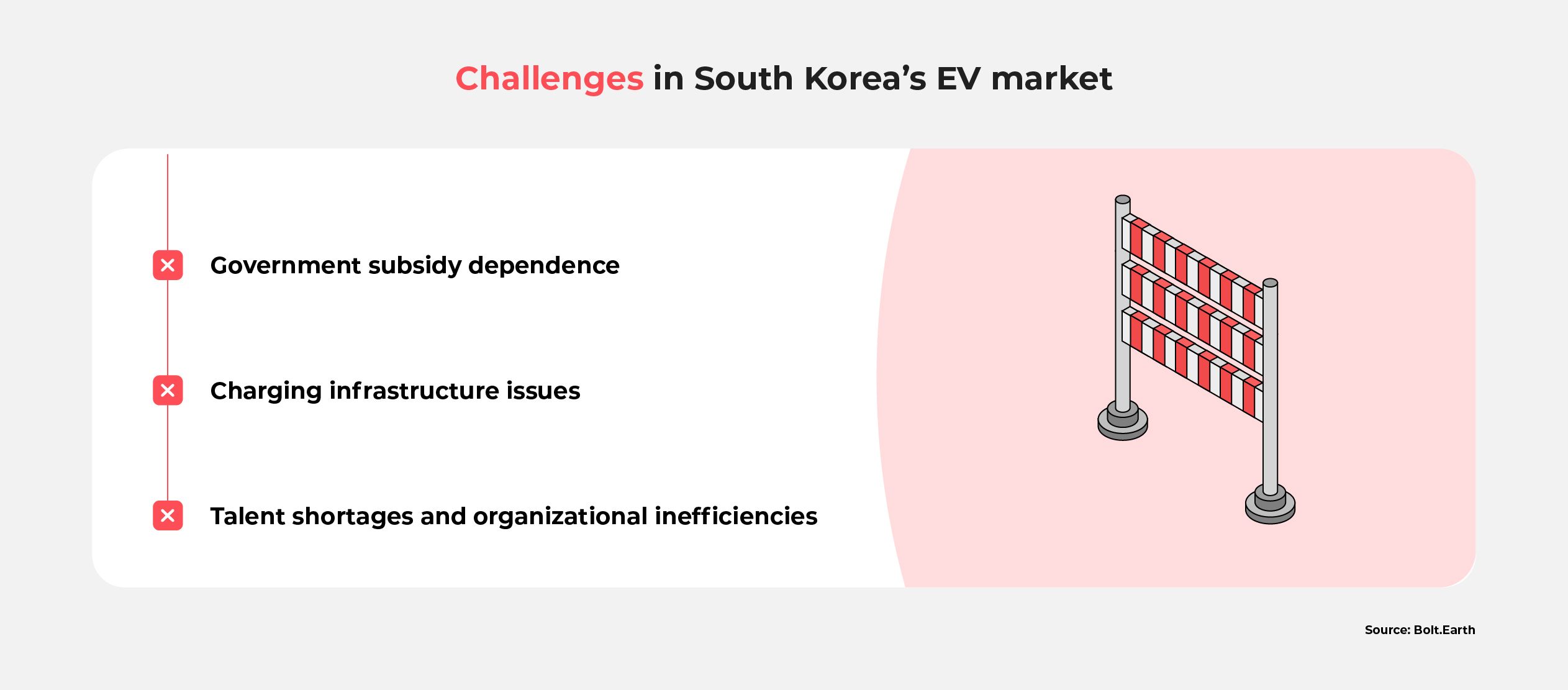
    Government Subsidy Dependence

    South Korea successfully achieved early EV adoption by heavily relying on government support. The downside of this strategy is that the market has been shaped by government policies rather than by consumer demand. In fact, according to a recent survey, price concerns persist despite biennial incentive revisions, significantly impacting purchase decisions. As South Korea’s EV industry advances, balancing government support with consumer demand will become increasingly important.

    Charging Infrastructure Issues

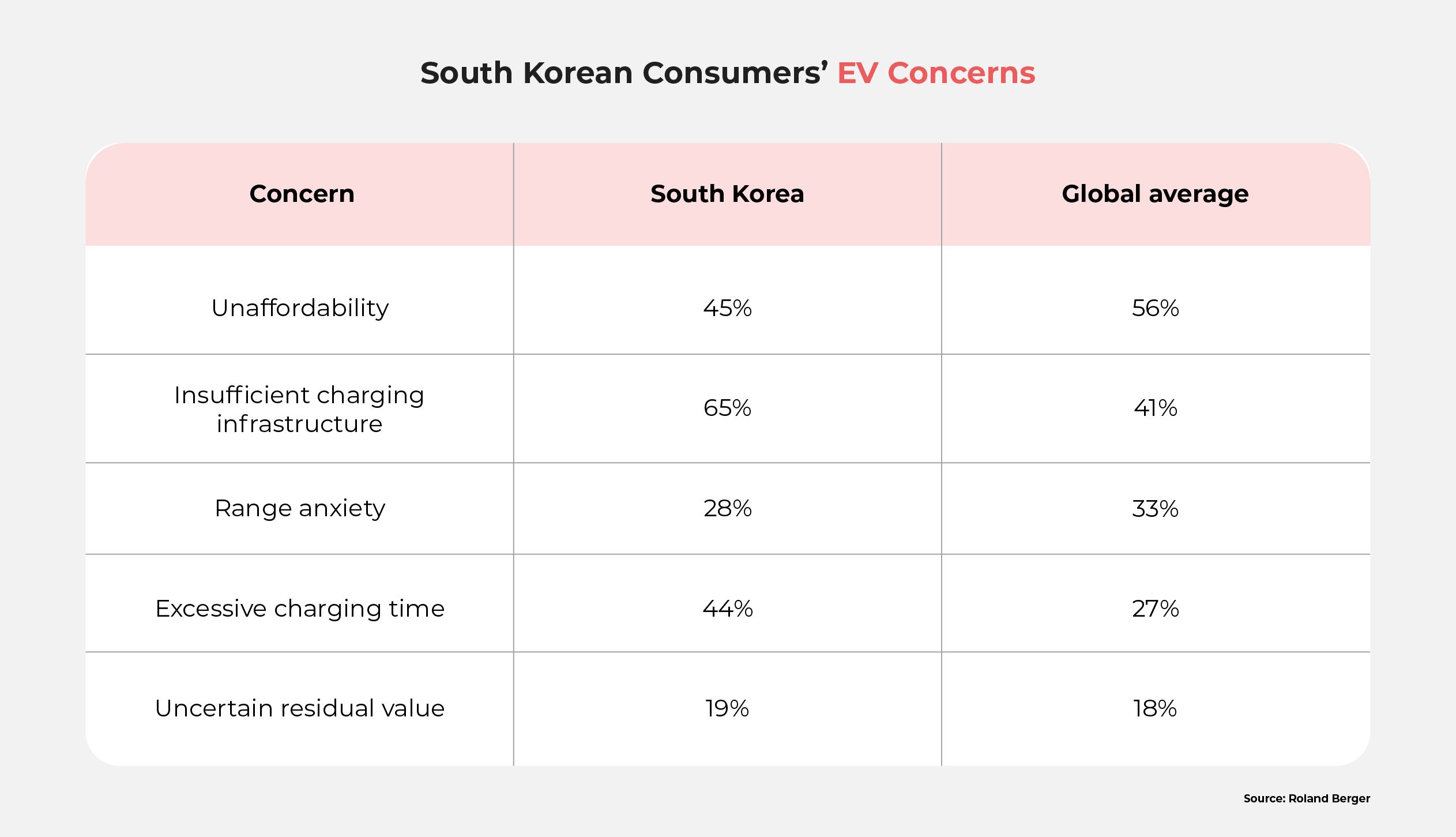
    The survey also indicated that charging infrastructure poses a significant challenge for prospective EV users in South Korea, particularly because multi-family housing with limited parking facilities is so common there. Unfortunately, economic issues discourage the establishment of new charging infrastructure. The government has capped charging fees, but does not directly subsidize the high initial costs of building a charging station, meaning that both public and private charging facilities have struggled to stay afloat. The government offers subsidies aimed at encouraging private investment in charger infrastructure, but this has led to market distortions, with companies prioritizing subsidies over charger optimization and demand considerations.
    A table showing results from a survey about South Korean consumers' EV-related concerns

    Talent Shortages and Organizational Inefficiencies

    The IMD World Competitiveness Ranking evaluates a nation’s capacity to foster a business-friendly environment. Between 2020 and 2023, South Korea’s ranking dropped from 20th to 28th out of 64. This decline has raised concerns about South Korean companies’ ability to sustain growth and contribute to their citizens’ well-being. Despite strong technological foundations, the country ranks low in workforce productivity growth and management practices.

    The service sector, including many small- and medium-sized enterprises, under-utilizes technology, and inadvertently hinders productivity by imposing excessive working hours and rigid hierarchical structures. Promotions are based on seniority rather than skill, compounding the problem. Senior leaders lack international exposure and skills, depriving them of hands-on knowledge about how to manage modern organizations. As a result of all these issues, even though South Korea’s government is encouraging EV-related research and development, the relevant companies may not be able to live up to their full potential.
    A graphic listing challenges in South Korea's EV market

    Opportunities for Future Growth

    South Korea has stepped into a prominent role in the global EV industry, even though its domestic market lags behind considerably. Looking ahead, the country has plenty of growth opportunities, both global and domestic.

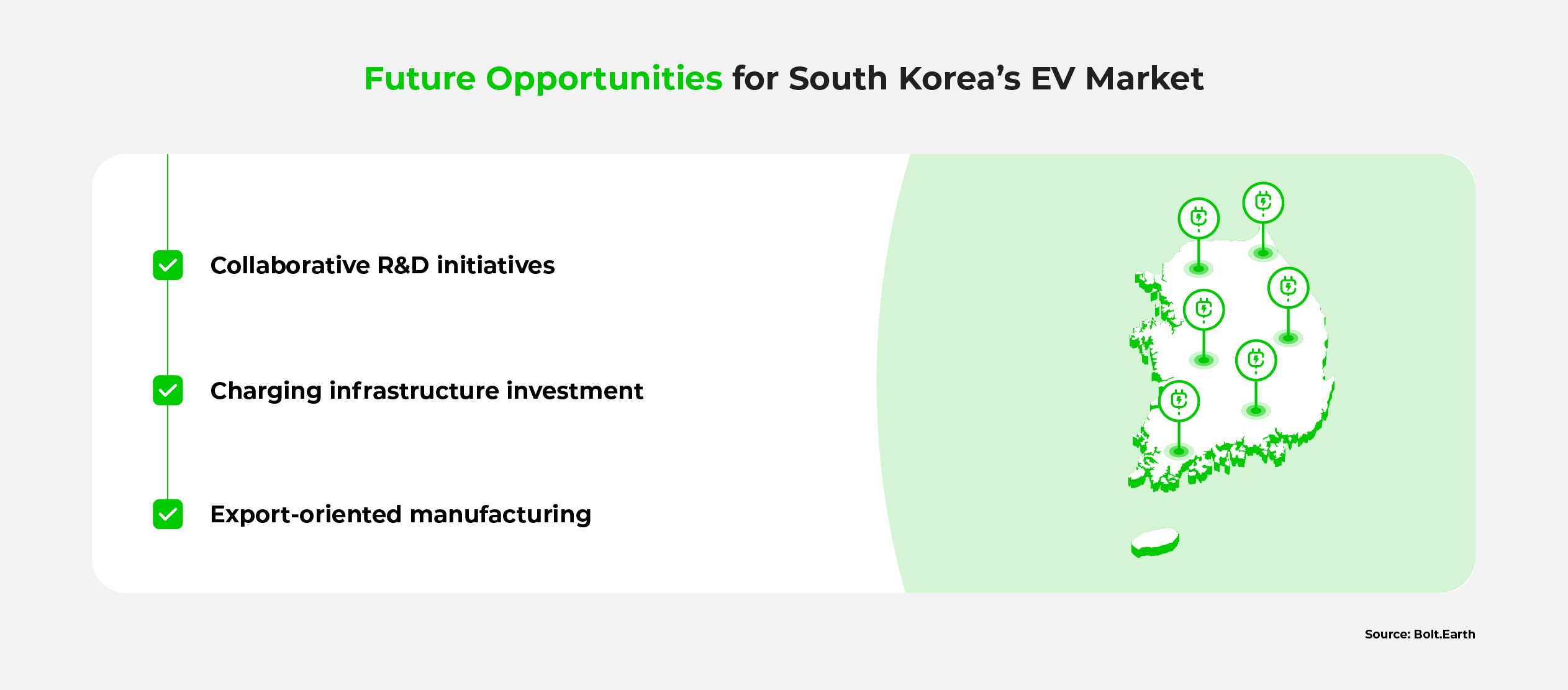
    Collaborative R&D Initiatives

    South Korea actively engages in collaborative EV research and development with strong support from the EV value chain. Stakeholders including automakers, battery manufacturers, and technology companies have already formed R&D partnerships.

    To promote international researchers’ participation, the government is increasing the international R&D budget by 29.3%, focusing on outstanding joint projects led by overseas institutions. This shift responds to global tech challenges and intensifying competition. Ssangyong Motor’s partnership with BYD and Renault Korea’s planned collaboration with Geely reflect a growing trend of international cooperation within the EV industry. Such partnerships leverage strengths and resources from different countries to advance EV development and adoption. The collaboration also benefits the labor market, which will in turn boost the industry. Kia’s groundbreaking EV plant in South Korea offers employment opportunities, with a 31% increase in staff. This strategic move aims to secure a skilled workforce, providing stability amid the global trend of job reductions in the electric vehicle industry.

    Charging Infrastructure Investment

    The South Korean government has already stressed the need to significantly expand the number of charging stations. For example, upcoming laws require new buildings to be equipped with EV chargers.

    Seoul, South Korea’s capital city, will replace 400k ICE vehicles with EVs by 2026. They plan to install 220k chargers to ensure that residents can access them within a five-minute walk from anywhere in the city. To meet this goal, the city has come up with innovative solutions such as street lamp chargers: 50kW fast chargers resembling street lamps, which can fully charge an electric vehicle in just one hour.

    Meanwhile, back in 2013, the city of Gumi introduced two electric buses which utilize dynamic wireless charging technology. The buses receive electricity at 20 kHz and 100 kW, with an 85% maximum efficiency rate, by drawing power from cables under the road’s surface. The innovative charging method offers a solution to long charging times and bulky batteries. If other cities go on to implement this wireless charging technology, South Korea could significantly boost its EV adoption rates.

    Export-Oriented Manufacturing

    South Korea relies heavily on exports to grow its EV industry, and is therefore sensitive to global conditions. As a result, various geopolitical developments could benefit South Korean companies, especially in the US market. For example, the US Inflation Reduction Act signals commitment to boost EV adoption and production, giving Korean firms a competitive edge in the US and North American markets.

    Moreover, South Korea actively participates in international negotiations and agreements related to minerals and EVs. These include free trade agreements, negotiations with Indonesia, and discussions about leveraging Argentina’s lithium resources to produce lithium-ion batteries.

    To support its export strategy, South Korea plans to implement smart manufacturing practices, improve productivity, and reduce costs. This initiative will provide training for 40k workers, benefiting employment rates.

    A graphic listing future opportunities for South Korea's EV market

    South Korea’s Electric Future

    South Korea has emerged as a leader in the EV industry, propelled by strong policy support, advanced technology, and an export-oriented strategy. Major players like Hyundai, Kia, and Tesla have contributed to exponential growth in EV adoption, with green vehicle registrations surging significantly. The government’s ambitious goals include supporting millions of eco-friendly vehicles by 2030, and expanding charging infrastructure. Substantial incentives for manufacturers and demand-side subsidies for domestic EV producers further propel the nation’s EV industry. However, challenges such as government subsidy dependence and charging infrastructure economics must be addressed. Nevertheless, South Korea’s commitment to collaborative R&D initiatives and international partnerships, along with its export-oriented manufacturing approach, promises a bright future for the nation’s EV industry and economic development.

    FAQ

    Why is the South Korean EV market gaining attention?

    The South Korean EV market is gaining attention due to its rapid growth and its commitment to green transformation. Factors such as determined policy support, advanced technology, a robust supply chain, and an export-oriented industry strategy have propelled South Korea to a leadership position in the Asian electric vehicle market.

    How are government policies influencing EV growth in South Korea?

    Government policies in South Korea are playing a pivotal role in driving EV growth. These policies include tax breaks, financial aid, R&D spending, and subsidies for both manufacturers and consumers. They encourage investment, production, and adoption of electric vehicles, in line with the government’s ambitious goals.

    What opportunities exist for investors in the South Korean EV market?

    Investors in the South Korean EV market can capitalize on opportunities in various sectors, including EV manufacturing, battery technology, and charging infrastructure development. The government’s strong support and incentives for EV-related projects make South Korea attractive to investors with an interest in sustainable transportation.

    Who are the major players in South Korea’s electric vehicle sector?

    Major players in South Korea’s electric vehicle sector include Hyundai, Kia, and Tesla, with Hyundai leading the domestic market. These companies have rapidly adopted EV technology and are leveraging their strong automotive industry and supply chains to compete globally.

    What key factors are driving South Korea’s shift towards sustainable transportation?

    South Korea’s shift towards sustainable transportation is driven by factors such as government policies promoting eco-friendly vehicles, investments in charging infrastructure, and the rapid growth of EV adoption. Consumers are increasingly considering electric vehicles, due to governmental incentives and rising environmental awareness.

    What are the projections for EV market growth in the coming years?

    Projections for South Korea’s EV market growth are positive, with the government targeting support for millions of eco-friendly cars by 2030. The country aims to substantially boost EV production and exports, with ambitious goals for increasing market share and expanding charging infrastructure.

    Resources

    Journal of Technology Management & Innovation: Industrial Policy and the Development of the Electric Vehicles Industry: The Case of Korea

    Read about the current state of South Korea’s EV industry here.

    IOP Conference Series: Study on Electrical Vehicle Policy in South Korea as a Lesson Learning for Indonesia

    Learn about South Korea’s EV policies here.

    Storm4: Why South Korea Is Dominating The EV Sector In Asia

    Discover South Korea’s prominent role in the Asian EV market here.

    Invest Korea: The Rapidly Developing Electric Vehicle Industry in Korea

    Understand South Korea’s EV export landscape here.

    EVVAP: Electric Vehicle in South Korea

    Explore South Korea’s history of EV development here.

  • The Rise of Electric Vehicles in South Africa

    The Rise of Electric Vehicles in South Africa

    Road transport remains a key source of greenhouse gas (GHG) emissions in South Africa. Nevertheless, South Africa has committed to the Paris Agreement, and is determined to transition to new-energy vehicles. This commitment is poised to accelerate electric vehicle (EV) adoption in the near future, despite some significant challenges. Thanks to its large mineral reserves, South Africa has even more opportunities on the horizon.

    This article explores South Africa’s nascent EV landscape. In particular, it addresses the following questions:

    • What is the current state of South Africa’s EV market?
    • How is the South African government supporting the EV industry?
    • What potential challenges and opportunities does South Africa’s EV market face?

    South Africa’s Nascent EV Market

    South Africa’s overall auto sector is growing. In 2021, the automotive industry contributed 4.3% to GDP, with vehicle and component exports making up 12.5% of total exports. In 2023, new vehicle sales rose by 5% YoY to 265,970 units by June 2023, exports increased by 4% to 172,836 units YoY, and production grew by 10% to 284,035 units.

    South Africa’s robust auto assembly industry is heavily reliant on exports to the European Union (EU), particularly Germany.). As a result, the EU’s 2035 ban on new petrol and diesel vehicles strongly incentivizes South African manufacturers to transition to new energy vehicles (NEVs).

    Within South Africa, NEV sales have been slow, but are now gaining momentum. Data from the National Association of Automobile Manufacturers of South Africa (NAAMSA) shows that NEVs accounted for nearly 1.2% of YTD June 2023 sales. Notably, NEV sales surged by 47.1% YoY in June 2023.

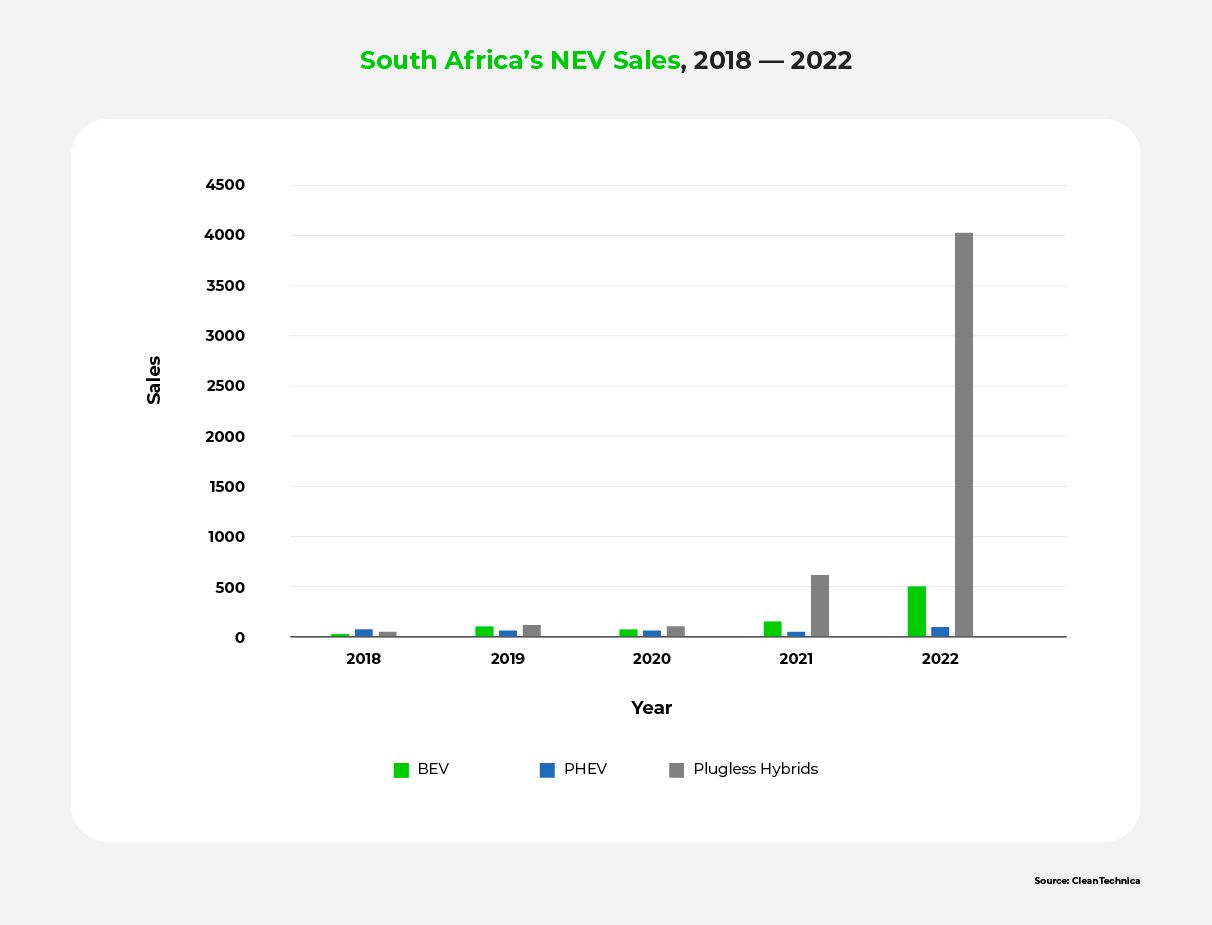
    Battery electric vehicles (BEVs) constitute a minor but fast-growing segment in South Africa’s NEV market. In the first half of 2023, South Africa saw the sale of 502 BEVs, matching the total number of BEVs sold during the entirety of 2022. This suggests the potential for over 1,000 BEV sales in a single year.

    As depicted in the chart below, plugless hybrids (HEVs) have experienced a significant surge in sales since 2022. This momentum continues into the first half of 2023; in 2022, a record-breaking 4,050 plugless hybrids were sold, and 2,561 have been sold in 2023 so far. This increase can be attributed to the growing availability of plugless hybrids, such as the Toyota Corolla Cross hybrid. As OEMs actively promote plugless hybrid models, consumer interest and purchases are aligning with this trend.

    A bar chart showing South Africa's NEV sales from 2018 to 2022
    Private passenger vehicles comprise the largest segment in South Africa’s market, but electrifying them poses significant challenges. Nevertheless, 506 BEVs were sold in 2022 for private passenger purposes.

    The second-largest segment consists of light commercial vehicles, primarily for last-mile delivery services. Several OEMs are entering this market, including Takealot, Spar, DPD, Skynet, and DHL.

    Another emerging category is electric 2- and 3-wheelers, projected to see a compound annual growth rate (CAGR) of 24.35% and 14.38%, respectively, by 2030. Due to South Africa’s high urbanization rate, this sector is poised for growth, primarily driven by fleet owners who want to save money on fuel.

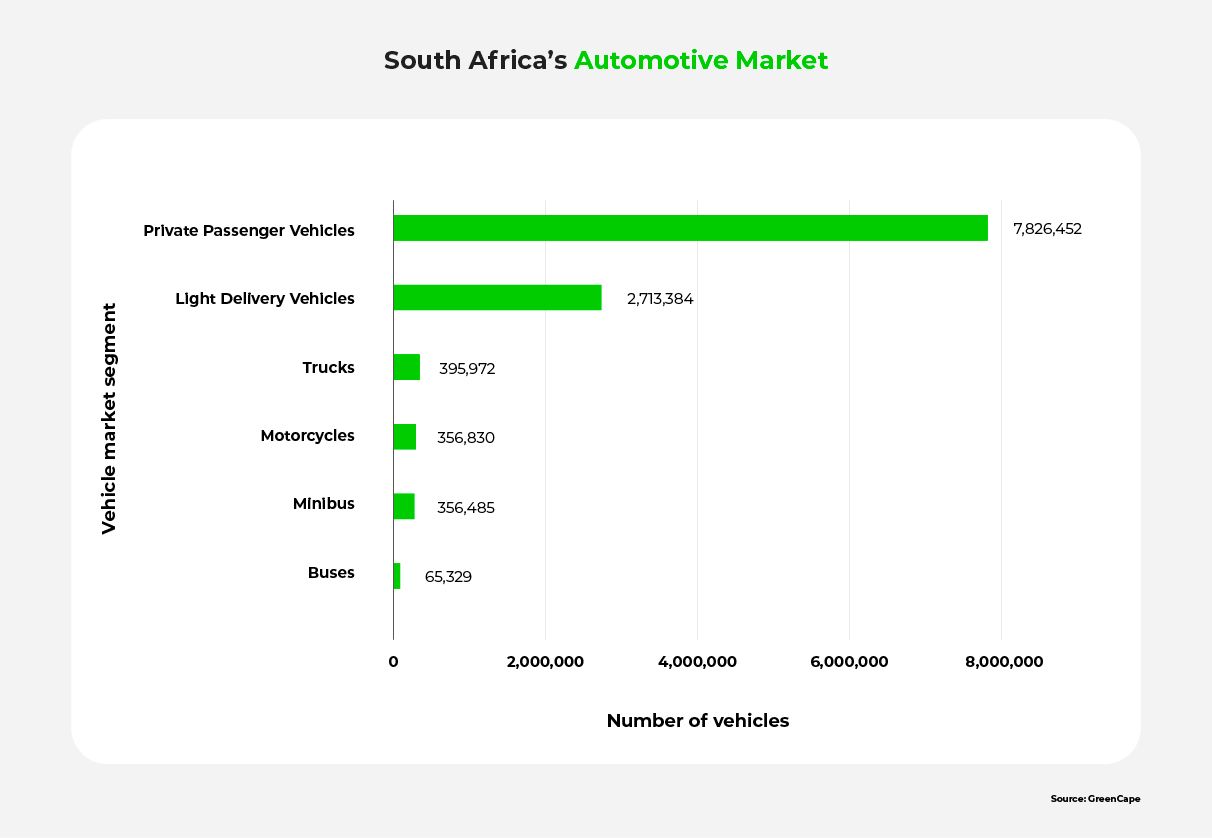
    The electric public transportation sector is also gaining ground. South Africa has approximately 65,239 buses and minibuses, and 356,485 minibus taxis, that could be replaced with electric buses. The City of Cape Town has already successfully tested and deployed electric buses for daily commuter use.

    A bar chart showing the composition of South Africa's automotive market

    Current Charging Infrastructure

    South Africa’s EV charging network currently consists of over 350 publicly accessible charging stations, including ones at dealerships.

    In 2022, several companies made substantial investments in expanding South Africa’s public EV charging network. Most notably, Audi South Africa partnered with Grid Cars to establish 70 new EV charging stations. These included 4 150kW DC super-charging stations, as well as slower chargers, across 33 locations.

    Other major EV manufacturers have also made significant contributions to South Africa’s public charging infrastructure. BMW, for instance, has deployed over 60 ChargeNow stations across the country. Jaguar and Nissan have also invested in expanding the charging network.

    The public EV charging station sector is expected to experience the most significant growth as South Africa’s network continues to expand. This expansion is essential to facilitate long-distance EV travel between cities and provinces.

    Key Players

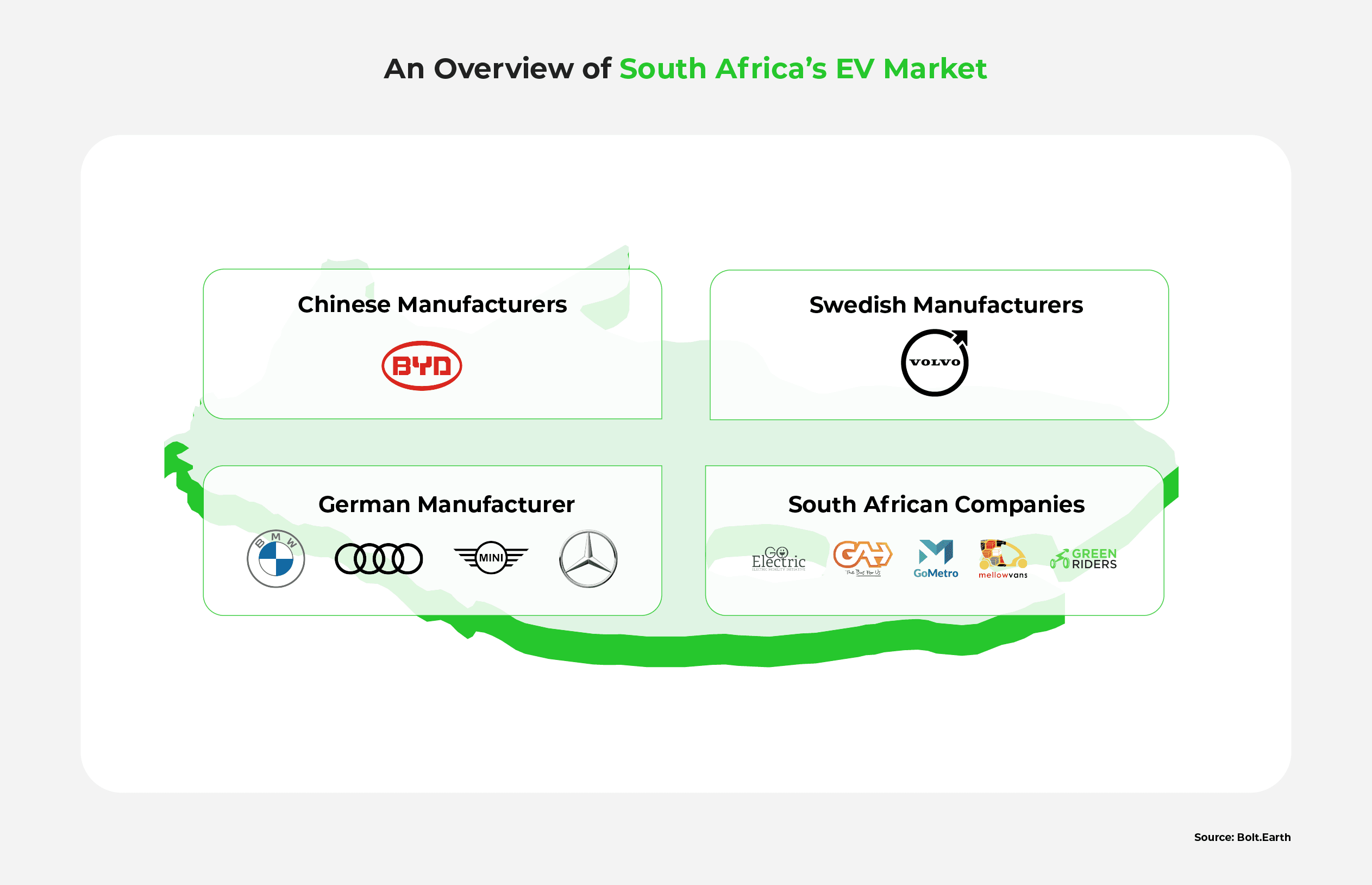
    An infographic listing key players in South Africa's EV market

    Numerous OEMs currently operate in South Africa, serving the private passenger vehicle market. There are key automotive manufacturing hubs in the Eastern Cape (EC), KwaZulu-Natal (KZN), and Gauteng (GP) regions. Despite having fewer commuters, the EC has attracted substantial investment due to its proximity to sea and river ports.

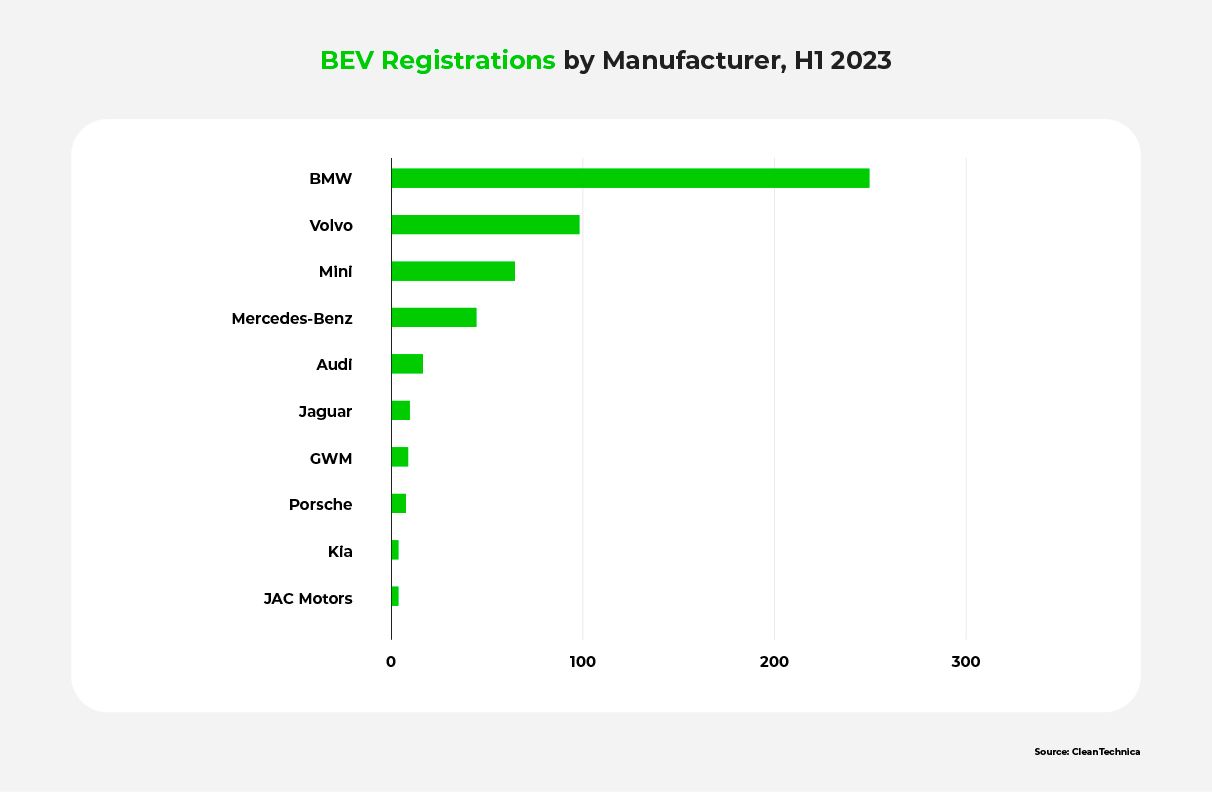
    German brands, including BMW, Audi, and Mercedes-Benz, dominate the BEV sector, mainly catering to South Africa’s private passenger vehicle market. BMW maintains its position as the BEV sales leader due to its wide range of EV options, while MINI, a part of the BMW Group, is also growing steadily. Mercedes-Benz has achieved some success by focusing on convenience; it offers home charging kits, and has installed charging stations at 36 of its dealerships.

    The Swedish Volvo XC40 is another common choice in South Africa, offering a 423km range at a lower price than the Mercedes-Benz EQA 250. Furthermore, the Chinese company BYD recently launched the Atto 3, priced between R 768,000 and R 835,000 (USD 40,941 – 44,479). Tesla vehicles, despite their popularity in other countries, are not yet available in South Africa. Volkswagen plans to produce its first African-market electric SUV by 2035, emphasizing the need for localized EV supply chains.

    Although Japanese OEMs make up a significant portion of South Africa’s overall auto sector, Japan’s historical focus on hybrid electric vehicles precludes its participation in the BEV market.

    A bar chart showing South Africa's BEV registrations during the first half of 2023, broken down by manufacturer

    The Domestic EV Fleet Market

    Several players are focusing on South Africa’s fleet market, including public transport, last-mile delivery, and niche sectors such as tourism vehicles.

    Public Transport

    Golden Arrow Bus Services (GABS) and BYD have jointly announced the deployment of two electric buses in Cape Town. These are the first electric buses in operation in the entirety of Southern Africa.

    GoMetro, in partnership with several firms and researchers, successfully tested the first minibus taxi in South African conditions in January 2023.

    Last-Mile Delivery

    Many South African startups participate in the last-mile delivery market segment. MellowVans has introduced a cargo e-rickshaw equipped with a 4KW motor and a 9kWh battery pack, allowing it to travel up to 100 kilometers on a single charge. Their production facilities in Stellenbosch and Strand can currently manufacture four electric three-wheelers daily, with nearly 70% of components sourced locally.

    In 2022, Go Electric collaborated with AEVERSA and the Spar Group to initiate a pilot project employing electric mopeds for Spar’s online grocery delivery service.

    Green Riders has launched a fleet of 600 electric cargo bicycles to support the growing electrification of last-mile food and grocery delivery services such as Uber Eats and Mr. Delivery. They aim to have 3,000 Green Riders in South Africa’s Western Cape and Gauteng provinces by the end of 2023.

    Other Niche Markets

    In 2020, Makanyi Private Game Lodge pioneered the first electric safari vehicle, in the Timbavati Game Reserve within Kruger National Park. This innovative initiative involved converting a traditional diesel 4×4 safari vehicle into an electric one, plus making it fully rechargeable via solar panels.

    Government Incentives and National EV Targets

    South Africa’s manufacturing industry urges clear EV policies for automotive sector stability, motivated both by the EU’s ICE phase-out and by South Africa’s GHG reduction goals. In response, a government-issued Auto Green Paper, released in 2021 for feedback from 7 major automakers, is poised to become a guiding White Paper in 2023.

    EV Master Plan

    The Auto Green Paper, South Africa’s first NEV industry guidance, has not been publicly issued yet, but its intentions are clear: it will focus on creating a competitive EV manufacturing hub. It aims to boost job creation, develop EV tech, transition to clean fuels, and reduce emissions through green manufacturing.

    Although industry players applaud these goals, some concerns remain. First, the paper’s call for local NEV production and exports may not be feasible, due to South Africa’s small market and high import duties. Second, charging infrastructure development is uncertain, raising questions about whether the government or the private sector should take responsibility for it.

    The new South African Automotive Master Plan (SAAM) offers incentives to encourage the automotive industry transition but, notably, remains silent on the issue of NEVs.

    EV Supply-Side Incentives

    Many stakeholders have requested that the government provide guidance or incentives for EV manufacturing, research, and development. Furthermore, the government-issued Green Transport Strategy for South Africa (2018 – 2050) proposes providing financial incentives for OEMs to produce and sell affordable EVs within South Africa. Thus far, however, the government has not actually implemented any of these measures.

    EV Demand-Side Incentives

    South Africa’s government has not issued demand-side incentives yet. However, early this year, NAAMSA released a document entitled the “New Energy Vehicle Roadmap Thought Leadership Discussion, The Route To The White Paper,” in which they recommend a detailed subsidy structure to drive consumption.

    Import tariffs on EVs in the South African market are a contentious issue. EVs are subject to a 25% import tariff, significantly higher than the 18% applied to traditional internal combustion engine (ICE) vehicles. In response, the Democratic Alliance (DA) advocated for the removal of all import duties on EVs in order to make these vehicles more affordable for consumers, especially in light of rising petrol prices. The government has not yet responded.

    Potential Challenges in South Africa’s EV Market

    In addition to the political uncertainty surrounding the EV industry, South Africa’s transition to electric mobility faces several other challenges. The primary hurdles involve high prices and limited charging infrastructure. Moreover, South Africa’s power supply constraints are not conducive to a swift transition to EVs.

    Limited Charging Infrastructure

    As of 2020, South Africa had one of the highest ratios of public EV chargers to EVs: close to 1.8 chargers per 10 EVs. However, this number does not reveal the whole picture; the ratio is so favorable because the country’s EV penetration rate is so low.

    Furthermore, charging infrastructure shortages may be in store. In 2020, there were about 143 public charging stations in South Africa, increasing to over 350 in 2023: approximately a 50% annual growth rate. However, in the same period, EV penetration saw a CAGR of 55%. South Africa’s EV goals will probably accelerate this CAGR even more. In other words, the number of chargers is rising more slowly than the number of EVs, which may lead to future problems.

    High Initial Costs

    Currently, South Africa’s EVs are priced much less competitively than ICE vehicles. South Africa’s expanding middle class, which represents a significant portion of the market, typically purchases vehicles priced between R150k and R350k (USD 7,923 – 18,487). However, most EVs in South Africa, with the sole exceptions of the Funky FE-1 and the Eleksa CityBug, are priced outside this range. This dearth of affordable options contributes to South Africa’s low EV adoption rates.

    South Africa’s taxation system compounds the problem. In addition to the 25% import tax mentioned above, EVs are subject to a further ad valorem tax, which can be as high as 30%. As a result, an EV often costs twice as much as a comparable ICE vehicle from the same manufacturer.

    Electricity Supply and Grid Infrastructure

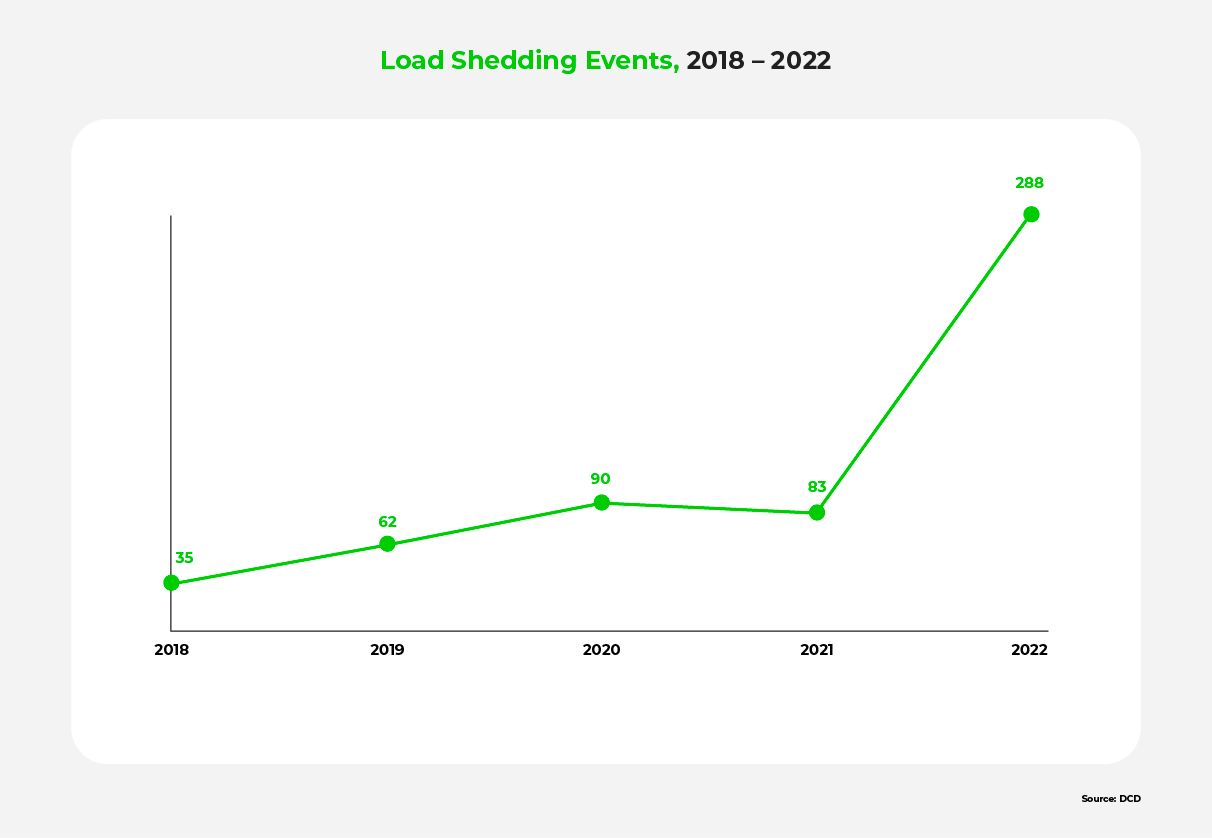
    South Africa is notoriously prone to power shortage issues, as a result of outdated grid infrastructure. Eskom, the state-owned national power utility, supplies more than 95% of the country’s electricity, but has not attained high efficiency, due to plant breakdowns. According to CEO Calib Cassim, although the power utility has approximately 47,500MW of installed capacity, it can utilize only 26,500MW. This has resulted in a continuous electricity crisis since 2007. Eskom has responded by implementing load shedding: strategic blackouts on a rotating schedule.

     A graph showing the number of load shedding events between 2018 and 2022

    In 2022 alone, South Africa underwent 288 load shedding events. Since mid-January of 2023, the country has typically been without electricity for 8 to 10 hours a day, causing economic losses and disrupting daily life. As a result, residents are reluctant to purchase vehicles that they will be unable to charge on a regular, reliable schedule.

    Opportunities for Future Growth

    Although South Africa has significant obstacles to EV adoption, it also holds great potential for progress.

    Energy Upgrades

    South Africa, like many other countries, presents opportunities for charging infrastructure development. However, it will need to support this development by improving its existing electricity system. The country has abundant forms of new energy, such as solar and wind power, which it could upgrade its infrastructure to harness. Alternatively, South Africa could leverage advanced technology such as V2G and distributed energy resources to relieve the strain on the state grid. It could also attract private sector investment in transmission, following Brazil’s example.

    Cape Town is already pioneering some of these solutions. They have commissioned a major solar and battery storage project, which is expected to generate more than 60MW of renewable energy. They are also exploring purchasing solar power from households and small producers.

    As EV growth continues, significant opportunities for charger infrastructure development, particularly in the private sector, will emerge. Several companies are already entering or planning to enter this market. Notably, Rubicon and Audi are collaborating on an ongoing charger installation project, including South Africa’s first ultra-fast charger.

    Green Incentives and Policy Overhaul

    South Africa could directly support EV adoption by offering subsidies and reducing taxes. However, this may not be a realistic option for a developing country. South Africa may be able to work around this if it funds EV incentives by leveraging the EV value chain to boost the country’s economy. In particular, South Africa’s existing battery industry and rich manganese resources make it an optimal destination for lithium-ion battery assembly and manufacturing. South Africa could also draw inspiration from Indonesia, which has successfully attracted investment in local processing. If South Africa steps into a role in global lithium-ion cell manufacturing, its economy and employment rates would improve, creating a positive production-demand cycle. Policy support from the demand side could further catalyze industry development.

    Public transportation holds additional potential. Government-level procurement and policy support for public transportation could incentivize EV adoption and create opportunities.

    Public Awareness and Education Campaigns

    A 2020 national survey revealed a significant disparity: 68% of respondents expressed high willingness to own an EV, but actual EV ownership is only 1.8%. This mismatch is largely due to concerns about load-shedding, range issues, and upfront costs.

    The Department of Transport partnered with several other entities to launch an Electric Vehicle Road Trip (EVRT) campaign in 2019. The journey aimed to promote electric mobility by demonstrating the feasibility of crossing the country without traditional fuel. The positive public sentiment expressed by the 2020 survey results may be attributable to this campaign. This suggests that future public awareness and education projects would meet with success.

    The Future of EVs in South Africa

    South Africa stands on the cusp of a significant transition towards EVs, driven by global commitments to reduce greenhouse gas emissions, and supported by the nation’s rich mineral reserves. Although the EV market is in its infancy, it shows promising signs of growth. A variety of EV types are gaining traction, especially in the private passenger vehicle and last-mile delivery sectors. However, this transition is not without challenges, including high initial costs, limited charging infrastructure, and ongoing power supply issues.

    As South Africa looks ahead, it could make progress by leveraging its potential in battery manufacturing, pursuing green incentives, and raising public awareness through education campaigns. The forthcoming Auto Green Paper on new energy vehicles and continued policy support promises to guide the nation toward a cleaner, more sustainable automotive future.

    FAQ

    How is charging infrastructure developing in South Africa?

    Charging infrastructure in South Africa is steadily growing. Currently, there are over 350 publicly accessible charging stations. Major investments from automakers like Audi have expanded the charging network, with a focus on facilitating long-distance travel.

    What incentives exist for South African electric vehicle buyers?

    South Africa does not yet offer direct incentives for EV buyers. However, there are proposals for subsidies, and the Auto Green Paper aims to guide future policies in this regard.

    Are there any government policies supporting EV adoption?

    The government has drafted the Auto Green Paper as the first guidance specifically addressing the NEV industry. It aims to create a competitive EV manufacturing hub, promote job creation, develop EV tech, transition to clean fuels, and reduce emissions through green manufacturing.

    How do electric vehicles compare to traditional cars in terms of cost?

    EVs can be more expensive upfront than traditional cars due to high import tariffs. However, the government is considering proposals for subsidies and reduced taxes to make EVs more affordable.

    What future trends can we expect for electric vehicles in South Africa?

    South Africa is predicted to continue adopting electric market private passenger vehicles and last-mile delivery service vehicles. Battery manufacturing, green incentives, and public awareness campaigns promise to boost EV growth.

    Resources

    NAAMSA: SA Automotive Market Analysis, Aug 2023

    Explore South Africa’s overall automotive market here.

    GreenCape: 2023 Electric Vehicles Market Intelligence Report

    Get details about South Africa’s EV market sector here.

    GreenCape: Electrification of public transportation

    Discover Cape Town’s successful electric bus initiative here.

    South African Government: Auto Green Paper on the advancement of new energy vehicles in South Africa

    Find South Africa’s current policy guidance here.

    Earth.Org: Understanding the Energy Crisis in South Africa

    Learn about South Africa’s ongoing energy crisis here.

  • The Rise of Electric Vehicles in Japan: An Exploration of Market Trends

    The Rise of Electric Vehicles in Japan: An Exploration of Market Trends

    The automotive sector accounts for over 89% of Japan’s GDP. In fact, Japan is the world’s third-largest automotive manufacturer! Nevertheless, unlike several other Asian countries, Japan has been slow to adopt zero-emission vehicles (ZEVs).

    As the global shift to ZEVs accelerates, the success or downfall of Japan’s automotive sector will impact the country’s economic stability. As a result, Japan’s still-emerging role in the evolving global EV landscape will take on significant implications.

    This article delves into Japan’s ZEV landscape from multiple angles, offering a comprehensive exploration.

    • What is the current state of Japan’s EV market, and how have governmental policies and national EV targets shaped it?
    • How is the market share distributed among different vehicle types and commercial EV OEMs?
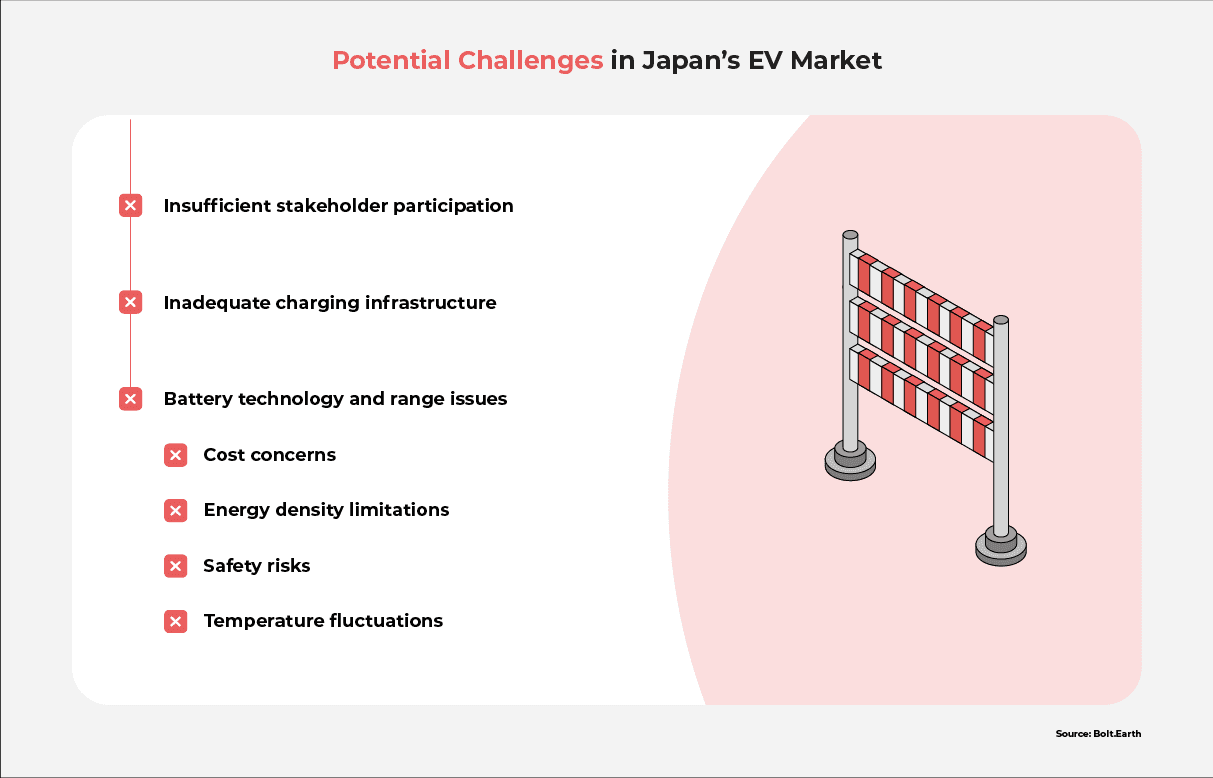
    • What potential challenges does the Japanese EV market face, and how do these challenges impact EV adoption in Japan?

    Japan’s Current EV Market

    In Japan, the term “Clean Energy Vehicles” encompasses a variety of eco-friendly technologies, including battery electric vehicles (BEVs), hybrid electric vehicles (HEVs), plug-in hybrid electric vehicles (PHEVs), hydrogen fuel cell electric vehicles (FCEVs), natural gas vehicles (NGVs), biofuel vehicles (BVs), and solar-powered vehicles (SVs).

    This article will use “xEV” to refer to these vehicles collectively, and “ZEV” to specifically denote emission-free options like BEVs, PHEVs, and FCEVs.

    Japan’s vehicle market has long been wary of zero-emission vehicles. It has instead favored hybrid vehicles, which controlled 70% – 90% of the market throughout the 2010s. Additionally, the government, led by Prime Minister Abe Shinzo, initially focused on hydrogen fuel-cells for car electrification.

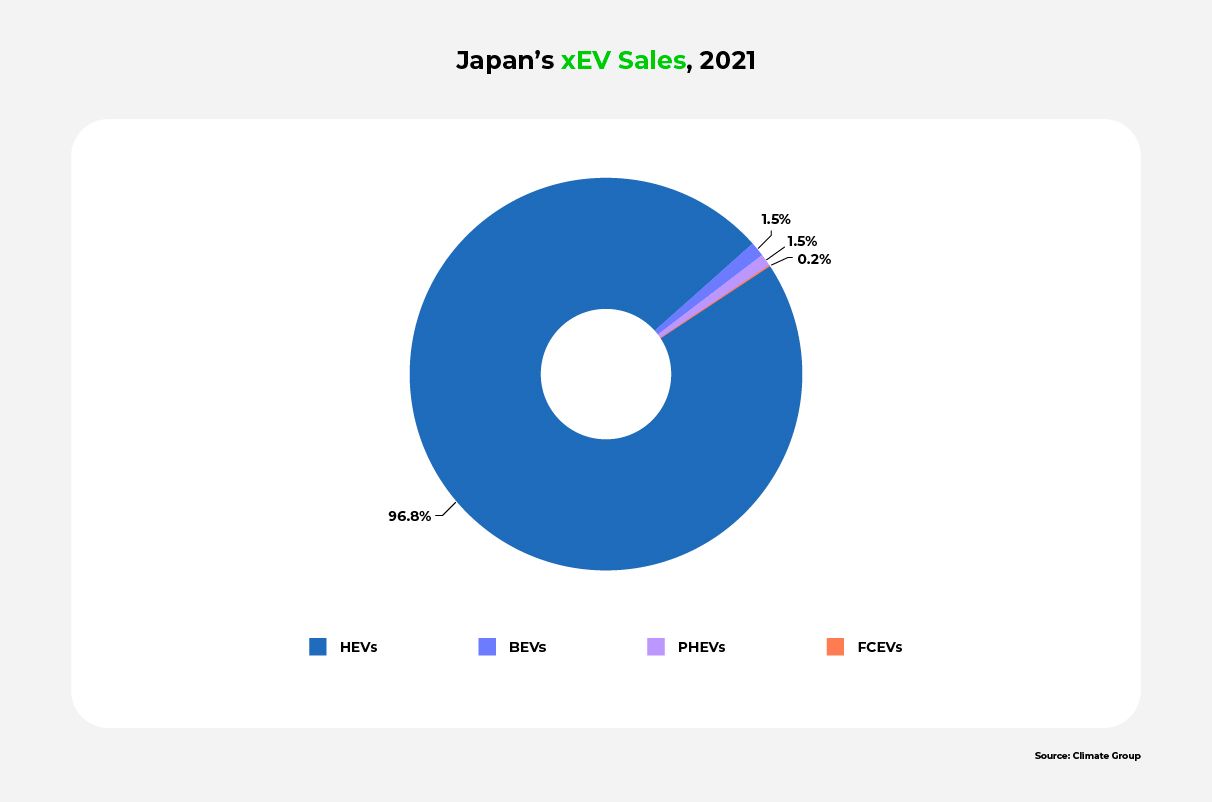
    Due to this focus on hybrid and hydrogen technologies, Japan has been slow to respond to the global EV trend. In 2021, although xEVs constituted about 33.5% of total car sales in Japan, BEVs accounted for just 1.5% of these.

     A pie chart showing Japan's 2021 xEV sales broken down by type

    More recently, however, Japan’s commitment to net-zero emissions by 2050 and 46% emission reduction by 2030 has begun to popularize EVs. In 2022, Japan hit an all-time high in ZEV sales: 92,000, representing a 109% YoY increase. Studies predict that, between 2023 and 2032, BEV sales will increase, ultimately achieving a 37.8% revenue share.

    The driving force behind this trend is twofold: OEMs’ intensifying efforts to enhance and reintroduce electrified versions of existing conventional cars, on the one hand, and governmental policies to encourage xEV adoption, on the other.

    Japan’s domestic 2-wheeler market has declined by over 50% over the past 30 years; Japanese motorcycle manufacturers now generate most of their profits from overseas markets. Although interest in electric scooters is growing, consumer demand is not strong enough for domestic 2-wheeler EV sales to constitute a significant component of the market.

    Government Incentives & National EV Targets

    Japan has been struggling to keep up with global EV trends. Clean energy vehicle policies face challenges including limited lithium resources, unstable energy sources, industry growth, and CO2 reduction.

    The over-prioritization of HEVs has further slowed down progress, as has Japan’s shifting stance on ZEVs due to global trends and local demand. As the situation intensifies, Japan’s government is gradually recognizing the need for action, and is adopting tax redemptions, incentives, and mileage tax discussions. At this point, Japan must choose between proactive hydrogen plan suspension or market-driven action.

    National EV Vision

    Electrified Vehicle Strategy 2050

    Japan aims to transition all vehicles produced by Japanese automakers in global markets to xEVs by 2050. This ambitious long-term goal is intended to achieve world-leading environmental performance and support a “Well-to-Wheel Zero Emission” approach, effectively eliminating emissions throughout a vehicle’s lifecycle, from fuel production to operation.

    Green Growth Strategy Through Achieving Carbon Neutrality in 2050

    The Ministry of Economy, Trade, and Industry (METI) set out a new policy goal in 2021, as part of the Green Growth Strategy: to achieve 100% xEV vehicles sales by 2035. This includes HEVs, where sales already comprise almost 30% of the total in Japan.

    Japan’s 2030 Fuel Efficiency Targets

    Japan’s national government has announced plans to increase the percentage of EVs and PHEVs in passenger car sales to 20-30%, and the percentage of FCVs up to 3%, by 2030.

    A table detailing Japan's targeted adoption rates for various types of vehicle by 2030

    Japan’s EV Charging Infrastructure Landscape

    Tokyo Electric Power Company Holdings (TEPCO) is planning to boost the number of rapid chargers on highways to 1,000 units by 2025. Meanwhile, the government in Tokyo is working to expand the network of public charging points from the current 30,000 to 150,000 by 2030.

    EV Supply-Side Incentives

    Research and Development Grants

    Japan currently invests in EV R&D, focusing on batteries and charging tech for improved capabilities. Government support includes $2.2 billion for battery production and $1bn subsidies for manufacturers like Toyota, aiming to bolster supply chain security.

    Tax Reductions

    To encourage the transition from gas to electric/hybrid cars, reducing lithium-ion battery costs is key. Accordingly, Japan is considering implementing tax incentives for firms investing in emission-cutting battery production facilities.

    Financial Assistance for Charging Infrastructure

    The Japanese government is providing a total of ¥12.5bn (USD 85mn) for e-mobility in a supplementary budget for 2021. They have designated a budget of ¥6.5B (USD 59.5mn) to establish new charging stations, and ¥6bn (USD 54.9mn) to develop new hydrogen filling stations.

    Government Procurement Incentives

    Japan’s Act on Promoting Green Purchasing sets a strong green procurement framework. Government agencies are mandated to practice it across product categories. xEVs, including passenger cars, buses, and trucks, are part of the procurement database.

    EV Demand-Side Incentives

    Subsidies for EV Purchases

    In 2021, Nikkei reported ¥25 bn (USD 193mn) subsidies for electric and fuel cell vehicles. BEV incentives reached ¥800,000 (USD 5,460) per vehicle, but eligibility requires access to renewable charging sources, which is challenging for urban residents.

    Reduced Acquisition Tax

    The Eco-Car Tax Break offers deductions or exemptions on motor vehicle tonnage tax, automobile acquisition tax, and motor vehicle tax for xEVs. Eligible types of vehicle also include efficient internal combustion engine vehicles.

    Exemption from Automobile Weight Tax

    The Japanese government aims to boost EV and hybrid adoption through revised vehicle weight tax (VWT) rules. Starting January 2024, vehicles hitting 80% of Japan’s fuel-economy target will receive 50% tax cuts; vehicles hitting 70% will receive 25% tax cuts. These rules will change by May 2025, requiring vehicles to meet 80% and 90% of the fuel-economy target to receive 25% and 50% breaks, respectively.

    Lowered Road Tax

    In Japan, combustion-powered vehicles can be taxed up to ¥110,000 (USD 789) annually, based on engine size. However, all EVs and fuel cell vehicles are taxed at a flat rate of only ¥25,000 (USD 178) per year.

    Major Players in Japan’s EV Market

    In the realm of imported cars, electric vehicles (EVs) are making significant headway. Sales of foreign electric passenger cars soared by 64% to 16,430 in FY2022, securing a 6% share in the imports market. While Japanese brands predominantly focus on electric minicars, foreign players like Tesla, BYD Auto, and Audi offer luxury EV options.

    An infographic showing key players in the Japanese EV market, superimposed on a map of Japan

    Domestic OEMs

    In 2020, Japanese-made xEVs tallied around 120,000 units, shared between Nissan and Toyota. Since then, however, due to the government’s net-zero emission commitments, domestic OEMs have announced plans to launch their own EVs.

    Toyota plans to expand its EV range, focusing on technological development in China. Nissan is investing in Renault’s Ampere for European EV ventures and hastening New Energy Vehicle (NEV) launches due to sales declines in China. Other Japanese OEMs like Suzuki, Mazda, Mitsubishi, and Subaru are introducing multiple EV models and aiming for substantial EV ratios in their respective markets by 2030.

    Currently, minicars, defined as cars with sub-660cc engines, significantly contribute to Japan’s EV growth, comprising 54% of the market in FY2021. The top-selling Japanese EV in FY2022 was the Nissan Sakura; thanks to its smaller lithium-ion battery, its relatively affordable price — ¥2.54 million (USD 19,300) — has boosted its popularity.

    Overseas OEMs

    In 2021, out of the 8,610 foreign EVs sold in Japan, more than half were Teslas. Volkswagen EVs were also popular. Hyundai gained traction in 2022, and 2023 marked BYD’s entrance into the passenger EV market.

    A bar chart showing how many imported BEVs were registered in Japan from 2011 to 2021

    Tesla

    Tesla’s EV lineup (Models S, 3, X, and Y) bolstered brand visibility in Japan, especially in urban areas with accessible chargers. The Model Y price dropped 24% in 2021, aided by local delivery centers. Meanwhile, urban-focused charging infrastructure expanded via Tesla’s Supercharger network growth.

    Volkswagen

    Volkswagen entered Japan’s EV market in 2017 with ID.3 and ID.4 models tailored to Japanese preferences. Volkswagen’s EV manufacturing innovations, such as metal binder jet 3D printing, are expected to further accelerate sales.

    BYD

    BYD’s global 7+4 Full Market Strategy has expanded to Japan’s EV market. Unlike Tesla, which has a proprietary charging network and focuses primarily on EVs, BYD complements country-specific charging strategies and boasts a diversified portfolio spanning various aspects of clean energy and transportation.

    Hyundai

    After 12 years away from the Japanese market, Hyundai has returned with its Nexo hydrogen fuel cell EV and Ioniq 5 battery EV. Partnerships with DeNA’s car sharing and Sompo Holdings for vehicle rentals strengthen Hyundai’s prospects.

    Major EV Fleets

    Japan’s fleets primarily consist of light commercial vehicles used for employee pool cars. Brands like Honda, Toyota, Nissan, Mitsubishi, Mazda, Suzuki, Mitsubishi, and Daihatsu offer electric vehicles for this sector. Car sharing companies like Times Car and taxi and car rental fleets also play a significant role.

    Although fleet business is a small part of Japan’s automotive market, growing interest in electric fleets is evident. DHL Express is deploying 19 electric trucks in Japan in 2023 to cut carbon emissions. Initially, four Hino Dutro Z EVs will serve pickup and delivery operations in Tokyo’s Chiyoda, Shibuya, and Taito wards.

    Potential Challenges in Japan’s EV Market

    Although Japan is actively moving towards an electric future, effectively addressing its challenges will require a gradual shift. These challenges involve limited resources, supply chain disruptions, environmentally damaging resource extraction, and inadequate charging infrastructure in terms of both quantity and quality. As a result, domestic OEMs are approaching BEVs with caution.

    A graphic listing potential challenges in the Japanese EV market

    Insufficient Stakeholder Participation

    Ironically, Japan’s delayed entry into the EV market is largely attributable to its past successes: its mastery of internal combustion engine manufacturing, and its robust hybrid vehicles.

    Hybrid production is a revenue cornerstone for Japanese automakers, dissuading them from investing in new areas. Industry leaders are wary of undermining existing strengths, while engineers who specialize in complex hybrids find simpler EVs less engaging. Meanwhile, executives fear that switching to ZEVs, which have fewer parts, will negatively impact supplier networks. These factors collectively contribute to Japan’s hesitation to commit to EVs.

    Inadequate Charging Infrastructure

    Japan’s electric vehicle charging infrastructure lags behind many other countries. As of 2021, there were only around 29,000 public charging stations nationwide, many of which were dilapidated. In rural regions, stations are disproportionately absent. Furthermore, Japan has only 160 hydrogen refueling stations for fuel cell vehicles. Although there are 7,600 quick chargers available, over 40% are situated in car dealerships, and are therefore challenging to access. Notably, 18 geographical areas lack charging facilities within a 44-mile highway radius, and 60 areas along major roads lack charging facilities within 25 miles. This scarcity discourages EV adoption.

    Furthermore, the number of charging stations is going down instead of up. Currently, high output chargers above 200 kilowatts face stringent safety regulations, resulting in elevated costs. Installing 200 kW charging equipment costs tens of millions of yen, plus ongoing operational expenses. The Japanese government subsidized 67% of charging piles constructed between 2013 and 2016, but private sector interest has remained limited since then. Consequently, as of February 2023, there were 800 fewer charging stations than in March 2020.

    Since Japan’s charging infrastructure is so limited, it has not yet overburdened the national grid. However, global experience indicates that, as EV demand surges, Japan will need to upgrade its grid to keep up.

    Battery Technology and Range Issues

    As other countries have discovered, lithium ion batteries face challenges in grid-scale energy storage due to degradation, cost, and safety issues. Despite their relatively high energy density compared to other batteries, they remain far less energy-dense than gasoline.

    Cost Concerns

    The battery industry’s heavy reliance on materials like lithium, nickel, and cobalt presents cost concerns. Along with rising demand and disruptions like the Chilean mine disaster in 2010, lithium prices soared and projected a 40-fold demand increase by 2040. Global trade barriers challenge Japan’s export-oriented model, necessitating domestic technology retention and supply chain improvement.
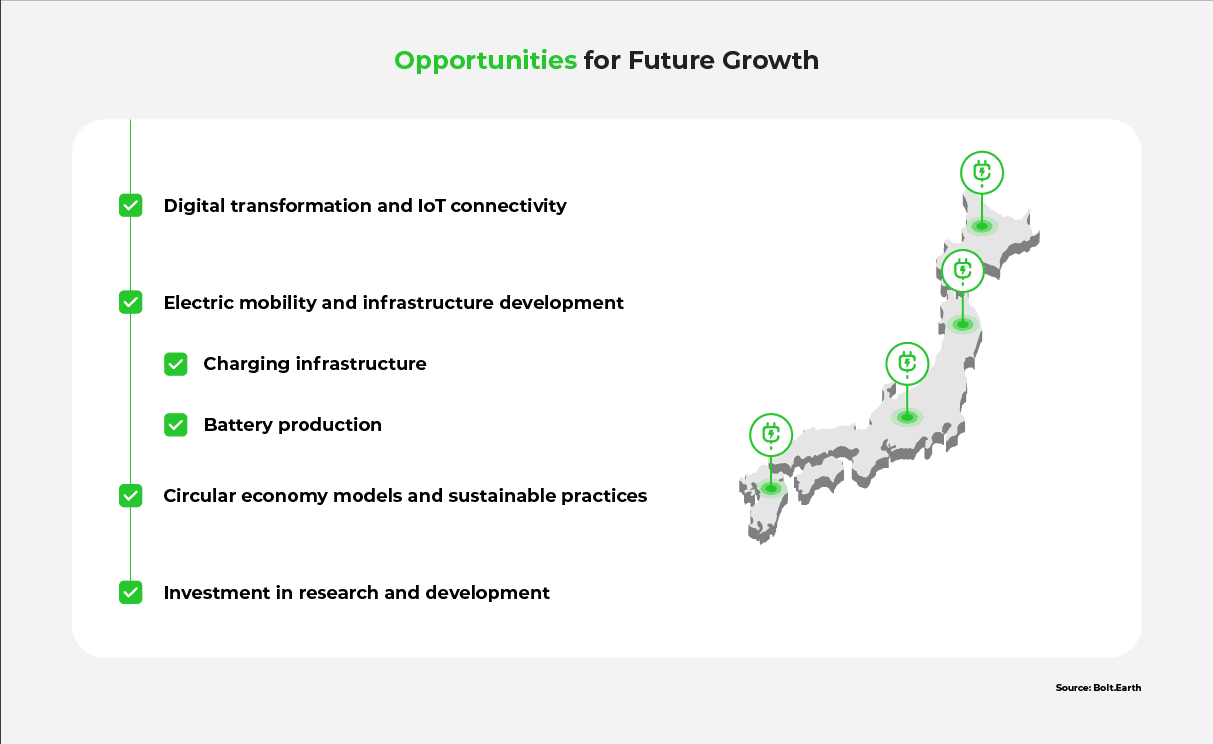
    Energy Density Limitations

    Energy density of mainstream lithium iron phosphate and ternary lithium batteries falls short of development needs, limiting their applications.

    Safety Risks

    Safety concerns include thermal runaway from overcharging, lithium precipitation, and electrolyte overheating during rapid charging, risking combustion.

    Temperature Fluctuations

    Temperature fluctuations impact battery performance, with low temperatures increasing viscosity and reducing energy, and high temperatures destabilizing battery interfaces. For instance, batteries rated for 100% capacity at 27°C (80°F) may deliver only 50% at -18°C (0°F), impacting performance in Japan’s particularly cold regions, such as Hokkaido.

    Opportunities for Future Growth

    As demand increases, Japan is determined to reclaim its place on the world stage of zero-emission vehicles. Despite external competition, there are plenty of opportunities for Japan’s traditional automotive giants to excel and succeed in this new era of sustainable mobility.

    A graphic listing opportunities for future growth in Japan's EV market

    Digital Transformation and IoT Connectivity

    Embracing the CASE concept (connected cars, autonomous driving, sharing, electrification), the global automotive industry is shifting towards a technology-driven landscape. Connected vehicles will create a booming mobility services market, propelled by semiconductors, sensors, autonomous algorithms, and cybersecurity.

    Japan’s smart city strategy.pdf), which involves using digital technology to enhance urban life, aligns with this trend, providing a perfect context for EV adoption. Practices such as smart charging, smart parking, and integrated eco-friendly transportation options will fit seamlessly into Japan’s existing urban frameworks.

    Japan’s progress is evident, with initiatives like Nissan’s Choimobi Yokohama car-sharing service promoting low-emission transport and sustainable urban mobility. The service targets ultra-compact EVs, and aims for public-private collaboration to expand its reach.

    Electric Mobility and Infrastructure Development

    Challenges in charging infrastructure and battery production hinder EV adoption in Japan, but also offer growth prospects. Addressing these hurdles involves exploring charging station development and battery advancements.

    Charging Infrastructure

    Japan’s stringent safety regulations inflate costs, particularly for high-output chargers; Japan could consider deregulating standards for >20 kW chargers to foster innovation. In addition, Japan could proactively mitigate any future space constraints by exploring innovative mobile chargers, equipped with AI for locating EVs and wireless stations.

    Battery Production

    Japan’s battery resource scarcity could be countered via deep-sea mineral extraction. Alternatively, focusing on next-gen batteries is promising; solid-state batteries with non-flammable electrolytes would ensure safety, while lithium-air batteries would offer high energy density for extended ranges. Toyota, Honda, and Nissan are optimistic about producing these advanced batteries by the mid to late 2020s, potentially offering a competitive edge.

    Circular Economy Models and Sustainable Practices

    The drive towards EV growth is intrinsically linked to curbing CO2 emissions. However, for this effort to be meaningful, the electricity used to power and manufacture EVs must come from low-emission sources. Other countries have been exploring solutions involving repurposing EVs as stationary storage batteries during downtime, fostering a cycle where increased EV usage promotes renewable energy adoption and vice versa.

    In Japan, Nippon Car Solutions and Nippon Rent-A-Car Service, Inc. have initiated an EV rental program in collaboration with Kyushu Electric Power Company. This innovative project aims to harness renewable energy through a solar power plant coupled with EV rental storage batteries.

    Resource scarcity poses another hurdle for Japan’s ZEV development. Recycled materials offer a solution, by reducing reliance on imports. Japan acknowledges this, and is exploring circular economy practices within the EV sector, focusing on strategies such as reuse, repair, refurbishment, remanufacturing, and recycling. Additionally, Japan could capitalize on its existing vehicle stock by transforming existing internal combustion engine and hybrid vehicles into EVs.

    Investment in Research and Development

    Japan’s strong foothold in ZEV and battery technology presents significant opportunities for the country to thrive in the global xEV trend. The government recognizes these advantages and is actively backing the research and development of ZEV-related technologies.

    In 2022, Japan allocated substantial funds — around ¥331.6bn (USD 2.5bn) — to enhance materials for magnets and batteries. This investment aims to reduce reliance on rare earth elements and lithium. The private sector is also increasing R&D investments, with companies like Honda committing $64bn for research over the next decade.

    Japan’s history of successful collaboration between the government and private sector has been pivotal in driving innovation, industry growth, and economic prosperity. As the nation invests in EV research and development, it is poised to become a technological leader, fostering job creation and economic expansion.

    The Future Of Japan’s EV Market

    Japan stands at the crossroads of its automotive legacy and the rapid global shift towards ZEVs. Despite already being a major player in the automotive industry, Japan grapples with substantial challenges, such as limited resources, charging infrastructure, and battery technology issues.

    However, Japan is expressing its determination to evolve. The government’s ambitious targets for ZEV adoption and investments in research and development underscore the country’s commitment to leading the charge in sustainable mobility. Collaborations between public and private sectors, innovative initiatives such as repurposing EV batteries for renewable energy storage, and the exploration of circular economy models demonstrate Japan’s multifaceted, strategic approach.

    By embracing opportunities in digital transformation, advanced battery technologies, and international collaboration, Japan is positioning itself to not only catch up but also excel in the global ZEV trend.

    The road ahead may be challenging, but Japan’s automotive prowess and adaptive spirit pave the way for a promising electric vehicle revolution.

    Want to know more about Japan’s EV landscape? Please visit the FAQ and Resources sections below!

    FAQ

    What key factors are driving EV adoption in Japan?

    Key factors driving EV adoption in Japan include government targets for emissions reduction, increased emphasis on clean energy, and growing public awareness of environmental concerns.

    How is the Japanese government supporting the growth of the EV industry?

    The Japanese government supports the EV industry through R&D grants, tax reductions, financial assistance for charging infrastructure, and subsidies for EV purchases.

    Which companies are major players in the Japanese EV market?

    Major players in Japan’s EV market include Toyota, Nissan, Honda, Suzuki, and Mitsubishi. Foreign companies like Tesla and Volkswagen also have a presence.

    What incentives are available for Japanese consumers to purchase electric vehicles?

    Incentives for consumers include subsidies for battery-electric, plug-in hybrid, and fuel cell vehicles, reduced acquisition tax, and exemption from automobile weight tax.

    What are the projected trends for EV growth in Japan?

    Projections indicate that BEVs will dominate with a 37.8% revenue share by 2032. Passenger cars are expected to lead EV sales, driven by OEM efforts and government incentives.

    How does the Japanese EV market compare to other global markets?

    While Japan’s EV market is growing, it initially lagged behind due to a focus on hybrid and hydrogen technologies. However, recent advancements and policy shifts are positioning Japan to catch up with and excel in the global EV trend.

    Resources

    Spherical Insights: Japan Electric Vehicle Market Insights Forecasts to 2032

    Discover market insights regarding Japan’s EV landscape here.

    Mordor Intelligence: Japan Electric Car Market Size & Share Analysis — Growth Trends & Forecasts up to 2028

    Learn about trends in the Japanese electric car market here.

    Climate Group: Japan and the Global Transition to Zero Emission Vehicles

    Explore Japan’s role in global ZEV trends here.

    LUT University / Agora / Renewable Energy Institute: Renewable Pathways to Climate-Neutral Japan

    Read about Japan’s determination to harness renewable energy here.

    NIMS: The Challenge of the Rechargeable Battery Revolution

    Learn about Japan’s advanced battery technology research projects here.

  • China’s EV Market: Opportunities, Challenges, and Future Scope

    China’s EV Market: Opportunities, Challenges, and Future Scope

    Over the last decade, China has led the race to transition to electric vehicles (EVs). It has been so successful that other countries have made immense progress by adopting its formula: a combination of significant capital investment and a centralized, interventionist approach. This strategy has successfully boosted EV adoption by supporting not only manufacturing, but also nationwide infrastructure development.

    China has encouraged the potential of its EV market by gradually introducing financial subsidies in many cities. Thanks to substantial reserves of raw materials for batteries, continuous technological advances, increasingly widespread charging infrastructure, and export efforts by EV manufacturers, China’s EV momentum keeps accelerating.

    This article will address the following questions:

    • What is the current state of China’s EV market, and how is the market share distributed among different vehicle types and commercial EV OEMs?
    • What potential challenges affect the Chinese EV market, and how do they impact EV adoption?
    • How do governmental policies, incentives, and national targets support the growth and development of China’s EV market?

    China’s Current EV Market

    As one of the leaders in the EV world, China has successfully expanded its global market share from less than 30% in 2019 to 41.5% in 2022. Its role as the largest EV production base is even stronger, with 7.1 million units, representing 70% of the 2022 global total, made in China.

    A bar chart showing China's 2019 – 2022 EV sales compared to other regions'

    Within China, EV sales have increased from 16% of the domestic car market in 2021, to 29%, or 6.9 million vehicles, in 2022. The market is segmented into battery-electric and plug-in hybrid electric vehicles. Battery EVs (BEVs) made up nearly 77.9% of sales in 2022. Moreover, there was a remarkable 151.9% YoY surge in plug-in hybrid EV (PHEV) sales.

    Currently, passenger cars are more popular than commercial vehicles, accounting for 95.1% of EV sales. The commercial vehicles sector is on the verge of widespread EV adoption, however; more than 30 cities are planning to fully electrify their public transit systems by 2028.

    China also dominates the electric two-wheeler and three-wheeler markets. As of 2021, it had 93 million electric two-wheelers, thanks in part to a 2019 technical standard favoring lithium ion batteries. Domestic companies Yadea and Aima account for the majority of lower-end electric scooter sales, followed by Nio. Meanwhile, electric 3-wheelers are popular for goods and service deliveries, accounting for about 90% of urban last-mile deliveries.

    The Chinese EV market is projected to continue growing, with an estimated revenue of US $292.1 billion in 2023, and a CAGR of 6.38% from 2023 to 2028. It remains competitive; more than 94 brands offer a total of over 300 EV models at various price points. Domestic brands like BYD lead, with an 81% share, while startups like Xpeng and Nio further intensify competition, solidifying China’s EV production dominance.

    Like other countries with major EV markets, China is rapidly expanding its EV charging infrastructure; as of August 2022, it accounted for 65% of global public charging points. In May of 2022, China added 87,000 new charging stations, reaching a total of 1.419 million stations.

    A table showing the number of charging stations in each of 5 provinces in China

    China aims for a ratio of 14.66 charging points per vehicle by 2025.

    Major 4W Market Players

    China’s domestic EV industry is well-developed, with many established manufacturers and an extensive supply chain. This has allowed Chinese companies to produce EVs at a competitive cost, making them attractive to consumers from other countries.

    An infographic listing major players in the Chinese EV market

    Foreign-brand joint ventures, as well as foreign brands such as Tesla with manufacturing facilities in China, have further contributed to the growth of China’s EV export industry. Some Chinese firms, like Geely, also own foreign-based subsidiaries.

    Major EV Fleets

    China’s fleet market is segmented into government firms, state-owned businesses, public services, taxis, and long-term rental companies.

    In keeping with policy interventions, government and state-owned firms feature lower transaction prices, smaller engines, and increased use of domestic brands, with a mandate for 30% EV adoption.

    E-buses and e-trucks are flourishing, constituting over 90% of the global e-bus market in 2021. Top 10 e-truck and e-bus manufacturers hold 70% and 85% market share, demonstrating consolidation through economies of scale.

    Major cities like Shenzhen, Chengdu, Zhengzhou, and Tangshan are experiencing high adoption of electric buses and trucks, due to policy-driven preferences. About 9.5% of conventional taxis were electric in 2020, and China’s 14th Five-Year Plan aims for 35% EV representation in the taxi fleet by 2025, with local targets in place.

    China has two types of taxis: conventional taxis hailed on the streets, and taxis ordered via apps. Around 9.5% of conventional taxis were electric in 2020, and the 14th Five-Year Plan aims for EVs to represent 35% of the taxi fleet by 2025. Accordingly, many cities have set local targets for taxi fleet electrification.

    A scatter plot showing several Chinese cities' taxi electrification targets

    Potential Challenges in the Chinese EV Market

    Thanks to strong government support, China has emerged as a major driving force in the global EV transition. However, China still faces challenges involving making local EV brands more competitive, securing the supply chain for raw materials, and expanding charging infrastructure.

    Transitioning from Subsidies to Market-Driven Demand

    The Chinese government has significantly contributed to EV demand. However, in an attempt to stimulate organic consumer demand, the government gradually canceled subsidies between 2020 and 2022. As a result, battery electric vehicle (BEV) sales temporarily rose as customers rushed to make purchases while subsidies were still in effect, but have since slowed. This decline may not turn out to be a major concern, however; EV manufacturers show signs of successfully adapting to focus on diverse consumer needs in the absence of subsidies.

    Competition and Market Consolidation

    Intense price competition among 40 carmakers in China led to unprecedented cuts in vehicle prices, negatively impacting gross margins for domestic brands in Q1 2022. Generally speaking, China domestic brands’ gross margin dropped 19% in Q1 of 2022 compared with the previous quarter. In January 2023, Tesla reduced Model 3 and Model Y prices by between 6% to 13.5%%20from%20265,900%20yuan.), which caused another round of price wars in the domestic market. Trade conflicts and battery resource costs may further erode margins.

    A graph showing gross margins for Chinese EV brands between 2017 and 2022

    As a result, Chinese EV businesses are seeking opportunities abroad. This may come with its own set of obstacles, however, such as other countries’ local protectionism.

    Battery Technology and Supply Chain Issues

    Unevenly distributed reserves of raw materials may put the supply chain at risk. China holds a dominant position in global graphite mining, accounting for 82% of the market share and owning nearly 25% of the world’s graphite reserves in 2022. However, it has only a 1% share in cobalt mining and reserves. This imbalance poses a risk to the EV battery supply chain; rising costs of battery materials like cobalt, nickel, and lithium could increase battery prices, potentially affecting consumer demand for EVs. Low self-sufficiency in batteries, electric motors, and power semiconductors may pose further problems.

    Government Incentives & National EV Targets

    The Chinese government has been a driving force behind the EV industry, implementing supportive policies for R&D, manufacturing, and marketing since the 1990s. These policies include consumer subsidies, sectoral plans, technical standards, tax credits, and charging infrastructure strategies, as well as the “dual credit” system. Local implementation is fundamentally guided by the same central policies, but varies due to China’s diverse political economies and unique circumstances.

    EV Master Plan: Made in China 2025

    China’s “Made in China 2025” plan is a national strategy which targets 20% EV sales by 2025. China already surpassed this figure in 2022.

    In 2020, China published the New Energy Vehicle Industry Development Plan (2021 – 2035) as a top-level policy to guide the comprehensive integration of new energy vehicles (NEVs) and intelligent connected vehicles (ICVs). The plan involves four principles: market-led development, innovation-driven development, coordinated promotion, and open development. By 2025, China envisions a more competitive EV market, while 2035 sees EVs reaching global standards and advanced charging infrastructure.

    China has also proposed comprehensive targets to guide the development of battery and charging infrastructure. The 14th Five-Year Plan prioritizes strategic emerging industries, particularly involving new energy vehicles and batteries; the policy emphasizes EV manufacturing, battery R&D, and nano ion battery industry development.

    Meanwhile, a January 2022 announcement revealed plans to establish 20 million EV charging facilities by 2025. Recently, the State Council set five major targets to create a high-quality charging infrastructure system by 2030, aiming for extensive coverage, moderate scale, balanced structure, and optimal functionality to support the growing EV market.

    EV Supply-Side Incentives

    Research, Development, and Tax Subsidies

    Both state and city governments provide support for researching and developing EV-related technology. For example, as part of China’s Five-Year Plan, the central government offers special funds for innovation, demonstration projects, and application promotion, whereas local governments allocate matching funds for infrastructure and battery recycling. Meanwhile, companies and institutions engaged in EV development are exempt from business tax.

    Since China bases its passenger car taxation system on average fuel consumption, EV users also benefit from tax relief. China’s vehicle purchase tax — a one-time tax that is paid when a new vehicle is purchased — is a significant cost, which can be up to 10% of the vehicle’s purchase price. Exemption from this tax is a major incentive for EV adoption in China. It makes EVs more affordable for consumers, and it helps to promote the use of cleaner transportation.

    Manufacturing Support

    In addition to implementing conventional policies and providing financial support, China utilizes a credit system to boost EV production. The International Council for Clean Transportation sets gradually increasing sales targets for domestic auto manufacturers, and enables flexible compliance through carbon-credit trading. Now that sales have surpassed the current 18% benchmark, the Ministry of Industry and Information Technology plans to set higher targets for the future.

    Technology Development Funds

    To support the EV industry, the government encourages financial institutions to provide credit reviews and diversified financing options to EV manufacturers.

    EV Demand-Side Incentives

    Purchase Subsidies and Tax Incentives

    To promote EV adoption, the Chinese government offers purchase grants through central and local rules, granting subsidies of up to RMB 100,000 (approximately USD $15,000) per vehicle. These subsidies are reported to be the second most generous in the world, following Norway. The government further supports electric vehicle sales by offering 2023 tax exemptions on purchases of
    new energy vehicles.

    Charging Infrastructure

    The Chinese government provides dedicated charging infrastructure subsidies to local governments that meet promotion targets. State Grid and China Southern Power Grid offer favorable treatment to charging station operators, exempting them from “basic charges” based on electricity usage. The basic charge is a predetermined charge based on the capacity of transformers used by significant industrial electricity consumers.

    Driving and Parking Privileges

    In some cities, like Nanjing and Shanghai, EVs are allowed to bypass traffic congestion by using bus lanes. Several cities are also encouraging public institutions to provide designated EV parking spots, including chargers.

    Public Bus Policies

    Subsidies and benefits for low-emission public bus fleets contribute to China’s optimistic outlook for EV development. The government has provided local governments with annual bus electrification targets, and penalizes noncompliance by reducing oil subsidies, thereby promoting EV bus adoption by increasing operating costs for traditional buses.

    Opportunities for Future Growth

    China’s significant domestic market and well-established technological competitiveness have already positioned it as a top player in the global EV market. With its commitment to achieving net-zero targets by 2060, China is ready to take advantage of new opportunities to further amplify its role in the electric revolution.

    Promoting Investment for Sustainable Market-Driven Demand

    The gradual end of financial subsidies may have short-term negative effects on the demand for EVs. The government could counter this potential downturn by providing different or non-financial incentives, such as free license plates, right of way privileges, or tax exemptions.

    China could also compensate for the subsidy discontinuations by taking steps to further stimulate its domestic market. For example, it could make EVs more appealing by focusing on research and development to enhance battery technology, charging infrastructure, and autonomous driving capabilities.

    As a matter of fact, starting from 2009, subsidies for the EV industry primarily manifested as conventional R&D grants, often channeled through established programs like the long-standing high-tech “863 Program.”

    Alternatively, it could make EVs more affordable by implementing measures to scale up EV production, optimize the supply chain, and encourage local manufacturing to reduce production costs.

    An even stronger target for phasing out ICEs might also be beneficial. Right now, only Hainan Province has announced a complete ban on ICE in the private vehicle sector by 2030; other cities or provinces could follow suit.

    Creating an equal investment environment for foreign enterprises entering the Chinese market is also essential.

    Supportive Infrastructure Development

    Due to the increasing number of EVs, China finds itself tackling the challenge of meeting the growing demand for charging infrastructure. China is planning to add over 600,000 charging points in 2023, and to introduce ultra-fast charging stations with 120 – 350 kW capacity. To further strengthen its charging infrastructure, China could attract more investments, and encourage joint ventures. It will also need to focus on expanding infrastructure to inland cities; over 70% of existing charging stations are in coastal areas.

    Technological Advancements and Innovation

    China’s thriving EV landscape is partially due to battery innovation, which has enabled the country to surpass its 2025 targets in range and energy consumption. The time is now ripe to implement a new technology target. For example, China could seize the chance to become a leader in achieving better graphite quality for battery production. Alternatively, it could focus on advancements in AI.

    Start-ups like Nio are already innovating new features in the premium EV market. China could further accelerate its EV technology and boost its competitive edge by forming joint ventures with, and further opening the market to, global players.

    Electrification of Public Transportation and Commercial Fleets

    China is strongly committed to achieving 100% electrification of its public transportation system, with many major cities setting clear timelines for this target. By rapidly adopting EV buses, China can open the door to significant advancements in fleet maintenance and management, and can go on to successfully implement smart city strategies.

    For example, a centralized system utilizing advanced algorithms to analyze electric bus operations and energy consumption data could efficiently optimize fleet scheduling by monitoring performance and predicting passenger flow.

    China’s Electric Future

    A bar chart showing China's projected EV sales between 2020 and 2035

    China leads the global electric vehicle market, thanks to strong government support, improved technology, growing environmental awareness, and commitment to smart city strategies. Battery EVs dominate sales, and China’s net-zero targets drive continuous investment in research and development.

    Despite challenges involving transitioning from subsidies to market-driven demand, handling intense price competition, and securing raw materials, China is on the verge of exploring opportunities to promote sustainable demand, develop charging infrastructure, and advance battery technology. With coordination among policymakers, manufacturers, and innovators, China can win the market in the long-term with its thriving and dynamic EV industry.

    FAQ

    What are the key factors driving the rapid growth of China’s electric vehicle (EV) market?

    The rapid growth of China’s EV market is driven by a combination of government policies such as subsidies and incentives, heightened environmental awareness, continuous improvements in EV technology, and a strong focus on battery innovation to enhance electric range and energy density.

    What are the latest trends and innovations in EV technology and infrastructure development in China?

    China’s latest trends in EV technology and infrastructure development include advances in battery capacity, energy density, and charging infrastructure expansion with a focus on ultra-fast charging stations. These developments aim to meet the increasing demand for EVs and facilitate efficient charging options for consumers.

    What advantages and benefits do Chinese companies gain by electrifying their fleets?

    Companies gain multiple advantages from adopting EVs in their fleets in China. Government incentives and tax exemptions encourage fleet electrification, leading to reduced operating costs due to lower fuel expenses. Additionally, adopting EVs aligns with environmental goals738186_EN.pdf), enhancing companies’ sustainability image.

    How are Chinese consumers responding to the availability and benefits of EVs in the market?

    Chinese consumers are showing a positive response to the growing availability and benefits of EVs in the market. Due to increased awareness of environmental issues, more consumers are opting for EVs, contributing to rising market demand.

    What are the investment opportunities and potential risks for investors looking to enter China’s EV market?

    Investment opportunities in China’s EV market stem from its large domestic market, technological advancements, and robust government support for the EV industry. However, potential risks exist, including intense competition among manufacturers, supply chain challenges, and uncertainties in government policies, which may impact the market dynamics.

    Resources

    Mordor Intelligence: China EV Market Size & Share Analysis — Growth Trends & Forecasts (2023 – 2028)

    Examine China’s current EV market here.

    BBVA Research: The rise of China’s EV sector and its implications for the world

    Discover China’s EV future and its global implications here.

    ICCT: Nine trends in the development of China’s electric passenger car market

    Explore trends in China’s EV landscape here.

    McKinsey: Winning the Chinese BEV market: How leading international OEMs compete

    Gain insight into China’s EV market here.

    Bloomberg: Challenges facing the China EV market

    Discover the challenges in China’s EV industry here.

    MIT Technology Review: How did China come to dominate the world of electric cars?

    Learn how China is leading the way towards global EV dominance here.

  • Vietnam’s EV Landscape & Market: An In-Depth Analysis

    Vietnam’s EV Landscape & Market: An In-Depth Analysis

    Vietnam is one of the fastest growing economies in Southeast Asia, and the government is committed to making the country a leader in clean transportation. As part of this commitment, the government has set ambitious targets for the adoption of electric vehicles (EVs). By 2030, the government aims for EVs to account for 10% of all new vehicles sold in Vietnam.

    Vietnam’s relatively new move towards e-mobility is largely powered by private enterprises. The local EV market initially concentrated on electric scooters. Recently, however, thanks to determined efforts from the private sector, Vietnam established itself as a key industry player by becoming the first country in Southeast Asia to have its own successful electric car manufacturing company. As a result, Vietnam’s EV growth could outshine that of nearby countries such as Thailand and Indonesia, and even disrupt China’s dominance.

    Vietnam’s thriving middle class, which displays strong interest in cutting-edge technologies, fuel efficiency, and environmental awareness, is creating an opportunity for the country’s EV market to grow at a double-digit rate over the coming years.

    This article will focus on the following questions about Vietnam’s EV journey:

    • Who are the major players in the Vietnamese EV industry, and what role do they play in the market’s evolution?
    • How are the Vietnamese government and private sector promoting EV usage?
    • What are the challenges and opportunities for EV adoption in Vietnam?

    Vietnam’s Current EV Market

    In Vietnam, motorbikes are the dominant form of transportation. In fact, in 2020, motorbikes outnumbered passenger vehicles by a staggering ratio of 30 to 1; the car ownership rate was merely 5.7%, substantially lower than in other Asian markets.

    However, this rate is poised to grow, due to Vietnam’s growing middle class and increasingly popular ride-sharing fleets. The International Trade Administration predicts that car ownership will reach 9% by 2025, and 30% by 2030.

    A bar chart showing passenger car sales in Vietnam between 2015 and 2022

    Unfortunately, this transformation comes along with a parallel increase in negative environmental consequences: the Vietnamese transport sector’s CO2 emissions are projected to rise from 33.2 million tons in 2014 to 89.1 million tons in 2030. Vietnam, however, has committed to regulating CO2 emissions, in keeping with the Paris Agreement. The best path forward, therefore, is to encourage EV adoption.

    Vietnam’s EV market is just getting started, but shows potential for growth. Electric two-wheelers captured 10% of the 2-wheeler market in 2021, with nearly 1.8 million electric motorcycles and scooters in operation; as a result, Vietnam ranks second globally in two-wheeler electrification, after China. Local companies like VinFast and Pega dominate Vietnam’s electric two-wheeler market.

    In the electric four-wheeler market, nearly 3,000 electric cars were produced, assembled, and imported as of August 2022, marking a substantial increase from 2019. VinFast leads the domestic companies, while foreign companies also enter the market with government support. EV adoption promises to reduce the transport sector’s greenhouse gas emissions, with a particular focus on clean, renewable sources.

    Major Players in Vietnam’s Electric Four-Wheeler Market

    VinFast delivered 4,200 EVs from 2020 to 2022; this marks a huge increase from the 190 registered electric cars in Vietnam in 2019, all of which were imported. Furthermore, major Asian and European car manufacturers, like Kia, Hyundai, Audi, Mercedes Benz, Lexus, Toyota, and Porsche are planning to bring their own EV models and unique strategies to the Vietnamese market.

    Foreign players commonly utilize strategies to develop the domestic supply chain and deploy charging infrastructure. Some companies, like Mitsubishi, Skoda, Toyota, Hyundai, and Kia, are establishing their entire supply chain within Vietnam. Others, like BYD, are setting up plants in Thailand to produce car parts for assembly in Vietnam, while also proposing to develop a local supply chain. Meanwhile, companies such as Mitsubishi and Porsche are actively deploying EV charging stations, while CHARGE+, ZenCar, Autel, and others offer battery charging solutions to support the growing EV demand in the market.

    Electric Fleets

    Electric 2-Wheeler Fleets

    The recent increase in electric two-wheelers’ market share, from 5.14% in 2019 to 8.54% in 2020 and 10% in 2021, has created momentum to electrify Vietnam’s two-wheeler fleets. Transitioning from traditional two-wheelers to their electric equivalents is relatively easy, because many vehicle components are similar and have a high rate of local production.

    Vietnam has seven E2W manufacturers, six of which — VinFast, Pega, Anbico, Detech, DK Bike, and Datbike — are Vietnamese.

    Electric Buses

    Demand for electric bus fleets is high, due to government policies which encourage the use of emission-free public transportation. Factors such as rapid urbanization, fluctuating oil prices and lowering battery costs further incentivize electric bus adoption. While the market for electric buses is growing, it is still limited by the higher upfront cost of electric buses compared to traditional buses.

    Ride-Hailing Services

    Use of ride-hailing services has surged, and is predicted to reach USD 2609.67 million by 2028. To gain a competitive advantage in Vietnam’s growing market, ride-hailing companies are converting gasoline vehicles to EVs, reducing emissions, promoting eco-friendly transport, and boosting EV awareness. Hanoi’s electric ride-hailing market is predicted to experience particularly rapid growth, thanks to newly launched companies like Grab, FastGo, and Gojek.

    An infographic listing EV-related brands and companies of various nationalities

    Other Electrification Projects

    Several pilot projects by various companies and institutions demonstrate Vietnam’s progress towards developing E-mobility solutions. For example, VinFast has introduced free e-motorcycle charging points with plans for 30,000 to 50,000 installations. Other initiatives include quick charging for electric cars by Central Power Corporation and Mitsubishi, and e-bike sharing programs by Ho Chi Minh National University, UNDP, and others.

    21 provinces have piloted electric three-wheelers for waste collection, and electric four-wheelers for tourism. Companies like Vingroup and VinBus plan to operate electric buses in major cities and Phu Quoc Island, which is supported by the Ministry of Transport’s focus on automobile industry development and sustainable transportation.

    Government Incentives & National EV Targets

    Vietnam’s EV industry has less policy support than other Southeast Asian countries do; instead, it is primarily led by private companies. However, although Vietnam lacks specific EV policy frameworks and incentives, its broader sustainable development plan is serving to promote EV adoption through sustainable development, green growth, climate change, and environmental protection laws.

    EV Master Plan

    Under the Paris Agreement, Vietnam has pledged to reduce greenhouse gas (GHG) emissions by 9% in 2030 compared to the business-as-usual (BAU) scenario, using domestic resources. It aims to increase this target to 27% against BAU, contingent upon receiving international support. It also plans to achieve net-zero emissions in the transport sector by 2050.

    Several industry players are contributing to this general vision for environmental development. Most notably, the Vietnam Automobile Manufacturers Association (VAMA) has proposed the National Automobile Development Strategy (2021 – 2050), which targets a production capacity of 3.5 million electric vehicles by 2040.
    Furthermore, various levels of Vietnam’s government have proposed plans involving EV development.

    State Policies

    In the absence of clear national targets or roadmaps, Vietnam’s state-level government has provided some direction.

    For example, in July of 2022, the Vietnamese government approved Decision No. 876/QĐ-TTg, which focuses on the Action Program for Green Energy Transition and Reducing Carbon and Methane Emissions in the Transport Sector. The decision emphasizes EV production, import, and charging infrastructure from 2022 to 2030, followed by phasing out fossil-fueled vehicles by 2040 and ensuring all road vehicles run on electric and green energy by 2050, supported by a nationwide charging infrastructure.

    Other state-level policies share this attention to encouraging usage of clean-energy vehicles and public transportation. These policies also lay out orientations for each type of electric vehicle.

    A table showing government-issued orientations for various types of electric vehicle

    Provincial/City Policies

    Article 33 of Decree 10/2020/ND-CP mandates provinces and central-level cities to create development and management plans for road vehicles.

    For example, the pioneering Government of Hanoi has developed a road vehicle plan, with ambitious targets. They aim to electrify 5% of all motorcycles and 5 – 20% of four-wheelers by 2030. They also plan to expand the bus fleet from 2,900 vehicles in 2021 to 6,800 by 2030. Similarly, Nha Trang’s implementation of the national green growth strategy aims to put 200 e-buses into circulation by 2025.

    EV Supply-Side Incentives

    Vietnam’s government encourages investment in EV and battery production, but provides limited policy support. For example, Vietnam’s Ministry of Finance has rejected proposed tax incentives for imported electric cars due to concerns about negatively impacting local manufacturers. The government has also declined to contribute to infrastructure development or research and development.

    Although Vietnam has implemented an “environmental tax” on users of fossil fuel, its impact has been limited. More effectively, the National Assembly’s excise tax reduction for electric cars has successfully reduced production costs and made electric four-wheelers more affordable for customers.

    EV Demand-Side Incentives

    There are several policies designed to support electric 4-wheeler adoption in Vietnam, although no corresponding measures to popularize electric two-wheelers exist. 4-wheeler EV incentives include:

    • Registration fee reduction. The Prime Minister issued a Decree to reduce registration fees for electric vehicles. Within three years, fees for battery-powered EVs will be eliminated, and until then, they will be half as expensive as registration fees for petrol and diesel cars with the same number of seats.
    • Special consumption tax. Prior to 2022, imported EVs faced special consumption taxes ranging from 15 – 70%. However, on March 1, 2022, the excise tax rates for EVs were reduced by up to 12%.
    • Public transportation incentives. Decision 13/2015/QD-TTg uses incentives like preferential loans, import duty exemptions, and subsidies to promote development of public electric and natural gas buses.

    Potential Challenges In Vietnam’s EV Market

    Although Vietnam’s EV market seems poised for growth, it has experienced some growing pains.

    Inadequate Government Regulations and Policies

    As mentioned above, Vietnam’s EV-related policies are both insufficient and ineffective. Policy makers are still struggling to develop regulations that will successfully attract more investment.

    Furthermore, the government’s attempt to discourage ICE vehicle usage by imposing environmental taxes has not yielded significant improvements, possibly due to their insufficient impact on consumer mindset. Meanwhile, the lack of efficient incentives or price subsidies hinder EV adoption.The absence of specific regulations for battery production and charging infrastructure installation presents further obstacles to EV development.

    Limited Charging Infrastructure

    Many of Vietnam’s EV adoption challenges are related to battery and charging infrastructure. In particular, the scarcity of rapid-charging stations is a major obstacle. Companies like VinFast are attempting to install quick-charge stations for e-motorbikes, with limited success.

    There have also been efforts to promote battery swapping, but this alleged solution brings its own challenges: it is only feasible for two- and three-wheelers, requires establishing expensive infrastructure, and is often restricted by incompatibilities between brand-specific systems.

    Lack Of Investment and Support

    Although Vietnam’s electric two-wheeler industry has substantial production capacity fueled by market demand, the electric four-wheeler market is lagging behind, largely due to lack of investment. As a result, consumers have an extremely limited selection of electric four-wheeler options. This scarcity perpetuates the problem by further slowing down market demand, which, in turn impedes industry development.

    This phenomenon is partially due to Vietnam’s dependence on imported spare parts, which raises vehicle production costs. Gaps in EV-related technical standards compound the problem; in the absence of a complete set of regulations, manufacturers may be wary of investing in EV production.

    Opportunities for Future Growth

    Enhance Policy Measures

    To accelerate the Vietnamese EV industry’s growth, the supply side should establish actionable production and sales targets aligned with Decision No. 876/QĐ-TTg. Standardizing technical regulations for EVs, charging infrastructure, and vehicle disposal will instill investor confidence in the entire value chain. Tightening emission standards for traditional vehicles can bridge the cost gap between ICE and EVs. Additionally, providing fiscal incentives like tax reductions, investment allowances, and VAT waivers for EV manufacturers can attract investments.

    On the demand side, fiscal incentives for EV ownership and operation, such as purchase subsidies, tax exemptions, free parking, and lower electricity prices, can boost EV adoption. Non-fiscal incentives like priority lanes, parking spaces, and low-emission zones can offer convenience to EV users. Discouraging ICE vehicle ownership through low- or zero-emission zones, environmental taxes, and registration quotas can further promote EV adoption. Finally, educational programs and awareness campaigns on EVs are vital to building consumer confidence in EV technology.

    For battery production and charging infrastructure, setting clear targets and regulations is crucial. Mandating EV charging station installations and E2W battery swapping services in new constructions while providing incentives like land rental waivers can boost infrastructure growth. Developing harmonized technical regulations and standards for charging infrastructure and battery swapping systems will enhance user experience. Moreover, upgrading the power grid to use renewable energy and phase out fossil fuels, while coordinating charging providers, can make EV charging more efficient and save money.

    Establish an Extensive EV Charging Network

    Many countries have made progress towards resolving the chicken-and-egg dilemma of EV ownership and charging infrastructure. For example, Singapore fosters public-private partnerships, whereas India and Taiwan explore battery swapping as a cost-effective alternative to plug-in charging. Vietnam could learn from these countries to develop its own EV charging network plan.

    Other possible strategies include:

    • Achieve strategic nationwide placement of public EV charging stations. The existing EV charging network should expand according to customer demands and existing power infrastructure. Stations should be strategically placed along popular routes and near transmission lines with adequate capacity to meet electricity requirements.
    • Develop the public-private partnership model by attracting more private sector involvement. The government could participate more actively in the EV infrastructure landscape, and leverage private companies’ financing capabilities.
    • Improve the efficiency of clean energy production such as hydroelectricity and solar power.
    • Incorporate V2G (vehicle-to-grid) technologies into battery-swapping systems, to improve charging speed by supporting the electrical grid’s capacity.

    Increasing EV adoption rates will also boost the demand for charging and attract more private sector investment.

    Analyze Investment Opportunities

    Automobile production is a pillar industry in Vietnam, comprising 3% of the country’s GDP. Vietnam has many large automotive assembly and production projects, with the aim of not only meeting domestic demand but also tapping into the regional market.

    As a result, there are many opportunities for Vietnamese residents, businesses, and governmental entities to invest in EV production. Particularly strong investment opportunities include:

    • Battery production. Vietnam’s total nickel and lithium reserves are estimated at 3.6 million tons and 1 million tons, respectively. However, the research and technology needed to effectively utilize these minerals are still limited.
    • Public transportation. Like many countries, Vietnam hopes to reduce environmental pollution by heavily investing in public EV fleets.
    • Assembly and sales opportunities. Under the recent EU-Vietnam Free Trade Agreement (EVFTA), investors can export Vietnamese-manufactured products to international markets.

    An infographic detailing challenges in the Vietnamese EV market, and their associated solutions

    The Future Of Vietnam’s EV Market

    Thanks to private enterprises, Vietnam is growing rapidly in the EV space within Southeast Asia. Despite a dominant motorbike culture, the country is witnessing a rise in EV adoption, especially with electric two-wheelers capturing a significant market share. Governmental support for clean energy transition and emission reduction goals have led to initiatives promoting EV production, import, and charging infrastructure. Although local players like VinFast, as well as global car manufacturers, are making impressive strides in the EV market, challenges such as limited charging infrastructure and insufficient policies and investment remain. Nevertheless, with strategic government measures and private sector investments, Vietnam’s EV landscape holds immense potential for a greener and more sustainable future.

    The next article in this series will examine China’s role within the Asian EV market.

    FAQ

    What government policies support the development of the EV market in Vietnam?

    Vietnam’s government supports the development of the EV market through policies such as reducing registration fees, VAT reductions, excise tax reductions for electric cars, and incentives for public bus development with clean-energy buses.

    Which companies are currently operating in the EV market in Vietnam?

    Companies operating in the EV market in Vietnam include VinFast, KIA, Hyundai, Audi, Mercedes Benz, Lexus, Toyota, and Porsche, with VinFast being the first Vietnamese company to successfully manufacture electric cars.

    What are the most popular EV models in Vietnam?

    The most popular EV models in Vietnam include electric two-wheelers produced by VinFast and Pega, and domestic electric four-wheelers produced by VinFast.

    How is the infrastructure for EV charging stations developing in Vietnam?

    The infrastructure for EV charging stations in Vietnam is still developing, with some private companies like VinFast setting up quick-charging stations for e-motorbikes. However, the scarcity of rapid-charging stations remains a challenge.

    What are the environmental benefits of transitioning to an EV landscape in Vietnam?

    Transitioning to an EV landscape in Vietnam, especially by using vehicles powered by clean, renewable sources, offers environmental benefits by reducing greenhouse gas emissions and promoting eco-friendly transportation.

    What are the potential impacts of the EV market on Vietnam’s energy grid?

    The potential impacts of the EV market on Vietnam’s energy grid may include increased demand for electricity, especially during peak charging times, requiring upgrades and investments to accommodate the growing EV fleet.

    Resources

    MDPI: Vietnam: Analysis Study of Current Transportation Status in Vietnam’s Urban Traffic and the Transition to Electric Two-Wheelers Mobility

    Learn more about Vietnam’s urban electrification here.

    International Council on Clean Transportation: Promoting the development of electric vehicles in Vietnam

    Gain insight into Vietnam’s current EV industry here.

    NDC Transport Initiative for Asia: Study of Electric Vehicle Mobility Development in Vietnam

    Find Vietnam’s 2021 report on electric mobility here.

    World Bank Group: The Economics of Electric Vehicles for Passenger Transportation

    Learn about Vietnam’s commercial EV fleets here.

    World Resources Institute: Developing an electric mobility roadmap for Vietnam: Global experiences from national case studies

    Explore relevant case studies here.

    Vietnam Briefing: E-mobility Seminar Sheds Light on Vietnam’s EV Market

    Discover the Vietnamese EV market here

    Power Technology Research: Electric Vehicle Charging Infrastructure in ASEAN: Need of the Hour and Challenges in Way

    Learn about ASEAN’s charging infrastructure here.

  • Navigating the Dynamic EV Landscape and Market in Singapore

    Navigating the Dynamic EV Landscape and Market in Singapore

    Electric vehicles (EVs) not only benefit the environment, reduce pollution, and promote energy security, but also create significant economic opportunities. Singapore is committed to reaping all of these rewards by fostering the EV industry’s immense potential.

    Due to its small size, high cost of labor, and limited resources, Singapore is unlikely to become a manufacturing hub like Thailand or Indonesia. However, the city-state can still leapfrog in the electrification journey by establishing itself as a research and development epicenter for Southeast Asia’s EV industry.

    Furthermore, although Singapore’s EV adoption rate for private vehicles remains low, introducing attractive incentives and implementing a strong public charging infrastructure could help to boost future demand.

    This article will explore Singapore’s EV landscape. In particular, it will address the following questions:

    • Who are the major players in Singapore’s EV industry, and what role do they play in the EV market’s evolution?
    • How are the Singaporean government and private sector promoting EV usage?
    • What are the challenges and opportunities for EV adoption in Singapore?

    Current State of Singapore’s EV Market

    According to the Land Transport Authority (LTA), EVs comprised almost 12% of 2022’s car sales in Singapore, up from almost 4% in 2021. The trend is continuing: 13.26% of cars sold during the first quarter of 2023 were EVs (including plug-in and battery-electric cars).

    A bar chart showing Singapore's past and projected sales between 2018 and 2029

    The overwhelming majority of vehicles in Singapore are four-wheelers; two- and three-wheelers account for only about 10% of all vehicles. Accordingly, the rate of electrification for two- and three-wheelers remains low, whereas the number of hybrid and electric four-wheelers in the car, taxi, and goods vehicle segments is increasing.

    In the interest of phasing out internal combustion engine (ICE) vehicles by 2040, several stakeholders in Singapore, including OEMs, fleet managers, and governmental entities, are working together to accelerate the EV adoption rate. The next section will discuss the various stakeholders involved.

    Major Players in Singapore’s Four-Wheeler Market

    Leading OEMs, such as BYD, Tesla, Bluecar, Hyundai, Renault, MG, Nissan, Volvo, BMW, Kia, Audi, Porsche, Polestar, Mercedes, Honda, and Ford, offer low-emission cars in Singapore. BYD, Tesla, and Bluecar manufacture only battery electric vehicles, while the rest of the automakers also offer ICE, mild-hybrid, and strong-hybrid vehicles.

    According to the latest data from Singapore’s LTA, BYD dominates the EV market; with 303 registrations in the first half of 2023 alone, they command 20.7% of the market.

    Graph showcasing Singapore's Leading EV Manufacturers from January - May 2023

    For nearly a decade, BYD has made significant contributions to Singapore’s new energy vehicle market. Their 7+4 Full Market Strategy aligns with the government’s commitment to green mass transit. Their range of products initially comprised taxis, buses, trucks, forklifts, and fleet vehicles, but in July of 2022, they leveraged their strong brand presence to introduce the popular ATTO 3-passenger vehicle model. With control over the entire supply chain and expertise in lithium battery production, BYD delivers electric vehicles at competitive prices, even supplying batteries to competitors like Tesla.

    Tesla’s sales soared in 2021 when Model 3 was launched to the public in Singapore, at substantially lower prices than imported European and East Asian brands offer. The allure of a luxury brand name coupled with an attractive price point has become a driving force in shaping the market.

    Other brands are also making efforts to establish a presence in Singapore’s EV market. For example, Hyundai is building the Hyundai Motor Group Innovation Center in Singapore (HMGICS), an R&D center and small-scale production facility which will help forge a new supply chain by manufacturing up to 30,000 vehicles.

    Major EV Fleets

    Fleets also play a crucial role in the transportation sector. Under the Land Transport Master Plan 2040, Singapore’s taxi and private hire car companies are actively embracing EVs to contribute to a more sustainable transportation future; they have committed to fully transitioning to cleaner energy by 2040. At least half of the total taxi fleet will go electric by 2030.
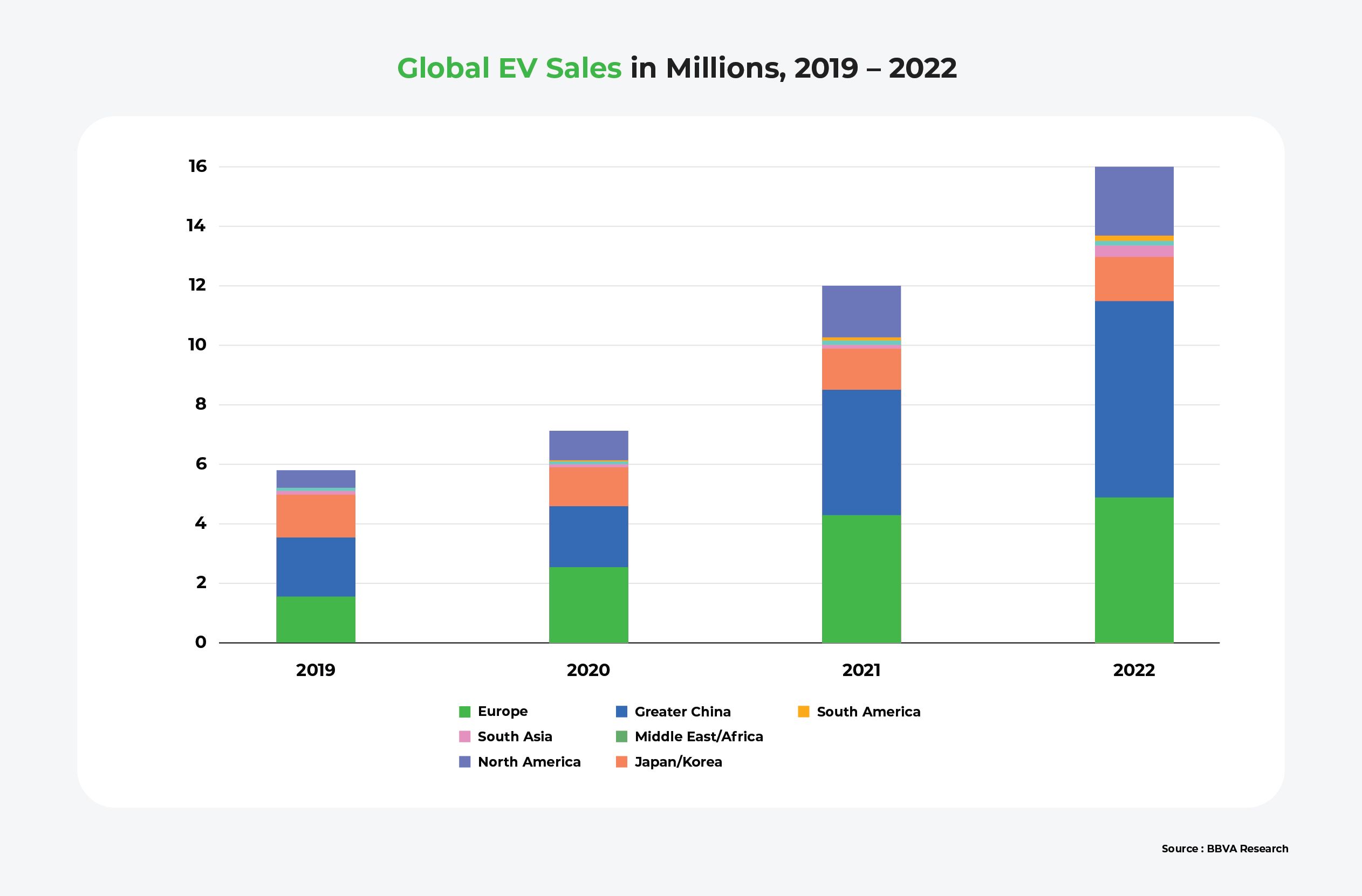
    Here’s how various fleet companies in Singapore are adopting EVs:

    Blue SG Car-sharing Service launched in 2017, and is owned by Goldbell Group. It offers 100% electric Bluecar vehicles at self-service charging stations in 500 locations across Singapore.

    ComfortDelGro Taxi is Singapore’s leading taxi operator. It aims to introduce up to 400 electric taxis by the end of 2022, and increase the EV fleet to 1,000 taxis by 2023.

    Strides Mobility plans to electrify its entire taxi fleet within the next five years, starting with 300 electric taxis arriving progressively from July 2021 onwards.

    Tribecar plans to electrify its fleet of rental cars, in collaboration with Charge+. It has not indicated a specific timeframe for EV adoption.

    Grab aims to electrify 100% of its ride-hailing fleet and 50% of its private hire cars (GrabRentals) by 2030.

    SingPost, Singapore’s postal service provider, is introducing electric three-wheeler scooters and vans, and plans to electrify all of its motorcycles, scooters, and vans by 2026.

    Ninjavan, a logistics company, initiated an EV pilot trial in October 2022, starting with 10 electric vehicles before considering a larger-scale roll-out.

    GoJek aims to operate a fully electric fleet by 2030, and has joined Singapore’s Electric Vehicle Accelerator (EVA) program for emission reductions.

    An infographic listing EV brands and companies of various nationalities

    Government Incentives & National EV Targets

    Singapore’s ambitious goal to reduce land transport emissions by 80% from the 2016 peak is achievable through initiatives like electrification, active mobility, and public transport. Switching from ICE to EVs can cut CO2 emissions by 50% and significantly contribute to national sustainability targets.

    Accordingly, the Singaporean government has developed systematic regulations and incentives to increase EV adoption.

    Singapore’s EV Vision

    Singapore’s government is committed to phasing out ICE vehicles and electrifying the transportation sector by 2040. Their plan includes promoting EV adoption, bolstering charging infrastructure, and promoting environmental health in both the private and public transportation sectors. For example, Singapore aims to establish 60,000 EV charging points — 40,000 in public car parks, and 20,000 on private premises — by 2030.
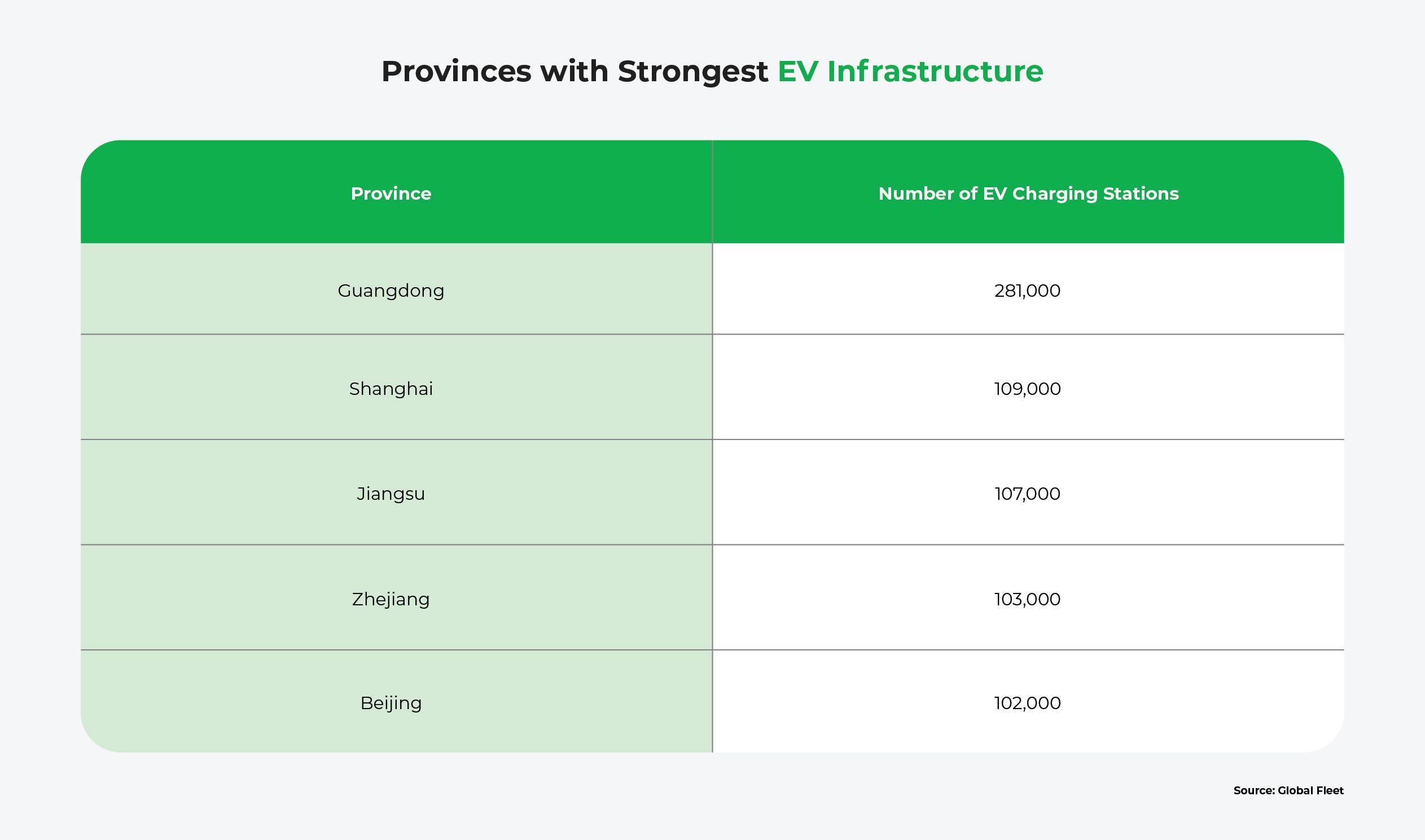
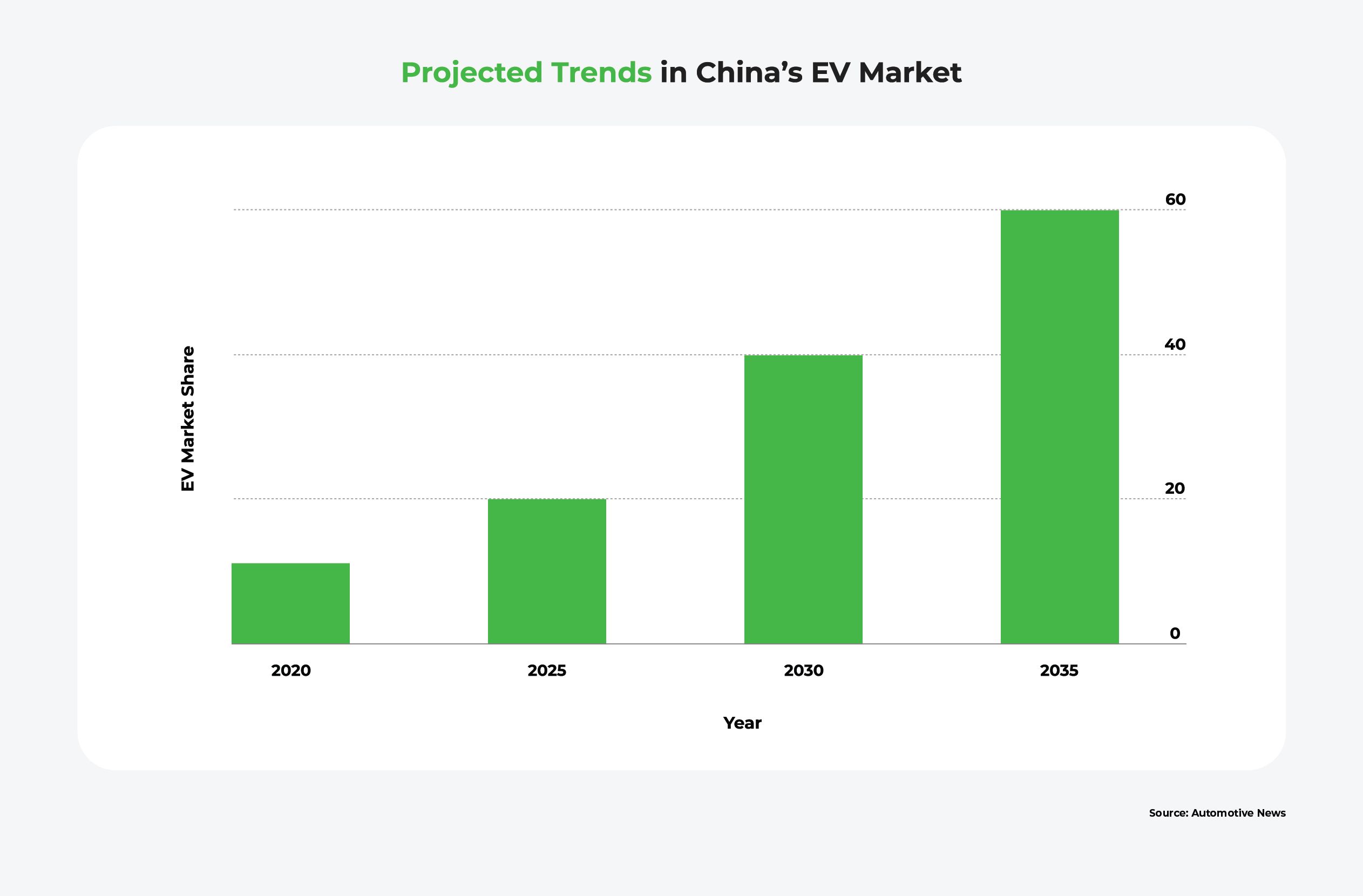
    Infographic displaying planned milestones for Singapore's EV vision from 2025-2050

    EV Incentives

    Such ambitious goals require government incentives and support. Accordingly, Singapore has adopted a three-pronged approach involving tax incentives, regulations and standards, and EV charger deployment. Tax incentives mainly serve to stimulate demand by incentivizing the use of eco-friendly vehicles. Meanwhile, charging regulations and standards, along with government pilot projects to install charging points, function as instruments to facilitate the supply of EVs. As all of these initiatives demonstrate, Singapore is determined to hasten EV adoption.

    Tax incentives

    The government has implemented several measures to lower the cost of purchasing and operating an electric vehicle.

    EV Early Adoption Incentive (EEAI), until December 2023: 45% Additional Registration Fee (ARF) rebate of up to $20,000, reducing the upfront investment.
    Enhanced Vehicular Emissions Scheme (VES), until December 2025: increased rebates of $5,000 for cars, and $7,500 for taxis.
    Additional Registration Fee (ARF) floor reduction, until December 2023: $0 ARF for electric cars and taxis, and combined rebates of up to $45,000.
    Road tax reduction, from January 2022: Up to 34% reduction for electric cars, aligning with internal combustion engine equivalents.

    Regulations and standards

    Clear regulations and national charging standard TR25 empower the LTA to promote and regulate EVs, ensuring alignment with best practices.

    EV charger deployment

    In September of 2021, Singapore’s Urban Redevelopment Authority (URA) and LTA awarded a pilot tender for 600+ EV charging points in public car parks. Additional tenders and the EV Common Charger Grant promote charger deployment in private residences.

    Potential Challenges in the Singaporean EV Market

    Singapore has made substantial progress but is still far from achieving its electrification goals. An overwhelming 97% of the private vehicles on Singapore’s roads are ICE vehicles. This is due to multiple significant challenges within Singapore’s EV ecosystem.

    Regulatory Implementation Issues

    Governmental tax incentives and grants for EVs and charging have provided Singapore’s market with early momentum. But these policies are struggling to achieve long-term implementation.

    Subsidies like EEAI and VES will only be available until 2025; the government has not proposed new policies to support further market growth after that point.

    Furthermore, although the current policies successfully mitigate consumers’ cost concerns, they largely disregard the other major obstacle to EV adoption in Singapore: range anxiety. This is difficult to remedy simply through regulations since addressing it requires fostering a widespread societal mindset shift. As a result, policymakers must turn their attention to more creative solutions.

    Singapore’s ambitious goal of phasing out ICE vehicles brings its own set of challenges. For example, it requires the government to create and implement regulations to overcome obstacles specific to fleets, such as limited EV models, high costs, impractical charging times, and a weak second-hand market.

    Limited Charging Infrastructure

    Singapore’s underdeveloped charging infrastructure and limited distribution of charging stations present another major obstacle to EV adoption.

    An overwhelming 80% of residents live in non-landed public housing, which does not typically contain EV charging stations, and are therefore effectively precluded from EV ownership.

    Furthermore, as the charging network expands, the electric grid may require upgrades to meet increased demand. This is particularly problematic because Singapore has only one entity operating the national grid.

    Financial and Operational Hurdles

    In Singapore’s current market, EVs are not a financially viable option for many consumers. Although pricing varies to some extent, EVs tend to be significantly more expensive than ICE vehicles, due to the high cost of electrical components like batteries and motors.

    Furthermore, mass production of petrol-powered cars lowers costs, whereas the lower demand for EVs renders them more expensive to manufacture. Commercial fleet adoption of EVs is particularly affected by limited availability and exorbitant upfront costs. Long charging times also impact operational efficiency.

    Overcoming these hurdles requires collaboration and innovation among industry players, policymakers, and stakeholders.

    Solutions for Future Growth

    To achieve widespread EV adoption, Singapore must address these challenges head-on. Implementing supportive policies, improving charging infrastructure, and reducing price disparities are vital steps towards fostering a more favorable environment for EVs.

    Governmental Support and Campaigns

    To take the next step towards its electrification goals, Singapore should focus on policies involving sustainability and implementation.

    For example, Singapore can increase demand for EVs by making them more affordable, via incentives such as road tax rebates and COE discounts. Singapore can further encourage EV adoption among private consumers by launching public awareness campaigns to correct misconceptions about EVs, address range anxiety and emphasize the convenience and lifestyle benefits that come along with EV ownership. To also promote EV adoption in commercial fleets, Singapore should implement incentives such as asset leasing and insurance to reduce upfront costs.

    Meanwhile, on the supply side, Singapore can expedite EV infrastructure development by utilizing its financial markets and S$30 billion in planned green bonds. Leveraging its position as a regional financial hub will attract private financing and accelerate infrastructure deployment.

    Charging Infrastructure Expansion

    Supporting EV infrastructure growth in Singapore is a relatively manageable project, due to the country’s small geographical size and low average daily mileage. As a result, Singapore is already making substantial progress. For example, Singapore has announced that every Housing & Development Board (HDB) town will be EV-ready by 2025, starting with 3 to 12 charging points per car park.

    Equipping strategic locations such as residential car parks and strategic locations with chargers can also go a long way to drive EV adoption. Strategically installing a combination of fast charging stations in commercial areas and slow charging stations in residential areas promises to stimulate considerable EV infrastructure growth.

    Private sector involvement is crucial, not just government support. In particular, encouraging taxi fleet operators to install charging points nationwide can increase profits and generate interest in fleet electrification.

    Affordability Initiatives

    In addition to implementing financial incentives, Singapore can make its EVs more affordable by finding ways to reduce production costs and encourage investment. In particular, it can leverage its research and development expertise to develop new technologies across the entire EV ecosystem.

    For example, Singapore can consider scaling up its production technologies, including battery and component manufacturing, charging infrastructure development, and management and analytics software, to lower manufacturing costs and bolster the EV industry’s economic impact. By investing in these areas, Singapore can lower EV prices, as well as creating more job opportunities, and further establish itself as a regional hub for advanced EV technologies.

    Further opportunities lie in the downstream value chain. For example, optimizing material use by embracing circular technologies significantly reduces production costs, in addition to promoting sustainability. Car manufacturers can minimize waste and make EVs more affordable by using recycled and reprocessed materials to create components such as exterior panels. Meanwhile, technologies such as rare earth element recycling can help extend EV batteries’ lifespan, thereby further reducing costs.

    An infographic listing obstacles to EV adoption in Singapore, alongside their associated solutions

    The Future of EVs in Singapore

    Singapore’s commitment to a greener future is establishing it as a dynamic player in the EV landscape. Governmental support and participation of OEMs and fleet operators, along with unique research and development advantages, have enabled Singapore to successfully increase its EV adoption rates, despite financial and infrastructural obstacles. As Singapore continues to lead the way in electrification, it will provide valuable insights for other markets worldwide.

    The next part of this series will explore Vietnam’s potential role in the electrification revolution.

    For more information, check out the FAQ and Resources below!

    FAQ

    How is Singapore’s transportation sector transitioning towards electrification?

    Singapore’s transportation sector is transitioning towards electrification through initiatives such as tax incentives, grants, and the development of a robust charging infrastructure. The government aims to phase out internal combustion engines in favor of EVs by 2040, thereby promoting a sustainable future.

    Which EV models and brands are available in Singapore?

    Singapore offers a range of EV brands, including BYD, Tesla, Bluecar, Hyundai, Renault, MG, Nissan, Volvo, BMW, KIA, AUDI, Porsche, Polestar, Mercedes, Honda, and Ford. These brands provide a combination of pure electric, hybrid, and plug-in hybrid models to cater to different consumer preferences.

    What is the status of charging infrastructure in Singapore?

    Singapore has made significant progress towards implementing a robust EV charging infrastructure. Public charging points are being installed in car parks, and by 2025, every Housing and Development Board (HDB) town will have 3 to 12 charging points per car park. Fast charging stations are also available in commercial areas, contributing to the overall charging network.

    How do EV financing options and costs compare to those of traditional petrol vehicles in Singapore?

    EV financing options in Singapore are supported by tax incentives such as the EV Early Adoption Incentive (EEAI) and Enhanced Vehicular Emissions Scheme (VES). While EVs generally have higher upfront costs than traditional vehicles, due to expensive electrical components, subsidies and reduced road taxes help bridge the price gap.

    How do consumers perceive and use EVs in Singapore?

    Consumer perception and usage of EVs in Singapore are increasing. Thanks to public awareness campaigns addressing range anxiety and highlighting the convenience and benefits of EVs, the EV adoption rate for private vehicles has risen, with cleaner vehicles becoming more common in the car, taxi, and goods vehicle segments.

    What are the environmental benefits of EVs in Singapore?

    EVs in Singapore offer environmental benefits such as reduced CO2 emissions. By switching from internal combustion engines to EVs, Singapore can cut CO2 emissions by 50%, contributing significantly to sustainability targets. EVs also help to reduce pollution, improve air quality, and enhance energy security, leading to a greener and more sustainable transportation ecosystem.

    Resources

    CMS Legal: Electric Vehicle Regulation And Law In Singapore

    Explore Singapore’s regulatory system here.

    Maximize Market Research: Singapore Electric Vehicle Market – Growth, Trends, Covid-19 Impact, And Forecasts (2023 – 2028)

    Gain insight into the Singaporean EV market here.

    EV Reporter: Singapore EV Landscape

    Learn about the EV charging landscape in Singapore here.

    Market analysis of two- and three-wheeler vehicles in key ASEAN member states

    Understand Singapore’s role among ASEAN countries here.

    Buying An Electric Car In Singapore: A Complete Guide

    Find out how to buy an EV in Singapore here.

  • Exploring the Indonesian EV Market

    Exploring the Indonesian EV Market

    Indonesia sits on the world’s largest nickel reserve and is also the highest producer of this crucial raw material. It also has significant reserves of aluminum, cobalt, and copper.

    Furthermore, with a population of 270+ million — the largest in Southeast Asia — Indonesia has a huge transportation sector, and is therefore a prime candidate for EV adoption. As a result, Indonesia can play a dual role in the global EV market: both as a supplier of EV components and as an EV consumer.

    In this second part of the Asian EV landscape series, we zoom in on the Indonesian EV market, and answer these three questions:

    • Who are the major contributors to the Indonesian EV market and what role do they play in the current state of the market?
    • What initiatives are being taken by the Indonesian government to promote the use of EVs in the country?
    • What are the challenges and opportunities in the Indonesian EV market?

    Current State of the Indonesian EV Market

    In 2022, Indonesia’s EV market was valued at US$ 533 million. With a projected CAGR growth rate of 20.9%, Indonesia’s EV market is expected to reach a value of US$ 2 billion by 2029.

    As of October 3rd, 2022, Indonesia had around 28,000 EVs on the road. But the country has set a very ambitious target for its EV market — by 2025, Indonesia aims to have 2.5 million EV users.

    Indonesia is also the second largest automobile manufacturer in the region, after Thailand. Similarly to Thailand, transforming vehicle production into EVs can have a significant positive impact on the country’s GDP.

    Indonesia has therefore set an ambitious EV manufacturing goal — the country looks to produce 1 million EVs by 2035.

    Provided it harnesses its strategic advantages, Indonesia has the potential to emerge as a major player in the EV market. To develop its EV ecosystem and secure a vital position in the EV supply chain, the country will need up to US$ 35 billion in investment over the next 5-10 years.

    The Nickel Advantage

    In 2021, Indonesia produced 760,000 tons of nickel. It has 21 million metric tons of reserves of the mineral. It also has the world’s second-largest copper deposit and significant reserves of other minerals that are required for EV production, e.g., cobalt.

    The Indonesian government recognizes this advantage and is using it to attract investors to the country’s EV market.

    A chart showing various countries' contributions to total global nickel reserves

    In 2020, the Indonesian government implemented an export ban on nickel ore. It created a state-owned holding company, MIND ID, which became a major shareholder in the largest mining companies in Indonesia, Freeport Indonesia and Vale Indonesia.

    In 2021, the Indonesian government established Indonesia Battery Corporation — a joint venture between state enterprises in nickel mining, oil and gas, and electricity sectors. This company is designed to leverage Indonesia’s strategic advantage in the battery sector and facilitate the development of Indonesia’s EV market.

    Calling on the Outside

    By requiring foreign firms to partner with state-owned enterprises, the government is both offering investors greater certainty and encouraging state governments to actively participate in improving the EV landscape. The aim is to attract international investors and develop a competitive advantage in EV batteries through partnerships. Policymakers are encouraging investors to set up facilities for refining, cathode, battery cell, and EV production in Indonesia.

    Foreign direct investment (FDI) has started flowing into the nickel and EV sectors. In the last 3 years alone, the government has signed deals worth more than US$ 15 billion with international companies for nickel mining, refining, and battery manufacturing in the country. Major global brands such as Toyota, Mitsubishi, Hyundai, Ford, Foxconn, LG, and General Motors have invested in the country.

    The Korean conglomerates are also investing US$ 1.1 billion to produce 150,000+ electric vehicle batteries per year. The Japanese company Toyota has also announced plans to invest US$ 2 billion in Indonesia over the 2019-2023 period.

    Discussions with other major players such as Tesla and BYD are in progress.

    An infographic showcasing EV manufacturers of Indonesia's market.

    Indonesia’s National Targets and EV Policy

    Besides leveraging its mineral advantages, Indonesia has developed a US$ 17 billion roadmap to realize its EV ambition. The section below analyzes the Indonesian EV market’s targets, as well as the key components of this roadmap and the specific areas it aims to address.

    To develop the Indonesian EV market, the government has set EV production and sales goals for 2025, 2030, and 2035:

    • Sell 2+ million EV 2-wheelers and 2.5 million total EVs by 2025
    • Produce 7.7+ million EV 2-wheelers by 2025
    • Achieve a cumulative number of 2.2 million electric cars by 2030
    • Achieve a cumulative number of 13 million EV motorcycles by 2030
    • Make 20% of annual vehicle production by 2025 and 30% by 2035 Low Carbon Emission Vehicle (LCEV), including hybrid vehicles, PHEV, BEV, and FCEV

    Reaching these targets requires significant efforts and preparations. As a result, the Indonesian government announced the EV roadmap and incentives for investors in 2021. Following this roadmap, Indonesia has set a 0% luxury vehicle tax, and 100% corporate income tax credit on investments exceeding Indonesian Rupiah (IDR) 500 billion.

    An infographic listing Indonesian governmental policies involving manufacturing, purchasing, and charging EVs

    In 2023, the government will also subsidize the sale of 200,000 electric 2-wheelers and 36,000 electric cars, aiming to reach a sales share of 4% and 5% respectively. The subsidies would reduce the price of an electric 2-wheeler by 25-50%.

    The Focus on 2-Wheeler EVs

    With 115 million 2-wheeler vehicles, Indonesia is the largest 2-wheeler market in Southeast Asia. Policymakers have recognized the importance of these EVs in the national transportation sector and have prioritized them in the EV transition plans.

    The electric 2-wheeler industry has potential to add IDR 171 trillion in annual economic value. Additionally, it can create 215,000 jobs in component and vehicle manufacturing. By 2030, the country can realize IDR 746 trillion in cumulative economic value creation.

    To encourage the purchase of electric 2-wheelers in 2023, the government has announced a subsidy of IDR 6.5 million. In Jakarta, policy incentives, such as a subsidy policy of 7 million rupiahs (around $460) on each new electric motorcycle that is locally made or that has at least 40 percent of its components sourced locally, have been announced.

    The focus on electric 2-wheelers is also logical given the state of infrastructure in the country. Public charging stations in Indonesia are sparse, so home charging with slow chargers will be the mainstay in the short-term.

    Despite the policy focus, and the current availability of charging infrastructure, the Indonesian EV market still faces several challenges that need to be addressed.

    Infographic illustrating the benefits of electrifying Indonesia.

    Challenges in the Indonesian EV Market

    Despite its obvious advantages and strong policy push, the Indonesian EV market faces several challenges that might prevent it from reaching its goals for the future if left unaddressed. Below we examine three of these challenges.

    1. Lack of Comprehensive Charging Infrastructure

    By 2022, Indonesia had only 439 charging stations and 961 battery swap stations, most of them located in urban areas like Java and Jakarta. That’s a long way to go until the country can reach its target to install 31,859 charging stations and 67,000 battery swapping stations by 2030.

    Although 2-wheelers can rely on the available home charging infrastructure, it won’t be long before the number of EVs on the road outgrows the available infrastructure. And as mentioned, the current infrastructure cannot support the electrification of larger, 4-wheeler vehicles.

    However, improving the Indonesian EV infrastructure isn’t as simple as adding new charging points. Numerous issues still need to be addressed, including high investment costs for public fast charging stations, the absence of standards for charging station operations, lack of land availability in strategic locations, and untested business models for charging/battery swap stations.

    Unfortunately, this lack of charging infrastructure in Indonesia prevents the public transportation sector and fleet operators from transitioning to EVs, which also hinders the growth of the Indonesian EV market.

    2. Higher Cost of EVs

    ICE vehicles’ cost in Indonesia is still relatively low compared to EVs. For example, even after the introduction of the new luxury tax, the total cost of ownership (TCO) of the Nissan Leaf BEV is greater than the cost of its gasoline counterpart, the 1.8L Toyota Corolla.

    Contributing to the high cost of EVs in Indonesia is the import duty. The existing taxation scheme does not favor imports. Fully assembled units (CBU) face a 50% import duty, while imported parts that are assembled locally (CKD) are charged 10% of the value.

    Given the insufficient supply of domestic components, Indonesia imports most components that go into EV production. Despite the savings on nickel and other minerals, the high import tax on the remaining components slows down local manufacturing.

    The high costs of EVs in Indonesia are making them undesirable for end-users, which also puts a damper on the growth of the Indonesian EV market.

    3. Lack of Public Acceptance

    The challenge in Indonesia, as well as other emerging markets, is the perception of vehicles, especially battery electric vehicles (BEVs), as luxury items. Consequently, any government funding allocated to promote them is seen as a subsidy for the wealthy and is met with resistance from the public.

    This raises concerns about the scale and sustainability of the subsidy in Indonesia. Convincing cost-conscious Indonesian buyers to transition to higher-priced BEVs will be difficult, making the subsidy crucial in reducing the price of BEVs to an acceptable level.

    Unlike other countries like India and China, Indonesia does not have domestic automakers and a supplier base who are capable of developing and producing affordable BEVs.

    Additionally, compared to India, Indonesia has relatively lower fuel prices and higher electricity prices. This makes EVs less appealing due to their lower running costs per kilometer in Indonesia.

    A table comparing fuel and electricity prices in India and Indonesia

    Strategies to Grow Indonesia’s EV Market

    Although the journey to EV adoption in Indonesia is not an easy one, the country can still take several measures to facilitate the process. Given the significant positive impact of EVs, both on the environmental and socio-economic front, these efforts will be well worth it to grow Indonesia’s EV market.

    Below we analyze three strategies the Indonesian government can consider to unlock the full potential of its EV market.

    1. Develop EV Infrastructure

    The government has already realized its infrastructural challenges, and is taking active steps to tackle the issue. Indonesia has tasked the Agency of Assessment and Application of Technology (BPPT) and the State-Owned Electric Company (PLN) with the responsibility of developing charging infrastructure.

    PLN aims to install 31,000+ EV charging stations by 2030 and has earmarked a US$ 3.7 billion investment to meet its goal. It has offered to sell electricity for EV charging at IDR 714 (5 US cents) per kWh (bulk price) to charging companies, who can then sell it for up to IDR 1,300 (8 US cents) per kWh.

    These kinds of initiatives will help startups and investors develop robust business models for charging infrastructure development. PLN is also offering several incentives for home charging, including discounts for connection upgrades and special tariffs for charging at night.

    Here are some additional recommendations to help Indonesia roll out a robust charging infrastructure:

    • Implement a centralized portal to check information on charging points and battery swapping stations
    • Integrate EV charging infrastructure with renewable energy sources
    • Encourage petrol stations to offer charging facilities on their premises

    Infographic showing existing challenges and solutions for Indonesia's EV market.

    2. Make EVs More Affordable

    The government is offering financial incentives worth IDR 7 trillion to encourage the purchase of 800,000 new electric motorcycles and conversion of 200,000 conventional 2-wheelers. The subsidies are in addition to the existing tax breaks. Incentives for around 35,800 electric cars and 138 electric buses are also planned.

    Making EVs more affordable, however, requires more than tax breaks and financial incentives. The Indonesian EV market requires a more innovative approach to manufacturing, which could contribute to the lower cost of EVs, making them more desirable.

    For example, the government can:

    • Explore and develop new business models and technologies. Selling EVs without batteries is a great way to bring down their price, but this would require a mature, country-wide battery swapping network.
    • Invest in R&D. R&D is crucial to help Indonesia become a manufacturing and assembling hub for EVs. If the country can achieve this goal, it can greatly reduce EV prices for its citizens.

    3. Promote EV Acceptance Through Investments and Awareness Campaigns

    The government needs to facilitate access to international sources of funding. EV projects qualify as sustainable projects and can get access to ESG funds. For example, electric bus operator DAMRI, Indonesia’s oldest state-operated public transport operator, is spearheading the transition to EVs in public fleets with US$ 150 million ADB funding.

    Upon realizing that public transport is also shifting to EVs, consumers will be less prone to viewing electric cars as a luxury. Foreign investments will also help Indonesia address its citizens’ unique transportation needs, positioning EVs as a better choice than ICE vehicles.

    Investment in renewable energy sources might also drive down electricity prices, making EVs more attractive to potential buyers. Finally, the country should promote investment in awareness campaigns on the benefits of EVs, to shatter any public misconceptions.

    • Build a body of knowledge within the Indonesian EV market, like best practice documentation and innovative business models
    • Promote collaborations, cooperative competition, and partnerships for international investors and large projects
    • Engage the international EV community and investors in the Indonesian EV market

    Future Outlook of the Indonesian EV Market

    Indonesia, with its abundant reserves of nickel and other crucial minerals, has the potential to become a major player in the electric vehicle (EV) market. As the largest market in Southeast Asia and a significant producer of EV components, Indonesia aims to boost EV adoption among its citizens and become an EV producer by 2035. This, however, requires help from investors and the government.

    Despite the government’s initiative, the Indonesian EV market faces challenges. The lack of a comprehensive charging infrastructure, the higher costs of EVs compared to internal combustion engine vehicles, and the need for adequate investment pose obstacles to its growth.
    However, the government has outlined strategies to overcome these challenges, including infrastructure development, making EVs more affordable through innovative manufacturing approaches and financial incentives, and increasing investment in the EV industry through partnerships and research initiatives.

    By addressing these challenges and implementing these strategies, Indonesia can unlock the full potential of its EV market and contribute to a greener and more sustainable transportation sector.
    In the next part of this series, we will move to another major Southeast Asian market, Singapore.

    To learn more about the Indonesian EV market, please see the FAQ and Resources sections below.

    FAQ

    What are the benefits of electric vehicles over traditional gasoline-powered vehicles?

    Electric vehicles (EVs) offer multiple benefits over traditional vehicles. EVs are more environmentally friendly as they emit zero tail-pipe emissions and negligible noise. EVs are also more economical to run as the cost of charging is much lower than the fuel cost of traditional vehicles. EVs also have lower maintenance because they do not have an engine and have a much lower number of moving parts.

    How is Indonesia building the necessary infrastructure for electric vehicles?

    The government has tasked PLN, the state-owned power company, with the responsibility of developing charging infrastructure. PLN aims to install 31,000+ EV charging stations by 2030. This should help startups and investors to develop robust business models for charging infrastructure development. PLN has also offered several kinds of incentives for charging at home, including discounts for connection upgrades and special tariffs for charging at night.

    What is the potential impact of electric vehicles on the environment in Indonesia?

    The three major segments responsible for carbon emissions in Indonesia are electricity, industry, and transportation. EVs present an opportunity to address the air pollution caused by road transportation. EVs can also be leveraged to initiate a transition to renewable sources of electricity. For example, consumers and electricity companies can install solar power to charge their EVs. EVs also reduce noise pollution.

    How does battery technology affect the development of the electric vehicle market in Indonesia?

    The battery is the most important component in an EV and Indonesia has significant reserves of nickel, cobalt, and copper, which are required in battery production. Indonesia is discouraging the export of mineral ore and is encouraging companies to invest in the country for EV and battery manufacturing. Companies are investing in mining, refining, and manufacturing operations within the country. This is helping to develop the EV market in Indonesia.

    How can individuals and businesses participate in the Indonesian electric vehicle market?

    Investors can invest in the Indonesian EV market by participating in any of the priority areas identified by the policymakers. EV batteries are one of the most significant areas of focus because the country has adequate mineral reserves. The country also has a very large 2-wheeler market which offers potential opportunities for investment. Public fleet electrification and charging infrastructure development are other major opportunity areas.

    Resources

    International Council on Clean Transportation: Indonesia transport electrification strategy

    Learn about Indonesia’s efforts to promote e-mobility across the country.

    Maximize Market Research: Indonesia Electric Vehicle Market

    Get a comprehensive overview and analysis of the EV market in Indonesia from 2022-2029.

    MDPI: Current Readiness Status of Electric Vehicles in Indonesia

    Learn how Indonesia can prepare itself for the shift to EVs in its transportation sector.

    IEA: Global EV Outlook 2023

    Learn about the latest innovations and updates in the global EV industry.

    BCG Report: Electrifying Indonesia’s 2-Wheeler Industry

    Discover why Indonesia’s policy focus on 2-wheeler EVs can help the country reach its goals for 2035.