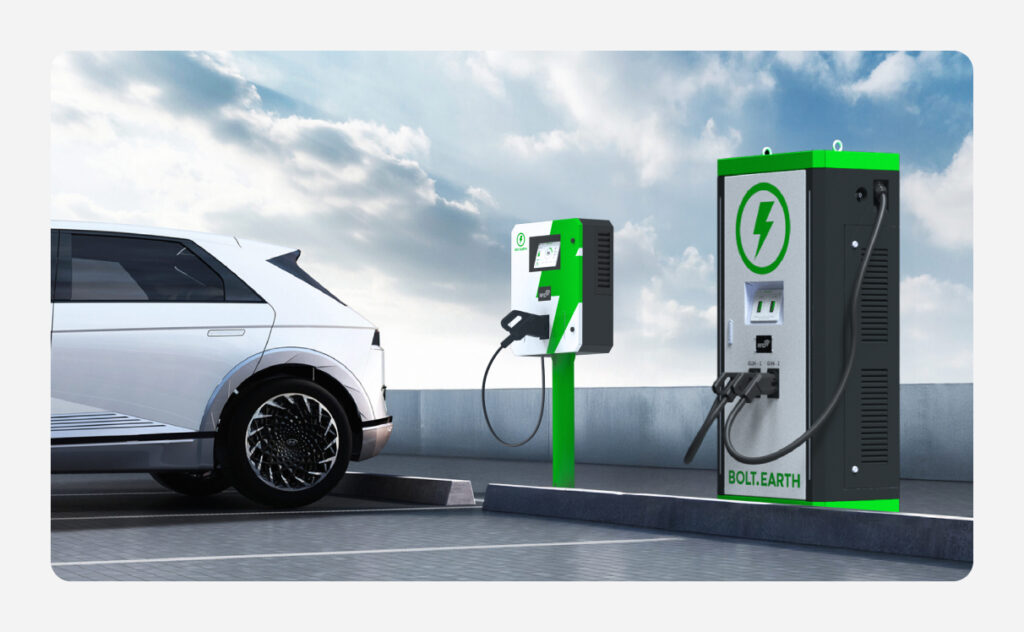
As EV adoption accelerates, the limiting factor is no longer vehicle availability but the infrastructure required to support it.
State policies are increasingly shaping how EV ecosystems evolve, particularly in areas such as charging access, grid readiness, and private sector participation.
Among Indian states, Karnataka stands out as an early mover that has consistently aligned policy with ecosystem development. For EV infrastructure players, the Karnataka EV Policy offers a clear signal of where the market is heading and how charging networks are expected to scale.
TL;DR
Karnataka EV Policy Highlights
The state transition to the Clean Mobility Policy 2025–30, targeting ₹50,000 crore in investments by 2030.
Capital incentives ranging from 20% to 35% for MSMEs and up to 25% for large enterprises.
Plans to add 2,500 new charging stations via Public-Private Partnerships (PPP) and charging points every 60–70 km on state highways.
Karnataka rolled back the 100% road tax exemption in 2026; new lifetime taxes range from 5% to 10% based on vehicle cost.
Allocation of ₹3,400 crore for Battery Energy Storage Systems (BESS) to support the grid during peak EV demand.
Establishment of dedicated mobility clusters in Gauribidanur, Dharwad, and Harohalli.
What is Karnataka EV Policy?
The Karnataka EV Policy is a regulatory and incentive framework designed to promote electric mobility by supporting:
EV manufacturing
EV adoption
Charging infrastructure deployment
Overview of Karnataka EV Policy
Karnataka, recognized as the first Indian state to launch a dedicated electric vehicle (EV) policy in 2017, strengthened the framework in 2021 to improve investor economics, and expanded it again on February 11, 2025, through the Clean Mobility Policy 2025–30.
Objectives and Vision
The primary vision is to attract ₹500 billion (₹50,000 crore) in investment by 2030 and create a sustainable, multi-modal transport system. The policy envisions:
100% electrification of public transport and government fleets by 2030
Generating high-value employment across the EV supply chain
Fostering innovation in hydrogen fuel cell technology alongside battery electric vehicles (BEVs)
Key Incentives for Manufacturers and Consumers
The Karnataka Clean Mobility Policy 2025–2030, alongside the 2026 Taxation Amendment, establishes a balanced ecosystem. While the state is moving toward a revenue-generating model for high-end vehicles, it remains one of the most aggressive Indian states in subsidizing manufacturing and infrastructure.
1. For Manufacturers: Boosting the Supply Chain
To cement its status as a global EV hub, Karnataka offers heavy capital subsidies and operational cost waivers, particularly focusing on MSMEs and R&D.
Category
Capital Subsidy (on Fixed Assets)
Maximum Cap
Micro Industries
20% to 35%
₹3.5 Million
Small Enterprises
20% to 30%
₹22.5 Million
Medium Enterprises
20% to 25%
₹100 Million
R&D Projects
30% Reimbursement of costs
₹10 Million
Operational Perks for Industry:
Tax Exemptions: A 100% exemption on electricity Duty for the initial 5 years (depending on the industrial zone).
Land Benefits: A 100% reimbursement of land conversion fee and full exemption from stamp duty on lease or sale of land.
EV Clusters: Special incentives for units set up in designated clusters like Dharwad and Gauribidanur.
2. For Consumers: The New Taxation Era
Effective April 1, 2026, Karnataka transitioned from a “zero-tax” regime to a tiered Lifetime Tax (LTT) for electric four-wheelers. Budget EVs remain accessible while luxury models contribute more to infrastructure funds.
Vehicle Type
Price Bracket
Lifetime Road Tax
Two-Wheelers
All Prices
0% (Fully Exempt)
Electric Cars/Jeeps
Under ₹10 Lakh
5%
₹10 Lakh – ₹25 Lakh
8%
Above ₹25 Lakh
10%
Additional Consumer Benefits:
Fast Charging Subsidy: A 25% capital subsidy (up to ₹10 lakh) for the first 500 public charging stations.
Battery Swapping: 25% subsidy for swapping stations, capped at ₹3 lakh for 2-wheeler networks and ₹10 lakh for bus networks.
Commercial Permits:Zero-fee permits for commercial electric and green vehicles
Infrastructure Development Plans
A core pillar of the Karnataka electric vehicle policy is the rapid expansion of the charging network to eliminate “range anxiety” for long-distance travelers.
Charging Stations and Grid Readiness
The state has moved beyond urban-centric charging to a corridor approach.
The Bangalore Electricity Supply Company (BESCOM) and Karnataka Road Development Corporation Limited (KRDCL) are installing fast chargers every 60–70 km at toll plazas, bus bays, and truck laybys.
The 2024-25 budget allocated ₹350 million to establish 2,500 new stations under a public-private partnership (PPP) model.
To handle demand, Karnataka is investing ₹3,400 crore in Battery Energy Storage Systems (BESS), ensuring excess solar energy can be used for EV charging at night without straining the grid.
For stakeholders in the EV ecosystem India, Karnataka offers unique advantages:
Stacking incentives from the EV policy with the ESDM (Electronics System Design and Manufacturing) policy allows MSMEs to reduce CAPEX by 40–60%.
The policy mandates a percentage of parking in cities for clean-fuel vehicles, creating a “push” for e-commerce and delivery companies to electrify fleets.
Charge Point Operators (CPOs) benefit from a 25% capital subsidy (up to ₹10 lakh) for the first 500 fast-charging stations.
Final Thoughts
The Karnataka EV policy story is now bigger than EVs alone. It spans manufacturing, charging, grid readiness, land use, skills, and clean mobility clusters. This makes the state one of India’s most important policy labs for companies operating across EV ecosystem India. Long-term winners will be businesses that align with infrastructure density, fast-charging access, and the new economics of clean mobility.
Frequently Asked Questions
What is the latest Karnataka EV policy?
Karnataka’s latest major framework is the Clean Mobility Policy 2025–30, which extends the state’s EV push beyond vehicles into charging, hydrogen, battery recycling, testing, and manufacturing.
Is there still a road tax exemption for EVs in Karnataka in 2026?
No.
The 100% exemption was rolled back in 2026. EVs are now taxed based on price: 5% for vehicles under ₹10 lakh, 8% for ₹10–25 lakh, and 10% for luxury EVs above ₹25 lakh.
Can private sector employees in Karnataka get BH (Bharat) Series registration for EVs to avoid high state taxes?
This remains a grey area. While the Karnataka High Court ruled in favor of private employees (working in companies with offices in 4+ states) getting BH series, RTO have resisted implementation.
As of 2026, while the option exists on paper, many dealers still struggle to process it. If one successfully gets a BH plate, they pay tax in two-year increments at a centralized rate, which is significantly lower than Karnataka’s 8–10% upfront lifetime tax.
Is an EV still worth it in Karnataka now that the 0% tax is gone?
Yes.
Despite the 5–10% road tax, the “Total Cost of Ownership” (TCO) still favors EVs.
For a mid-range SUV (like a Nexon EV or XUV400), the upfront tax adds up to ₹1.2–1.6 lakh, but lower running costs (~₹1.4/km vs. ~₹7-9/km for petrol) offset within 18–24 months.
Overview of the Policy (Scope, Targets, Timeframe)
Delhi EV policy 2026, originally notified in 2020, has been extended through March 2026-2030. The government aims to position Delhi as a leader in electric mobility. The 2020 policy set ambitious goals, such as EVs accounting for 25% of all new vehicle registrations by 2024. While timelines shifted, the extension continues the original incentives and targets. In July 2025, officials confirmed the extension until March 31, 2026, reaffirming Delhi’s commitment to electrification and even setting long-term stretch goals of 100% EV adoption (over a few years) in select vehicle segments.
TL;DR
Delhi EV Policy 2026 Quick View
Scrappage: Up to ₹1 lakh incentive for scrapping old BS-IV or older cars.
New Mandate: Delhi released draft EV policy with new strong incentives and a registration ban on petrol two-wheelers starting April 1, 2028.
Subsidies: Phased tapering incentives for 2Ws (up to ₹30,000) and 3Ws (up to ₹50,000) in Year 1.
Tax Waivers: 100% road tax and registration fee waiver for EVs; 50% for strong hybrids (under ₹30 lakh).
Incentives and Mandates by Vehicle Type
Delhi’s EV Policy 2026-2030 offers phased incentives and clear mandates across vehicle types.
Vehicle Category
Purchase Subsidy (Year 1)
Scrappage Incentive
Key Mandate
Electric 2W
₹10,000 per kWh (Max ₹30k)
₹10,000
No petrol 2W registrations from April 1, 2028
Electric 3W
₹50,000 (Fixed)
₹25,000
Only electric 3W registrations from Jan 1, 2027
Electric 4W
Tax & Reg. Fee Waiver
₹1,00,000 (First 1L buyers)
Government fleet 100% EV by end of 2026
Strong Hybrids
50% Tax/Reg. Fee Waiver
N/A
Transition tech for vehicles under ₹30 lakh
1. Electric Two-Wheelers
For electric two-wheelers, incentives apply to models priced up to ₹2.25 lakh (linked to battery capacity and will reduce over three years. Subsidies start at ₹10,000/kWh (year 1, capped at ₹30,000), tapering to ₹6,600/kWh (Year 2, capped at ₹20,000) and ₹3,300/kWh (Year 3, capped at ₹10,000).
A scrappage incentive is proposed at ₹10,000 for turning in an old petrol or CNG scooter to buy an EV. The policy mandates that no new petrol two-wheelers be registered from April 1, 2028.
2. Electric Three-Wheelers
For electric three-wheelers (auto-rickshaws), the incentives are now phased at ₹50,000 in Year 1, ₹40,000 in Year 2, and ₹30,000 in Year 3.
A ₹25,000 scrappage incentive is proposed for old CNG autos. The policy mandates that only electric three-wheelers are allowed for new registrations from January 1, 2027.
3. ElectricGoods Vehicles
For N1 category electric goods vehicles up to 3.5 tonnes, the policy incentives are ₹1 lakh in year 1, ₹75,000 in year 2, and ₹50,000 in year 3. A scrappage incentive of ₹50,000 is proposed for e-goods vehicles.
4. Electric Four-Wheelers
According to the policy, all electric four-wheelers priced up to 30 lakh can enjoy 100% waiver of road tax and registration fees until March 31, 2030. A scrappage incentive of ₹1 lakh is proposed for scrapping BS-IV or older car (limited to the first 1 lakh buyers). Strong hybrid cars priced up to ₹30 lakh will get 50% reduction in road tax and registration fees, but no scrappage incentives.
Support for Charging Infrastructure
Delhi’s policy prioritizes charging accessibility, aiming for a public charging facility within 3 km of any location. The EV Charging Infrastructure in Delhi has grown rapidly, with the EV Charging Infrastructure Action Plan (2022–25) committed to tens of thousands of chargers.
For example, one report noted Delhi already has approximately 2,452 public charging points and 234 battery-swap stations. By early 2026, the network had expanded to 9,000 public charging stations, with a target of 30,000 in the coming years.
To facilitate rollout, Delhi offers subsidies and amenities for charger installation, including concessional land in public parking for private charging operators, and explicitly subsidizes charger installation costs.
Battery-swapping stations receive additional support, including 100% reimbursement of state GST on advanced batteries. Regulations mandate EV-ready infrastructure in new buildings, requiring 20% of parking spaces to be equipped with power conduits for chargers. The government is also working to lower electricity tariffs for EV charging, ensuring affordability and widespread adoption.
Private & Home Charging
While public infrastructure is expanding, most users prioritize the convenience of home setups. One of the most common questions from new buyers is: can you charge an electric car at home with normal plug?
Well, yes, you can charge most EVs using a standard 15A (Ampere) socket. However, this is “Level 1” charging and is significantly slower than a dedicated setup.
For faster and safer “Level 2” charging, it is recommended to install a dedicated wallbox charger. Under the current policy, no special government approval is needed for private residential chargers, and DISCOMs in Delhi offer simplified “EV-only” connections with subsidized tariffs.
To navigate the city’s charging points, apps like Statiq, EV Connect, and Bolt.Earth are considered the gold standard for real-time availability and payment integration in 2026.
Mandates & Public Fleets Electrification
Delhi has used mandates and fleet procurement to drive EV demand. The policy directs the city to take the lead by greening its own fleet. All leased or hired government cars are to be converted to EVs within 12 months of the policy’s issue. The city has aggressively expanded its e-bus fleet, operating 3,535 electric buses out of 5,335 total by early 2026. Under the PM E-Drive program, Delhi is procuring 2,800 e-buses in Phase-1 (bringing the fleet to ~10,430) and has requested another 3,330 e-buses in Phase-2. The target is to reach 7,500 electric buses by the end of 2026 and 11,000 by 2028. From January 1, 2026, no new ICE vehicles will be allowed in aggregator-based operations, and existing BS-VI two-wheelers can operate only until December 31, 2026.
Delhi’s public transport electrification is illustrated by the image below (a NUEGO electric bus that recently entered service). These e-buses, covering major routes and last-mile feeders, not only cut pollution but also set up a model for other cities. Similarly, Delhi’s auto-rickshaw sector is targeted: the government planned to phase out all CNG auto-rickshaws by 2025 in favor of e-autos (though that was deferred in the latest policy draft). Delivery and ride-hailing platforms are being urged to switch to e-2Ws and cabs, leveraging Delhi’s incentives to accelerate the transition. The overall aim is clear: public fleets, city vehicles, and even paratransit services must lead the EV transition, multiplying the impact of subsidies and demonstrating new technology on the roads.
Policy Impact: EV Registrations, Sales and Charging Growth
Delhi has emerged as one of India’s top EV markets. A government data summary for 2025 showed the city with an EV-to-ICE ratio of approximately 14%, meaning roughly 1 in 7 new vehicles registered were electric, compared to the national average of 8%. One analysis found Delhi’s EV share second only to Kerala’s in recent quarters. Since 2020, Delhi has registered over 86,000 EVs, with strong uptake in two-wheelers and three-wheelers and growing adoption of electric cars. Charging infrastructure has expanded rapidly, from a few hundred points in 2020 to approximately 9,000 by 2026. Fast-charging hubs are being set up at transit centers, parking lots, and metro stations, reducing range anxiety and supporting adoption.
In sum, the policy’s impact data suggest Delhi is outperforming older state goals: it already meets or exceeds interim targets (e.g., 10% EV share in sales, as Transport Minister Gahlot noted on the action plan launch) and is on track to meet the policy’s major aims.
Implementation and Governance
To implement the EV policy, the Transport Department of Delhi is the nodal agency. The policy mandates the creation of a dedicated EV Cell within Transport Delhi, staffed with technical experts to coordinate implementation. A State Electric Vehicle Board oversees the strategy and reviews progress. Funding comes from several sources: the city has ring-fenced its Air Ambience Fund (pollution fines and related revenues) to subsidize EVs.
New pollution-related charges (e.g., additional road tax on high-emission vehicles, congestion fees on cabs) were explicitly earmarked to refill the EV fund. Furthermore, all central FAME subsidies (for eligible vehicles) are redirected through Delhi’s scheme, and pending grants from the earlier Air Ambience Fund are being cleared by the transport department. Practically, subsidy payments have been a challenge: previous governments had accrued backlogs of incentive claims, which current authorities have promised to clear.
For outreach and oversight, Delhi’s EV policy calls for public awareness campaigns and periodic policy reviews. The government tracks key metrics such as EV registrations, charger installations, pollution levels, and adjusts rules accordingly. By late 2025, a high-level committee including officials and experts was finalizing the next EV policy draft based on these results. Notably, Delhi has begun preparing policy “2.0” for implementation from FY2027 onward, reflecting lessons learned. For example, strengthening subsidy disbursal, incorporating a scrappage scheme, and even opening an “open database” of charging points.
Challenges & Policy Adaptations
Despite a strong vision, Delhi’s EV push has faced hurdles. One persistent issue was implementation delays: many buyers complained that promised subsidies took months to arrive, causing confusion and frustration. The new government pledged to streamline this by issuing “purchase stickers” for vetted buyers and automating claims. Infrastructure siting also posed challenges (hence the concessional location policy), as land in Delhi is scarce.
Safety and regulatory clarity have been emerging issues: for example, Delhi’s plan to incentivize retrofitting old cars (at ₹50,000 per conversion) sparked industry debate in 2026, with automakers citing safety concerns. Policymakers note that while retrofits could help remove old polluting vehicles, the approach needs stricter standards to address those concerns.
Air quality requirements have also pressured timelines. Delhi’s Supreme Court-mandated bans on older vehicles (petrol >15 years, diesel >10 years) mean many owners will either scrap or convert their ICE cars. The EV policy now dovetails with these rules: for instance, scrappage incentives were introduced so that owners of banned vehicles get a bonus to switch to EVs. To address e-waste and battery recycling, Delhi has started drafting rules (and even offering battery swapping trials). Each year’s budget or policy tweak has added new elements —e.g., doubling swap station incentives and adding interest subvention for loans. These adaptations show Delhi continuously refining its framework based on feedback from industry and civil society.
Sodium-ion batteries are a viable alternative to lithium-ion batteries
As Delhi scales its EV fleet, the industry is pivoting toward more stable chemistries. Sodium-ion batteries are a viable alternative to lithium-ion batteries in the Indian context for several reasons:
Thermal Stability: Sodium-ion cells handle Delhi’s hot summers better, significantly reducing “thermal runaway” or fire risks.
Cost-Efficiency: Sodium is derived from abundant sea salt, potentially reducing battery costs compared to lithium-ion.
Sustainability: It reduces India’s reliance on imported lithium and cobalt.
Delhi in Context: National Goals and Lessons for Others
Delhi’s EV penetration (14% in 2025) is among the highest nationwide, reflecting both strong policy incentives and people’s willingness to adopt new tech. The city also ranks second in public charging infrastructure after Maharashtra. Its aggressive charger-to-EV ratio target of 1:15 surpasses many state norms. Politically, Delhi’s leaders have extended and expanded the policy, signaling consensus on EVs as a solution to Delhi’s notorious air pollution.
However, Delhi’s fiscal constraints and land scarcity differ from those of larger states. Some states like Maharashtra and Karnataka have more generous budgets and industrial bases, and their targets can be even more ambitious (e.g., Maharashtra’s goal of 10% EV share in new sales by 2025 and Karnataka’s plan to electrify 100% of small cargo vehicles by 2030). Nationally, the EV mission also involves central incentives (FAME, tax breaks) that Delhi complements with its own schemes.
Other cities can learn from Delhi’s integrated approach: combining purchase subsidies, charging network planning plus fleet mandates creates synergies. For instance, Delhi’s experience shows how important it is to waive road taxes and to involve local electricity regulators in tariff design. The capital’s efforts at single-window approvals and public data dashboards could be models for other cities. This makes Delhi a case study in EV Policy and Infrastructure in India, offering lessons for states with different fiscal and industrial contexts.
Final Thoughts
Delhi EV policy 2026 is a comprehensive program anchored on clear targets and generous incentives. It has driven measurable growth in EV adoption and infrastructure in the last two years, and the government has demonstrated political will to refine the policy further. While challenges remain, from execution bottlenecks to new tech issues like retrofitting, Delhi’s strategy offers valuable lessons. It shows that even a dense, high-pollution city can accelerate EV uptake through decisive policy, and that continual adaptation (as seen in Delhi’s upcoming “EV Policy 2.0”) is key to staying on track. Other states and cities seeking to ramp up EVs can study Delhi EV policy infrastructure, its public charging push, and its proactive fleet electrification, while also being mindful of Delhi’s unique context (cost of living, congestion, etc.) when replicating its approach.
Key Takeaways
Act Fast: Subsidies for two-wheelers are at their highest in Year 1 and will decrease annually.
Check Eligibility: Subsidies are generally capped at vehicles priced under ₹2.25 lakh for 2Ws and ₹30 lakh for 4Ws.
Hybrid Advantage: If you aren’t ready for a full EV, strong hybrids now enjoy a 50% tax waiver in Delhi.
Frequently Asked Questions
Which vehicle segments benefit most from Delhi’s EV incentives?
Two-wheelers and three-wheelers benefit the most. High per-kWh subsidies, scrappage incentives, interest support, and permit flexibility make EVs significantly cheaper than ICE alternatives in these segments. Commercial fleets and last-mile delivery vehicles are also heavily targeted.
Are EV buyers in Delhi exempt from road tax and registration fees?
Yes. All EVs registered in Delhi receive a 100% waiver on road tax and registration fees, regardless of vehicle category. This remains one of the most impactful non-cash incentives in the policy.
Has Delhi’s EV policy actually increased EV adoption?
Yes. Delhi has one of the highest EV penetration rates in India, with EVs accounting for roughly 14% of new vehicle registrations in 2025, well above the national average. Charging infrastructure has expanded from a few hundred points in 2020 to thousands today.
Is it mandatory for new apartments in Delhi to have EV chargers?
Yes. Current building bylaws require 20% of all parking spaces in new residential and commercial complexes to be “EV-ready” with power conduits and wiring already in place.
How do I apply for the ₹1 lakh car scrappage incentive?
To claim the ₹1 lakh bonus, you must scrap a Delhi-registered BS-IV or older car at an authorized facility. You will receive a Certificate of Deposit (CoD), which must be presented at the time of purchasing a new EV (priced under ₹30 lakh) within 6 months.
Maharashtra has unveiled a bold Electric Vehicle (EV) Policy 2025–2030 with a budget of ₹1,993 crore (more than double the previous allocation). The vision is to make Maharashtra “India’s leading hub for electric mobility,” driving large-scale EV adoption, charging infrastructure, and local manufacturing.
Key targets include 30% of all new vehicle registrations to be EVs by 2030, with higher goals for specific segments (e.g., 40% of new 2- and 3-wheelers). These EV adoption targets of Maharashtra 2030 echo national ambitions of 30% EV sales by 2030 as India pursues net-zero emissions by 2070.
Maharashtra’s EV market is already strong. In FY2025, the state sold approximately 2.46 lakh EVs (12.5% of India’s total). It led the nation in electric two-wheeler sales (211,880 units, 18% of India’s e-2W) and e-cars (17,133 units, 16% of India’s e-cars). Domestic OEMs (Tata, Mahindra, Force, Bajaj, Kinetic, Piaggio, etc.) have strong EV manufacturing bases in Maharashtra. The new policy builds on this momentum by making EVs more affordable and convenient (through subsidies and infrastructure) and by strengthening the local EV industry and supply chain.
In this blog, we explore:
What does Maharashtra’s EV Policy 2025–2030 change in practice
How these policy shifts impact EV buyers, fleet operators, OEMs, and charging point operators
The key challenges and execution gaps that could slow adoption
Key Goals and Targets
The Maharashtra EV Policy 2025 sets ambitious adoption targets and environmental goals. For 2030, it envisions roughly:
Charging network: Stations every 25 km on highways; at least one fast EV charger at every fuel station and MSRTC bus depot; and one charging point in every government office parking. This expansion will strengthen the EV charging network across the state.
Buildings: All new residential buildings must be EV-ready; new commercial buildings must reserve 50% of parking for EVs (existing to retrofit 20%).
4-wheelers (electric cars) – ₹1.5–2.0 lakh per vehicle for transport or commercial use (taxis). The subsidy is capped at approx. 25,000 cars. (Notably, unlike the previous policy, pure private e-car buyers are no longer eligible; only taxi/fleet operators get the car subsidy.)
In simple terms, the incentives roughly amount to approx. 10% off the factory cost of e-2Ws/e-3Ws and 15% for goods carriers and transport vehicles, subject to fixed caps (as above). For example, an e-scooter might get a ₹10k rebate, an e-auto ₹30k, and a small electric hatchback (as a taxi) up to ₹2 lakh off its price.
Charging Infrastructure and Partnerships
To tackle range anxiety, the policy mandates rapid expansion of charging networks. Key provisions include:
Viability Gap Funding (VGF): The state offers up to 15% capital subsidy (VGF) for high-power public charging stations (DC fast chargers) to encourage private investment.
One-window approvals: A single-window online clearance system will fast-track charger installations, aligning building/fire codes and utility approvals.
Corridors: The Mumbai–Pune Expressway and Samruddhi Mahamarg will be developed as “sustainable mobility corridors” with dense EV charging solutions and priority infrastructure.
Manufacturing, Recycling, and R&D Incentives
The new policy supports EV and battery manufacturing clusters, recycling hubs, and R&D centers. This ensures Maharashtra remains the leader in EV innovation while supporting the EV charging station India ecosystem.
Industrial incentives: The government offers “D+ category” package benefits (preferential power tariffs, subsidies, and land) to EV and battery manufacturers. This is crucial for attracting investments: Maharashtra already has big auto clusters (Pune, Mumbai region) that can convert to EV production. Under these, companies get capital subsidies (up to 15–20%), production-linked incentives, and SGST reimbursements.
Battery recycling & circular economy: Maharashtra will support dedicated EV battery recycling hubs in Mumbai, Pune, Nagpur, and Sambhajinagar. It directs city/municipal bodies to create battery drop-off and recycling facilities for used lithium cells. This aligns with the central government’s Battery Waste Management Rules and aims to capture valuable materials (e.g., lithium, cobalt) locally.
R&D and innovation: At least three Centres of Excellence will be established (in areas like EVs, charging tech, and hydrogen fuel). A dedicated EV R&D fund of ₹15 crore will finance industry-academia projects. Focus areas include advanced batteries (solid-state, LFP, etc.), EVSE components, motor tech, V2G (vehicle-to-grid), and even green hydrogen for transport.
Skills development: The State Board of Technical Education will roll out specialized EV training and certification programs. A workforce certification/reskilling framework is planned so that mechanics and engineers can support EV design, manufacturing, and charging.
Urban Mobility and Last-Mile Transit
Maharashtra’s policy explicitly targets city transit and last-mile EVs. Urban planners and fleet operators stand to benefit from:
Auto-rickshaws and taxis: Electrifying last-mile auto-rickshaws (3Ws) is a priority. With a ₹30k purchase incentive, fleet aggregators (Ola, Uber, etc.) and delivery companies can convert a large share of autos to EV. The policy also sets a 50% EV mandate for aggregator fleets by 2030. In practice, this means ride-hailing and logistics firms must transition to EVs or face regulations, aligning with national discussions on fleet mandates.
2-wheelers for mobility and delivery: Electric scooters and e-bikes, used by commuters and delivery riders, benefit from the ₹10k subsidy. This lowers the cost for ubiquitous last-mile vehicles. As the EV charging network grows, the state’s own EV charging app, will help riders find chargers seamlessly.
Sustainable corridors: The Mumbai–Pune Expressway and the upcoming Samruddhi Mahamarg will be “green corridors” with fast charging at intervals. This enables not just intercity bus routes but also long-haul electric trucks and vans.
Alignment with National EV Initiatives
EV adoption targets Maharashtra 2030 align with several national programs:
NEMMP and emission goals: While the 2013 National Electric Mobility Mission Plan (NEMMP) had ended, its spirit of 100% electrification of public transport by 2030 lives on. Maharashtra’s 30%-by-2030 goal mirrors national aspirations. According to WRI India, New Delhi has set a target of 30% EV sales by 2030 to meet its net-zero-by-2070 pledge. Maharashtra’s policy explicitly cites climate benefits (PM2.5 and GHG reductions), showing alignment with India’s Paris Agreement commitments.
State synergies: Maharashtra joins the league of progressive states (like Delhi, Karnataka, and Tamil Nadu), ramping up EV policies. For instance, Delhi’s policy offers ₹30k–₹150k incentives and a city-wide charging grid; Karnataka’s 2017 policy gave large capital subsidies for industry and chargers; Tamil Nadu’s 2023 policy targets ₹50,000 Cr investment in EV manufacturing and mandates 30% of buses be EV. Maharashtra’s approach (30% target, state and central subsidies, charging mandates) is broadly comparable, but it uniquely emphasizes recycling and R&D centers.
Who Benefits from the Policy
Consumers and fleet operators get lower costs. Buyers of e-scooters, e-autos, and even e-cars will see a portion of the price rebated, plus they save on fuel and taxes. Fleet companies (taxis, logistics, e-commerce delivery) can cut operating expenses through toll exemptions and lower energy costs. Electric buses and cabs will cost significantly less per kilometer than diesel ones.
OEMs and startups in EV and battery manufacturing benefit from a clearer demand picture and local incentives. Established automakers (Tata, Mahindra, Force, etc.) see their home state fortify demand and charging infrastructure. Startups (e.g., e-bike makers, charging tech firms) gain from subsidies and government endorsement. The D+ package and PLI scheme alignment also sweeten the deal for setting up factories in Maharashtra.
Charging Point Operators (CPOs) gain guaranteed market access with subsidies for commercial EV charging stations. With mandates requiring chargers every 25 km, companies that install and operate chargers now have a defined growth path. The one-window policy reduces red tape, while technical standards (interoperable plugs) ensure consistency and reliability across the network.
Urban planners and city governments will find it easier to meet pollution and traffic goals. Cleaner EV buses and autos reduce NOx/PM emissions, improving air quality. The policy’s building and parking rules are urban-planning tools to control congestion and emissions. Cities can also leverage EV data (e.g., charging demand patterns) to optimize electricity distribution.
Utilities and energy sector: Electricity boards (MSEDCL, etc.) see a new source of demand. The policy’s push for off-peak charging and potential V2G (bidirectional charging) integration can help flatten load curves if managed well. (However, this is also a challenge).
Challenges and Gaps
Despite its strengths, some challenges remain:
Infrastructure rollout speed: Installing chargers every 25 km is ambitious. It requires rapid land allocation, grid connections, and private investment. As transport analysts note, charging is often the bottleneck in state EV plans. Maharashtra’s one-window system should help, but skilled manpower and coordination (between transport, energy, and urban departments) are crucial for the timely rollout.
Grid and energy: The policy does not detail electricity planning. Experts advise dynamic time-of-use tariffs and V2G to manage peak loads. Without such measures, mass EV charging could strain the grid. Maharashtra should monitor its demand and expand renewables for clean charging.
Demand-side reach: By focusing subsidies on commercial vehicles, the policy sidelines pure private car buyers (except that they get tax breaks). This may slow consumer uptake of private EV cars. Similarly, the modest ₹10k subsidy on e-2Ws (on top of FAME-II) may not fully offset their cost for budget-conscious riders. Uptake by lower-income groups (e-rickshaw drivers, delivery riders) will depend on the total cost of ownership improvements.
Implementation and monitoring: Achieving 30% EV sales requires strong governance. Maharashtra will need an EV cell or digital dashboard to track adoption, charger installations, and incentive disbursements. The policy does call for transparency and an online portal, but sustained political commitment (beyond the five-year policy) is key.
Battery recycling capacity: While hubs are planned, actual recycling infrastructure in India is nascent. Ensuring batteries from thousands of EVs are safely collected and recycled will take time and partnerships with specialized firms.
Bolt.Earth’s analysis underscores that incentives are only part of the picture; long-term success hinges on execution. For example, even if the state sets EV quotas, it must enforce (or at least encourage) fleet electrification, similar to Delhi’s mandated 25% EVs by 2024. Maharashtra may eventually consider regulatory levers like low- or zero-emission zones in cities (as Delhi has) or local “feebate” taxes on dirty vehicles.
Frequently Asked Questions
What is Maharashtra’s EV Policy 2025–2030?
It is a state policy backed by a ₹1,993 crore budget to accelerate EV adoption, charging infrastructure, and local EV manufacturing in Maharashtra between 2025 and 2030.
Which vehicles are eligible for subsidies under the new policy?
Subsidies apply mainly to commercial and transport vehicles, including:
Electric 2-wheelers and 3-wheelers
Electric taxis and commercial cars
Electric buses
Electric tractors and harvesters
Private electric cars are not eligible for purchase subsidies under this policy.
How does the policy support public charging operators (CPOs)?
The policy offers:
Up to 15% Viability Gap Funding (VGF) for fast chargers
One-window online approvals for faster installations
Guaranteed demand via highway, fuel station, and building mandates
This significantly improves the business case for public charging.
Tamil Nadu is rapidly positioning itself at the forefront of India’s EV revolution, driving the expansion of DC fast chargers and broader EV charging infrastructure in India through bold, clear-sighted policy measures. Its latest Tamil Nadu EV policy 2025 blends financial incentives with smart governance, lowering costs, streamlining approvals, and inviting private participation to build a dense, reliable charging network. In doing so, the state is powering its own mobility transition while setting a national benchmark for DC fast charging solutions and EV infrastructure growth.
This blog explores:
The financial and operational measures that make dc fast-charging solutions more viable for investors.
The collaborative models and institutional mechanisms driving large-scale rollout.
The results on the ground and how Tamil Nadu EV policy 2025 is influencing state EV policies in India.
Incentives Fueling Fast Charger Deployment
Tamil Nadu’s policy introduces significant financial and operational incentives to spur DC fast charging station deployment:
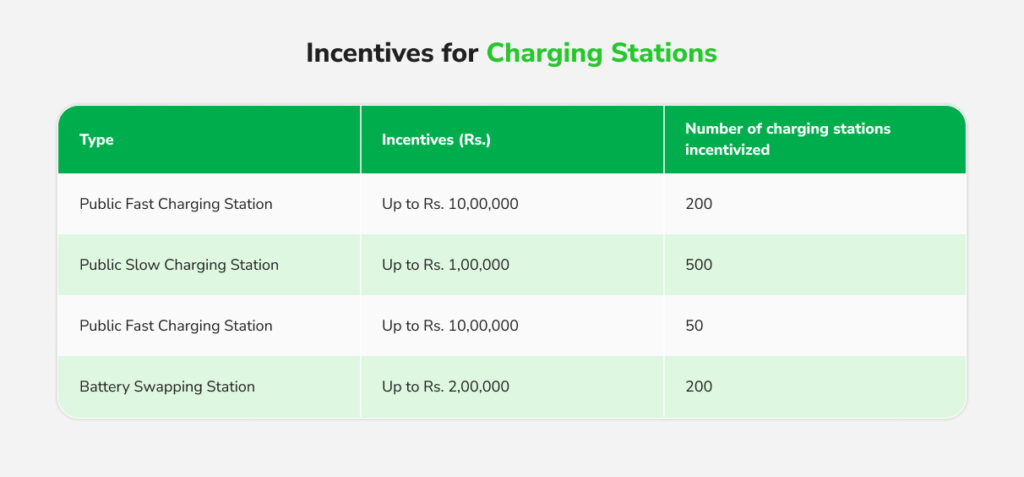
Capital Subsidies: The state offers a 25% capital subsidy on equipment and machinery costs for companies setting up public charging stations that meet national guidelines. Additionally, the first 50 private charging stations qualify for a 25% subsidy, up to ₹10 lakh each, on charger hardware, encouraging early private investment. These grants substantially reduce the high capital expenditure of DC fast chargers, which often exceed ₹20–30 lakh for 50 kW+ units.
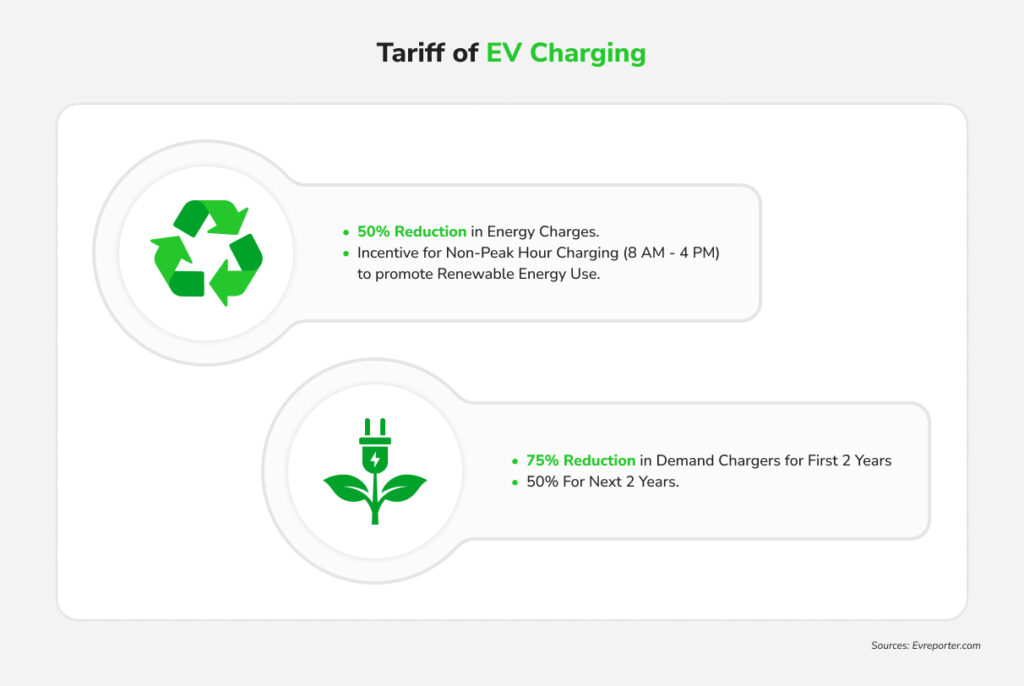
Reduced Power Tariffs: To improve the business case for charging operators, Tamil Nadu slashed electricity rates and demand charges for EV charging. Demand charges are cut by 75% for the first 2 years and 50% for the next 2 years for EV power connections. Energy tariffs are reduced by 50% during daytime off-peak hours (8 AM–4 PM), encouraging use of surplus solar power. This time-of-day tariff model directly lowers operating costs for high-capacity DC fast charging solutions, improving profitability and attracting private players.
Land and Infrastructure Support: Access to affordable land is critical for charger installation. Tamil Nadu offers land at concessional rates in dedicated EV parks, with a 50% discounted land price for companies building EV or charging equipment factories. While this primarily targets manufacturing, it indirectly benefits the dc fast charging solutions ecosystem by lowering hardware costs. For charging station siting, the state is leveraging public land – highway rest areas, bus depots, and municipal parking lots – to host chargers in high-demand locations. Tamil Nadu Generation & Distribution Corporation (TANGEDCO), the nodal agency for charging infrastructure, and the Tamil Nadu Green Energy Corporation Ltd. (TNGECL) are working with local bodies to earmark government-owned sites for rollout.
Tax Exemptions: Tamil Nadu has waived 100% of electricity tax for EV charging operators for five years and classifies public charging under a special tariff category. Electricity duty holidays ensure energy drawn by DC fast chargers isn’t burdened with extra levies. These financial sweeteners improve ROI for commercial EV DC fast charging stations, which typically have longer payback periods than slower chargers.
Public-Private Partnerships and Policy Enablement
Tamil Nadu’s EV policy actively promotes public-private partnership (PPP) models to accelerate charging network growth. Rather than relying solely on government installations, the state is inviting private capital and expertise to co-develop infrastructure:
Nodal Agency & Single-Window Clearance: TANGEDCO is the state nodal agency for EV charging, responsible for planning and facilitating network expansion. Guidance Tamil Naduacts as a single-window facilitator for EV infrastructure projects. An inter-departmental EV cell coordinates efforts across power, transport, housing, and industry departments. For a private operator, this means faster and centralized approvals and reduced procedural delays.
Land & Utility Cooperation: Municipal corporations are working with TNGECL to offer bus depots and parking lots as sites for private firms to install DC fast chargers. Public entities provide the space, while the private player bring equipment and operational expertise. TANGEDC supports these PPP stations by ensuring sufficient power supply and encouraging open access to renewable energy. This cooperation lowers barriers to entry for private operators.
To address this, Tamil Nadu EV policy 2025 aims to install about 24,715 charging stations by 2030. This nearly ten-fold increase within the next five years would elevate Tamil Nadu into a leading position for EV charging infrastructure in India.
This scale-up contributes meaningfully to India’s overall EV charging outlook. Nationwide, about 29,277 public charging stations were installed as of August 2025. Tamil Nadu’s 2030 goal would account for roughly 5% of the country’s public chargers, assuming India meets its target of 4–5 lakh chargers by 2030. With nearly 4.5 lakh EVs already on road by 2025), Tamil Nadu’s rollout, is both necessary and influential. Success here could bolster confidence and inspire similar projects across other state EV policies in India.
Streamlined Implementation and National Ripple Effects
Tamil Nadu is not only crafting incentives but also focusing on execution mechanisms. In July 2025, the state released the Tamil Nadu Public Charging Infrastructure Guidelines, India’s first comprehensive state-level framework for EV charging rollout. These guidelines clarify agency roles, technical standards, and processes like obtaining connections and approvals. They encourage smart charging, and processes like obtaining connections and approvals. They encourage smart charging and renewable integration to minimize grid impact and outline a single-window system for permits.
This move is nationally significant. Few states have published such detailed guidance, so Tamil Nadu’s document is poised to become a reference for other state EV policies in India.
More broadly, the state’s policy approach is shaping best practices across India:
Traffic reform: Tamil Nadu’s innovative tariff model is inspiring similar reforms in states like Maharastra and Karnataka. Adjusting demand tariffs and enabling open-access renewable power for fast chargersare key to avoiding a fragmented policy landscape.
PPP models: Tamil Nadu’s emphasis on private sector participation provides a working model for sharing costs and responsibilities. Offering upfront subsidies for a limited number of private stations and reserving government support for corridor charging can be replicated with local tweaks.
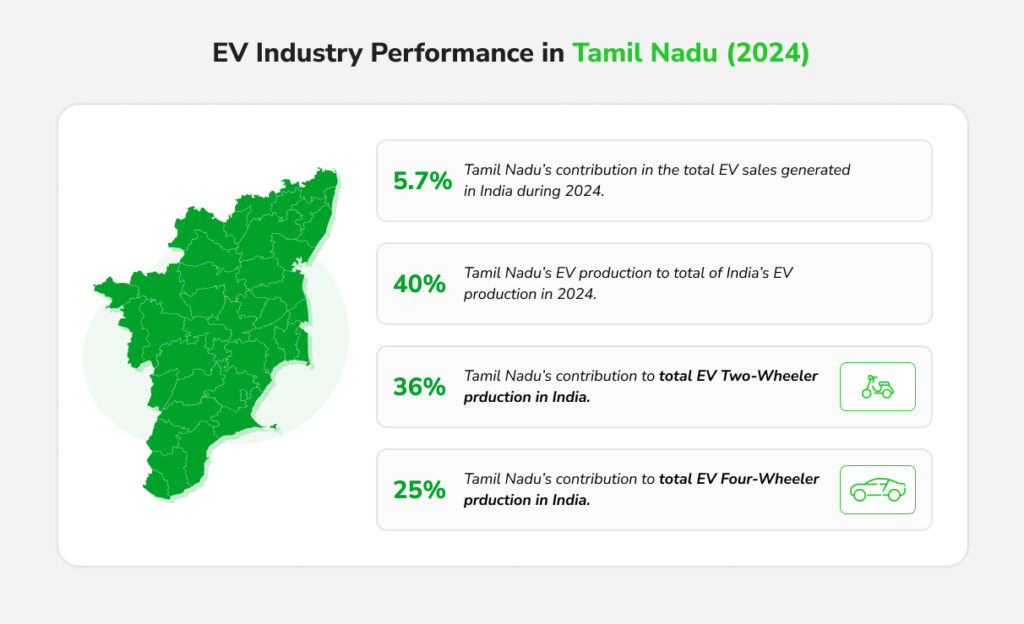
Integrated ecosystem planning: Tamil Nadu links EV manufacturing incentives with charging infrastructure goals. Subsidizing charger deployment while attracting equipment manufacturers creates synergy; many chargers installed in the state may be locally produced, lowering costs and ensuring supply. Other states may follow suit by aligning their industrial policy (attracting EV/charger production) with infrastructure deployment, creating regional EV hubs. Indeed, Tamil Nadu aims to attract ₹50,000 crore (approx. $6B) of EV investment by 2030, and its success in drawing major EV and battery makers is partly due to such comprehensive planning. If this strategy continues to pay off, it will set a benchmark for treating the EV ecosystem as an end-to-end value chain in policy design.
Regulatory best practices: Publishing detailed guidelines and establishing an EV cell demonstrates proactive governance. These efforts address interoperability and safety norms, which, if adopted widely, could lead to more uniform charger installations across India. Tamil Nadu’s framework tackles multi-agency coordination, consumer awareness, and grid readiness, common challenges in fast charger deployment.
Final Thoughts
Tamil Nadu EV policy 2025 has become a strong accelerant for DC fast charging infrastructure, within the state and as a national trend-setter. For B2B stakeholders, charging infrastructure providers, automakers, utilities, and policymakers, the key takeaway is the power of a comprehensive policy framework in unlocking the EV charging infrastructure in India.
By coupling financial incentives with enabling measures like PPP models, nodal agency support, and clear guidelines, Tamil Nadu has rapidly expanded its DC fast charging network and attracted significant private investment. Its trajectory over the next five years could very well shape the confidence and strategies of players across India’s EV sector. If the state meets its 2030 targets, it’ll be a proof-of-concept that robust state policy can drive the EV transition at a pace and scale needed to meet India’s electrification goals. Tamil Nadu has effectively thrown down the gauntlet, demonstrating how to supercharge the drive toward an electric mobility future.